- Design Ideas
- Cities
- Trends
- Guides
- Price Calculators
- Interior DesignersNEW
- Our Portfolio
- More


- Home
- Trends
- Modular Solution
- Modular Wardrobe
- Wardrobe Finishes
Laminate Finish Wardrobe: What You Notice Only After Living With One

A wardrobe doesn’t really introduce itself on day one. At first, you notice the size, the layout, maybe the colour. The finish takes longer. It shows its nature slowly. Morning light hits it from the side. Fingerprints appear near the handle. Dust either blends in or stands out. After a few weeks, you start understanding whether you chose well.
That’s why a laminate finish wardrobe is less about looks in a catalogue and more about how the surface behaves in daily life. Some laminates stay calm under bright light. Some make a room feel sharper. Some quietly hide wear even after years of use. The structure underneath might be the same across many wardrobes, yet the outer layer decides how the piece lives in your room, how often you clean it, and whether it keeps looking right as everything else around it changes.
Table of Content
What A Laminate Finish Wardrobe Really Is?
Types Of Wardrobe Finishes Compared Without The Showroom Gloss
Finish Categories Based On How The Surface Actually Looks
Finishes That Change How A Room Feels
Matching Finishes With Wardrobe Types
Mistakes People Notice Only After The Wardrobe Is Installed
Choosing A Finish That Stays Right Over Time
What A Laminate Finish Wardrobe Really Is?
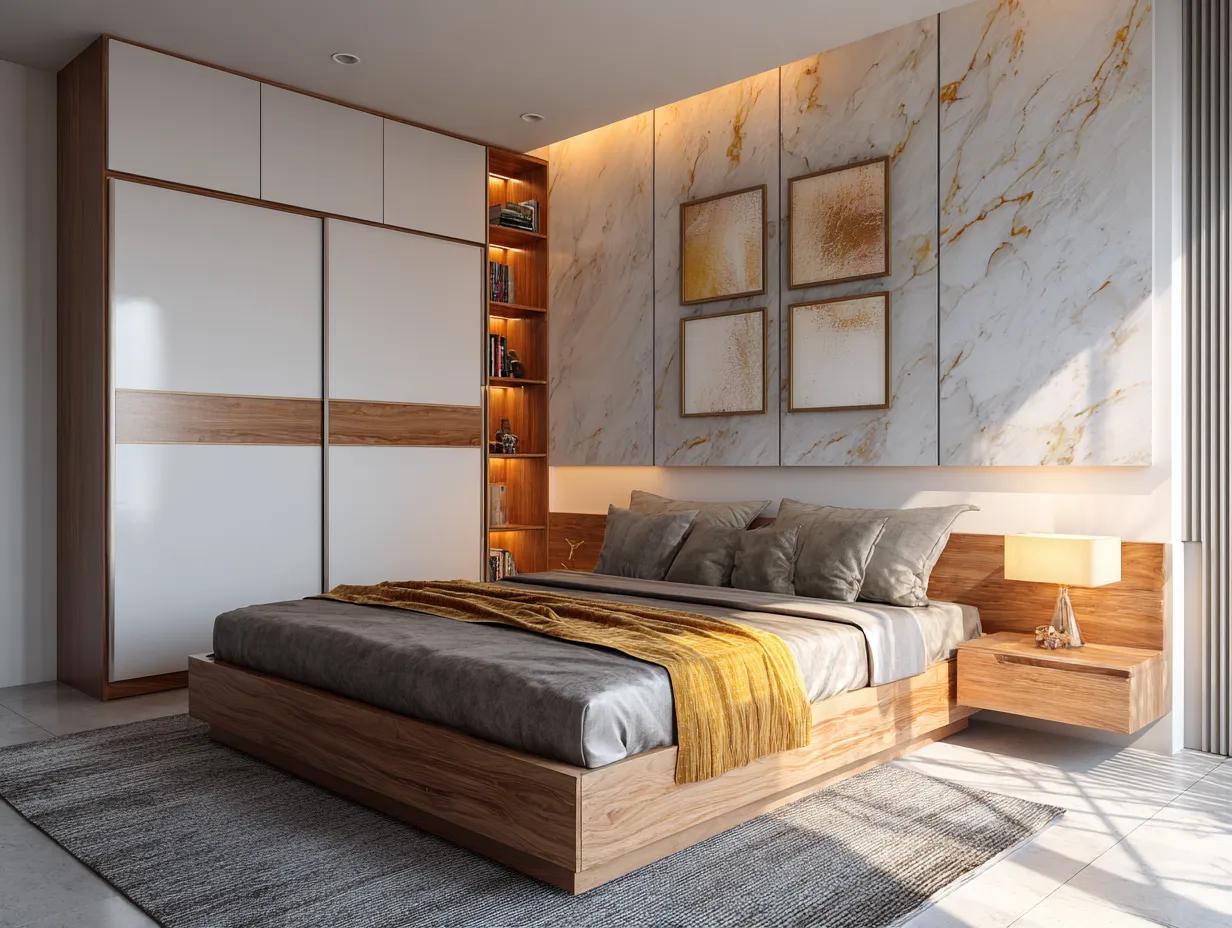
A laminate finish wardrobe is built in two parts. Inside, there's the core board that gives it strength and shape. Outside, there's a pressed sheet that decides how it looks and feels. That outer sheet is the laminate. It's manufactured separately, then bonded to the board using heat and pressure, so it sits tight and smooth without bubbles or gaps.
Laminates get mistaken for paint or polish quite often, but they behave nothing alike. Paint stays on the surface and can chip. Laminate doesn't sit on top like that. It's a bonded layer, more like a fitted skin than a coating, which is why it shows up so often across different types of wardrobe finishes in modern interiors. It handles everyday contact well, resists stains, and doesn't demand refinishing after a few years.
They're also made to resemble other materials surprisingly well. One sheet might resemble stone, another fabric, another wood. Someone may like the look of a wood veneer wardrobe, yet still pick laminate because the colour stays consistent and humidity doesn't affect it as much. The same thinking applies when comparing matte laminates with reflective options like high gloss laminates for wardrobes. Both are laminates underneath. What changes is the decorative surface and the way it reacts to light.
Thickness matters too, even though it rarely comes up in conversation. Thicker laminates usually go on shutters since they handle impact better. Thinner sheets are often used for side panels where hands don't often reach. Small detail, but it shows over time in how a wardrobe holds up.
Types Of Wardrobe Finishes Compared Without The Showroom Gloss
Standing in front of finish samples, most options look equally convincing. The real differences show up later, once they're part of an actual room and used every day. Here's how the main finishes behave when they leave the catalogue page and become part of a real cupboard design.
Laminate
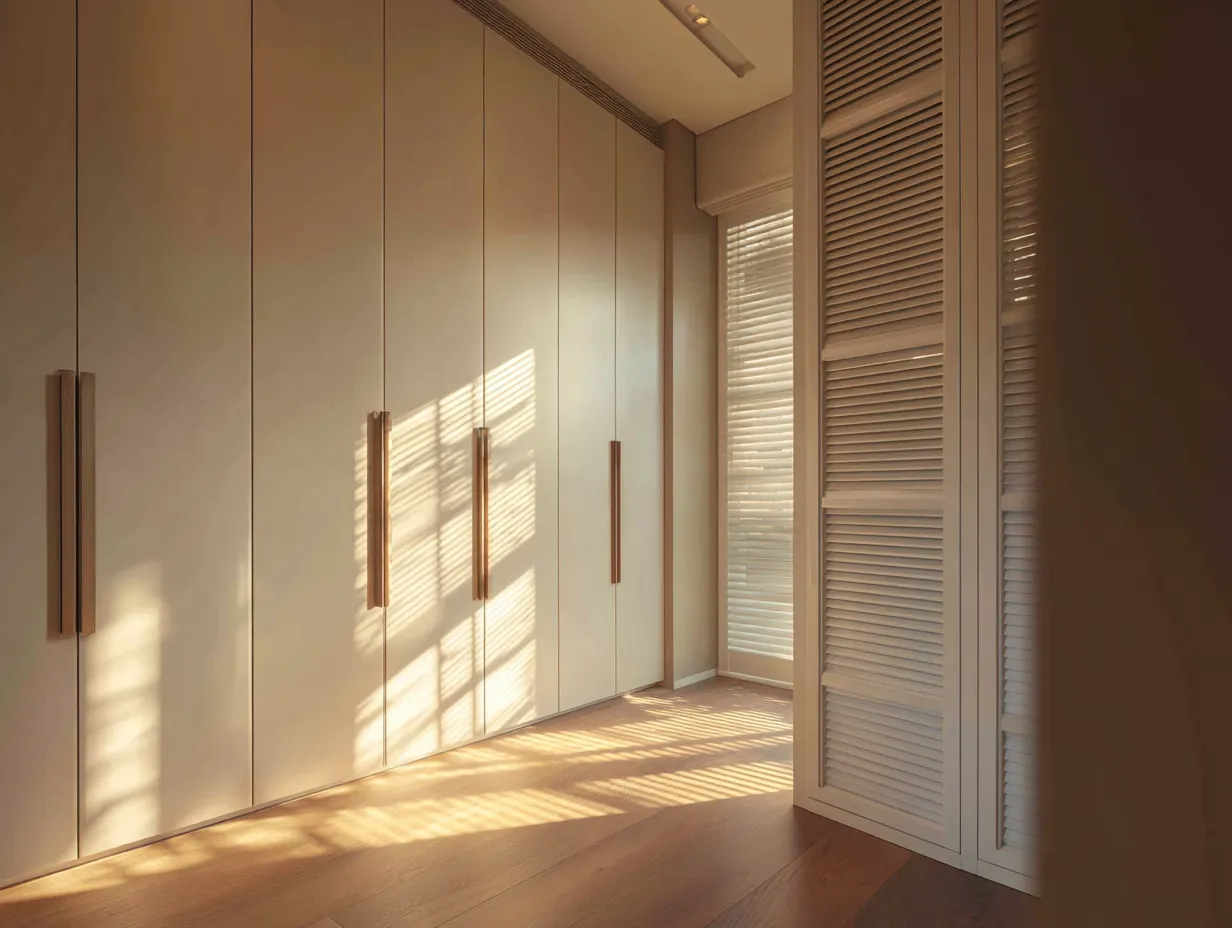
Reliable, consistent, and widely used. Among modern wardrobe finishing materials, a laminate finish wardrobe doesn't demand much maintenance and holds colour well over time. It works across everything from a compact almirah design to a full wall unit because sheets come in controlled patterns and shades. Good choice when you want predictability.
Veneer
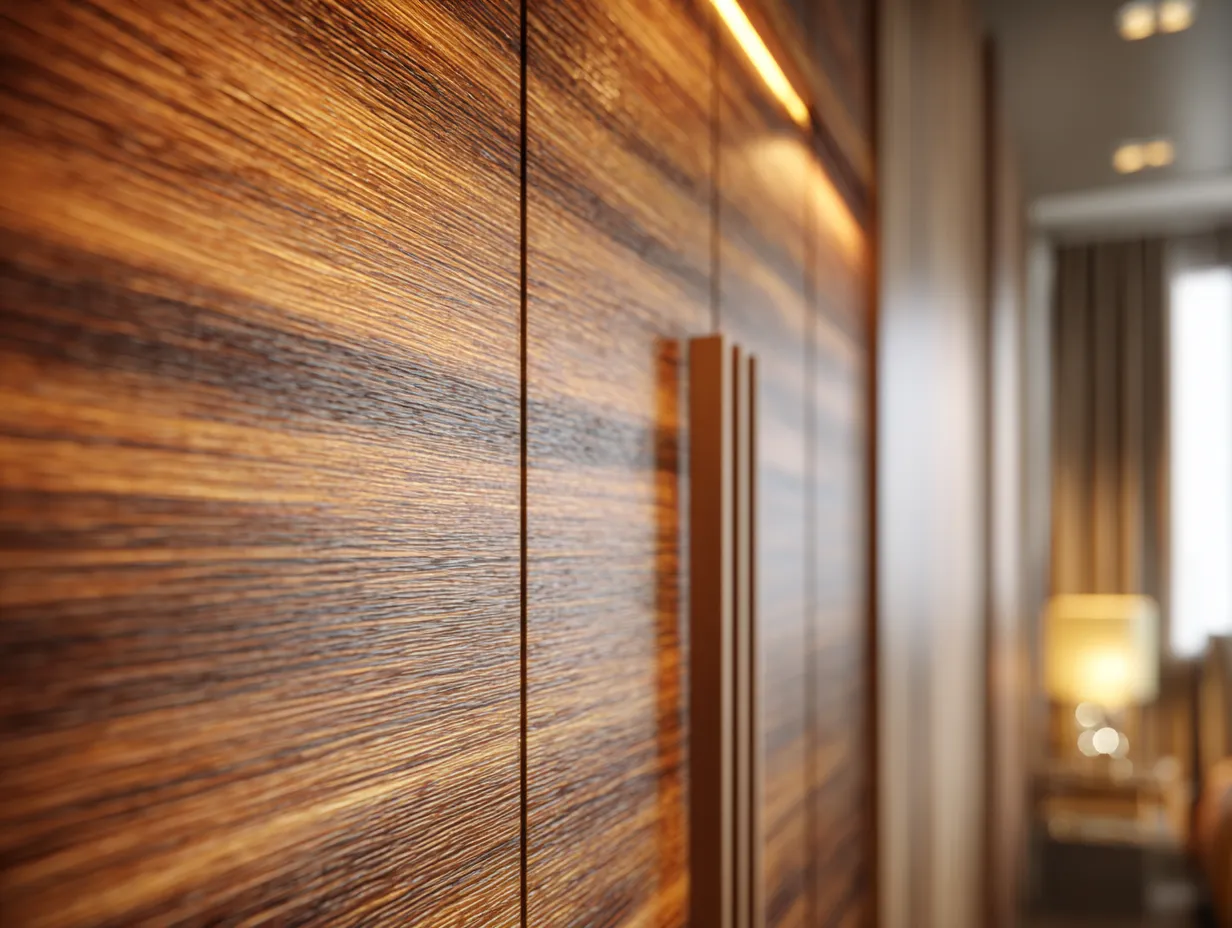
A wood veneer wardrobe uses thin slices of real wood. Grain patterns vary naturally, which some people love, and others find risky. It brings warmth that printed surfaces try to imitate. It suits rooms where natural materials already lead the palette, especially in layered master bedroom interior decoration themes.
Membrane
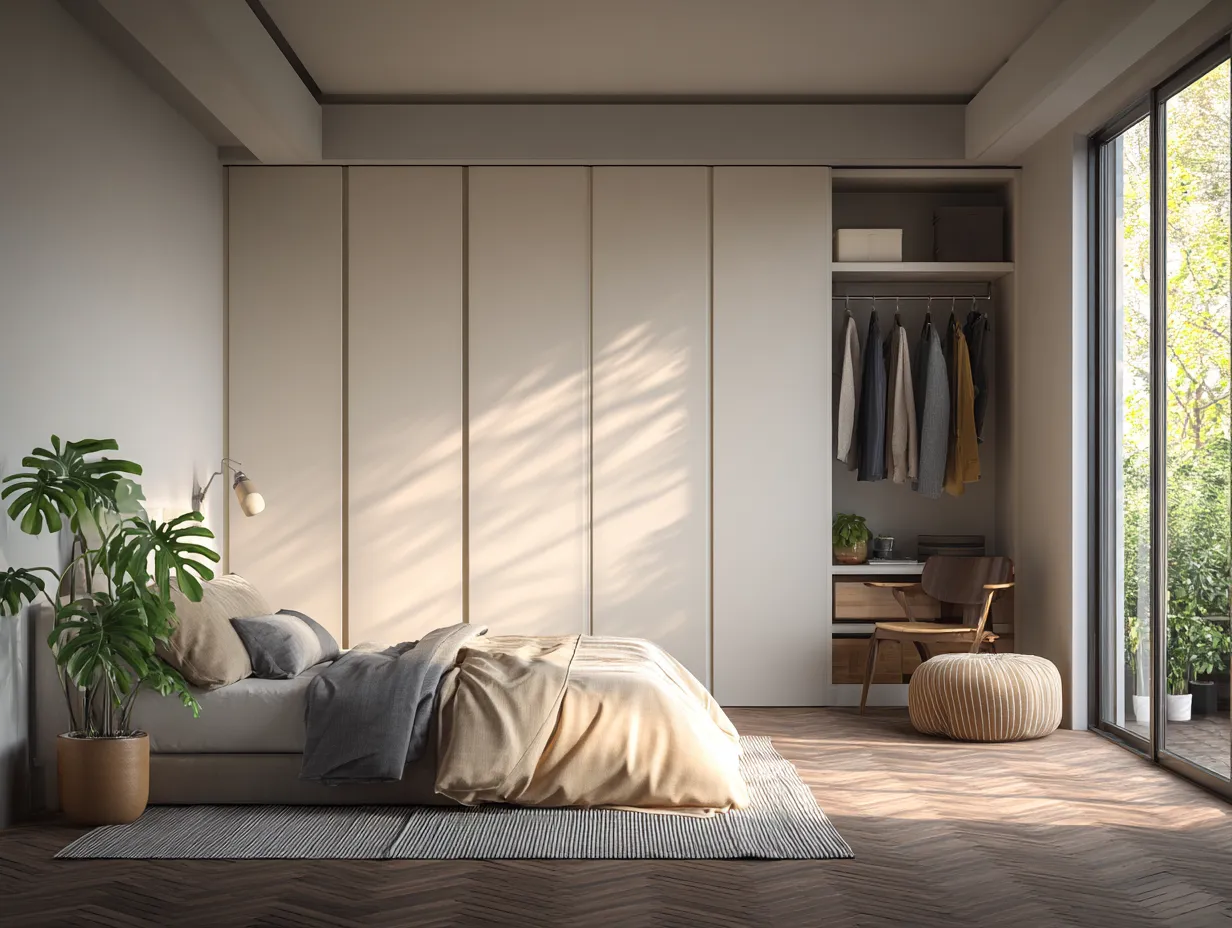
A membrane finish wardrobe has a foil-like layer vacuum-pressed over the board so edges look seamless. No visible joints. That's why it's often chosen for curved or routed wardrobe shutter design styles where sharp laminate edges wouldn't work as neatly.
PU Finish
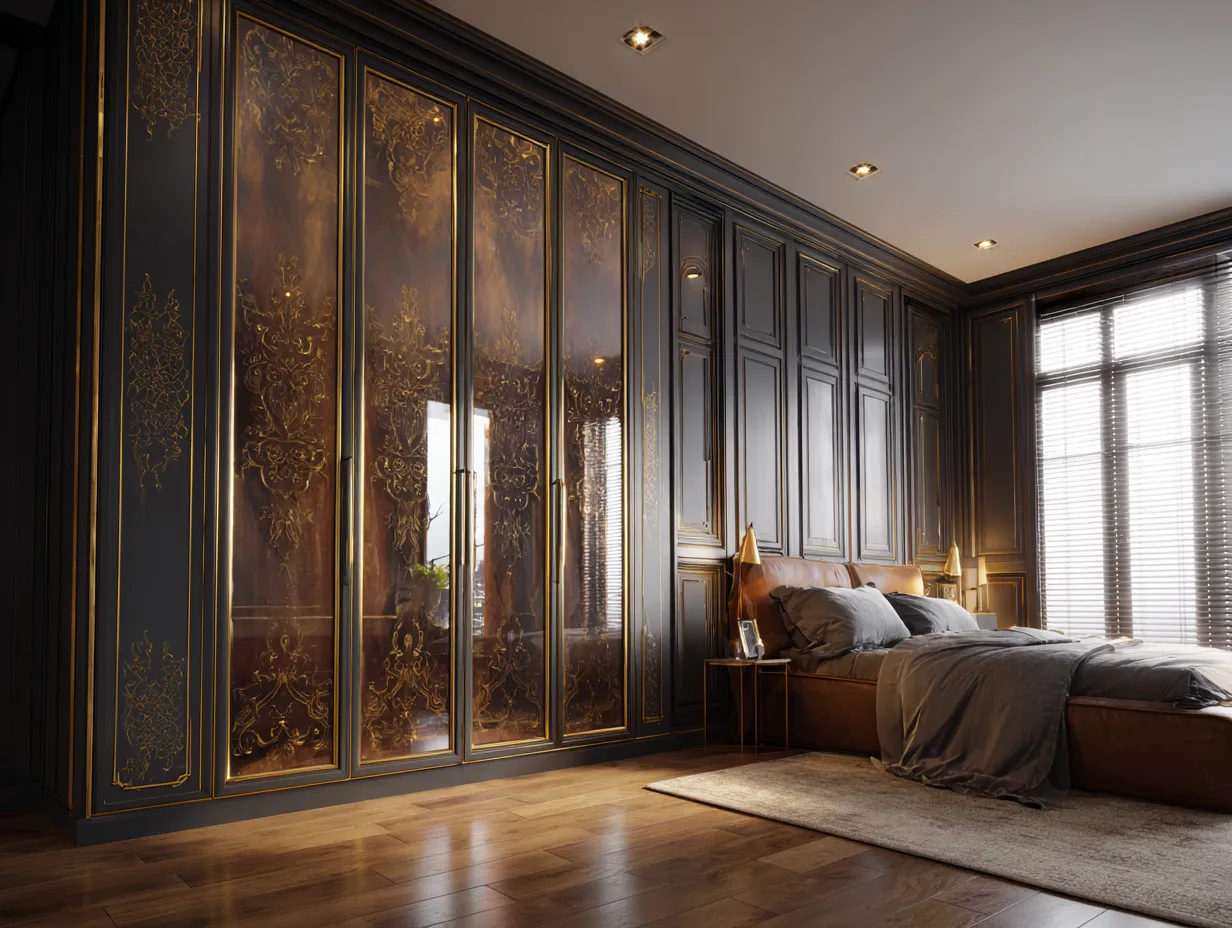
A modern PU finish wardrobe is spray-painted rather than sheet-covered. The surface feels smooth and almost liquid when done well. It's often used when someone wants a specific wardrobe colour combination that isn't available in ready-made laminates.
Acrylic
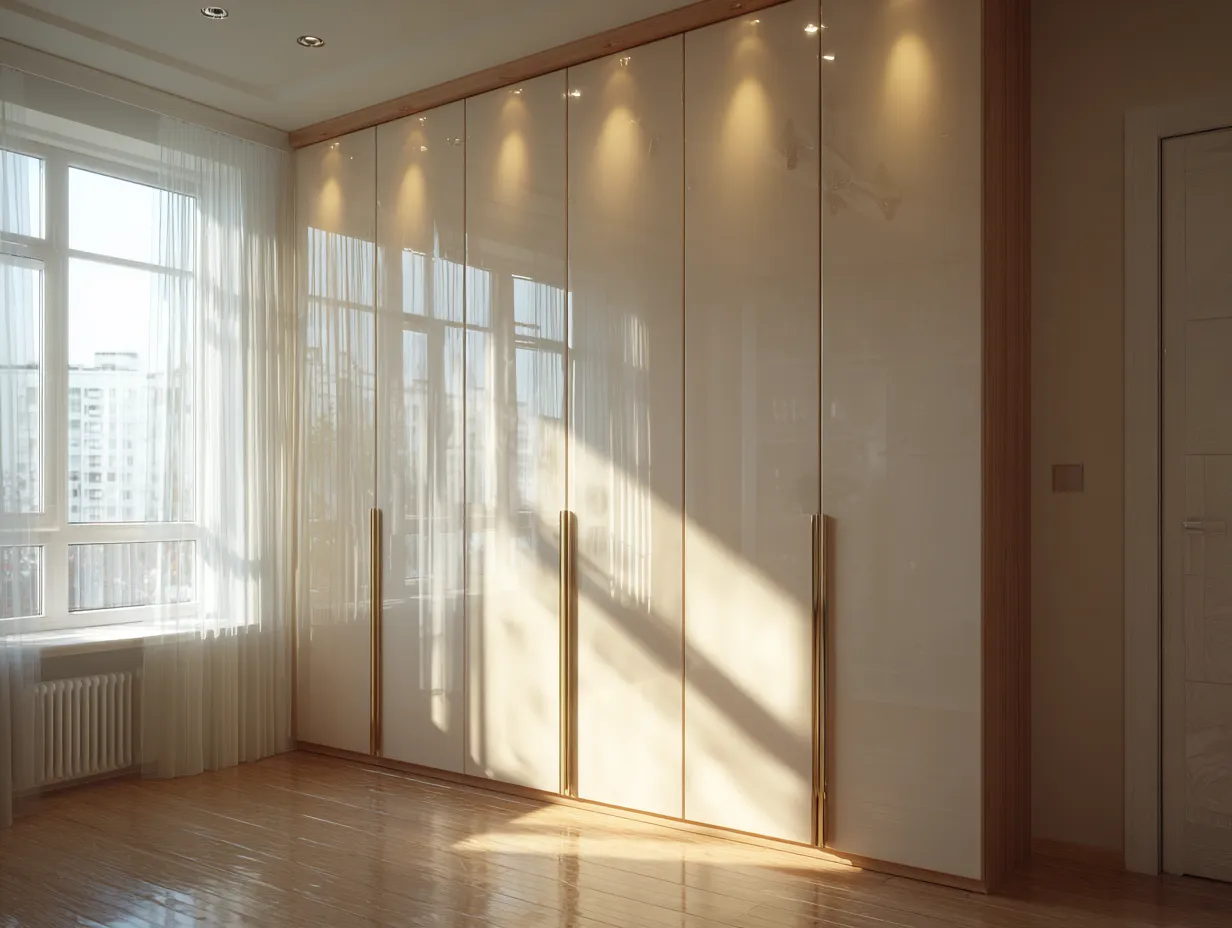
An acrylic finish wardrobe reflects like glass but weighs less and resists cracking. It's popular in bright layouts and contemporary home interior ideas where surfaces are meant to catch light rather than absorb it.
Lacquer
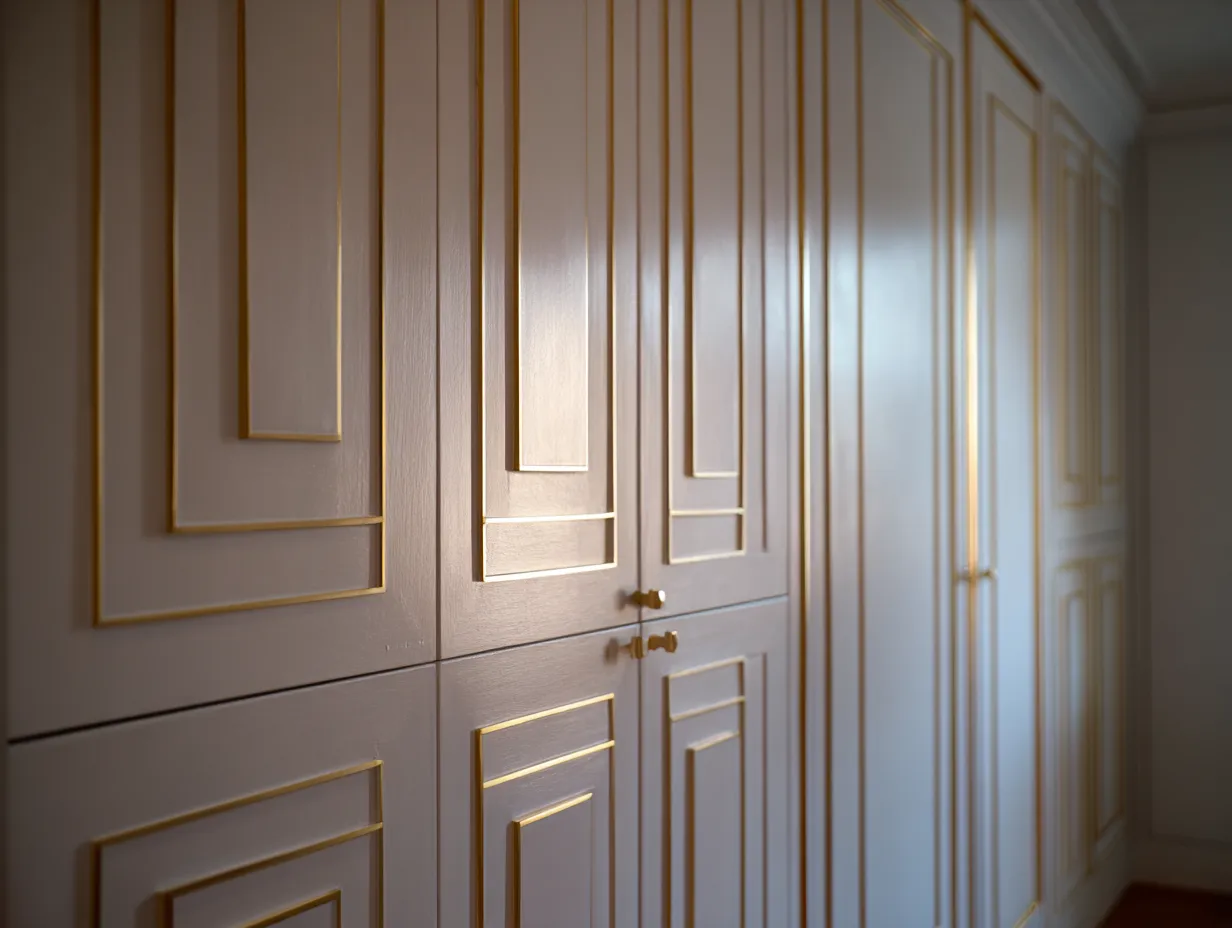
A lacquer finish wardrobe has a sprayed coating similar to automotive paint. It can look rich and even-toned, though it needs careful handling during installation. Often chosen for statement pieces rather than everyday-heavy shutters.
Glass
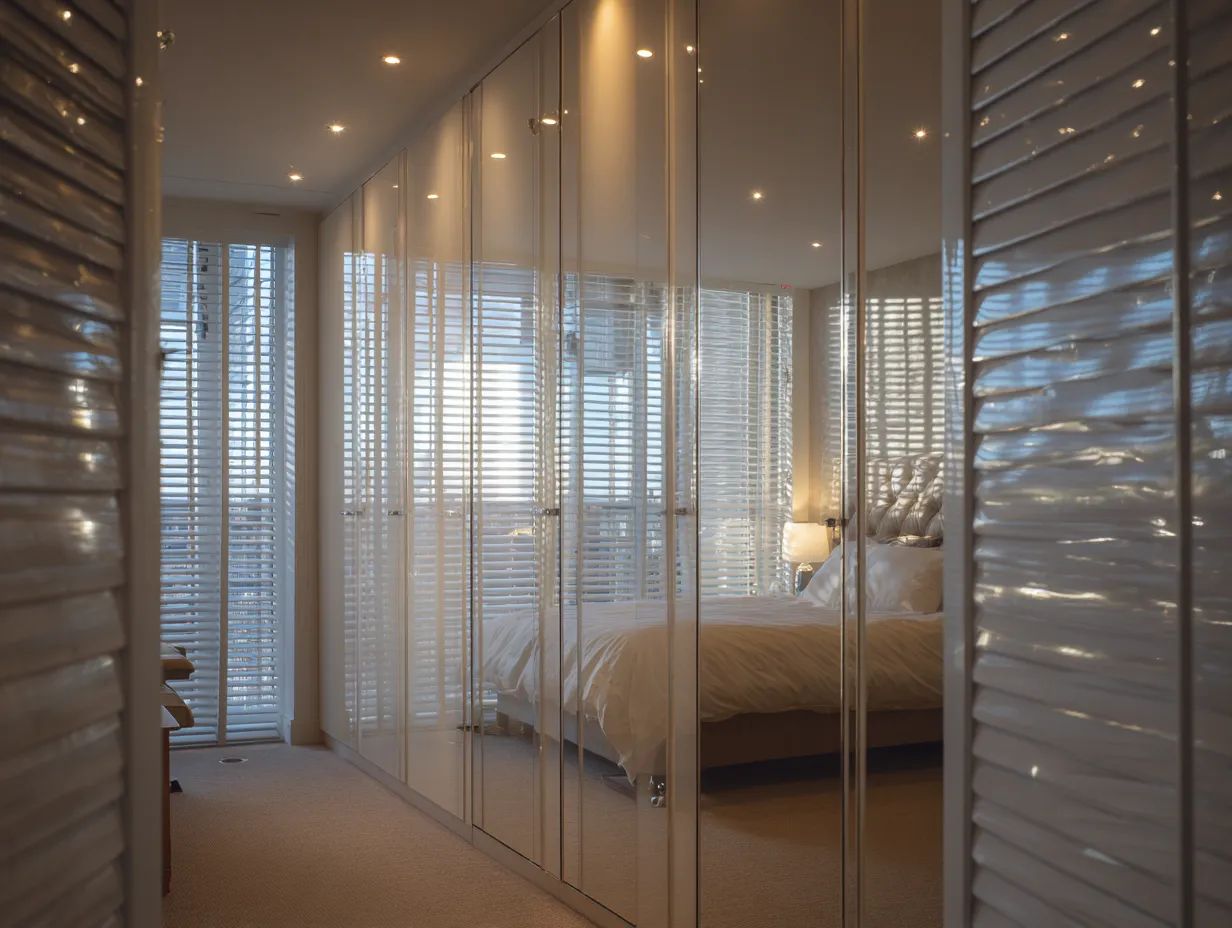
A glass-finish wardrobe uses back-painted or coated panels. These are common in a sleek glass wardrobe design, especially when the goal is sharp reflections and crisp edges. They visually lighten a wall because reflections break up the solid surface.
Mirror
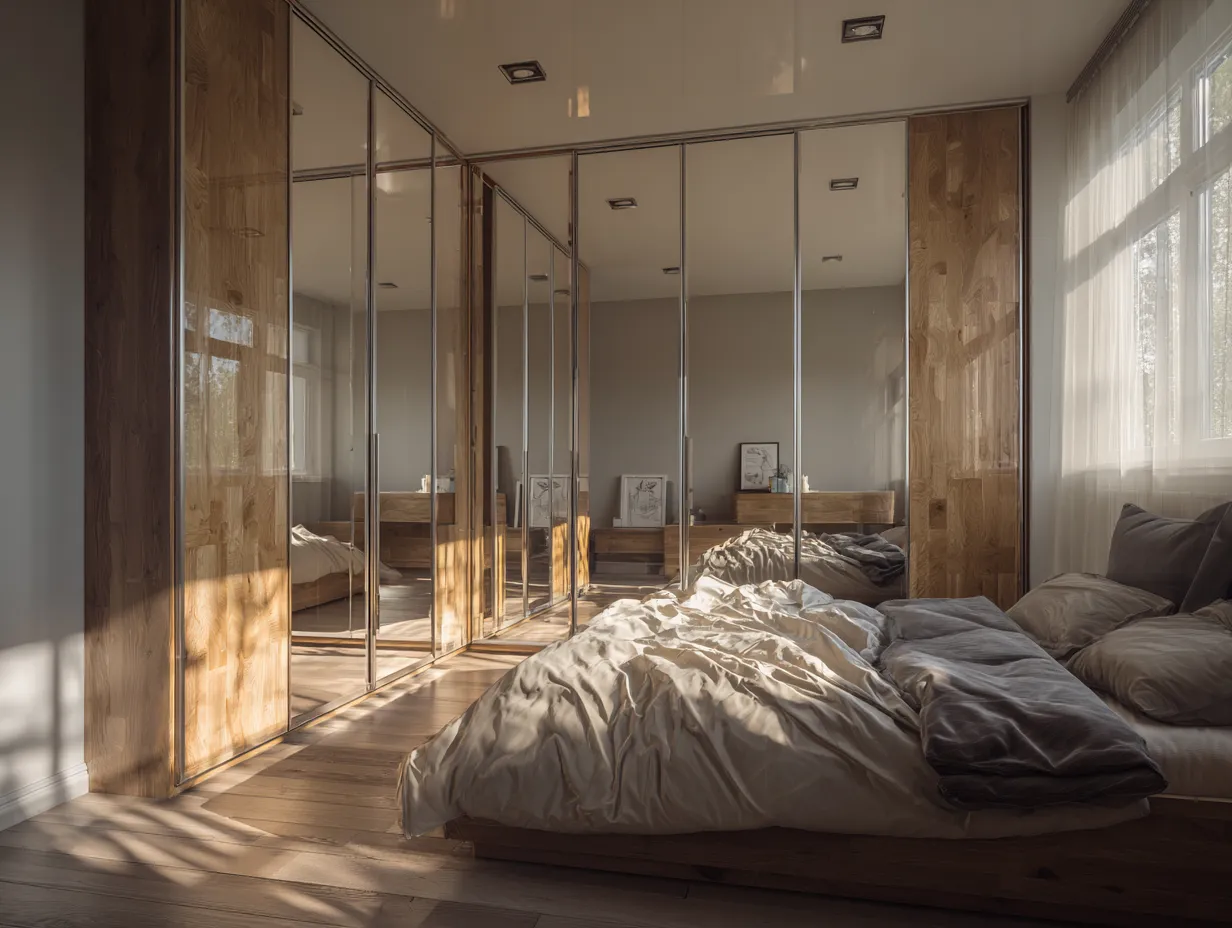
A mirror finish wardrobe doubles as both storage and dressing surface. It's practical in a hinged wardrobe design where doors swing open and can function as full-length mirrors without needing extra wall space.
Textured Finishes
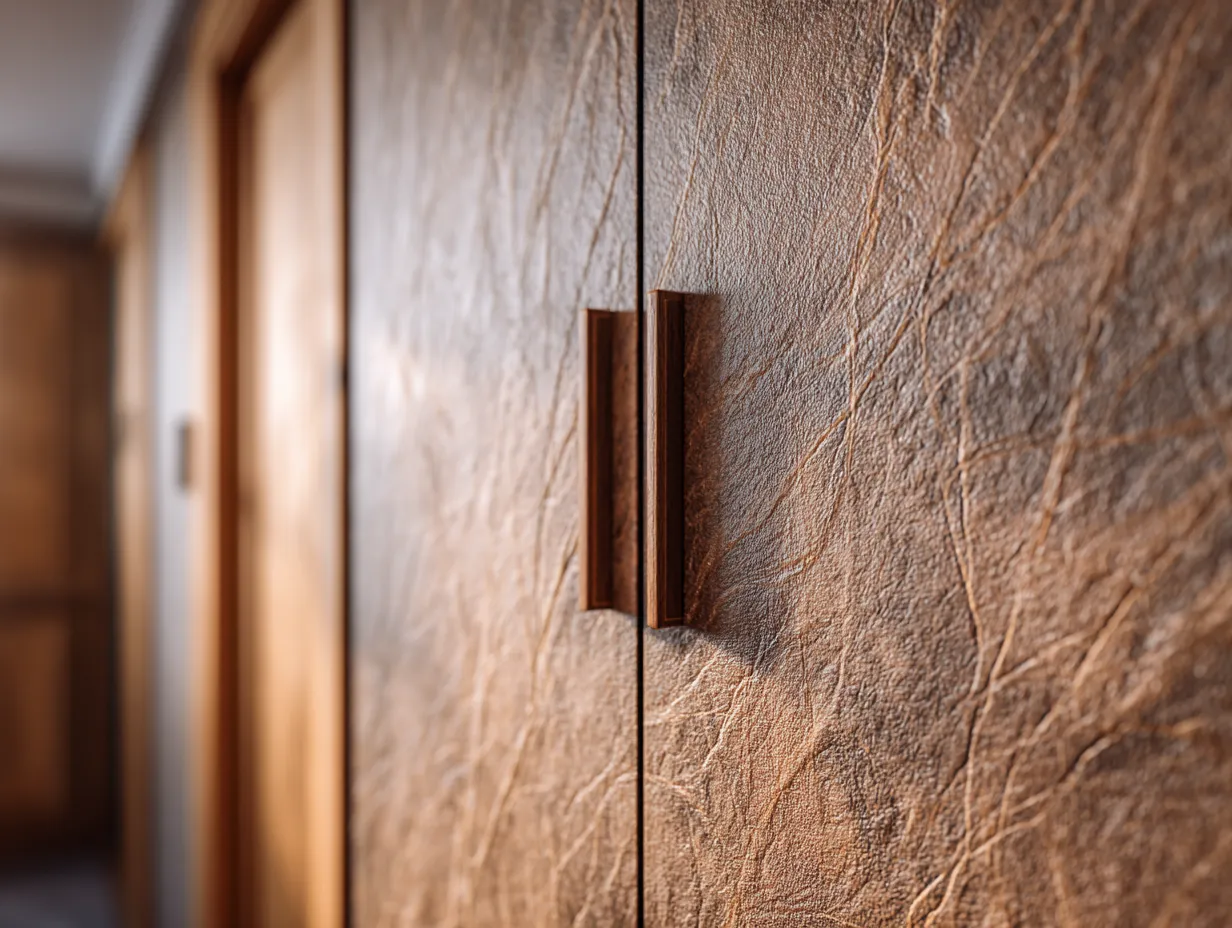
Options like a leather finish wardrobe, suede finish wardrobe, or fabric finish laminate for wardrobe change how a surface feels, not just how it looks. These are often used inside a walk-in closet design or feature units where panels are seen up close, and touch becomes part of the experience.
Stone and Pattern Looks
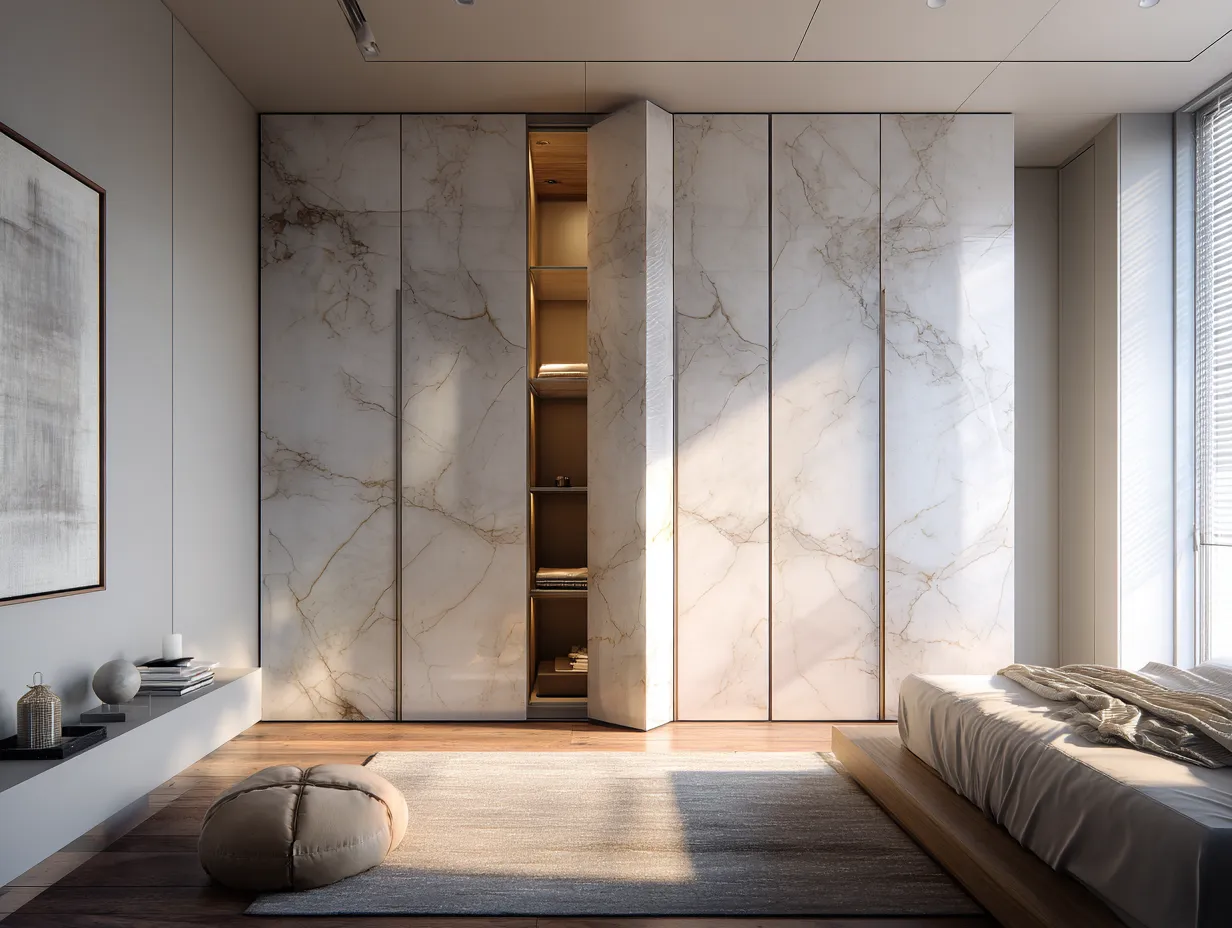
A marble finish wardrobe or marble finish laminate wardrobe introduces pattern movement across shutters. Designers usually balance these with plain panels so the surface doesn't overwhelm the room, especially in wide sliding wardrobe design layouts.
Finish Categories Based On How The Surface Actually Looks
People don't usually think in technical finish names when choosing wardrobes. They react to what they see. Shine, depth, texture, colour warmth. That visual response is what guides most decisions long before material specs enter the conversation. So it makes more sense to look at finishes the way the eye reads them.
Matte Surfaces That Keep Things Quiet
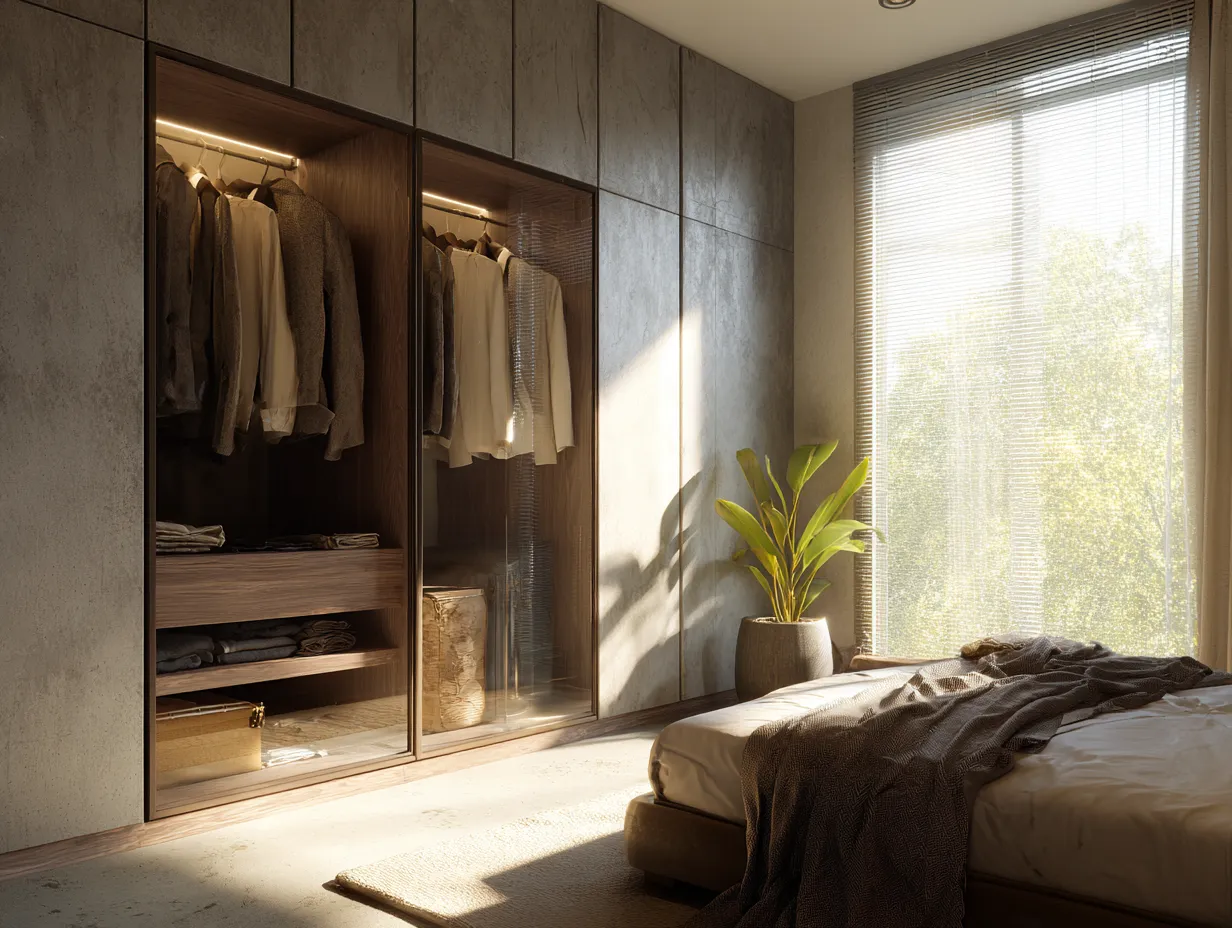
A matte finish wardrobe or matte finish laminate for the wardrobe absorbs light instead of reflecting it back. That's why it feels calm even in rooms with strong lighting. These finishes suit spaces where visual noise needs to stay low. Dark matte tones feel grounded. Lighter ones feel soft. A white laminate wardrobe in matte, for example, looks gentle rather than stark. Designers often rely on this type of wardrobe laminate design when they want the storage to blend rather than stand out.
Gloss Finishes That Reflect The Room
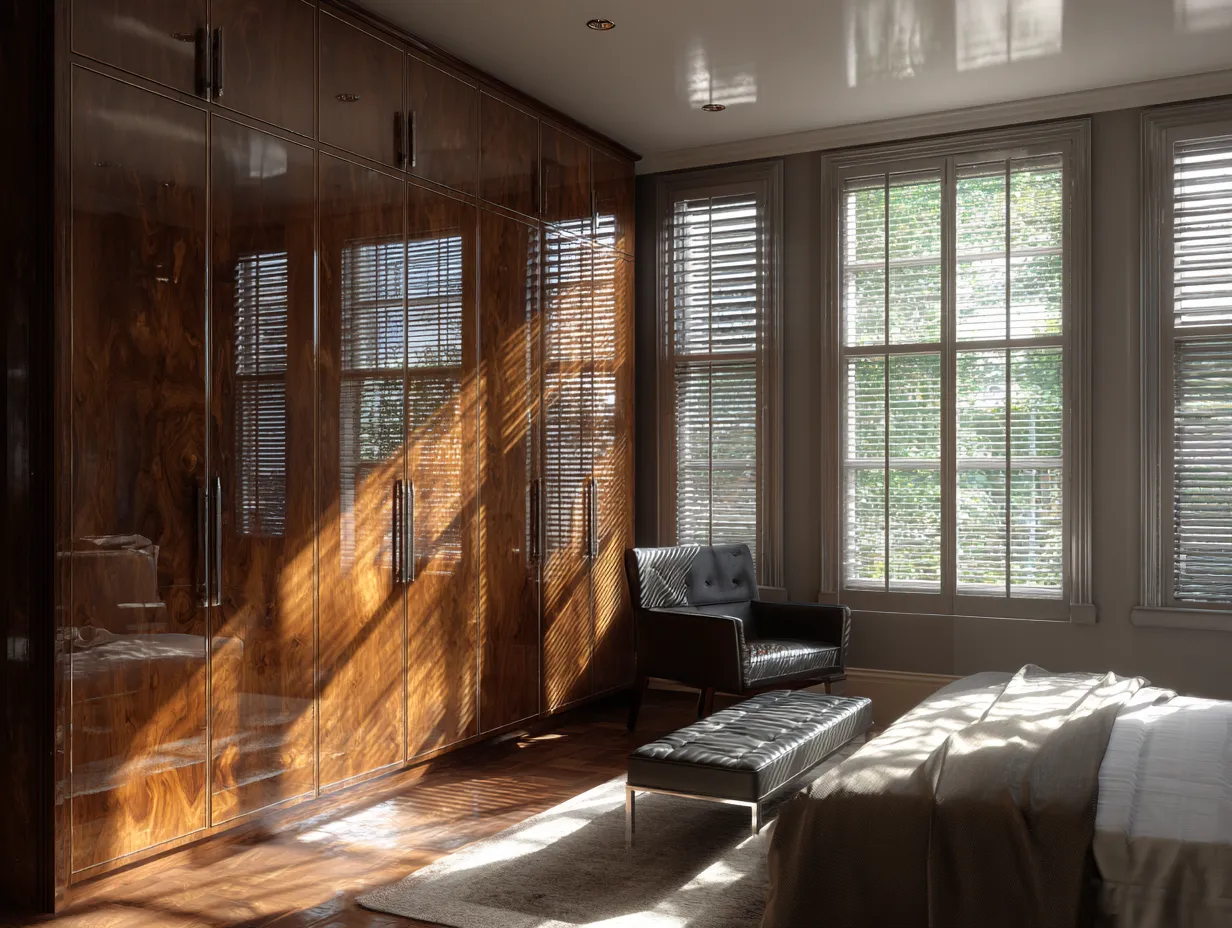
Gloss changes how large a wardrobe feels. Reflection breaks up the surface, so panels don't look as heavy. This is why gloss finish wardrobes are common in compact rooms. A grey gloss wardrobe adds shine without being loud, while white gloss wardrobes can brighten a wall that gets little daylight. At the higher end, glossy laminate wardrobes create a near mirror-like sheen that makes colours appear deeper and sharper.
Glass-Look Surfaces With Sharp Presence
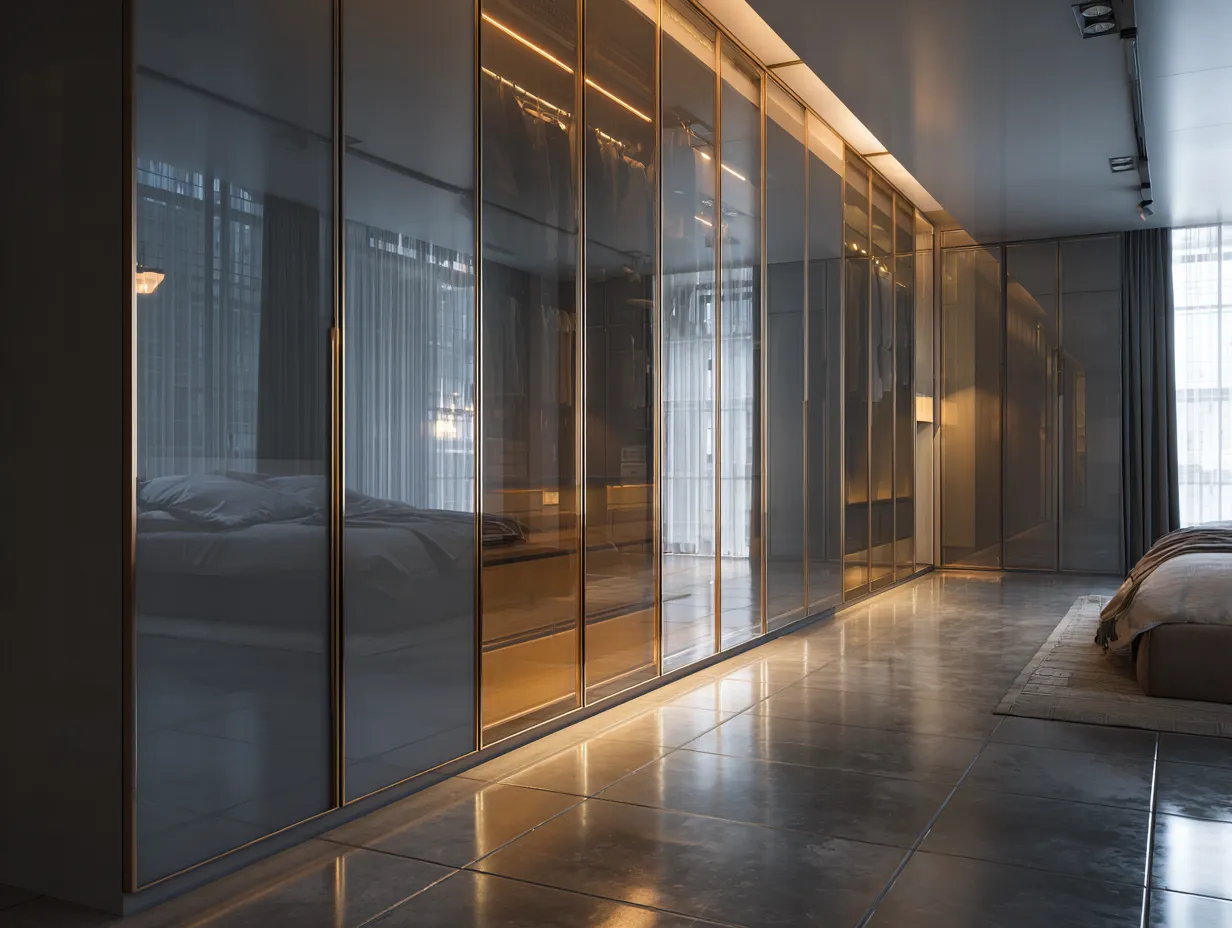
Glass-style finishes have a crispness that laminates try to imitate but never fully match. A set of lacquered glass wardrobe designs can make a wall look almost architectural. Variations like a black lacquered glass wardrobe feel bold, while a classy lacquered glass wardrobe in pale tones looks refined instead of dramatic. Some homeowners even choose printed lacquered glass wardrobe designs to introduce pattern without using wallpaper. Each lacquered glass design for a wardrobe behaves differently depending on the lighting direction, which is why placement matters as much as colour.
Natural-Look Finishes That Add Warmth
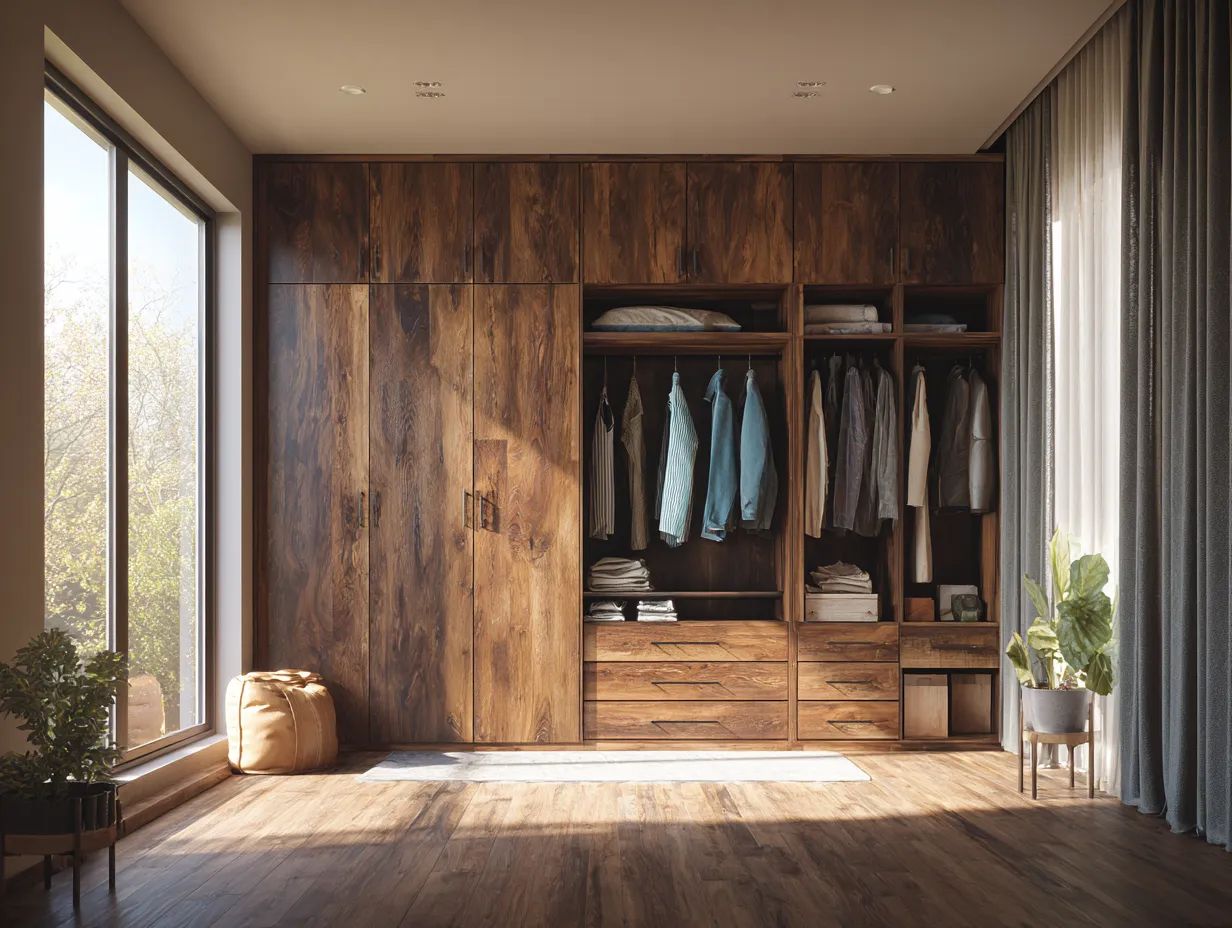
Wood tones change the mood of a room faster than most colours. A wood grain laminate wardrobe brings pattern and warmth without the unpredictability of real timber. Lighter shades such as a light wood colour wardrobe, tend to open up smaller spaces visually. These finishes are often used when the interior of the unit is also visible, since they pair well with shelving tones inside an inside wardrobe design.
Textured Surfaces You Notice Up Close
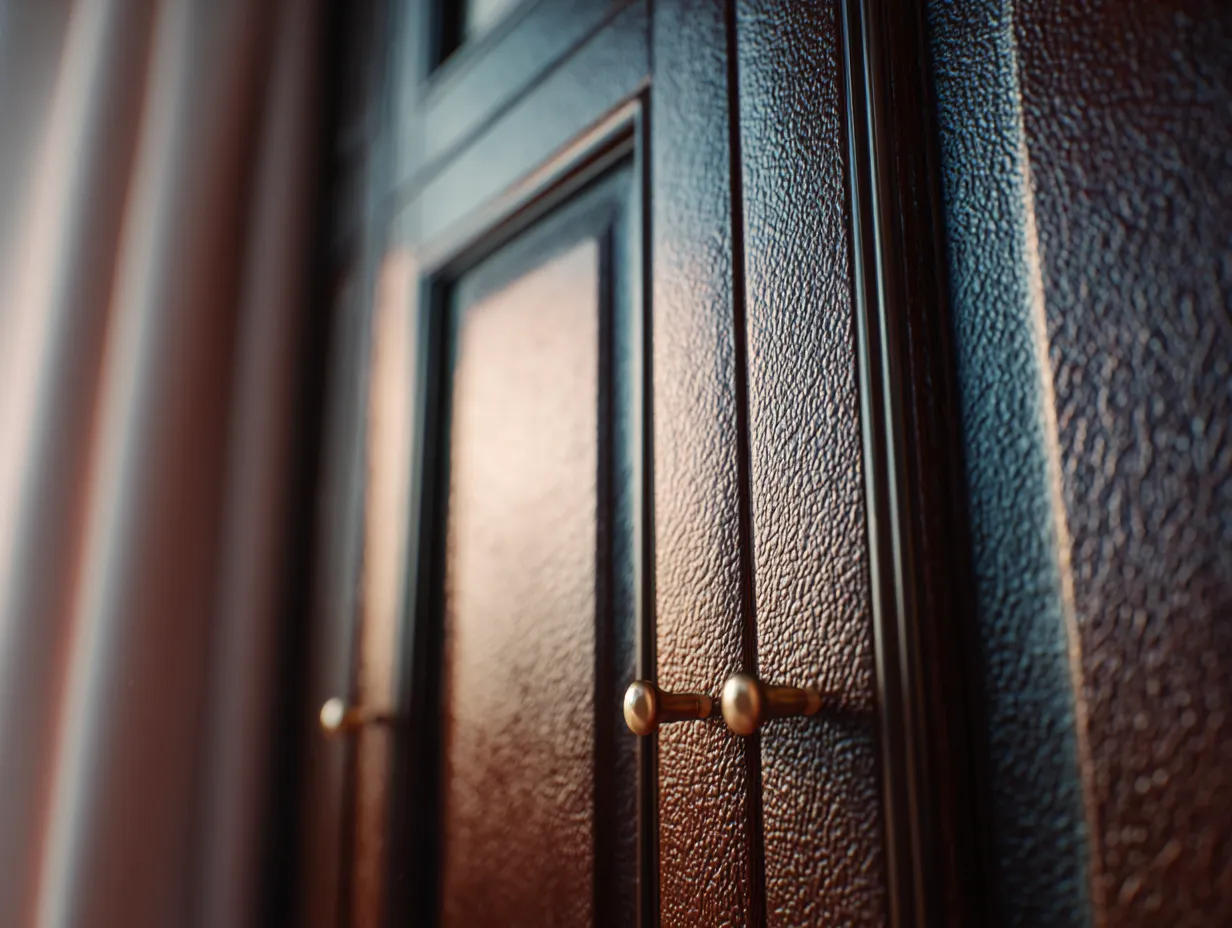
Not every finish is about shine or colour. Some are about touch. Texture wardrobe doors introduce depth through surface relief rather than reflection. Options like a leather finish laminate wardrobe feel rich without being glossy. These finishes are usually chosen for wardrobes that people interact with often, because the tactile quality becomes part of the daily experience rather than just a visual feature.
Read Also: Modern Wardrobe Inside Design Ideas for Your Bedroom
Finishes That Change How A Room Feels
The finish you choose doesn't just sit on the wardrobe. It affects the whole room around it. Light reacts to it. Colours beside it shift slightly. Even the sense of space can change depending on whether the surface reflects, absorbs, or adds texture.
If A Room Feels Small
Reflective surfaces tend to loosen that boxed-in feeling. Panels with shine or reflection scatter light instead of stopping it. That's why glossy wardrobe designs, acrylic panels, and glass-look shutters are often picked for tighter layouts. They visually break up the wardrobe's mass so it doesn't read like a heavy block.
If The Lighting Is Harsh Or Uneven
Rooms with strong tube lights or direct sun sometimes benefit from softer finishes. Matte laminates and textured surfaces reduce glare. Instead of throwing light back, they diffuse it. The wardrobe blends into the room rather than catching your attention every time light hits it.
If The Space Feels Flat
Patterned finishes help. Wood grain, marble effects, or woven textures add movement across large shutters. Without that variation, wide wardrobes can look like plain panels stretched across a wall. Subtle pattern keeps the surface active without making it busy.
If Warmth Is Missing
Cool-toned rooms with stone flooring or pale walls often feel more comfortable once a warmer finish is introduced. Wood-look laminates or soft neutral textures shift the balance. The wardrobe starts contributing to the atmosphere instead of just storing clothes.
If Maintenance Is A Concern
Finishes behave differently under daily use. Gloss shows smudges sooner. Dark matte shows dust faster. Textured laminates hide fingerprints best but can collect grime if not cleaned occasionally. The right choice depends less on appearance and more on how much upkeep someone is willing to handle.
If You Want A Premium Look
Depth matters more than shine. Rich tones, consistent panel alignment, and restrained contrast tend to look more expensive than overly reflective surfaces. Even a simple laminate can feel high-end when the finish suits the room's scale and lighting.
Matching Finishes With Wardrobe Types
The finish and the wardrobe style affect each other. A surface that looks perfect on a sample board can feel completely different once it's applied to a particular door format. That's why designers rarely choose finish and structure separately.
Sliding Shutters
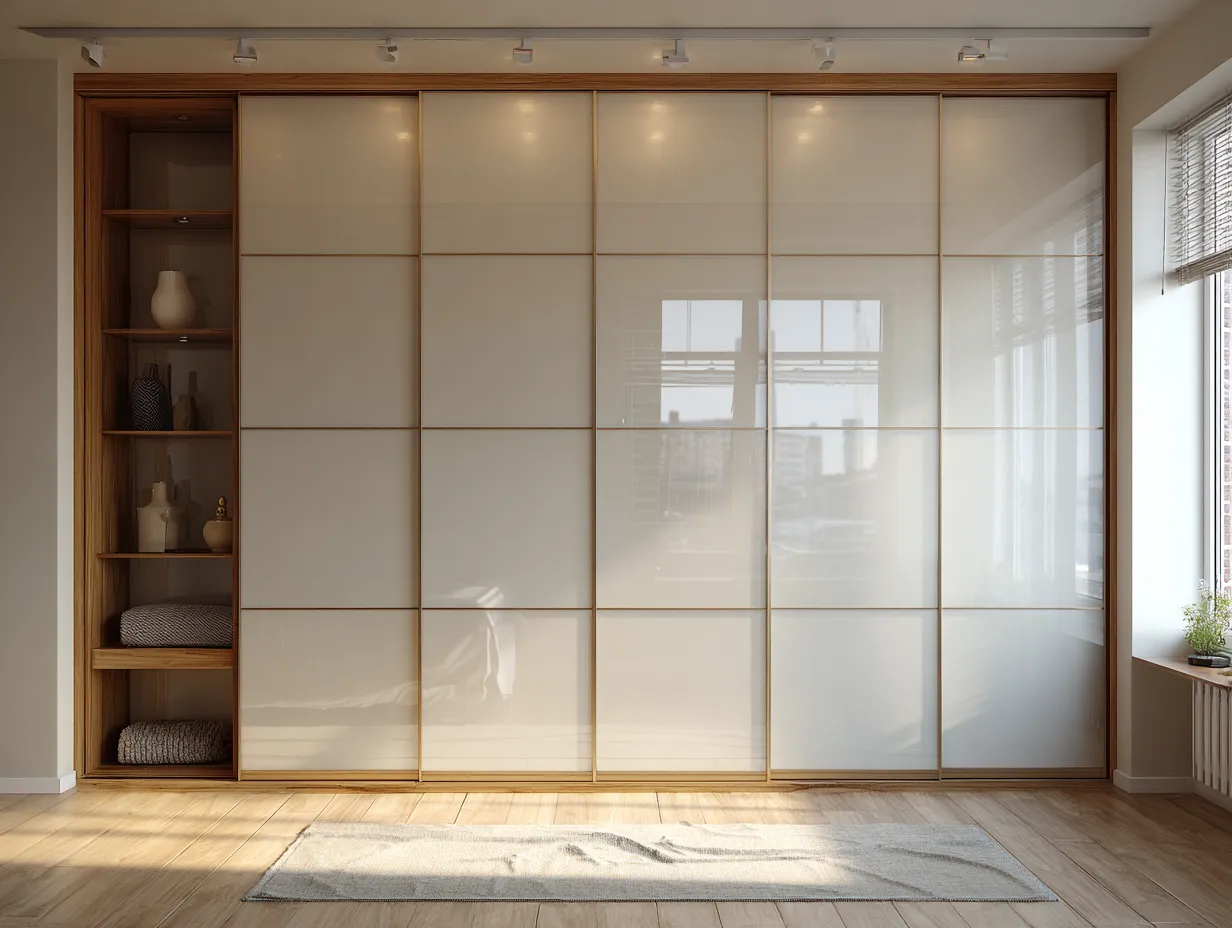
Wide panels move across each other, so finishes that reflect light help reduce the visual weight. Gloss, acrylic, or glass-look surfaces usually sit comfortably on large spans because reflections break the surface into shifting highlights as the panels move.
Hinged Shutters
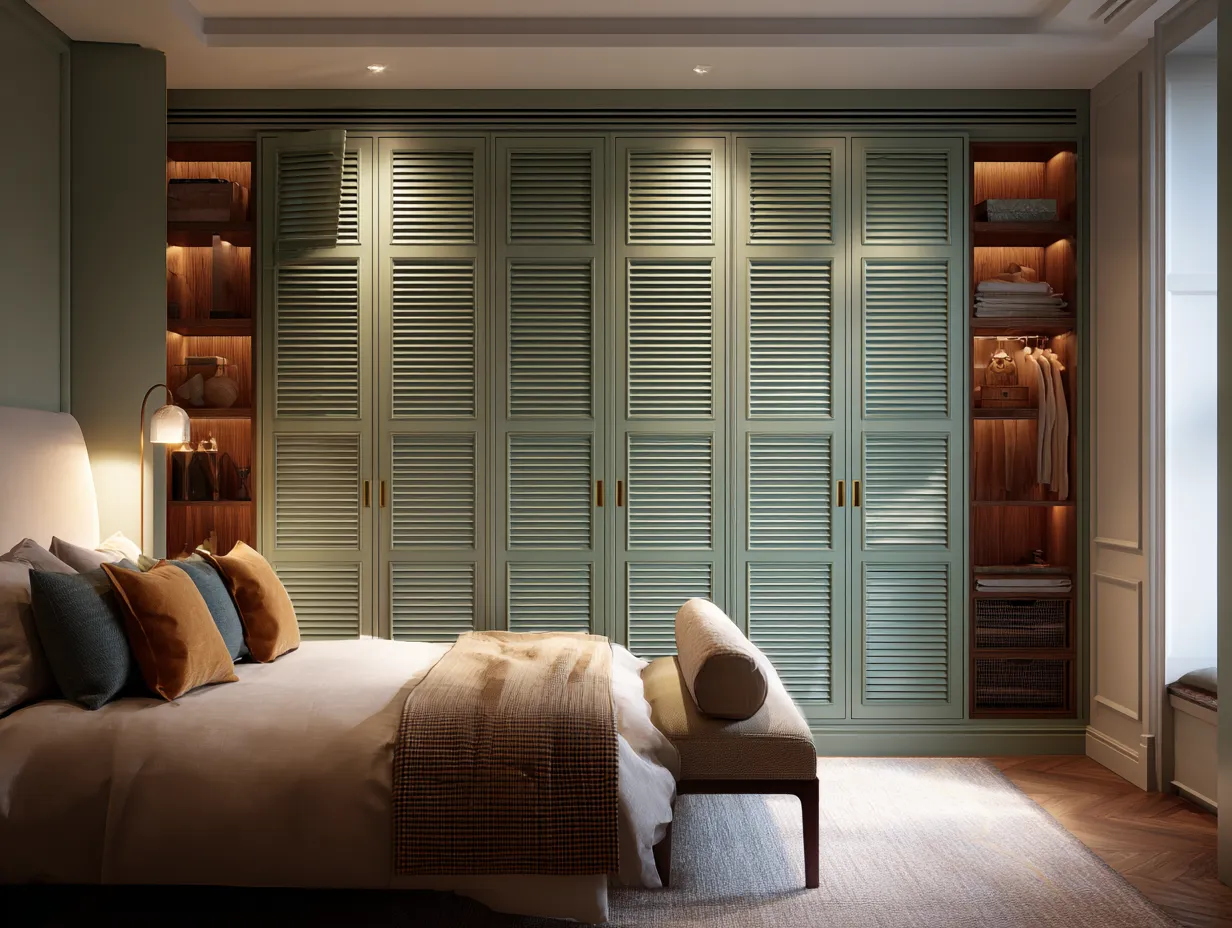
These create visible divisions between panels. Matte, wood-look, or textured laminates work well here because they emphasise the panel structure rather than hiding it. The finish follows the rhythm of the door layout instead of flattening it.
Full-Height Wardrobes
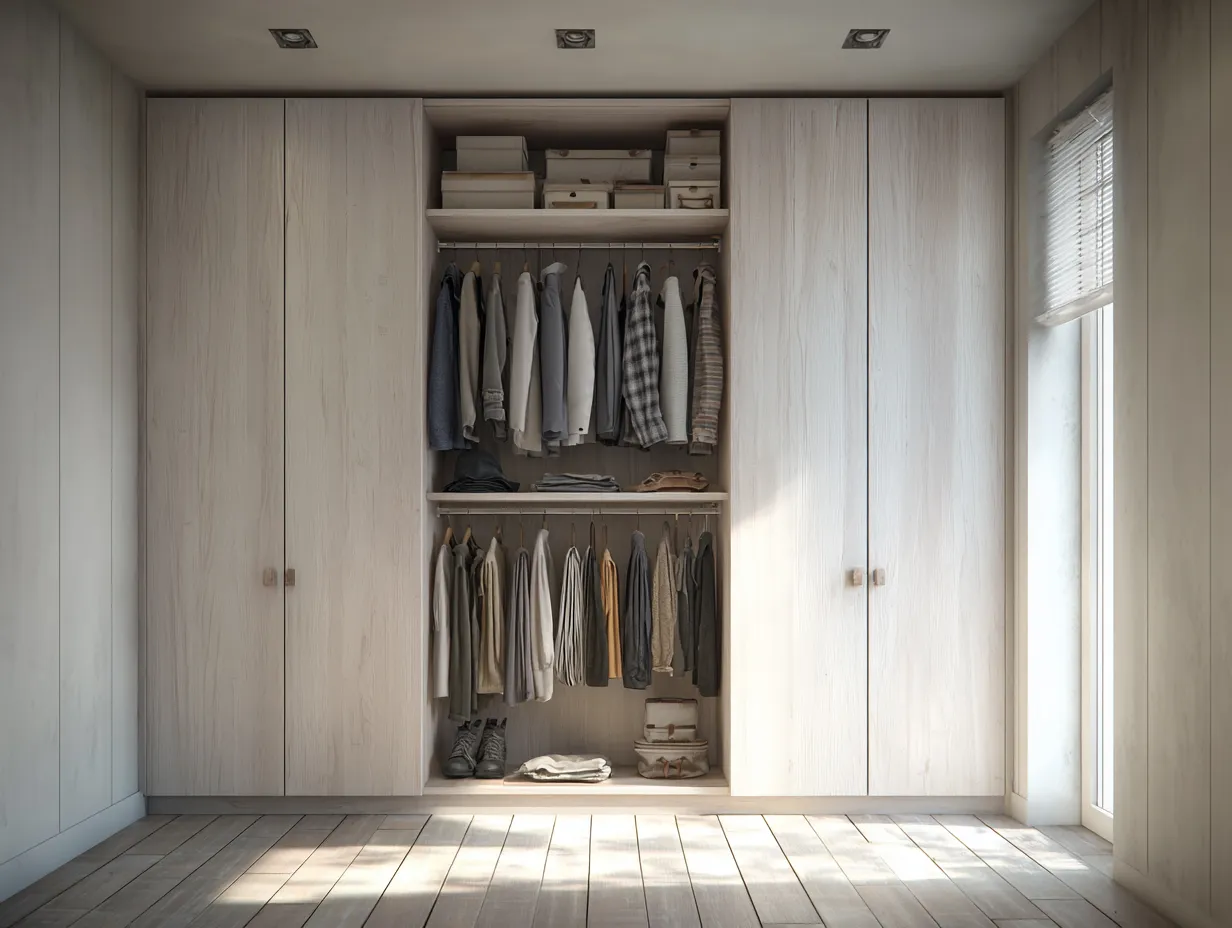
Tall units draw attention upward. Consistent finishes with minimal pattern tend to look cleaner across height. Strong grains or bold prints can stretch visually and start to feel overwhelming when repeated from floor to ceiling.
Corner Wardrobes
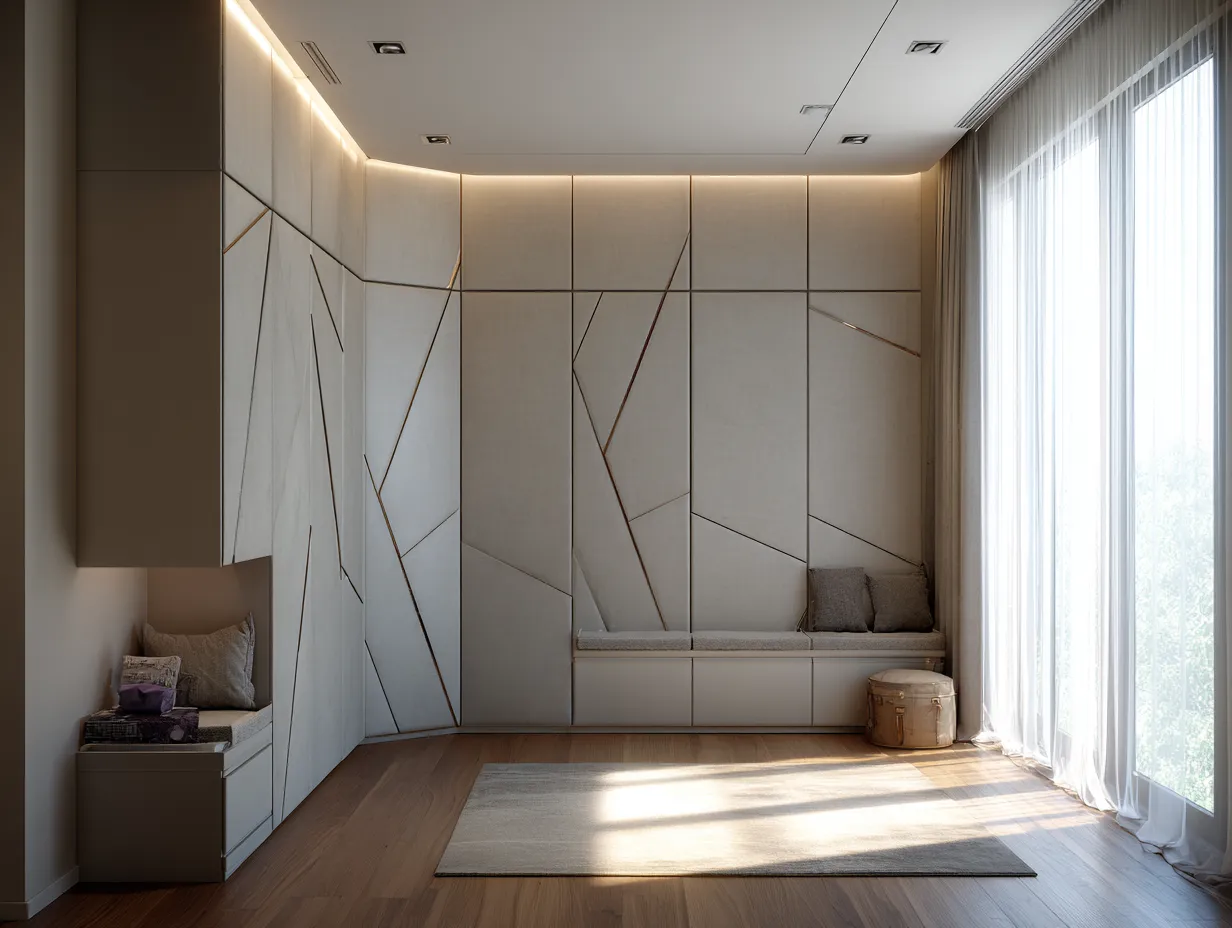
Angles change how light hits the surface. Finishes with heavy reflection sometimes look uneven where panels meet. Subtle textures or soft sheens usually handle corners more gracefully because they don't depend on direct reflection.
Open Wardrobes Or Partially Open Units
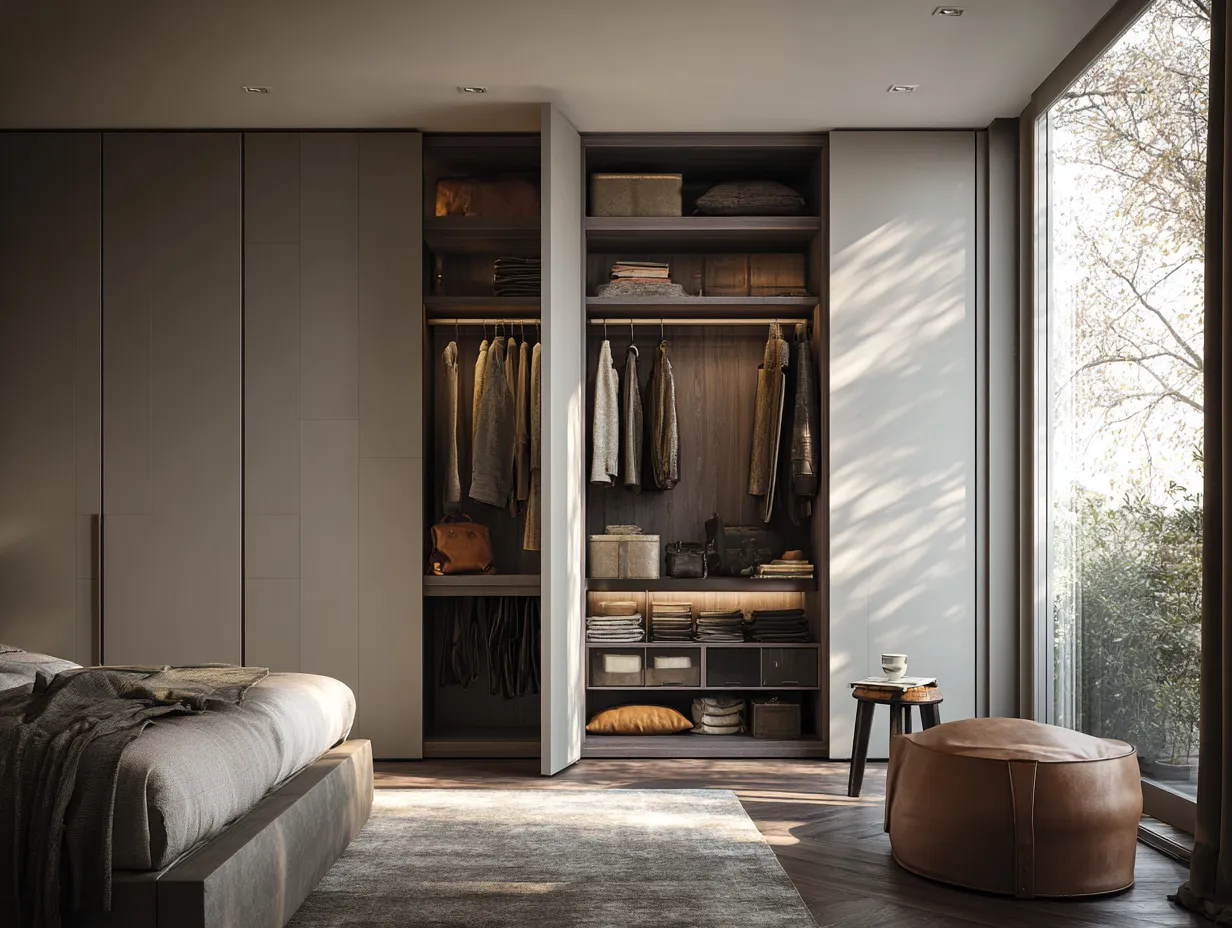
When interiors stay visible, exterior and interior finishes need to cooperate. Wood tones or soft neutrals often work better than high-contrast colours because the inside becomes part of the visual composition rather than a hidden section.
Statement Wardrobes
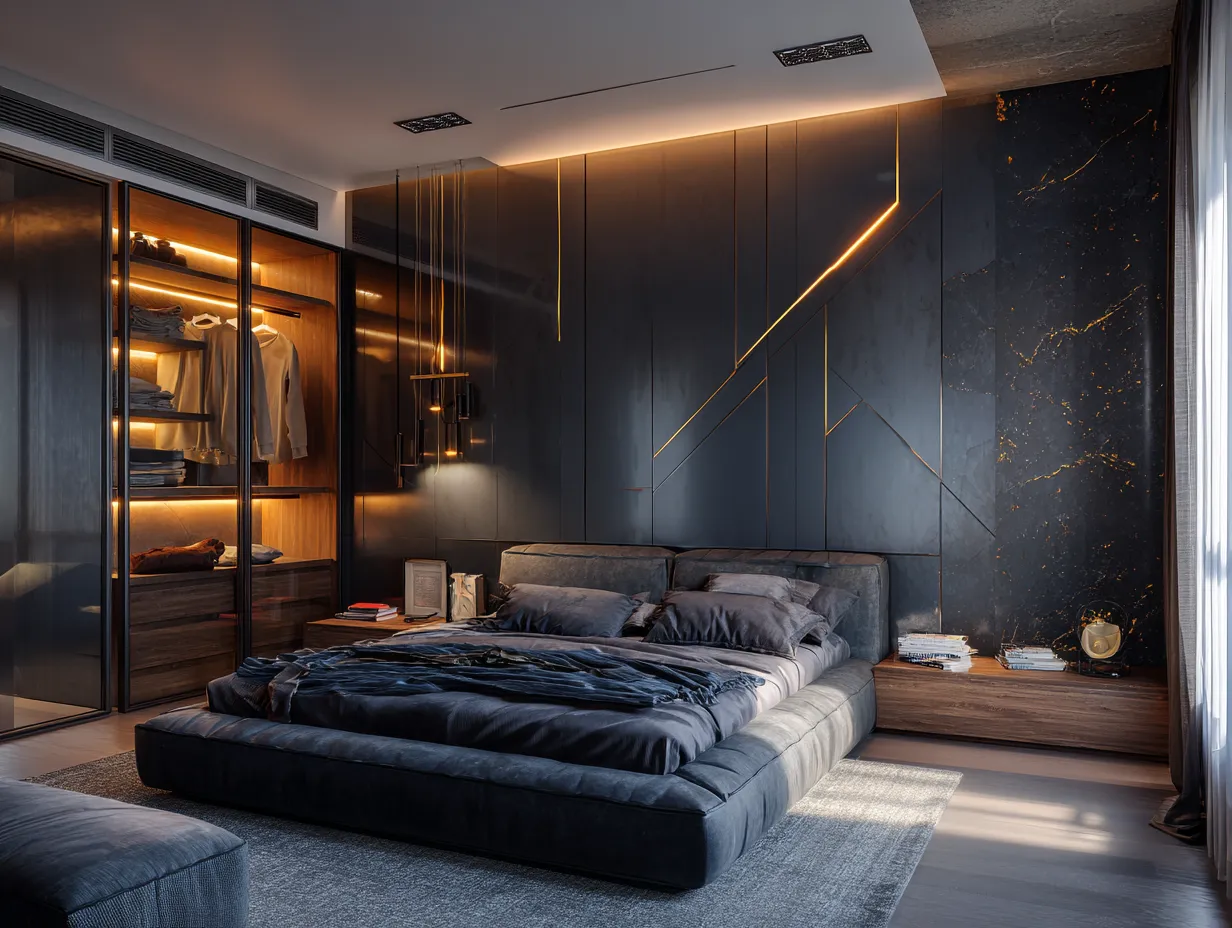
If the wardrobe is meant to stand out, contrast becomes useful. Deep shades, glass-look finishes, or strong patterns can anchor a wall visually. In these cases, the wardrobe acts less like background storage and more like a feature surface.
Read Also: Wardrobe Shutter Design: Types, Materials and Technical Details
Mistakes People Notice Only After The Wardrobe Is Installed
- Most finish regrets don't happen at the store: They show up later, once the wardrobe is part of daily life and real lighting, real walls, and real routines start interacting with the surface.
- Choosing from a small sample: A finish can look balanced on a tiny swatch but feel overwhelming when repeated across full-height shutters. Patterns, grains, and marble effects change character once scaled up.
- Ignoring undertones: Some laminates appear neutral until they sit beside flooring or wall paint. Then, hidden warm or cool tones suddenly stand out and clash.
- Picking gloss for the wrong wall: Reflective finishes placed opposite windows or lights can create glare instead of brightness. Placement matters as much as finish type.
- Not thinking about cleaning habits: Gloss shows fingerprints quickly. Dark matte shows dust in sunlight. Textures hide marks but collect grime in grooves.
- Forgetting what the surface will reflect: A shiny wardrobe opposite open shelves or a busy wall ends up reflecting visual clutter all day.
- Using bold finishes on large spans: Strong patterns or dark shades across wide shutters can make a room feel heavier than expected.
Choosing A Finish That Stays Right Over Time
A wardrobe finish isn't just a surface choice. It shapes how the storage looks, feels, and ages inside a room you use every day. The right one doesn't demand attention, yet still holds its presence. It works with the light you actually have, the colours already in the space, and the way you live around it. A laminate finish wardrobe remains a dependable option because it balances durability, variety, and ease without asking for constant upkeep. When the finish suits the room rather than just the sample, the wardrobe settles in naturally and keeps looking right long after installation.
*Images used are for representational purposes only. Unless explicitly mentioned, the Interior Company does not hold any copyright to the images.*
Wardrobe Design Ideas for You
- Type
- Color
- Finish
- Theme
- Size
- Gender
- Floor Material
- Orange Color Wardrobe Design
- Gold Color Wardrobe Design
- Green Color Wardrobe Design
- Grey Color Wardrobe Design
- Light Brown Color Wardrobe Design
- Multi-Coloured Color Wardrobe Design
- Natural Brown Color Wardrobe Design
- Beige Color Wardrobe Design
- Pink Color Wardrobe Design
- Purple Color Wardrobe Design
- Red Color Wardrobe Design
- Silver Color Wardrobe Design
- White Color Wardrobe Design
- Yellow Color Wardrobe Design
- Black Color Wardrobe Design
- Blue Color Wardrobe Design
- Brown Color Wardrobe Design
- Dark Brown Color Wardrobe Design
- Cashmere Color Wardrobe Design
- Cream Color Wardrobe Design
- Bamboo Floor Material Wardrobe Design
- Medium Hardwood Floor Material Wardrobe Design
- Dark Hardwood Floor Material Wardrobe Design
- Vinyl Floor Material Wardrobe Design
- Laminate Floor Material Wardrobe Design
- Slate Floor Material Wardrobe Design
- Carpet Floor Material Wardrobe Design
- Light Hardwood Floor Material Wardrobe Design
- Ceramic Tile Floor Material Wardrobe Design
- Porcelain Tile Floor Material Wardrobe Design
- Plywood Floor Material Wardrobe Design
- Painted Wood Floor Material Wardrobe Design
- Concrete Floor Material Wardrobe Design
- Marble Floor Material Wardrobe Design

Ready for a home transformation?
Let our designers assist you!
Recent Posts







Among different wardrobe finishes, laminates are usually the easiest. No polishing. No special care. If you don’t want to keep checking for marks, textured ones are even safer.
A veneer finish wardrobe design is mostly about the look. The grain and warmth are real, which is why people like it. Just know it needs more care since real wood reacts to moisture and scratches.
No. A matte black wardrobe can actually make light walls pop. It only feels heavy if the room is already dark or tight.
Not better. Just different. Gloss reflects light. Matte hides marks. People usually pick based on whether they prefer shine or easy maintenance.
It’s not really about finishing. Build quality matters more. A well-installed laminate or acrylic wardrobe can last for years. A badly installed premium one won’t.
Yes. Mixing works well. A reflective panel beside a soft finish, or a wood tone with a solid colour, usually looks better than one flat surface.
Related Category
- Balcony
- Bedroom
- Kids Room
- Kitchen
- Living Room