- Design Ideas
- Cities
- Trends
- Guides
- Price Calculators
- Interior DesignersNEW
- Our Portfolio
- More


- Home
- Trends
- Modular Solution
- Modular Wardrobe
- Wardrobe Shutter Design
Wardrobe Shutter Design: Types, Materials and Technical Details

Wardrobe shutter design usually enters the conversation late, often after the wardrobe layout is already finalised. By then, the choice is reduced to what looks acceptable on the surface. In practice, the shutter determines how the wardrobe opens, how much access is available at a time, and how the storage functions in relation to the bedroom on a daily basis.
Table of Content
This blog looks closely at wardrobe shutter design from that functional point of view. It covers the different types of shutters, how sliding and openable systems work, the materials commonly used, and how shutter choices vary by room size and layout.
What are Wardrobe Shutters?
Wardrobe shutters are the panels attached to the front of a wardrobe that allow it to be opened or closed. Beyond this basic function, shutters evolve from simple surfaces to elements of daily interaction. The same internal wardrobe can feel effortlessly accessible or constantly obstructive depending on how its shutters move once installed.
Some shutters require clear space in front of the wardrobe every time they are opened, while others slide across the face, limiting access to one section at a time. These differences might seem unimportant during selection, but significantly influence how the wardrobe fits into the room over weeks and months of use.
Types of Wardrobe Shutters
Once the role of wardrobe shutters is understood, the next difference lies in how they open and operate within a space. This is where wardrobe shutter design starts to differ significantly. Sliding, openable, and profile shutters are not just visual choices; each type functions differently once fitted, especially in bedrooms where space, clearance, and accessibility are crucial every day.
Sliding Wardrobe Shutter Design
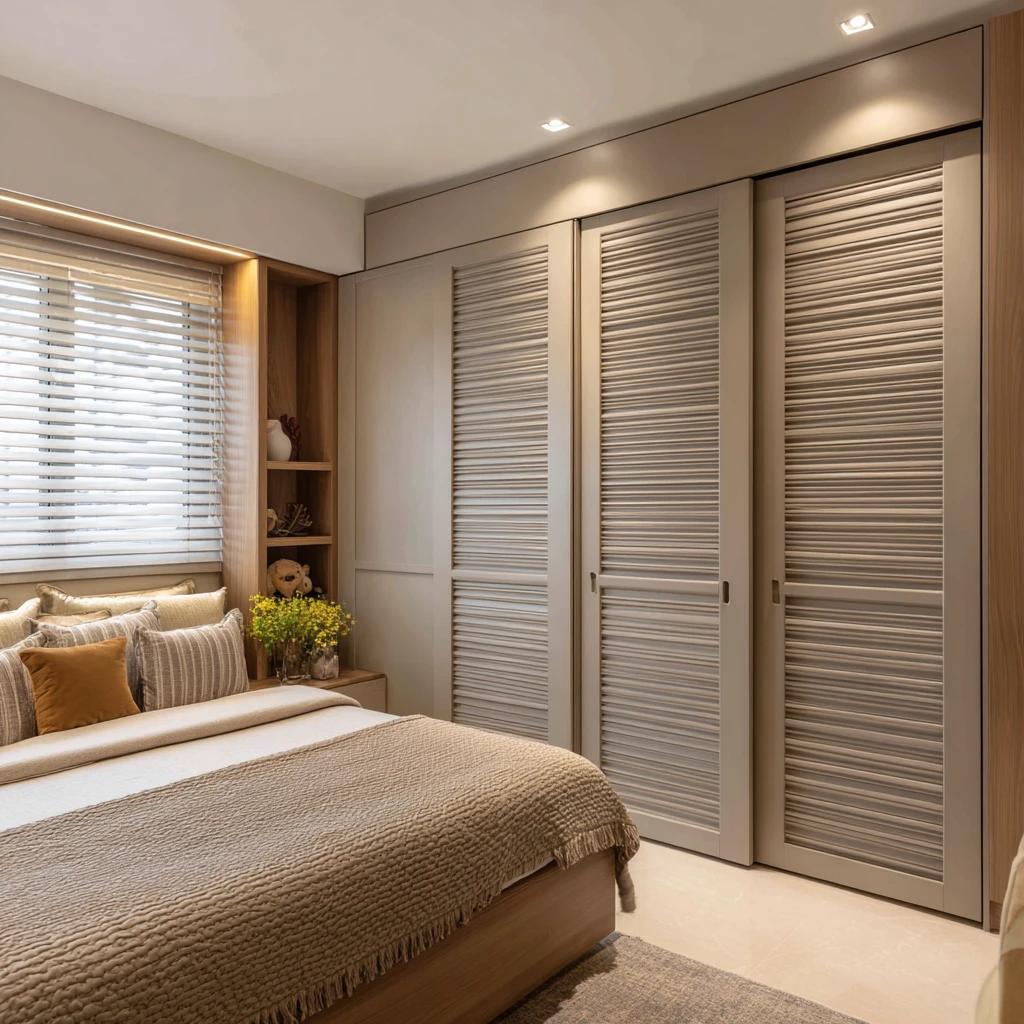
Sliding wardrobe design uses shutters that move sideways instead of the ones that open outward. This design suits tight bedroom spaces because the panels stay within the wardrobe frame, and no clearance is needed in front. This design is commonly used when the wardrobe is placed close to the bed. The trade-off is access, as only part of the wardrobe can be opened at a tim,e depending on the panel overlap.
Openable / Hinged Wardrobe Shutter Design
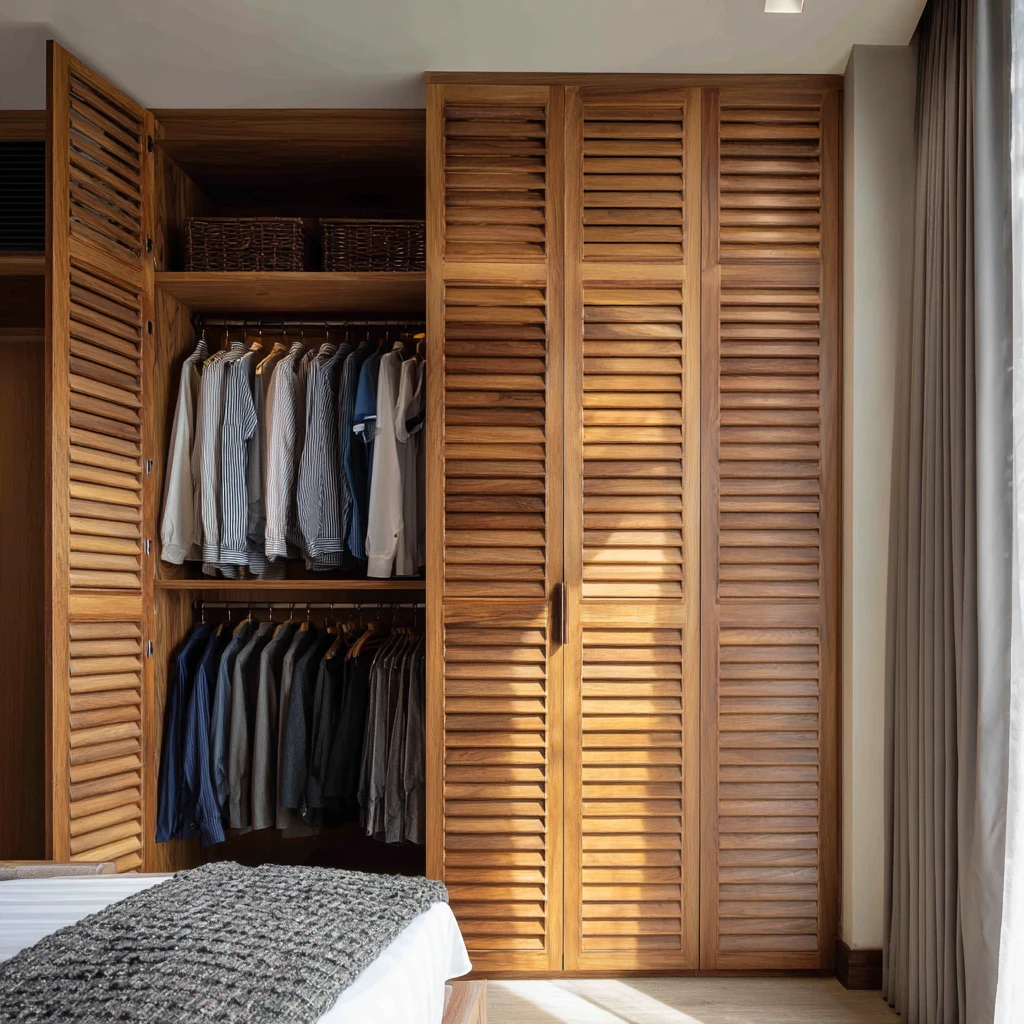
Openable wardrobe shutter design uses outward-opening shutters. Once a shutter is open, the section behind it is fully exposed. This setup depends heavily on what is positioned in front of the wardrobe. If there is enough space, it is easy to move. When the bed or a side table is pushed too close, the shutters start getting in the way. That's when the layout matters more than the wardrobe’s look.
Profile Shutter Wardrobe Design
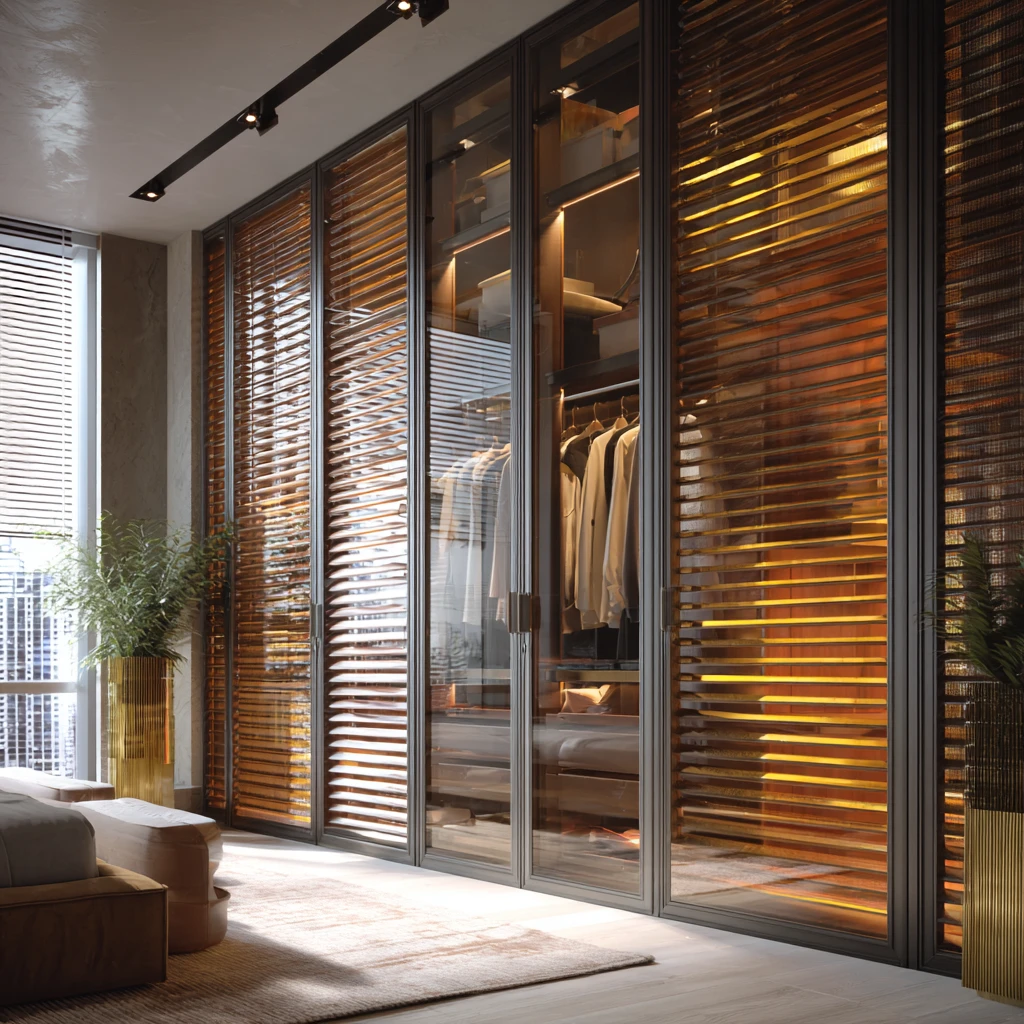
In a profile shutter wardrobe design, the frame is visible. Slim aluminium sections run along the edges of each shutter, with glass, laminate, or similar finishes set inside them. Because the shutter is not a single continuous surface, the wardrobe does not appear to be a solid block.
Sliding Wardrobe Shutter Configurations
Once a sliding wardrobe shutter design is chosen, the next decision is how many shutters the wardrobe should have. This is not a styling choice alone. The number of shutters directly affects access, visibility, and how comfortably the wardrobe works in daily use, especially in wider wardrobes.
2-Shutter Sliding Wardrobe Design
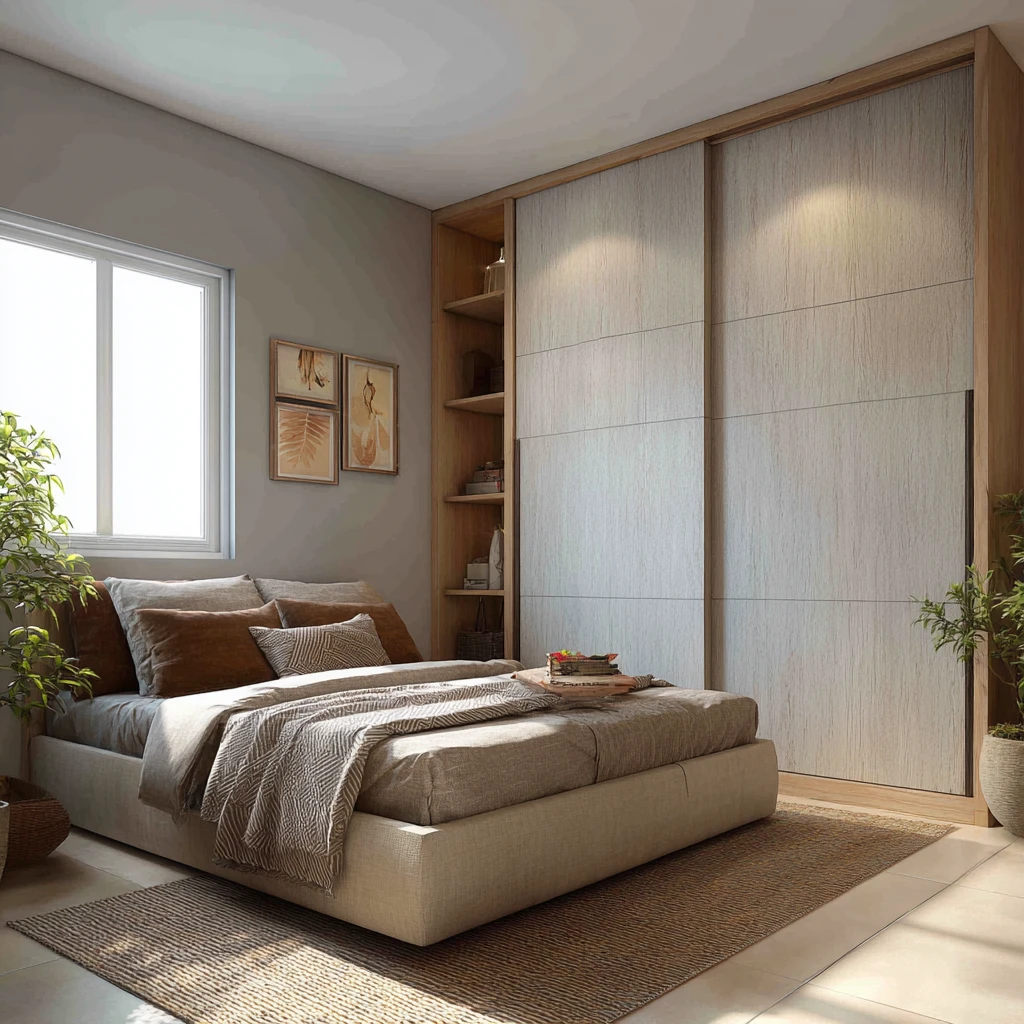
A 2-shutter sliding wardrobe works best for compact or medium-width wardrobes. With fewer panels, the shutter movement is simple, but only half the wardrobe can be accessed at a time.
3-Shutter Sliding Wardrobe Design
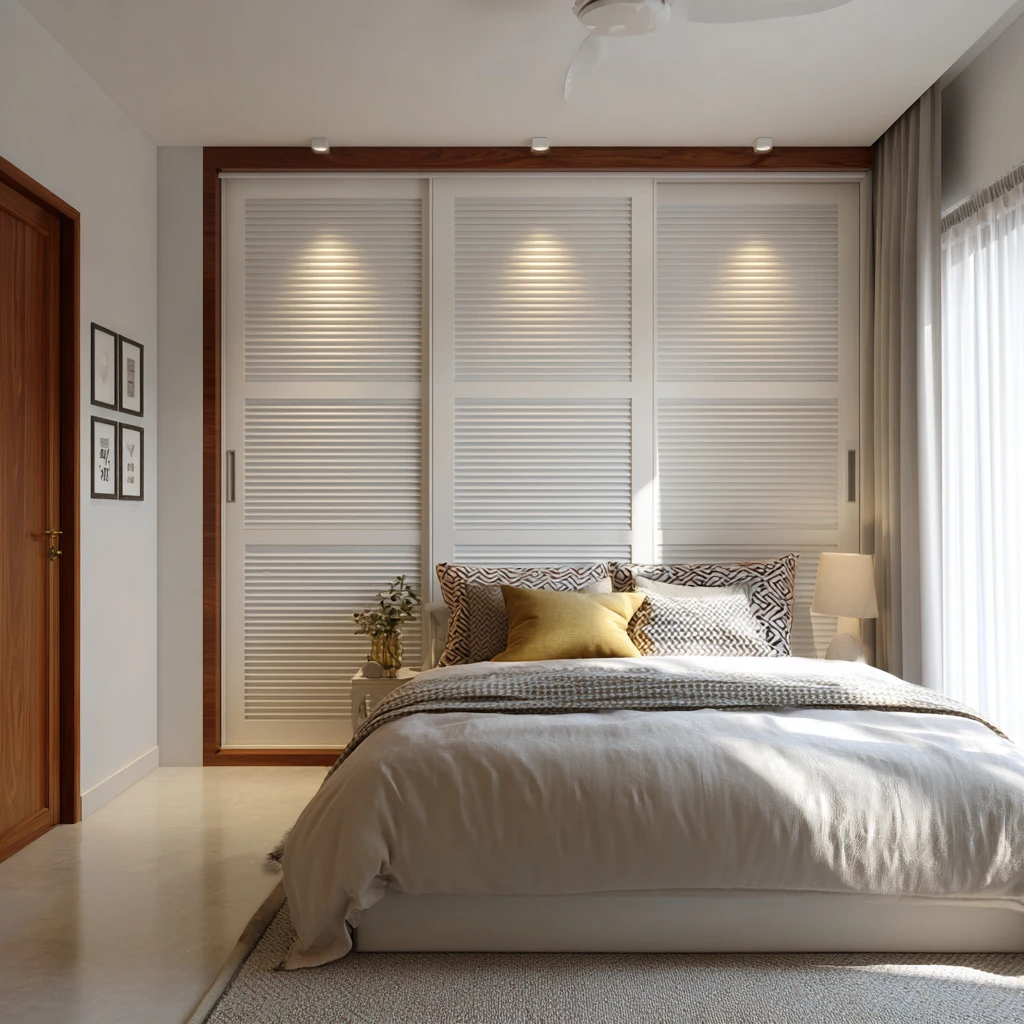
A 3-shutter sliding wardrobe improves access in wider units. Panel overlap is distributed more evenly, making it easier to reach different sections without fully sliding multiple panels. This setup is often preferred when the wardrobe spans a longer wall.
4 Shutter Wardrobe Design
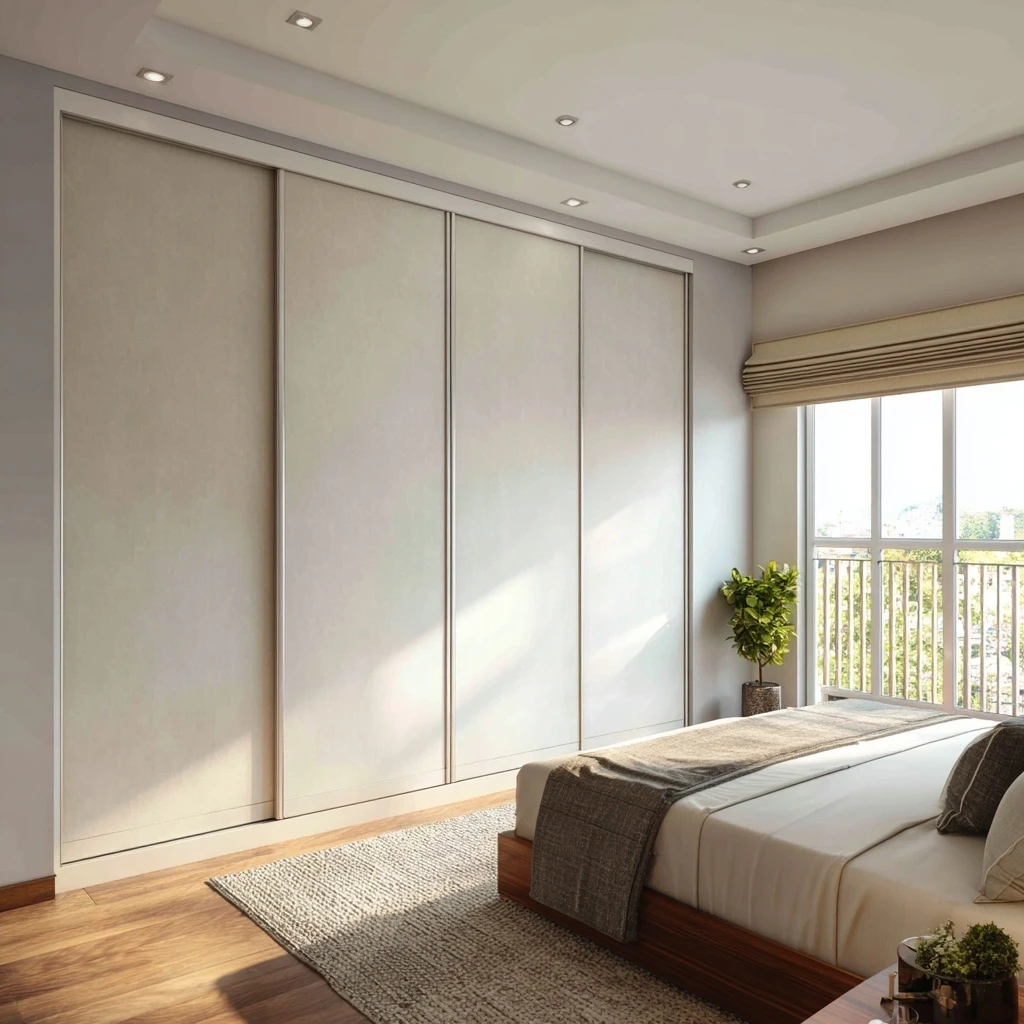
A 4-shutter wardrobe is usually used when the wardrobe runs wall-to-wall or covers a large elevation. Instead of oversized panels, the shutters are divided to keep movement smooth and balanced. This configuration suits larger bedrooms where the wardrobe is a dominant feature and needs visual rhythm rather than a single large surface.
Key consideration: Bedroom width must allow comfortable side-to-side movement without forcing excessive panel overlap.
Sliding Folding Wardrobe Shutter Design
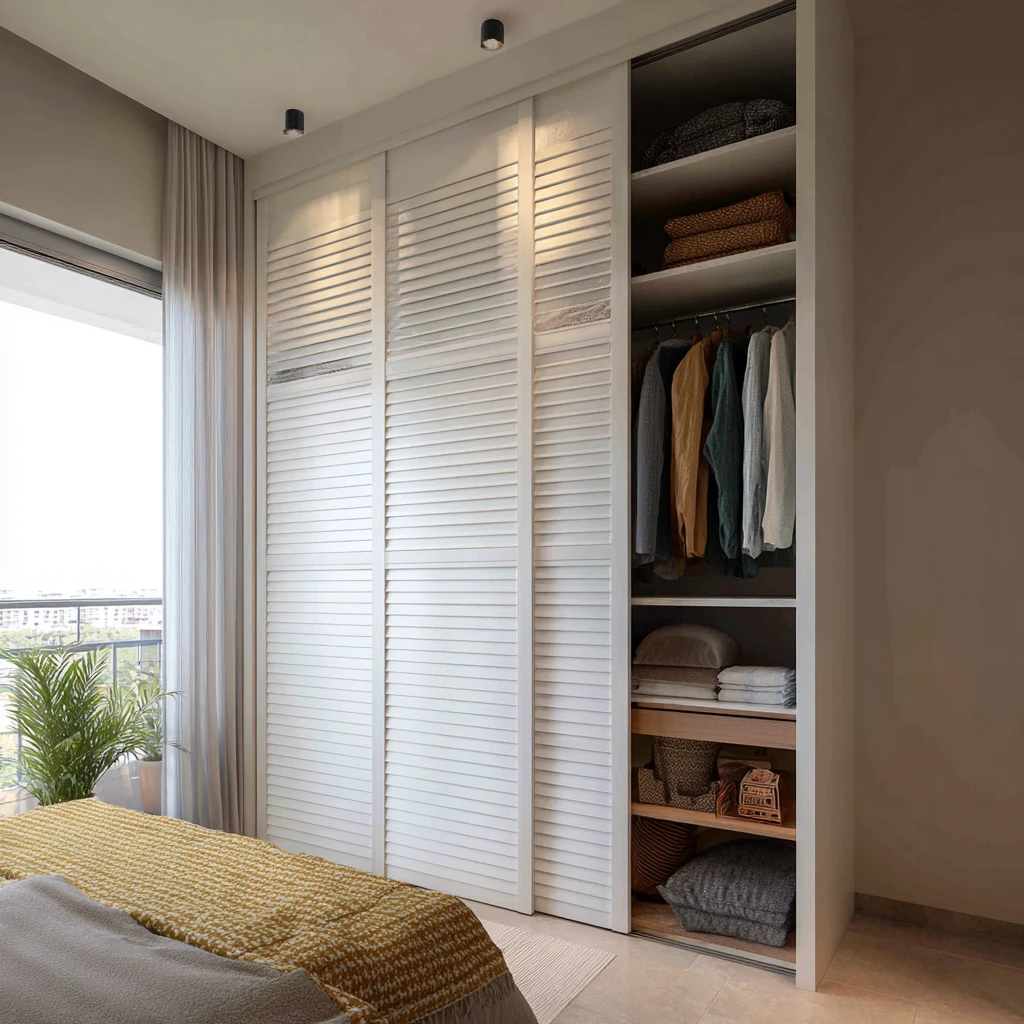
Sliding folding wardrobe shutters combine sliding tracks with hinged panels. Unlike standard sliding shutters, these panels fold partially, allowing wider access in a smaller opening.
Bi-fold Wardrobe Shutter Design
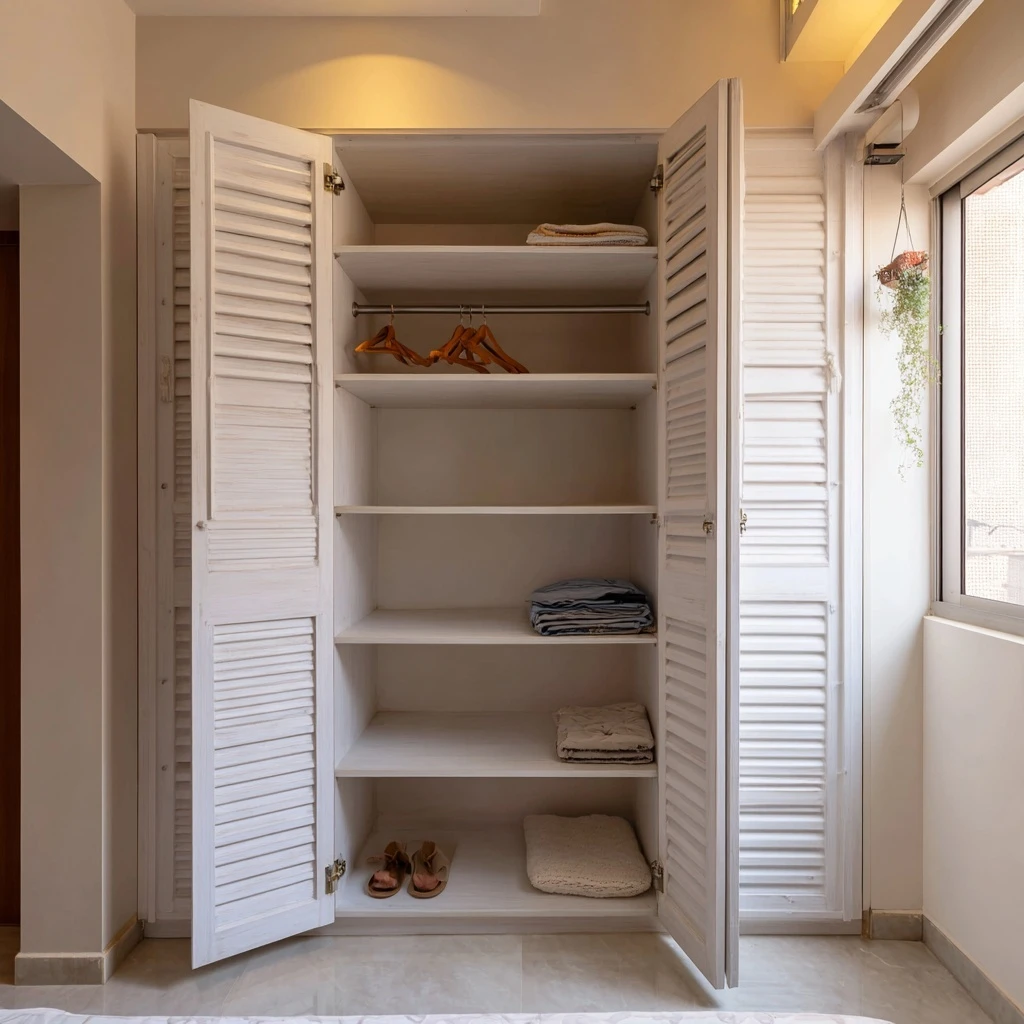
Bifold doors shutters are typically used when full wardrobe access is needed, but front clearance is limited. However, they involve more hardware and require precise installation.
Limitation: More moving parts mean higher maintenance compared to standard sliding shutter wardrobe doors.
Mirror & Speciality Wardrobe Shutter Designs
Mirror and speciality shutters are usually chosen when the wardrobe shutter design needs to serve more than one purpose. These shutters affect not just access, but how the master bedroom functions and appears once the wardrobe is in daily use.
Mirror Shutter Wardrobe
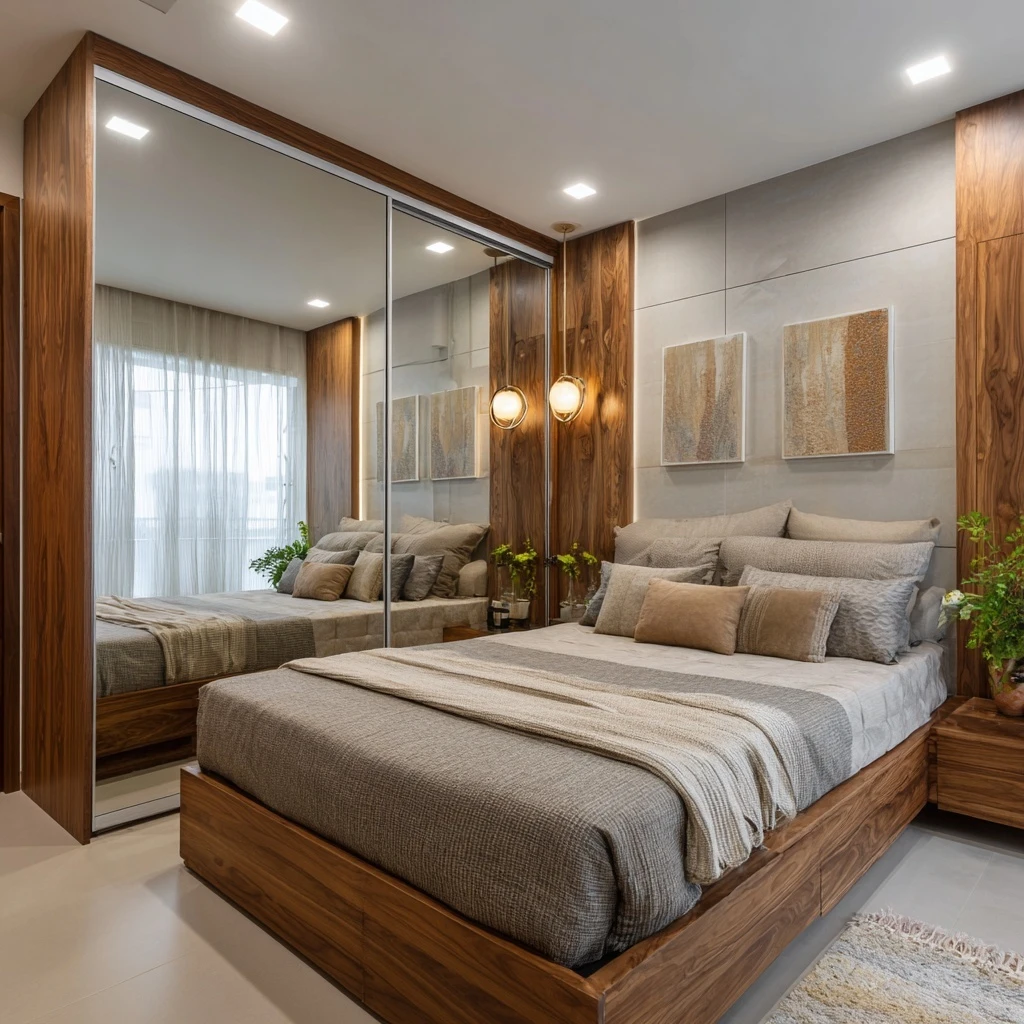
A mirror shutter wardrobe combines storage access with dressing and grooming needs. By placing the mirror on the shutter itself, separate wall mirrors are avoided, which helps in bedrooms where space is limited. Mirror shutters are commonly used to visually expand smaller rooms, but they are not suitable everywhere. In bedrooms with cluttered layouts or uneven lighting, mirror shutters can exaggerate visual noise instead of reducing it.
Best used when:
- The bedroom is compact.
- Natural light is adequate.
- The wardrobe faces an open area, not the bed directly.
Roller / Rolling Shutter for Wardrobe
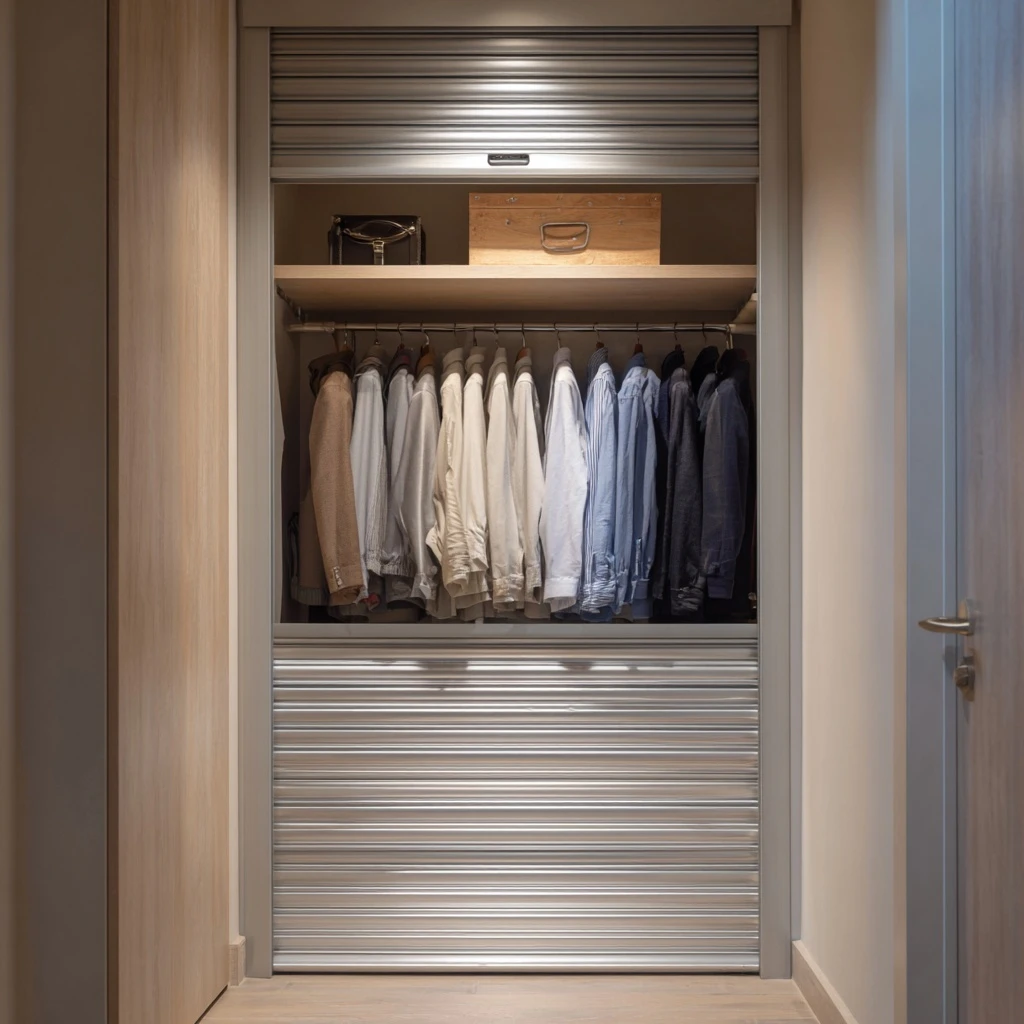
A rolling shutter for a wardrobe works differently from sliding or hinged systems. The shutter rolls upward into a concealed housing, similar to utility storage shutters. These are rarely used for full bedroom wardrobes. Instead, roller shutter wardrobe doors are more common in closets, loft storage, or utility zones where access needs to be quick and space in front is extremely restricted.
Limitations:
- Limited material choices.
- Less suited for the primary bedroom wardrobes.
- More functional than decorative.
Wardrobe Shutter Materials
The material is a practical consideration. This is where usage starts showing up. Some shutters stay aligned for years. Others need adjustment early. The difference usually comes down to material, not design.
Aluminium Shutter for Wardrobe
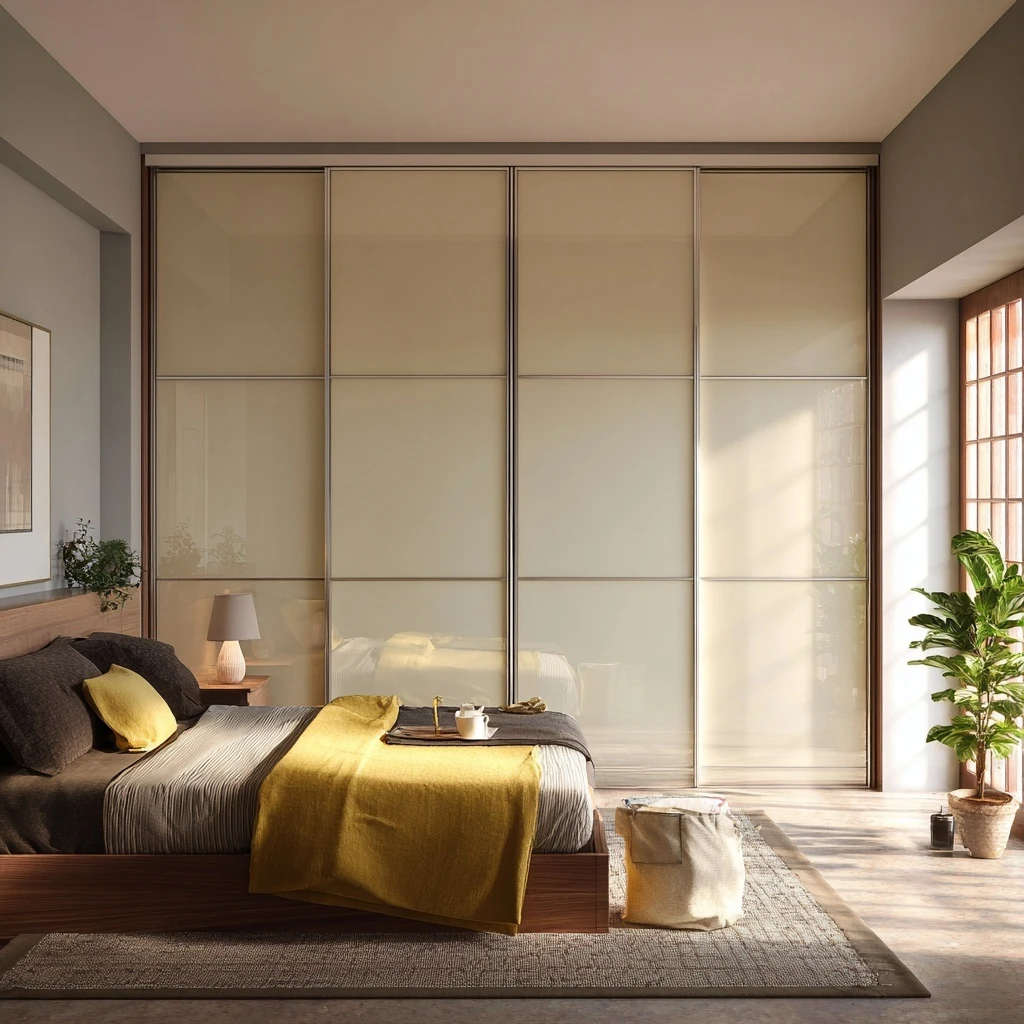
An aluminium shutter for wardrobes is usually part of a profile system. The aluminium forms the frame. The visible surface sits inside it, finished in glass, laminate, or acrylic. This setup is common in wider wardrobes and sliding wardrobe shutter designs. The frame holds shape well and keeps panels running evenly on tracks. Sagging and edge misalignment are less common compared to full solid shutters.
Acrylic Wardrobe Shutters
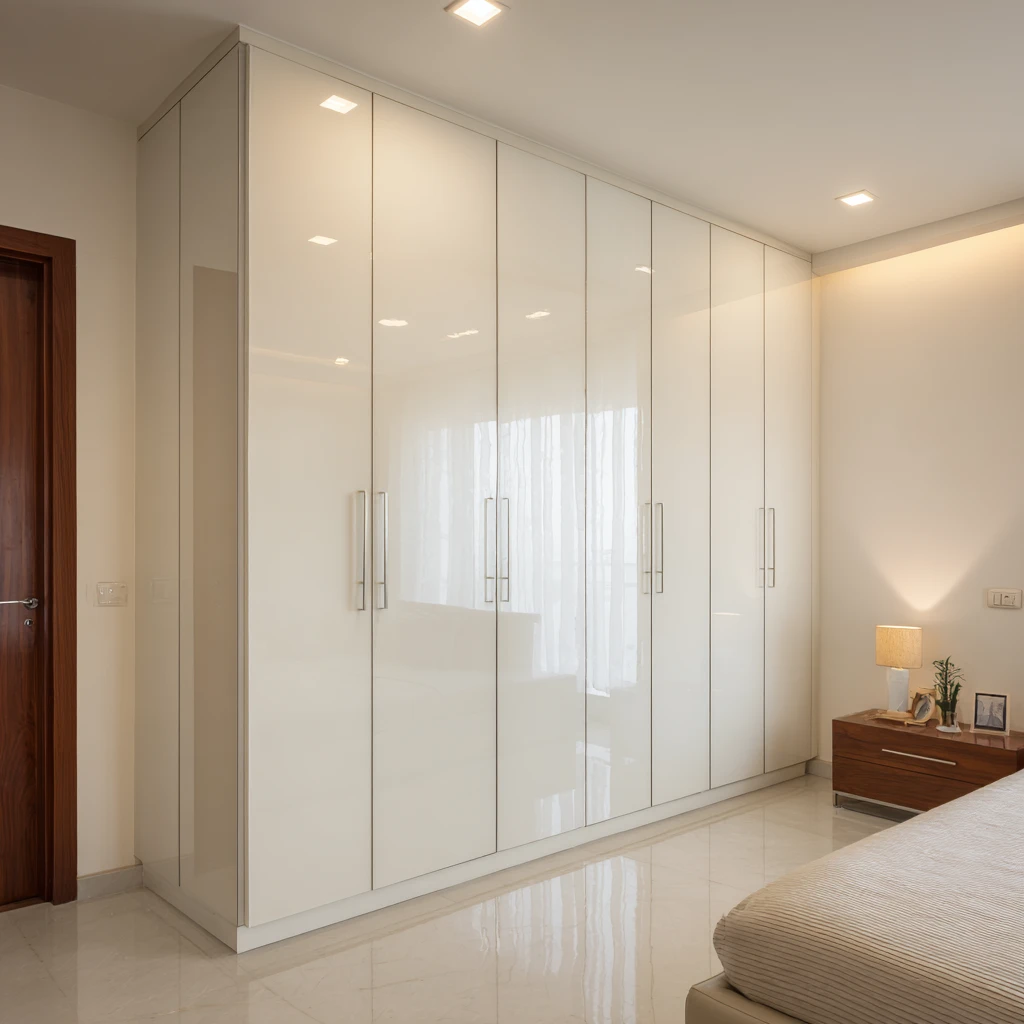
Acrylic wardrobe shutters are used when a smooth, uniform surface is required. They are often seen in bedroom design where the wardrobe front is meant to stay visually clean. Acrylic shows marks easily and, hence, requires high maintenance. Fingerprints and light scratches are visible, especially in darker shades. These shutters work better in spaces with controlled use than in shared bedrooms.
Best Material for Wardrobe Shutters
There is no single best material for wardrobe shutters. The choice depends on use, shutter size, and tolerance for upkeep.
- Aluminium with laminate or glass infill: stable, commonly used.
- Acrylic shutters: clean surface, higher maintenance.
- Laminate shutters: practical, easier to manage.
- Glass shutters: lighter appearance, careful handling required.
Modern Wardrobe Shutter Design for Bedrooms
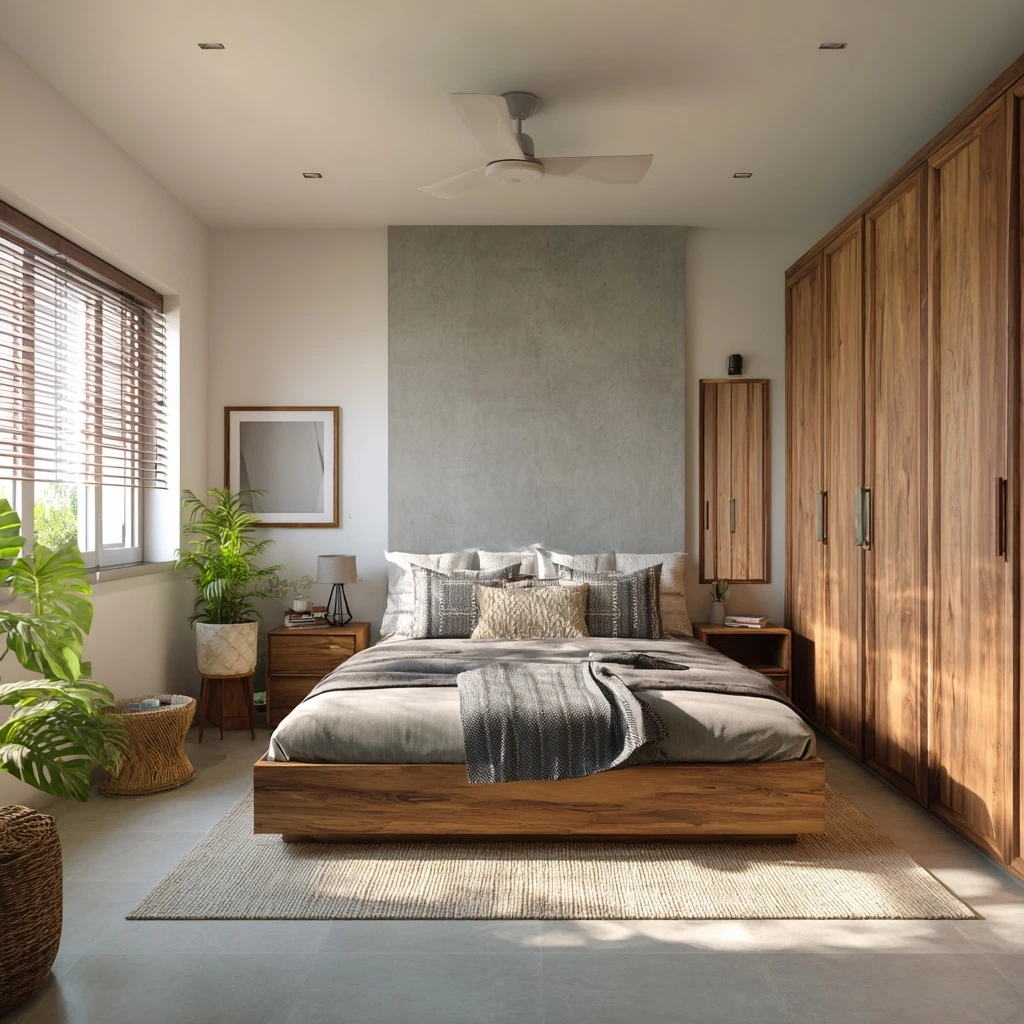
By the time bedroom planning begins, most wardrobe shutter design decisions are already narrowed down. What matters here is whether the shutters fit the room without interfering with daily movement.
In compact bedrooms, sliding shutters are usually preferred. They avoid clearance issues near beds, side tables, and narrow walkways. Openable shutters often get ruled out early when there isn't enough space in front of the wardrobe.
In larger bedrooms, both sliding and openable shutters work. Hinged shutters are often chosen when full access is needed at once, especially in shared wardrobes. Sliding shutters still appear, but panel width and alignment need careful planning to keep the elevation balanced.
Across bedroom sizes, modern wardrobe shutter design is less about variety and more about restraint. Full-height wardrobes work best when the shutter surface is visually broken through panel divisions, profiles, or muted finishes. The right choice is the one that fits into the room without forcing changes to furniture placement or circulation.
Wardrobe Sliding Shutter Details to Check Before Finalising
Before finalising any sliding wardrobe shutter design, the technical details matter more than the finish. These details decide how the shutters behave after installation, not how they look on day one.
Track Quality and Alignment
In sliding shutter wardrobe doors, the track supports the full weight of the shutters. If the track is uneven or poorly installed, movement becomes irregular, and wear shows up early. This is especially critical in long wardrobes where alignment has to remain consistent across the entire span.
Soft-Close Mechanisms
Soft-close systems reduce impact when shutters reach the edge. In larger wardrobes, this helps prevent repeated stress on the frame and keeps movement controlled. Not all sliding systems include this by default.
Profile Thickness and Rigidity
In profile-based systems, aluminium thickness affects stability. Thinner profiles may flex over time, especially in wider shutters. This is a key part of the wardrobe sliding shutter detail that is often overlooked during selection.
Noise and Friction Over Time
In sliding shutter wardrobe doors, the track supports the full weight of the shutters. If the track is uneven or poorly installed, movement becomes irregular and wear shows up early. This is especially critical in long wardrobes where alignment has to remain consistent across the entire span.
Ease of Adjustment and Maintenance
Sliding shutter wardrobes may need alignment adjustments over time. Systems that allow easy access to rollers and tracks are simpler to maintain than sealed or fixed setups.
Final Note
Wardrobe shutter design is a long-term decision that affects how the wardrobe functions every day. Once installed, shutters determine access, movement, and how comfortably the storage works within the room. Choices based only on finish or trend often reveal limitations later, while shutters selected around layout, clearance, and usage tend to remain practical over time.
When the shutter type and material are planned together with the room layout, the wardrobe fits into daily life without requiring adjustments. If you need help deciding what works best for your space, Interior Company offers layout-driven guidance to help you choose wardrobe shutters based on use, proportion, and longevity rather than surface appeal alone.
*Images used are for representational purposes only. Unless explicitly mentioned, the Interior Company does not hold any copyright to the images.*
Wardrobe Design Ideas for You
- Type
- Color
- Finish
- Theme
- Size
- Gender
- Floor Material
- Orange Color Wardrobe Design
- Gold Color Wardrobe Design
- Green Color Wardrobe Design
- Grey Color Wardrobe Design
- Light Brown Color Wardrobe Design
- Multi-Coloured Color Wardrobe Design
- Natural Brown Color Wardrobe Design
- Beige Color Wardrobe Design
- Pink Color Wardrobe Design
- Purple Color Wardrobe Design
- Red Color Wardrobe Design
- Silver Color Wardrobe Design
- White Color Wardrobe Design
- Yellow Color Wardrobe Design
- Black Color Wardrobe Design
- Blue Color Wardrobe Design
- Brown Color Wardrobe Design
- Dark Brown Color Wardrobe Design
- Cashmere Color Wardrobe Design
- Cream Color Wardrobe Design
- Bamboo Floor Material Wardrobe Design
- Medium Hardwood Floor Material Wardrobe Design
- Dark Hardwood Floor Material Wardrobe Design
- Vinyl Floor Material Wardrobe Design
- Laminate Floor Material Wardrobe Design
- Slate Floor Material Wardrobe Design
- Carpet Floor Material Wardrobe Design
- Light Hardwood Floor Material Wardrobe Design
- Ceramic Tile Floor Material Wardrobe Design
- Porcelain Tile Floor Material Wardrobe Design
- Plywood Floor Material Wardrobe Design
- Painted Wood Floor Material Wardrobe Design
- Concrete Floor Material Wardrobe Design
- Marble Floor Material Wardrobe Design

Ready for a home transformation?
Let our designers assist you!
Recent Posts







Sliding wardrobe shutters are best suited to small bedrooms because they slide sideways, preventing obstruction from other items in the room.
Sliding wardrobe shutters suit small spaces while openable wardrobe shutter design is meant for areas with ample space for the wardrobe doors to open fully.
The best material for wardrobe shutters entirely depends on your choice and usage. Aluminium shutters are stable for large or sliding wardrobes, laminates are a good choice for low maintenance, acrylic shutters give a smooth finish and glass shutters offer good visuals but require careful handling.
Mirror shutters work well in bedroom layouts where there are limited mirrors on the wall. It makes the room look clean and organised. However, it requires careful handling.
Yes, aluminium shutter is the most commonly used material for wardrobes since it gives stability in the structure and is resistant to warping.
The number of shutters on a wardrobe entirely depends on your choice and the size of your storage. There is no hard and fast rule on the number of shutters a wardrobe should have. For compact units, you can go for 2 shutter wardrobes, and if you need elevations or require more access, you can go for 4 shutter wardrobes.
Related Category
- Balcony
- Bedroom
- Kids Room
- Kitchen
- Living Room