- Design Ideas
- Cities
- Trends
- Guides
- Price Calculators
- Interior DesignersNEW
- Our Portfolio
- More


18+ Best Crockery Unit Design: Choosing The Right Style For Your Home

Every home has crockery that tells a small story. Plates from festivals, glasses saved for special evenings, and bowls brought back from trips. Some are used daily, while others only come out when guests arrive. Without a proper place, they end up being scattered all over the kitchen. A crockery unit brings everything together. It keeps them safe, easy to reach, and neatly arranged. At the same time, it adds warmth and character to the dining area or living room.
Over the years, the crockery unit designs have evolved from a basic storage cabinet into a proper furniture element that adds a look to the dining area or kitchen wall. Some are used to hide everyday plates, while others are designed to proudly display fine crockery. The right crockery unit design depends on how much space you have and how you use the items daily.
Table of Content
Why A Crockery Unit Makes Sense For Your Home?
20 Smart Crockery Unit Design Ideas For Every Space
- 2.1 Wall-Mounted Crockery Unit
- 2.2 Full-Height Crockery Unit
- 2.3 Sideboard-Style Crockery Unit
- 2.4 Crockery Unit With Open And Closed Storage
- 2.5 Glass-Front Crockery Display Unit
- 2.6 Corner Crockery Unit
- 2.7 Open Shelf Crockery Unit
- 2.8 Built-In Dining Area Crockery Unit
- 2.9 Wooden Crockery Unit For A Warm Look
- 2.10 Minimal Floating Crockery Cabinets
- 2.11 Asymmetric Crockery Unit Design
- 2.12 Traditional Indian Crockery Unit
- 2.13 Split Crockery Units
- 2.14 Crockery Unit With Integrated Lighting
- 2.15 Metal And Glass Crockery Unit
- 2.16 Vintage-Style Crockery Cabinet
- 2.17 Multi-Purpose Crockery Unit
- 2.18 Kitchen-Integrated Crockery Unit
- 2.19 Slim Vertical Crockery Unit
- 2.20 Drawer Crockery Unit
Choosing The Right Materials And Finishes
What To Consider Before Finalising A Design?
How Much Do Crockery Units Cost in India?
Finding The Right Crockery Unit For Your Home
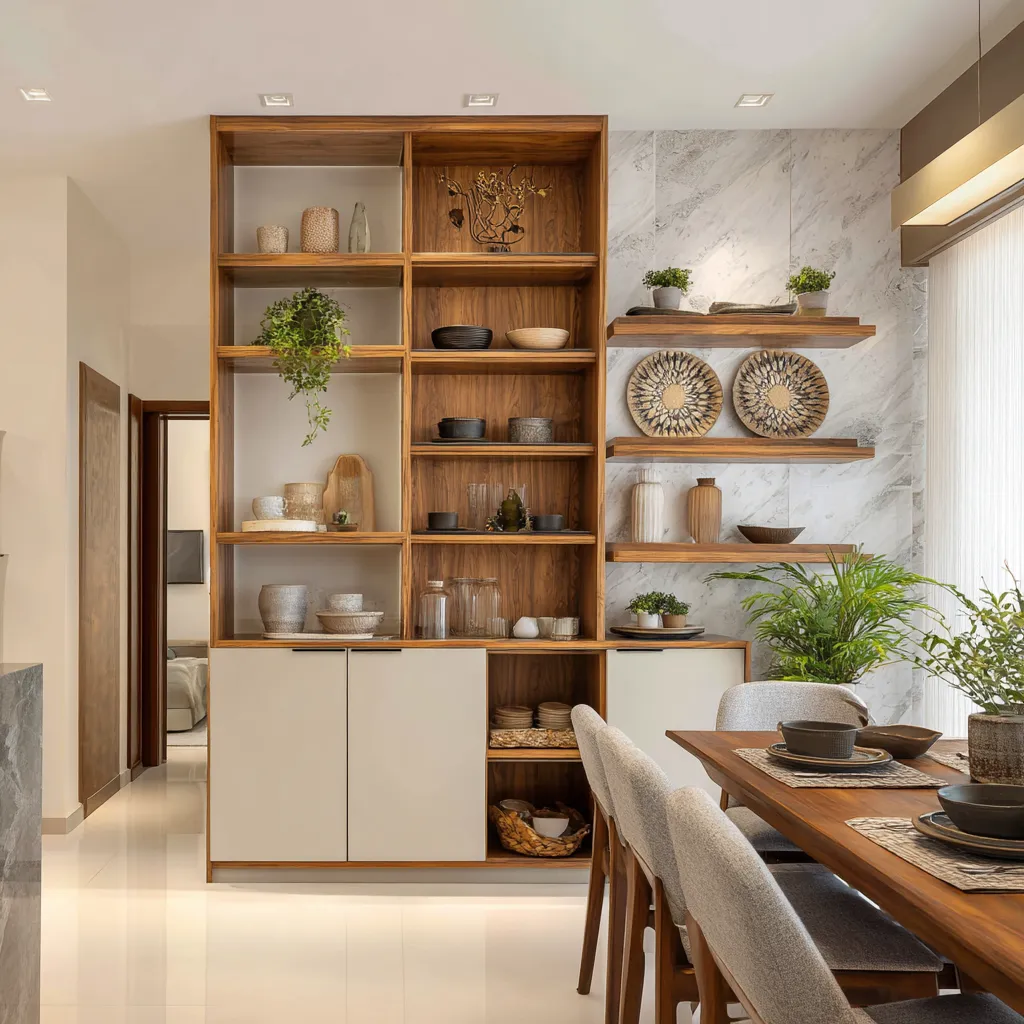
Why A Crockery Unit Makes Sense For Your Home?
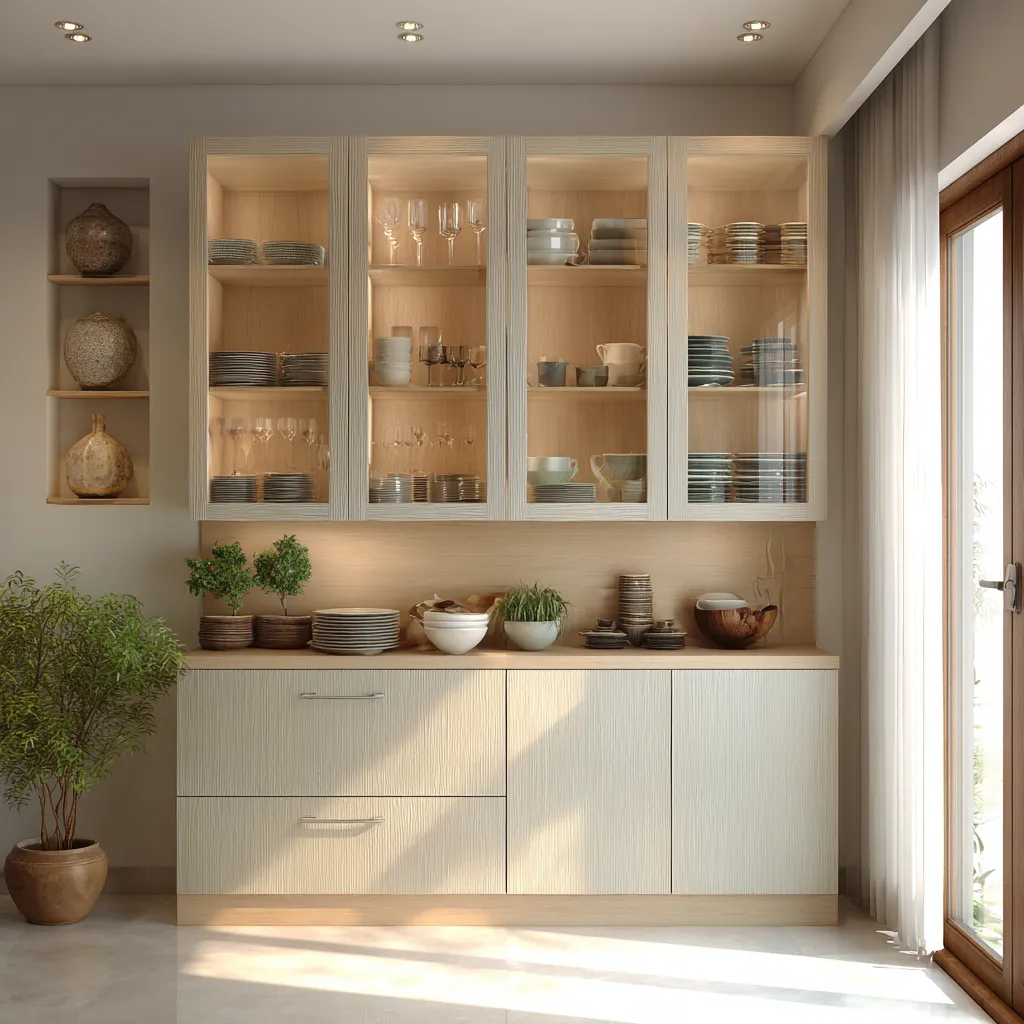
A crockery unit keeps all your plates, bowls, cups, and glasses in one organised place. Instead of spreading them across different cabinets. It keeps everything organised and easy to find. It also protects crockery from dust, moisture, and accidental knocks. Closed cabinets also reduce the risk of chips and cracks.
Crockery units also work well as display pieces. Glass doors and open shelves let you showcase your best dinner sets or glassware, making them part of the room's decor. Another major benefit is space saving. Crockery units use vertical wall space that goes unused most of the time. It adds a well-put-together look to the dining or kitchen area.
You may also like!
| Aluminium Kitchen Design | Best Aluminium Kitchen Designs For Modern Homes |
| Black and White Kitchen Design | Trendy Black and White Kitchen Designs You Will Love |
| Breakfast Counter Design | Modular Kitchen Breakfast Counter Design Ideas |
| Coffee Bar Ideas | Beautiful Home Coffee Bar Ideas And Style |
20 Smart Crockery Unit Design Ideas For Every Space
Not all crockery units are the same. Some are made for small kitchen design, while others are made to stand out in dining or living areas. The size and design can change how it looks and works in a home. Below are a few crockery unit design ideas that show different ways to store and display crockery.
Wall-Mounted Crockery Unit
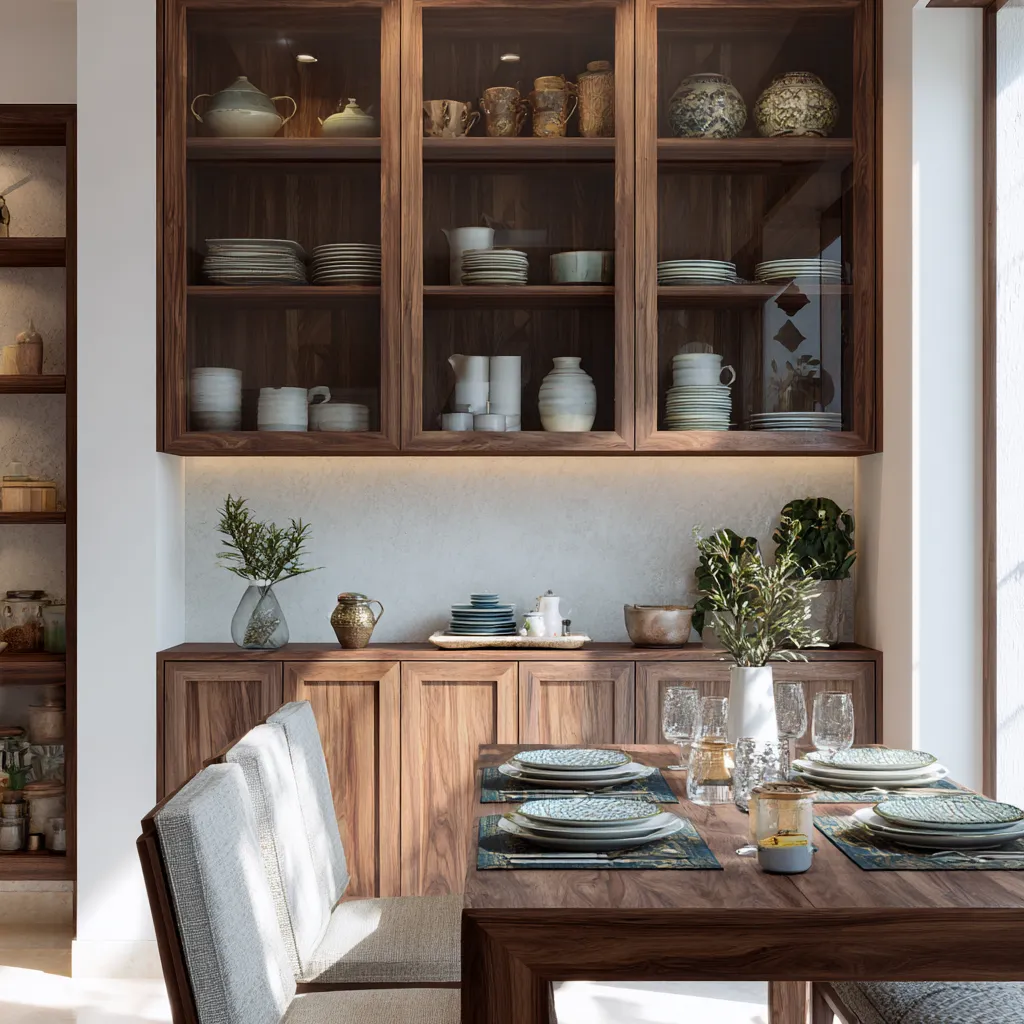
In this design, the cabinet is fixed to the wall and does not touch the floor. It works well in compact homes where floor space is limited. The unit usually has shutters on the lower half and glass doors or open kitchen shelves on top. It stores heavy items safely while lighter crockery is displayed above. This design also makes the room feel lighter and less crowded.
Full-Height Crockery Unit
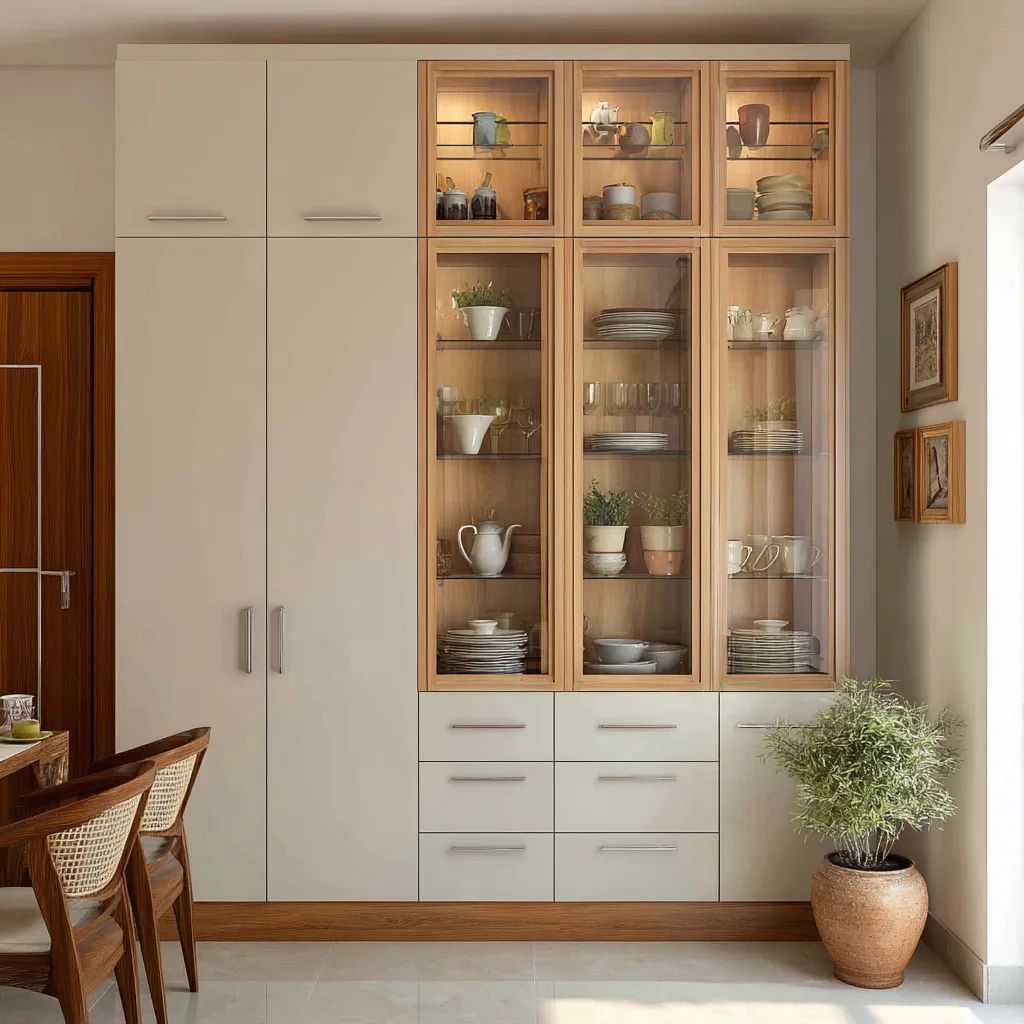
A full-height crockery unit runs from floor to ceiling. It offers maximum storage and works best in dining room design with empty wall space. The lower section can store heavy utensils and serving dishes. The middle section can have glass shutters for display. The top section is the best for items used occasionally. This design keeps everything in one place and looks clean.
Read also – Gloss vs Matte Kitchen Cabinets: What Actually Works in a Real Kitchen?
Sideboard-Style Crockery Unit
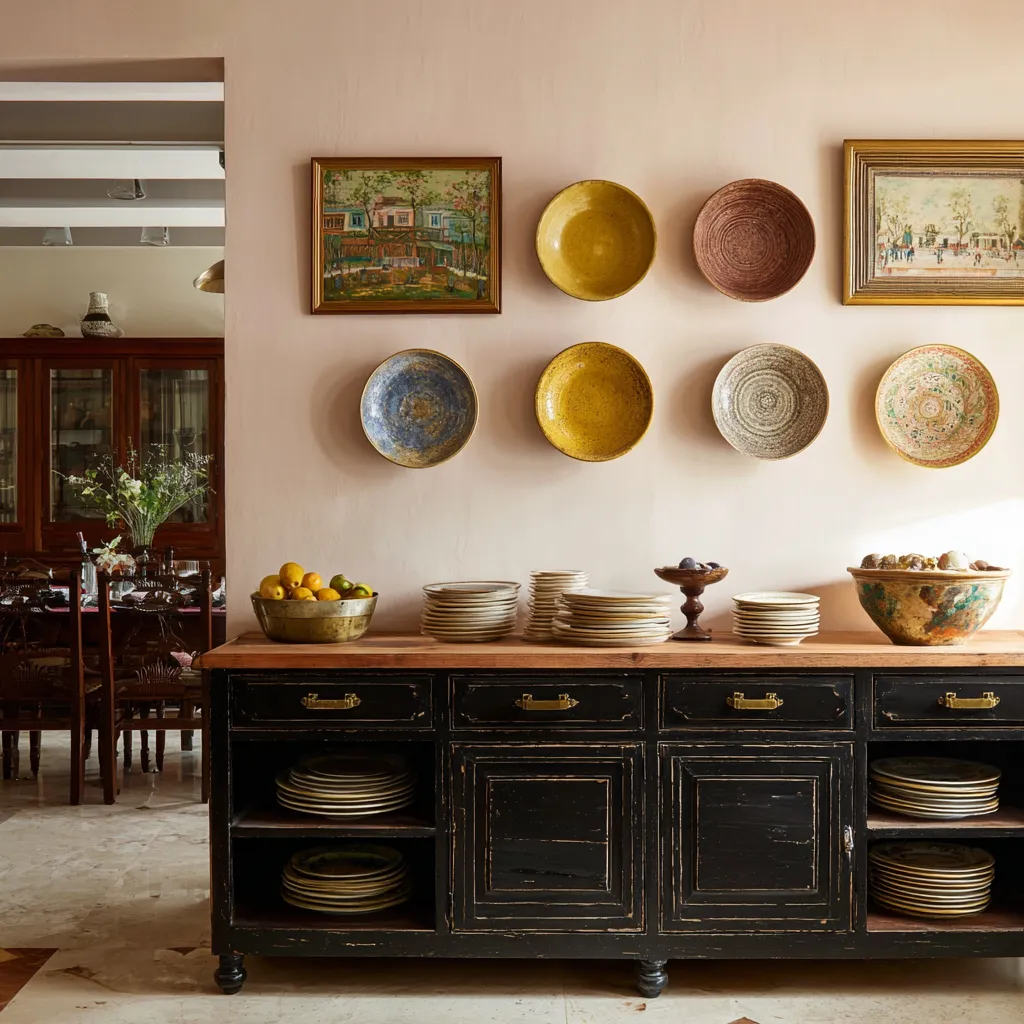
It is a low cabinet placed against a wall. It also serves as a counter that can be used for other purposes as well. The drawers are useful for cutlery and napkins. The cabinets below store plates and bowls. The top surface can hold decor, lamps, or trays. This style works well in dining rooms that are part of the living area.
Crockery Unit With Open And Closed Storage
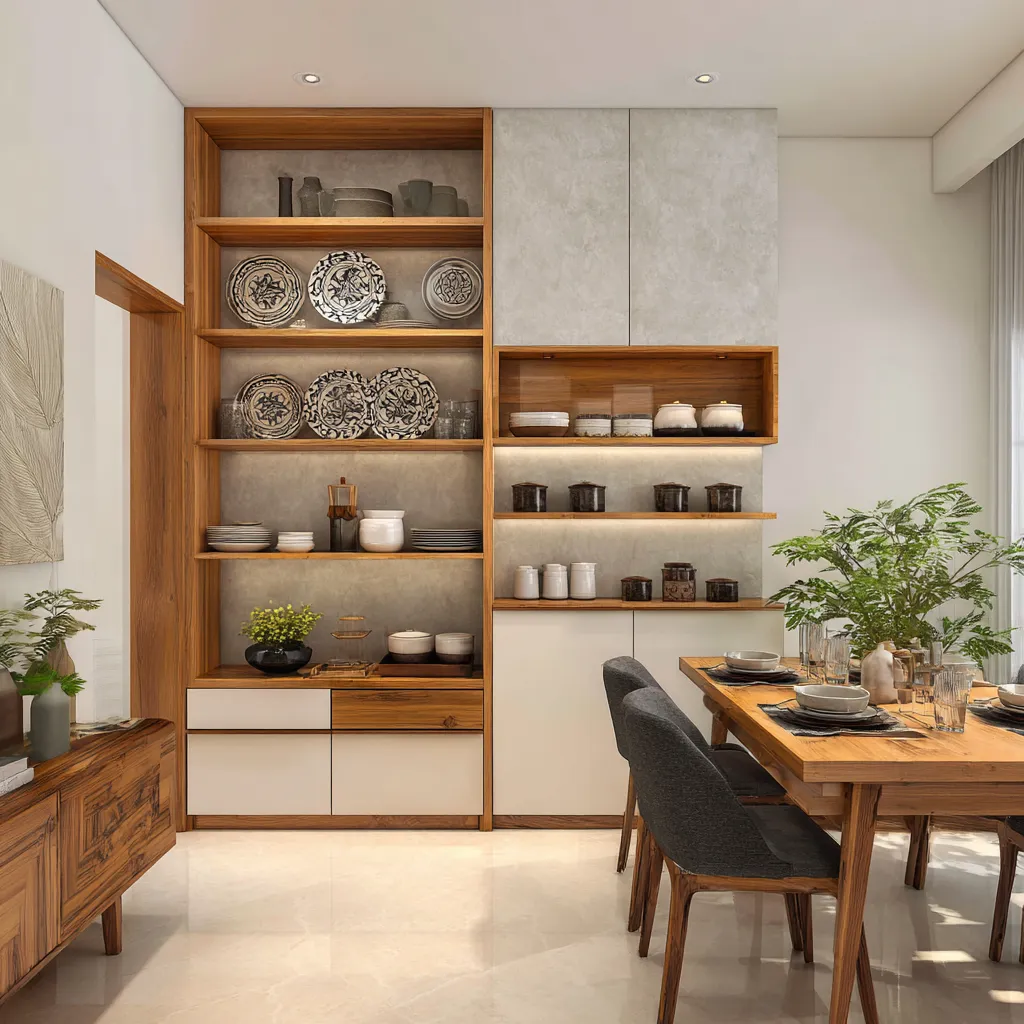
Not all crockery needs to be visible. This design has a mix of open shelves and closed cabinets. Everyday items stay hidden behind shutters. Decorative plates and glassware are placed on open shelves. This keeps the crockery unit practical while still making it visually appealing. It also prevents the space from looking too crowded.
Also Read: 12 Ingenious Open Shelving Kitchen Design Ideas
Glass-Front Crockery Display Unit
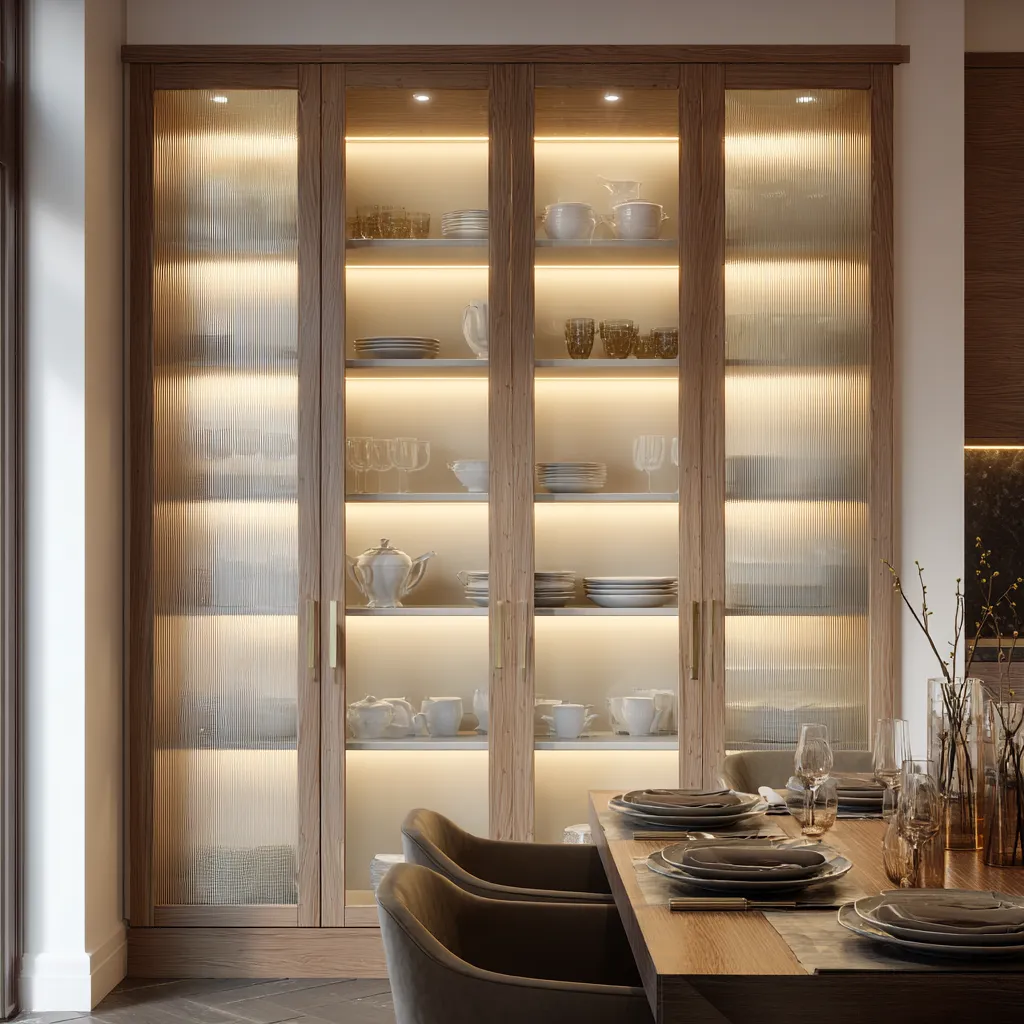
Glass shutters are the best option when you want to display your collection. They protect crockery from dust while keeping everything visible. Frosted glass gives a softer look. Clear glass looks more formal and elegant. You can add warm lighting inside the unit to enhance the display and make the space feel inviting in the evening.
Corner Crockery Unit
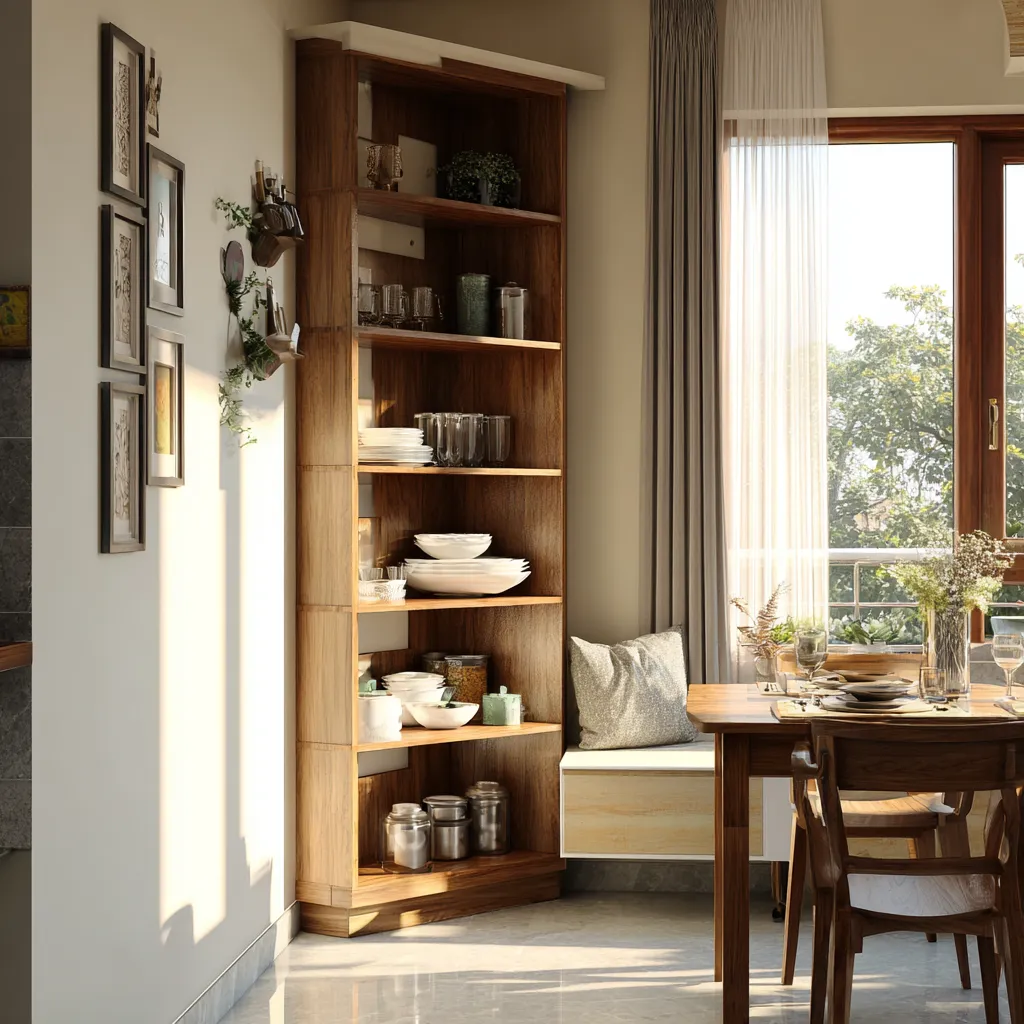
Corners are often underused in kitchen design. A corner crockery unit makes good use of this space. These units are usually tall and narrow. They work well in small dining rooms or kitchens. Curved shelves or angled shutters help the unit to blend smoothly into the corner without looking awkward.
Read also – 15+ Attractive Kitchen Glass Door Designs for Your Modern Home
Open Shelf Crockery Unit
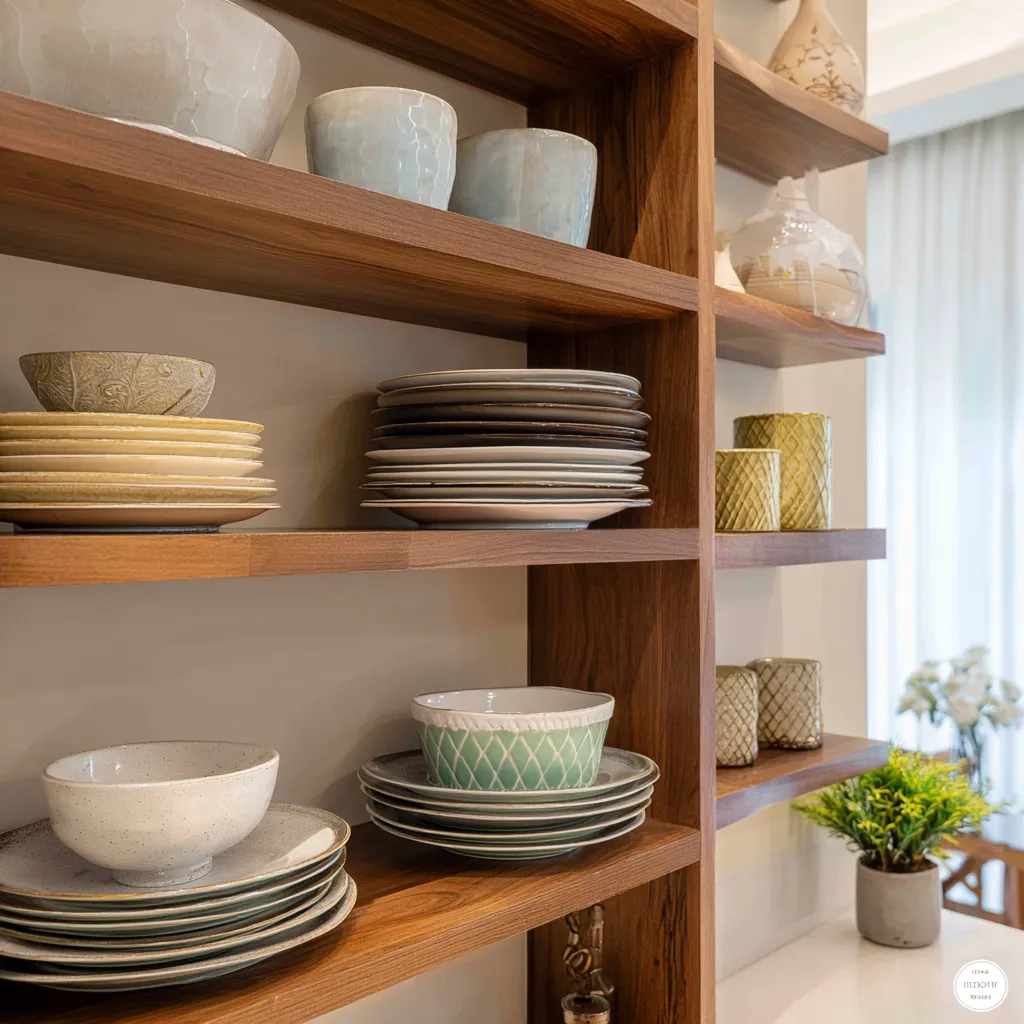
This design uses only open shelves without shutters. It is suitable for homes where crockery is used daily. Everything is easily accessible. This style works best when shelves are kept neat and organised. It also suits modern and casual interiors.
Also Read: Creative Kitchen Tall Unit Design Ideas for Indian Homes
Built-In Dining Area Crockery Unit
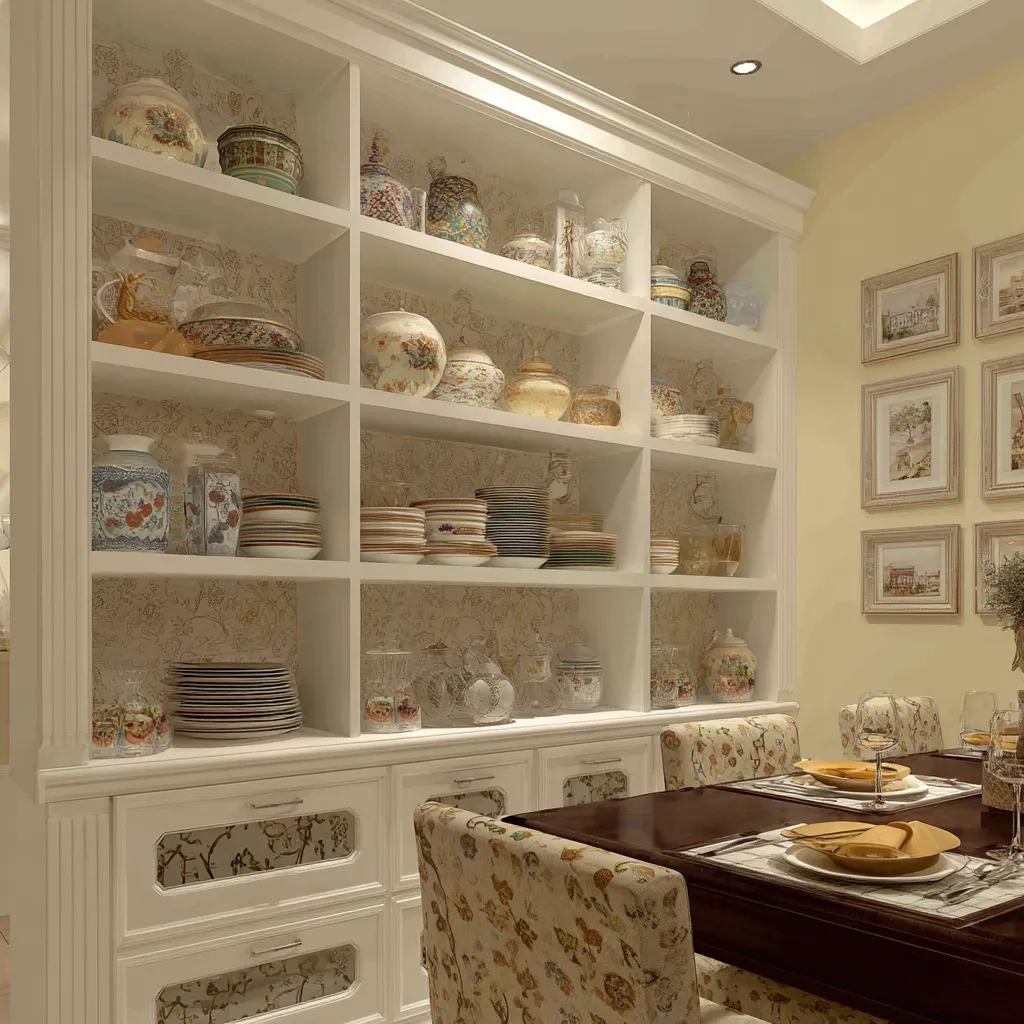
This crockery unit is designed as part of the dining room's wall. It is usually placed behind or beside the dining table. It keeps serving dishes and plates close during meals. The design usually matches the dining furniture and wall finishes, which makes the space look more planned.
Read also – Best White Kitchen Design Ideas for Modern Homes
Wooden Crockery Unit For A Warm Look
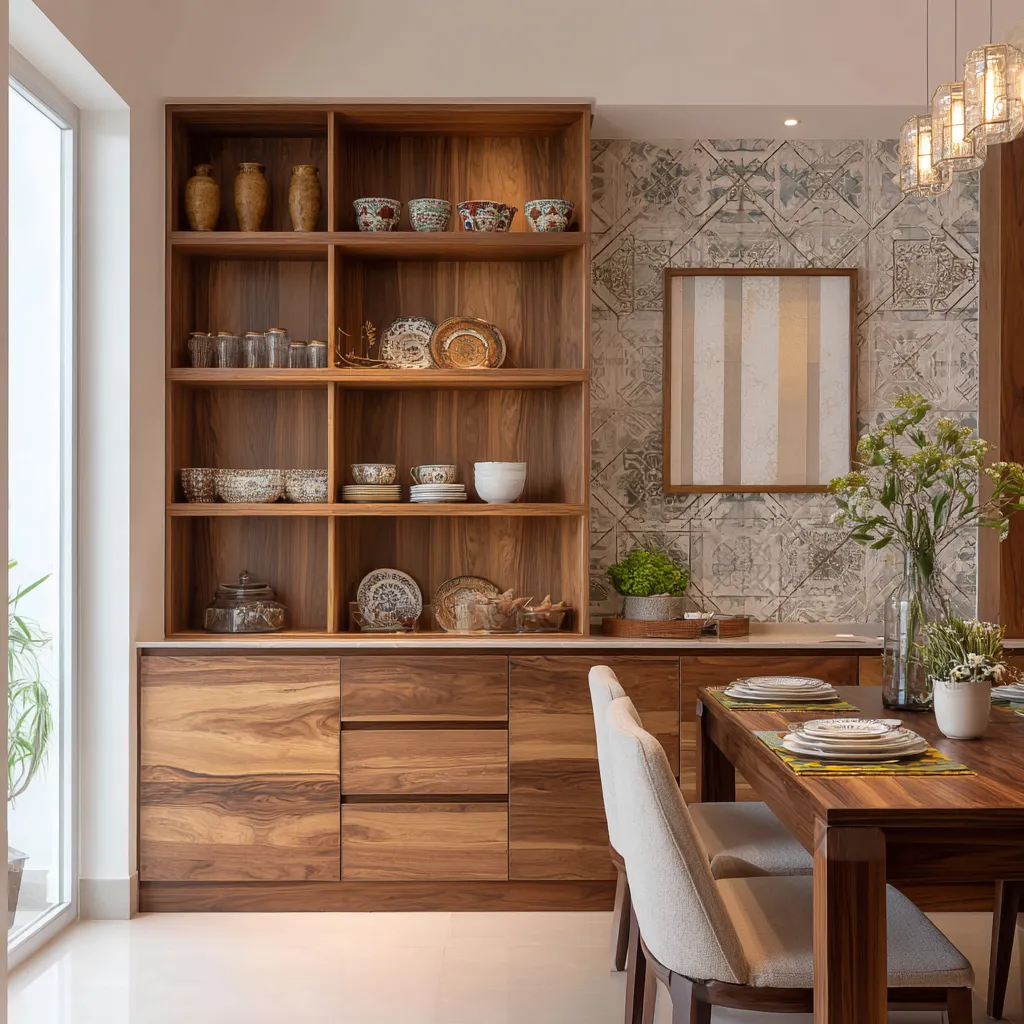
Solid wood or wood-finish crockery units add warmth to the space. They suit both traditional and contemporary homes. Dark wood gives a rich feel, while lighter wood keeps the room bright. These units age well and rarely go out of style.
Minimal Floating Crockery Cabinets
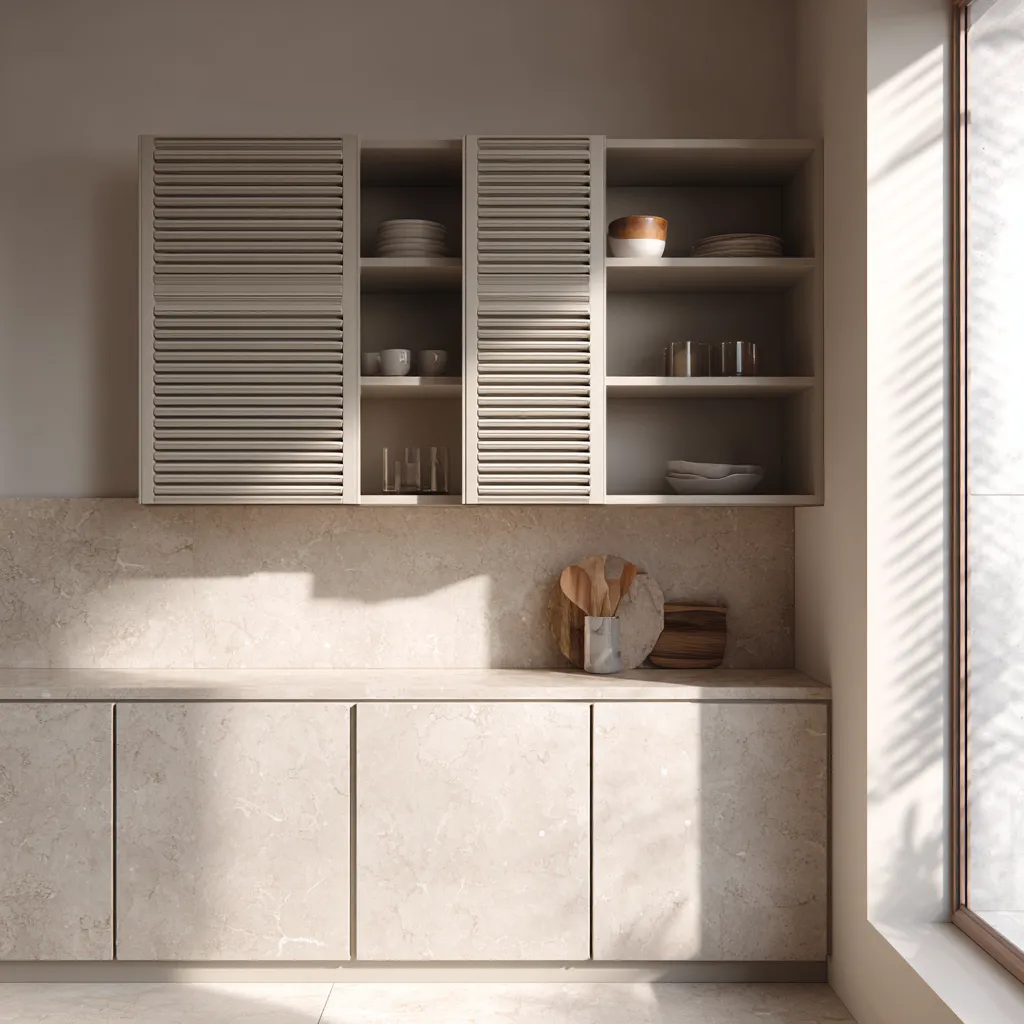
Floating cabinets without visible handles look sleek and modern. This design works well in modern apartments. The floating effect keeps the room visually light while also providing storage.
Checkout: Minimalist Kitchen Design Ideas That Beautify Space by its Simplicity
Asymmetric Crockery Unit Design
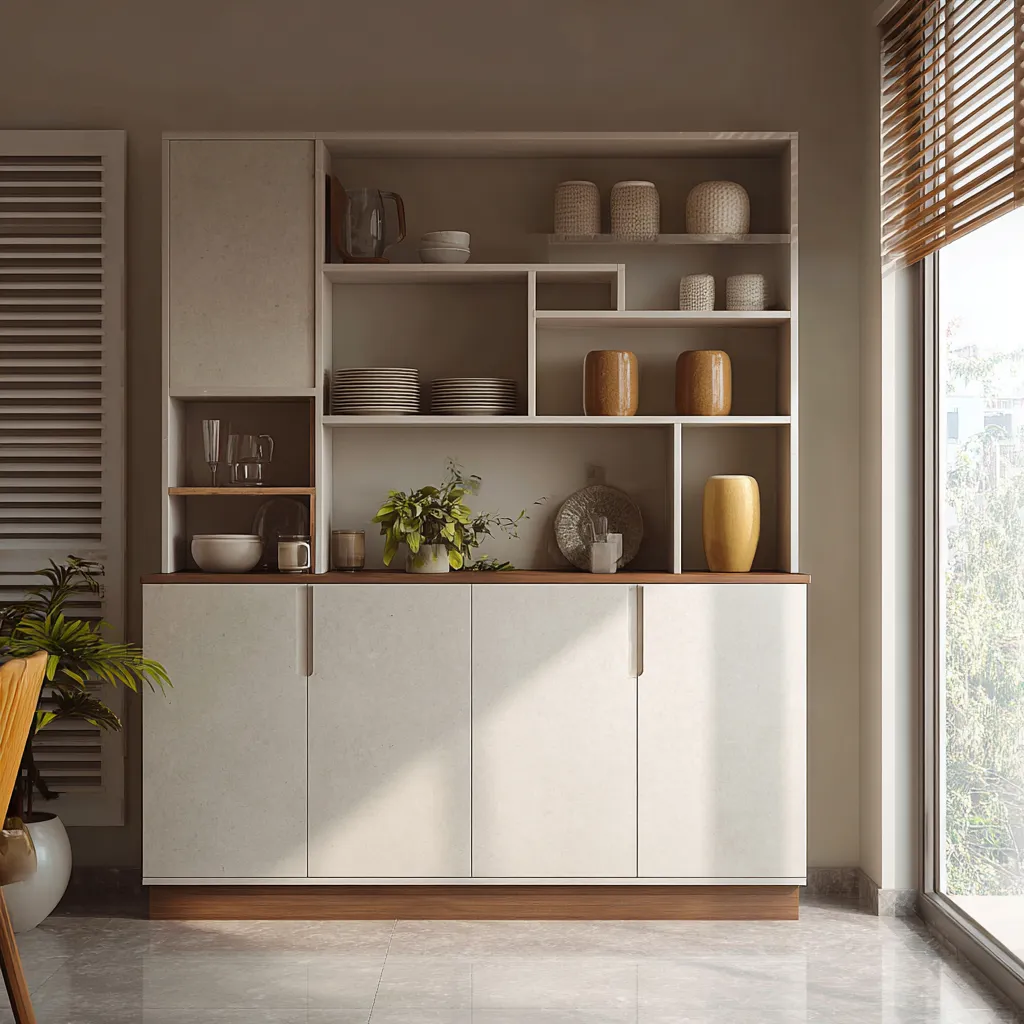
In this design, shelves are placed at different heights. Cabinets may vary in size. It creates a more relaxed and artistic look. This works well for homes that prefer a modern and bold style.
Traditional Indian Crockery Unit
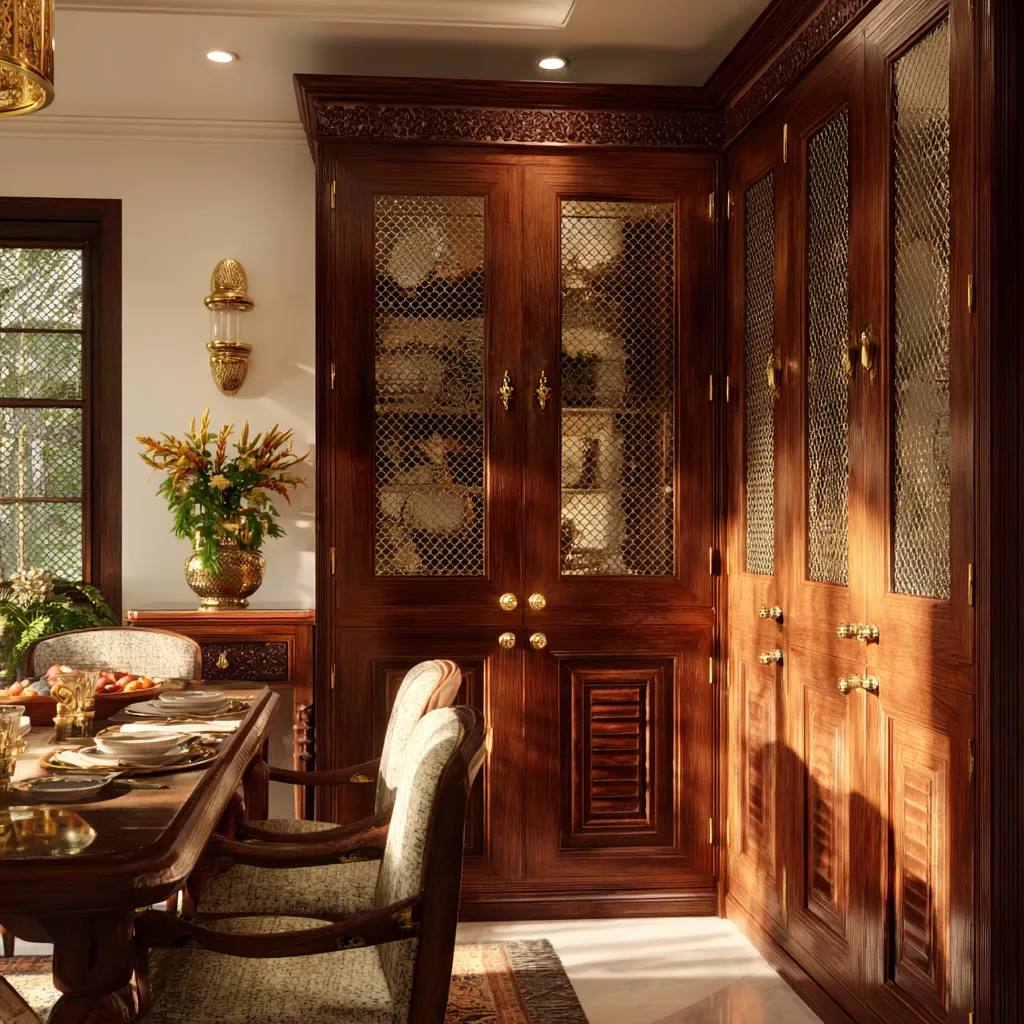
The traditional crockery units are made up of carved wood, jaali shutters, or brass handles. They have regional design influences. This style suits homes that value handcrafted details. It goes well with traditional crockery and decor pieces.
Also read – 22+ Best Kitchen Backsplash Ideas That Do More Than Just Sit Behind The Counter
Split Crockery Units
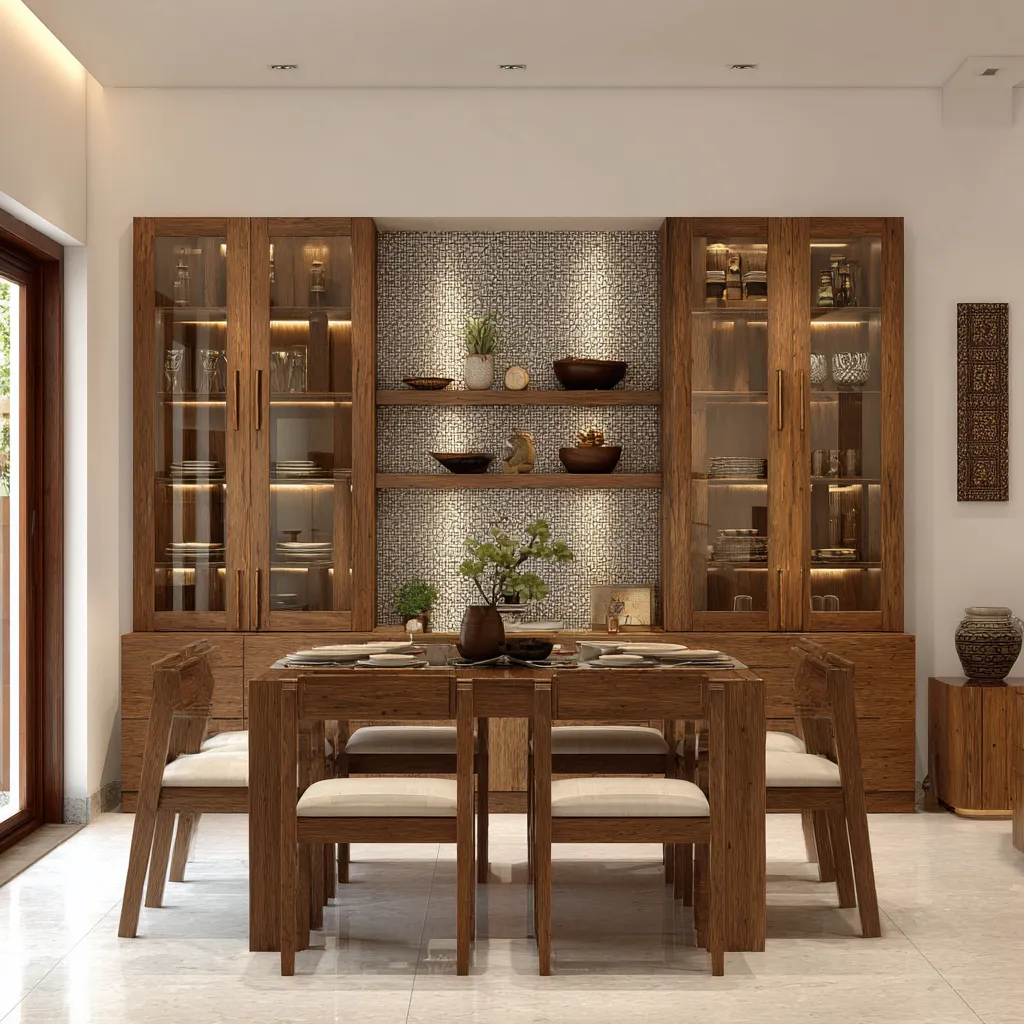
Instead of one large unit, storage is divided into two or more sections. These are placed on either side of a wall or dining space. This layout feels balanced and less heavy. It works well in larger rooms.
Also Read: Stylish Kitchen Rack Design Ideas for Your Home
Crockery Unit With Integrated Lighting
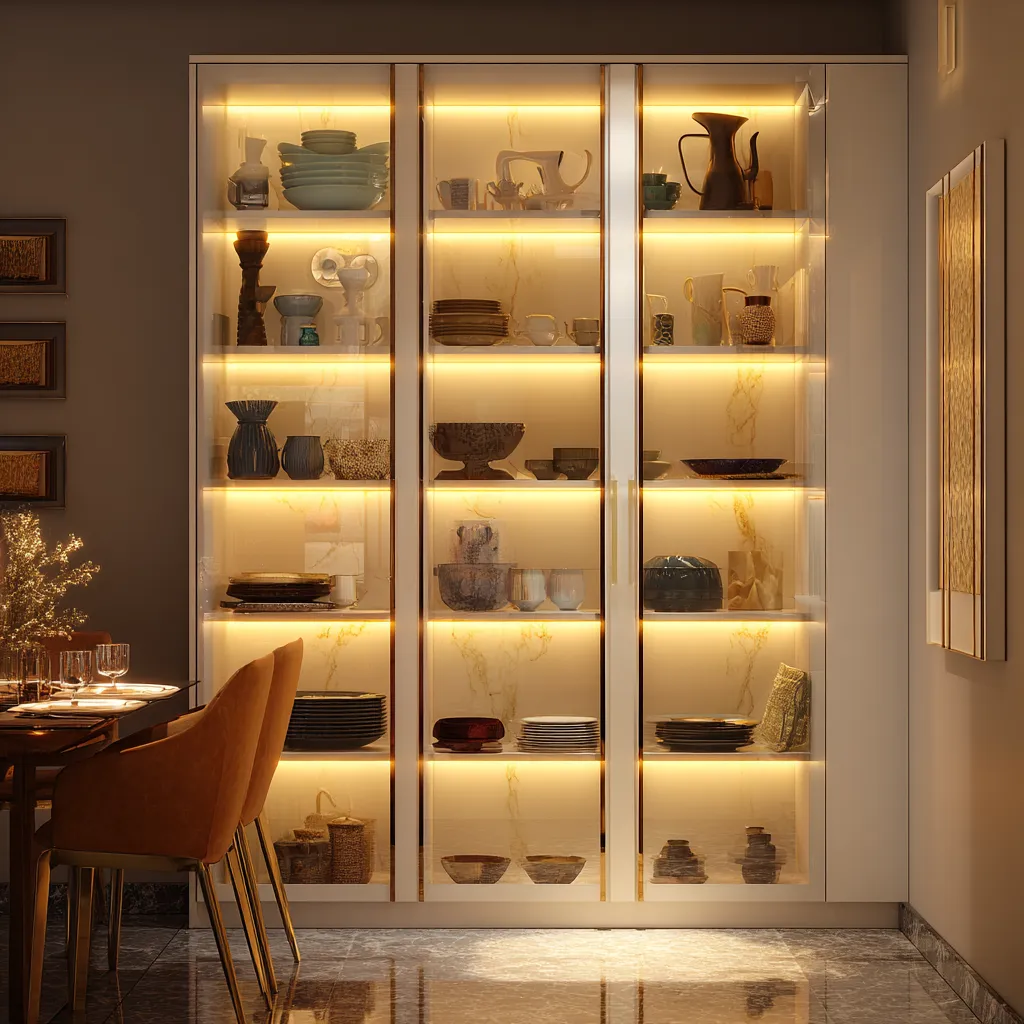
Lighting changes how a crockery unit looks completely. Warm LED strips inside shelves or behind glass highlight the crockery. It also makes the space warm and welcoming.
Metal And Glass Crockery Unit
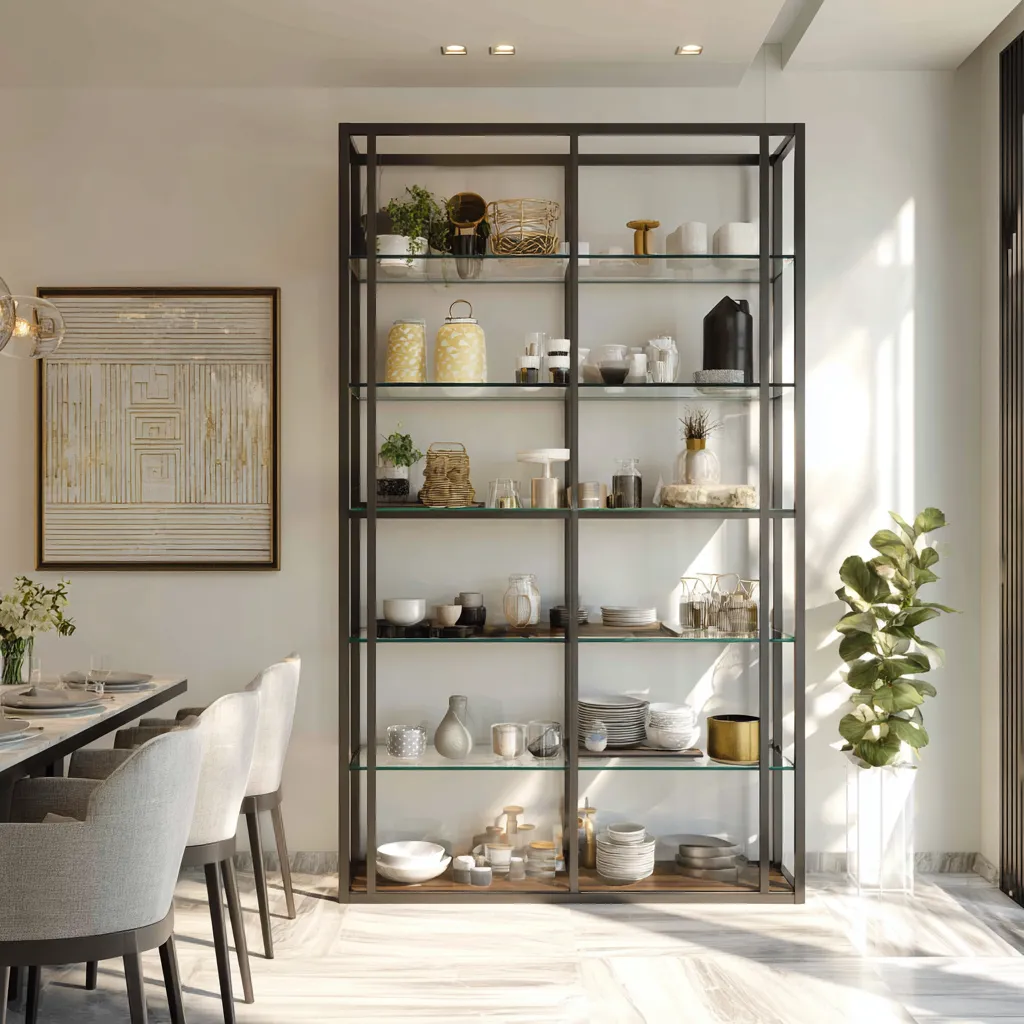
Metal frames combined with glass shelves create a modern, airy look. These units are good for contemporary homes and open spaces. They are visually light but strong. This design works best when kept minimal.
Read also – Best Small Kitchen Storage Ideas: Smart Ways To Organise Small Kitchens
Vintage-Style Crockery Cabinet
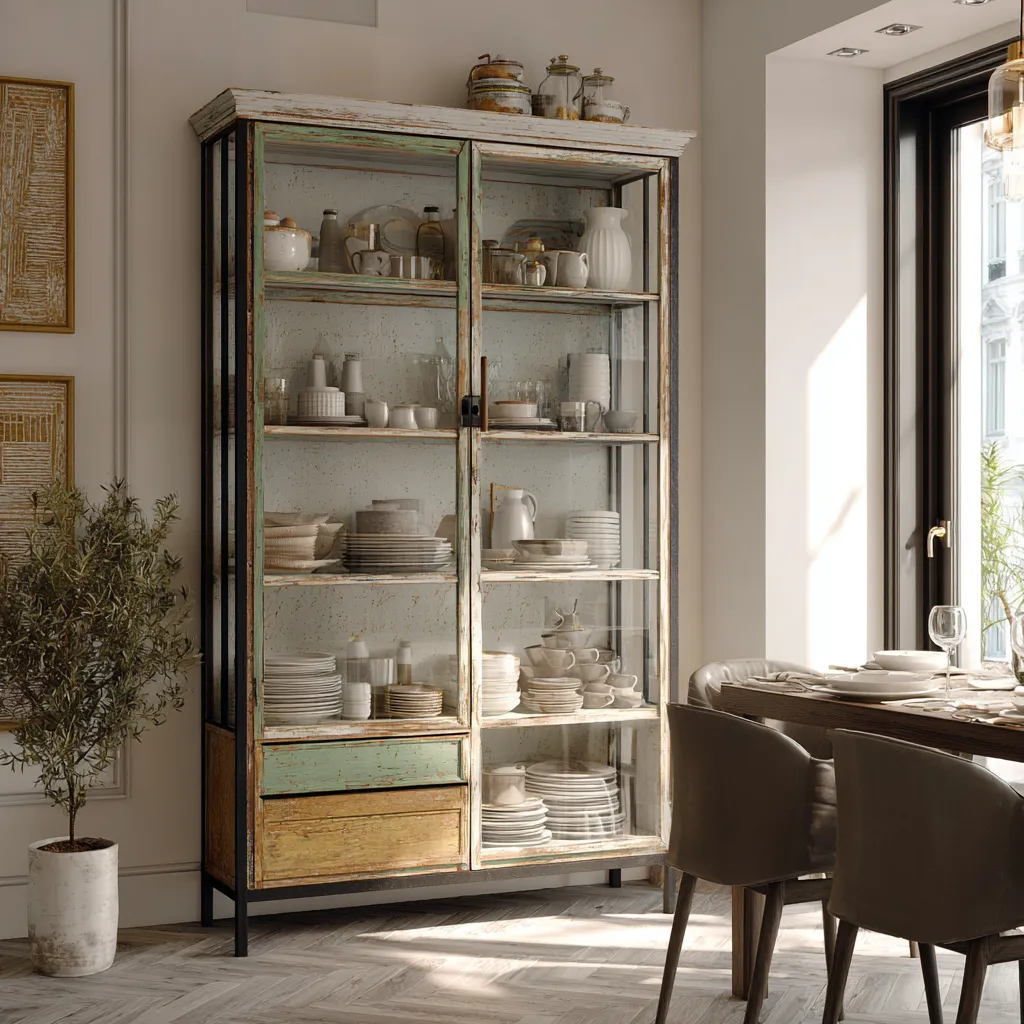
Distressed finishes, muted colours, and antique handles give a vintage feel to the unit. These units work well in spaces that enjoy soft, lived-in home interiors. They go really well with ceramic and handcrafted crockery.
Multi-Purpose Crockery Unit
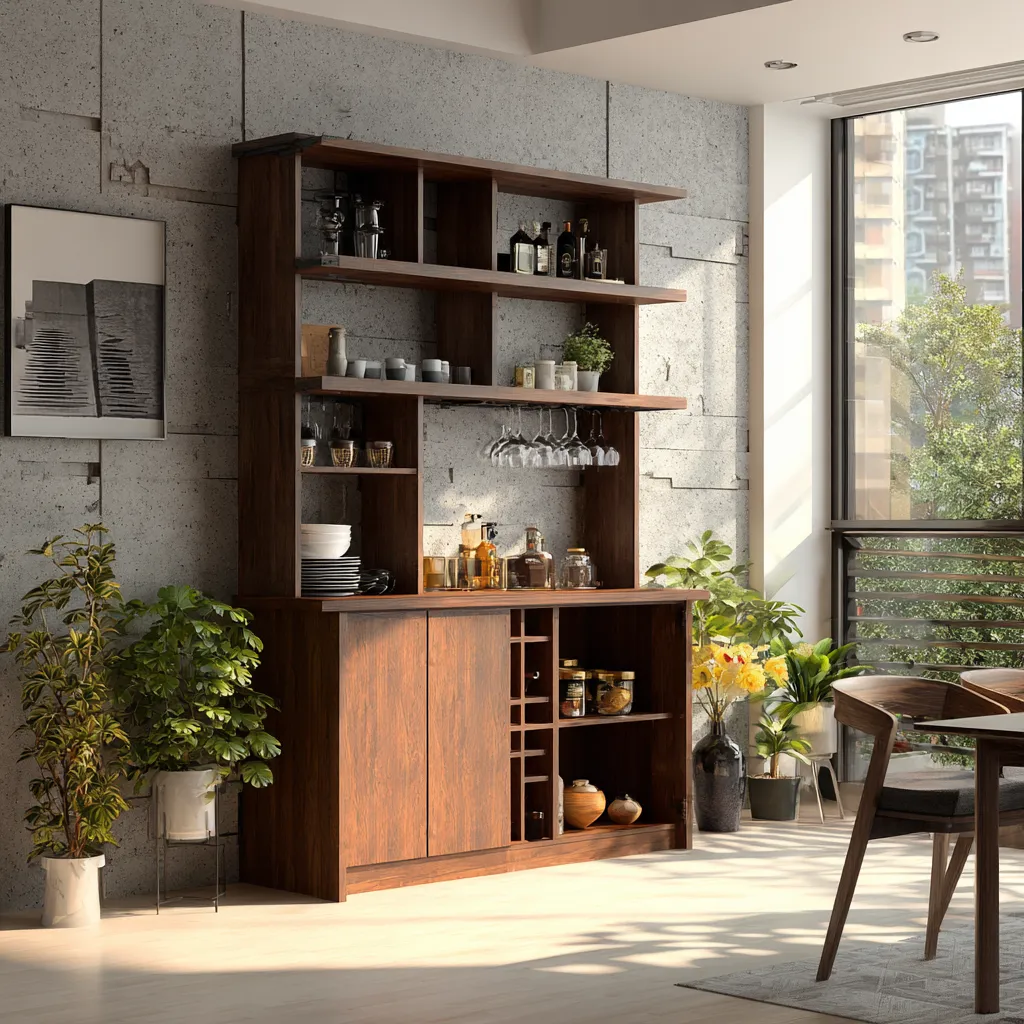
Some units combine crockery storage with a bar counter or display shelves. This makes the unit more functional. It is good for homes that entertain guests frequently and want storage to do more than one job.
Also Read: Unique Partition Design Ideas that Add Style to Your Space
Kitchen-Integrated Crockery Unit
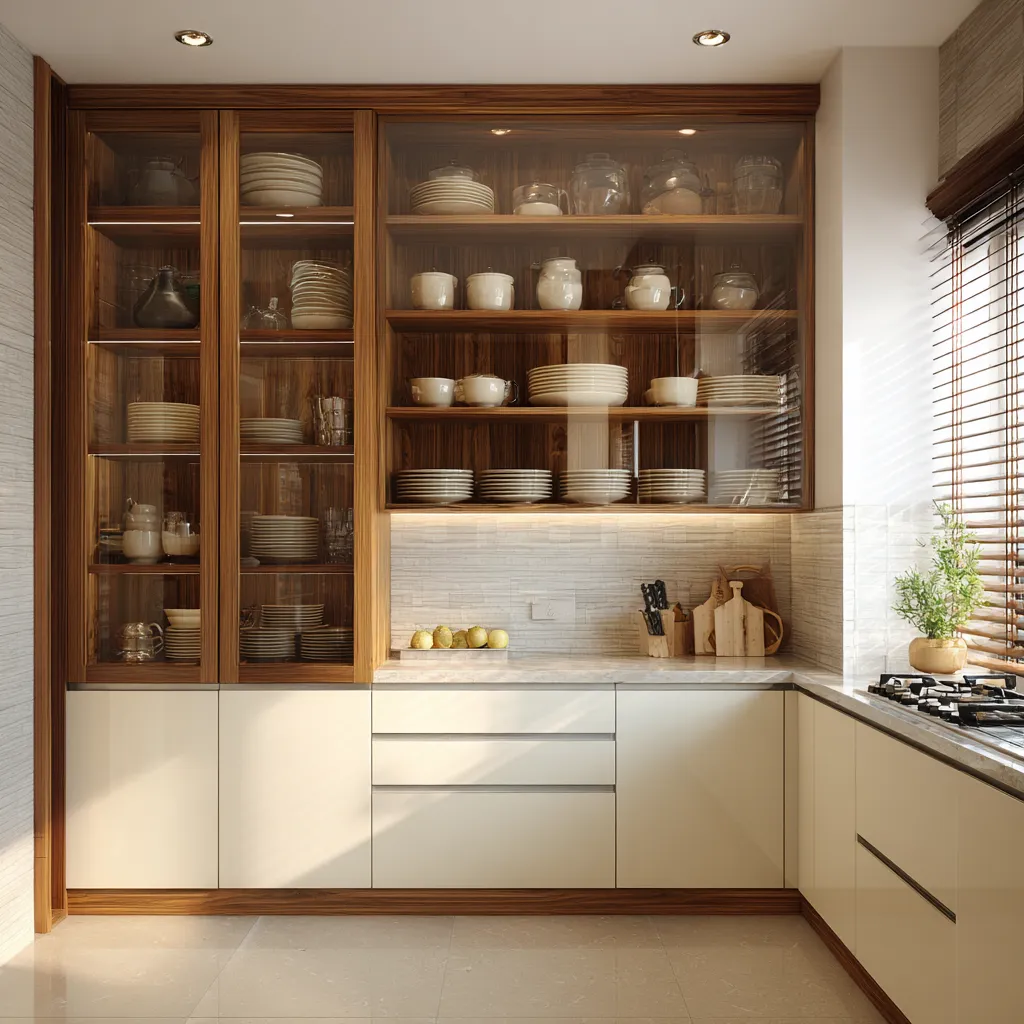
This unit is part of the kitchen cabinetry. It stores plates close to the cooking and washing area. Glass shutters help to identify items quickly. This design is useful in improving the workflow and keeping the dining area clutter-free.
Slim Vertical Crockery Unit
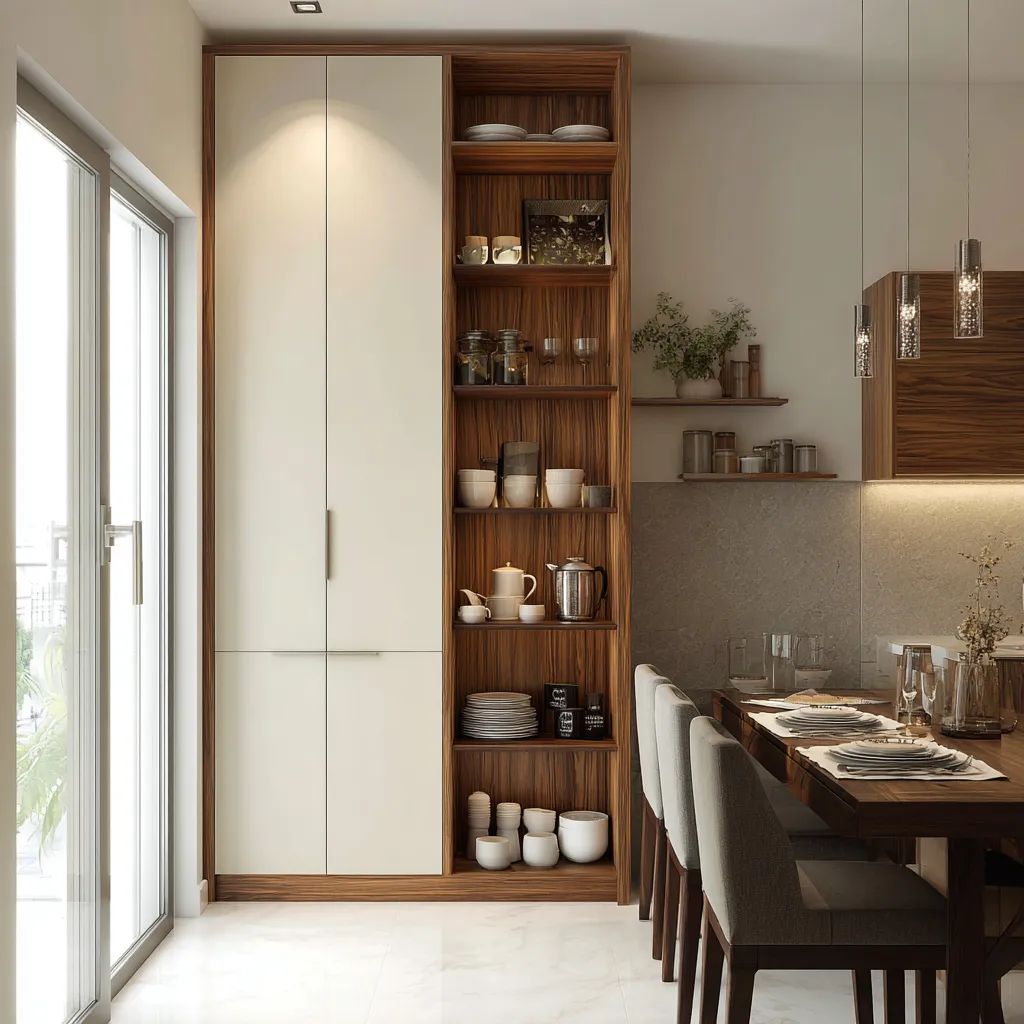
These units are designed for narrow spaces as it is tall and compact. It offers good storage without occupying much space. It is ideal for apartments and small spaces.
Read also – 30+ Beautiful Kitchen Wall Decor Ideas to Upgrade the Blank Walls
Drawer Crockery Unit
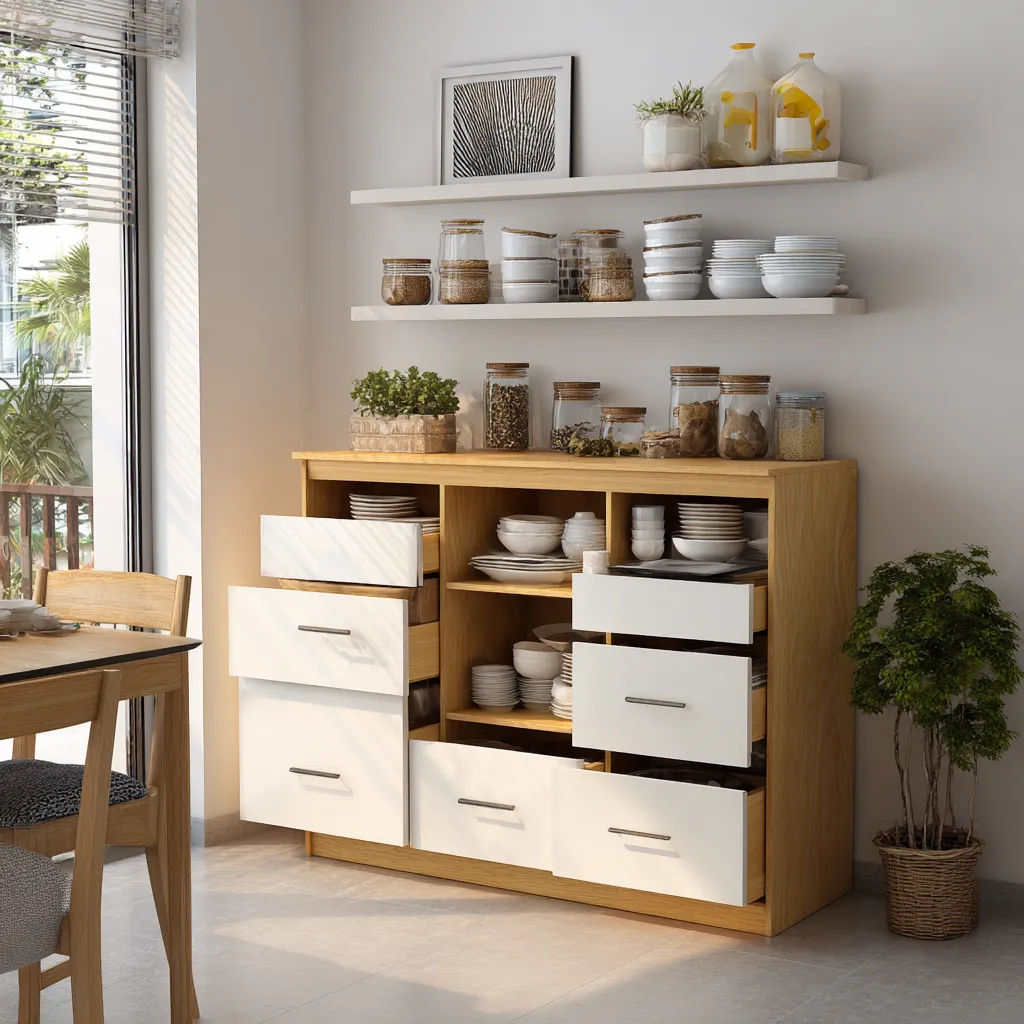
Drawers are useful for smaller items like bowls, cups, and cutlery. Soft-close drawers look really good. This design keeps everything organised and easy to access.
Also read – 5+ Best PVC Kitchen Cabinets Design: Tough On Mess And Easy On Maintenance
Choosing The Right Materials And Finishes
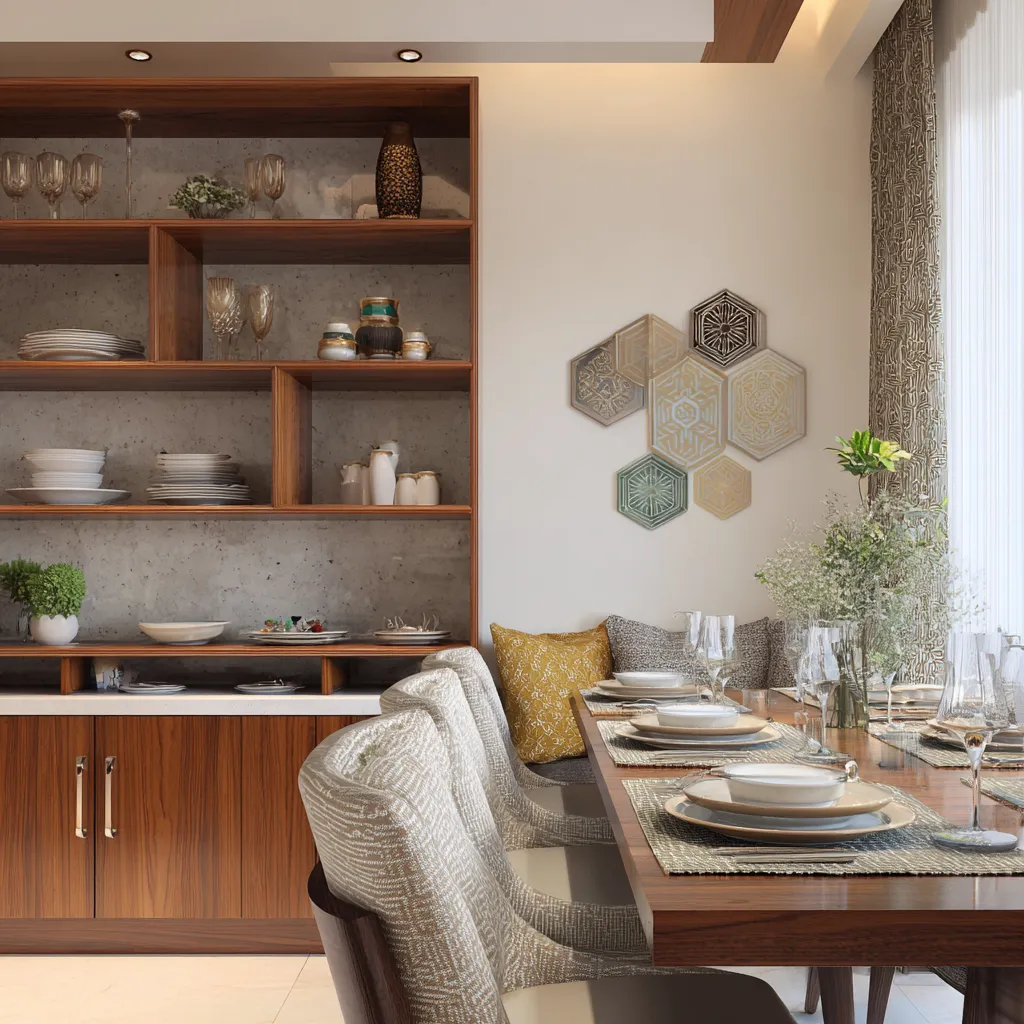
The material and finish of a crockery unit decide how strong it is and how it looks over time. Since they store fragile items, they should be sturdy and easy to maintain.
- Plywood and engineered wood are the most commonly used materials for crockery units. Plywood is stronger and works well for larger units.
- Engineered wood is more budget-friendly and suits compact designs.
- Solid wood is used for premium units and adds warmth. But it needs more care as it is not moisture-resistant.
- Glass is mainly used for display sections. Clear glass shows crockery clearly, while frosted glass gives a softer look.
For finishes, laminates are practical and easy to clean. Veneers give a natural wood look and feel more premium. Matte finishes create a modern look and hide fingerprints, while gloss finishes add shine but need regular cleaning.
Choosing the right combination of material and finish helps to blend the crockery with the rest of the interiors while still being practical for daily use.
Also read – 20+ Best Kitchen Design Tips: Everything You Need To Plan The Perfect Kitchen
What To Consider Before Finalising A Design?
- Check the available wall and floor space before finalising the size.
- Choose a design that does not block movement.
- Plan storage based on how much crockery you use daily and occasionally.
- Keep everyday items at a reachable height.
- Decide how much you want to display and how much you want to hide.
- Pick closed cabinets if dust and maintenance are a concern.
- Match the finish of the unit with the rest of the interiors.
- Consider lighting if the unit has display shelves.
- Choose materials that are easy to clean and will last longer.
- Make sure the unit suits the space it is placed in, like the kitchen or dining area.
How Much Do Crockery Units Cost in India?
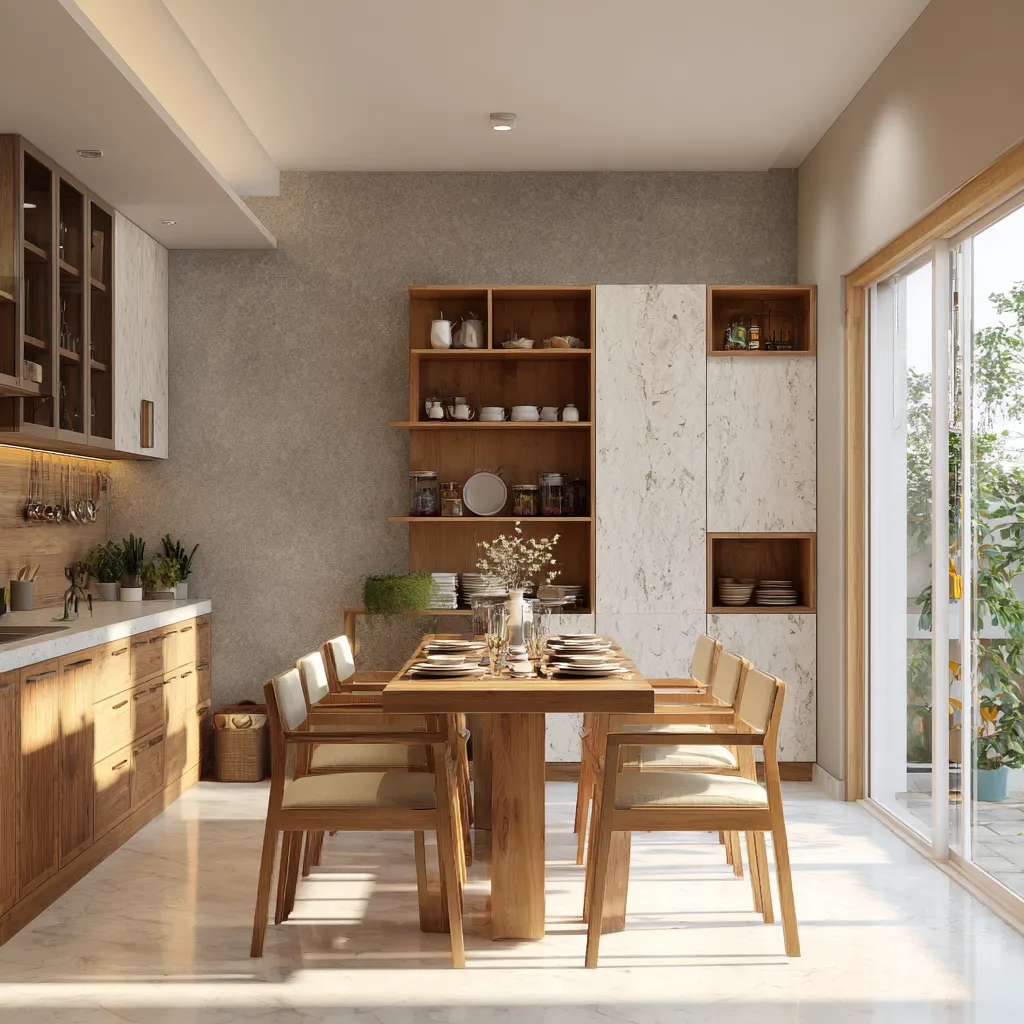
The cost of a crockery unit completely depends on size, material, finish, and whether it is custom-made or ready-to-buy.
- Basic ready-made crockery units can start around '¹6,000 to '¹15,000. You can easily get them from furniture stores.
- Mid-range crockery cabinets with better finishes, doors, and display sections usually range from '¹20,000 to '¹40,000.
- Larger or customised crockery units cost between '¹30,000 and '¹80,000 or more.
If you want custom designs with additional features like glass shutters, built-in lighting, or soft-close drawers, the price can go even higher.
You may also like!
| Kitchen Trolley Design | Reliable Kitchen Trolley Design For Modern Homes |
| Kitchen Colour Combination | Eye-Caching Colour Combination For Modular Kitchen |
| Kitchen Platform Granite Design | Amazing Granite Modular Kitchen Platform Design |
| Parallel Kitchen Design | Stylish Parallel Modular Kitchen Design For Home |
Finding The Right Crockery Unit For Your Home
A crockery unit may seem like a small detail, but it affects how a space looks and feels. When plates, bowls, and glassware have a place of their own, everything feels more organised and easier to manage. The right crockery unit designs blend into the room and make the space more visually appealing.
If you're thinking about adding a crockery unit that fits into your home, Interior Company focuses on designs that feel practical, balanced, and easy to maintain. The idea is simple, a design that looks good, works better, and is right for everyday living.
'Images used are for representational purposes only. Unless explicitly mentioned, the Interior Company does not hold any copyright to the images.'
kitchen Design Ideas for You
- Shape
- Color
- Finish
- Theme
- Backsplash Color
- Backsplash Material
- Cabinet Style
- Counter Colour
- Floor Material
- Size
- Almond Brown Color Kitchen Design
- Beige Color Kitchen Design
- Black Color Kitchen Design
- Blue Color Kitchen Design
- Brown Color Kitchen Design
- Charcoal Black Color Kitchen Design
- Charcoal Grey Color Kitchen Design
- Coral Color Kitchen Design
- Cream Color Kitchen Design
- Dark Grey Color Kitchen Design
- Gold Color Kitchen Design
- Green Color Kitchen Design
- Grey Color Kitchen Design
- Ivory Color Kitchen Design
- Light Brown Color Kitchen Design
- Multicolour Color Kitchen Design
- Natural Brown Color Kitchen Design
- Nude Color Kitchen Design
- Off White Color Kitchen Design
- Olive Color Kitchen Design
- Olive Green Color Kitchen Design
- Olive Rust Color Kitchen Design
- Orange Color Kitchen Design
- Pink Color Kitchen Design
- Purple Color Kitchen Design
- Red Color Kitchen Design
- Silver Color Kitchen Design
- Smokey Blue Color Kitchen Design
- Smokey Grey Color Kitchen Design
- Stone Color Kitchen Design
- Teal Color Kitchen Design
- White Color Kitchen Design
- Wooden Brown Color Kitchen Design
- Yellow Color Kitchen Design
- Contemporary Theme Kitchen Design
- Cottage-Style Theme Kitchen Design
- Countryside Theme Kitchen Design
- Industrial Theme Kitchen Design
- Luxurious Theme Kitchen Design
- Mid-Century Modern Theme Kitchen Design
- Minimalist Theme Kitchen Design
- Modern Theme Kitchen Design
- Modern -Industrial Theme Kitchen Design
- Rustic Theme Kitchen Design
- Scandinavian Theme Kitchen Design
- Traditional Theme Kitchen Design
- Beige Backsplash Color Kitchen Design
- Black Backsplash Color Kitchen Design
- Blue Backsplash Color Kitchen Design
- Brown Backsplash Color Kitchen Design
- Gray Backsplash Color Kitchen Design
- Green Backsplash Color Kitchen Design
- Metallic Backsplash Color Kitchen Design
- Multi Backsplash Color Kitchen Design
- Orange Backsplash Color Kitchen Design
- Red Backsplash Color Kitchen Design
- White Backsplash Color Kitchen Design
- Yellow Backsplash Color Kitchen Design
- Brick Backsplash Material Kitchen Design
- Cement Tile Backsplash Material Kitchen Design
- Ceramic Tile Backsplash Material Kitchen Design
- Engineered Quartz Backsplash Material Kitchen Design
- Glass Tile Backsplash Material Kitchen Design
- Granite Backsplash Material Kitchen Design
- Marble Backsplash Material Kitchen Design
- Matchstick Tile Backsplash Material Kitchen Design
- Mosaic Tile Backsplash Material Kitchen Design
- Porcelain Tile Backsplash Material Kitchen Design
- Stone Slab Backsplash Material Kitchen Design
- Stone Tile Backsplash Material Kitchen Design
- Subway Tile Backsplash Material Kitchen Design
- Terra-Cotta Tile Backsplash Material Kitchen Design
- Travertine Backsplash Material Kitchen Design
- Window Backsplash Material Kitchen Design
- Wood Backsplash Material Kitchen Design
- Beige Counter Colour Kitchen Design
- Black Counter Colour Kitchen Design
- Blue Counter Colour Kitchen Design
- Brown Counter Colour Kitchen Design
- Gray Counter Colour Kitchen Design
- Green Counter Colour Kitchen Design
- Multi Counter Colour Kitchen Design
- Pink Counter Colour Kitchen Design
- Red Counter Colour Kitchen Design
- White Counter Colour Kitchen Design
- Yellow Counter Colour Kitchen Design
- Carpet Floor Material Kitchen Design
- Cement Tile Floor Material Kitchen Design
- Ceramic Tile Floor Material Kitchen Design
- Dark Hardwood Floor Material Kitchen Design
- Light Hardwood Floor Material Kitchen Design
- Marble Floor Material Kitchen Design
- Medium Hardwood Floor Material Kitchen Design
- Painted Wood Floor Material Kitchen Design
- Porcelain Tile Floor Material Kitchen Design
- Terrazzo Floor Material Kitchen Design
- Travertine Floor Material Kitchen Design

Ready for a home transformation?
Let our designers assist you!
Recent Posts








A crockery unit can be placed in the kitchen, dining area, living room, or main hall. The choice should depend on the space you have and how often the crockery is used. Dining areas are the most common location in Indian households.
Closed crockery units are more practical for Indian homes. They protect crockery from dust and grease, which is very common in most parts of India. Open shelves are better for limited display only.
For small homes, wall-mounted or slim vertical units work best. They use wall space instead of floor space. This keeps the room open and easy to move around.
Kitchen cabinets usually store many things together. A crockery unit gives crockery its own space. They make it easy to find items and reduce the risk of damage or breakage.
Most crockery units are made using plywood, MDF, or engineered wood. Solid wood is also used for premium designs. Glass is added for display sections.
Yes, they are safe when made with toughened glass and good fittings. Glass kitchen doors also protect crockery from dust. They make it easier to see items without opening cabinets, and also act as a display for premium crockery.
Yes, crockery units can be customised based on space and usage. You can change shelf heights, cabinet size, and finishes as per your requirements. This customisation can help fit both daily and special-use crockery.
Open crockery units are easy to access and are good for daily use. Closed units hide items and keep them dust-free. Most of the households prefer a mix of both styles.
Laminate and matte finishes are easy to clean and maintain. They do not show stains easily. These finishes are suitable for everyday homes.
Yes, many crockery units are designed mainly for display. Glass shelves, lighting, and open sections help to highlight special crockery as well as decor pieces.
Lighting improves visibility and enhances the look of the unit. Soft LED lights are commonly used for this purpose. They make glassware and crockery look more visually appealing.
The storage space depends on how much crockery you own. It is good to plan separate areas for daily-use items and occasional pieces.
Yes, it is recommended to design crockery units to match modern kitchen cabinets or dining furniture. Using similar colours and finishes creates a balanced look in the space.
A modular crockery unit is made of different sections or modules. These can be adjusted or rearranged later. This makes the unit flexible and good for future needs.
To choose the right crockery unit designs, start by checking how much space you have. Think about how much crockery you use daily. Choose a design that fits your lifestyle and home interiors both.
Related Category
- Dining Room
- False Ceilings
- Paint and Color
- Tips and Advice
- Walls and Texture