- Design Ideas
- Cities
- Trends
- Guides
- Price Calculators
- Interior DesignersNEW
- Our Portfolio
- More


Kids Wardrobe Design Ideas That Grow With Your Child

A kid’s wardrobe normally fails long before it looks old. Clothes stop fitting the shelves. School bags end up on the floor. Drawers become junk zones. The problem here isn’t storage shortage, it’s planning based on how adults use wardrobes, not how children do.
Table of Content
What a kid's wardrobe needs at different ages?
For Toddlers and Preschoolers
For School-Age Children
For Pre-Teens and Growing Kids
Kids Almirah Design vs Built-in Wardrobe Options
Wardrobe Layout and Internal Planning for Kids' Rooms
Modern Wardrobe Designs for Childrens Rooms
Sliding vs Hinged Wardrobes for Kids Bedrooms
Kids' Wardrobe With Study Table Combinations
Girl Wardrobe Design
Boy Kids Wardrobe Design
Cupboards Beyond Clothes in Childrens Bedrooms
Kids' Wardrobe Design Mistakes to Avoid
Conclusion
Most parents realise this late. By then, the cupboard is already built. Too tall. Too deep. Too fixed. It looks fine, but it doesn't work. A functional kids’ wardrobe design starts with behaviour, not colour or theme. How often does the child access it alone? What changes every year? Which sections need flexibility and which don't? These questions matter more than whether the finish is glossy or matte.
Only decorative ideas or trending styles won't help here. It's about wardrobe designs for childrens room that survive growth phase, changing routines, and daily mess without needing replacement every few years.
What a kid’s wardrobe needs at different ages?
Every kid’s wardrobe design should start with one basic truth. Children don't use storage the way adults do. Their height, habits, and priorities change faster than furniture cycles. Planning without age in mind almost guarantees a redesign later.
For Toddlers and Preschoolers
At this stage, reach matters more than capacity. A tall children’s wardrobe design with deep shelves looks neat on day one and becomes dead space immediately.
Lower hanging rods make sense here. Shallow shelves work better than stacked ones. Open sections help because toddlers respond to what they can see. When clothes are visible and reachable, putting things back stops feeling like a task.
This is where many parents overspend on finish and underthink layout. A simple kids’ bedroom wardrobe with fewer sections often performs better than a complex one. Design decisions here also affect how the room functions overall. Poor wardrobe access usually spills into clutter elsewhere, which then affects kids room design and even play areas.
For School-Age Children
Once school enters the picture, wardrobes stop being only about clothes. Uniforms need a fixed spot. Bags need hooks or cubbies. Shoes cannot be pushed under shelves anymore. A well-planned kids’ room wardrobe design balances hanging space with shelves and a small open zone for daily-use items.
This is where flexibility becomes important. Adjustable shelves matter more than decorative shutters. One section should be easy to reconfigure every year without carpentry changes. At this age, wardrobes quietly start overlapping with kids’ study room ideas. Books appear. Activity folders pile up. Storage needs stop being predictable.
For Pre-Teens and Growing Kids
Here's where most wardrobes start feeling outdated. Hanging space increases. Folded clothes reduce. Privacy starts to matter. Accessories show up. The design doesn't need to grow in size, but it needs to change in function.
A smart kid’s wardrobe design at this stage avoids themed finishes and focuses on internals that can evolve. Neutral structure. Clean divisions. No cartoon-heavy decisions that age badly. When planned well, the wardrobe adapts with minor internal tweaks instead of full replacement. That's the difference between short-term storage and a cupboard that actually lasts.
Kids Almirah Design vs Built-in Wardrobe Options
This choice affects flexibility more than appearance. Many parents focus on shutters and finishes, then struggle with daily use. Almirahs and built-in wardrobes solve different problems. Picking the wrong one early limits how long the storage works.
Freestanding Wooden Almirah for Kids’ Rooms
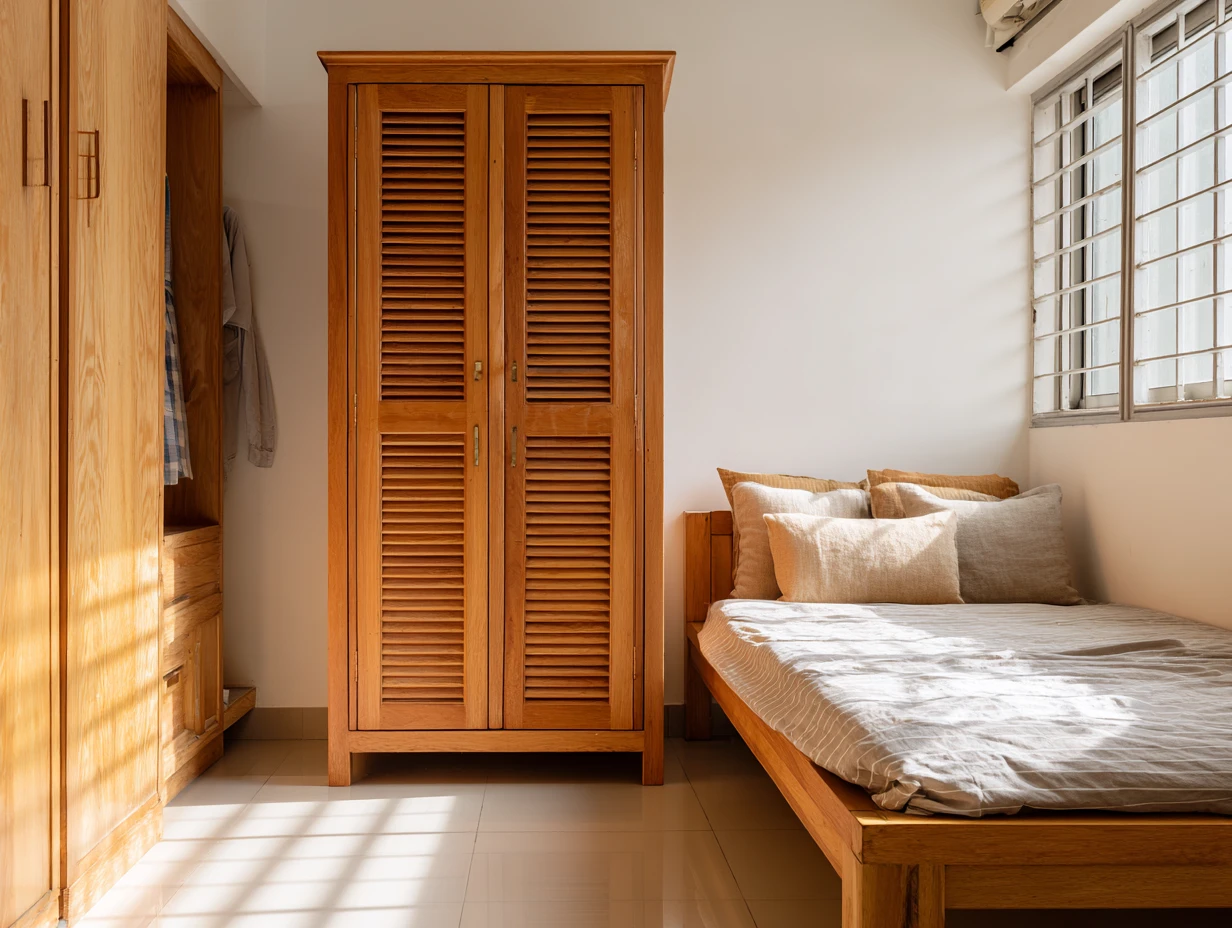
A freestanding kids’ almirah design suits homes where layouts may change. It works well in rental spaces and rooms that might be repurposed later. The biggest advantage is flexibility. Shelves can be rearranged easily, and the unit can be moved without breaking walls. Simple wooden finishes age better than themed designs. This type of children’s cupboard blends into evolving home interior ideas without locking the room into a fixed children-only setup.
Built-in Wardrobe for Compact Children's Bedrooms
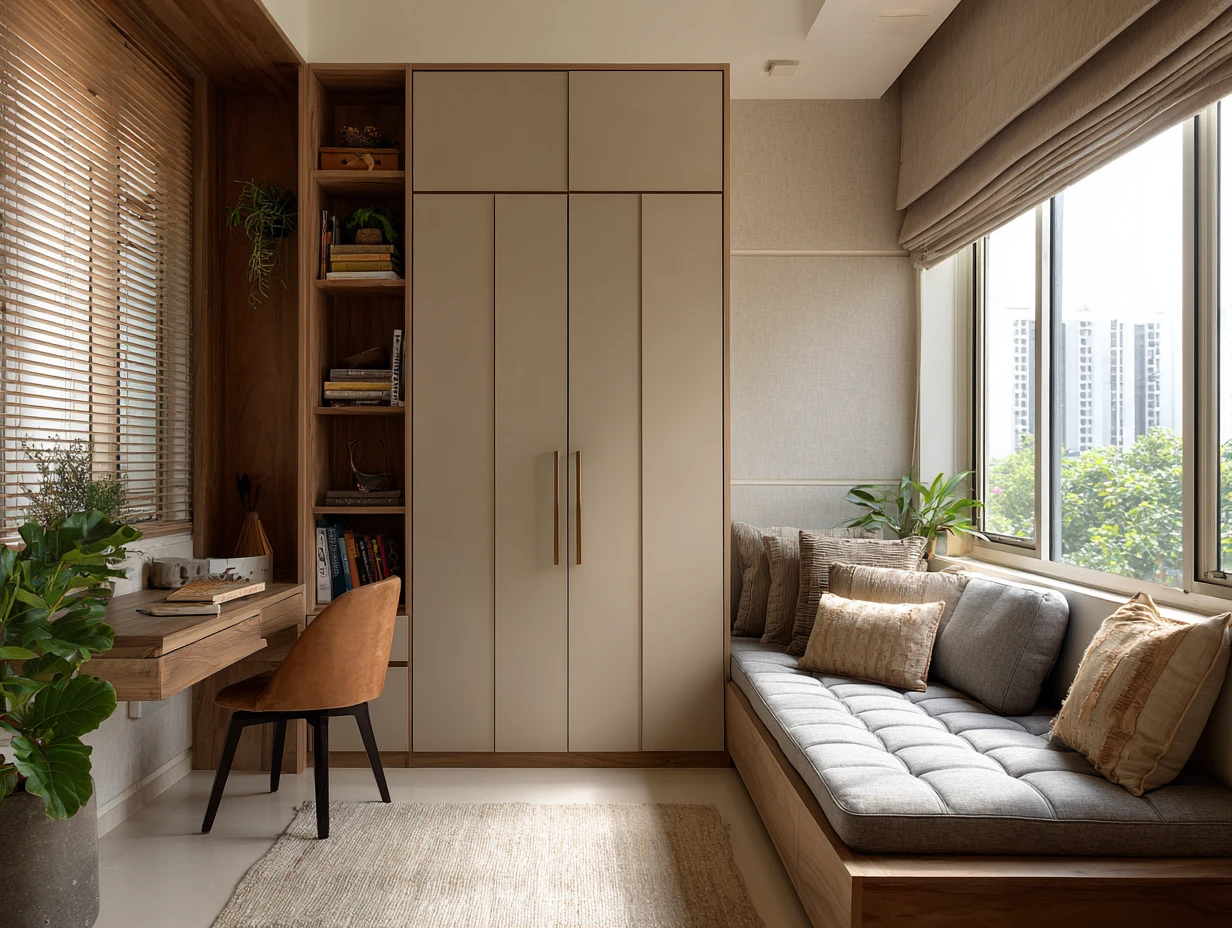
A built-in children’s cupboard works best when space is limited. Wall-to-wall planning reduces wasted corners and keeps the room open. Internals can be customised to a child's height and routine, which improves daily use. The limitation is permanence. Once built, changes are difficult. A neutral internal layout with adjustable shelves helps the kids’ wardrobe design stay useful as the child grows. It also aligns neatly with overall cupboard design planning in the home.
Wardrobe Layout and Internal Planning for Kids’ Rooms
This is where most kids’ wardrobe design decisions quietly succeed or fail. Shutters get attention. Internals get ignored. A wardrobe that looks good but works poorly becomes cluttered faster than expected.
Shelf-Heavy Wardrobe for Folded Clothing
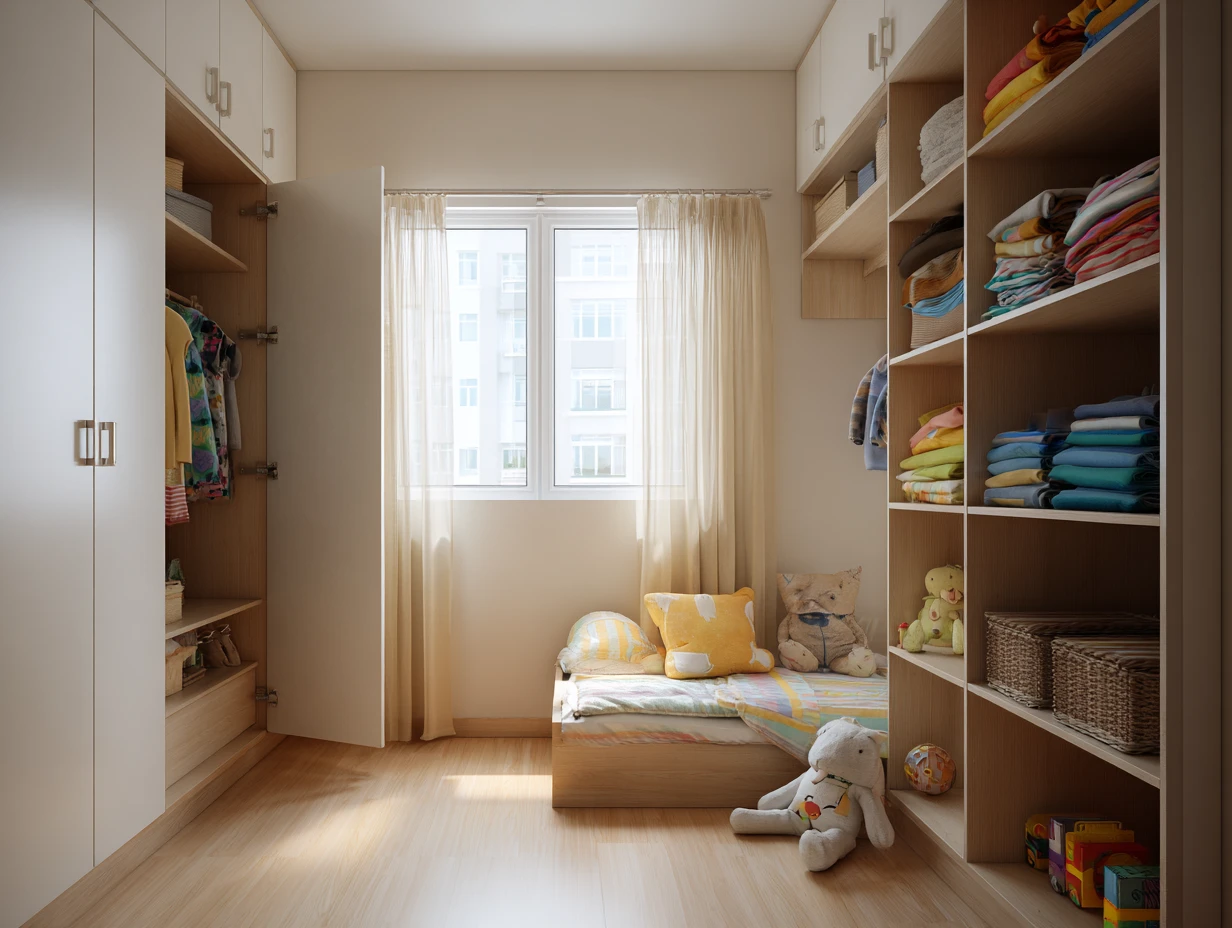
This layout works well for younger children who mostly use folded clothes. More shelves, fewer drawers, minimal hanging space. Shallow shelves prevent clothes from disappearing into piles. Everything stays visible and reachable. This type of kids room wardrobe design reduces daily mess because children don't need help accessing their things. It pairs well with simple kids’ room design layouts where ease of use matters more than storage volume.
Mixed Hanging and Shelving Layout
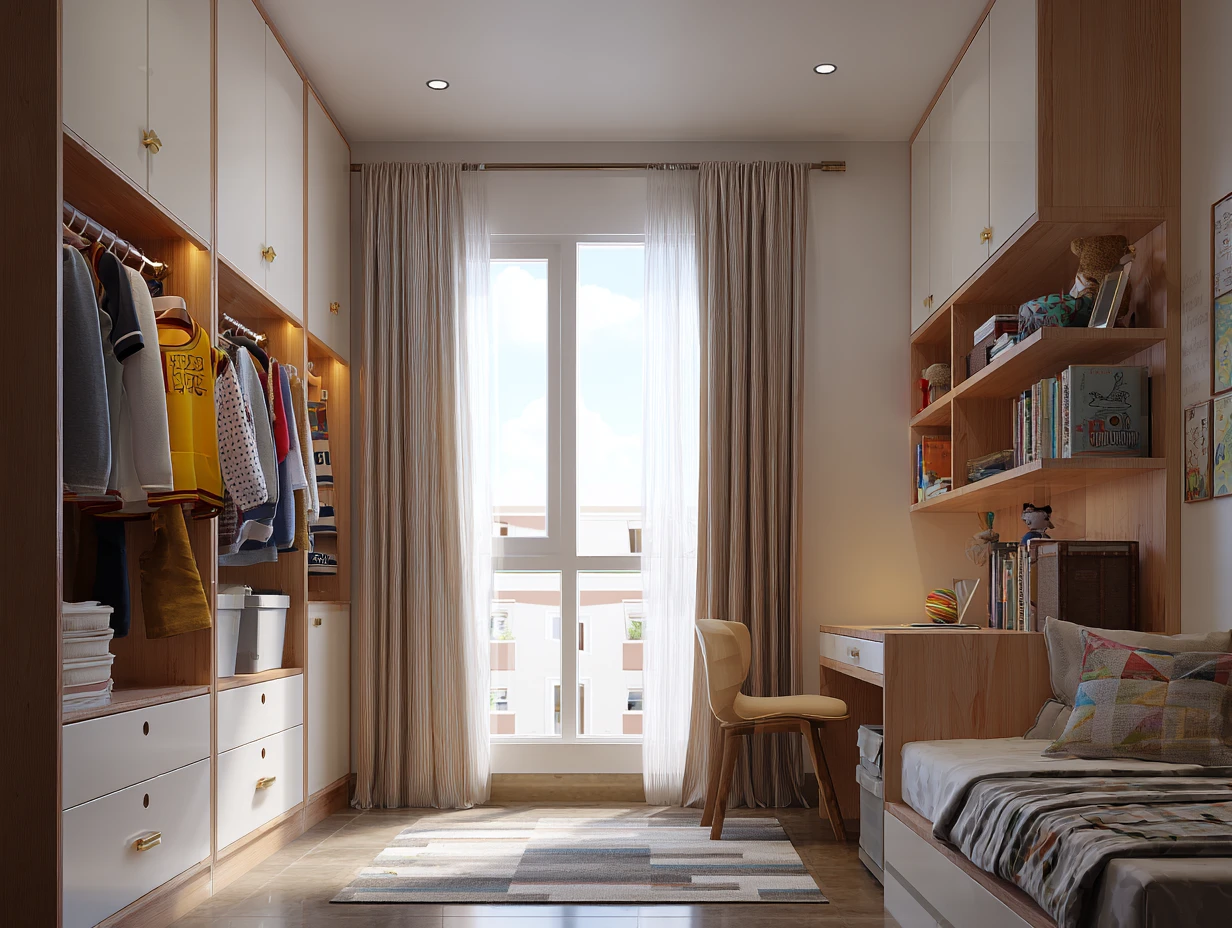
A balanced mix suits school-age children best. One hanging section for uniforms and occasion wear. Open shelves for daily clothes. A couple of drawers for innerwear and accessories. This kid’s bedroom wardrobe layout adapts year after year with small internal changes. It avoids overcommitting to hanging space too early. It also works well when wardrobes share space with kids’ study room ideas and learning zones.
Open Cubby and Closed Cupboard Combination
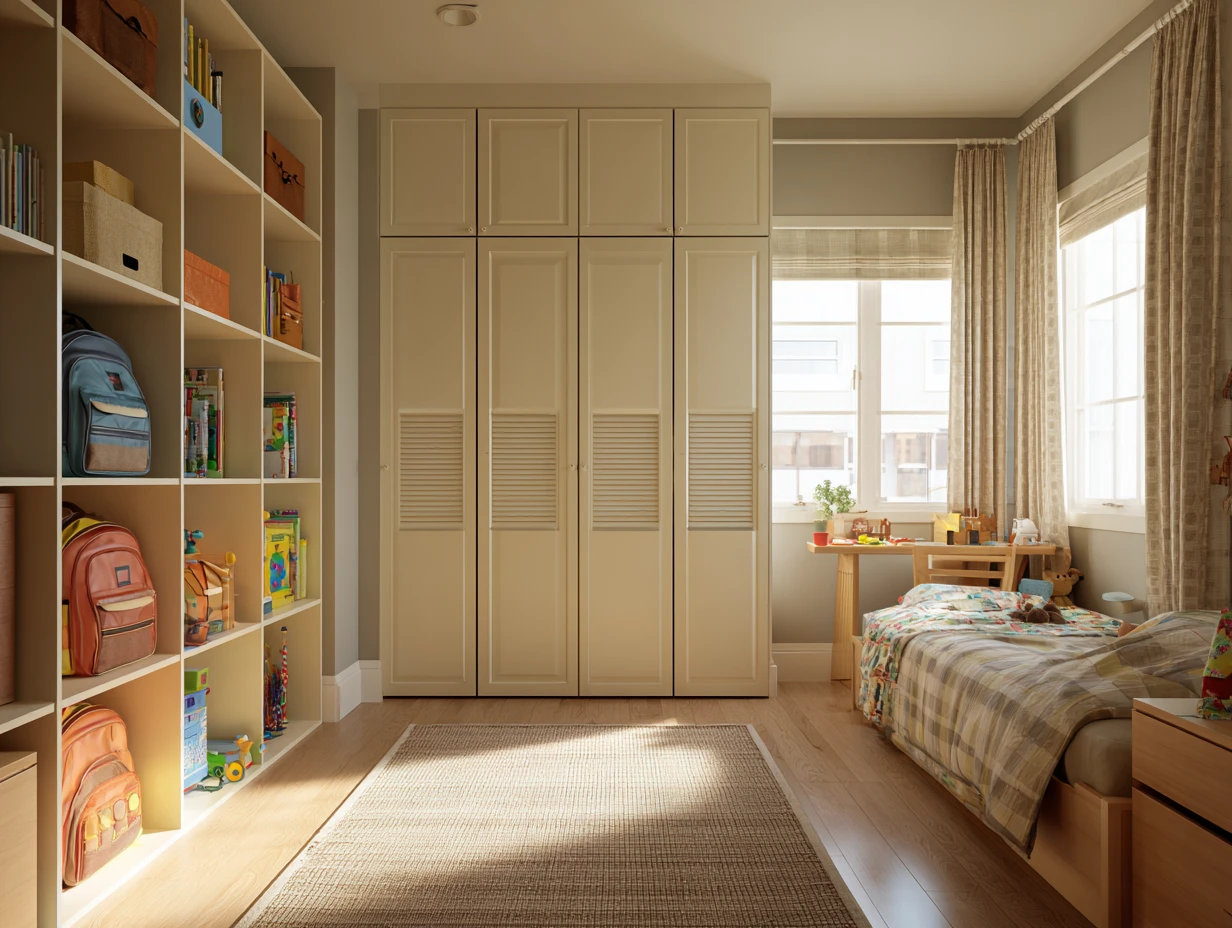
This layout mixes discipline with convenience. Closed sections store clothes and seasonal items. Open cubbies handle bags, toys, or quick-access items. It helps children maintain basic organisation without forcing perfection. A children’s wardrobe design like this works well in active households. It also complements bookshelf ideas for kids’ rooms when storage overlaps beyond clothing.
Modern Wardrobe Designs for Children's Rooms
Modern doesn't mean flashy. In a kids’ wardrobe design, it usually means choices that don't expire quickly. Clean lines. Calm finishes. Details that survive changing tastes.
Neutral Base with Replaceable Shutters
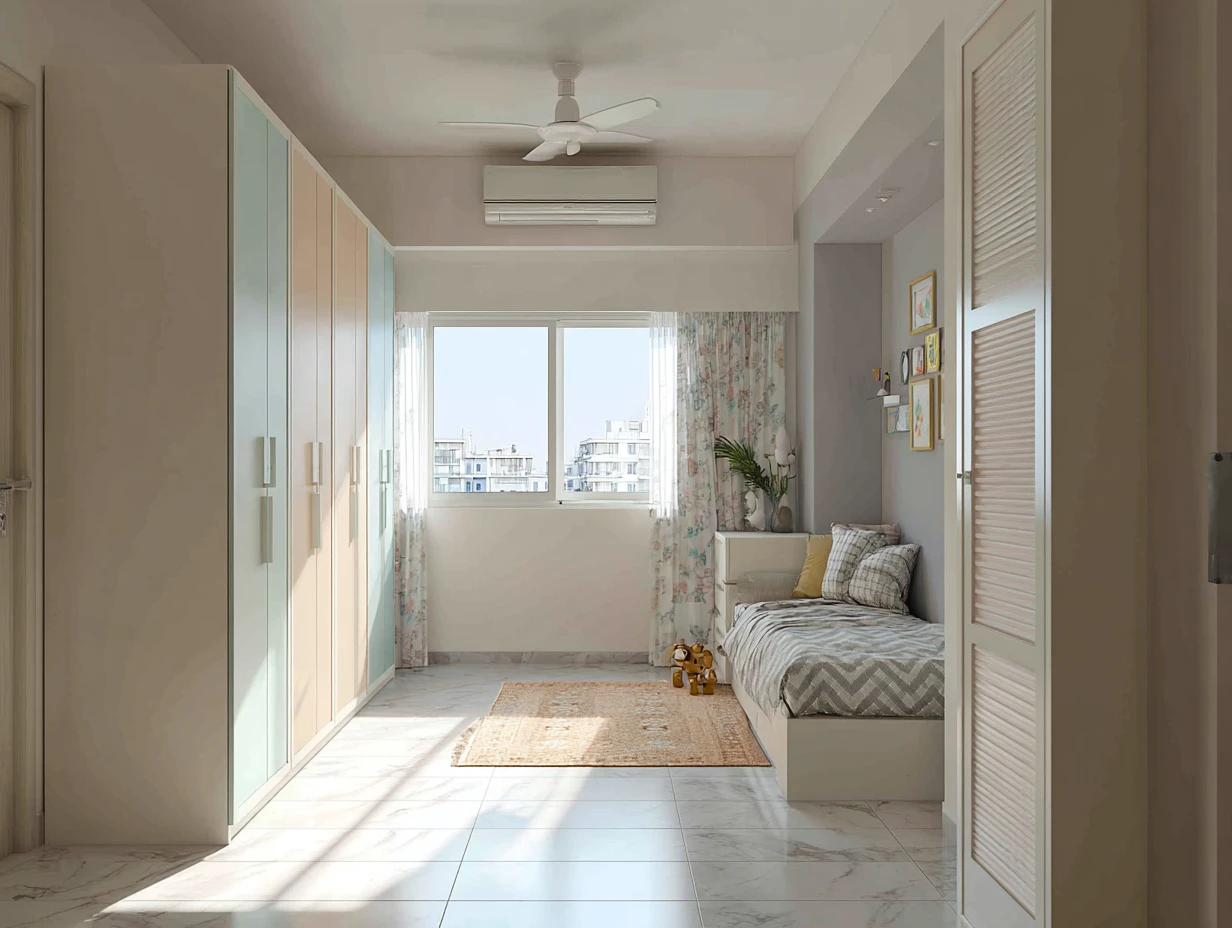
This approach keeps the main structure calm and long-term. The internal carcass stays neutral while shutters can be changed later if needed. It avoids full replacement when preferences shift. A modern kids’ wardrobe design like this works well in shared homes and apartments. It allows visual updates without disturbing storage logic and blends easily with broader home interior ideas.
Handle-less Wardrobe with Soft-Close Shutters
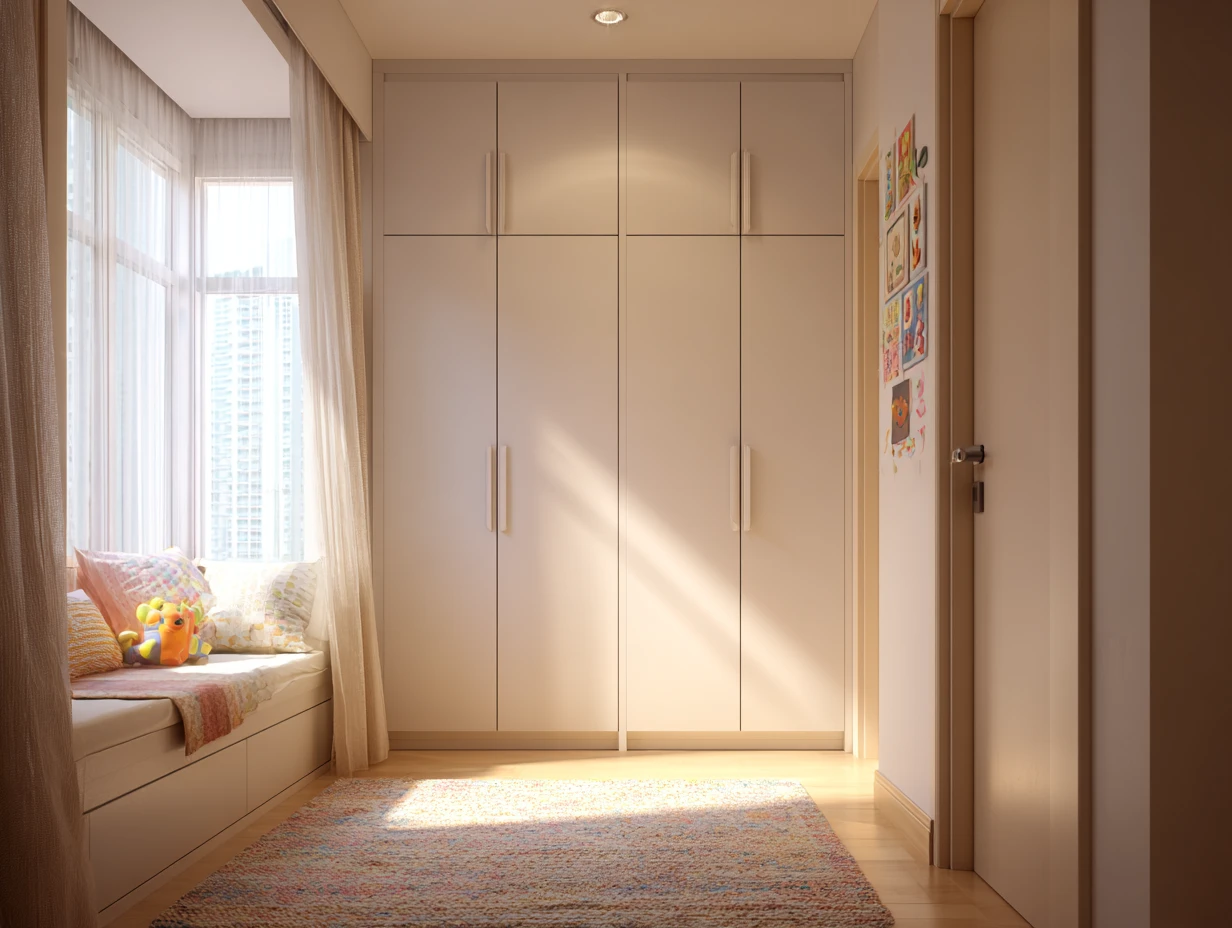
Handle-less shutters reduce visual noise and improve safety in kids’ rooms. Soft-close hardware prevents slamming and finger injuries. This style suits compact rooms where projections matter. A clean kids bedroom wardrobe designs setup like this pairs well with minimal kids room wall design ideas without overwhelming the space.
Two-Tone Laminate Wardrobe Design
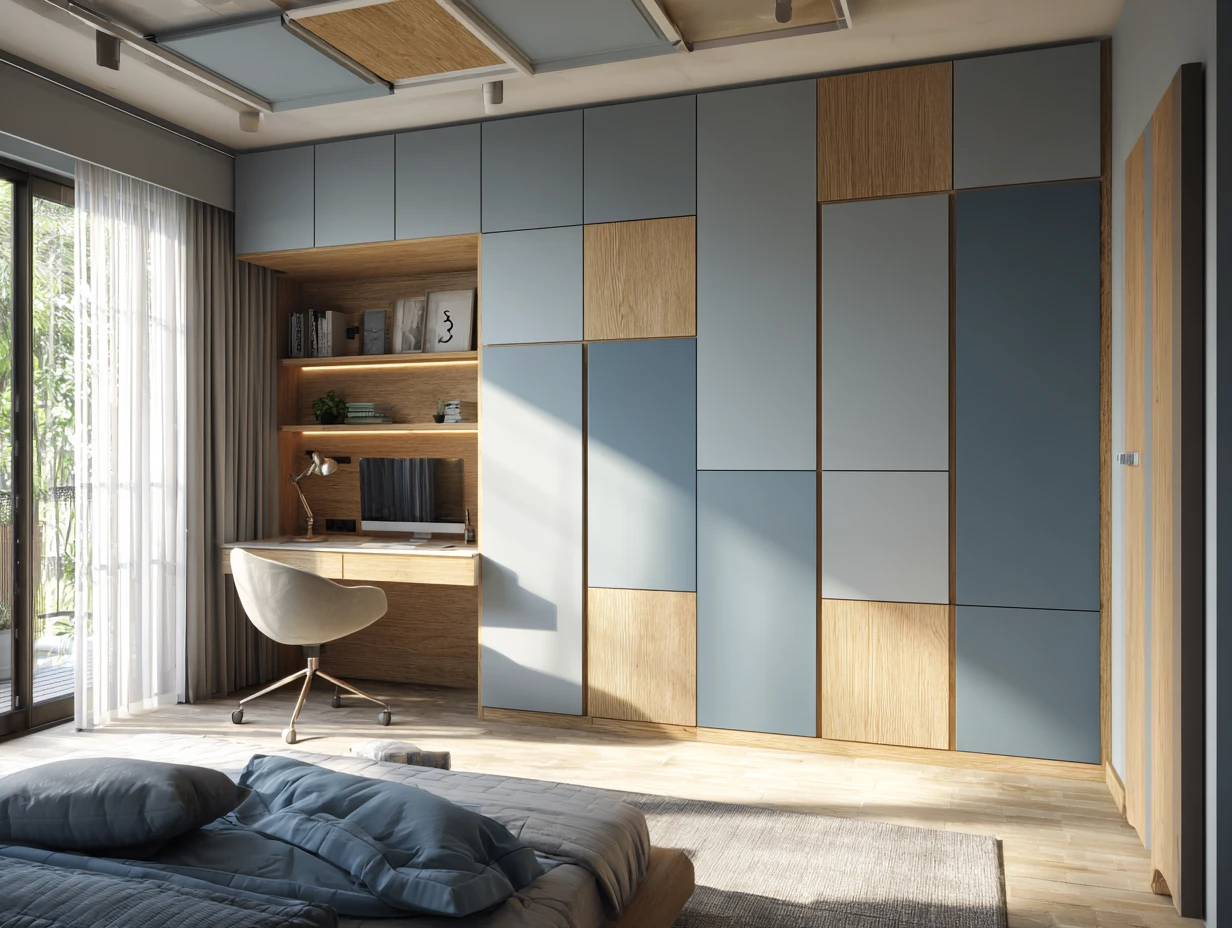
Two-tone finishes add character without leaning into themes. One neutral shade, one soft accent. This keeps the wardrobe designs for childrens room playful but controlled. Laminates are easy to maintain and age better when colours stay muted. It also allows coordination with kids room laminate choices elsewhere in the room.
Sliding vs Hinged Wardrobes for Kids Bedrooms
The choice between sliding and hinged shutters affects safety, space, and long-term use more than style. In a kids’ wardrobe design, this decision should be practical first.
Sliding Wardrobe for Tight Kids Bedrooms
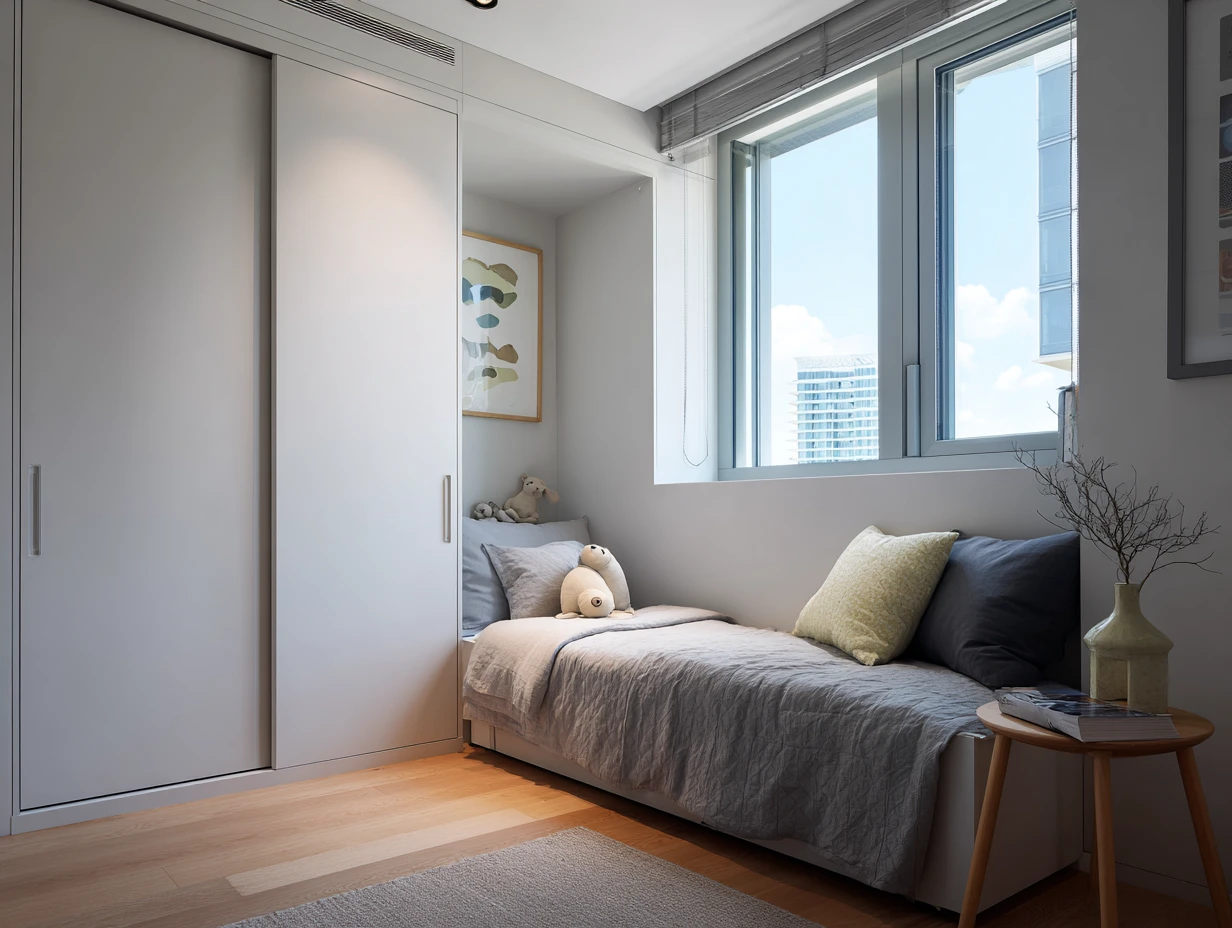
Sliding shutters work well where bed placement or circulation space is limited. There's no swing area, which keeps pathways clear. For children, this reduces accidental bumps and door slams. A sliding wardrobe designed for kids bedroom setup looks clean and modern, especially in narrow rooms. The limitation is access. Only one side opens at a time. This works best when internals are planned carefully. It fits neatly into the overall kids’ room design without crowding the layout.
Hinged Wardrobe with Safety Locks
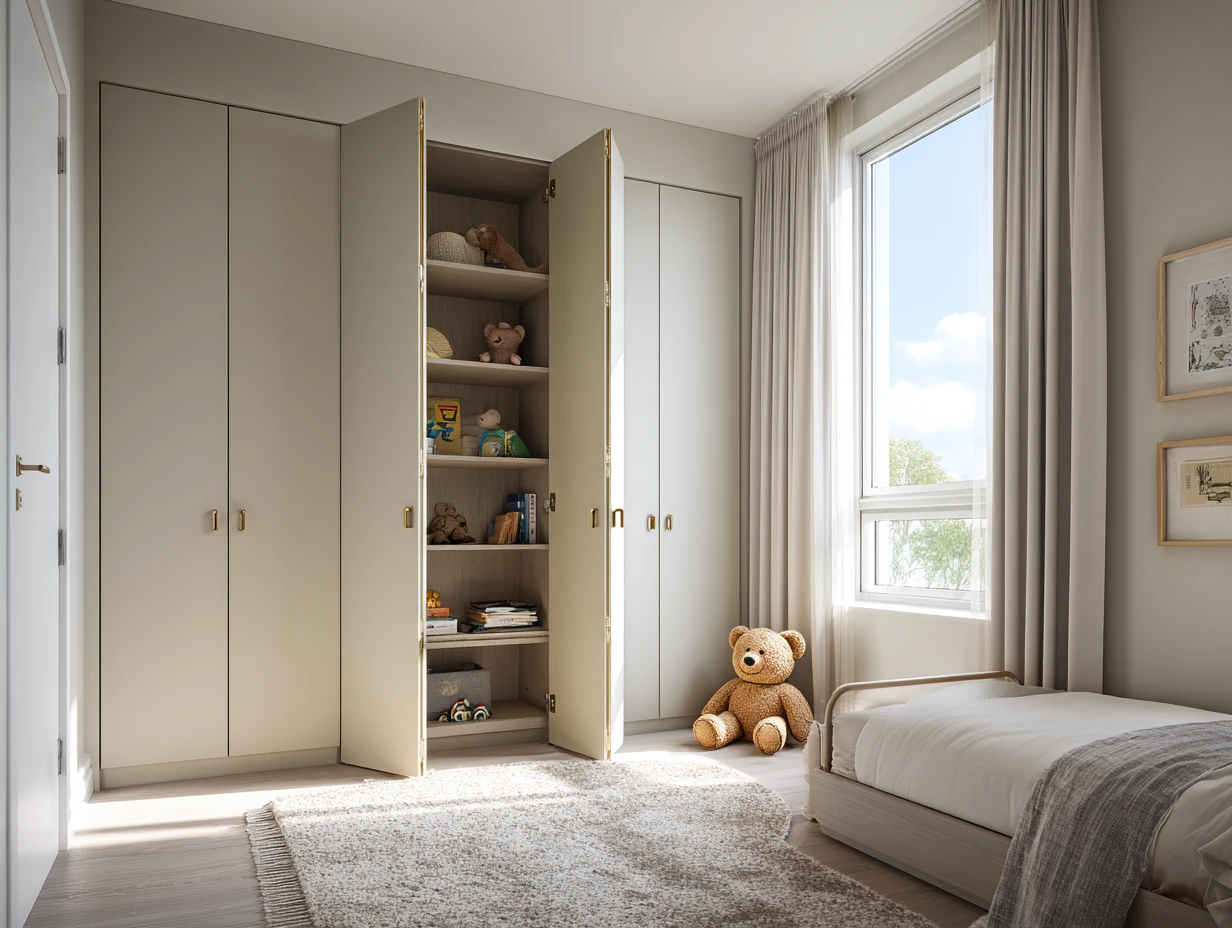
Hinged shutters offer full access to the wardrobe at once. That makes daily organisation easier, especially for younger children. Soft-close hinges and safety locks reduce risk. This kids’ bedroom wardrobe option works well in rooms with enough clearance for door swing. Internals are easier to modify over time. It also aligns well with broader cupboard design choices used elsewhere in the home.
Kids’ Wardrobe With Study Table Combinations
Combining storage and study works only when both get enough space. A forced merge usually hurts one of them. These layouts focus on balance, not novelty.
Side-Attached Study Table With Wardrobe
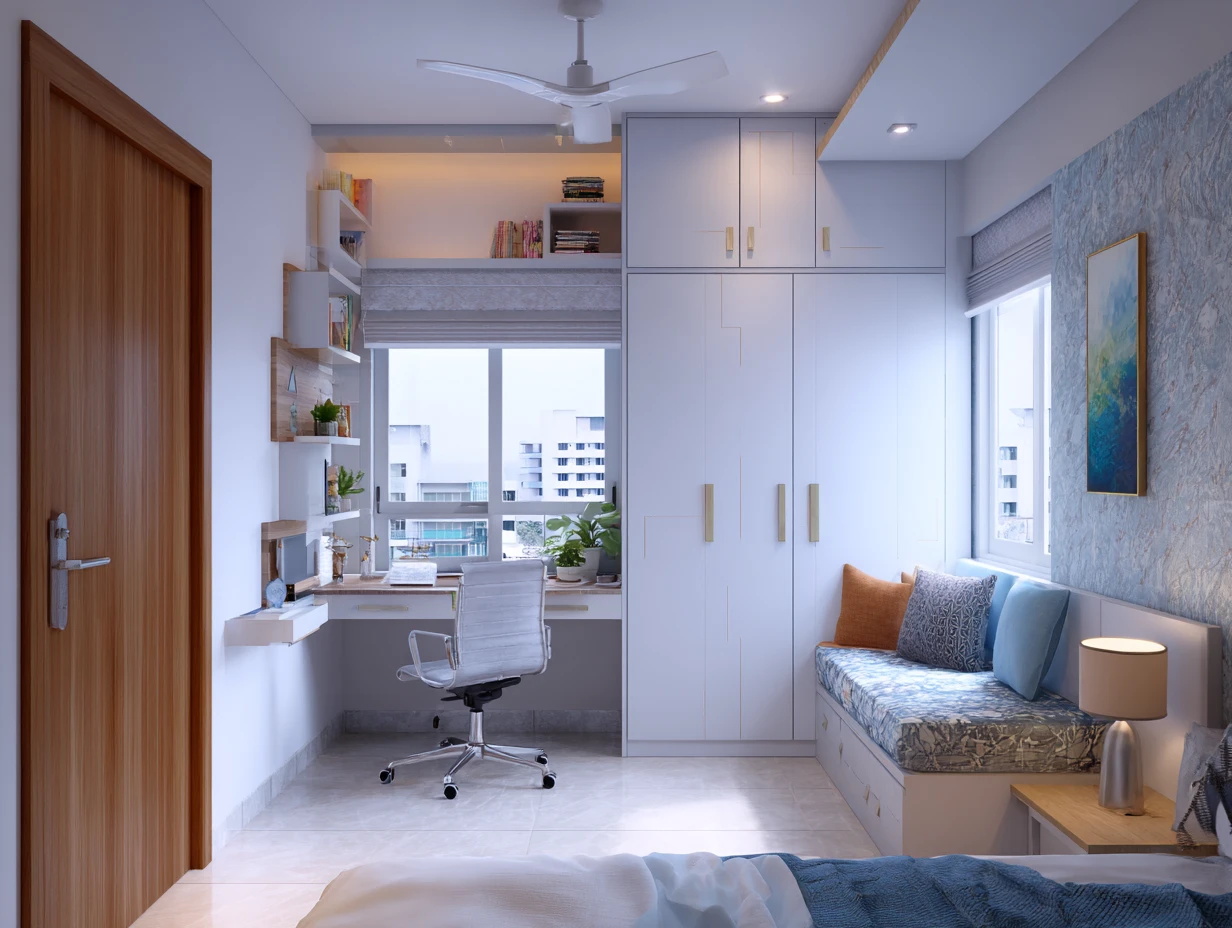
This layout places the study table along one side of the kids’ wardrobe with study table, keeping both functions clearly separated. Storage remains vertical. Study space stays horizontal. It works well in medium-sized rooms where walls can be used fully. The child gets a defined work zone without compromising cupboard depth. This setup fits naturally into kids study room ideas and avoids the cramped feel that many combo units create.
Compact Fold-Out Study Integrated Into Wardrobe
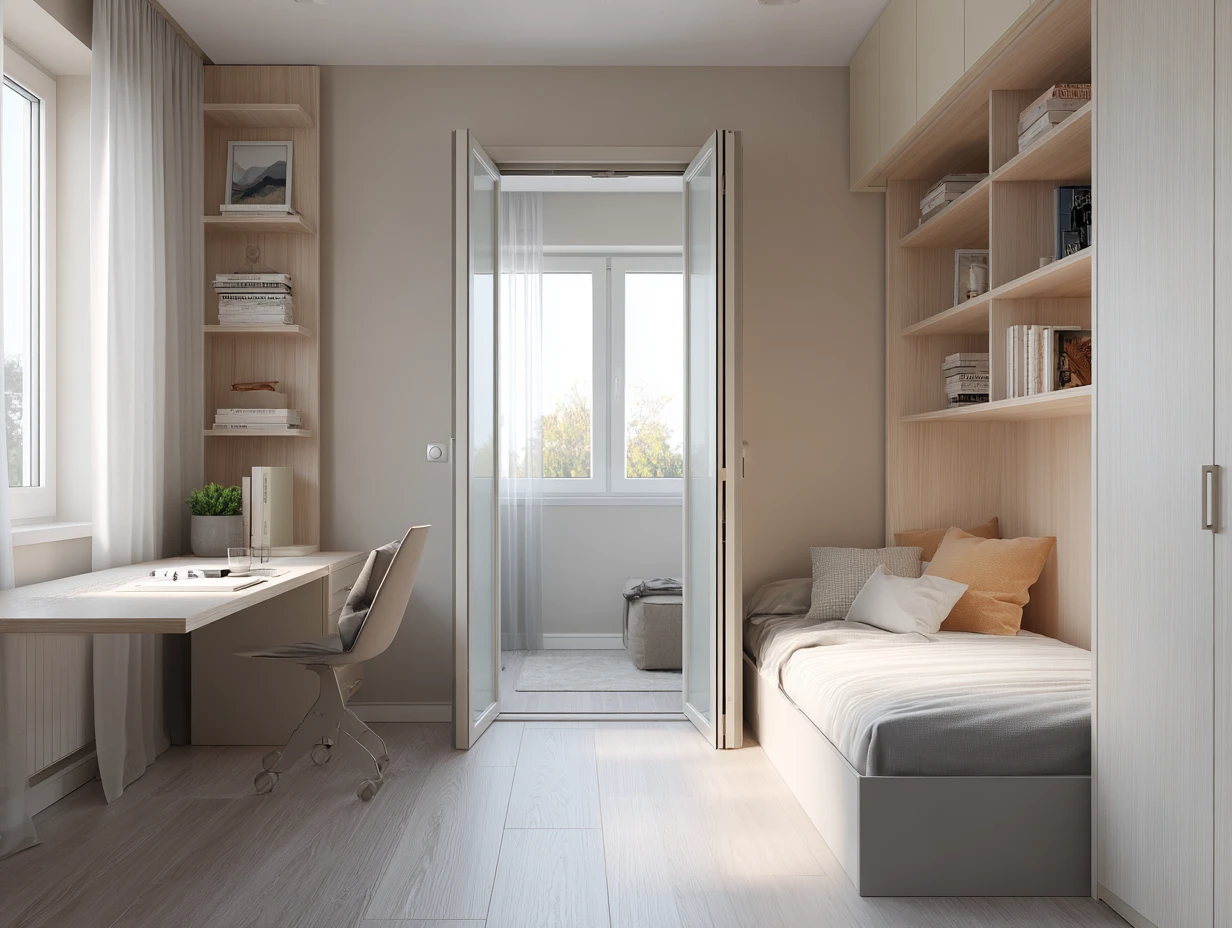
A fold-out desk works in rooms with limited space. The table stays hidden when not in use and opens only during study time. This cupboard for a children’s bedroom solution suits younger kids with shorter study hours. Lighting and leg space must be planned carefully. It works best when supported by nearby bookshelf ideas for kids room to avoid overloading the wardrobe itself.
Girl Wardrobe Design
A girl's wardrobe design avoids locking into trends too early. Preferences change faster than furniture. The goal is flexibility without looking temporary.
Neutral Palette Wardrobe With Soft Accents
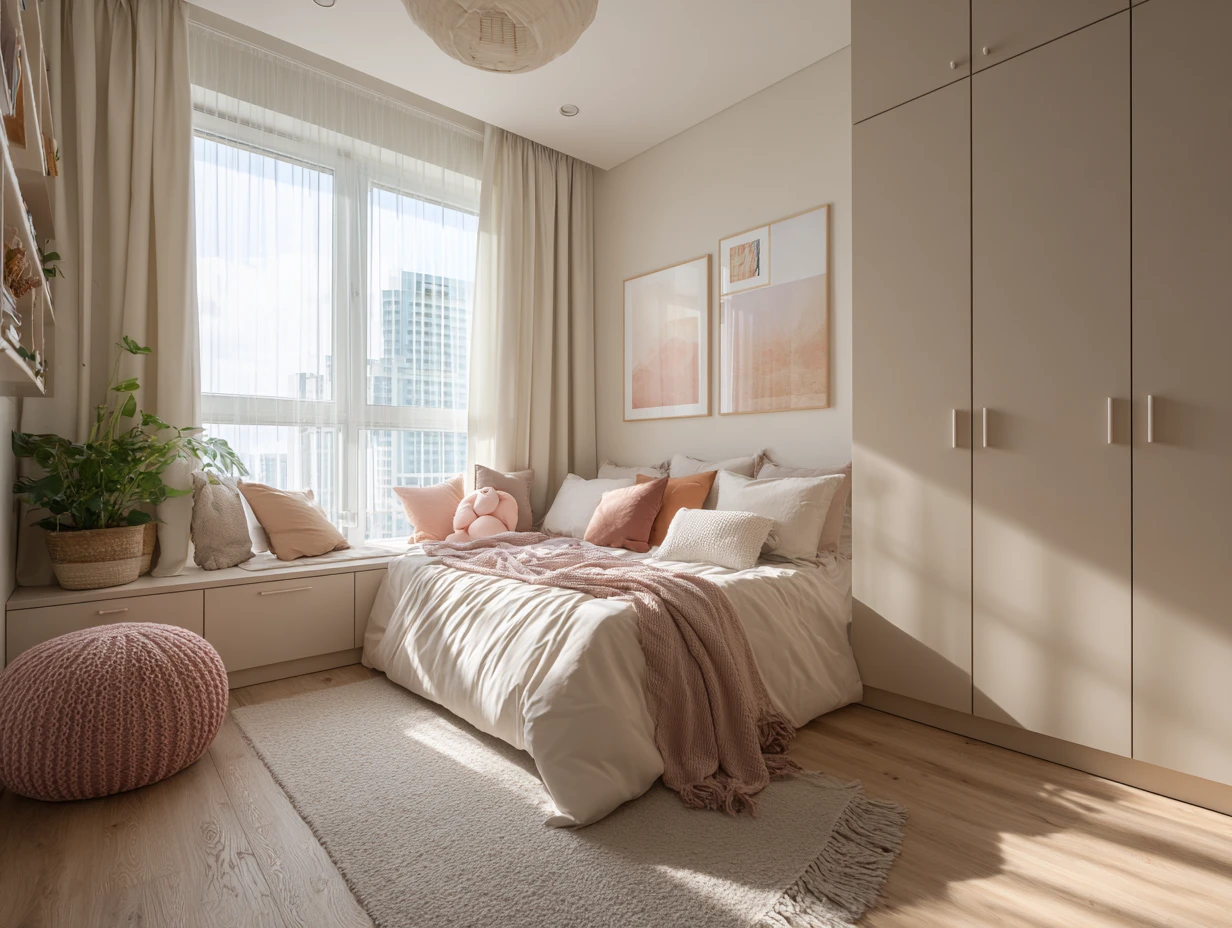
This design uses calm base colours with light accents that can be changed later. Beige, light wood, muted pastels work better than bold shades. It keeps the room adaptable as tastes evolve. A cupboard design for girls like this avoids age-specific themes and blends easily with changing décor. It also allows updates through handles, knobs, or wall colour rather than full replacement. This approach pairs well with girl's room design that needs to grow over time.
Wardrobe With Mirror and Internal Organisers
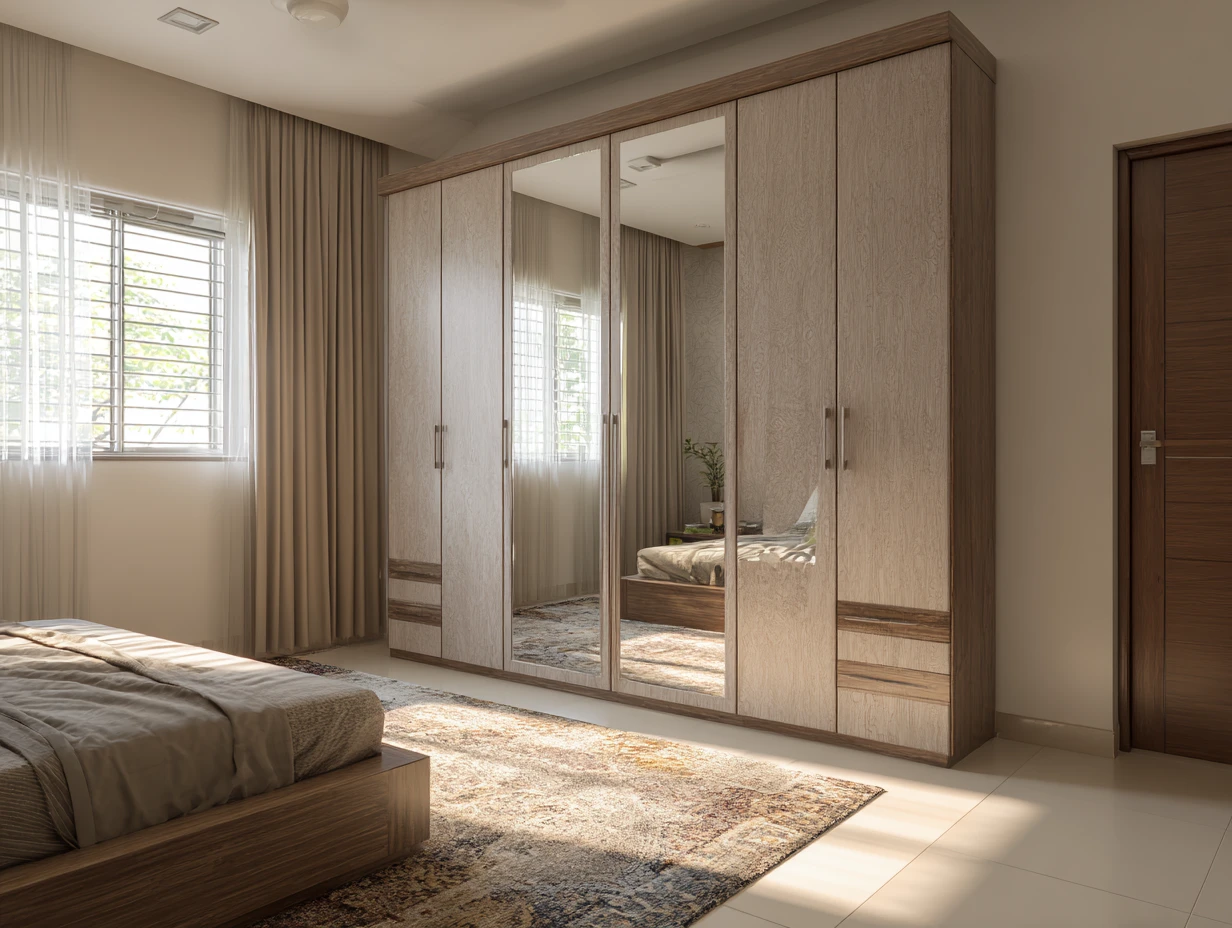
A mirror inside the shutter or on a narrow panel adds daily utility without taking extra space. Internal organisers for accessories, hair items, and small clothing prevent clutter. This girl’s cupboard design improves usability without increasing size. Soft-close shutters and rounded edges matter here. It keeps the wardrobe practical while supporting independence as the child grows. It fits naturally into broader home interior ideas focused on function over decoration.
Flexible Long-Term Wardrobe Layout
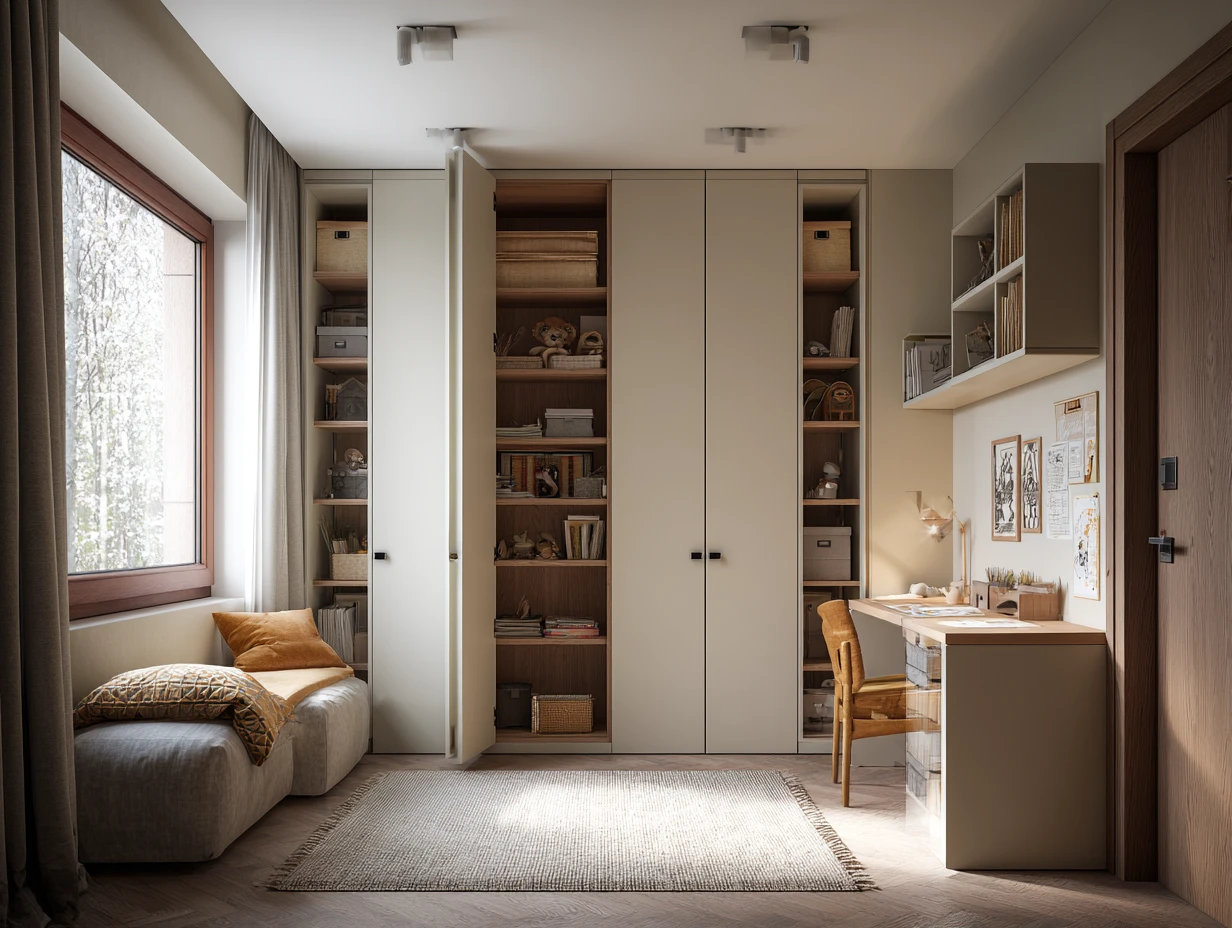
This layout prioritises adjustable shelves and mixed storage zones. Hanging space can expand later. Drawers can reduce. Nothing is over-fixed. A modern wardrobe design for girls like this avoids redesign during teenage years. Neutral internals matter more than shutter style here. When planned well, it works across age groups and aligns with evolving cupboard design choices in the home.
Boy Kids Wardrobe Design
A functional boy’s wardrobe design focuses less on appearance and more on durability. Storage needs change quickly, but wear and tear are constant.
Rugged Wardrobe for Active Use
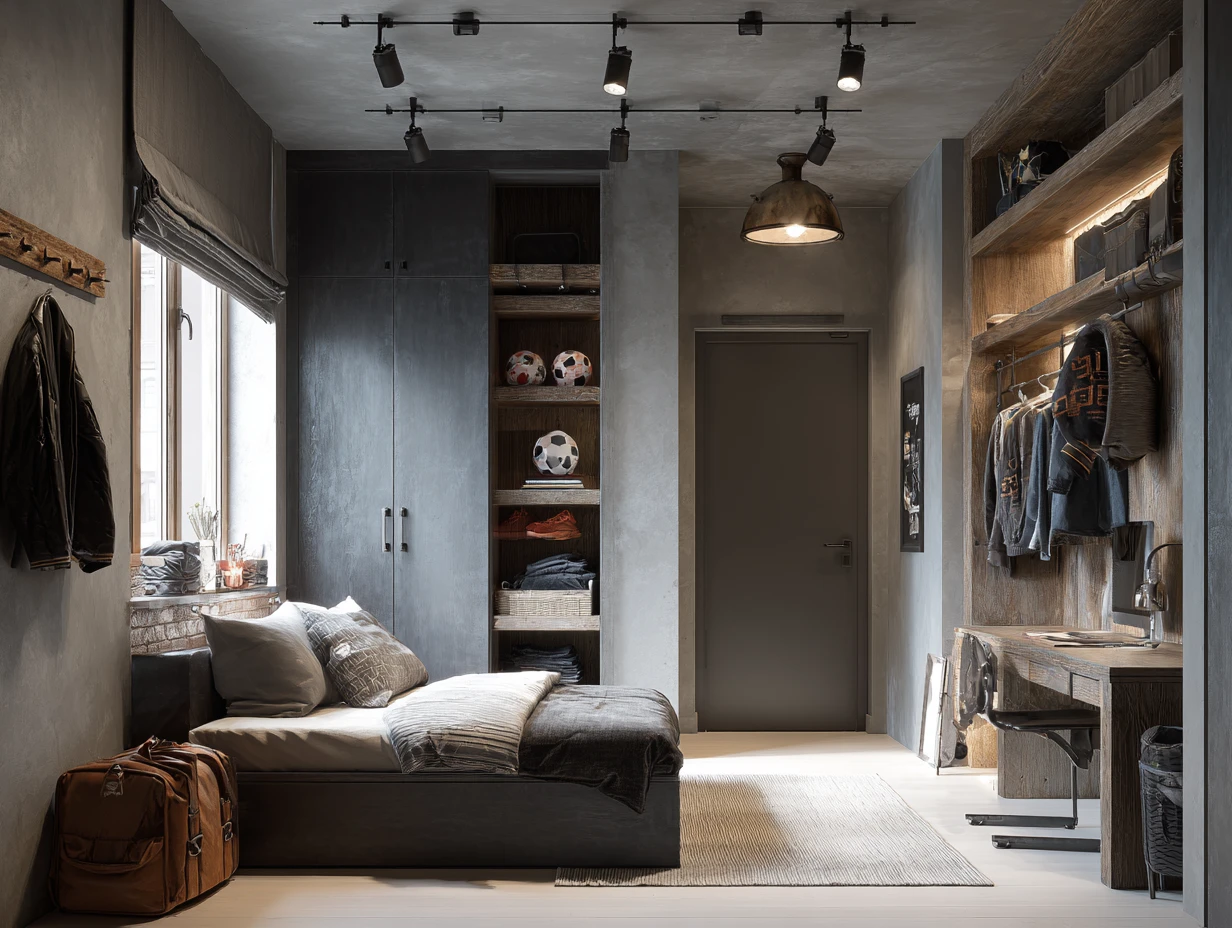
This design prioritises strength over finish. Thicker shutters, sturdy hinges, and fewer delicate elements reduce damage over time. Internals focus on shelves and open sections rather than too many drawers. It handles rough use without constant repairs. A kid's bedroom wardrobe built this way stays functional even with sports gear and heavy bags.
Minimal Wardrobe With Open Storage
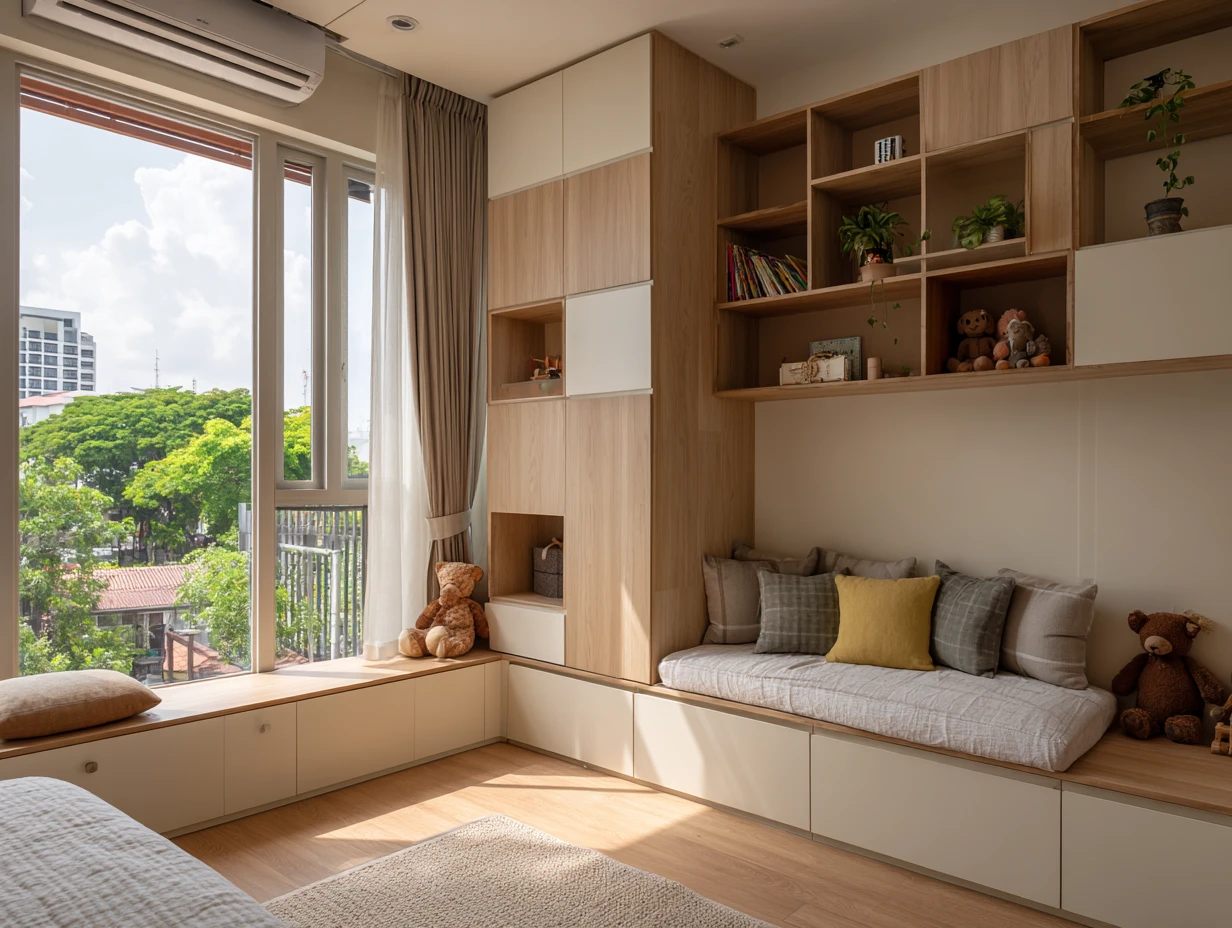
This layout reduces closed compartments and adds open shelves or cubbies for quick access. It helps keep frequently used items visible and reduces clutter build-up. A kid’s room wardrobe design like this supports independence without forcing organisation. It works well in smaller rooms and blends easily with evolving kids’ room design without needing frequent changes.
Cupboards Beyond Clothes in Children's Bedrooms
A kid’s room wardrobe often ends up storing far more than clothes. Planning for that early avoids spillover clutter across the room.
Toy and Book Integrated Cupboard
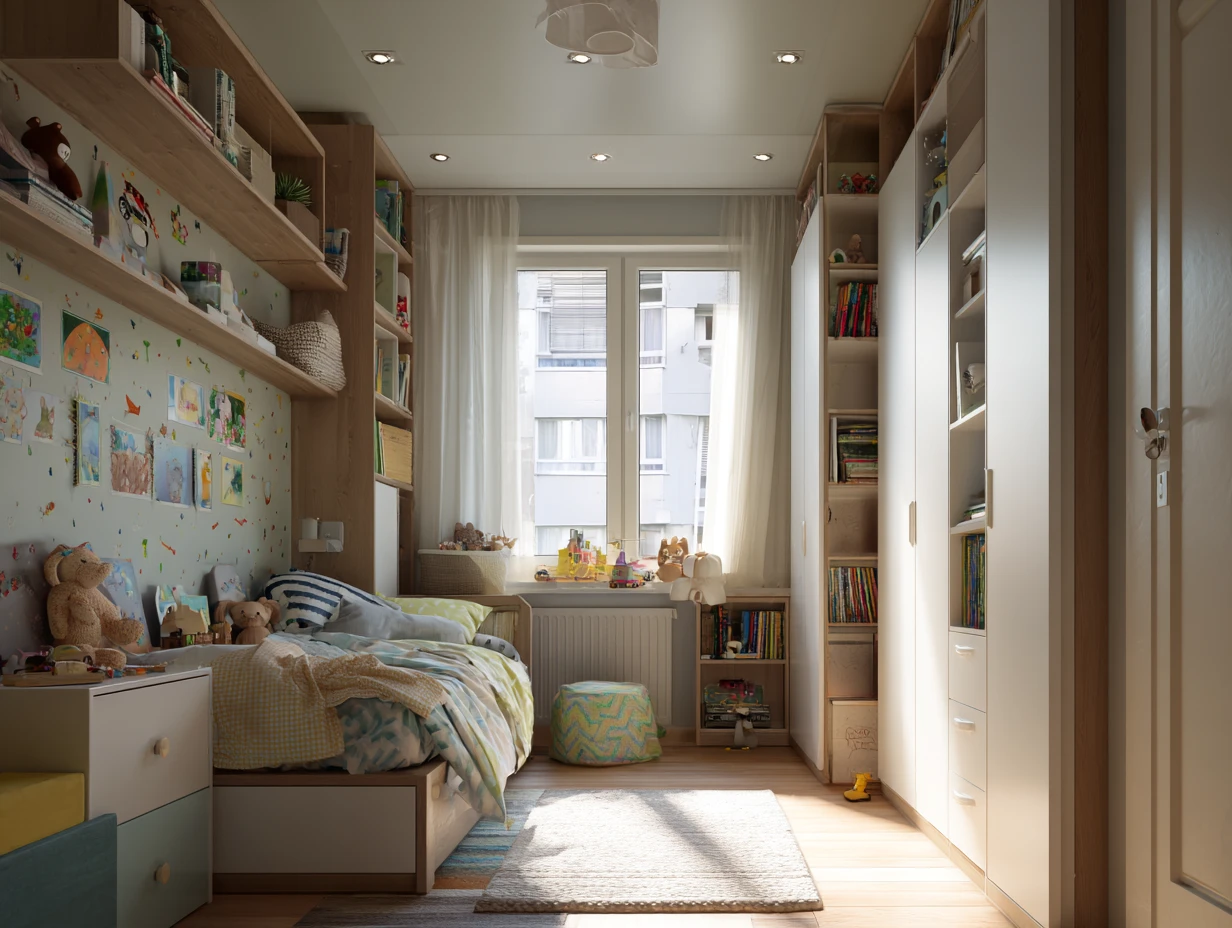
This design combines closed storage for clothes with open or semi-open sections for toys and books. It keeps frequently used items within reach without mixing them into clothing shelves. A children’s cupboard planned this way reduces mess and teaches basic sorting habits. It works especially well when wardrobes sit near reading or play zones and pairs naturally with kids playroom ideas without duplicating storage.
Seasonal Storage Cupboard Within the Wardrobe
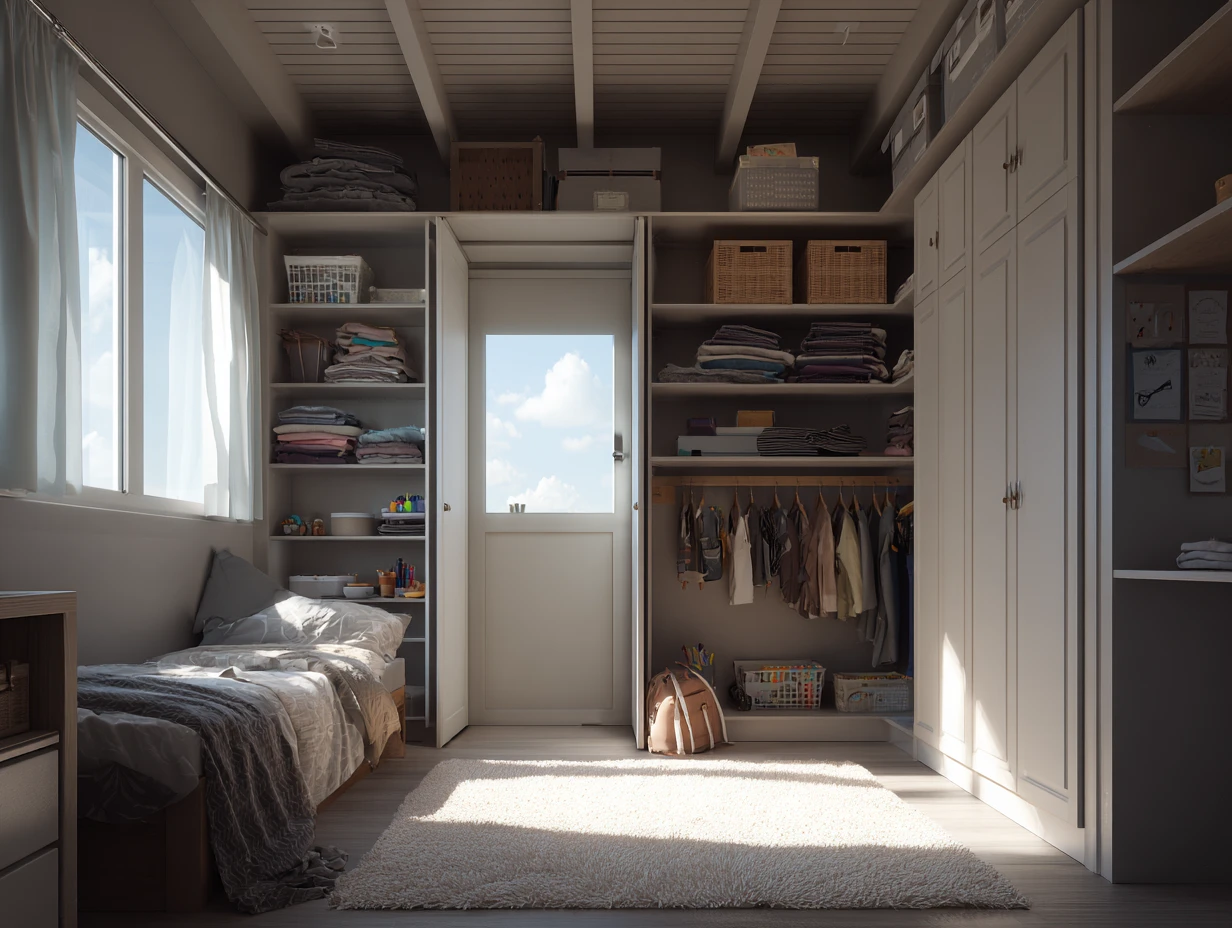
Seasonal items take up more space than expected. Extra blankets, winter wear, spare bedding. This layout reserves upper or deeper sections for long-term storage while keeping daily-use areas accessible. A kids’ room cupboard design like this prevents overcrowding in active zones. It also reduces the need for external storage units and integrates smoothly with broader cupboard design planning in the home.
Kids’ Wardrobe Design Mistakes to Avoid
Most wardrobe problems don't show up immediately. They appear after months of use, when habits form and storage starts failing quietly.
- One common mistake is planning everything at adult height. Tall shelves and high hanging rods look neat but remain unused. Kids either stop accessing the wardrobe or rely on adults for simple tasks. This defeats the purpose of a functional kids’ wardrobe design.
- Another issue is over-segmentation. Too many small drawers and fixed compartments limit flexibility. Children's storage needs change every year. A rigid children’s wardrobe design doesn't adapt and becomes cluttered fast.
- The third mistake is overdesigning shutters. Loud colours, characters, and novelty finishes age poorly. They force early replacement even when internals still work.
- Finally, ignoring future use is costly. Wardrobes planned only for the present stage rarely survive growth. Neutral internals and adjustable sections matter more than decorative details.
Conclusion
A kid’s wardrobe doesn't fail because the colour feels dated. It fails because it stops fitting real life. Clothes change, and routines shift. What worked at four becomes wrong at eight.
In case you are looking for more such ideas, just contact Interior Company. If there's one thing worth getting right in a child's room, it's storage that adapts quietly in the background. When that works, everything else in the room feels easier.
*Images used are for representational purposes only. Unless explicitly mentioned, the Interior Company does not hold any copyright to the images.*
Kids Room Design Ideas for You
- Color
- Theme
- Size
- Gender
- Wall Color
- Floor Material
- Green Color Kids Room
- Off-White Color Kids Room
- Navy Blue Color Kids Room
- Multicoloured Color Kids Room
- Multi-Colour Color Kids Room
- Orange Color Kids Room
- Metallic Silver Color Kids Room
- Pink Color Kids Room
- Light Blue Color Kids Room
- Grey Color Kids Room
- Red Color Kids Room
- Teal Color Kids Room
- Beige Color Kids Room
- Brown Color Kids Room
- Black Color Kids Room
- White Color Kids Room
- Yellow Color Kids Room
- Blue Color Kids Room
- Wooden Brown Color Kids Room
- Orange Wall Color Kids Room
- Pink Wall Color Kids Room
- White Wall Color Kids Room
- Purple Wall Color Kids Room
- Yellow Wall Color Kids Room
- Beige Wall Color Kids Room
- Black Wall Color Kids Room
- Blue Wall Color Kids Room
- Brown Wall Color Kids Room
- Green Wall Color Kids Room
- Gray Wall Color Kids Room
- Multi Wall Color Kids Room
- Dark Hardwood Floor Material Kids Room
- Carpet Floor Material Kids Room
- Travertine Floor Material Kids Room
- Ceramic Tile Floor Material Kids Room
- Cork Floor Material Kids Room
- Slate Floor Material Kids Room
- Laminate Floor Material Kids Room
- Porcelain Tile Floor Material Kids Room
- Plywood Floor Material Kids Room
- Light Hardwood Floor Material Kids Room
- Limestone Floor Material Kids Room
- Painted Wood Floor Material Kids Room
- Medium Hardwood Floor Material Kids Room

Ready for a home transformation?
Let our designers assist you!
Recent Posts


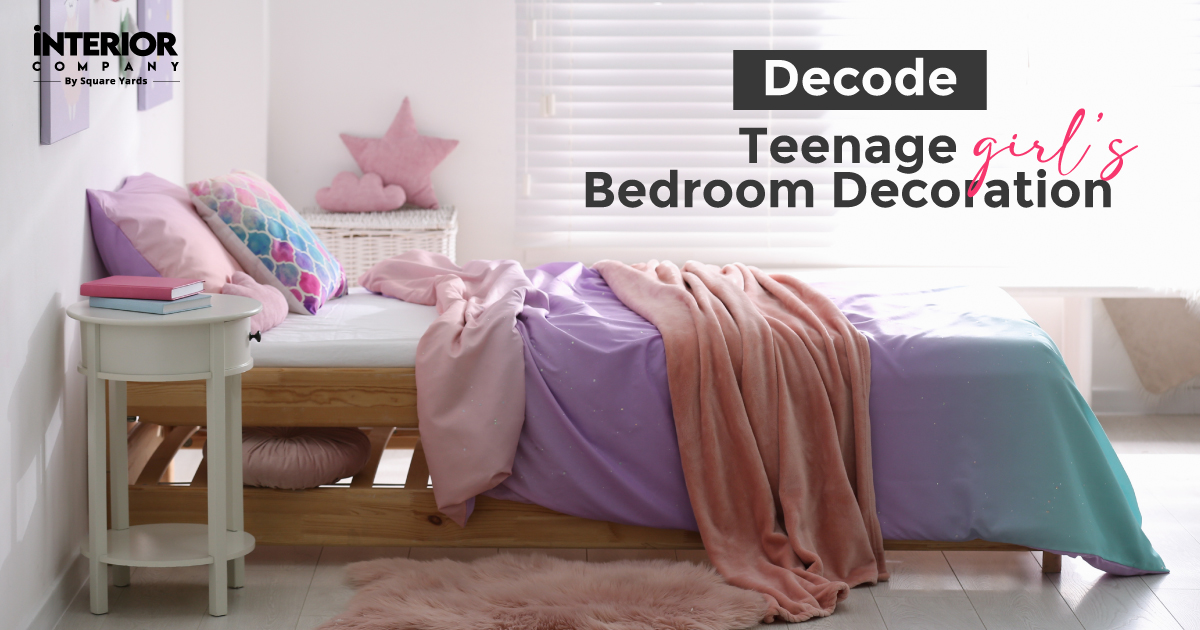
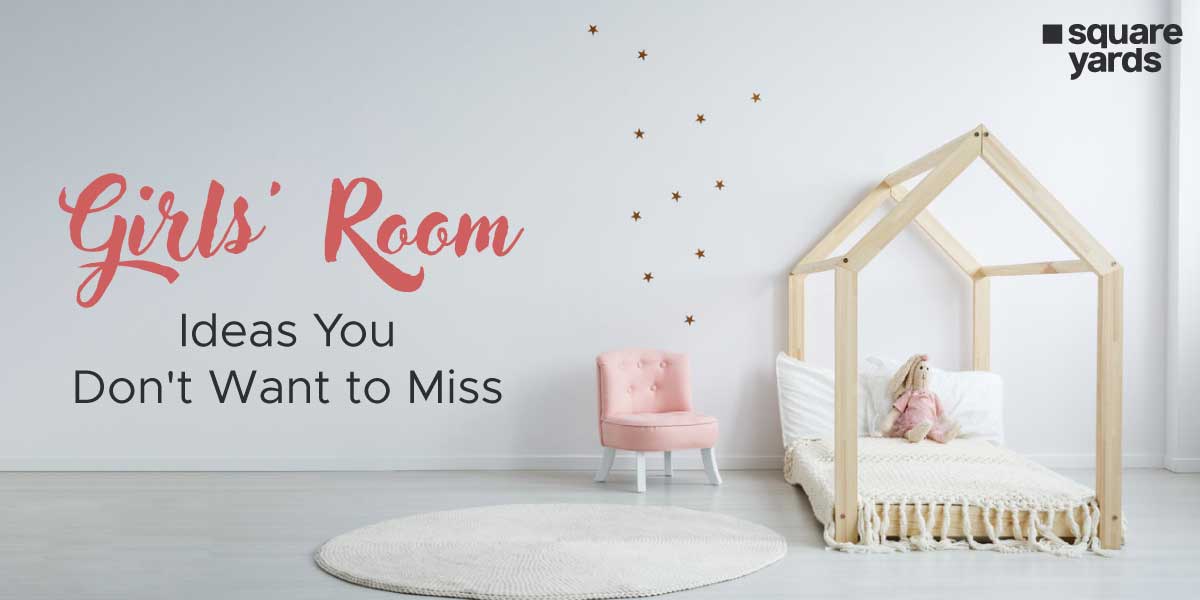






The best option is one that prioritises reach and flexibility. A cupboard for children’s bedroom should have lower hanging rods, adjustable shelves, and minimal fixed compartments. Overly tall or deep cupboards reduce usability and lead to clutter. Planning should match how the child actually uses the room, not how an adult would.
Both work, depending on the room. Modular units offer flexibility and faster installation. Custom-built kids’ wardrobe design works better when space is tight or layouts are irregular. The key factor isn’t the format, but whether internals can be adjusted over time. Fixed layouts fail early.
Yes, when planned correctly. Sliding wardrobe designs for kids’ bedrooms reduce door swing accidents and save space. Soft-close tracks and sturdy panels are essential. Internals must be planned carefully since only one section opens at a time. They fit well into compact kids’ room design layouts.
Less than most people assume. A functional kids’ bedroom wardrobe focuses on daily-use storage, not maximum capacity. Extra shelves usually go unused. Seasonal items should be stored separately or higher up. Smart zoning matters more than size.
Matt or textured finishes perform better than glossy ones. They hide fingerprints and minor scratches. Neutral shades last longer visually. For durability, thicker boards paired with good kid’s room laminate choices reduce long-term maintenance.
Yes, if space is planned properly. A kid’s wardrobe with a study table works best when both functions have defined zones. Avoid squeezing a desk into leftover space. Proper lighting and legroom are essential.
Related Category
- False Ceilings
- Furniture
- Home Decor
- Paint and Color
- Walls and Texture