- Design Ideas
- Cities
- Trends
- Guides
- Price Calculators
- Interior DesignersNEW
- Our Portfolio
- More


- Home
- Trends
- Modular Solution
- Modular Kitchen
- Quartz Countertop Guide
Quartz Kitchen Countertops: Types, Dimensions, Designs And Prices

When someone says they have a quartz kitchen counter, they mean a factory-made slab that sits on top of the cabinets. It looks like stone, feels solid, and most people just call it “quartz top” or “quartz platform”.
Inside that slab, there is not one big natural piece. It is made from ground quartz rock, mixed with a binding material and colours, and then pressed in large machines. Think of it more like a tightly packed mixture than a single chunk. The slab is then cut to the size of your kitchen platform or quartz tabletop, polished on its surface, and installed.
The name creates confusion because shops also keep natural quartzite. The two sit close to each other on the rack, and the words sound almost the same. Quartzite is a mined stone, like granite or marble. It is sliced straight from the block and finished. The material used in most quartz kitchen countertops is the factory-made one, not quartzite. If you visit a stone yard, you will usually see separate stands for both.
Table of Content
Quartz Countertop Materials And Types
Quartz Countertop Dimensions And Thickness
Quartz Countertop Designs And Colours
Advantages Of Quartz Countertops
Quartz Countertop Prices In India
Best Quartz Countertop Brands In India
Quartz Countertop Installation Process
How To Maintain Quartz Countertops?
Limitations Of Quartz Countertops
Quartz Countertop Edges And Finishes
Quartz Countertops For Different Kitchen Layouts
Common Mistakes People Make With Quartz Counters
Final Thoughts
In daily use, the engineered version behaves differently from softer stones and from plain tiles. The mix inside is packed tightly, so liquids do not sink in as fast. For many families, that is enough reason to shift from older stone platforms to quartz stone for kitchen worktops, especially when renovating an old flat and wanting something more substantial and easier to maintain.
Quartz Countertop Materials And Types
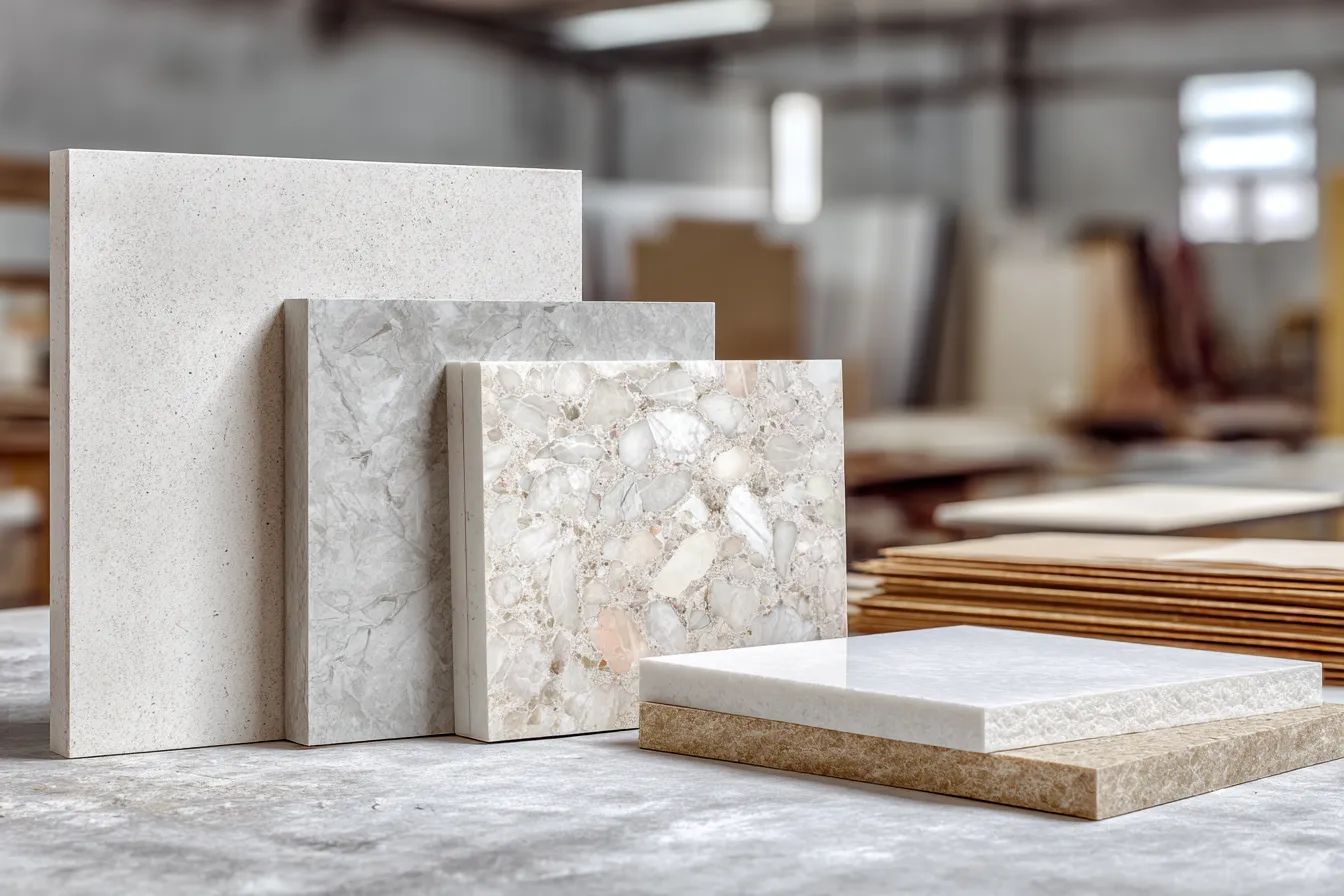
When you ask for quartz in a stone yard or large tile shop, they will not show only one product. You may see large slabs on stands, smaller cut pieces, and, sometimes, tiles stacked in a corner. All of these are called 'quartz', but they are used in different ways. Here is some information about those varieties.
Engineered Quartz Slabs
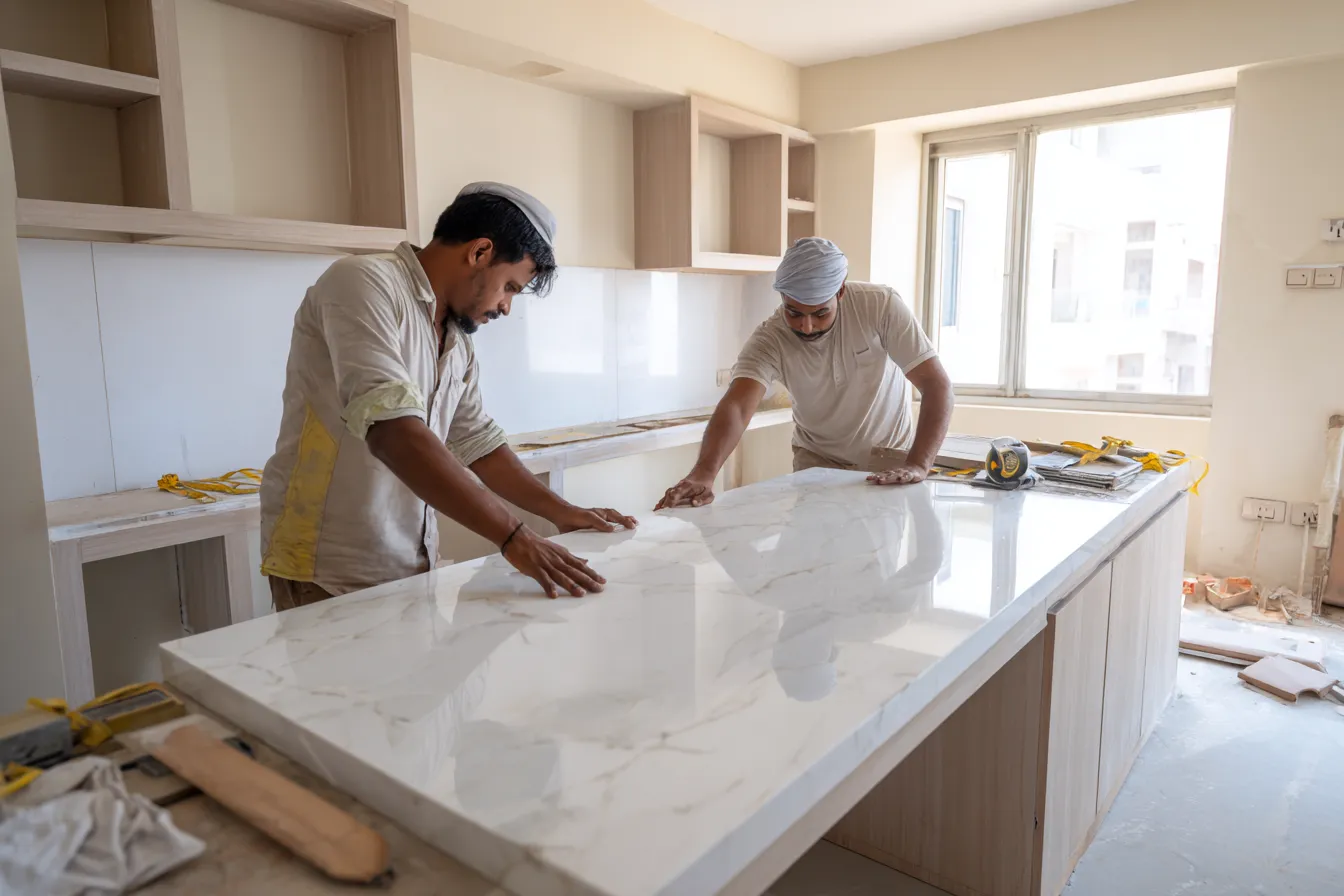
These are full-size slabs. Each piece is long and wide enough to cover a standard kitchen counter in one stretch. The slab is made from crushed quartz, resin and colour pigments that are pressed together in a factory. Most main kitchen platforms use this format. It also works for a breakfast counter or an island, if the layout has space.
Quartz Tiles And Smaller Pieces
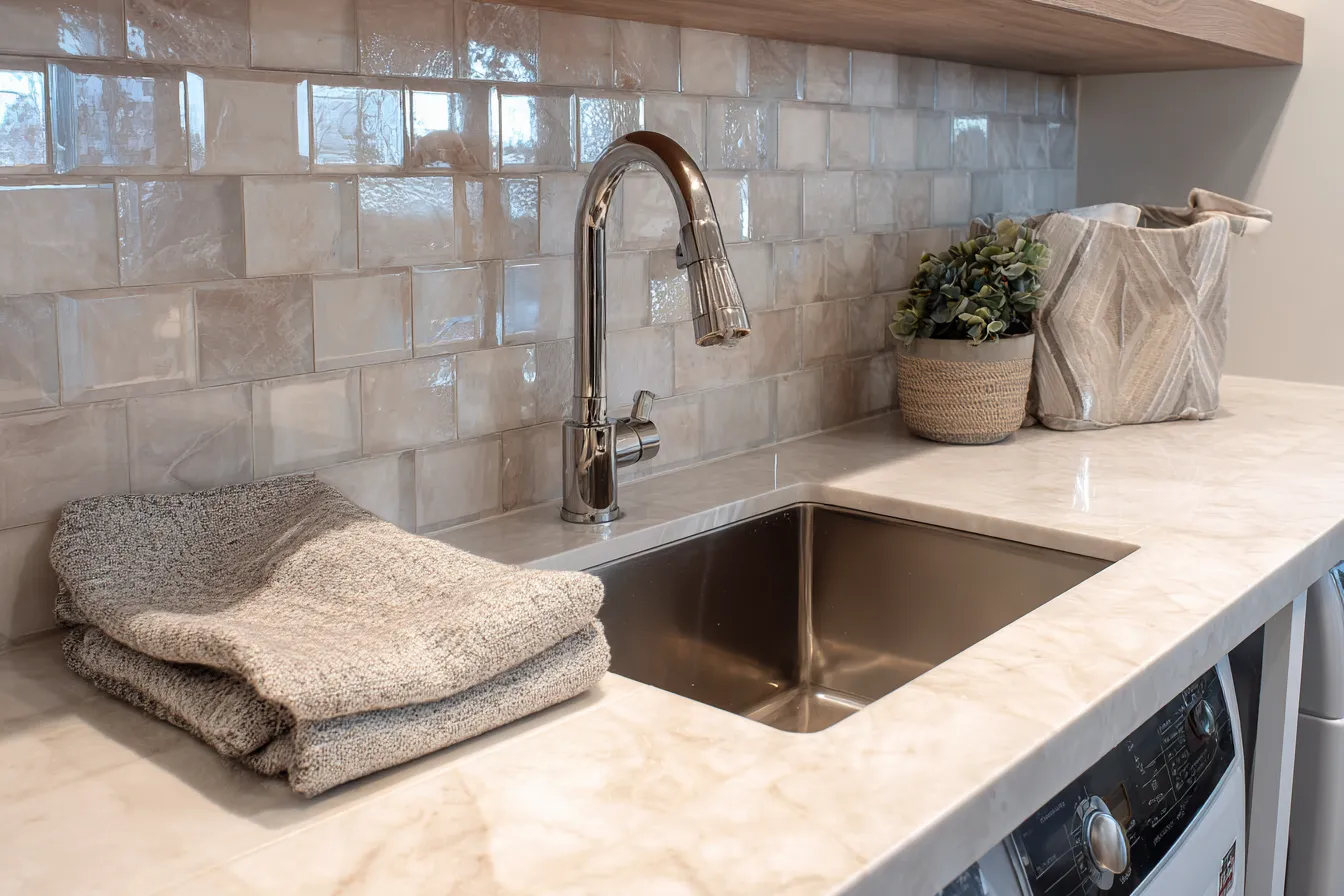 Some shops offer quartz tiles instead of full slabs. These tiles can be used for backsplashes, small counters or utility areas. They cost less, but you will see more joints, so the surface does not look as seamless as a single slab. Leftover pieces are often used for table tops, side units, study tables or crockery counters.
Thin Quartz Sheets And Panels
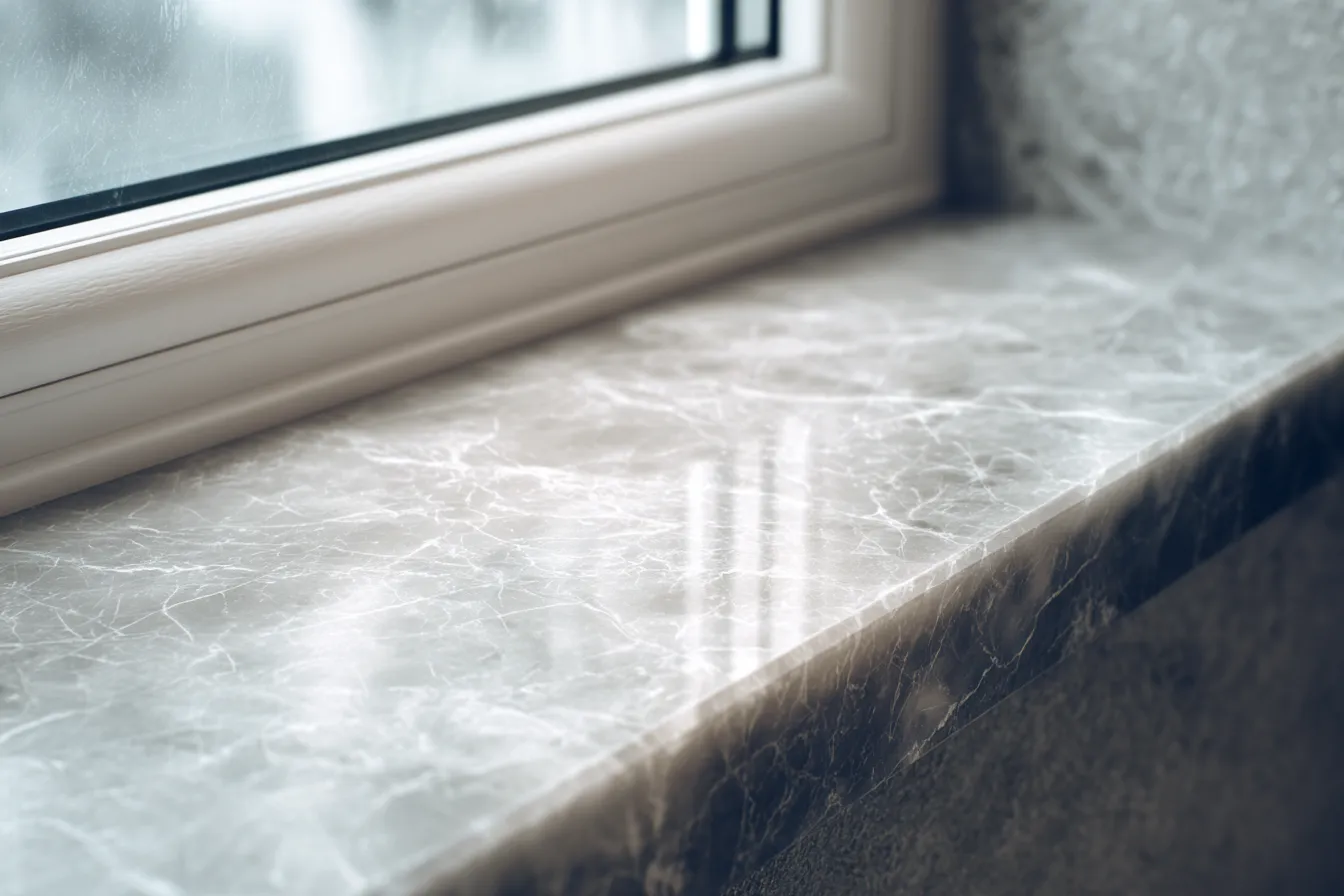
Thin quartz sheets or panels are also available. These are meant for light use. They look like stone, but they are not designed to withstand the heavy load and heat of a functioning kitchen platform. People use them on wardrobe tops, window sills or shelves. For the main kitchen counter, a proper slab with good thickness is still the safer choice.
Quartz vs Quartzite And Composites
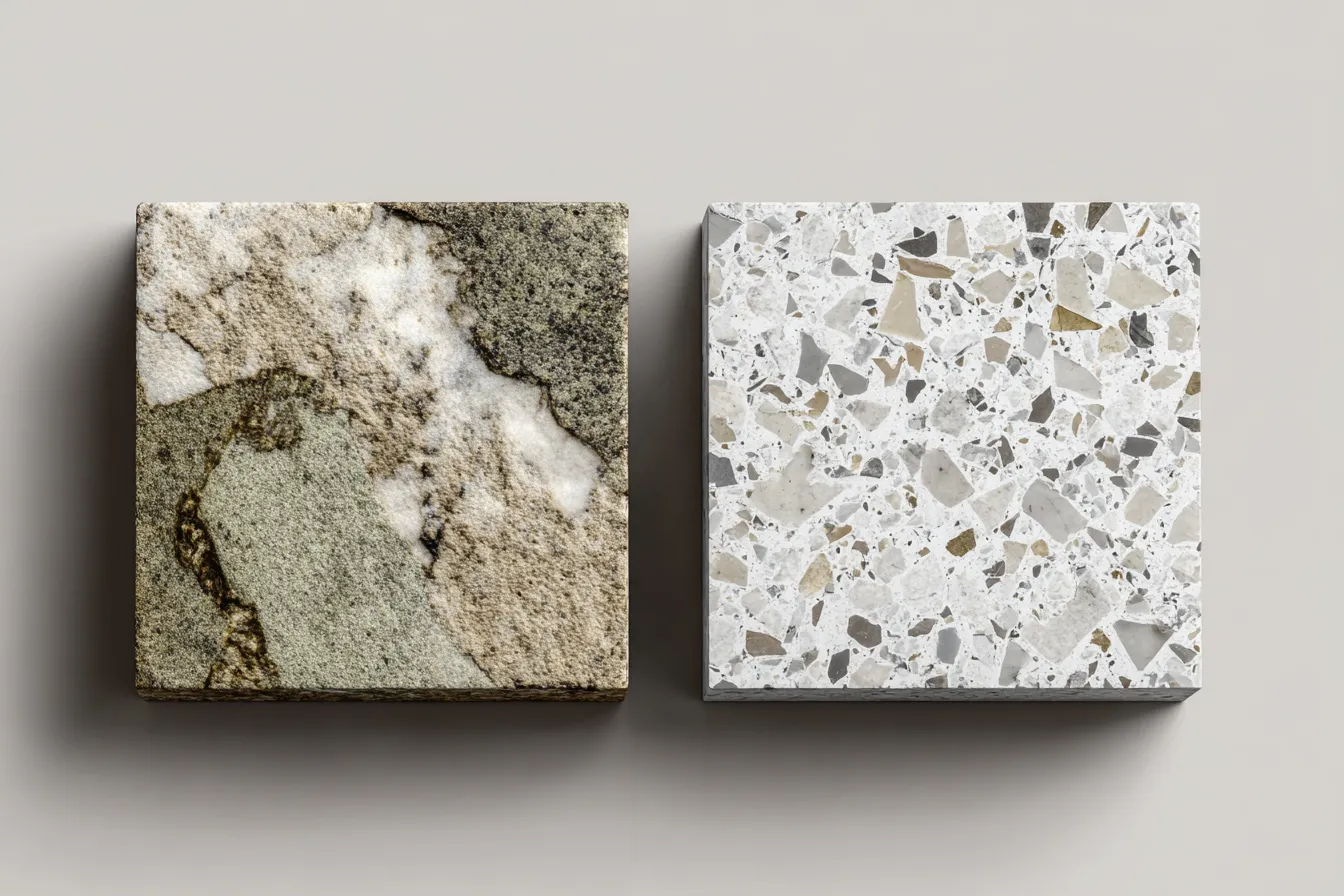
Quartzite is a natural stone quarried directly from a giant stone mine, cut, and polished like granite. Engineered quartz is a composite material made in a factory and has a more uniform colour. It is easy to get confused because of the similarity in names, but there is a clear difference between the two materials.
You may also like!
| Semi Modular Kitchen Design | Semi Modular Kitchen Design Trends for Home |
| Kitchen Partition Ideas | Stylish Kitchen Partition Ideas for Modern Homes |
| Kitchen Wallpaper Design | Best Kitchen wallpaper Design to Suit Your Mood |
| Kitchen Curtain Ideas | Simple Kitchen Curtain Designs Ideas for Indian Home |
Quartz Countertop Dimensions And Thickness
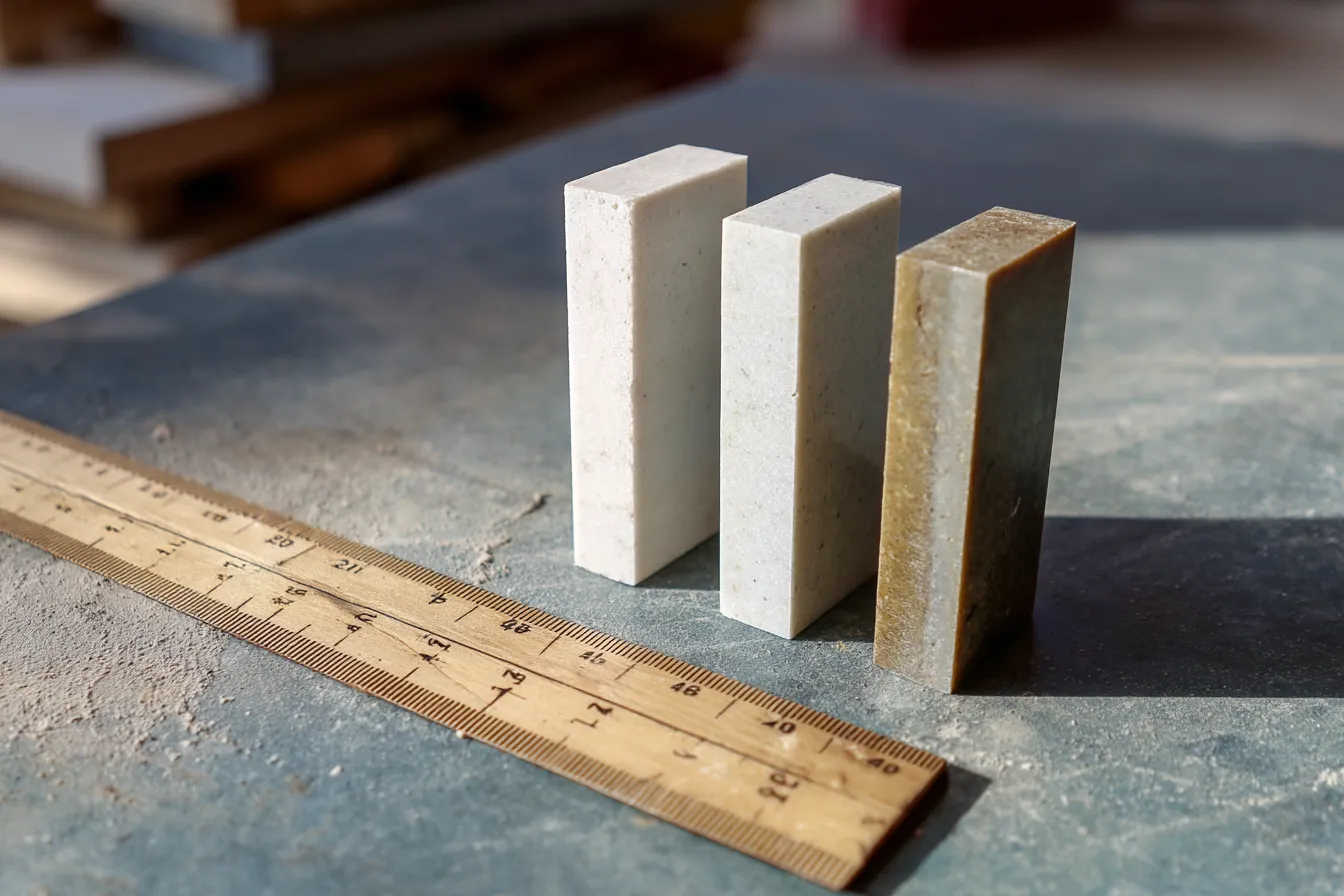
When you start buying quartz for a kitchen, the first thing the shopkeeper usually asks is, 'What thickness do you want?' Most people think only about colour, but the slab’s size and thickness determine how the counter behaves later. In a small kitchen, you may need only one straight piece. In a larger kitchen, the slab has to turn at the corner or take a cutout for the sink, so the slab’s thickness becomes essential.
Slab Sizes You Usually Get
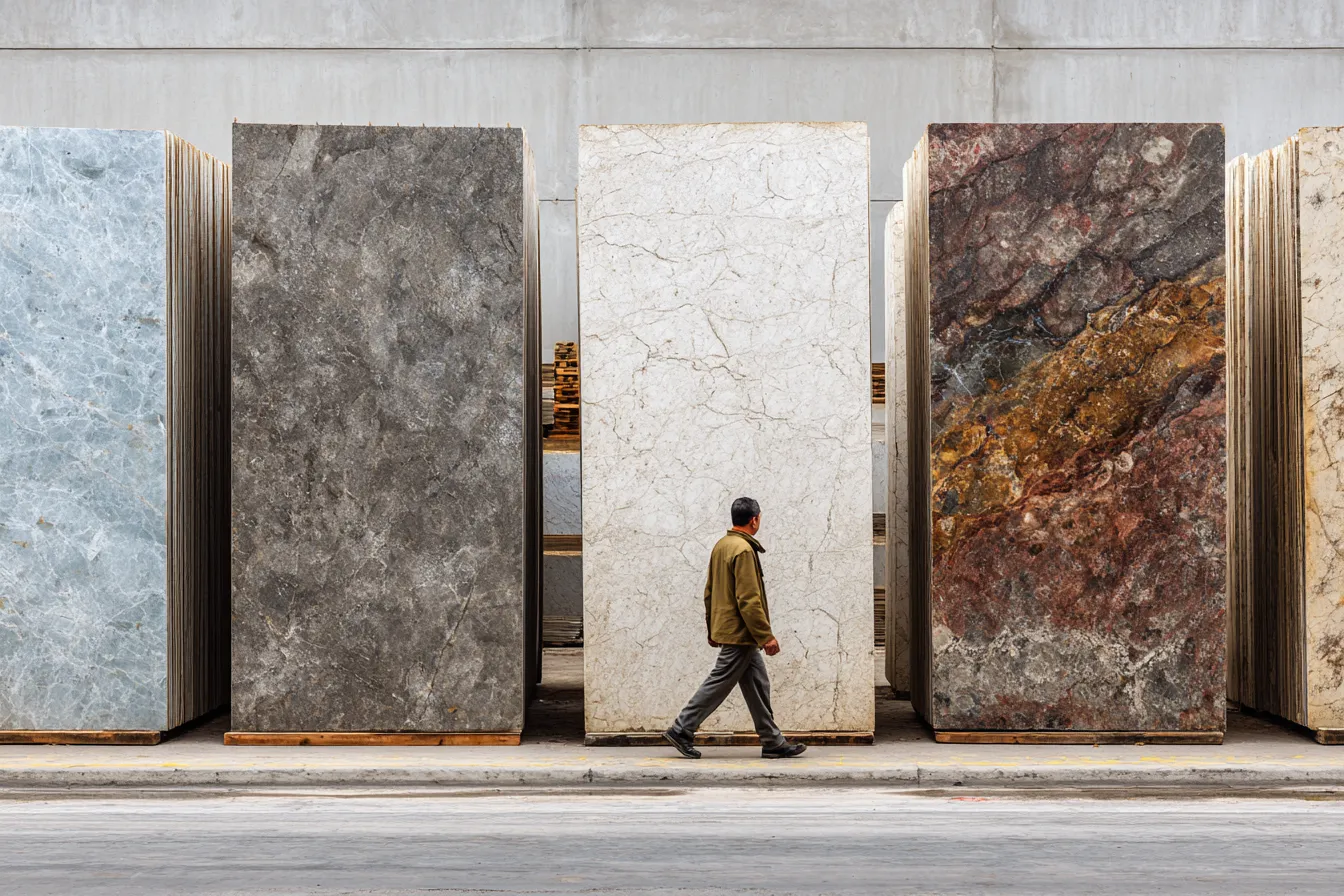
Quartz slabs are primarily available in large sheets. They are long enough to cover the entire length of cabinets in a typical Indian kitchen. It is not easy to get a perfect size for every layout, but the available sizes are enough for the fabricator to cut what he needs without too many joints. A straight kitchen run usually sits on one piece. When the counter bends into an L, two pieces are joined at the angle.
Read also – 22+ Best Kitchen Backsplash Ideas That Do More Than Just Sit Behind The Counter
Thickness Options And How They Behave
Shops keep a few thicknesses, but the three below are the ones you hear about the most:
- 15 mm: This is the slimmer option. It looks light and clean but needs careful handling. Works in a small or low-use kitchen. Needs support under longer spans.
- 18 mm: Some places keep this as a middle size. Not very common, but people use it for side counters or a small utility top.
- 20 mm: This is the safe choice in most homes. A 20mm quartz worktop sits firmly on the cabinets and doesn't sag near the sink or hob. Installers prefer this thickness because it feels more stable when cutting openings.
Depth, Edge and Overhang
A standard kitchen platform in India is roughly two feet deep, and quartz slabs cover that easily. If you want a slight overhang for a breakfast counter, the fabricator will add brackets under the extra part. Without support, the slab can crack over time, especially near the corner.
Custom-Cut Quartz For Odd Layouts
Some kitchens don't match standard slab sizes. Windows fall low, walls are not straight, or the cabinets stop short. In those cases, the shop measures everything and cuts the quartz before bringing it to the site. People call this a made-to-measure quartz worktop, but it's basically a slab shaped to your layout, so the installer doesn't need to cut too much inside the house.
Quartz Countertop Designs And Colours
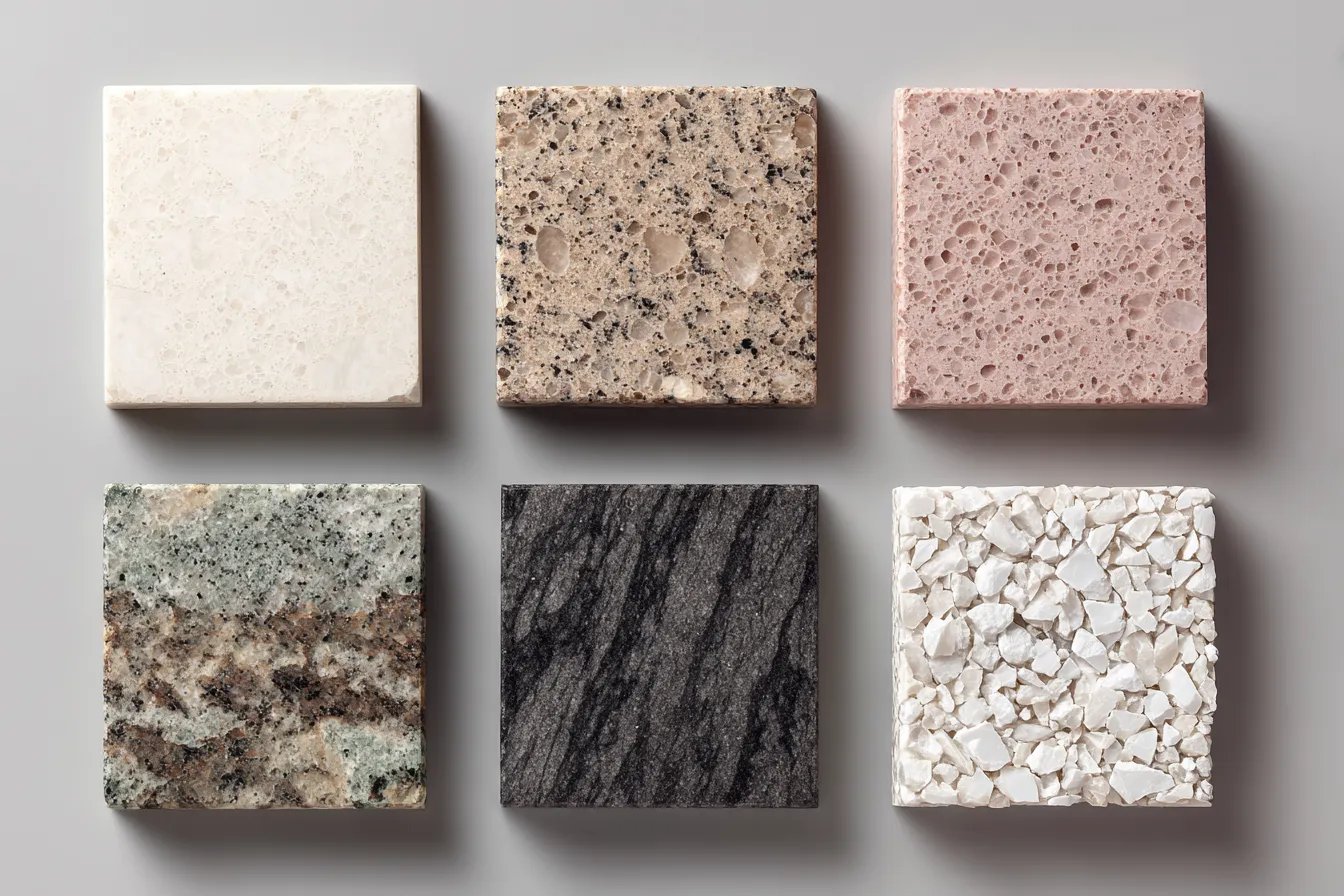
Once you start seeing real samples, quartz stops looking like 'one white slab' and becomes a full tray of options.
Light And Soft Shades: White, Ivory, Beige, Taupe
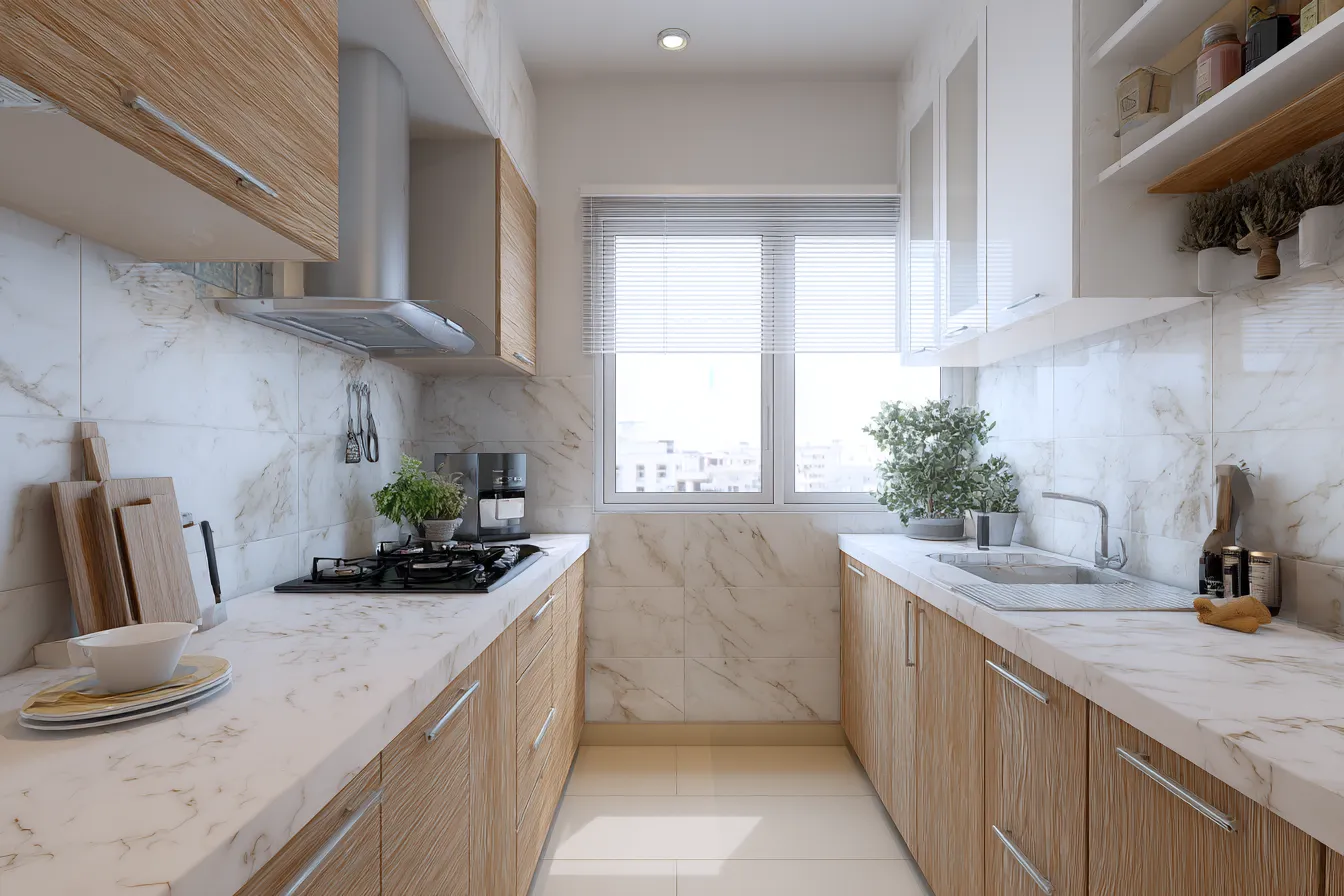
Most people begin with white. It lifts a dark kitchen straight away and makes a small room feel wider. White quartz countertops colours range from plain, almost paper'clean, to light marble-style veins. In a busy Indian kitchen, a soft white with a bit of grain works better than pure flat white, because it hides the odd tea ring or fingerprint.
Ivory and beige sit just one step warmer. These suit cream tiles, wooden cabinets, muted interiors. Taupe and light tan come in when you want a little depth without going into full brown or grey. These shades often look good with both steel and black appliances, so you don't feel stuck later when you change your hob or fridge.
Deeper Neutrals: Grey, Black, Brown
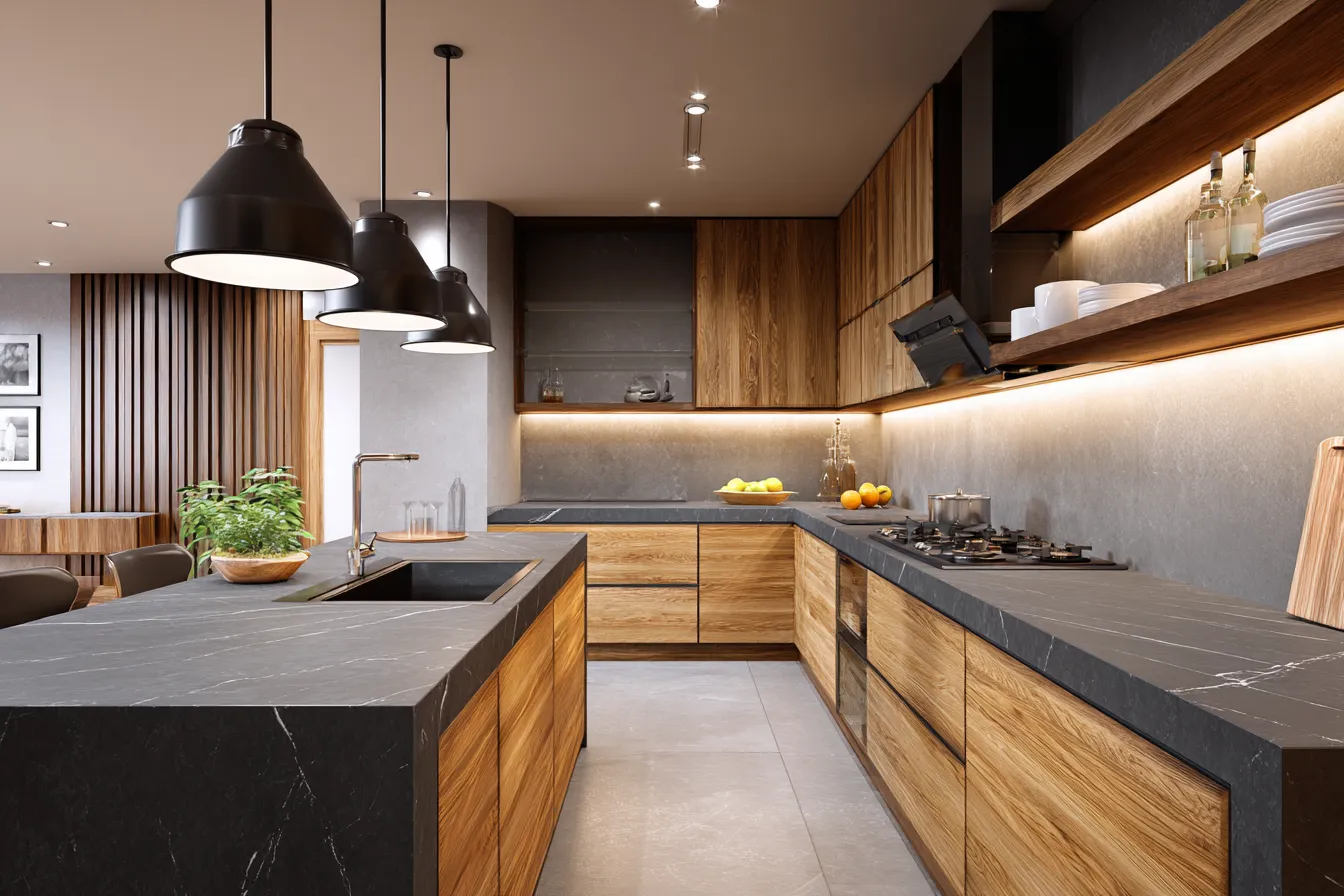
Grey has become the default 'modern' option. Pale greys look gentle, mid greys feel smart, and charcoal brings weight. In a bright kitchen, a grey quartz kitchen top with a simple grain can feel more suitable than a stark white one. In low light, something mid-tone works better than very dark.
Black is bold. A black quartz stone for a kitchen platform, with a soft sheen or tiny sparkles, can look rich, especially with white or wood cabinets. It shows dust and smudges faster, but a quick wipe makes it look clean again. Brown and deeper tan tones are convenient to maintain. Masala spills, tiny chips, and everyday wear blend into the background. Many rental and heavy-use kitchens go for brown because it ages well.
Colour Pops: Blue, Green, Pink, Rose, Red, Yellow
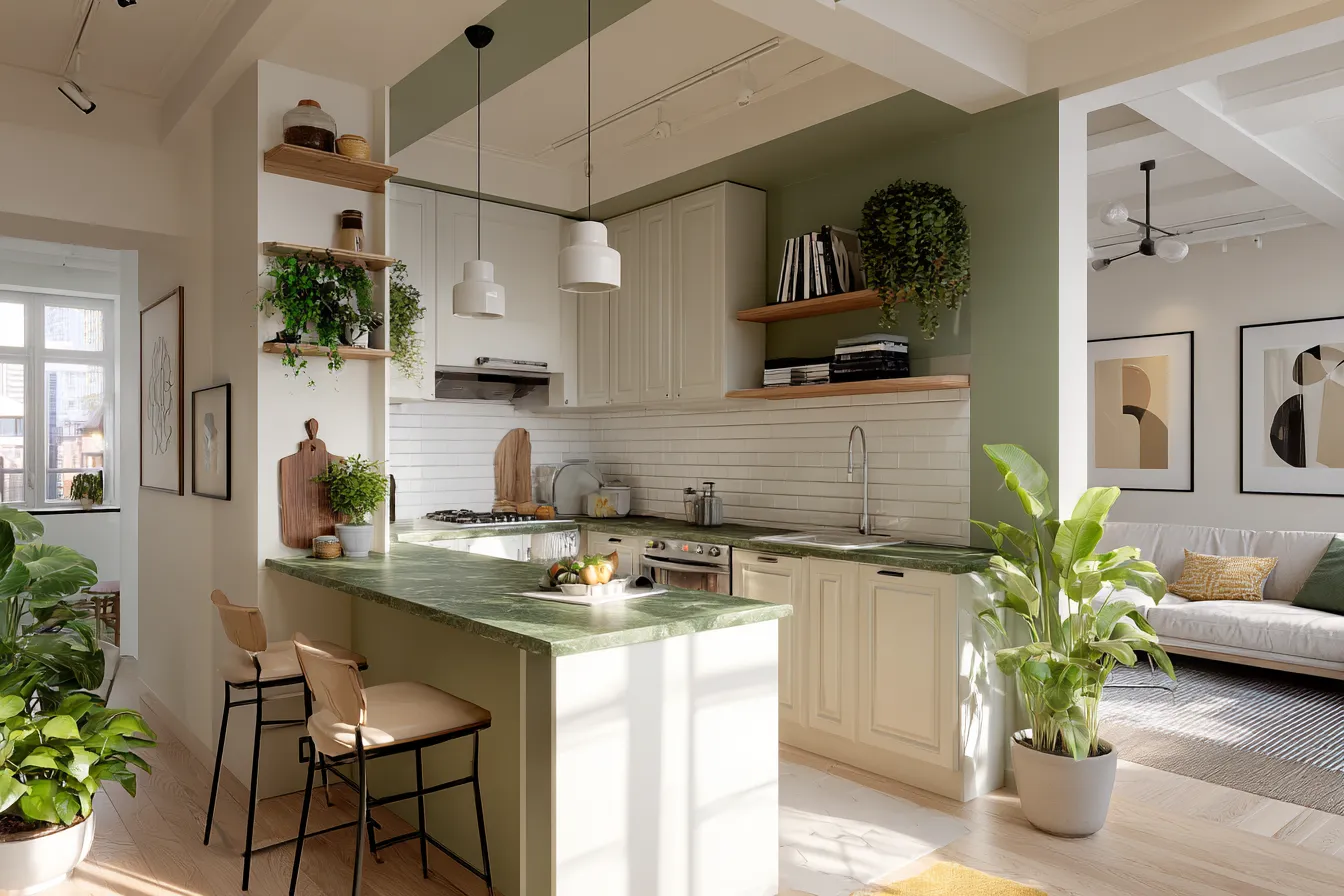
Not everyone wants colour on the counter, but when it is done with care, it changes the whole mood of the modular kitchen. Blue quartz, especially in softer denim or grey-blue, looks good in open kitchens with plenty of light. In very dark rooms, a deep navy top can feel heavy unless the rest of the finishes stay light.
Green works nicely in homes that already have plants or wooden finishes. Sage, olive, or bottle green slabs feel minimalistic rather than flashy. A small breakfast ledge on a green quartz kitchen platform can become the room’s focal point.
Pink and rose tones appear more in premium catalogues. They are not bubble-gum bright, more like a blush or dusty rose. These suit compact corners, dresser tops, or a small quartz table top rather than a huge main counter. Red and yellow are rare and need care. A muted, brick-style red or a soft mustard can look interesting in a café-style kitchen, but most homeowners prefer to keep these shades as an accent, not across the entire platform.
Textured, Sparkle And Wood-Look Quartz
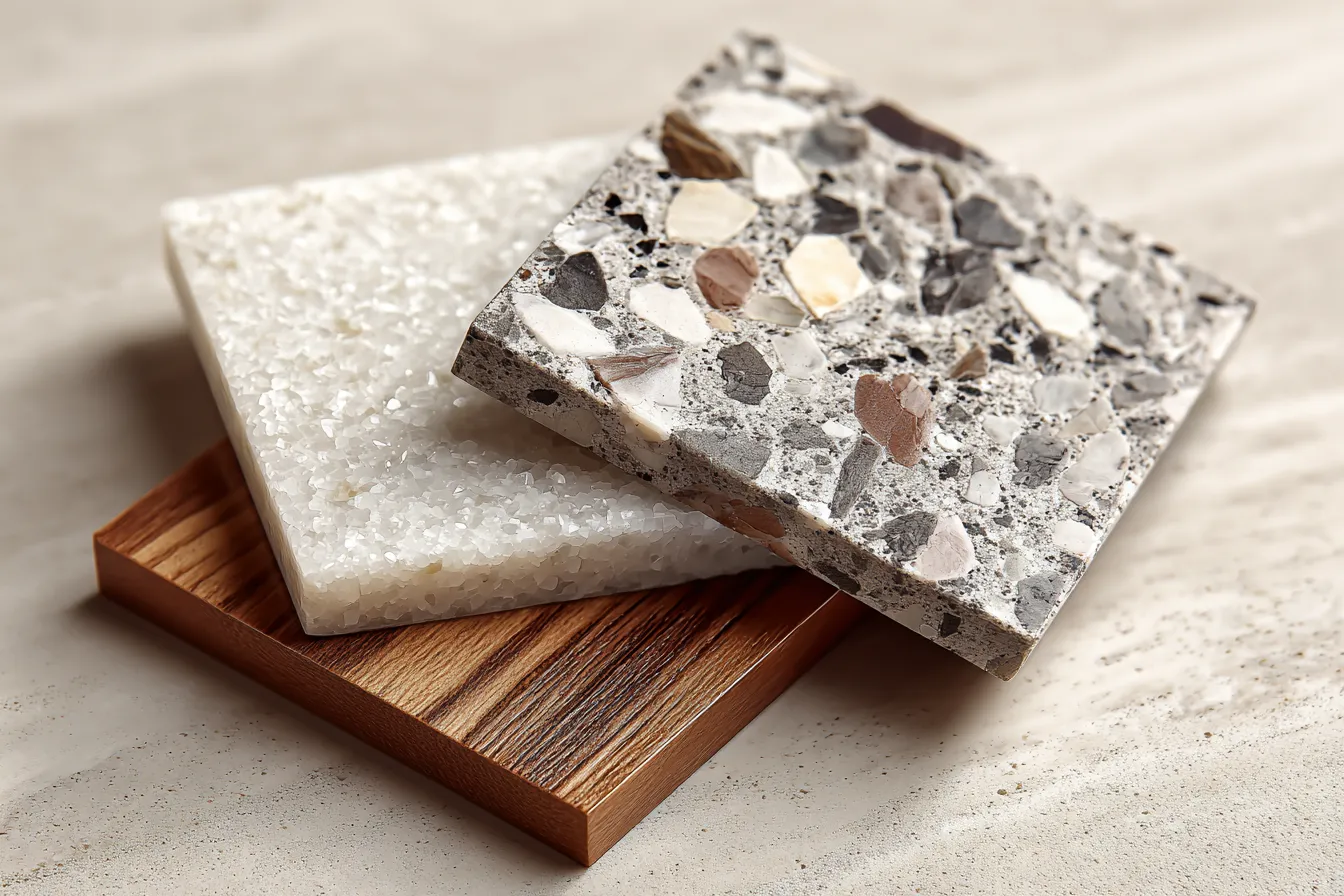
Beyond colour, the surface itself changes the feel. Some sparkle quartz countertops catch light in small dots, almost like salt scattered across the stone. These work well in simple kitchens where the rest of the materials stay plain.
Textured quartz, with a slightly grainy or matte feel, suits people who do not like high shine. It hides minor scratches better and feels less slippery when water spills. Wood-look quartz tries to copy the lines of timber without the upkeep. It does not fool anyone up close, but it adds warmth when you want the idea of wood near the sink or hob without worrying about swelling or polish.
Once you see these options together, the 'beautiful quartz countertops' are not just the whitest ones. The best choice is usually the slab that looks good in your light, matches your cabinets, and still feels easy to clean and maintain after a long day in the kitchen.
Read also – 6 Different Types Of Kitchen Layout – Your Home Is Missing
Advantages Of Quartz Countertops
Quartz became popular in Indian kitchens for a simple reason. It carries well even when the stove runs daily, the sink stays busy, and someone is always chopping something on the side. It looks like stone, but it reacts differently. That difference is what makes people pick it.
Stays Steady Under Daily Use
A quartz is firm when you set cookware on it. It does not chip easily around the sink edge, which is usually the first place to suffer in older kitchens. The surface stays even across the years because the combination of stone and resin holds everything together tightly.
Does Not Soak Up Spills Quickly
Indian kitchens see spills all the time. Cutting mango, boiling rasam, frying onions, and making tea. A quartz platform handles this better than softer stones because liquids sit on top for longer. You still have to wipe, but you do not see immediate stains spreading into the slab. This helps when you stay busy and keep the cleaning to the last.
Plenty Of Colours And Patterns
Most shops store a wide range of quartz kitchen countertop materials, from minimal whites to deep blacks and textured greys. Because the material is engineered, colours stay consistent across slabs. This makes it easier to match long platforms or L-shaped layouts without worrying about patchy variation.
Feels Smooth And Easy To Clean
A quartz surface is easy to maintain. A damp cloth and mild liquid are enough for most marks. No sealing, no yearly treatment, no special polish. This matters when you want the kitchen to stay clean without a long routine every evening.
Resists Small Scratches Better Than Many Stones
Every day cooking does not scratch quartz easily. You still need a board for chopping, but daily movement of jars, pressure cooker bases, spoons, and mixing bowls does not show up as quickly as it does on softer counters.
Works Well In Both Small And Large Kitchens
A single clean slab on a small platform makes the room feel open. In a larger kitchen, quartz lets you match the main counter with the breakfast counter, island top, or window ledge without colour mismatch. Many homeowners choose it when they want all worktops to look connected.
Quartz Countertop Prices In India
Quartz prices vary widely depending on design details, slab thickness, and brand. Trying to budget a kitchen without checking prices is risky, so you can easily end up paying more than expected for the colour or thickness you didn't need.
Here's a breakdown of what we typically see across India:
|
Factor |
Typical Cost Range |
Notes |
|
Basic plain quartz (mid-thickness) |
'¹250 ' '¹425 per sq ft |
Solid colour or simple grain, 20 mm thickness is standard. |
|
Designer quartz (marble-look, strong veining) |
'¹400 ' '¹600 per sq ft |
Includes marble-style patterns, limited colours, imported feel. |
|
Premium quartz (rare patterns, thick slabs, premium brand) |
'¹550 ' '¹1,000+ per sq ft |
Custom design, large-size slabs, heavy usage areas. |
What Affects The Cost?
- Thickness: Thicker slabs cost more. 20 mm is standard. Premium slabs may be 30 mm or more and cost more.
- Brand & Design: Well-known brands and special colours (such as Calacatta and Onyx) add to the cost.
- Pattern and Finish: Marble-look, sparkle finishes, or textured surfaces carry a premium cost.
- Installation complexity: If your counter has many curves, corners, cut-outs, and edges, the installation cost rises.
Example Budget For A Typical Indian Kitchen
This is a rough budget idea; actual prices vary by city, brand, and design, but it helps you read a quote with more clarity.
Approximate Material Cost for a 40 sq ft Platform
|
Option |
Area (sq ft) |
Approx rate ('¹ / sq ft) |
Approx slab cost ('¹) |
|
Mid-range quartz |
40 |
350 |
14,000 |
|
Designer pattern quartz |
40 |
500 |
20,000 |
Best Quartz Countertop Brands In India
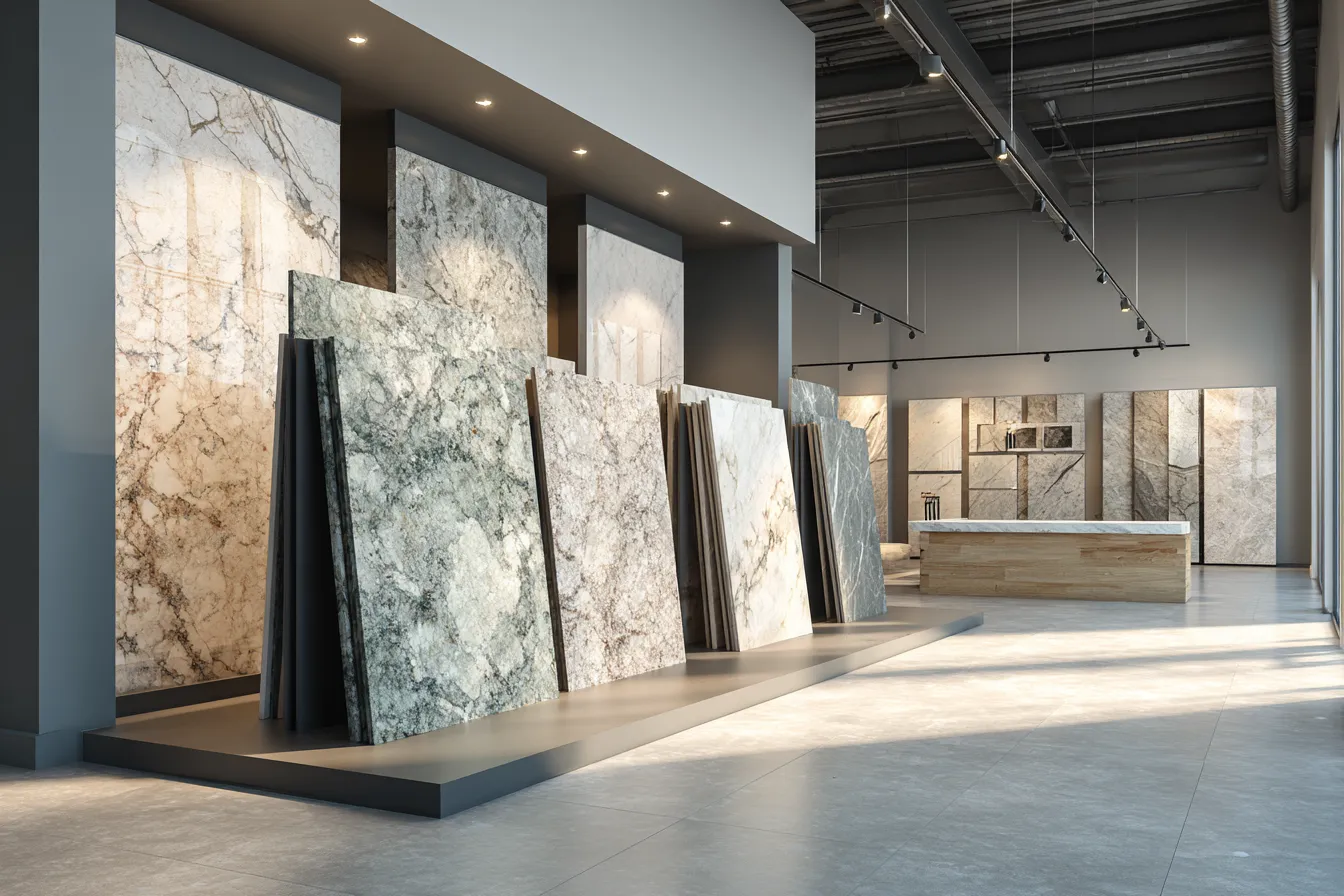
When homeowners start searching for quartz, the first confusion usually comes from the number of brand names. Every shop claims to have the 'best slab', but the experience changes a lot from one brand to another. Most people want something steady, long-lasting and easy to clean, not a showpiece that needs too much care. These are the brands that often appear when people look for dependable quartz in India.
Caesarstone
This brand is known for its cleaner patterns. Their slabs are solid, and the colours stay uniform. People who want a neat modern look usually end up shortlisting Caesarstone early.
Silestone
Silestone has a wide range of colours in its brochure, especially in the lighter tones. Their slabs tend to hold up well in busy kitchens throughout the day. Many designers like Silestone because the finish looks refined without being too glossy.
KalingaStone
You see KalingaStone often in Indian kitchens because it sits in a comfortable price range. They cover most of what homeowners ask for, such as colours, grains, and marble-style veining.
AGL Quartz
AGL works well for people who want more options without jumping brands. Their catalogues have everything from whites to darker, sparkled surfaces. Many homeowners choose AGL because the slabs match well in larger kitchens where two or three slabs are used.
Johnson Marble & Quartz
This name comes up a lot when people are looking for slabs with a hygienic angle. They have quartz surfaces explicitly designed for kitchen use, and the colours stay fairly uniform. Their pieces look clean, and most counters fit well without odd colour patches.
Local And Regional Manufacturers
Shops across major cities also keep unbranded or locally made quartz slabs. Some of these work perfectly fine for simple kitchens. The finish may not be as refined as premium brands’, but the price is lower, which helps when the budget is tight. The only thing to watch is consistency; always check the slab under good light before confirming.
Also read – 10+ Unique Kitchen Themes: Creative Ways To Give Your Kitchen Its Own Personality
Quartz Countertop Installation Process

A quartz counter is fixed in a few steps. The goal is to make sure the slab sits flat, stays supported and matches the cabinet line.
Measuring The Cabinets
The team measures the length and depth of the cabinets. They check multiple points to make sure the walls are in line. They also mark the sink and hob positions so the cut-outs match the layout.
Cutting The Quartz Slab
The slab is cut in the workshop. The sink opening, the hob opening and any corner shapes are made there. This keeps dust out of the house and gives cleaner cuts.
Bringing The Slab To The Kitchen
Quartz is heavy. Two or three people carry it upright and place it near the cabinets. They check the size once again before lowering it into place.
Placing And Levelling
The slab is placed on the cabinets and checked with a simple level tool. If one part is low, the fitter adds small packing pieces under that area. A flat counter stops water from collecting and keeps cooking vessels steady.
Fixing The Sink And Hob
The sink is fitted into its opening and sealed so water does not leak inside. The hob is placed after the counter is steady. All pipes and wires are connected only after the fitter checks the fit.
Joining Two Slabs
In L-shaped kitchens, two slabs meet at the corner. The fitter aligns the edges, adds adhesive and presses them together. Extra adhesive is cleaned so the joint looks neat.
Final Check
Edges and corners are checked for chips. The level is rechecked. The slab is wiped, and the fitter makes sure there are no gaps between the counter and the wall.
Read also – Low-Cost Simple Kitchen Design For Everyday Indian Homes
How To Maintain Quartz Countertops?
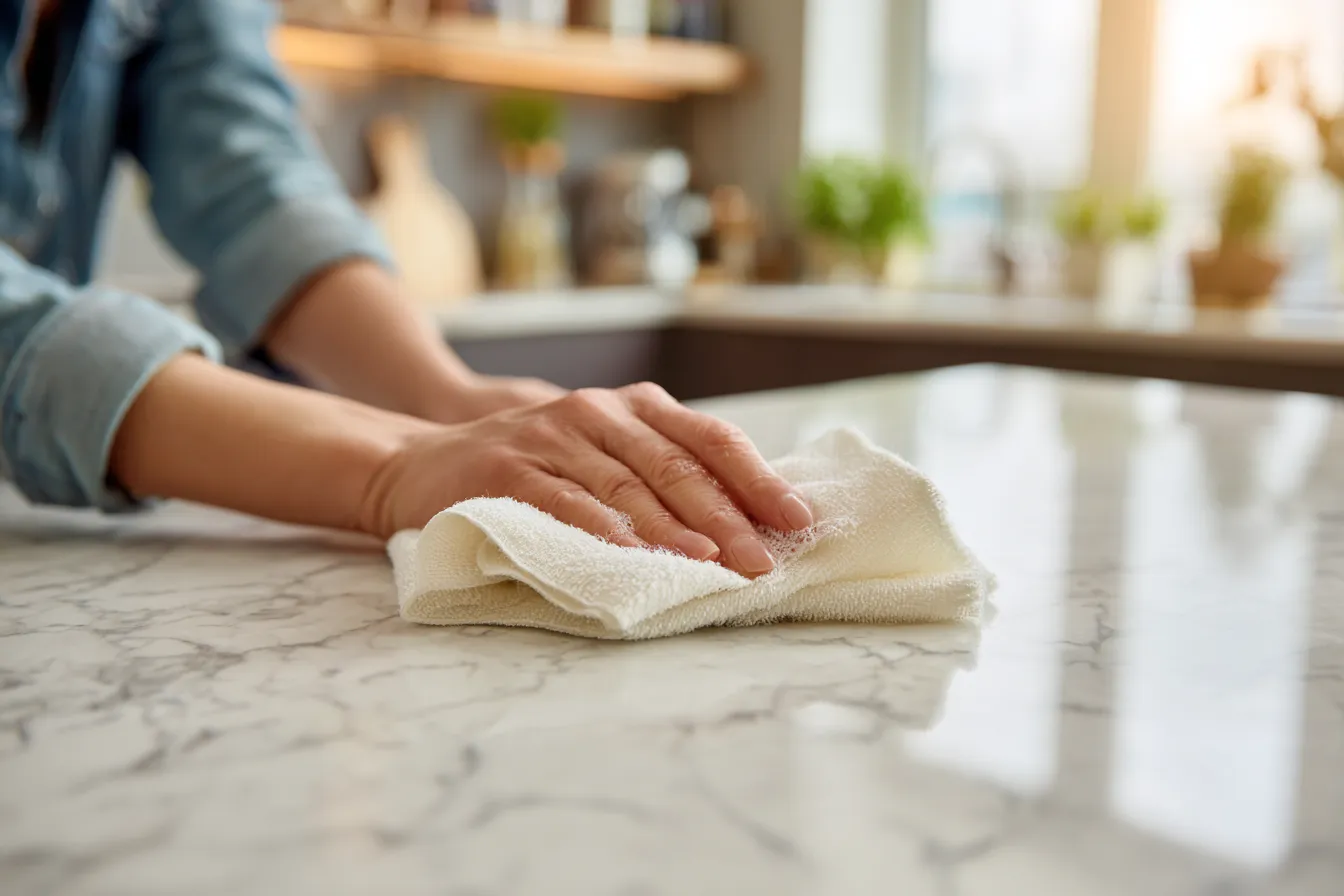
Quartz is not hard to maintain. You do not need special products. A few small habits are enough to keep the counter in good shape.
Daily cleaning
After cooking, wipe the top with a soft cloth. Use mild liquid soap in water. This removes oil, dust and minor food marks. You do not have to scrub hard.
Handling Spills
Spills will happen. Tea, coffee, curry and chutney can leave light marks if they sit for too long. Wipe them when you notice them. Normal soap water is usually enough.
Protecting From Heat
Quartz is not compatible with very high direct heat. Do not keep a hot tawa or cooker on the same spot straight from the flame. Use a stand or trivet for heavy hot vessels. Warm plates and cups are fine.
Avoiding Scratches
Regular use does not easily scratch quartz, but cutting on the slab is not a good idea. Keep a chopping board for knives. Try not to drag heavy appliances across the surface. Lift and place them instead.
Looking After Edges And Joints
Edges and corners can chip if heavy pots are dropped on them. Place large vessels gently near the sink. If your counter has a joint, look at it once in a while. If the line appears open or cracked, call the fabricator to have it sealed again.
Read also - Modular Kitchen Trends 2026: Latest Kitchen Design Trends That Work in Real Homes
Limitations Of Quartz Countertops
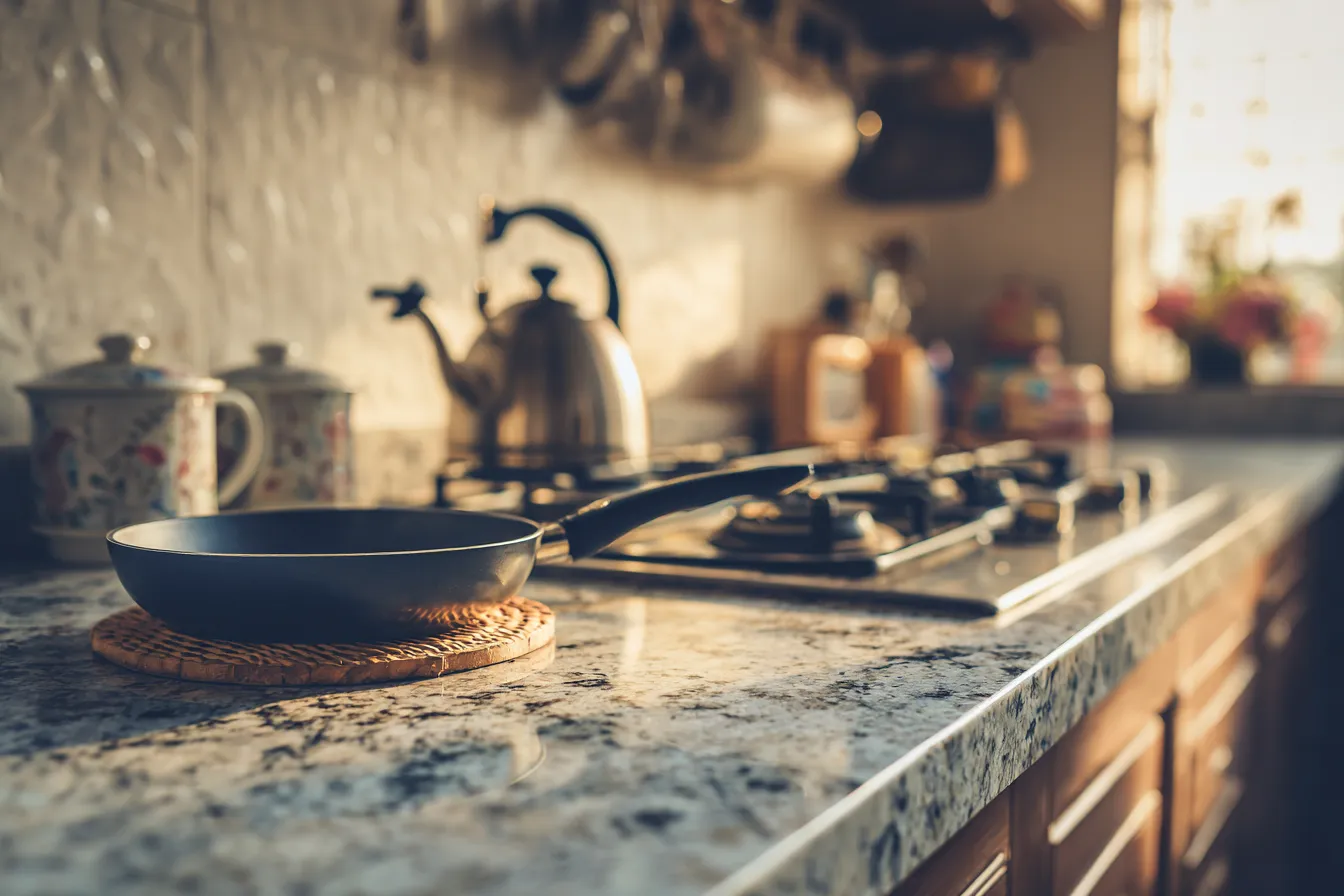
Quartz works well in most kitchens, but it has a few limits. These are small things, but they matter in daily use.
Heat Sensitivity
Quartz does not like sudden, high heat. A hot pan left on the stove can damage the surface. It may leave a dull spot. It may create a small crack. A simple stand or trivet avoids this.
Stains Or Spills That Stay Too Long
Quartz does not soak liquids fast, but it is not fully stain-proof. Haldi, tea and coffee can leave marks if they sit for hours. Wipe them when you notice them. Regular cleaning usually removes the colour.
Corners Can Chip
The surface handles daily work well. The corners and outer edges need more care. Heavy steel pots or mixer jars can chip the edge if they hit it hard. This happens most near the sink area.
Not For Open Sun
Quartz stays better indoors. Direct sun over many months can fade the colour a little. It may also weaken the top. For open balconies or outdoor cooking, people normally choose a different stone.
Joints In Big Layouts
A straight platform uses one piece. Larger kitchens need two or more pieces joined. The joint is neat, but you can still see the line on a close look. This is common with any engineered slab.
Needs A Flat Base
Quartz is heavy. It must sit on a level and firm cabinet line. If the base is uneven, stress builds slowly. That may cause a crack later. Good installers check the support before placing the slab.
Quartz Countertop Edges And Finishes
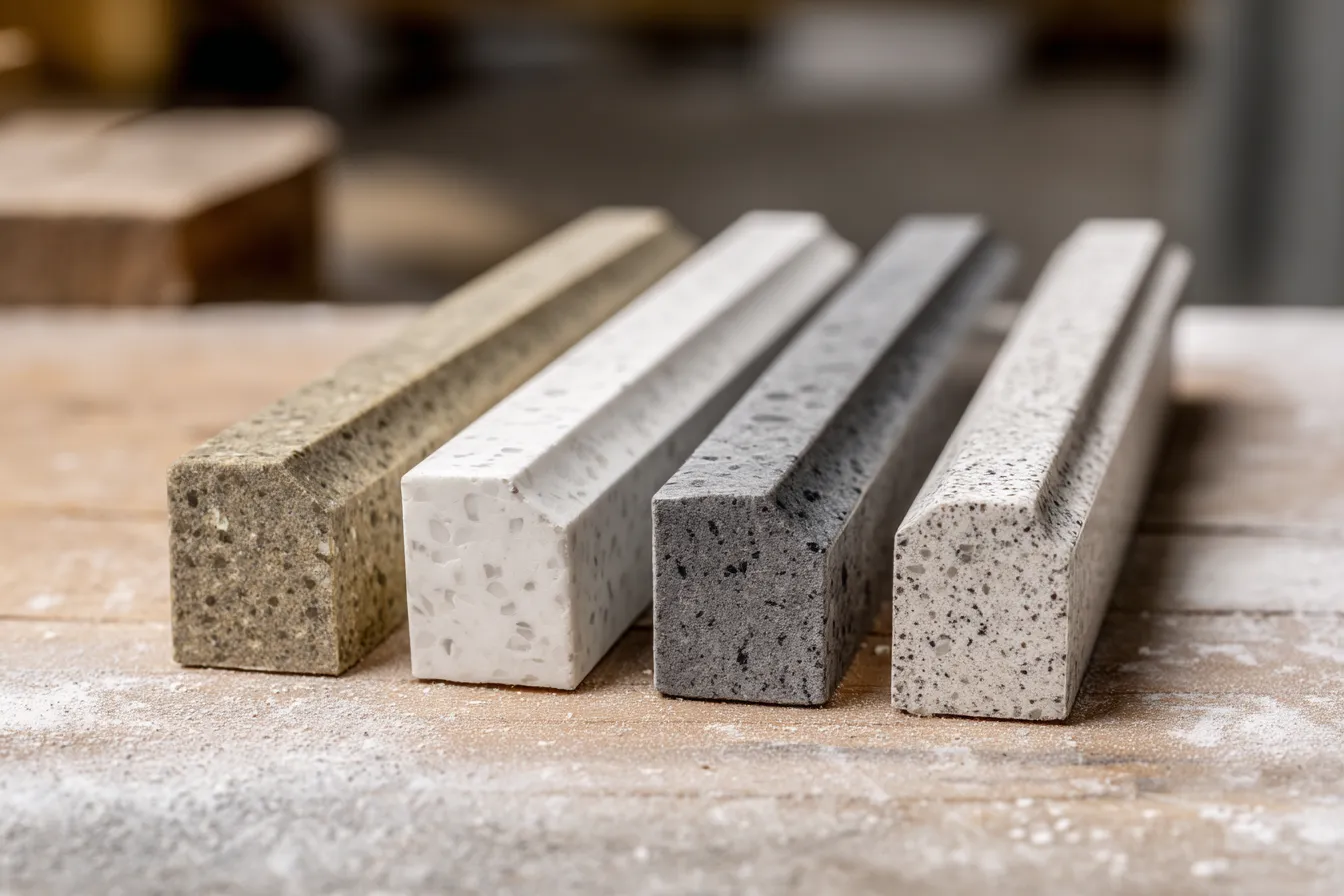
A quartz slab needs a clean front edge before fitting. The edge decides the looks and safety around it. These shapes are simple, and each one has a basic purpose.
Straight Edge
This edge is cut plain. The front stays flat. Only the sharpness is eased a little. Most people choose this because it looks simple and works in any kitchen.
Half Bullnose
The top part has a slight curve. The bottom stays straight. Water flows down gently, so it helps near the sink. Wiping the counter is also easier with this edge.
Full Bullnose
This one is fully curved. The front has no hard point. It is a safe choice for families with children.
Bevel Edge
A small angled cut sits along the top line. It gives a slight break in the shape. It suits people who want a sharper look without risking the edge.
Pencil Round
Almost straight at the front part, but the top corner has a small round-off. It removes the sharp feel while still keeping a clean line. Many installers suggest this for everyday use.
Pro Tips For Choosing Edge Finishes
Ask your installer to prepare a slight sample edge on a leftover piece. Seeing it once makes the decision easier.
- Straight and pencil round fit most kitchens.
- Half bullnose helps in wet areas.
- Full bullnose is safer around kids.
- Bevel adds a small detail without being heavy.
Quartz Countertops For Different Kitchen Layouts
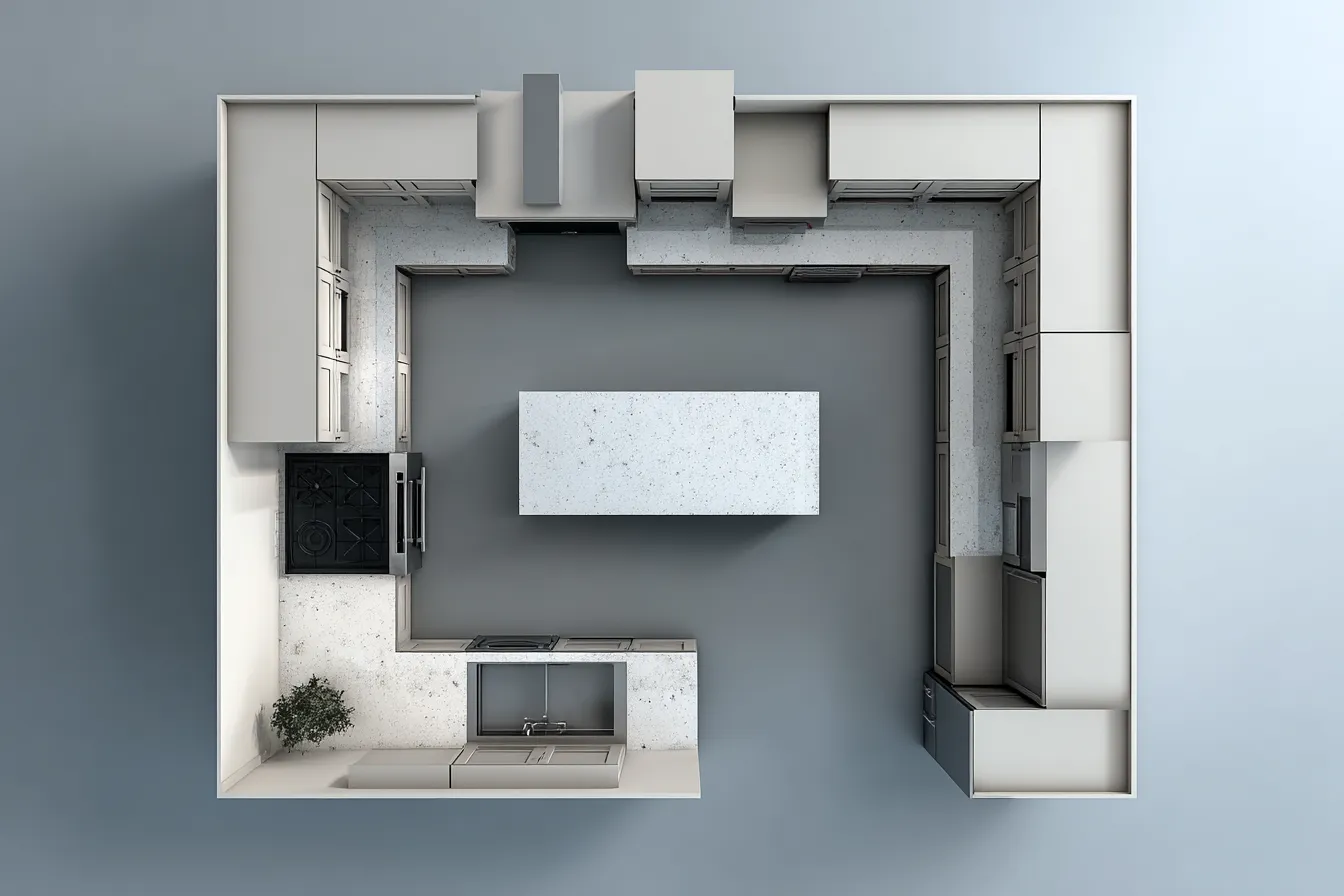
Quartz works in most kitchen shapes. The slab stays steady with a clean look. Each layout uses the slab in a slightly different way.
Straight kitchen
A straight counter is the simplest setup. One long slab sits on the cabinets. There are no corners to join. Most people choose quartz for this because one clean piece makes the whole wall look neat.
L-Shaped Kitchen
Here, the counter has an L-shaped angle. Two slabs join together at the corner. The joint is small and lies against the wall, so it does not bother daily use. Quartz works well in this layout because the colour remains consistent on both sides of the turn.
U-Shaped Kitchen
A U-shape needs three sides. This layout uses more slabs and has two joints. As long as the base cabinets are level, the slabs sit firmly. Quartz helps keep the space bright, as U-shaped kitchens can feel closed when the finish is very dark.
Island Counter
An island uses one full slab if the size allows it. If the island is expansive, two pieces may be joined. Quartz suits islands because the top gets used for cooking and serving. The surface does not stain fast, which helps in a busy home.
Utility Counters
Utility areas handle wet buckets, detergent, and daily washing. Quartz works here if the counter stays shaded and the slab is adequately supported. The surface cleans easily and holds up well for basic household work.
Common Mistakes People Make With Quartz Counters
Many homeowners choose quartz because it is durable and easy to clean, but a few small mistakes can cause trouble later. Knowing these early helps you avoid repairs and extra costs.
Choosing Thickness Only By Price
Some people select the thinnest slab because it looks cheaper. A thin slab bends near the sink or cracks during cutting. For most kitchens, a thicker slab is safer and lasts longer.
Keeping The Counter Too Close To The Intense Heat
Quartz can handle warm pots for a short time, but it should not sit next to open heat. A stove without proper spacing, a tandoor, or a heavy burner can damage the surface. A small gap or a heat shield solves this.
Not Checking The Slab Under Good Light
Shops often show slabs in dim corners. Colours and patterns look different in real kitchen light. Always ask to see the slab near sunlight or bright lighting before confirming.
Ignoring Support Under Overhangs
Breakfast counters or side projections need brackets. Without support, the slab sags over time. A simple metal bracket fixes this problem and keeps the edge safe.
Relying Only On Photos
Online pictures look clean and bright, but real slabs have grain, small dots, or light lines. Always see a real piece before you decide, even if it is a small sample.
Not Planning Cut-Outs Properly
Sink and hob cut-outs need space and careful cutting. Rushing this step weakens the slab around the hole. A measured drawing avoids cracks and chipping during installation.
You may also like!
| Kitchen Window Design | Stylish Kitchen Window Ideas for Every Kind of Kitchen |
| Kitchen Lighting Design | Best Kitchen Lighting Ideas and Trends |
| Open Shelves Kitchen Design | Open Kitchen Shelving Ideas for Perfect Space |
| Kitchen Laminates | Perfect Two Colour Combination for Kitchen Laminates |
Final Thoughts
Quartz works well for people who want the kitchen to look neat but not hard to manage. It feels solid under daily cooking, and the surface does not soak up every spill. You still have to wipe it, but the cleaning is simple and quick.
Price varies around thickness, colour, edge and shape. A good fitter will check the base, level the cabinets and handle the sink and hob openings with care.
If you look after heat, do not drag heavy items and clean with mild soap, a quartz counter can serve you for many years without much fuss. In most homes this reliability and consistency is exactly what people want from a kitchen platform.
*Images used are for representational purposes only. Unless explicitly mentioned, the Interior Company does not hold any copyright to the images.*
kitchen Design Ideas for You
- Shape
- Color
- Finish
- Theme
- Backsplash Color
- Backsplash Material
- Cabinet Style
- Counter Colour
- Floor Material
- Size
- Almond Brown Color Kitchen Design
- Beige Color Kitchen Design
- Black Color Kitchen Design
- Blue Color Kitchen Design
- Brown Color Kitchen Design
- Charcoal Black Color Kitchen Design
- Charcoal Grey Color Kitchen Design
- Coral Color Kitchen Design
- Cream Color Kitchen Design
- Dark Grey Color Kitchen Design
- Gold Color Kitchen Design
- Green Color Kitchen Design
- Grey Color Kitchen Design
- Ivory Color Kitchen Design
- Light Brown Color Kitchen Design
- Multicolour Color Kitchen Design
- Natural Brown Color Kitchen Design
- Nude Color Kitchen Design
- Off White Color Kitchen Design
- Olive Color Kitchen Design
- Olive Green Color Kitchen Design
- Olive Rust Color Kitchen Design
- Orange Color Kitchen Design
- Pink Color Kitchen Design
- Purple Color Kitchen Design
- Red Color Kitchen Design
- Silver Color Kitchen Design
- Smokey Blue Color Kitchen Design
- Smokey Grey Color Kitchen Design
- Stone Color Kitchen Design
- Teal Color Kitchen Design
- White Color Kitchen Design
- Wooden Brown Color Kitchen Design
- Yellow Color Kitchen Design
- Contemporary Theme Kitchen Design
- Cottage-Style Theme Kitchen Design
- Countryside Theme Kitchen Design
- Industrial Theme Kitchen Design
- Luxurious Theme Kitchen Design
- Mid-Century Modern Theme Kitchen Design
- Minimalist Theme Kitchen Design
- Modern Theme Kitchen Design
- Modern -Industrial Theme Kitchen Design
- Rustic Theme Kitchen Design
- Scandinavian Theme Kitchen Design
- Traditional Theme Kitchen Design
- Beige Backsplash Color Kitchen Design
- Black Backsplash Color Kitchen Design
- Blue Backsplash Color Kitchen Design
- Brown Backsplash Color Kitchen Design
- Gray Backsplash Color Kitchen Design
- Green Backsplash Color Kitchen Design
- Metallic Backsplash Color Kitchen Design
- Multi Backsplash Color Kitchen Design
- Orange Backsplash Color Kitchen Design
- Red Backsplash Color Kitchen Design
- White Backsplash Color Kitchen Design
- Yellow Backsplash Color Kitchen Design
- Brick Backsplash Material Kitchen Design
- Cement Tile Backsplash Material Kitchen Design
- Ceramic Tile Backsplash Material Kitchen Design
- Engineered Quartz Backsplash Material Kitchen Design
- Glass Tile Backsplash Material Kitchen Design
- Granite Backsplash Material Kitchen Design
- Marble Backsplash Material Kitchen Design
- Matchstick Tile Backsplash Material Kitchen Design
- Mosaic Tile Backsplash Material Kitchen Design
- Porcelain Tile Backsplash Material Kitchen Design
- Stone Slab Backsplash Material Kitchen Design
- Stone Tile Backsplash Material Kitchen Design
- Subway Tile Backsplash Material Kitchen Design
- Terra-Cotta Tile Backsplash Material Kitchen Design
- Travertine Backsplash Material Kitchen Design
- Window Backsplash Material Kitchen Design
- Wood Backsplash Material Kitchen Design
- Beige Counter Colour Kitchen Design
- Black Counter Colour Kitchen Design
- Blue Counter Colour Kitchen Design
- Brown Counter Colour Kitchen Design
- Gray Counter Colour Kitchen Design
- Green Counter Colour Kitchen Design
- Multi Counter Colour Kitchen Design
- Pink Counter Colour Kitchen Design
- Red Counter Colour Kitchen Design
- White Counter Colour Kitchen Design
- Yellow Counter Colour Kitchen Design
- Carpet Floor Material Kitchen Design
- Cement Tile Floor Material Kitchen Design
- Ceramic Tile Floor Material Kitchen Design
- Dark Hardwood Floor Material Kitchen Design
- Light Hardwood Floor Material Kitchen Design
- Marble Floor Material Kitchen Design
- Medium Hardwood Floor Material Kitchen Design
- Painted Wood Floor Material Kitchen Design
- Porcelain Tile Floor Material Kitchen Design
- Terrazzo Floor Material Kitchen Design
- Travertine Floor Material Kitchen Design

Ready for a home transformation?
Let our designers assist you!
Recent Posts


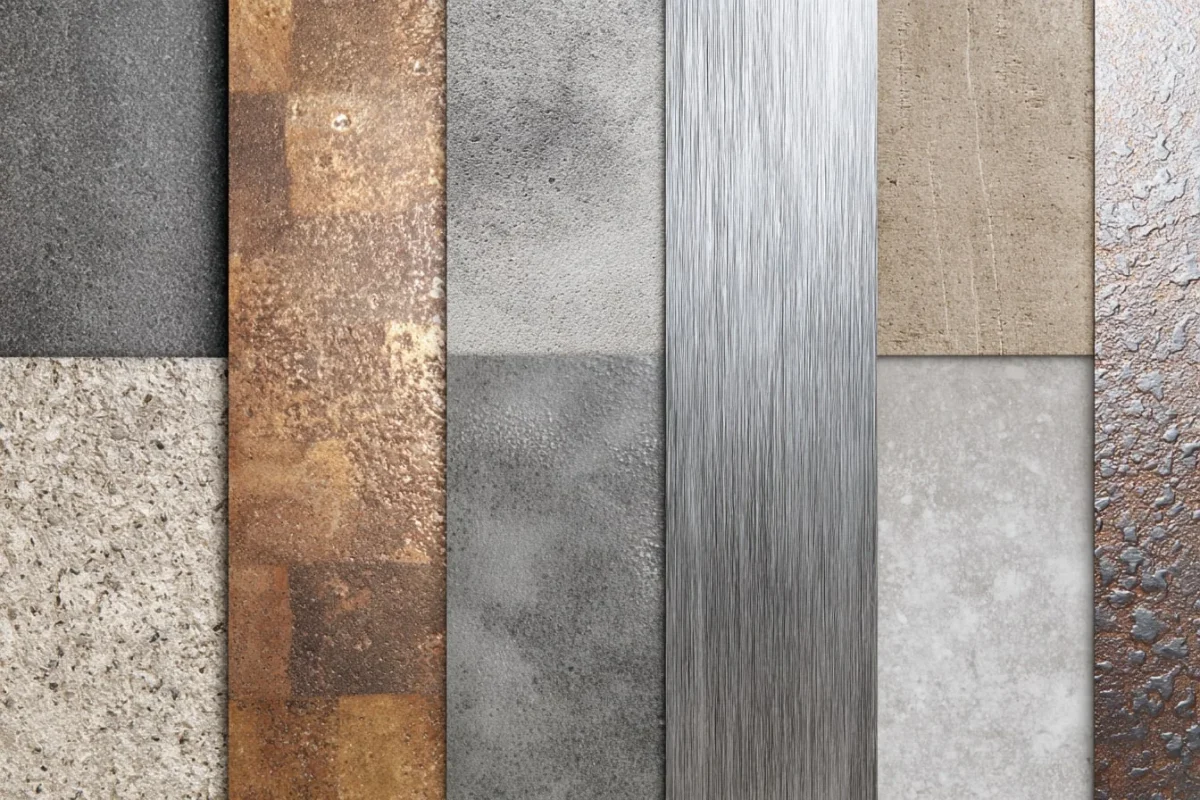






Quartz is a ready slab made in a factory. Composed of crushed quartz, resin, and colour pressed into a single solid piece. The slab is then cut to size and placed on the kitchen cabinets. It looks like stone but is not cut from a single rock.
Not easily. Most spills stay on the surface for some time. Tea, coffee or curry should still be wiped soon. Leaving them for hours can leave a light patch.
Yes, but carefully. Short contact is fine. Very hot pans can cause damage to the surface. Placing heavy, hot cookware on the same spot repeatedly can damage the surface.
No. The slab is already non-porous when it leaves the factory. There is no need to seat it every year.
Yes. You can keep washed items on the counter while cooking. Cutting is better done on a board to protect both the knife and the slab.
Most kitchens use 20 mm. It stays strong over the cabinets and around sink areas. Thinner sheets are only for light shelves or side counters.
Yes. It sits nicely on islands, too. If the island’s top overhangs, add brackets beneath it to keep the slab steady.
Small chips can be softened. More significant damage may require a fresh piece. A fabricator can check it and suggest what works.
It is priced in the mid-range. Depending on the colours, thickness, brand and cut-outs, the final costing changes. A written quote gives a clear picture.
With normal use and simple cleaning, a quartz counter can last 15 to 25 years. The colour stays consistent, and the surface does not wear out fast.
Related Category
- Dining Room
- False Ceilings
- Lighting
- Paint and Color
- Walls and Texture