- Design Ideas
- Cities
- Trends
- Guides
- Price Calculators
- Interior DesignersNEW
- Our Portfolio
- More


- Home
- Trends
- Room
- Dining Room
- Marble Top Dining Table Design
15+ Best Marble Top Dining Table Design: Luxury, and Material Fusion

Every home has one surface that sees daily life up close. That includes meals, work calls and conversations that run late. That place is the dining table. Over time, dining spaces have changed. They are no longer used only when guests arrive. In many homes, the dining area is active throughout the day. This shift has changed how dining room design is approached.
Among all options, the marble dining table stands apart. Not because it looks rich, but because it feels permanent option. A marble top dining table does not fade into the background. It holds its place. Once introduced, it influences how the room is planned and used. Wood and glass have their roles among dining tables. But marble brings weight, calm, and continuity. It is best for homes that value durability as much as appearance. Choosing marble is less about trend and more about intention. That intention is where good design begins.
Table of Content
How Designers Think About A Marble Dining Table?
A marble dining table becomes a fixed point in the room. Designers treat marble as an anchor. Once it enters a dining space, everything else responds. Chairs feel lighter or heavier. Walls feel closer or calmer. Even lighting changes on stone surfaces. This contrast becomes obvious when compared to a dining room with glass table.
This is why marble is planned in the early stages. The table sets the tone before colours, decor, or finishes are discussed. In many homes, it quietly shapes the dining room design without drawing attention. Understanding this mindset makes the next choices clearer. Material combinations feel logical. Shapes stop feeling random. Styling becomes restrained instead of forced.
Material Fusion: Dining Table Types By Material
Material decides behaviour before style. Some tables anchor a room. Others lighten it. But marble fusion tables fall into the first group. They are chosen for strength, balance, and long-term use, with different base materials changing how the table feels in daily life.
Marble Top Dining Table with Solid Wood Base
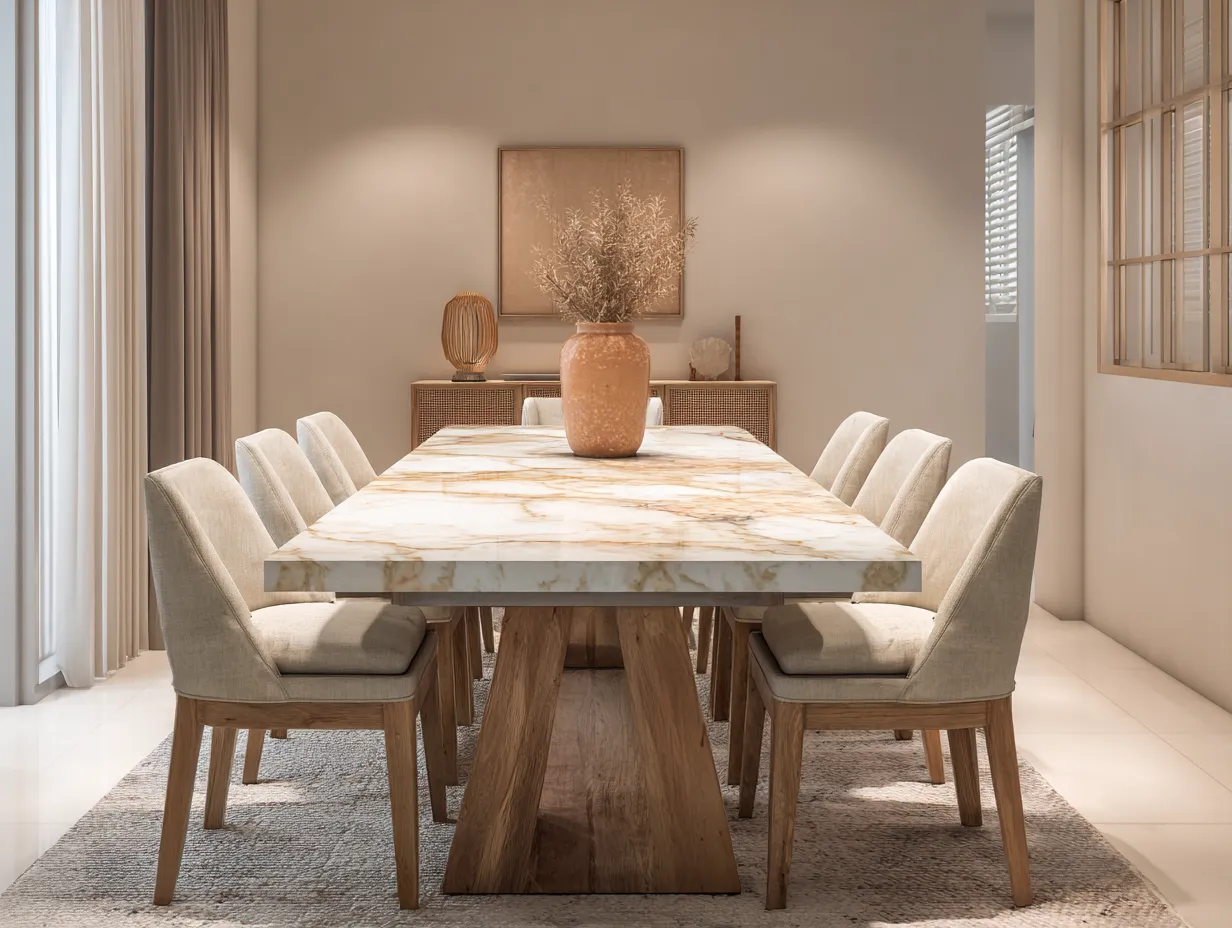
This is the most balanced mix. Marble forms the tabletop, while solid wood supports the base. The stone handles heat and daily wear. The wood adds warmth and stability. This type works well in Indian homes where the dining table is used every day, not kept aside for occasions. This table type is also known as marble table wood or wood and marble dining room table in Indian homes.
Teak Wood Dining Table With Marble Top
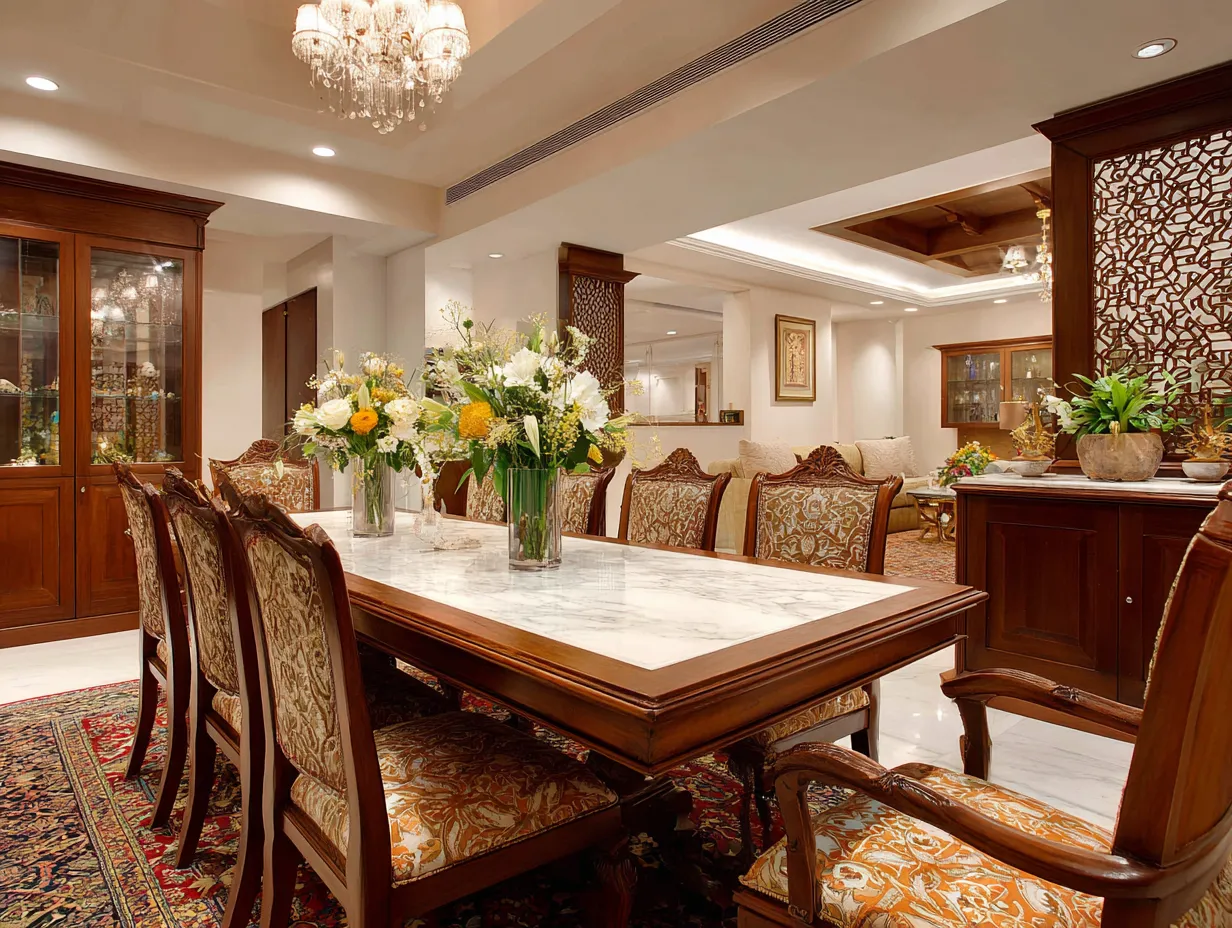
Teak wood paired with marble feels heavier and more permanent. The grain of teak softens the smooth stone surface. This combination suits formal dining rooms and homes that prefer furniture with long life over frequent change.
Marble Dining Table With Metal Base
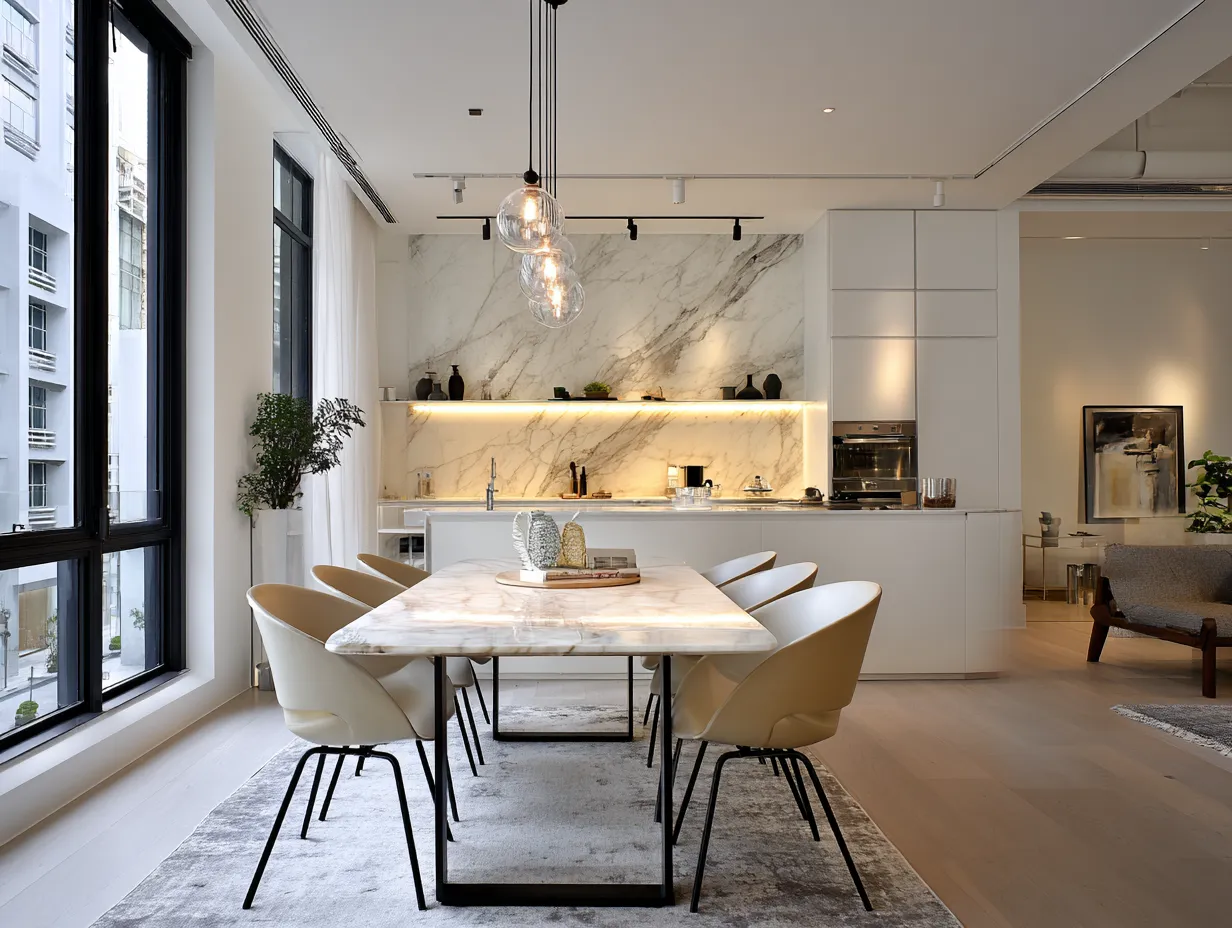
Here, marble sits on a slim metal frame. The contrast is sharp and clean. Marble adds weight. Metal keeps the structure visually light. This table type fits modern homes where the dining area shares space with the living room and needs a simpler profile.
Also Read: Partition Design Ideas That Separate Living and Dining Areas in Style
Marble Dining Table With Glass Elements
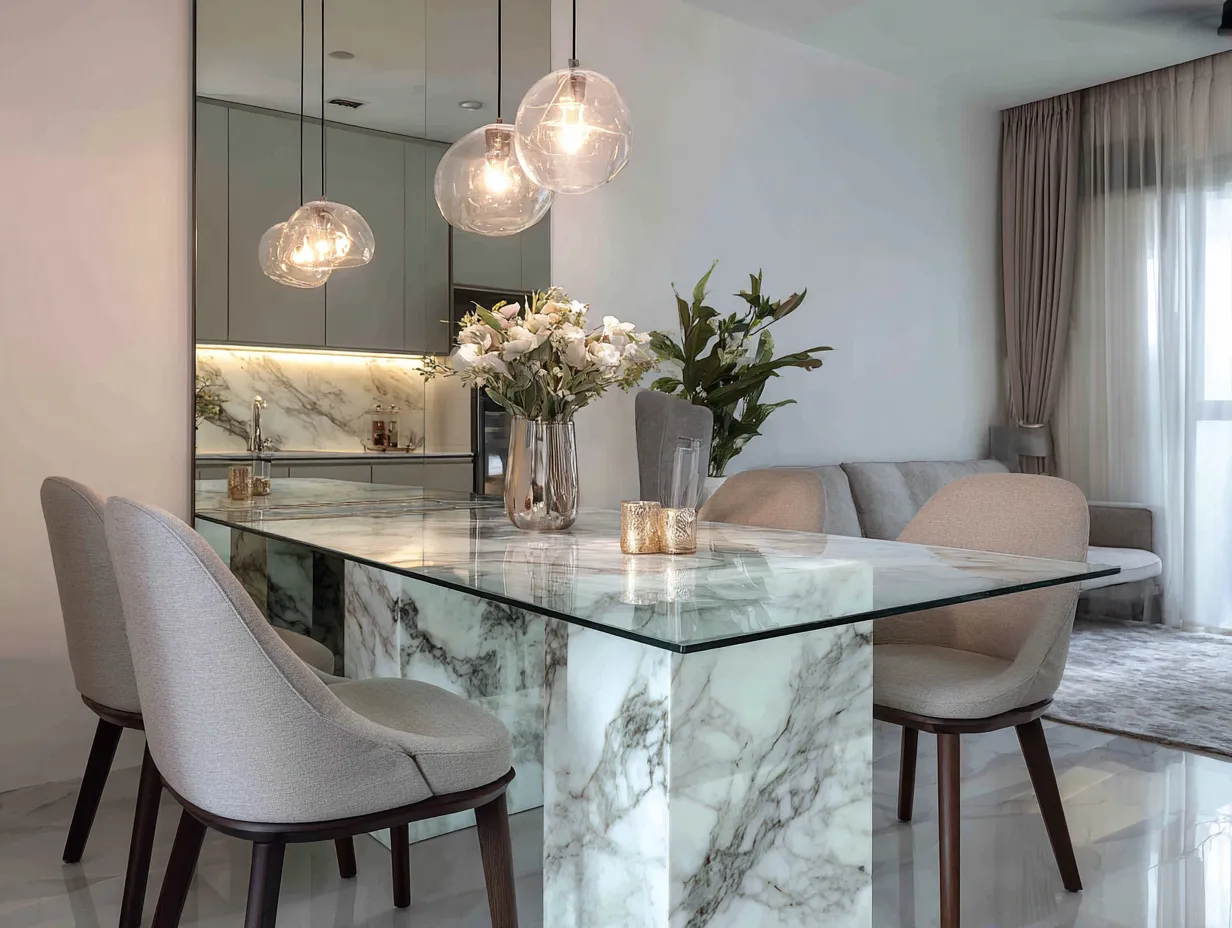
In this design, glass is used as a secondary surface or as part of the base. Marble remains the main tabletop. The glass reduces visual bulk, making the table feel lighter. This type works well in smaller homes where a full marble table may feel too heavy. This design is often seen in formats like a dining room table glass top wood base or wood dining room table with glass top.
Marble Dining Table With Engineered Wood Base
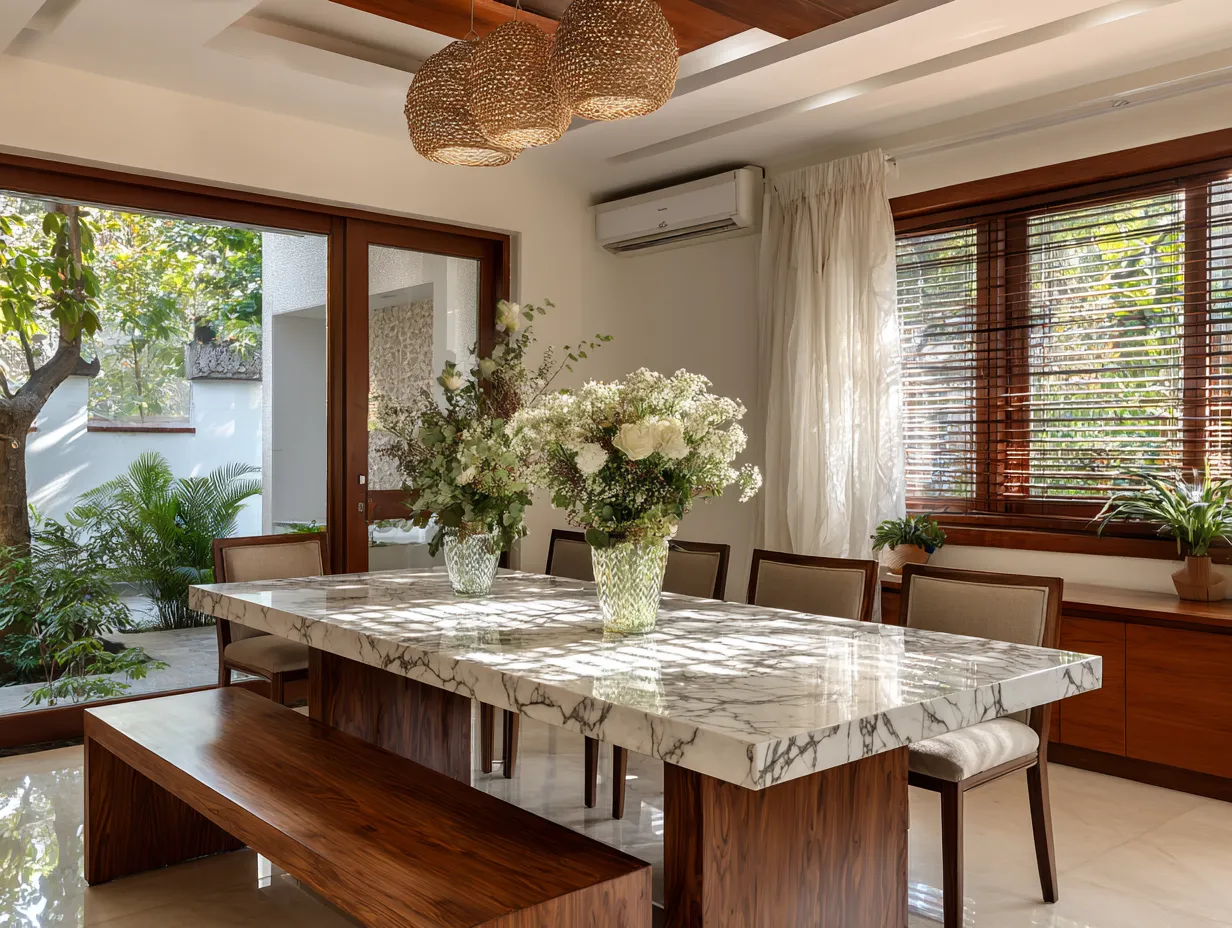
This option pairs marble with engineered wood or ply-based construction. It keeps costs controlled while retaining the look of a stone table. This table type suits homes that want the marble finish without committing to very heavy furniture or large solid-wood bases.
Glass Segun Wood Dining Table With Marble Top
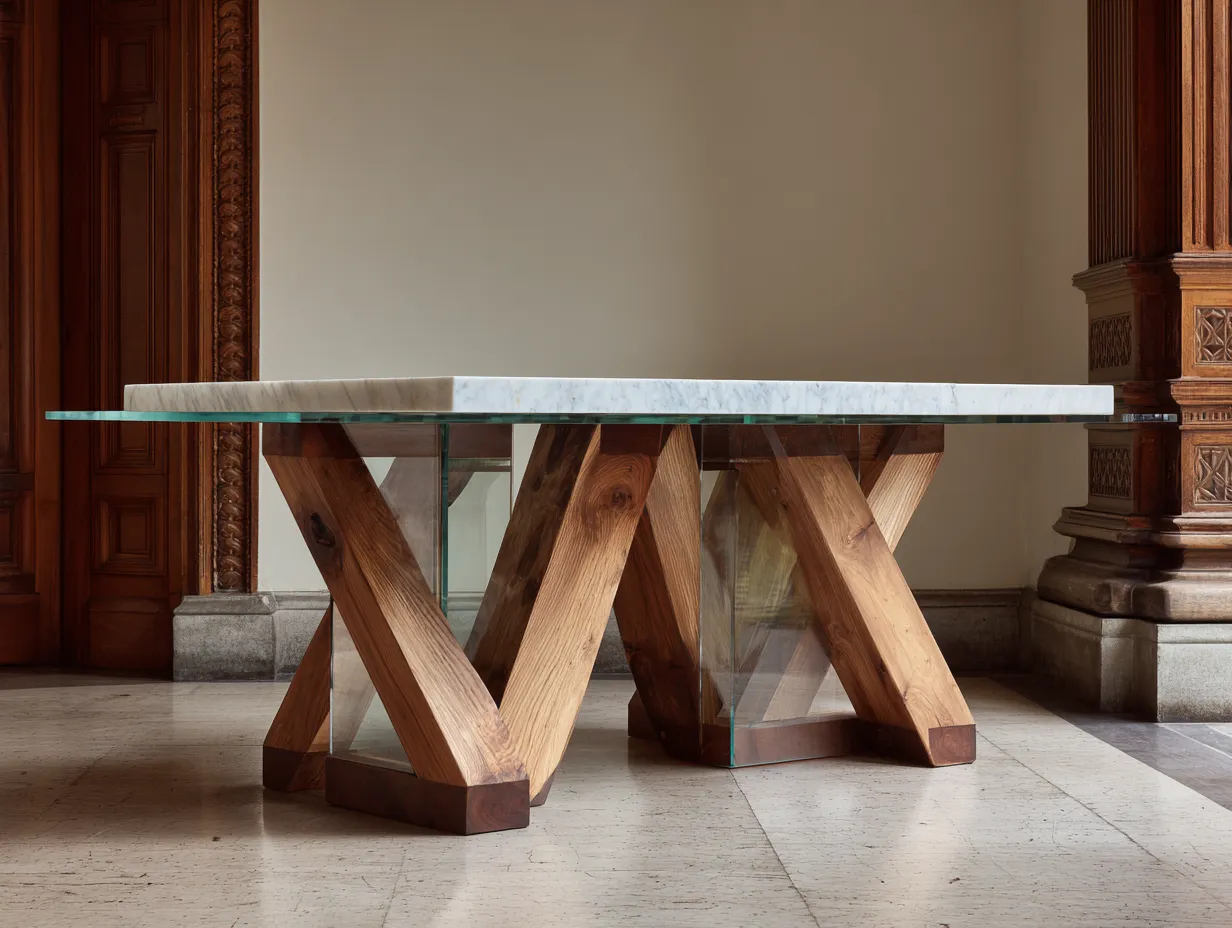
A glass segun wood dining table paired with marble blends traditional wood with lighter visual elements. Segun wood keeps the base sturdy, while glass reduces bulk around the structure. When topped with marble, this design suits homes that want durability without a heavy visual footprint. It remains a familiar indian dining table choice, especially in mixed traditional and modern interiors.
Also Read: Inspiring Dining Room Paint Colour Ideas You Should Save Today
Dining Table Types By Shape
Shape changes how a dining table behaves in a room before it changes how it looks. Movement, chair spacing, and people cutting across the space. You notice it most when someone pulls a chair back, and there's no room to step past. This becomes easier to judge when the standard dining room size is understood before choosing a table shape.
Round Marble Dining Room Table
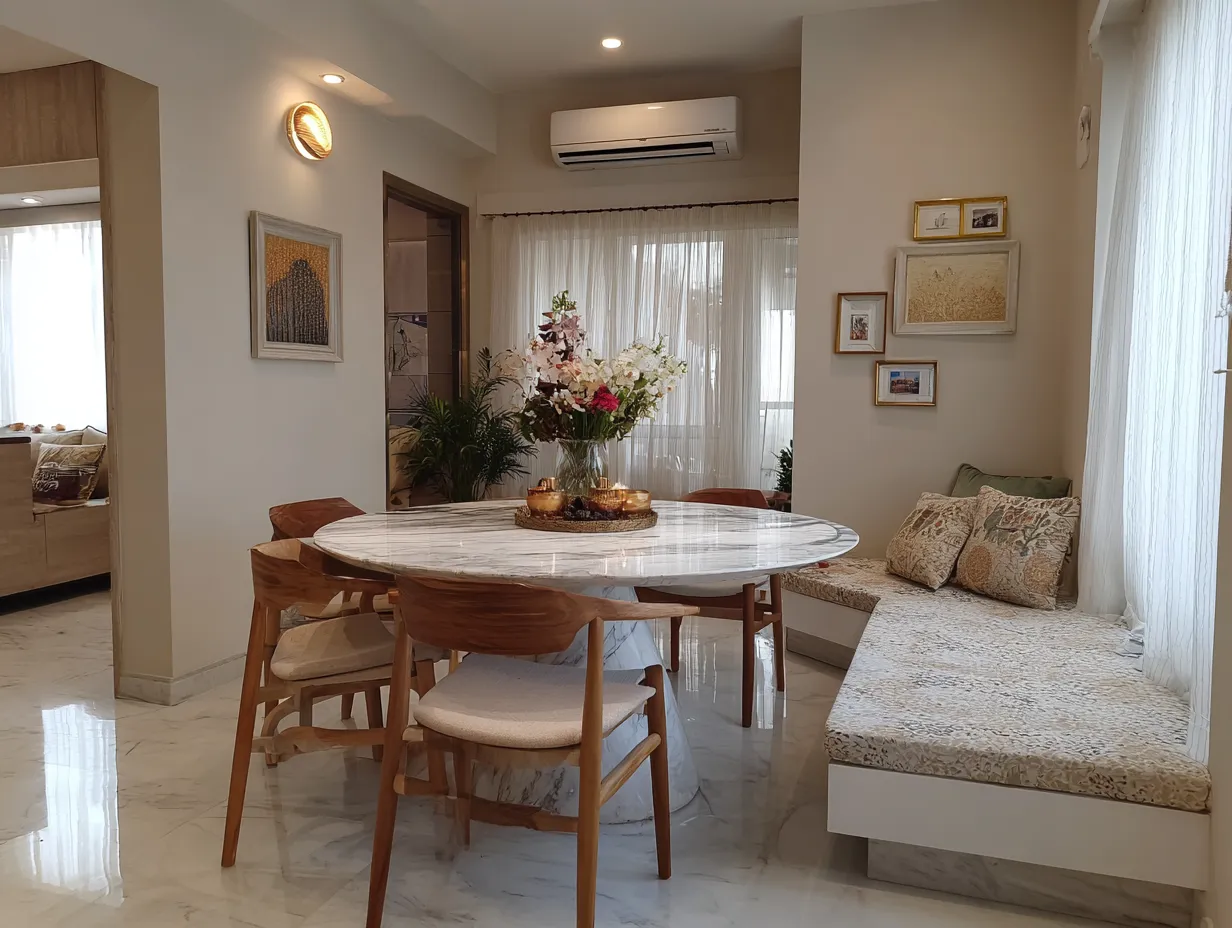
A round marble dining room table is often chosen when space feels tight. Without corners, movement feels easier. Less hesitation. People don't keep adjusting their chairs. In smaller homes, that matters more than the table itself.
Square Marble Dining Room Table
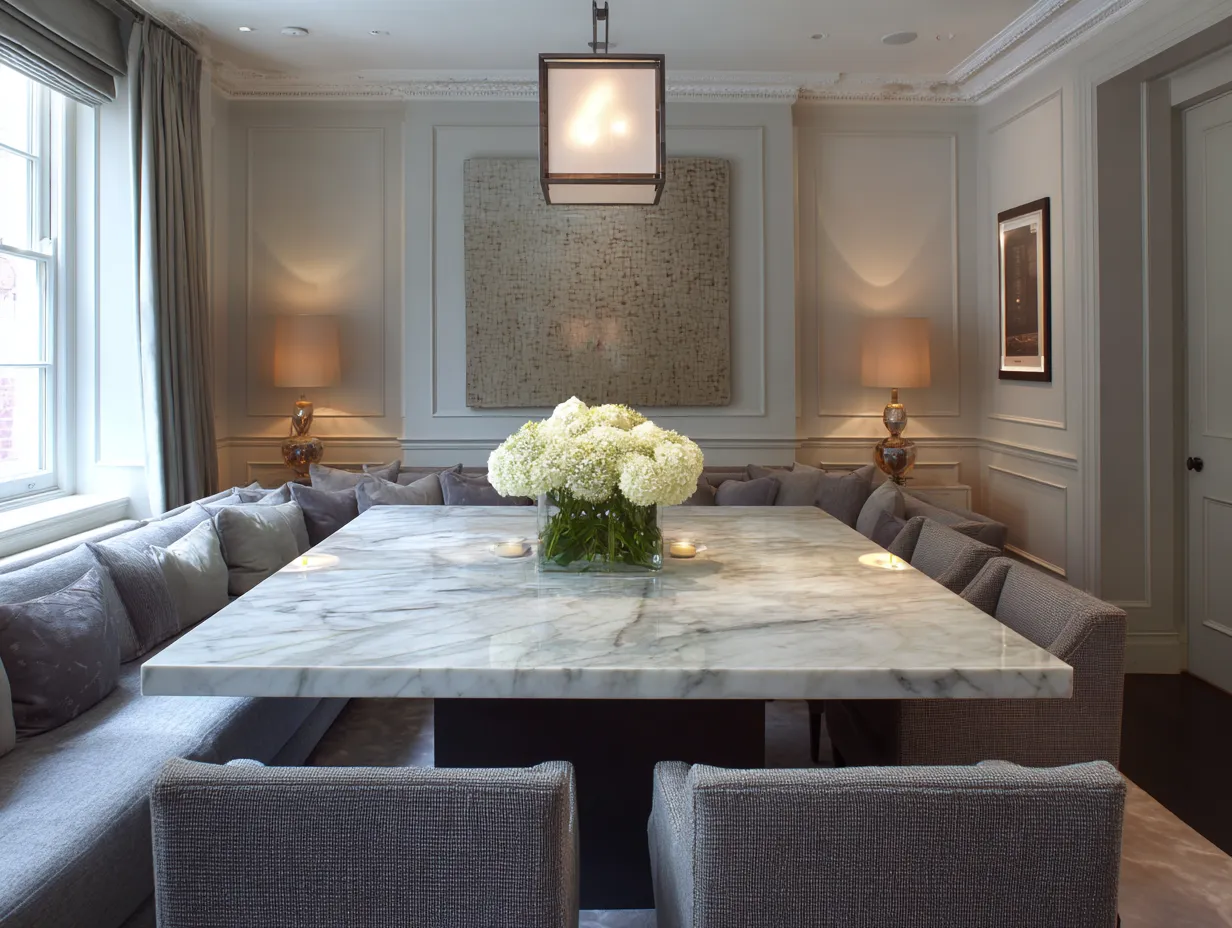
A square marble dining room table fits rooms with clear proportions. It sits neatly in closed dining areas. Everything lines up. Some homes prefer that sense of order. Others find it restrictive.
Oval Marble Dining Room Table
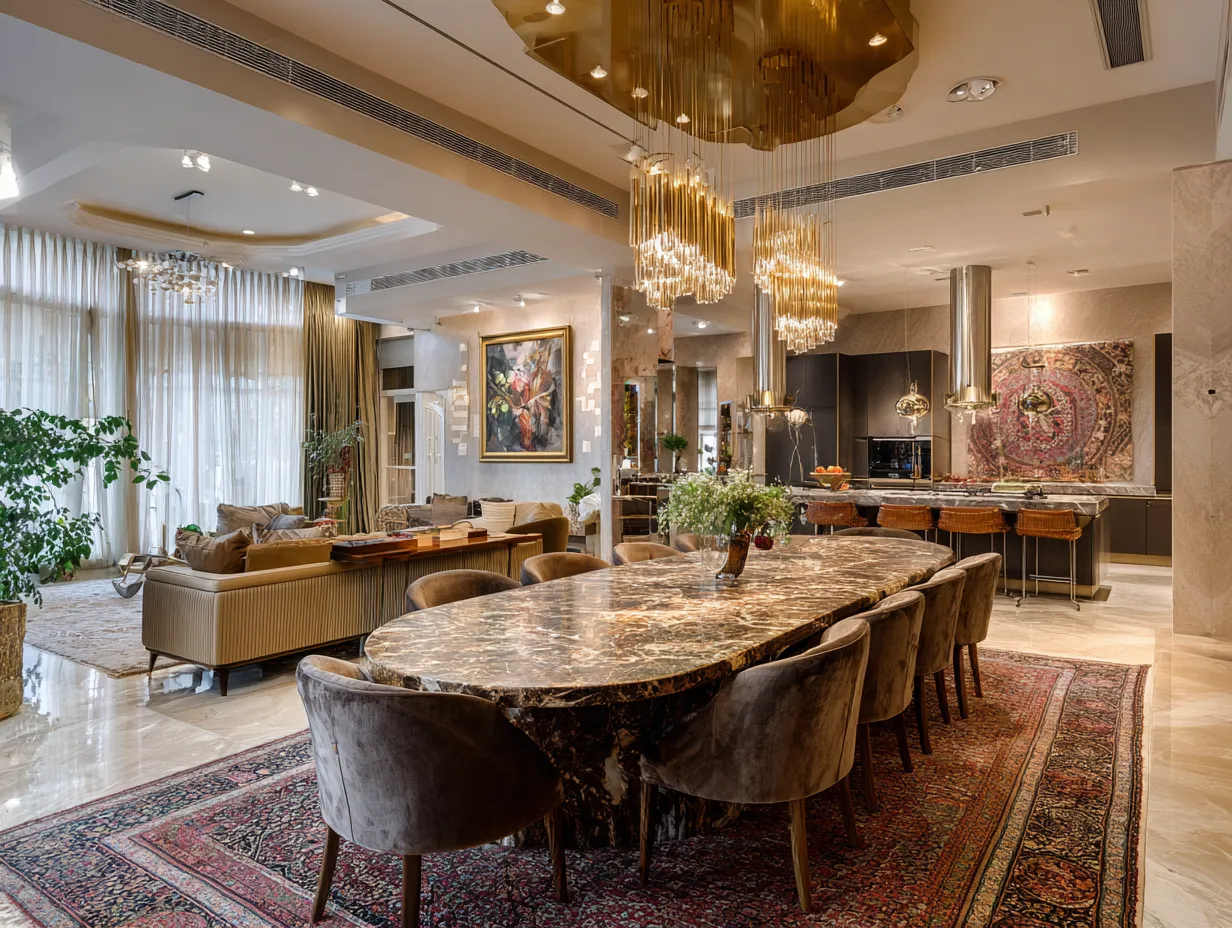
An oval marble dining room table sits somewhere in between. More seating than a round table. No sharp edges like a rectangle. Interior designers reach for it in longer dining rooms, especially when the table is used often. The ends matter here.
Round Glass Dining Room Table
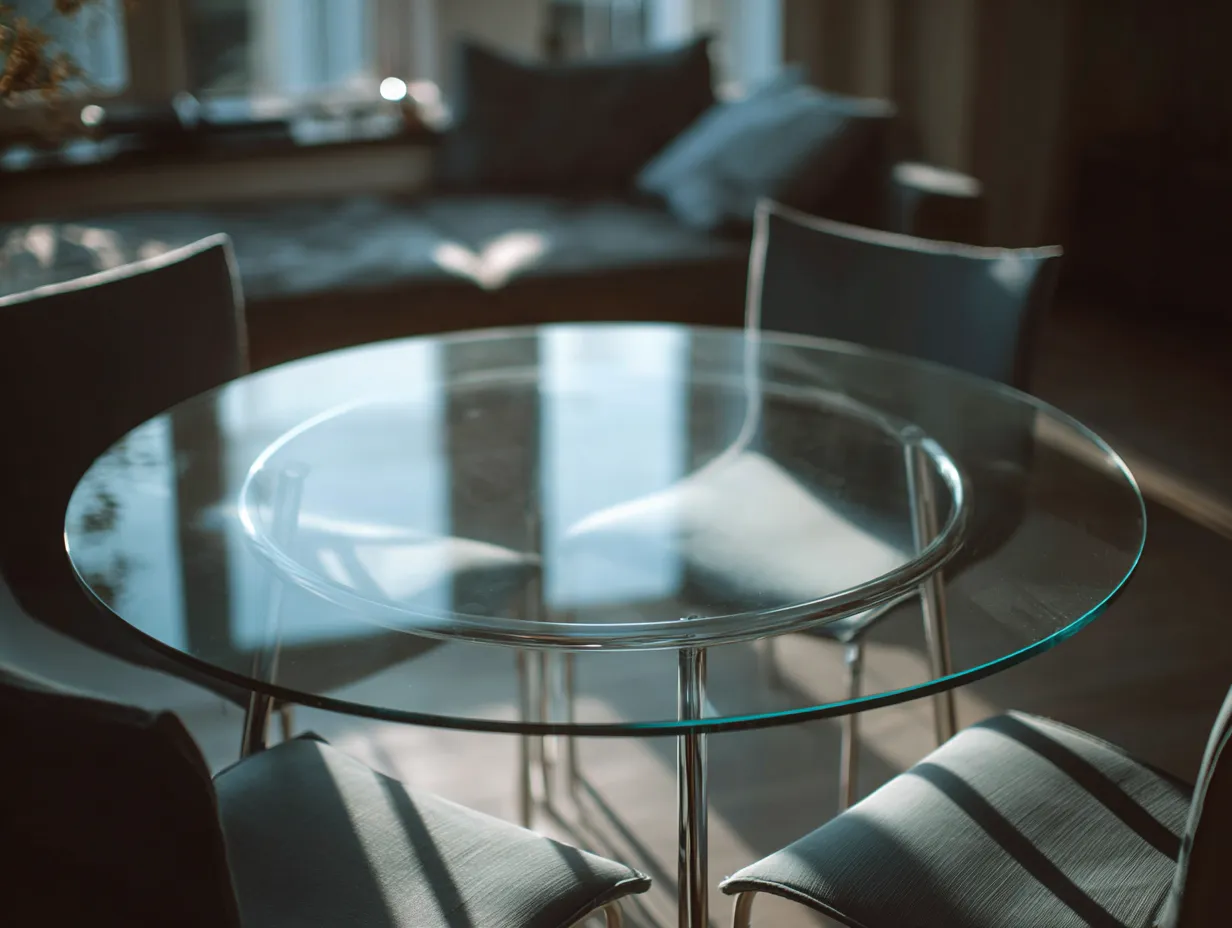
A round glass dining room table keeps the dining area visually light. Light passes straight through the surface. Smaller spaces feel less boxed in. You notice it more at night, when the lights are on.
Oval Glass Dining Room Table
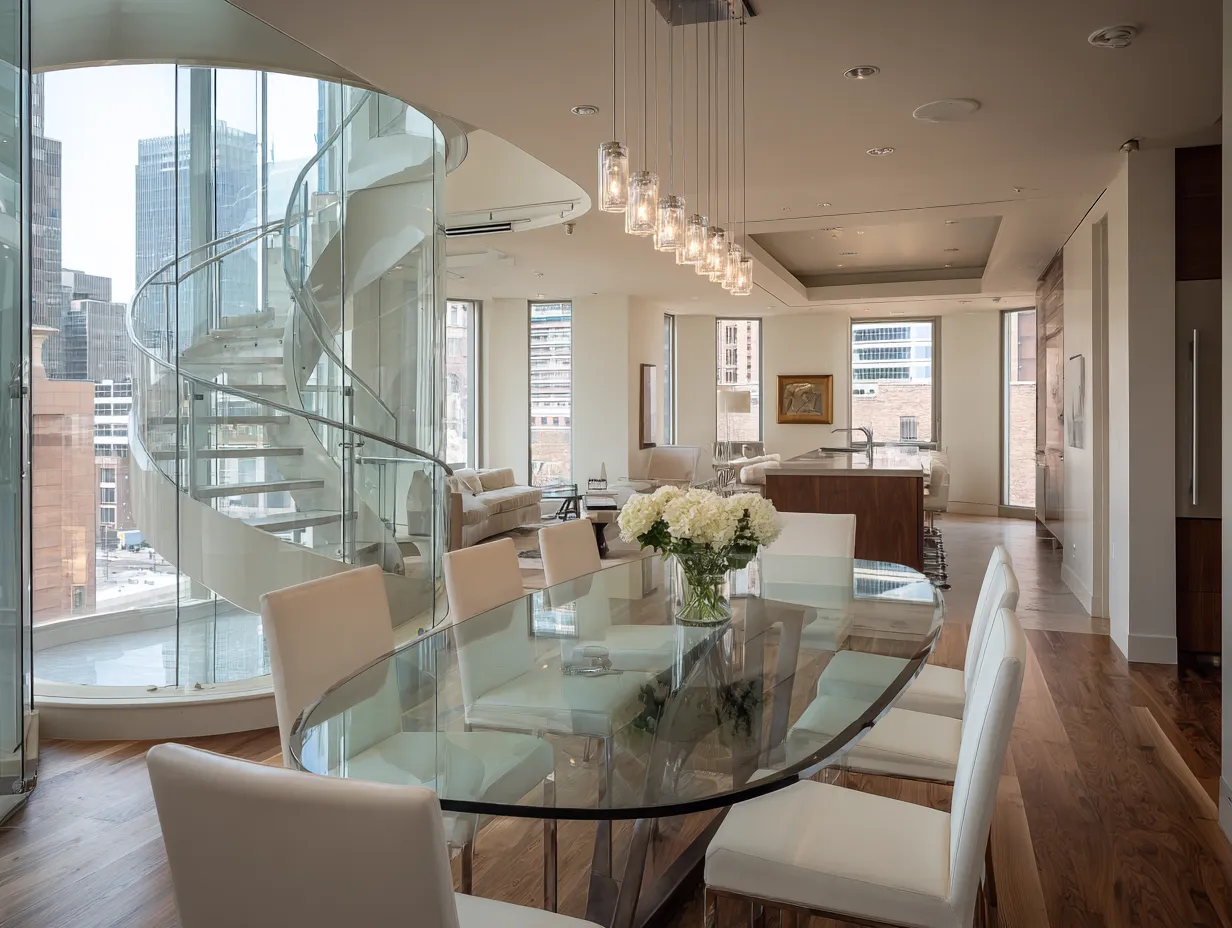
An oval glass dining room table stretches seating while keeping sight lines open. It works in open layouts. The dining area stays connected to the rest of the home. Nothing feels cut off.
Rectangle Glass Dining Room Table
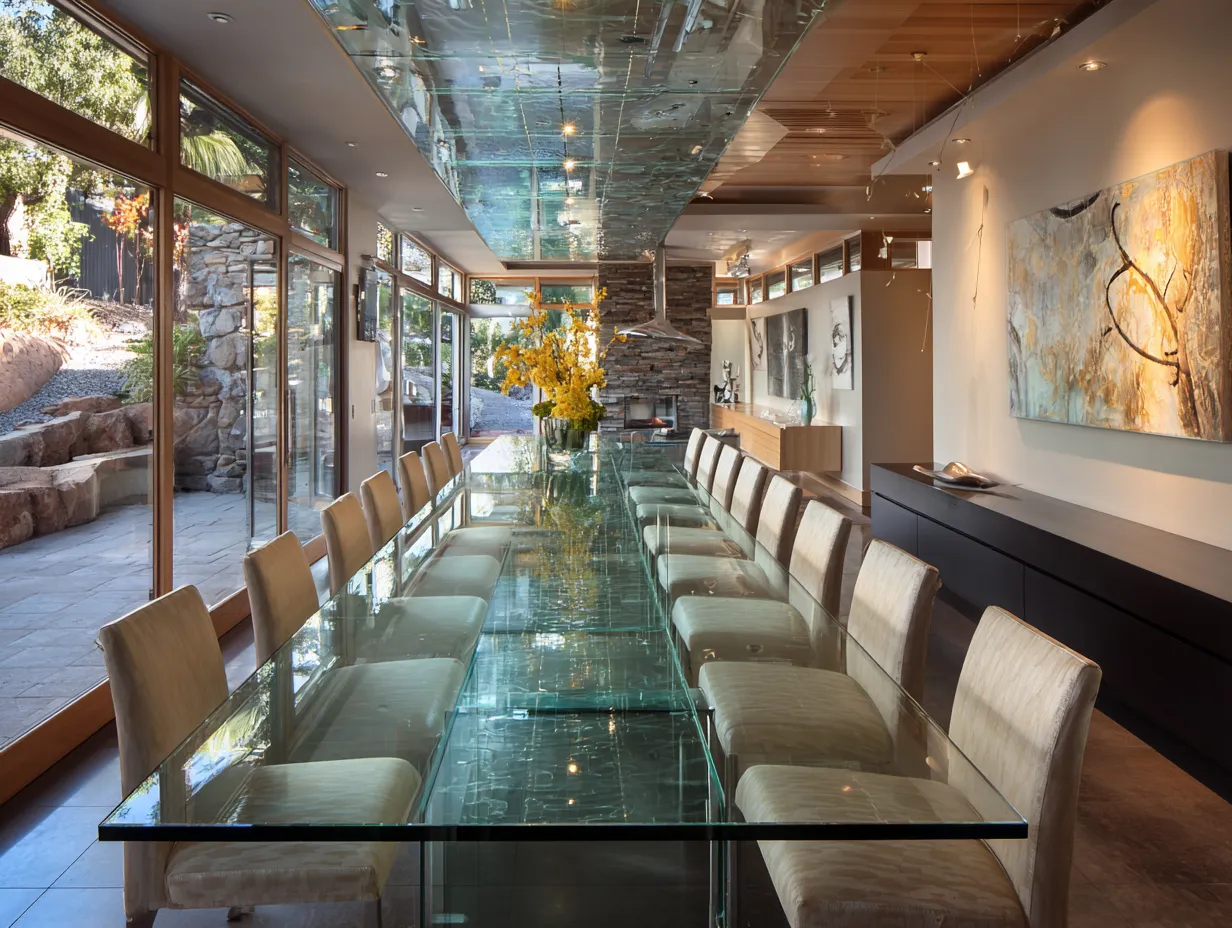
A rectangle glass dining room table fits long rooms with straight layouts. Seating order is clear. Some families like that. Even at larger sizes, the glass surface stops the room from feeling heavy. Especially from the side.
Dining Table Types By Seating And Function
Seating decides comfort before design. A dining table should match how many people use it most days, not how it looks in a catalogue. When seating and function are clear, a marble dining table feels practical instead of overwhelming.
Marble Dining Table 6 Seater
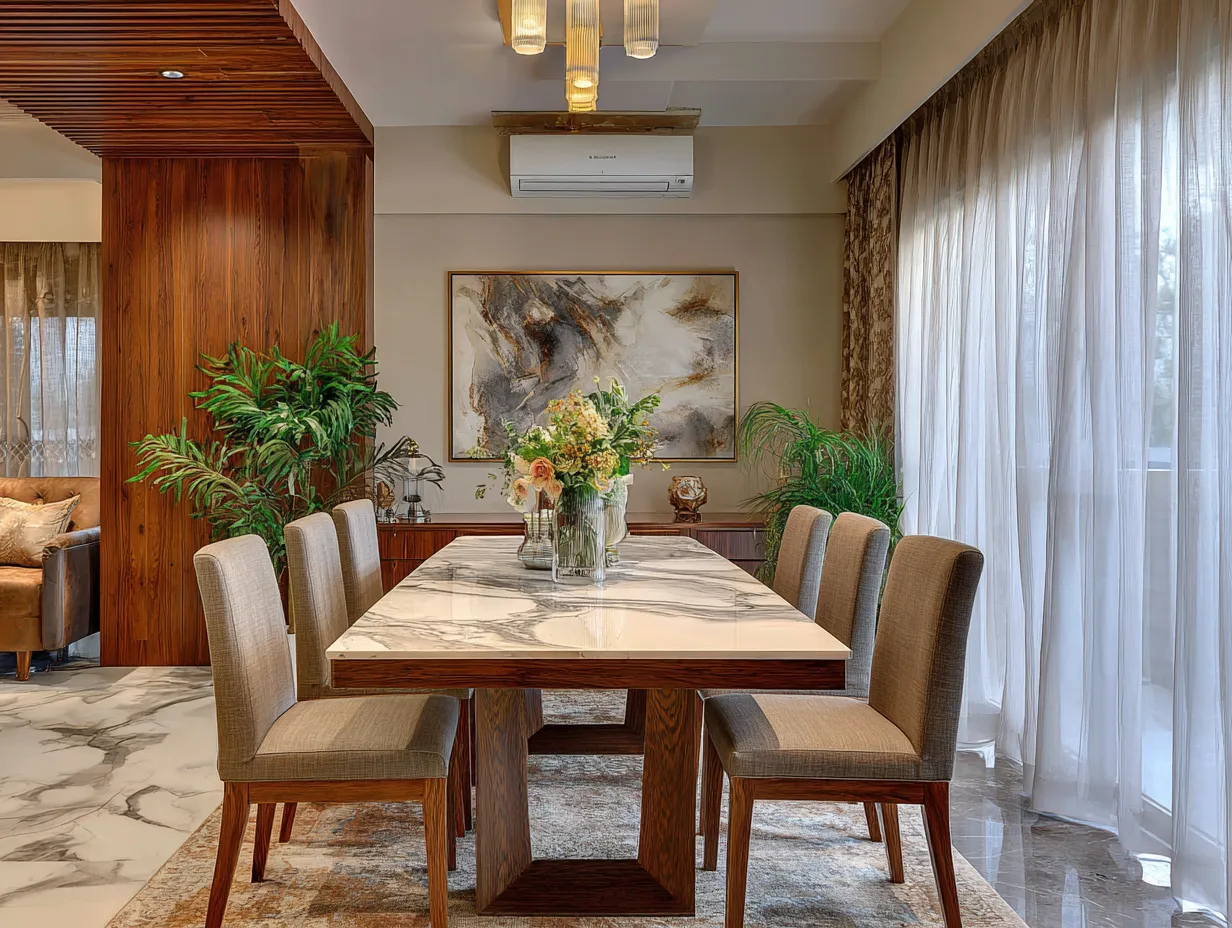
A marble dining table 6 seater suits families and homes that host often. It works best in dedicated dining areas where chairs can remain pulled out comfortably. This format feels permanent. In many homes, it becomes the place where meals stretch longer than planned.
Glass Top Dining Table 4 Seater
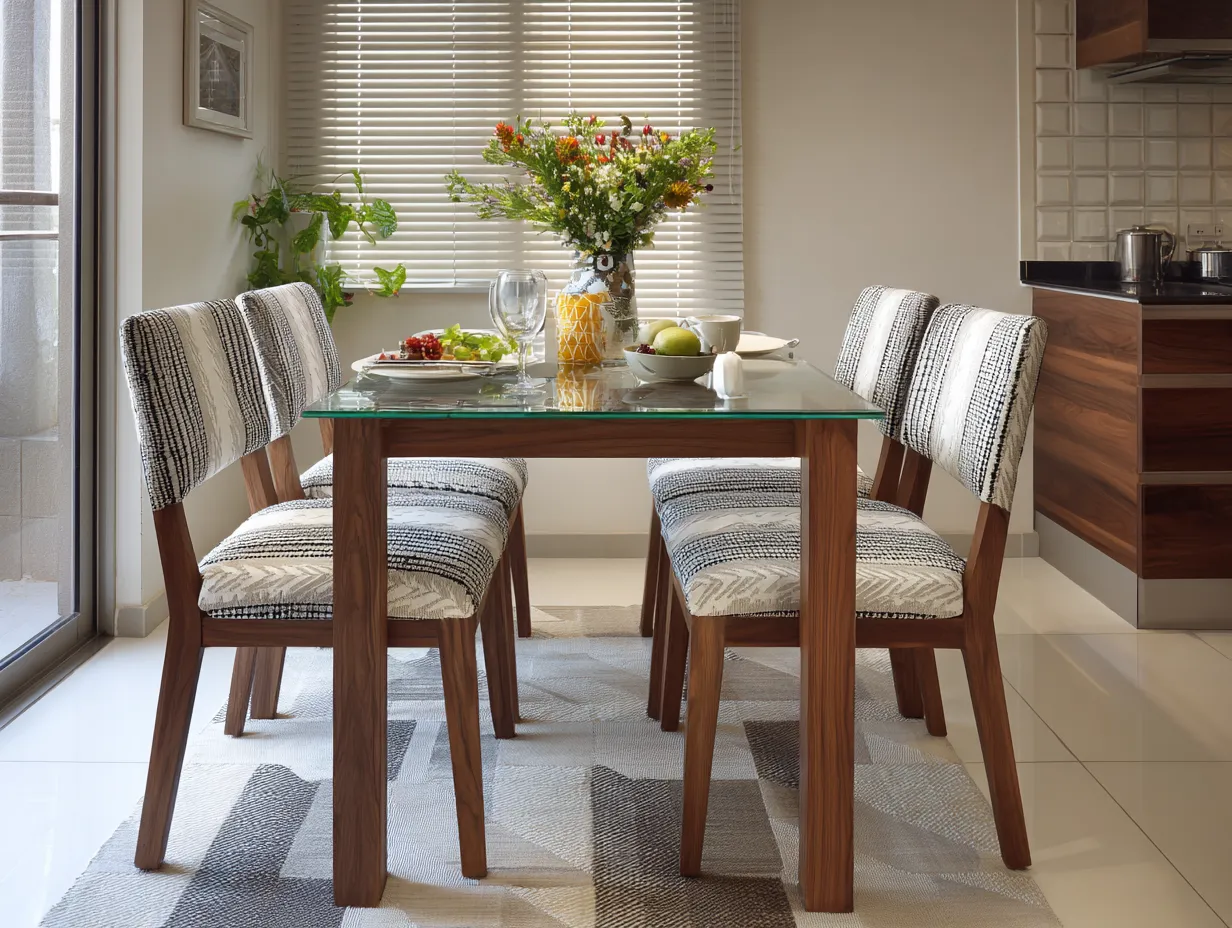
A glass top dining table 4 seater is chosen when space is tight and everyday use is simple. It keeps the room visually open and fits easily into dining areas that share space with the living room. This type works when movement matters more than presence.
Everyday-Use Marble Dining Table
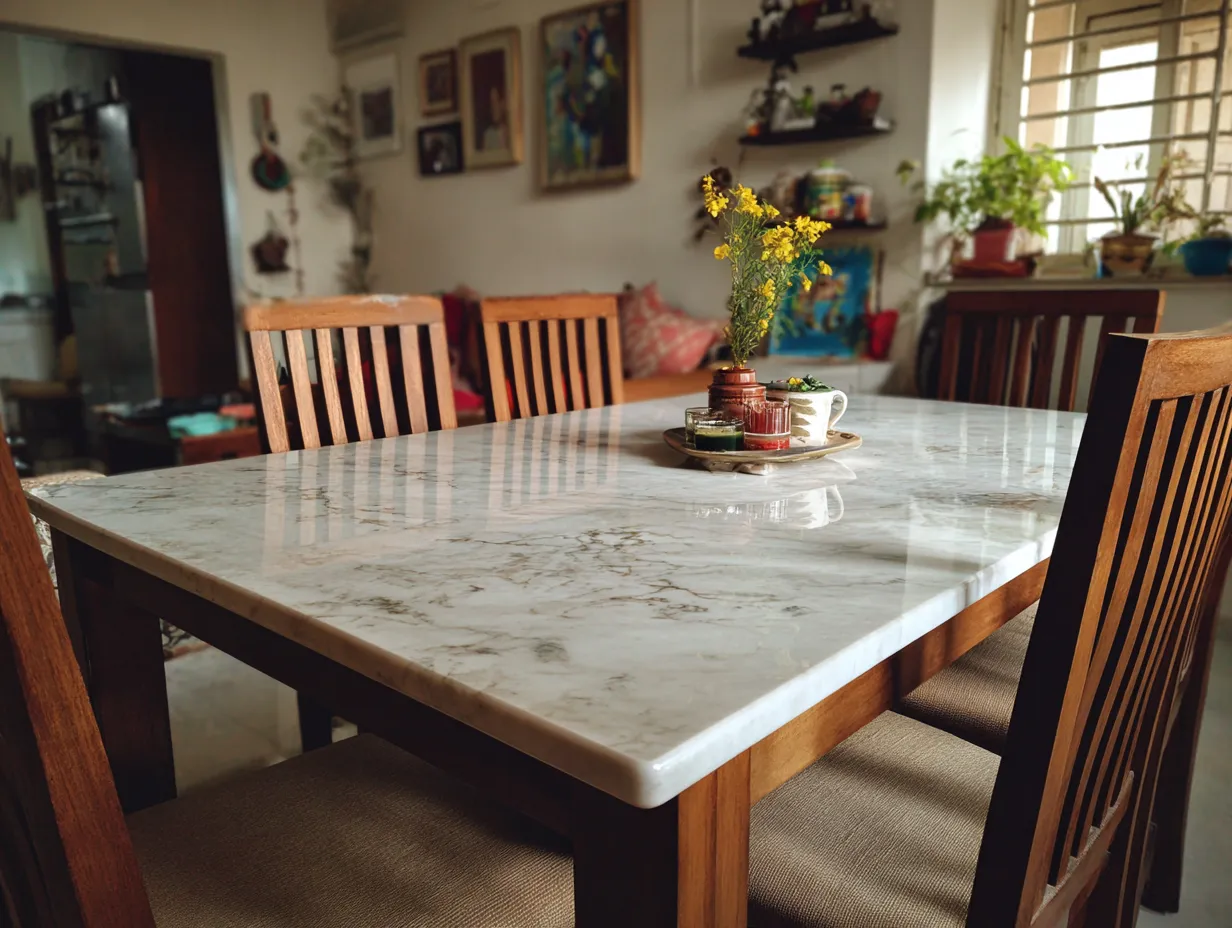
These marble dining tables are used throughout the day. Meals happen here. So does work. Sometimes conversations don't have a clear start or end. Comfort and durability matter more than finish. Shape and base design quietly do the heavy lifting.
Occasional-Use Marble Dining Table
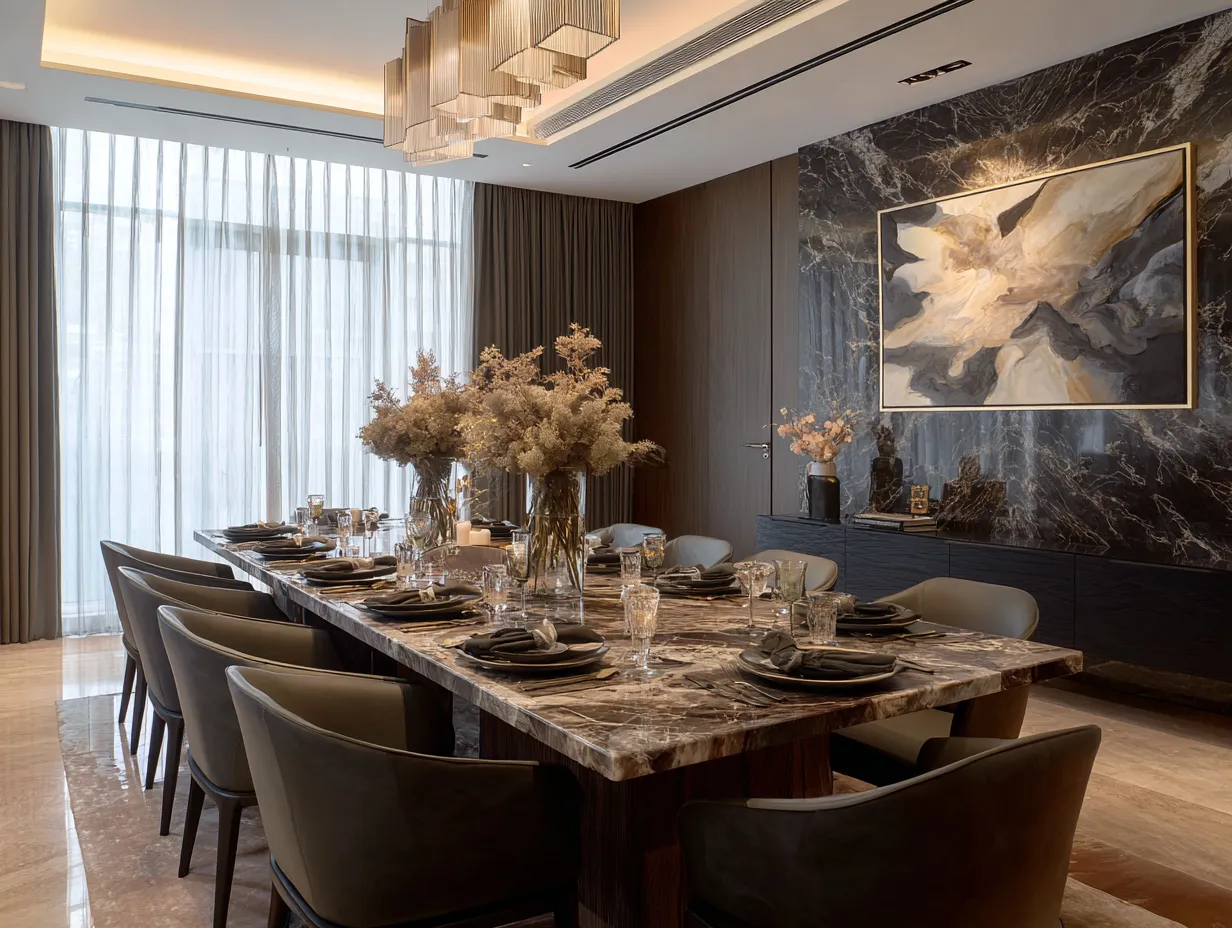
This type is chosen for formal dining rooms or guest-focused spaces. The marble surface becomes more of a visual feature. Daily wear is limited. Design choices tend to prioritise finish and proportion over flexibility.
Styling A Marble Dining Table
Marble already has presence. Styling is not about adding more. It is about balance. When done right, the table feels settled in the room, not oversized or loud.
Colour And Wall Choices Around Marble
Marble already carries its own palette. That's usually where designers start. A dining room colour combination that stays close to the stone works better than trying to contrast it. Soft whites, warm greys, muted neutrals. They don't compete. Strong colours do, and marble tends to lose its calm when that happens.
Walls matter more than people expect. Most dining room wall paint ideas work only when they stay subtle. Matte finishes help. Gloss usually doesn't. If the marble has strong veining, calmer walls make sense. Dining room paint colour ideas should support the table, not try to frame it. When this balance works, the marble holds attention without feeling heavy, and the dining room design settles naturally.
Also Read: Beautiful Dining Room Wall Decor Ideas You Should Inspire From
Lighting And Visual Balance
Lighting changes marble more than it changes wood or glass. You see it at different times of day. Warm or neutral lighting works better than harsh white light, which tends to exaggerate reflections on stone. Pendant lights matter here. Not the fixture itself, but where it sits. It should follow the table, not the room. When the scale is right, the dining area feels grounded within the larger interior design. When it isn't, something always feels slightly off.
Styling The Tabletop
Marble does not need decoration to stand out. One centrepiece is enough. A low bowl, a simple floral arrangement, or a single solid object works well. Avoid filling the surface. Marble already acts as decor. This restraint becomes more important when compared with a glass and wood table top, which reflects clutter more easily. Use dining table decor ideas that leave space for daily use.
Styling Based On Shape
Round marble tables handle centred decor easily. Everything flows outward. Square tables need restraint. Keep decor compact and low. Oval tables allow a bit more length, but symmetry still matters. Styling should follow the table's shape, not fight it.
Also Read: Clever Dining Room Decorating Ideas on a Budget for 2026
Making The Final Choice
A dining table stays in a home for years. That alone changes how it should be chosen. This is why a marble dining table is often seen as the best dining table for long-term use. It doesn't follow short trends or seasonal styles. Once it is placed, it settles into the space and becomes part of daily life.
Marble brings a sense of weight and calm that other materials don't. It holds its presence without asking for attention. When chosen with intention, a marble dining table doesn't fill a dining area. It gives the room something to hold onto.
*Images used are for representational purposes only. Unless explicitly mentioned, the Interior Company does not hold any copyright to the images.*
Dining Room Design Ideas for You
- Color
- Theme
- Size
- Type
- Wall Color
- Floor Material
- Beige Color Dining Room
- Pink Color Dining Room
- Orange Color Dining Room
- Minimalist Color Dining Room
- Red Color Dining Room
- Green Color Dining Room
- Gray Color Dining Room
- White Color Dining Room
- Brown Color Dining Room
- Yellow Color Dining Room
- Wood Tones Color Dining Room
- Black Color Dining Room
- Blue Color Dining Room
- Black & White Color Dining Room
- Mid-Century Modern Theme Dining Room
- Mediterranean Theme Dining Room
- Asian Theme Dining Room
- Rustic Theme Dining Room
- Scandinavian Theme Dining Room
- Industrial Theme Dining Room
- Traditional Theme Dining Room
- Transitional Theme Dining Room
- Tropical Theme Dining Room
- Contemporary Theme Dining Room
- Victorian Theme Dining Room
- Modern Theme Dining Room
- Yellow Wall Color Dining Room
- Pink Wall Color Dining Room
- Red Wall Color Dining Room
- White Wall Color Dining Room
- Green Wall Color Dining Room
- Beige Wall Color Dining Room
- Black Wall Color Dining Room
- Blue Wall Color Dining Room
- Brown Wall Color Dining Room
- Gray Wall Color Dining Room
- Multi Wall Color Dining Room
- Light Hardwood Floor Material Dining Room
- Laminate Floor Material Dining Room
- Painted Wood Floor Material Dining Room
- Marble Floor Material Dining Room
- Dark Hardwood Floor Material Dining Room
- Ceramic Tile Floor Material Dining Room
- Carpet Floor Material Dining Room
- Medium Hardwood Floor Material Dining Room
- Porcelain Tile Floor Material Dining Room
- Plywood Floor Material Dining Room

Ready for a home transformation?
Let our designers assist you!
Recent Posts







It’s easier to explain by how it’s used. A marble dining table has a stone top made from marble. The base is usually wood, metal, or sometimes a mix. People choose marble because it handles heat well and doesn’t lose stability over time. It’s not delicate furniture. It’s meant to be used.
Yes, if you treat it like furniture and not a showpiece. A marble dining table works for daily meals when basic care is followed. Hot dishes are fine. Spills are fine too, as long as they’re wiped when they happen. Most problems come from neglect, not use.
Sometimes, yes. It depends less on marble and more on proportion. Smaller tables and round formats work well within small dining room design ideas, especially when there’s enough space to move around the table without adjusting your body every time.
Visually, it can. A round glass dining room table or an oval glass dining room table lets light pass through the surface. That alone changes how the room feels. The space doesn’t actually grow, but it stops feeling boxed in.
They are heavier than glass or wood. That’s true. But the weight is spread through the base. In standard homes, this isn’t a structural issue. What matters more is build quality. A poorly made table is a problem, no matter the material.
They behave differently. Marble feels solid and permanent. Glass feels lighter and visually open. Homes with a dining room with glass table usually prioritise openness. Marble is chosen when the dining space needs to feel grounded and settled.
There isn’t one correct answer. Solid wood and teak are popular for strength and warmth. Metal bases suit modern interiors. Engineered wood is often used when cost control matters. The base decides stability and how heavy or light the table feels in the room.
Related Category
- False Ceilings
- Furniture
- Kitchen
- Lighting
- Paint and Color