- Design Ideas
- Cities
- Trends
- Guides
- Price Calculators
- Interior DesignersNEW
- Our Portfolio
- More


5+ Best PVC Kitchen Cupboard Design: Tough On Mess And Easy On Maintenance

PVC kitchen cabinets are everywhere now. Not just in budget homes like earlier. Even new modular kitchens are using them, which makes sense once you think about what a kitchen actually goes through every day. There’s water, oil splashes, heat from cooking, random spills, and humidity sitting in the air half the time. All of it together. So people naturally start looking for something that won’t swell or crack after a year or two.
That’s mostly how PVC kitchen cabinets became so common. PVC stands for polyvinyl chloride. It’s a plastic-based material used for cabinet shutters, shelves, and sometimes even the full storage units in a modular kitchen. It’s light, doesn’t attract termites, and moisture doesn’t really affect it much either. Plus, you don’t have to keep maintaining it over and over, which is honestly a big reason people choose it.
Table of Content
What Are PVC Kitchen Cabinets?
How Are PVC Kitchen Cabinets Made?
Types Of PVC Used In Kitchen Cabinets
Why Choose PVC For Kitchen Cabinets?
Choosing PVC Kitchen Cabinets: What To Consider
Smart Places To Use PVC Kitchen Cabinets
PVC Kitchen Cabinets For Different Kitchen Layouts
Latest PVC Kitchen Cabinet Design Options
PVC Kitchen Cabinet Doors And Drawer Types
PVC Panels vs PVC Boards In Kitchen Cabinets
PVC vs Other Kitchen Cabinet Materials
How Long Do PVC Kitchen Cabinets Last?
What Is The Price Of PVC Kitchen Cabinets?
Pros and Cons of PVC Kitchen Design
Simple Maintenance Tips For PVC Kitchen Cabinets
Are PVC Kitchen Cabinets Worth Choosing?
A Practical Choice For Your Kitchen!
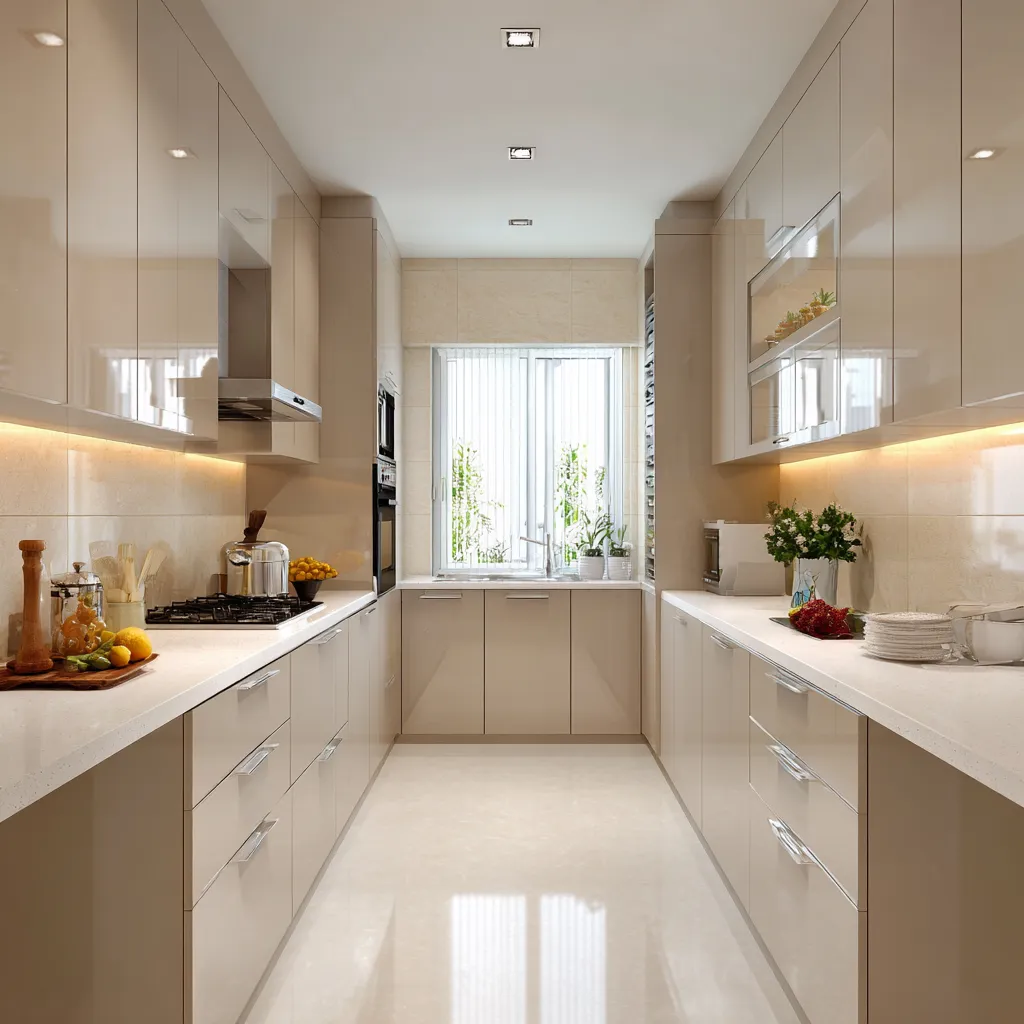
Earlier PVC kitchens used to look very plain, though. Mostly white panels everywhere. Felt basic. But now there are multiple colours and finishes available, so they don't look like temporary setups anymore.
So if you're trying to figure out whether PVC is actually the right choice for your kitchen cabinets, it helps to understand where it works well, what it costs, and where maybe it's not the best option. Let's go step by step.
What Are PVC Kitchen Cabinets?
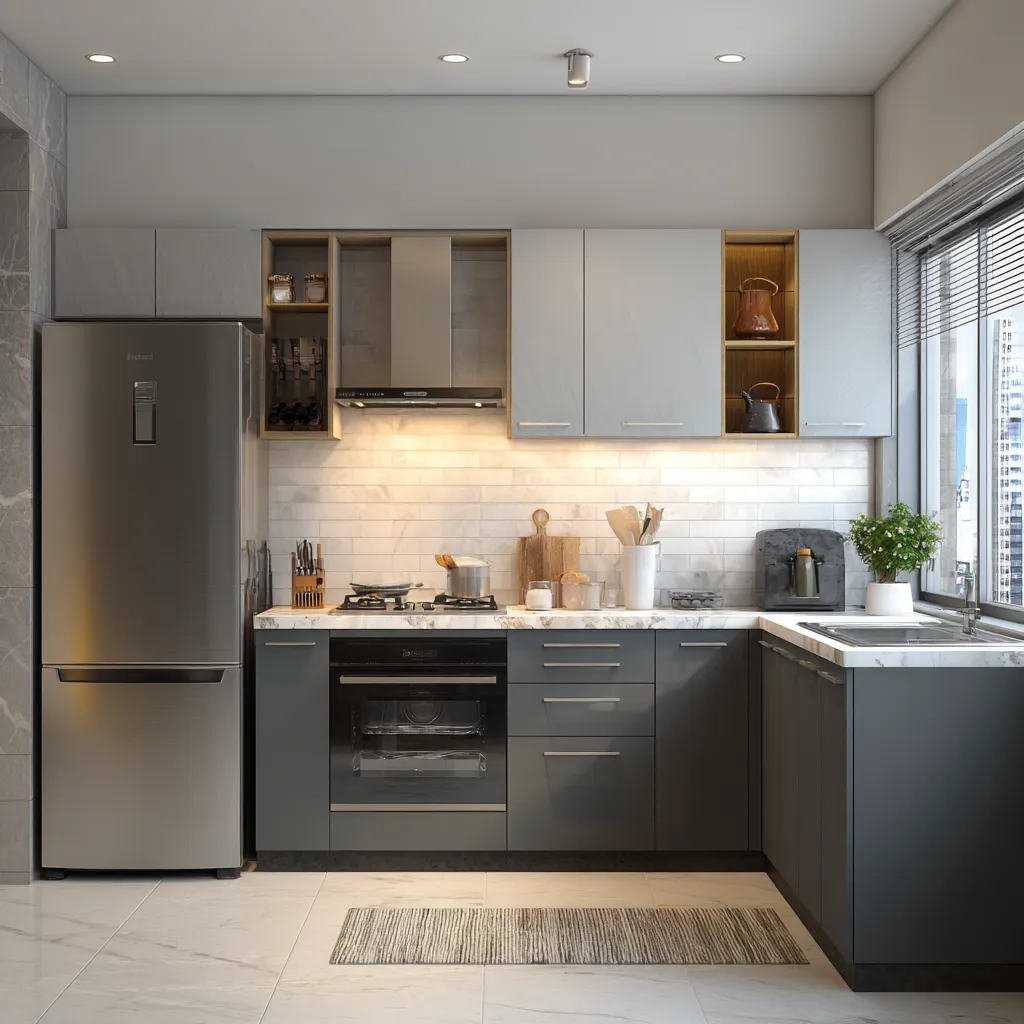
PVC refers to polyvinyl chloride. Basically, it is a plastic-based board used to make cabinet shutters, carcasses, shelves, and drawers. Unlike plywood, PVC doesn't absorb moisture. There is no swelling, termite damage, or polishing needed. And that's exactly why it works well inside Indian kitchens.
Depending on the design requirement, PVC is used for:
- Cabinet shutters
- Drawer systems
- Internal shelves
- Side partitions
- Loft storage units
- Full cabinet carcasses
Because PVC boards already have a finished surface, they do not need polishing or painting after installation. Modern PVC kitchen cabinet design options also don't look basic anymore. You get matte finishes, gloss shutters, wood textures, and even stone-style sheets sometimes. So visually, they fit easily into modular kitchen designs.
Read also – Best White Kitchen Design Ideas for Modern Homes
How Are PVC Kitchen Cabinets Made?
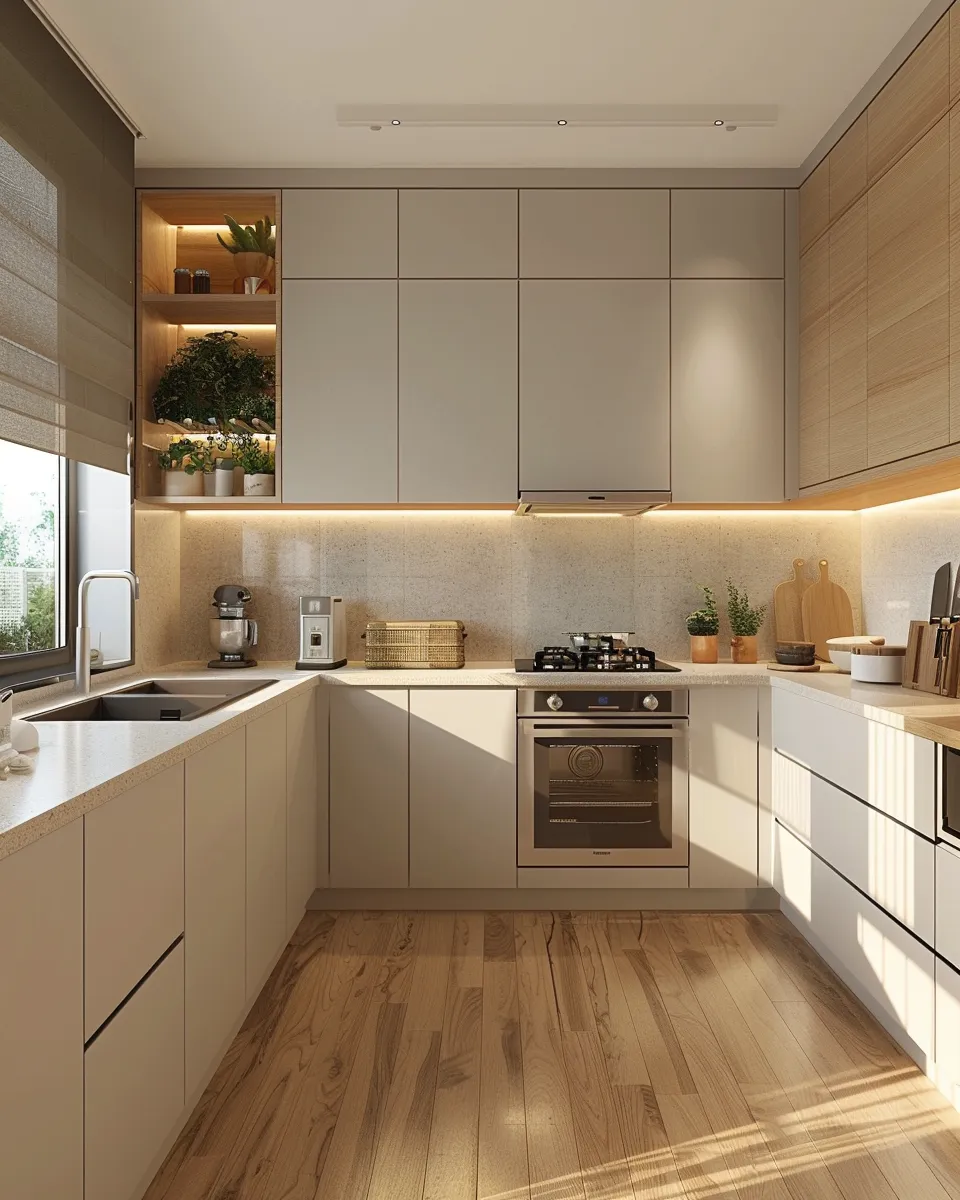
PVC kitchen cabinets are made from ready-made PVC foam boards or hollow PVC boards, which are cut to fit the kitchen layout and cabinet measurements. These boards come ready-finished and are cut into the required cabinet sizes during installation.
Since these boards are manufactured in controlled thickness and size, they help create straight and uniform cabinet surfaces during installation. This improves alignment in modular kitchens compared to site-made carpentry cabinets.
After cutting, the boards are assembled using screws, adhesives, and modular fittings. Hinges, handles, and drawer channels are installed just like in any standard PVC modular kitchen cabinet setup.
In many cases, an additional PVC kitchen cupboard sheet or membrane finish is applied to the board surface. This adds colour, gloss, or texture variation and improves the final appearance of the cabinet shutters.
You may also like!
| kitchen Countertop Designs | Best Countertop Design for Modern Kitchen |
| Kitchen Sunmica Design | Latest Kitchen Sunmica Designs for a Modern Look |
| Kitchen Pantry Space | Trendy Kitchen Pantry Ideas for All Storage |
| Kitchen Window Design | Stylish Kitchen Window Ideas for Every Kind of Kitchen |
Types Of PVC Used In Kitchen Cabinets
Most PVC modular kitchen designs use a combination of board types rather than relying on a single structure. Each board serves a different purpose depending on the load requirement and its location within the kitchen.
PVC Foam Boards
PVC foam boards are dense, solid panels made from compressed PVC. These boards are stronger than hollow sheets and are used where cabinets need to support the weight of regular kitchen storage.
They are commonly installed in:
- Base cabinets
- Cabinet shutters
- Internal shelves
- Drawer support structures
Because of their durability, foam boards are often considered the best PVC material for daily-use modular kitchen storage.
PVC Hollow Boards
PVC hollow boards contain air gaps inside the structure. This makes them lightweight and more affordable than foam boards.
They are usually installed in:
- Side panels
- Loft cabinets
- Vertical separators
- Light storage sections
These boards help reduce the overall price while still providing moisture resistance, which makes them suitable for small modular kitchen layouts and rental homes.
Read also – 15+ Attractive Kitchen Glass Door Designs for Your Modern Home
Why Choose PVC For Kitchen Cabinets?
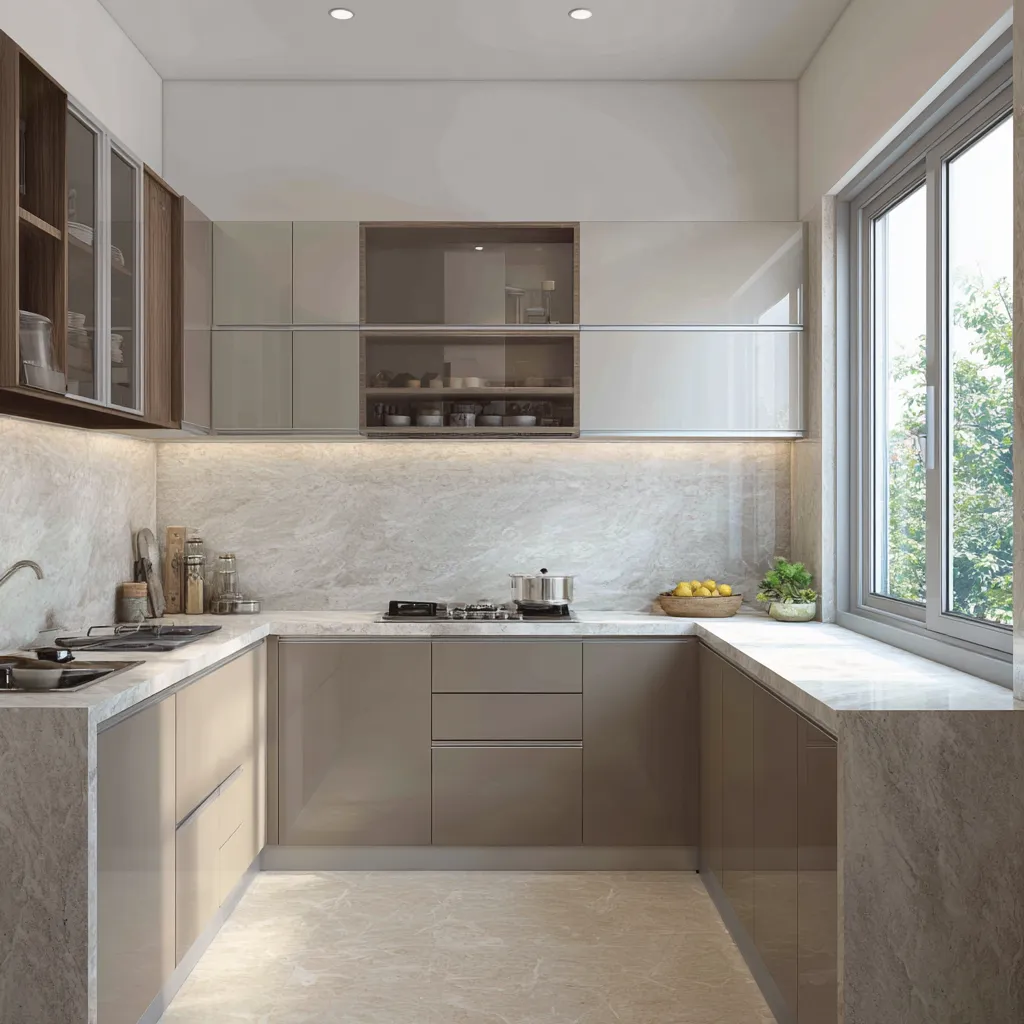
Kitchen cabinet materials go through a lot every single day. Steam from cooking, oil stains on shutters, cleaning liquids, and heat changes. It keeps happening again and again. That's usually when people start thinking maybe wood isn't the easiest option to maintain. PVC kitchen cupboards work better in these situations because the material doesn't react to moisture the way plywood or MDF sometimes does.
Here's why many people end up choosing them.
- Water resistant: PVC doesn't absorb water. So even near sink areas, the cabinets don't swell or start cracking after some time. That makes them a safer choice for lower storage where spills happen anyway.
- Termite-resistant: Since PVC is plastic-based, termites don't really bother it. Which honestly removes one big headache people usually have with wooden cabinets.
- Easy to clean: Oil stains, dust, and cooking marks. Most of it just wipes off with a damp cloth. No need to think too much about cleaning products.
- Low maintenance: Once PVC cabinets are installed, that's mostly it. No repainting later. No polishing every year. Just normal cleaning, and they stay fine.
- Budget-friendly: Compared to acrylic kitchen designs or even some plywood setups, PVC kitchens usually cost less. That's why they show up a lot in modular kitchens now.
- Lightweight structure: PVC cabinets are lighter than wood ones, so hinges and fittings don't carry too much load. Drawers and shutters stay smoother for longer. Small thing, but makes a difference over time.
- Available in multiple finishes: Earlier PVC looked very plain. Now there are gloss finishes, matte colours, and even wood-like textures. So they don't feel basic anymore.
- Resistant to mould and fungus: PVC doesn't support fungus inside closed storage spaces. Which helps, especially in kitchens where humidity is always there somewhere. It keeps things a bit more hygienic without extra effort.
Also read – 20+ Best Kitchen Design Tips: Everything You Need To Plan The Perfect Kitchen
Choosing PVC Kitchen Cabinets: What To Consider
PVC works well in most kitchens, but it's not perfect everywhere. Before choosing PVC kitchen cabinets, it helps to know where they do well and where they might not be the best fit. Just makes planning easier later.
- Not as strong as plywood: PVC is lighter than plywood. That's good in some ways, but it also means it can't handle very heavy storage in one place. Big steel vessels were stacked in one cabinet for years. Not ideal unless there's extra support.
- Sensitive to direct heat exposure: PVC handles moisture easily, but heat is different. If cabinets sit too close to the gas stove or oven, the surface can slowly change shape over time. So spacing matters here.
- Limited decorative carving options: PVC works best for simple, flat shutters. Clean modern finishes. If someone wants detailed carved cabinet designs like traditional wooden kitchens, PVC usually isn't the right material for that.
- Possible colour fading in low-quality boards: Lower-grade PVC sheets can lose their shine after long exposure to sunlight or constant heat. Doesn't happen with better quality boards as much, but still something people check before finalising.
- Installation quality matters: PVC cabinets depend a lot on proper fitting. If installation isn't done carefully, panels may bend slightly, or joints may loosen later. Good installation makes a big difference in how long the kitchen actually lasts.
Read also – Stylish Brown Kitchen Design Ideas for Every Home
Smart Places To Use PVC Kitchen Cabinets
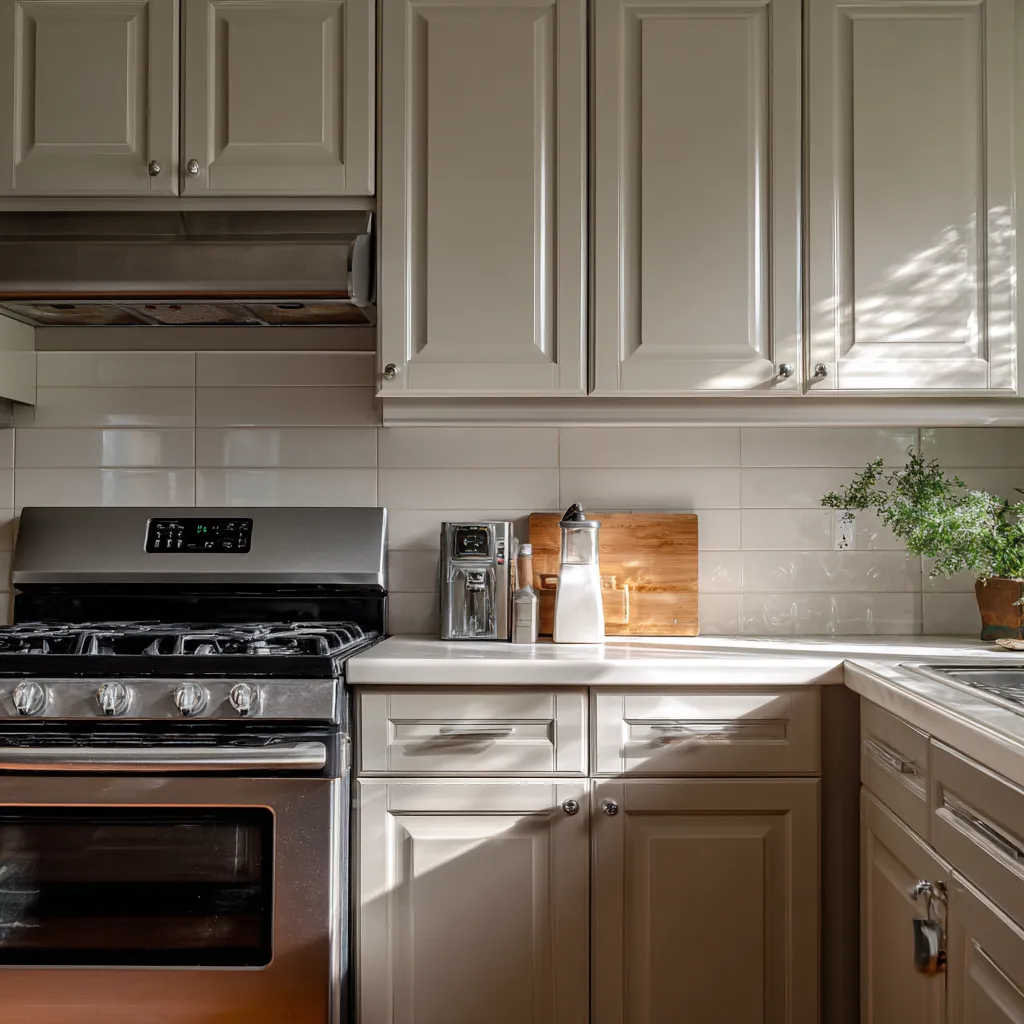
PVC cabinets perform especially well in areas exposed to moisture and regular cleaning. Recommended placement includes:
- Under-sink cabinets
- Lower storage units
- Washing areas
- Utility cabinets
- Coastal region kitchens
- Rental home kitchens
Many designers combine plywood upper cabinets with PVC lower cabinets to balance durability and cost in modular kitchen designs.
Read also – Best Small Kitchen Storage Ideas: Smart Ways To Organise Small Kitchens
PVC Kitchen Cabinets For Different Kitchen Layouts
PVC works with almost every layout used in modular kitchens.
Straight Kitchen Design
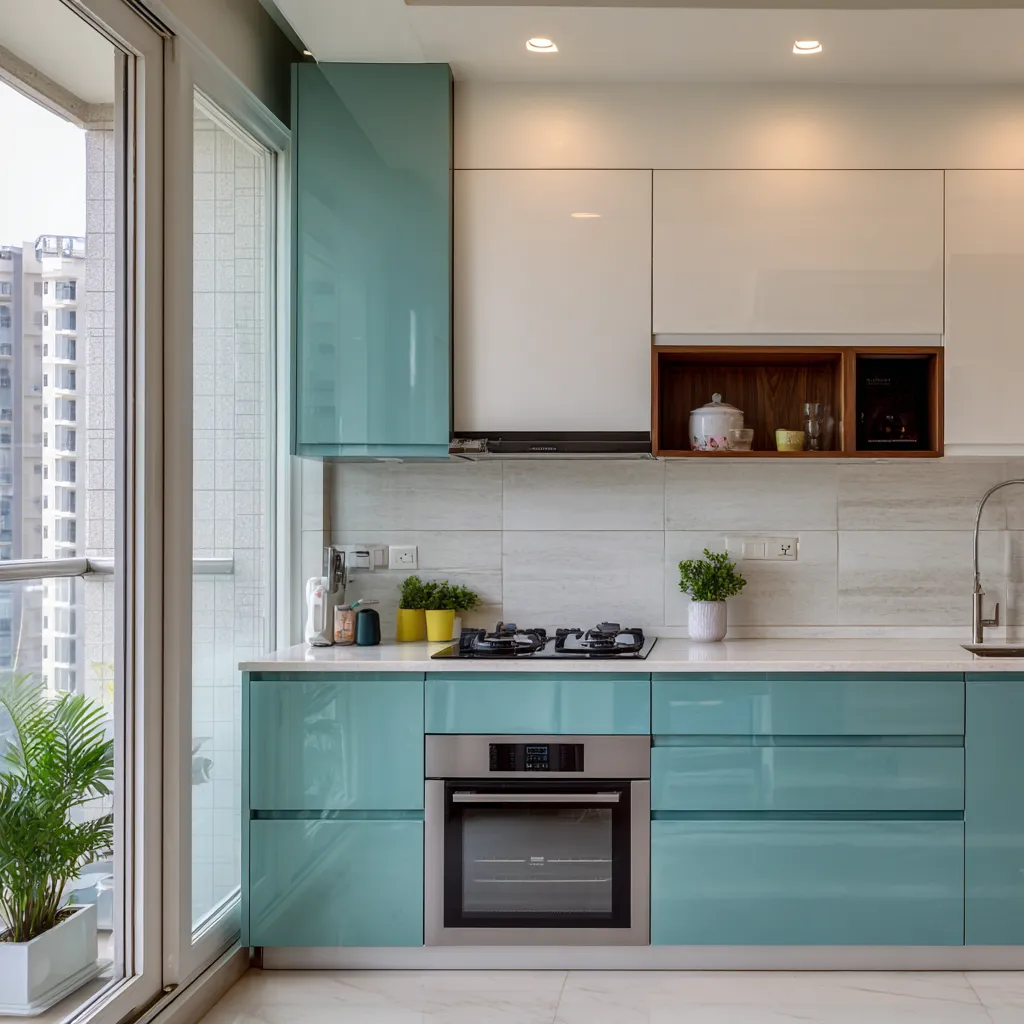
In this layout, cabinets are placed along a single wall. It is commonly used in compact apartments and studio homes. Tall PVC kitchen cupboards improve vertical storage in this arrangement and make it suitable for small kitchen design setups.
L-Shaped Kitchen Design
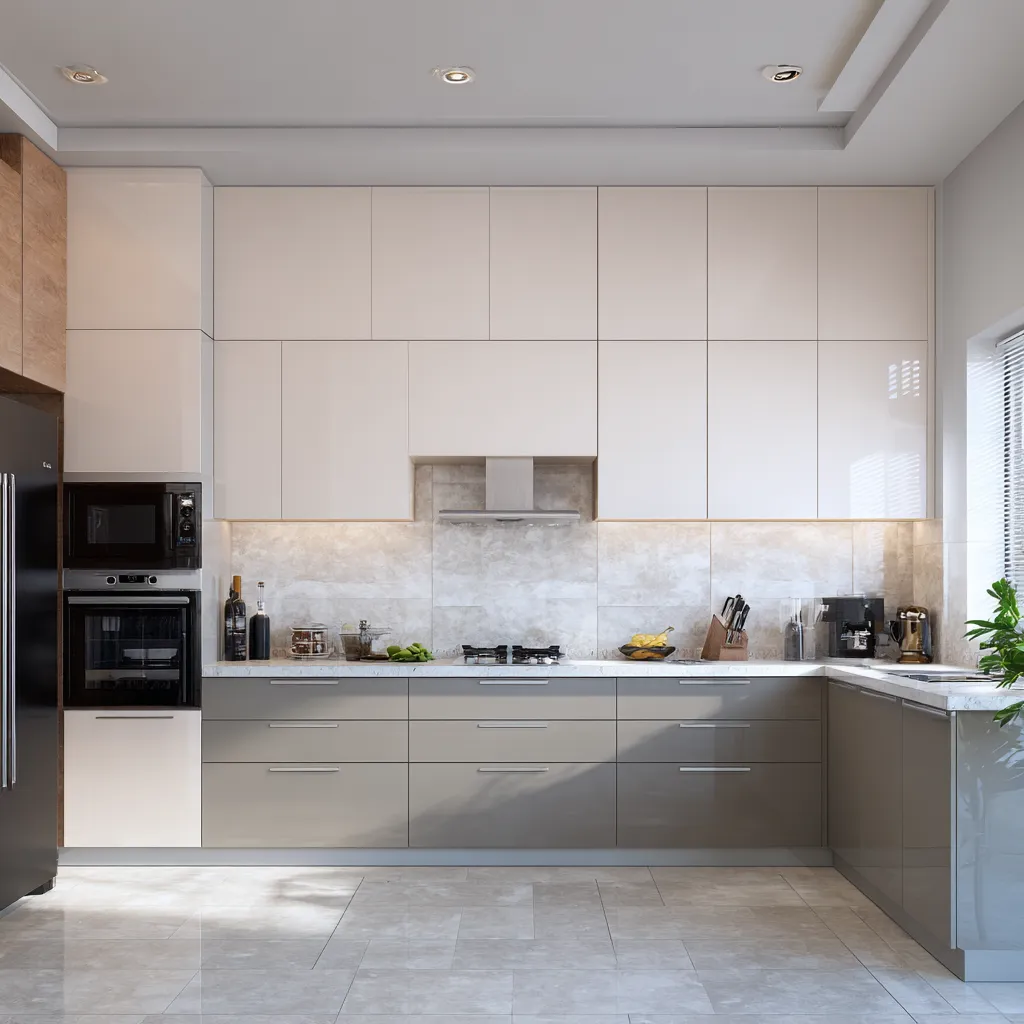
This layout uses two connected walls for storage and appliances. It improves movement efficiency and corner-space utilisation. Corner pull-out units work well with PVC kitchen drawer storage systems in L-shaped kitchens.
Read also – Gloss vs Matte Kitchen Cabinets: What Actually Works in a Real Kitchen?
U-Shaped Kitchen Layout
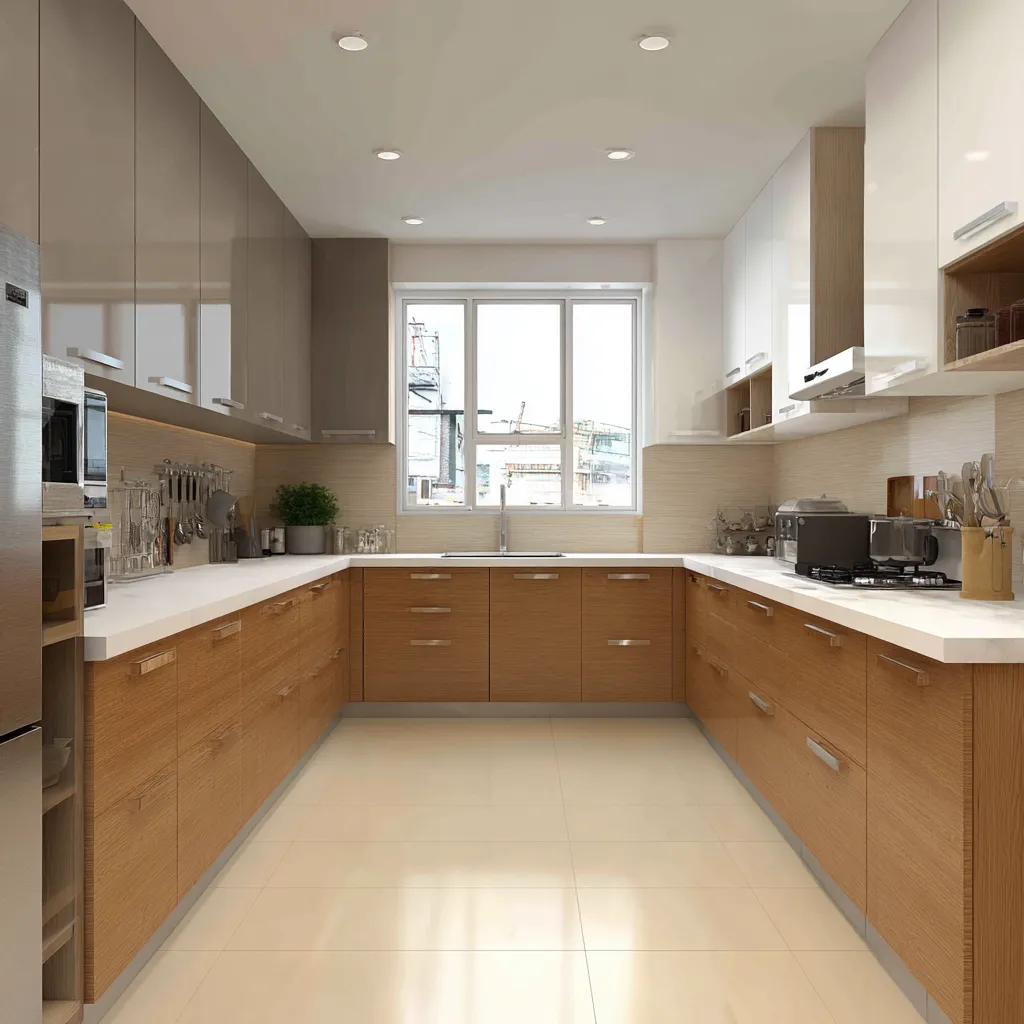
Cabinets are installed along three walls, creating maximum storage capacity. This layout is suitable for families that cook daily and require deeper base storage sections.
Parallel Kitchen Design
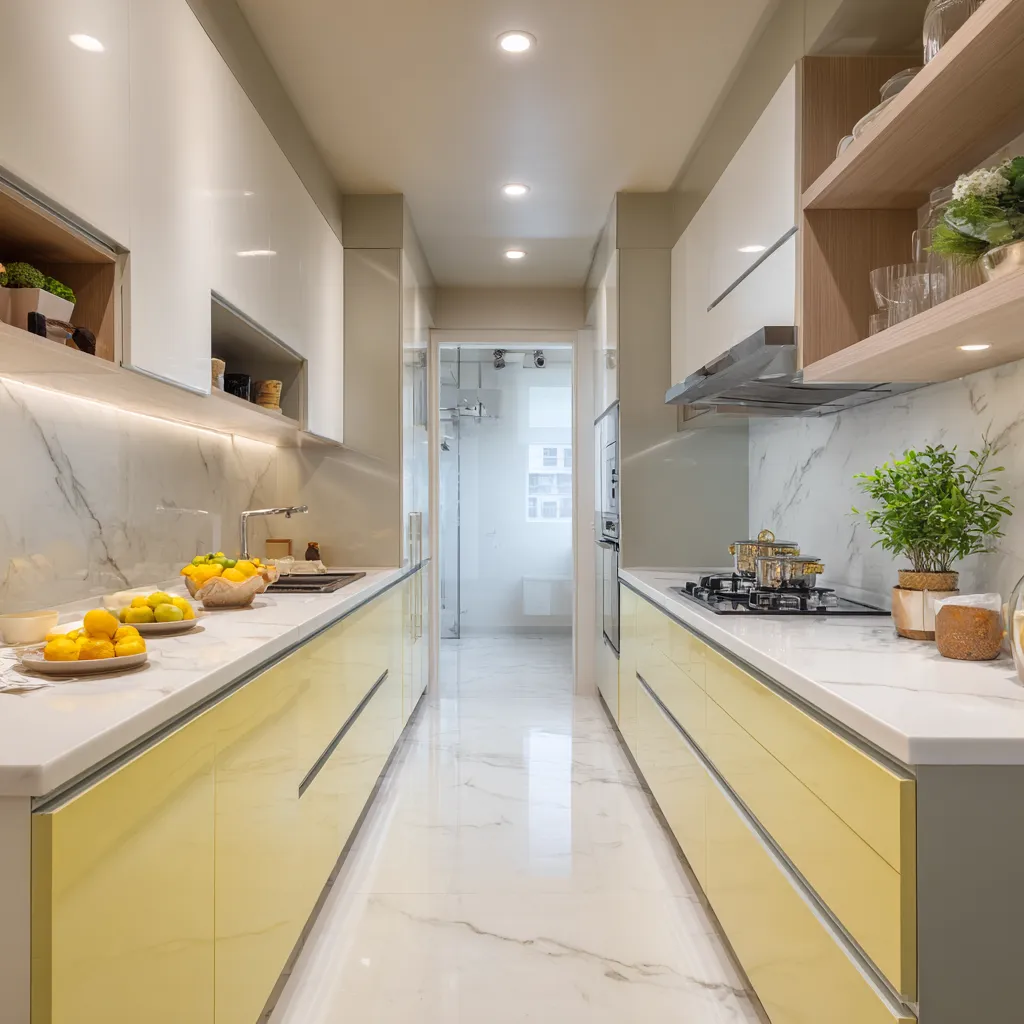
Also called a gallery kitchen, this layout features two rows of facing cabinets. Slim PVC kitchen cabinet doors help maintain walking space in narrow kitchens.
Island Kitchen Design
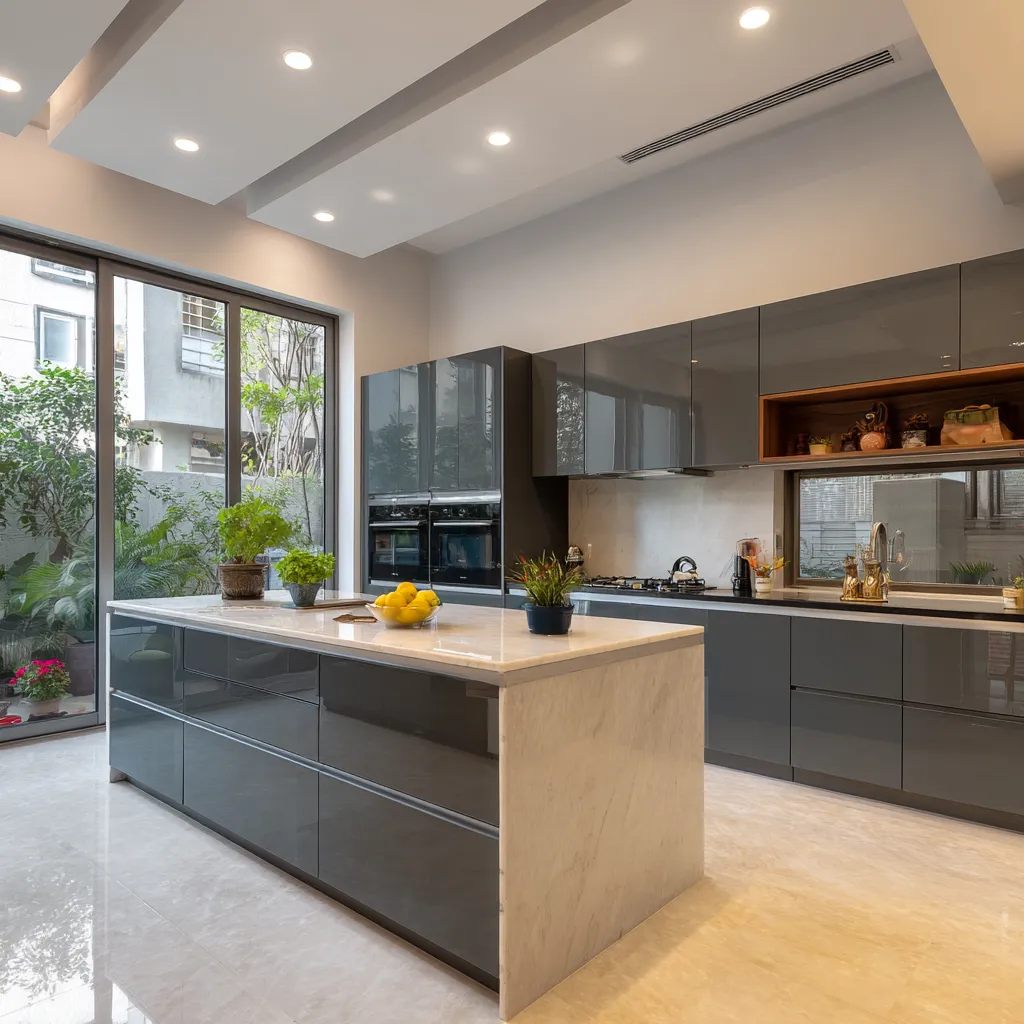
Island kitchens include a central storage counter in addition to wall cabinets. Island sections often include extra PVC drawers for daily-use items.
Read also – 10+ Best Open Shelves Kitchen Design Ideas in 2026
Peninsula Kitchen Layout
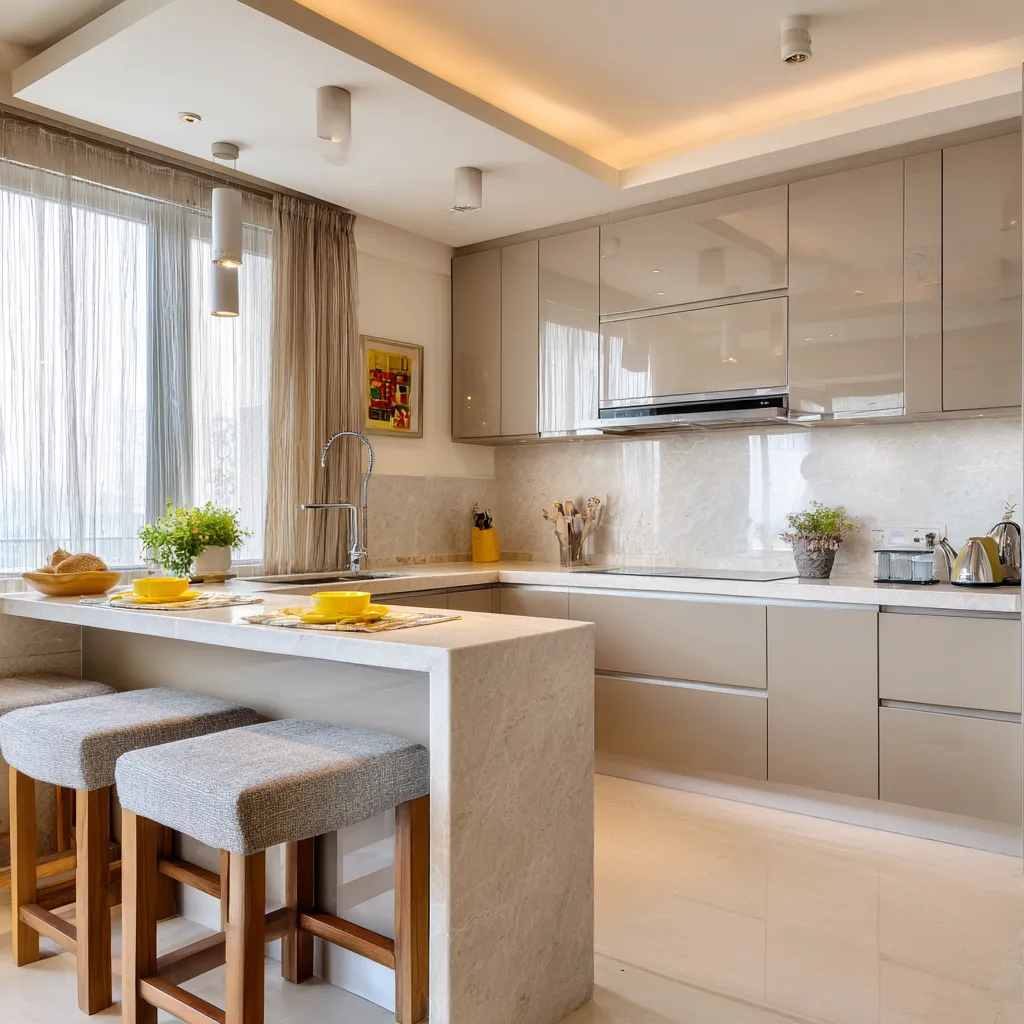
A peninsula layout is similar to an island, but attached to one side wall. This layout works well in semi open kitchen spaces where full island placement is not possible.
Read also – Low-Cost Simple Kitchen Design For Everyday Indian Homes
Latest PVC Kitchen Cabinet Design Options
PVC kitchens now come in several finish styles suitable for modern interiors. Popular latest PVC kitchen design options include:
- Matte pastel shutters
- Dual-tone cabinet combinations
- Wood-grain sheet finishes
- handleless cabinet systems
- High-gloss white panels
- Vertical texture sheets
These styles are widely used in PVC modular kitchen furniture installations today.
Read also – 5+ Latest Semi-Modular Kitchen Design Ideas in 2026
PVC Kitchen Cabinet Doors And Drawer Types
Cabinet usability depends heavily on the planning of shutters and drawers.
Common PVC kitchen cabinet doors include:
- Flat shutters
- Grooved shutters
- Membrane finish shutters
- Gloss finish shutters
Drawer options include:
- Cutlery drawers
- Spice pull-outs
- Bottle storage units
- Deep utensil drawers
Together, these improve the functionality of PVC kitchen cupboard designs.
PVC Panels vs PVC Boards In Kitchen Cabinets
PVC panels and PVC boards are not the same thing.
- PVC boards form the cabinet structure.
- PVC panels are surface sheets applied on top to improve the finish.
Panels add colour and texture. Boards provide strength. Both are used together in modern PVC kitchen designs for storage systems.
Read also - Modular Kitchen Cost In India for 2026: How Kitchen Pricing Really Works
PVC vs Other Kitchen Cabinet Materials
Choosing between cabinet materials usually comes down to a few simple things. Budget, how strong you want the cabinets to be, and how much maintenance you're okay with later. All of that matters more than people expect. The material you choose affects how long the cabinets last, how easy they are to clean, and also how much you end up spending overall.
So before deciding anything, it helps to see how PVC compares with other common materials used for kitchen cabinets. Makes the choice a lot clearer.
PVC vs Plywood
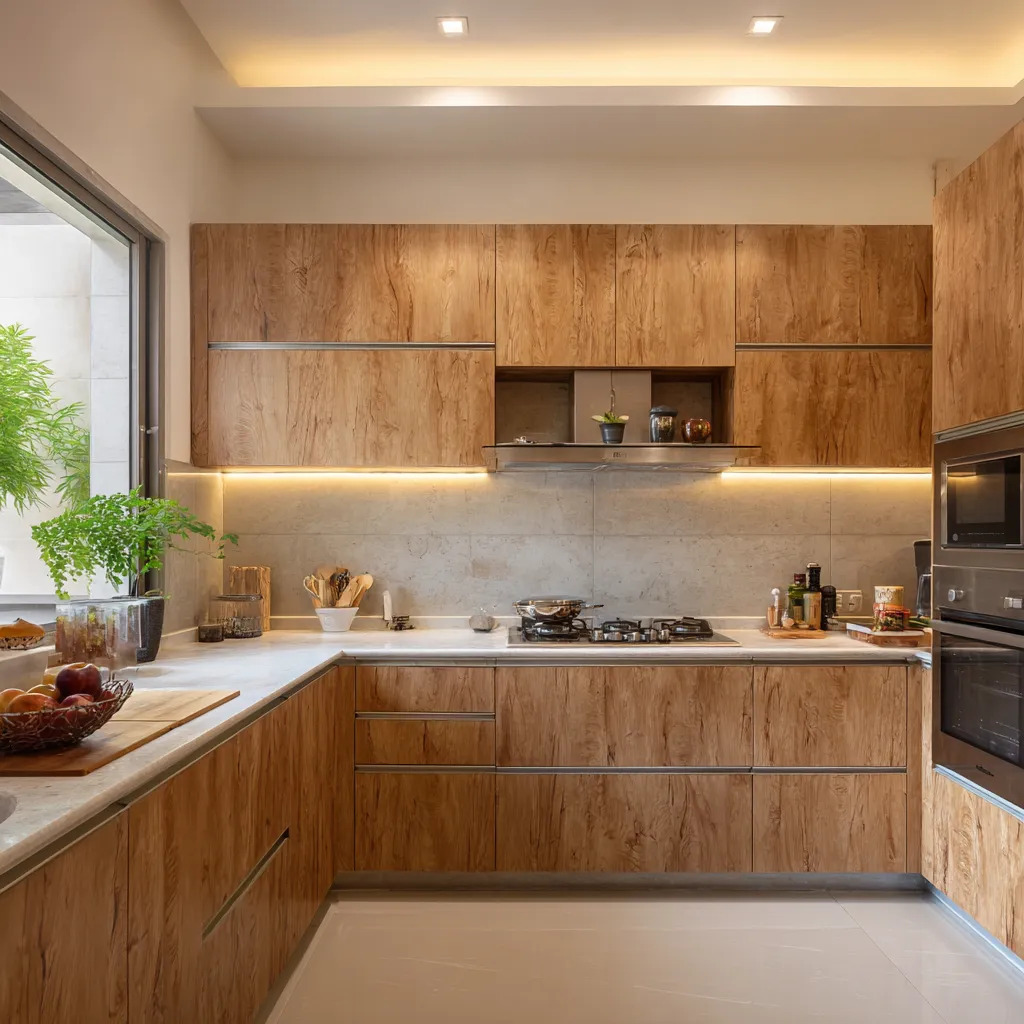
Plywood is stronger but absorbs moisture if not laminated properly. PVC is fully moisture-resistant but lighter. Many kitchens combine both materials for better performance.
Read also – Trending Grey Kitchen Design Ideas for Indian Homes
PVC vs Aluminium
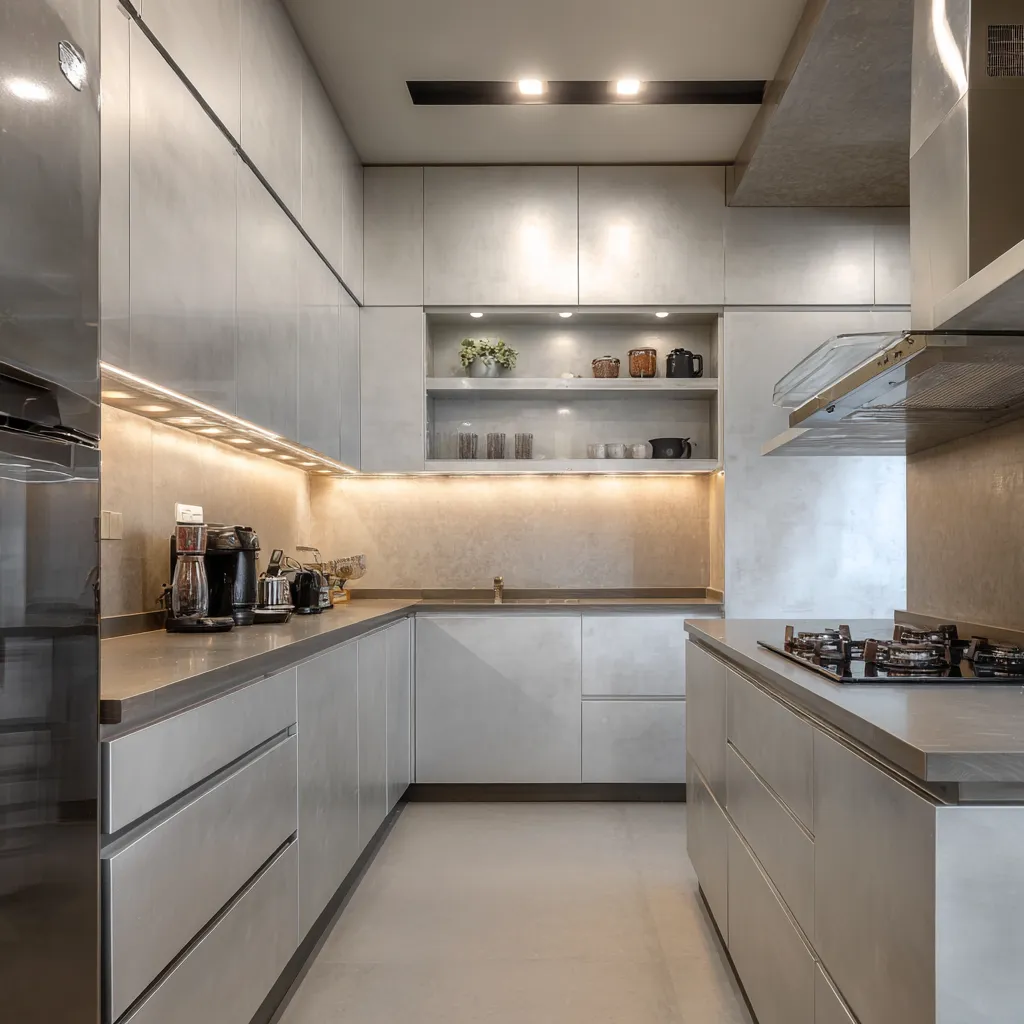
Aluminium cabinets are extremely durable and fire-resistant. However, they cost more and offer fewer finish variations. PVC gives more colour flexibility for residential interiors.
PVC vs Other Metals
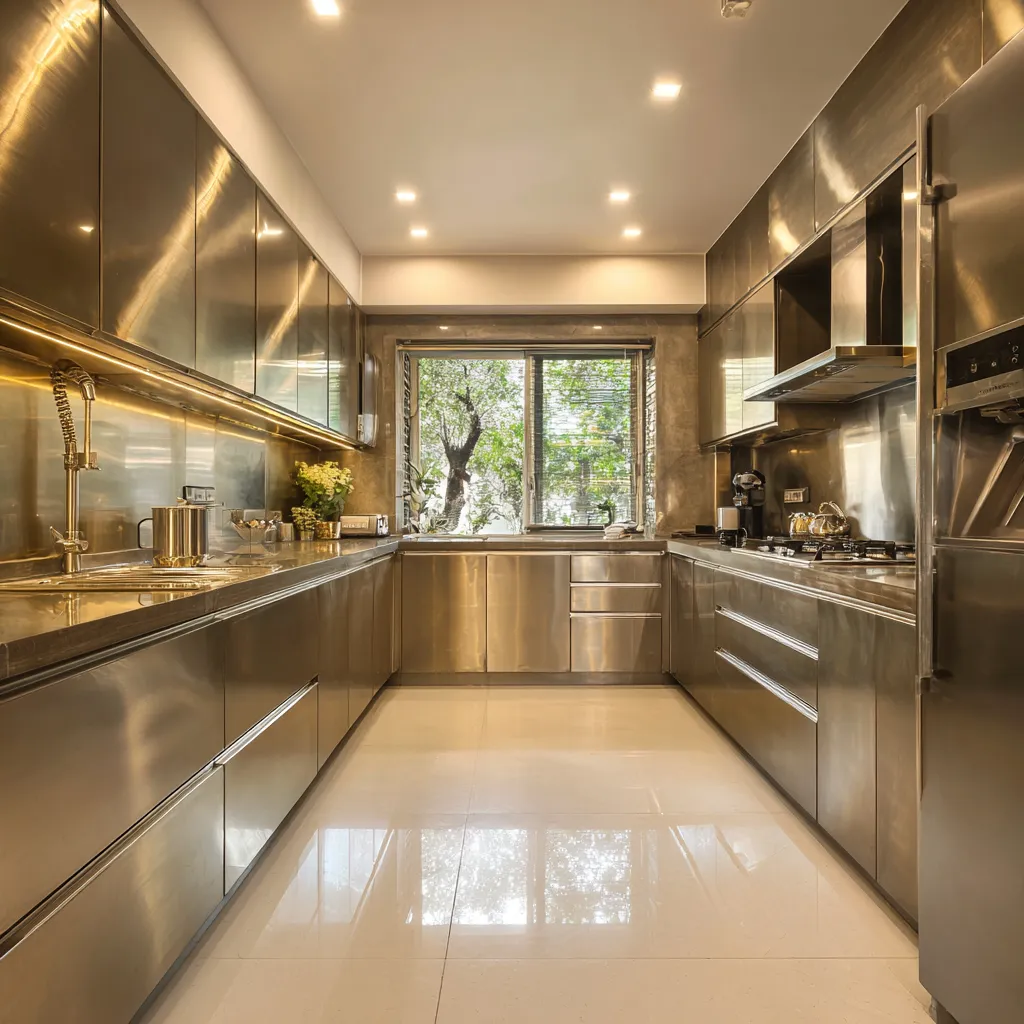
Metal cabinets are really strong, no doubt about that. They handle heat well and usually last for years without much trouble. But they also cost more, and design choices aren't that many. They can feel a bit cold in the kitchen, too. Sometimes even slightly noisy when you keep opening and closing them daily.
PVC cabinets feel easier to live with, honestly. They're lighter, more affordable, and come in lots of colours and finishes, so matching them with the rest of the kitchen is simpler. Not as strong as metal, yes. But for most homes, they work just fine and don't need much maintenance either. That's usually why people end up choosing them.
Read also – Modular Kitchen Trends 2026: Latest Kitchen Design Trends That Work in Real Homes
How Long Do PVC Kitchen Cabinets Last?
With proper installation and high-quality boards, PVC cabinets usually last between 10 and 15 years. Thicker foam boards generally last longer than hollow boards. Ventilation and distance from direct heat sources also affect lifespan.
Read also – Trending Flat-Panel Kitchen Design Ideas for Modern Living
What Is The Price Of PVC Kitchen Cabinets?
PVC cupboard designs for kitchens are economical as compared to other commonly used modular kitchen materials.
Here are popular shutter finishes in modern kitchen designs:
- Laminates
- Polymers
- PVC Membrane
- Acrylic
- PU
- Veneer/ Lacquer Glass
These PVC kitchen cupboard designs are favoured because they tick all important boxes ' sturdiness, wide availability, maintenance-free, and low cost. While wooden cabinets are still preferred, the advantages of PVC cabinet designs should be considered.
Also read – Acrylic Kitchen Cabinets: Know It’s Types, Finishes, Colours, Cost and More
Pros and Cons of PVC Kitchen Design
There are several benefits of adding PVC material to your kitchen but with some limitations, let check them below!
| Pros | Cons |
| Cost-effective and quick installation | Low heat and fire resistance |
| Termite-resistant and waterproof | Susceptible to scratches and damages, if not maintained |
| Easy to maintain and stain resistant | Prone to discolouration due to excessive use |
| Made in gloss and matt finish with an array of colours. | Hollow boards are exposed to attracting insects |
Simple Maintenance Tips For PVC Kitchen Cabinets
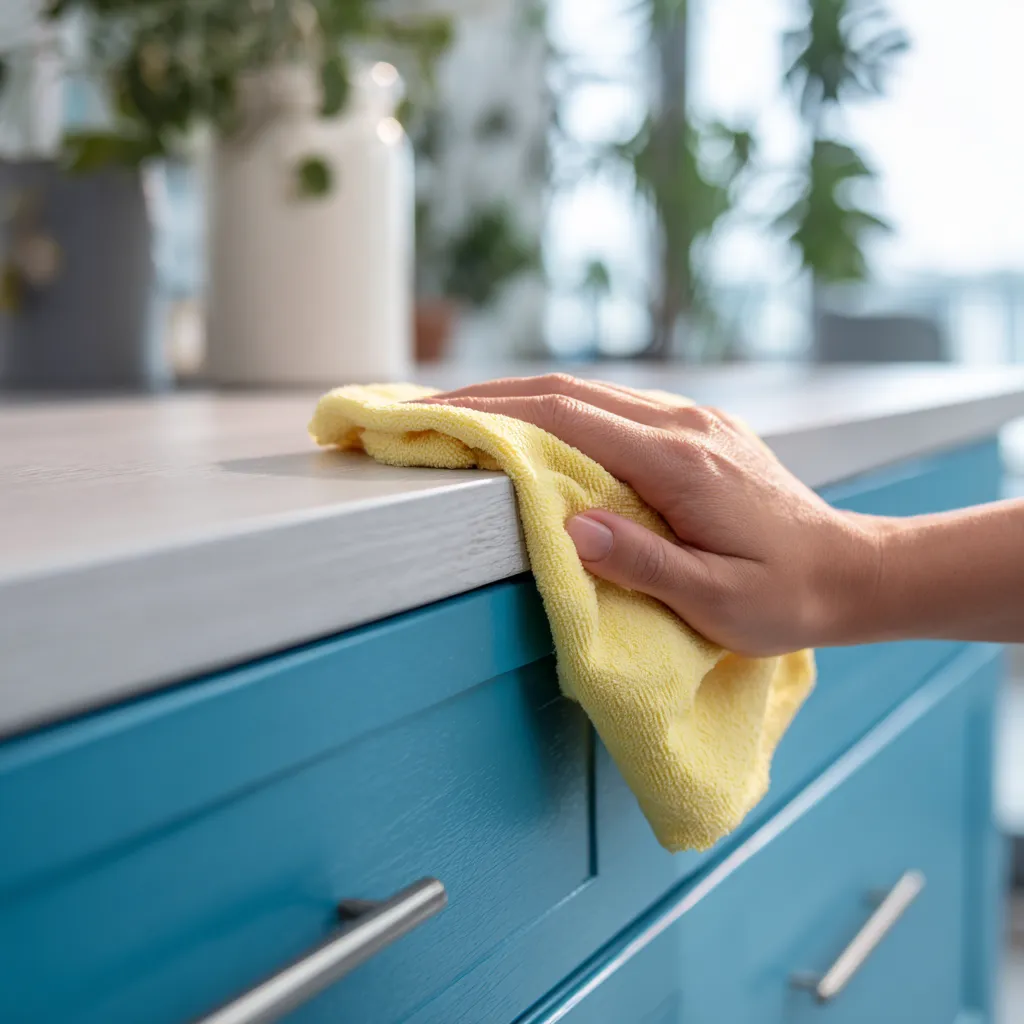
One big reason people choose PVC kitchen cabinets is that they're easy to manage. You don't have to polish them every year or repaint anything later, like wooden cabinets. Still, a few small habits help them stay clean and last longer. Nothing complicated, really.
- Clean cabinets regularly: Just wipe the cabinet surfaces with a soft cloth and a little mild soap once or twice a week. That's usually enough to remove oil marks and dust. Try not to use strong chemical cleaners, though. Over time, they can reduce the shine.
- Keep cabinets away from direct heat: PVC handles moisture easily, but constant heat from stoves or ovens is different. If shutters sit too close to the heat for long, they can slowly change shape. Keeping a little distance helps.
- Avoid harsh cleaning tools: Bleach, acid sprays, and steel scrubbers. Better not use those on cabinet surfaces. They can damage the top finish layer without you noticing immediately.
- Wipe moisture around sink areas: PVC is water-resistant, yes. But still, if water keeps sitting around hinges and joints, fittings wear out faster. Just wiping that area once in a while helps more than people think.
- Use hinges and drawers gently: Try not to slam shutters or pull-outs. Smooth handling keeps hinges and channels working properly for years. Small habit but makes a difference.
- Maintain good ventilation: Steam builds up quickly inside kitchens. Using a chimney or exhaust fan regularly keeps moisture under control and helps the cabinets stay fresh-looking for longer.
Are PVC Kitchen Cabinets Worth Choosing?
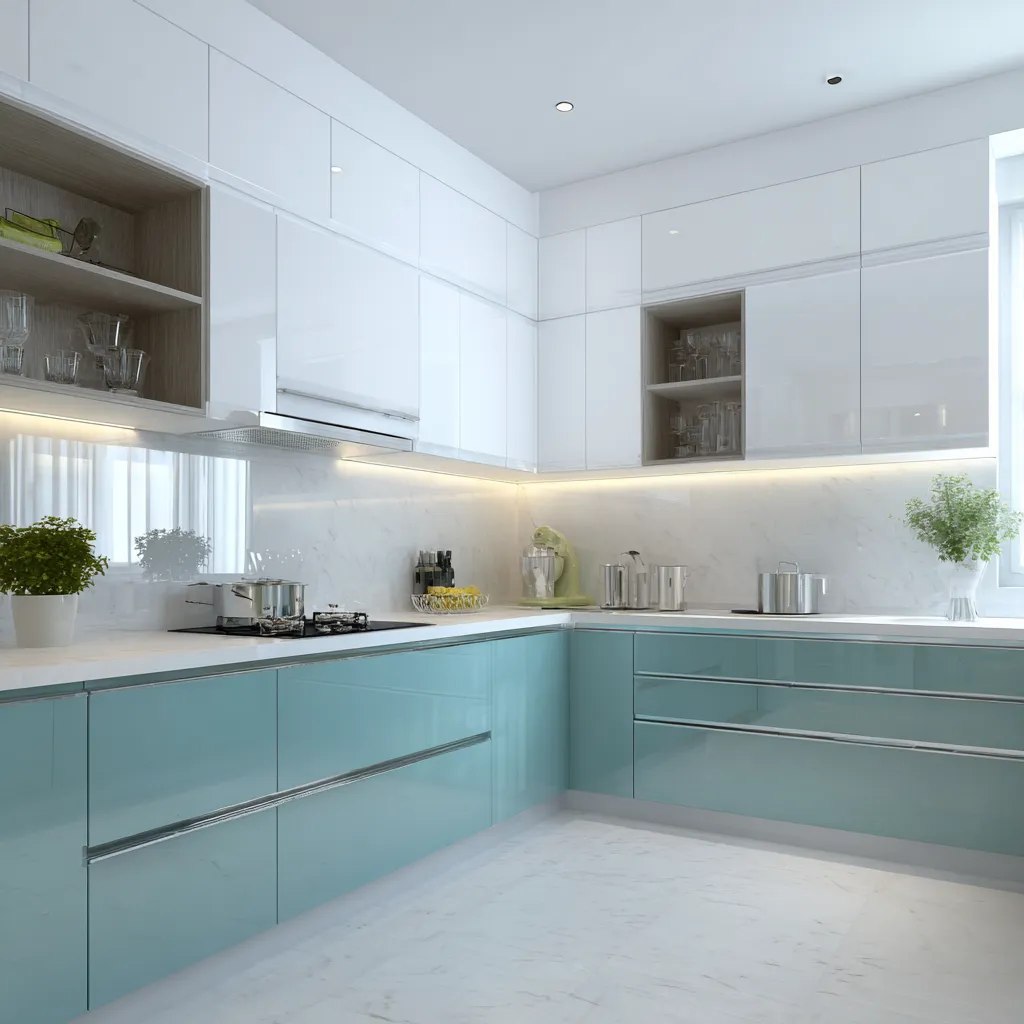
PVC cabinets are a practical option for homeowners who want moisture-resistant storage without increasing kitchen costs too much.
They work especially well for:
- Compact apartments
- Rental homes
- Utility kitchens
- Wet storage zones
- Budget modular kitchens
Modern kitchen PVC interior designs now include enough finish options that PVC kitchens no longer feel basic or temporary. For many homes, they provide the right balance between durability, affordability, and everyday usability.
You may also like!
| Kitchen Entrance Design | Kitchen Entrance Design Ideas for Modern Homes |
| Kitchen Curtain Ideas | Simple Kitchen Curtain Designs Ideas for Indian Home |
| Kitchen Lighting Design | Best Kitchen Lighting Ideas and Trends |
| Colourful Kitchen Ideas | Coloured Kitchen Ideas to Brighten Your Home |
A Practical Choice For Your Kitchen!
PVC kitchen cupboards are a practical choice if you're looking for storage that can handle moisture, daily cooking, and regular cleaning without needing too much maintenance. They work especially well in compact kitchens and modular layouts where durability and budget both matter.
If you're looking for help planning the right PVC kitchen cupboard design for your space, Interior Company can help you explore layout options, finishes, and storage ideas that actually fit your kitchen and daily routine.
'Images used are for representational purposes only. Unless explicitly mentioned, the Interior Company does not hold any copyright to the images.'
kitchen Design Ideas for You
- Shape
- Color
- Finish
- Theme
- Backsplash Color
- Backsplash Material
- Cabinet Style
- Counter Colour
- Floor Material
- Size
- Almond Brown Color Kitchen Design
- Beige Color Kitchen Design
- Black Color Kitchen Design
- Blue Color Kitchen Design
- Brown Color Kitchen Design
- Charcoal Black Color Kitchen Design
- Charcoal Grey Color Kitchen Design
- Coral Color Kitchen Design
- Cream Color Kitchen Design
- Dark Grey Color Kitchen Design
- Gold Color Kitchen Design
- Green Color Kitchen Design
- Grey Color Kitchen Design
- Ivory Color Kitchen Design
- Light Brown Color Kitchen Design
- Multicolour Color Kitchen Design
- Natural Brown Color Kitchen Design
- Nude Color Kitchen Design
- Off White Color Kitchen Design
- Olive Color Kitchen Design
- Olive Green Color Kitchen Design
- Olive Rust Color Kitchen Design
- Orange Color Kitchen Design
- Pink Color Kitchen Design
- Purple Color Kitchen Design
- Red Color Kitchen Design
- Silver Color Kitchen Design
- Smokey Blue Color Kitchen Design
- Smokey Grey Color Kitchen Design
- Stone Color Kitchen Design
- Teal Color Kitchen Design
- White Color Kitchen Design
- Wooden Brown Color Kitchen Design
- Yellow Color Kitchen Design
- Contemporary Theme Kitchen Design
- Cottage-Style Theme Kitchen Design
- Countryside Theme Kitchen Design
- Industrial Theme Kitchen Design
- Luxurious Theme Kitchen Design
- Mid-Century Modern Theme Kitchen Design
- Minimalist Theme Kitchen Design
- Modern Theme Kitchen Design
- Modern -Industrial Theme Kitchen Design
- Rustic Theme Kitchen Design
- Scandinavian Theme Kitchen Design
- Traditional Theme Kitchen Design
- Beige Backsplash Color Kitchen Design
- Black Backsplash Color Kitchen Design
- Blue Backsplash Color Kitchen Design
- Brown Backsplash Color Kitchen Design
- Gray Backsplash Color Kitchen Design
- Green Backsplash Color Kitchen Design
- Metallic Backsplash Color Kitchen Design
- Multi Backsplash Color Kitchen Design
- Orange Backsplash Color Kitchen Design
- Red Backsplash Color Kitchen Design
- White Backsplash Color Kitchen Design
- Yellow Backsplash Color Kitchen Design
- Brick Backsplash Material Kitchen Design
- Cement Tile Backsplash Material Kitchen Design
- Ceramic Tile Backsplash Material Kitchen Design
- Engineered Quartz Backsplash Material Kitchen Design
- Glass Tile Backsplash Material Kitchen Design
- Granite Backsplash Material Kitchen Design
- Marble Backsplash Material Kitchen Design
- Matchstick Tile Backsplash Material Kitchen Design
- Mosaic Tile Backsplash Material Kitchen Design
- Porcelain Tile Backsplash Material Kitchen Design
- Stone Slab Backsplash Material Kitchen Design
- Stone Tile Backsplash Material Kitchen Design
- Subway Tile Backsplash Material Kitchen Design
- Terra-Cotta Tile Backsplash Material Kitchen Design
- Travertine Backsplash Material Kitchen Design
- Window Backsplash Material Kitchen Design
- Wood Backsplash Material Kitchen Design
- Beige Counter Colour Kitchen Design
- Black Counter Colour Kitchen Design
- Blue Counter Colour Kitchen Design
- Brown Counter Colour Kitchen Design
- Gray Counter Colour Kitchen Design
- Green Counter Colour Kitchen Design
- Multi Counter Colour Kitchen Design
- Pink Counter Colour Kitchen Design
- Red Counter Colour Kitchen Design
- White Counter Colour Kitchen Design
- Yellow Counter Colour Kitchen Design
- Carpet Floor Material Kitchen Design
- Cement Tile Floor Material Kitchen Design
- Ceramic Tile Floor Material Kitchen Design
- Dark Hardwood Floor Material Kitchen Design
- Light Hardwood Floor Material Kitchen Design
- Marble Floor Material Kitchen Design
- Medium Hardwood Floor Material Kitchen Design
- Painted Wood Floor Material Kitchen Design
- Porcelain Tile Floor Material Kitchen Design
- Terrazzo Floor Material Kitchen Design
- Travertine Floor Material Kitchen Design

Ready for a home transformation?
Let our designers assist you!
Recent Posts







Yes, PVC kitchen cabinets are completely water-resistant. They do not absorb moisture. This means they will not swell or rot even when exposed to steam, spills, or humidity. Being a waterproof material makes them ideal for Indian kitchens.
PVC cabinets are strong enough for regular household use for years if good-quality boards and fittings are used. However, PVC cabinets are not as strong as plywood or metal, so very heavy items need to be stored carefully.
No, PVC is a plastic-based material, so termites and insects cannot damage it. This makes PVC kitchen cabinets a safer option compared to wooden cabinets, which are prone to termites.
Usually, the price of PVC kitchen cabinets falls somewhere between ₹900 and ₹4,000 per square foot. It depends on whether the boards are hollow or foam, and also what kind of finish you pick. Hardware matters too. Soft-close fittings increase the cost slightly, but they’re worth it, honestly.
Depends on where you’re using it. PVC handles moisture better, so it works nicely for sink areas and lower storage. Plywood is stronger, though. Many kitchens actually mix both now. PVC below, plywood above. That way, you get durability without pushing the budget too much.
They do now. Earlier, they looked very plain, mostly white panels everywhere. But today’s PVC kitchen cabinet design options include matte colours, gloss shutters, and even wood-like finishes. So they can easily match modern kitchen interior design styles without looking basic.
Yes, they work really well in compact spaces. A small PVC modular kitchen stays lighter and easier to manage, especially in apartments where ventilation isn’t always great. Installation is quicker, too, compared to traditional carpentry cabinets.
Usually, around 10 to 15 years if the board quality is good and installation is done properly. Foam board modern PVC kitchen cabinets last longer than hollow ones. Also helps if they’re not placed too close to the heat.
Better not too close. PVC handles moisture well, but direct heat is different. Over time, the surface can change shape if it stays near the stove constantly. Designers normally keep a little gap between the stove and the cabinet doors for this reason.
Not the same thing. PVC boards are what actually make the cabinet structure. PVC panels for kitchen cabinets are more like surface layers added on top for colour or texture. Most modular kitchens use both together.
Yes, especially if you want something easy to maintain. PVC modular kitchen furniture doesn’t get affected by termites, handles moisture well, and stays lighter than wood cabinets. That’s why people often choose it for lower cabinets and utility storage areas. Works well for everyday use.
Related Category
- Dining Room
- False Ceilings
- Paint and Color
- Tips and Advice
- Walls and Texture