- Design Ideas
- Cities
- Trends
- Guides
- Price Calculators
- Interior DesignersNEW
- Our Portfolio
- More


- Home
- Trends
- Modular Solution
- Modular Kitchen
- Quartz Vs Granite Countertops
Granite Vs Quartz: Which Countertop Is Perfect For Your Kitchen In 2026?

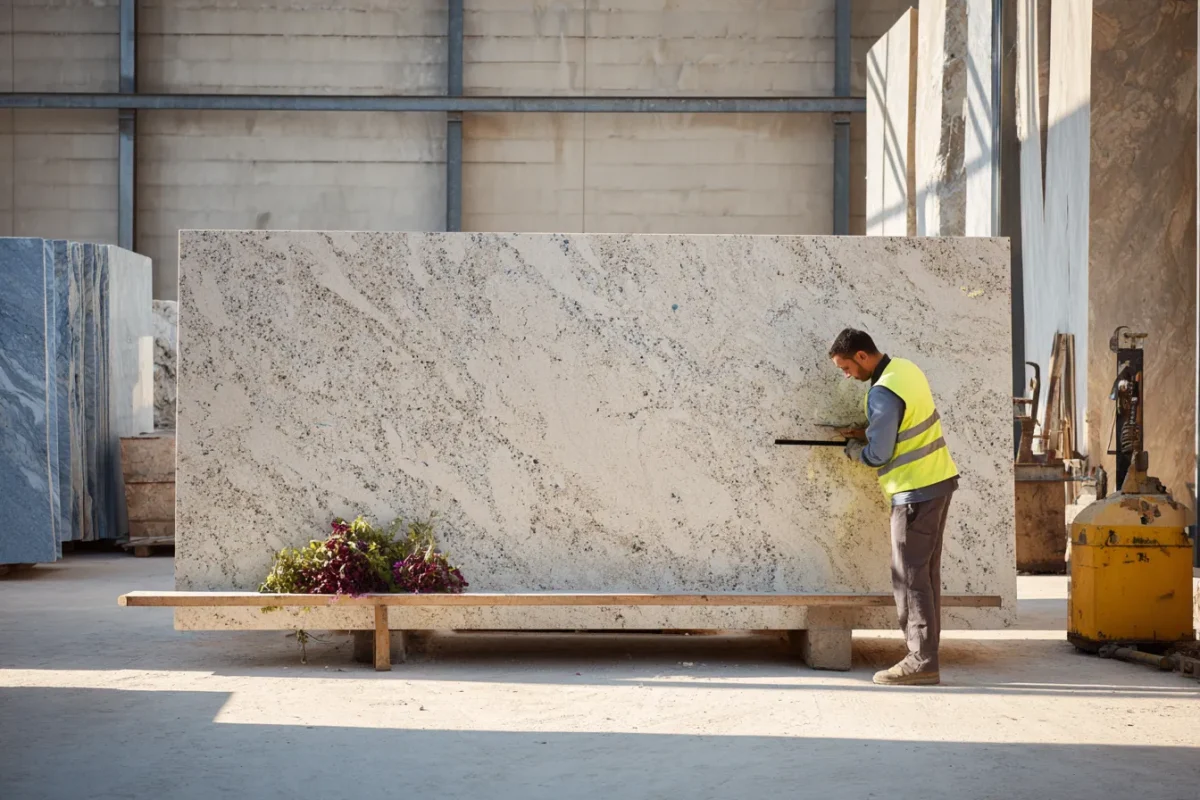
The difference between quartz and granite becomes clearer once you notice where each material actually begins. Granite forms on its own, deep below the ground, changing slowly until it becomes a hard mass. When the slab is finally cut out, it carries the colours and grains it collected during those long years. Some pieces feel busy. Others fall into calmer patches. You often understand the pattern only when the full slab opens up in front of you.
Quartz takes a different path. It comes from crushed crystals mixed with resin and colourants, pressed until it settles into a surface that stays steady from edge to edge. Many homeowners who compare quartz vs. granite notice this early on. Granite behaves like something nature created. Quartz behaves like something built to stay uniform, which helps when the rest of the kitchen needs predictable pairing.
Table of Content
How Are Quartz And Granite Countertops Made?
Which Is More Durable, Quartz Or Granite?
What Are The Pros And Cons Of Granite Vs Quartz?
Which Is More Expensive, Quartz Or Granite?
What Is The Granite Vs Quartz Cost Per Square Foot In India?
Which Works Better For Indian Kitchens, Quartz Or Granite?
Is Quartz Stronger Than Granite For Kitchen Use?
What Is The Difference Between Granite, Marble And Quartz?
Which Is Easier To Maintain, Granite And Quartz Countertops?
What Thickness Should You Choose For A Quartz Worktop?
What Is The Difference Between Quartz And Granite Worktops?
How Do You Decide Between Granite And Quartz Cost For Your Kitchen?
Should You Consider Quartzite Or Granite, Which Is Better?
What Should You Know About Granite And Quartz Slabs Before Buying?
How Do Quartz Vs Granite Countertops Fit Into Your Overall Kitchen Design?
How Are Quartz And Granite Countertops Made?
The two materials reach the kitchen through very different journeys.
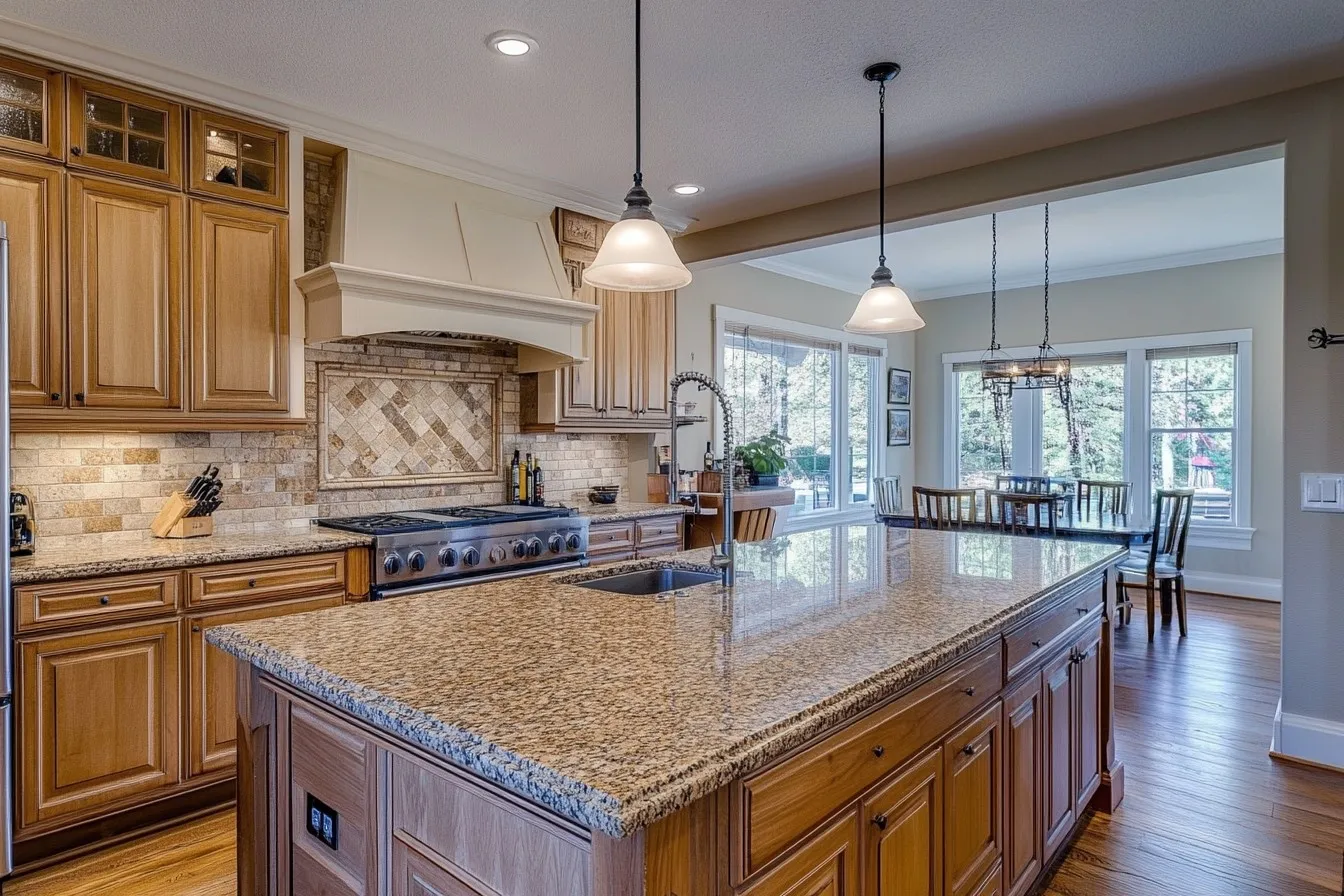
Granite starts as a large stone mass inside the earth. Once quarried, the block is sliced and polished. Whatever minerals lie within appear naturally on the final surface. The slab keeps its own character, and small marks or colour shifts show up only when the full length is revealed.
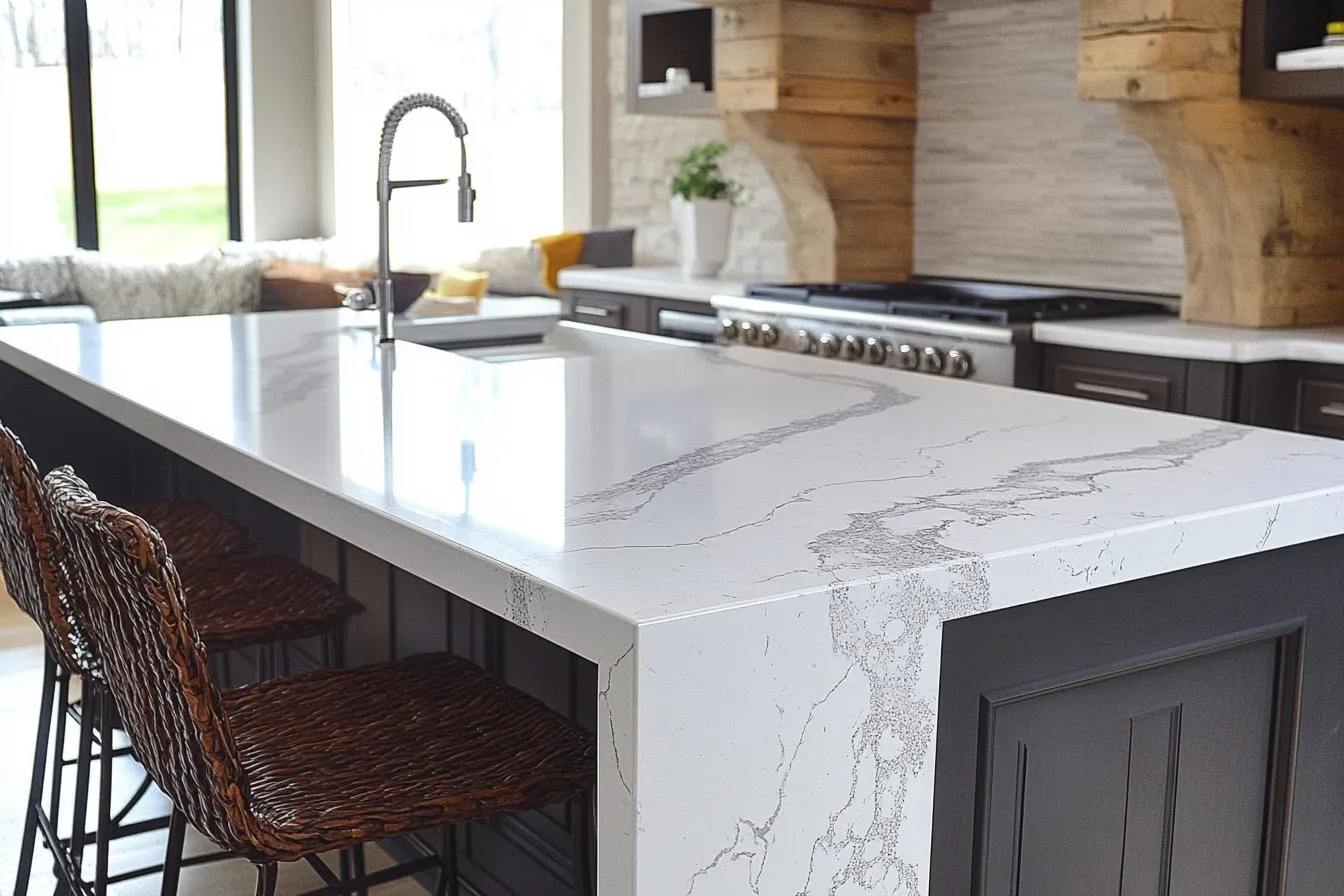
Quartz is more controlled. For quartz vs granite countertops, the Quartz side is produced in factories. Crushed Quartz, resin, and pigments blend together and settle into a consistent finish. It feels designed. Some people prefer this calmness, especially when they want the worktop to match the cabinets without surprises.
Which Is More Durable, Quartz Or Granite?
The question of what’s more durable, quartz or granit,e usually comes from everyday habits. Both materials cope with chopping and mixing. Granite tolerates heat well and handles the quick placement of a warm pan better than Quartz. It behaves like a tough natural stone because that is exactly what it is.
Quartz resists stains with ease because it stays non-porous. Oils and spices do not sink in if cleaned reasonably soon. High heat can affect Quartz, so many homeowners place trivets nearby. Both materials last years when fitted on level cabinets with proper support, and everyday cooking rarely pushes either one towards its limits.
Read also – What is a Modular Kitchen – Everything You Need to Know Before Planning One
What Are The Pros And Cons Of Granite Vs Quartz?
People exploring what are the pros and cons of granite vs quartz often think about lifestyle more than looks. Granite brings natural patterns that change across the slab, and it handles heat well. It does need sealing, otherwise, strong spices and oils may leave marks over time. Quartz avoids sealing completely. It offers easy cleaning and stable colouring.
It is its sensitive to high heat and long exposure to harsh sunlight. Granite suits those who enjoy natural stone and do not mind occasional maintenance. Quartz suits those who want a smoother, uniform appearance with simpler upkeep.
You may also like!
| Kitchen Trolley Design | Reliable Kitchen Trolley Design For Modern Homes |
| Kitchen Colour Combination | Eye-Caching Colour Combination For Modular Kitchen |
| Kitchen Platform Granite Design | Amazing Granite Modular Kitchen Platform Design |
| Parallel Kitchen Design | Stylish Parallel Modular Kitchen Design For Home |
Which Is More Expensive, Quartz Or Granite?
Cost behaves differently in each store, which explains why people search for which is more expensive quartz or granite and which is less expensive quartz or granite almost at the same time. Granite in common colours usually starts lower. Imported slabs or dramatic patterns cost much more. Quartz begins at a middle range and climbs with brand and pattern complexity.
Both materials change price once edges, cut outs, transport, and installation enter the picture. The total often depends on how long the counters are and how many corners or details need shaping.
What Is The Granite Vs Quartz Cost Per Square Foot In India?
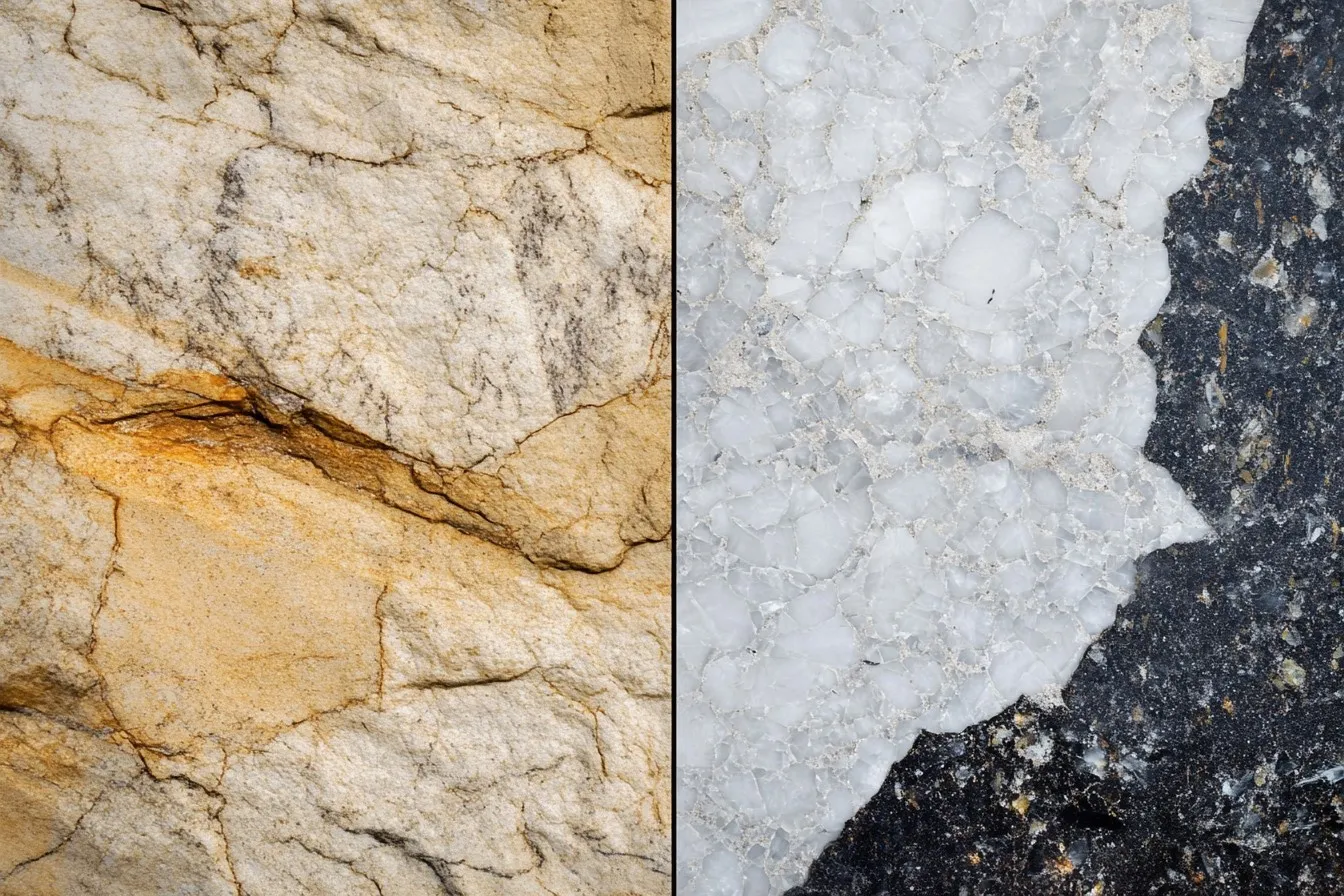
To compare granite vs quartz cost per square foot, it helps to look at actual slabs in person. On average, quartz countertops start from INR 240 per square foot. Quartz sits somewhere between them, with its price rising when the pattern resembles marble kitchen or when the slab has more detailed veining. On the contrary, granite kitchen countertops are slightly more affordable, price starts from INR 60 per square foot. Granite from local suppliers tends to be affordable when the colour is common. Imported Granite increases sharply.
Fabrication costs also matter. Some edges take longer to polish. Some kitchens require extra support. These small requirements shift the total more than people often expect.
Read also – Gloss vs Matte Kitchen Cabinets: What Actually Works in a Real Kitchen?
Which Works Better For Indian Kitchens, Quartz Or Granite?
When people consider quartz vs granite for indian kitchen needs, they usually think about heat, spices, and heavy cookware. Granite copes well with the heat of a tawa placed down for a moment. It feels firm when kneading dough or cutting vegetables. Quartz holds up better against turmeric or chilli stains because of its non-porous surface. Wiping it soon after cooking keeps it looking fresh.
Households that regularly place hot utensils on the counter lean toward Granite. Homes that prefer easy cleaning during busy mornings often move toward Quartz. Both materials handle Indian cooking well once the habits of the family are considered.
Read also - Modular Kitchen Cost In India for 2026: How Kitchen Pricing Really Works
Is Quartz Stronger Than Granite For Kitchen Use?
The search is quartz stronger than granite can be misleading because strength shows itself in different ways. Granite stands firm under weight and heat because of its natural formation. Quartz has resin binding, which gives it slight resistance to sudden small impacts. Neither one scratches easily under normal kitchen use.
Support beneath the slab matters just as much as the material itself. If cabinets stay level and the slab is fitted with proper reinforcement near sinks or overhangs, both Quartz and Granite remain dependable for years of everyday work.
What Is The Difference Between Granite, Marble And Quartz?
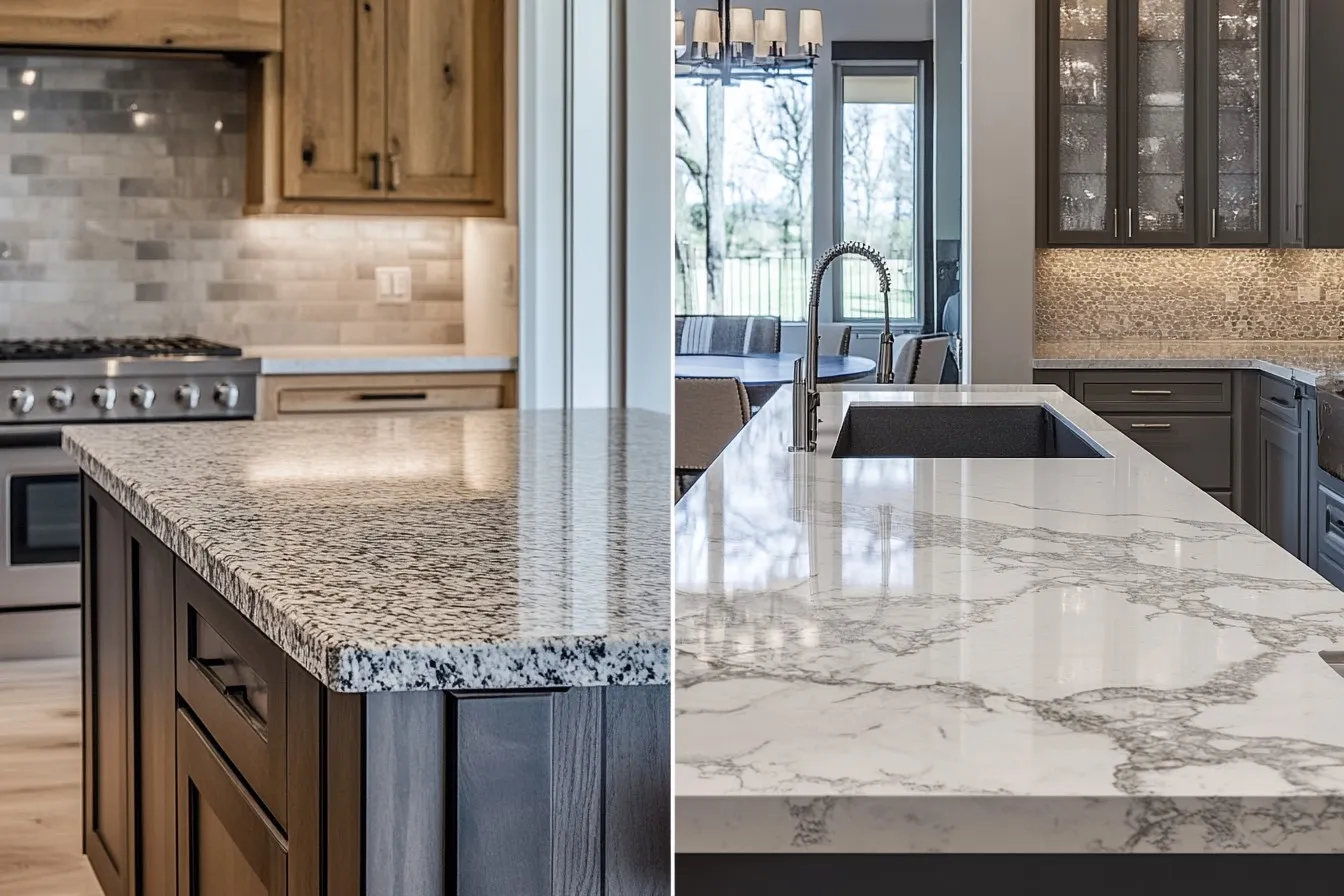
Understanding the difference between granite marble and quartz helps when narrowing options. Granite feels grainy, with patterns built from mixed minerals. Marble has long, soft veins that look elegant but react quickly to acidic foods. Quartz imitates stone visually but stays non porous, giving it stability against stains.
Granite and Quartz usually suit kitchens better because of their durability. Marble finds a place in quieter spots where its beauty can be appreciated without dealing with constant cleaning or spill management.
Read also – 6 Different Types Of Kitchen Layout – Your Home Is Missing
Which Is Easier To Maintain, Granite And Quartz Countertops?
Most homeowners want low-effort surfaces, which is why they compare granite and quartz kitchen countertops carefully. Both wipe clean with mild soap and water. Granite needs sealing to block spills from seeping into its pores. Quartz avoids sealing entirely, keeping maintenance simple.
Harsh cleaners can dull the surface of both materials over time. Granite near a cooktop may darken where oil sits too long on an unsealed patch. Quartz stays more consistent but still benefits from quick wiping to keep the finish even.
Also read – 20+ Best Kitchen Design Tips: Everything You Need To Plan The Perfect Kitchen
What Thickness Should You Choose For A Quartz Worktop?
The choice between 20mm vs 30mm quartz worktop thickness often comes down to the look you prefer. A thicker 30 mm slab appears solid and traditional, adding weight to the modular kitchen design. It handles wider spans more comfortably when the cabinets support it well.
A thinner 20 mm slab suits modern interiors. It feels lighter and works with slim, minimal cabinets. It may need extra attention in areas where the counter stretches across a gap. Both thicknesses stay strong when fitted properly.
Read also – Modular Kitchen Design Trends 2026: Latest Kitchen Trends That Work in Real Homes
What Is The Difference Between Quartz And Granite Worktops?
The difference between quartz and granite worktops shows up in day to day use as much as appearance. Quartz stays non-porous and offers one consistent tone across the counter. Granite keeps natural variations that appear under soft or bright light.
People who enjoy unique markings often choose Granite. Those who want a calm, balanced surface often lean toward Quartz. Both materials shape neatly around sinks and hobs, and both can continue up the wall as a backsplash if desired.
How Do You Decide Between Granite And Quartz Cost For Your Kitchen?
Sorting out granite versus quartz cost becomes easier once the full layout is measured. Edge styles, sink cut outs, and slab length shift prices more than the material itself at times. Granite may start with a lower slab price but require extra polishing or sealing.
Quartz begins at a mid-range but stays consistent once installed. Getting two or three detailed quotes helps reveal where the real differences lie, whether in labour, transport, or finishing.
Read also – 22+ Best Kitchen Backsplash Ideas That Do More Than Just Sit Behind The Counter
Should You Consider Quartzite Or Granite, Which Is Better?
Some homeowners explore natural alternatives and end up asking quartzite or granite which is better. Quartzite forms naturally from Sandstone and looks striking with long flowing veins. It is hard and durable but requires sealing, much like Granite.
Granite offers more colour variety and is easier to source in most markets. Quartzite suits those who want dramatic patterns. Granite suits those who prefer a wider range of tones and availability.
Also read – Acrylic Kitchen Cabinets: Know It’s Types, Finishes, Colours, Cost and More
What Should You Know About Granite And Quartz Slabs Before Buying?
When choosing granite and quartz slabs, seeing them in person helps more than browsing samples. Full slabs reveal tones, small marks, and movements that smaller pieces cannot show. Quartz should come from the same batch to keep the colour uniform across the kitchen.
Granite might display small pits or faint lines that some homeowners enjoy and others may prefer to avoid. Checking how the fabricator plans to cut the stone slab for your kitchen layout prevents unexpected patches from appearing in visible areas.
You may also like!
| Kitchen Chimney Design | Stunning Chimney Designs For Modern Kitchen |
| Kitchen Cupboard Storage Ideas | Kitchen Cupboard Storage Ideas For Modular Space |
| Kitchen Decorating Ideas | Modular Kitchen Decorating Ideas You Must Try |
| Kitchen Floor Tile Design | Unique Modular Kitchen Floor Tiles Design |
How Do Quartz Vs Granite Countertops Fit Into Your Overall Kitchen Design?
Looking at granite and quartz within the full kitchen helps the decision feel clearer. Worktops sit beside cabinets, flooring, wall colour, and lighting. Granite with strong natural movement pairs well with quieter cabinet tones. Quartz with its even finish works comfortably beside bold colours or patterned tiles.
Thinking about the difference between granite and quartz countertop usage this way makes the choice part of the full design instead of an isolated decision. Some homeowners even combine both, keeping one for the island and another for the cooking zone.
*Images used are for illustration purposes only. Interior Company does not hold any copyright to the images unless mentioned explicitly.
kitchen Design Ideas for You
- Shape
- Color
- Finish
- Theme
- Backsplash Color
- Backsplash Material
- Cabinet Style
- Counter Colour
- Floor Material
- Size
- Almond Brown Color Kitchen Design
- Beige Color Kitchen Design
- Black Color Kitchen Design
- Blue Color Kitchen Design
- Brown Color Kitchen Design
- Charcoal Black Color Kitchen Design
- Charcoal Grey Color Kitchen Design
- Coral Color Kitchen Design
- Cream Color Kitchen Design
- Dark Grey Color Kitchen Design
- Gold Color Kitchen Design
- Green Color Kitchen Design
- Grey Color Kitchen Design
- Ivory Color Kitchen Design
- Light Brown Color Kitchen Design
- Multicolour Color Kitchen Design
- Natural Brown Color Kitchen Design
- Nude Color Kitchen Design
- Off White Color Kitchen Design
- Olive Color Kitchen Design
- Olive Green Color Kitchen Design
- Olive Rust Color Kitchen Design
- Orange Color Kitchen Design
- Pink Color Kitchen Design
- Purple Color Kitchen Design
- Red Color Kitchen Design
- Silver Color Kitchen Design
- Smokey Blue Color Kitchen Design
- Smokey Grey Color Kitchen Design
- Stone Color Kitchen Design
- Teal Color Kitchen Design
- White Color Kitchen Design
- Wooden Brown Color Kitchen Design
- Yellow Color Kitchen Design
- Contemporary Theme Kitchen Design
- Cottage-Style Theme Kitchen Design
- Countryside Theme Kitchen Design
- Industrial Theme Kitchen Design
- Luxurious Theme Kitchen Design
- Mid-Century Modern Theme Kitchen Design
- Minimalist Theme Kitchen Design
- Modern Theme Kitchen Design
- Modern -Industrial Theme Kitchen Design
- Rustic Theme Kitchen Design
- Scandinavian Theme Kitchen Design
- Traditional Theme Kitchen Design
- Beige Backsplash Color Kitchen Design
- Black Backsplash Color Kitchen Design
- Blue Backsplash Color Kitchen Design
- Brown Backsplash Color Kitchen Design
- Gray Backsplash Color Kitchen Design
- Green Backsplash Color Kitchen Design
- Metallic Backsplash Color Kitchen Design
- Multi Backsplash Color Kitchen Design
- Orange Backsplash Color Kitchen Design
- Red Backsplash Color Kitchen Design
- White Backsplash Color Kitchen Design
- Yellow Backsplash Color Kitchen Design
- Brick Backsplash Material Kitchen Design
- Cement Tile Backsplash Material Kitchen Design
- Ceramic Tile Backsplash Material Kitchen Design
- Engineered Quartz Backsplash Material Kitchen Design
- Glass Tile Backsplash Material Kitchen Design
- Granite Backsplash Material Kitchen Design
- Marble Backsplash Material Kitchen Design
- Matchstick Tile Backsplash Material Kitchen Design
- Mosaic Tile Backsplash Material Kitchen Design
- Porcelain Tile Backsplash Material Kitchen Design
- Stone Slab Backsplash Material Kitchen Design
- Stone Tile Backsplash Material Kitchen Design
- Subway Tile Backsplash Material Kitchen Design
- Terra-Cotta Tile Backsplash Material Kitchen Design
- Travertine Backsplash Material Kitchen Design
- Window Backsplash Material Kitchen Design
- Wood Backsplash Material Kitchen Design
- Beige Counter Colour Kitchen Design
- Black Counter Colour Kitchen Design
- Blue Counter Colour Kitchen Design
- Brown Counter Colour Kitchen Design
- Gray Counter Colour Kitchen Design
- Green Counter Colour Kitchen Design
- Multi Counter Colour Kitchen Design
- Pink Counter Colour Kitchen Design
- Red Counter Colour Kitchen Design
- White Counter Colour Kitchen Design
- Yellow Counter Colour Kitchen Design
- Carpet Floor Material Kitchen Design
- Cement Tile Floor Material Kitchen Design
- Ceramic Tile Floor Material Kitchen Design
- Dark Hardwood Floor Material Kitchen Design
- Light Hardwood Floor Material Kitchen Design
- Marble Floor Material Kitchen Design
- Medium Hardwood Floor Material Kitchen Design
- Painted Wood Floor Material Kitchen Design
- Porcelain Tile Floor Material Kitchen Design
- Terrazzo Floor Material Kitchen Design
- Travertine Floor Material Kitchen Design

Ready for a home transformation?
Let our designers assist you!
Recent Posts






Granite is often less expensive upfront, but prices vary based on the quality and origin of the stone. Quartz tends to be pricier but offers lower maintenance costs.
Both are durable, but quartz is more resistant to chips and cracks due to its engineered consistency, making it a longer-lasting option in many cases.
Granite is more heat-resistant than quartz. Hot pans placed directly on quartz can cause damage, while granite is less likely to be affected by high temperatures.
Quartz is more eco-friendly because it’s engineered from natural materials and waste by-products, while granite requires quarrying, which impacts the environment.
Related Category
- Dining Room
- False Ceilings
- Lighting
- Paint and Color
- Walls and Texture