- Design Ideas
- Cities
- Trends
- Guides
- Price Calculators
- Interior DesignersNEW
- Our Portfolio
- More


- Home
- Trends
- Furniture And Decor
- Furniture
- Teak Wood Vs Sheesham
Sheesham Wood or Teak Wood: Which is Better for Furniture and Why?

If you have ever shopped for solid wood furniture in India, this question shows up sooner or later: sheesham wood vs teak wood. It usually comes up in a showroom, or during a conversation with a carpenter. One person swears by teak. Another says sheesham is more than enough. Everyone has a reason.
Both woods are common in Indian homes. Beds, wardrobes, dining tables, cabinets. You’ve probably seen them around without thinking much about it. The difference becomes clearer only after a few years of use. Some furniture stays steady with little effort. Some need regular care. Some feel worth the price much later.
Table of Content
What Is Sheesham Wood?
- 1.1 How People First Notice Sheesham Wood?
- 1.2 Where Sheesham Wood Usually Gets Used
- 1.3 Why Sheesham Works Well for Furniture
- 1.4 What Is Teak Wood (Sagwan)?
- 1.5 How People Come Across Teak Wood
- 1.6 Teak Wood and Sagwan: Why the Names Get Mixed Up?
- 1.7 How Teak Wood Behaves Over Time
- 1.8 Why Teak is Seen as a Long-Term Choice
Sheesham Wood vs Teak Wood: Key Differences That Matter in Daily Use
Sheesham Wood vs Teak Wood Price
Which is Better for Different Furniture?
Long-Term Reality of Owning Sheesham vs Teak Furniture
Common Mistakes People Make When Choosing Between Sheesham and Teak
Wrapping Up
This blog looks at sheesham and teak, the way homeowners notice them over time, as furniture that lives inside everyday spaces.
What Is Sheesham Wood?
Sheesham wood is present in most Indian households, making it the primary choice for homeowners for their furniture and wall work. They could be found in the form of a solid bed at your parents' place, a dining table that's been moved houses more than once. A cupboard that still works even after years of use. People recognise the look before they know the name.
How People First Notice Sheesham Wood?
Most people notice the grain first. Dark lines. Lighter patches. No two pieces look exactly the same. Furniture made from sheesham wood usually feels solid when you tap it, but it doesn't feel bulky. Over time, the colour settles into a deeper brown. Some owners like that change. Others keep polishing it to slow the shift.
Where Sheesham Wood Usually Gets Used
Sheesham is mostly seen indoors. Beds, side tables, cabinets, coffee tables. It handles daily use well as long as it stays away from moisture. That's one reason carpenters often suggest it for master bedrooms and living rooms, not balconies or modular kitchens. The sheesham wood tree grows locally, which makes this wood easier to source and easier to work with.
Why Sheesham Works Well for Furniture
Carving is where sheesham stands out. It takes cuts cleanly and holds detail without splitting easily. That's why carved headboards, panelled doors, and decorative units often use it. This is also why people say sheesham wood is good for furniture. It gives a solid wood feel without pushing the budget too far, especially for indoor pieces.
What Is Teak Wood (Sagwan)?
Teak usually enters the conversation with a certain weight to it. Not just in how the wood feels, but in how people talk about it. Someone mentions cost. Someone else talks about longevity. Most people have seen teak furniture somewhere, even if they've never owned it themselves.
How People Come Across Teak Wood
Teak furniture often shows up in older homes. Heavy beds that don't creak. Wardrobes that still shut properly after years. Dining tables that look the same even after daily use. This is where teak wood gets its reputation. It doesn't demand attention early on. It just stays put. That quiet consistency is what many people remember first.
Teak Wood and Sagwan: Why the Names Get Mixed Up?
In most Indian homes, teak is casually called sagwan. You'll hear both used for the same thing. When people ask how to identify teak furniture, they usually talk about feel rather than looks. The surface feels slightly oily. The wood is heavy. The grain is straighter and more even. This is often how carpenters explain how to identify teak wood or how to identify sagwan wood without getting technical.
How Teak Wood Behaves Over Time
Teak changes slowly. The colour deepens, but it doesn't lose its shape easily. Moisture affects it less than most woods used indoors. That's why teak is often chosen for areas where spills or humidity are common. Over the years, it has developed a softer, warmer tone instead of cracks or rough patches. People who own teak furniture often forget about maintenance altogether, which says a lot about how forgiving the wood is.
Why Teak is Seen as a Long-Term Choice
Teak costs more upfront, and everyone knows that. The reason people still choose it is patience. They don't plan to replace the furniture anytime soon. They expect it to last through moves, changes in décor, and years of daily use. That expectation is what sets teak apart. It's not chosen for quick styling. It's chosen for staying power.
Sheesham Wood vs Teak Wood: Key Differences That Matter in Daily Use
Most comparisons between woods sound neat on paper. Real differences show up later, after the furniture has been used, moved, cleaned, and lived with. This is where sheesham wood vs teak wood starts to feel less like a showroom debate and more like a daily experience.
Strength and How the Furniture Feels Over Time
Teak furniture feels steady from the beginning. Beds stay firm. Tables don't wobble easily. Years pass without much change. Sheesham is also strong, but it feels slightly more flexible. You might notice minor movement in large pieces after long use. This is part of the difference between teak wood and sheesham wood that owners talk about only after living with both.
Water, Moisture, and Seasonal Changes
Moisture is where teak quietly pulls ahead. Spills, humidity, and seasonal weather don't affect it much. Sheesham needs more care here. Without regular polish, moisture can leave marks or dull patches. This is one reason people hesitate when choosing sheesham for dining tables or areas close to windows. In daily life, this moisture response becomes one of the most noticeable points in sheesham vs teak comparisons.
Grain, Colour, and Visual Character
Sheesham has a stronger visual presence. Dark streaks, contrast, and natural variation stand out. Some people love this. Others find it too busy. Teak looks calmer. The grain is straighter and more even. Over time, it settles into a warm tone without dramatic change. This visual contrast often defines the difference between sheesham and sagwan wood in furnished rooms.
Maintenance and Long-Term Care
Sheesham asks for attention. Polishing helps keep the surface even and protects it from wear. Skipping this shows sooner rather than later. Teak, on the other hand, lets people forget about maintenance. Many owners clean it and move on.
Weight, Movement, and Stability
Teak furniture is heavier. Once placed, it stays put. Sheesham is slightly lighter, which makes it easier to move but also more sensitive to repeated shifting. Over the years, this can affect joints and fittings. When people talk about sagwan vs sheesham, this physical difference often comes up during house moves or rearranging furniture.
Sheesham Wood vs Teak Wood Price
Price usually comes up after everything else. Someone likes the look. Someone else checks the build. Then the number is said out loud, and the mood changes.
How Teak Wood Prices Show Up in Real Buying
When people ask about teak wood price, they almost never get a straight answer. One shop quotes high. Another quote is higher. A carpenter asks where the wood is coming from. Indian teak. Burmese teak. Plantation teak. Each name shifts the number. This is why the price of sagwan wood feels all over the place. Even the price of teak wood per square foot can change depending on how old the wood is and how heavy it feels when you lift it. Most buyers don't calculate it neatly. They decide whether the number feels worth saying yes to.
How Sheesham Wood Is Usually Priced
Sheesham prices feel easier to digest. The sheesham wood price per kg or per piece stays within a range that people expect. Some sellers also quote the sheesham wood price per square foot, especially for custom furniture. Because the wood is easier to source and quicker to work with, labour costs stay lower too. For many buyers, this is where sheesham starts to make sense. The numbers don't shock them the way teak sometimes does.
Why the Price Gap Feels So Big
The difference in sheesham wood vs teak wood price isn't subtle. Teak asks for patience and money upfront. Sheesham spreads the cost out in a different way. People who choose teak usually plan not to replace the furniture anytime soon. People who choose sheesham are often balancing budget with appearance. This is where the decision quietly lands for most homes.
Which is Better for Different Furniture?
This is where most decisions actually get made. Not on paper, not after reading comparisons, but while imagining the furniture inside a specific room. The same wood can feel right in one place and wrong in another.
Beds and Wardrobes
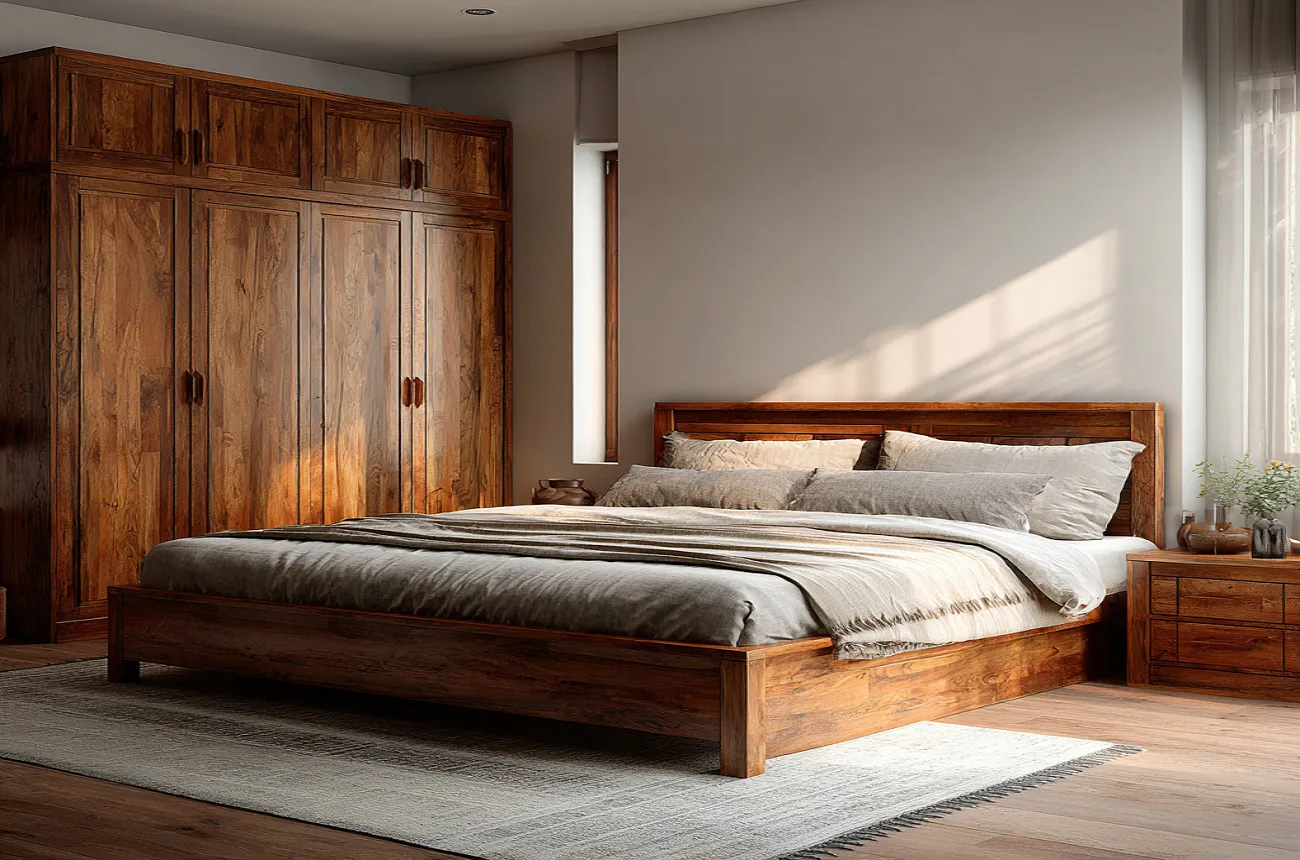
A solid wood bed and wardrobe set used in a bedroom.
Beds and wardrobes take on weight every day. Teak is often chosen here because it stays steady over the years. Heavy frames don't shift much, even after moving houses. Sheesham is also used for beds, especially carved headboards or panelled designs. It works well indoors, but very large frames may need tighter joints over time. This is where people quietly debate teak wood or sheesham wood, which is better for long-term use.
Dining Tables
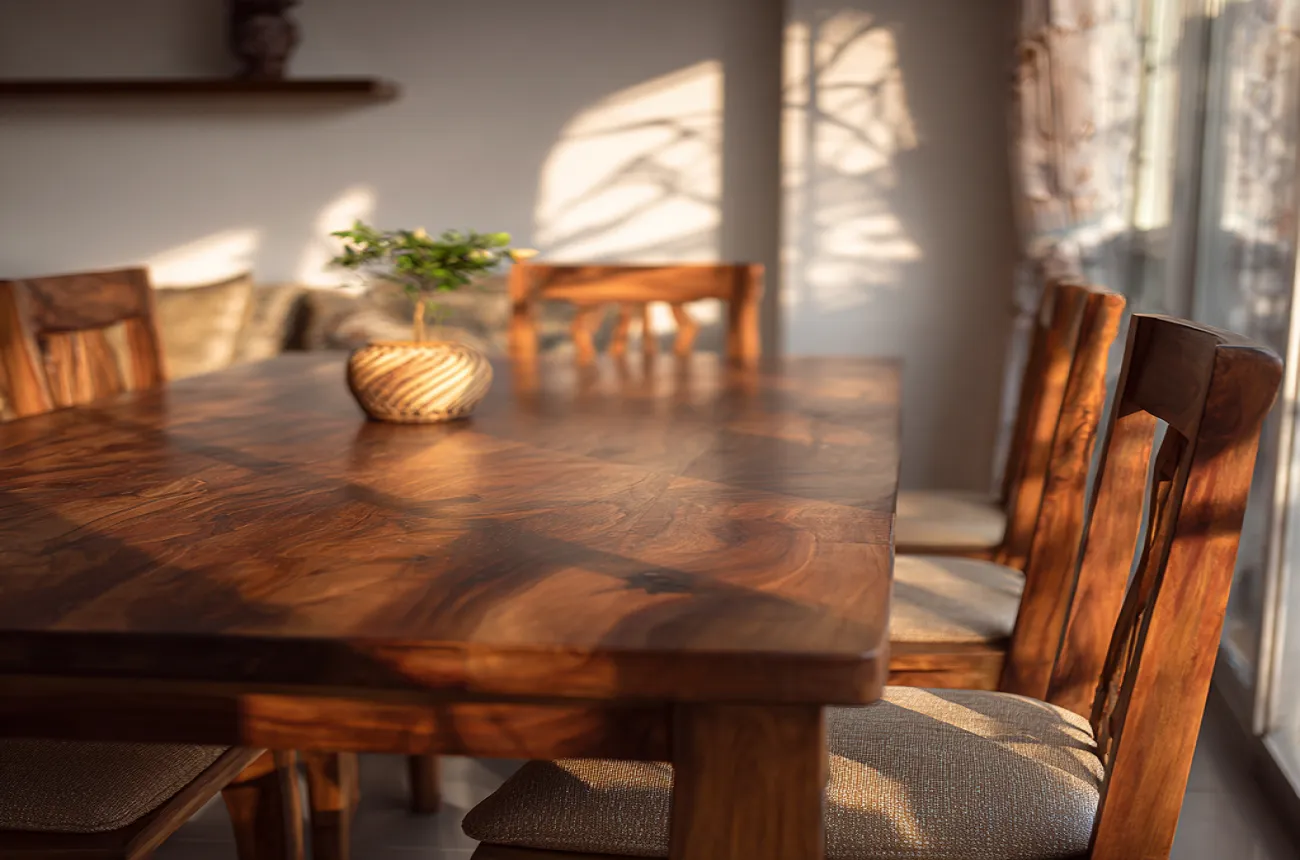
A wooden dining table set placed near a window
Dining tables deal with spills, heat, and daily cleaning. Teak handles this calmly. Watermarks and minor spills don't show easily. Sheesham dining tables look good, especially with rich grain patterns, but they need more care. Regular polishing helps. In homes where the table is used heavily, this difference becomes obvious within a few years.
Living Room Furniture
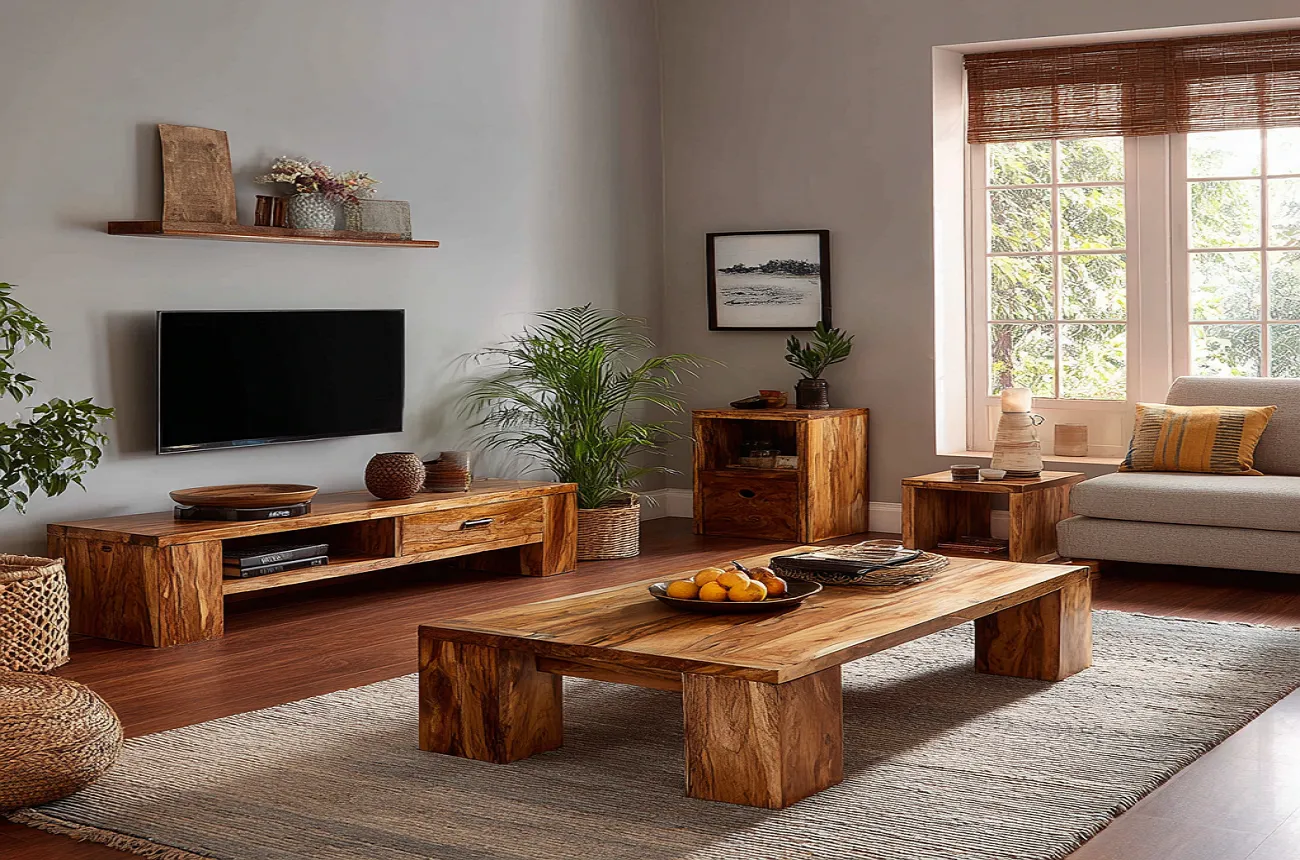
Wooden coffee table, TV unit, and side furniture used in a living room.
Living rooms are where sheesham shows its character. Coffee tables, side tables, display units, and TV cabinets often use it because the grain adds visual interest. Teak living room furniture feels quieter and more uniform. People who prefer clean lines lean towards teak. Those who like warmth and texture lean towards sheesham.
Carved and Decorative Pieces
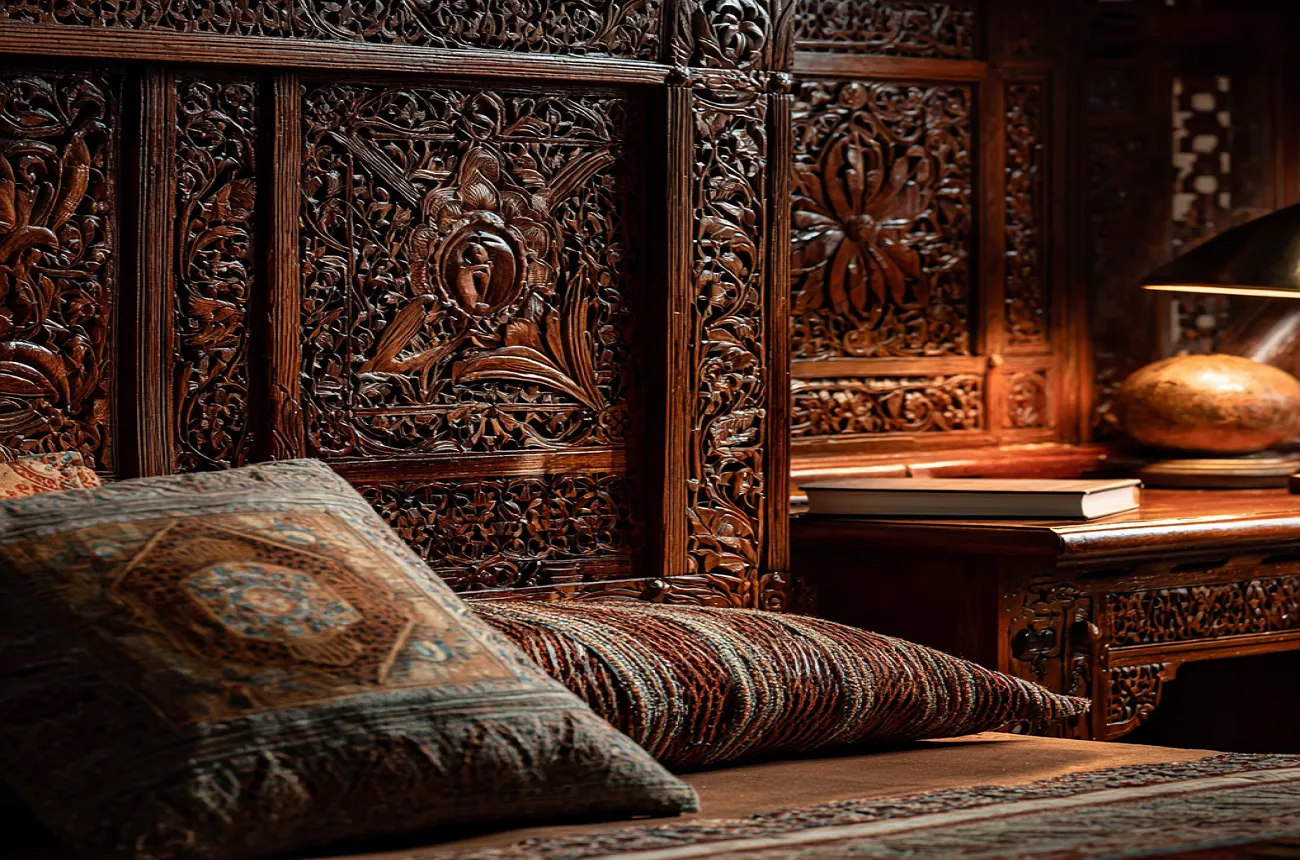
Carved wooden panels and furniture showing detailed workmanship.
Carving is where sheesham feels more at ease. Decorative panels, carved beds, and detailed cabinets usually use it because it takes cuts cleanly. Teak can be carved, but the look stays more restrained. People who want visible detail usually end up choosing sheesham without overthinking it.
Outdoor and Semi-Outdoor Furniture
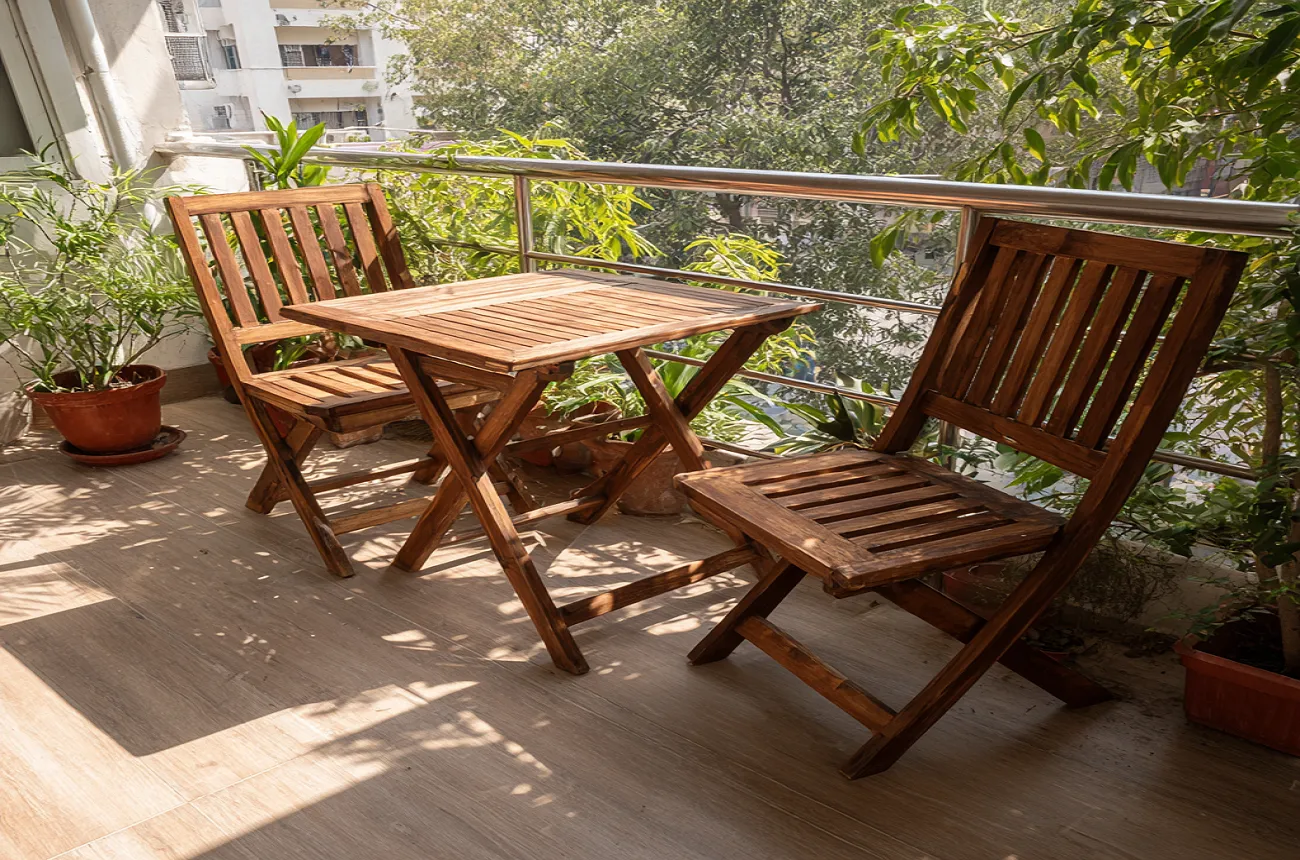
Wooden table and chairs used on a balcony
Outdoor use changes the conversation completely. Teak handles humidity and weather far better. That's why it's chosen for balconies, gardens, and semi-open areas. Sheesham doesn't enjoy constant exposure. Even with care, it tends to react to moisture. For outdoor furniture, most people don't debate much. Teak becomes the safer choice.
Long-Term Reality of Owning Sheesham vs Teak Furniture
The difference doesn't show up quickly. In fact, for the first year or two, most people don't notice much at all. The furniture looks fine. It does its job. Life moves on.
With sheesham, small things start showing up first. A faint line along a joint. A drawer that doesn't slide as smoothly as it once did. The colour changes a bit, sometimes darker in one place than another. Some people don't mind this. Others start polishing more often once they notice it. If the room stays very dry or very humid, the wood reacts. Nothing dramatic. Just enough to be noticed.
Teak tends to stay quiet longer. People often realise this only when they compare. A bed that hasn't been tightened in years. A cupboard door that still shuts the same way. Scratches blend in instead of standing out. Many owners don't even think about maintenance until someone asks them about it.
Resale is another thing people talk about later. Old teak pieces still attract interest. Sheesham depends more on how well it has been kept and how heavy the design is. These are not things people plan for when buying, but they come up eventually.
Common Mistakes People Make When Choosing Between Sheesham and Teak
Most people notice this part only later, once the furniture has been in use for some time. The issue is rarely the wood itself. It's usually the small decisions that are overlooked at the beginning.
- Choosing based only on appearance: Grain and colour stand out in a showroom. After a few years, people notice the joints, the finish, and how well the piece was made.
- Forgetting to think about the spot where the furniture will actually stay: Over time, light, dampness, and air around the room start to affect the wood. Furniture kept in a dry bedroom ages differently from pieces placed close to windows or balconies.
- Assuming all teak or all sheesham is the same: Quality varies widely. Two pieces sold under the same name can age very differently depending on sourcing and construction.
- Skipping questions about preparation: Drying, seasoning, and joinery affect how long furniture lasts, but these details are often never discussed.
- Ignoring long-term maintenance habits: Some households polish regularly. Others rarely do. The choice of wood should match how the furniture will actually be cared for.
- Spending in the wrong areas: Paying extra for wood while cutting corners on fittings or workmanship weakens the final result.
- Expecting no change over time: All wood moves and ages. Problems start when people expect it to stay exactly the same.
Wrapping Up
The difference between sheesham wood vs teak wood usually makes sense only after the furniture has been used for a while. Both sheesham wood and teak wood show up in Indian homes for different reasons. One brings visible grain and warmth. The other stays steady with very little attention. Many people decide based on budget or advice and only notice the difference after living with the furniture for a while. The choice tends to feel settled once the furniture becomes part of the room and daily routine.
*Images used are for representational purposes only. Unless explicitly mentioned, the Interior Company does not hold any copyright to the images.*

Ready for a home transformation?
Let our designers assist you!
Recent Posts










It depends on use. Teak lasts longer compared to sheesham, which costs less and works well indoors.
Sheesham is durable indoors, but it is not as long-lasting as teak.
Teak stays more stable over time. Sheesham is used often, but needs more care.
No, sheesham handles small spills but reacts to moisture over time.
Teak is worth the price for long-term use though it is expensive.
Teak handles spills better. Sheesham needs regular polishing.
No, it does not handle weather exposure well.
Sheesham has stronger, more visible grain. Teak looks more uniform.
Sheesham needs more care. Teak needs very little.
Teak lasts longer. Sheesham lasts well indoors with care.
Related Category
- Bedroom
- Dining Room
- Living Room
- Materials
- Tips and Advice