- Design Ideas
- Cities
- Trends
- Guides
- Price Calculators
- Interior DesignersNEW
- Our Portfolio
- More


- Home
- Trends
- Modular Solution
- Modular Wardrobe
- Cupboard Vs Cabinet Vs Closet Vs Wardrobe Vs Almirah
Cupboard vs Cabinet vs Closet vs Wardrobe vs Almirah: What Each One Means and Which You Actually Need

People use these words as if they mean the same thing. A contractor says closet. A carpenter says wardrobe. A store label says cupboard. Someone else insists it’s a cabinet. Same conversation, four names, mild confusion. Searches like cupboard vs cabinet vs closet vs wardrobe, closet vs wardrobe, or the difference between wardrobe and cupboard usually happen right at that moment when a person is planning storage and realises the terms don’t actually match what they imagined.
Table of Content
The mix-up happens because some of these refer to furniture, some to built-in structures, some to function, and some to regional language habits. A wardrobe can look like a cupboard. A cupboard can act like a cabinet. A closet might not even be movable. So the question isn't just what each word means. It's which one fits your space, your storage habits, and the way your room is actually laid out.
Quick Difference Snapshot
Before getting into layouts or styles, the names themselves need sorting. These words get used for the same thing all the time, yet in actual interiors, they refer to different types of storage. Some are built into walls. Some stand like furniture. Some are meant only for clothes, while others hold whatever needs organising.
|
Term |
What it refers to in practice |
Fixed or movable |
Usage |
Best for |
Size |
|
Cupboard |
A general storage unit with shelves or compartments |
Either |
Mixed storage |
Kitchens, bedrooms, utility areas |
Small to medium |
|
Cabinet |
A compact storage unit, often modular |
Usually fixed |
Frequently used items |
Kitchens, bathrooms, work zones |
Small |
|
Closet |
A storage space formed within the wall |
Fixed |
Clothes and personal items |
Bedrooms, hallways |
Medium to large |
|
Wardrobe |
A clothing-focused storage unit with hanging sections |
Movable or built-in |
Garments and accessories |
Bedrooms |
Medium to large |
|
Almirah |
A freestanding storage piece, often lockable |
Movable |
Clothes, documents, valuables |
Bedrooms |
Medium |
Why these storage names get mixed up?
Ask three people what a wardrobe is, and you might get three different answers. One imagines a built-in wardrobe design. Another thinks of a freestanding piece. Someone else pictures an old metal almirah. The disagreement usually isn't about furniture. It's about terminology.
The confusion shows up most when people try comparing a wardrobe and a cupboard or figuring out the difference between a closet and a wardrobe, because those words don't describe appearance alone. They describe structure, placement, and purpose.
Cabinet vs Cupboard
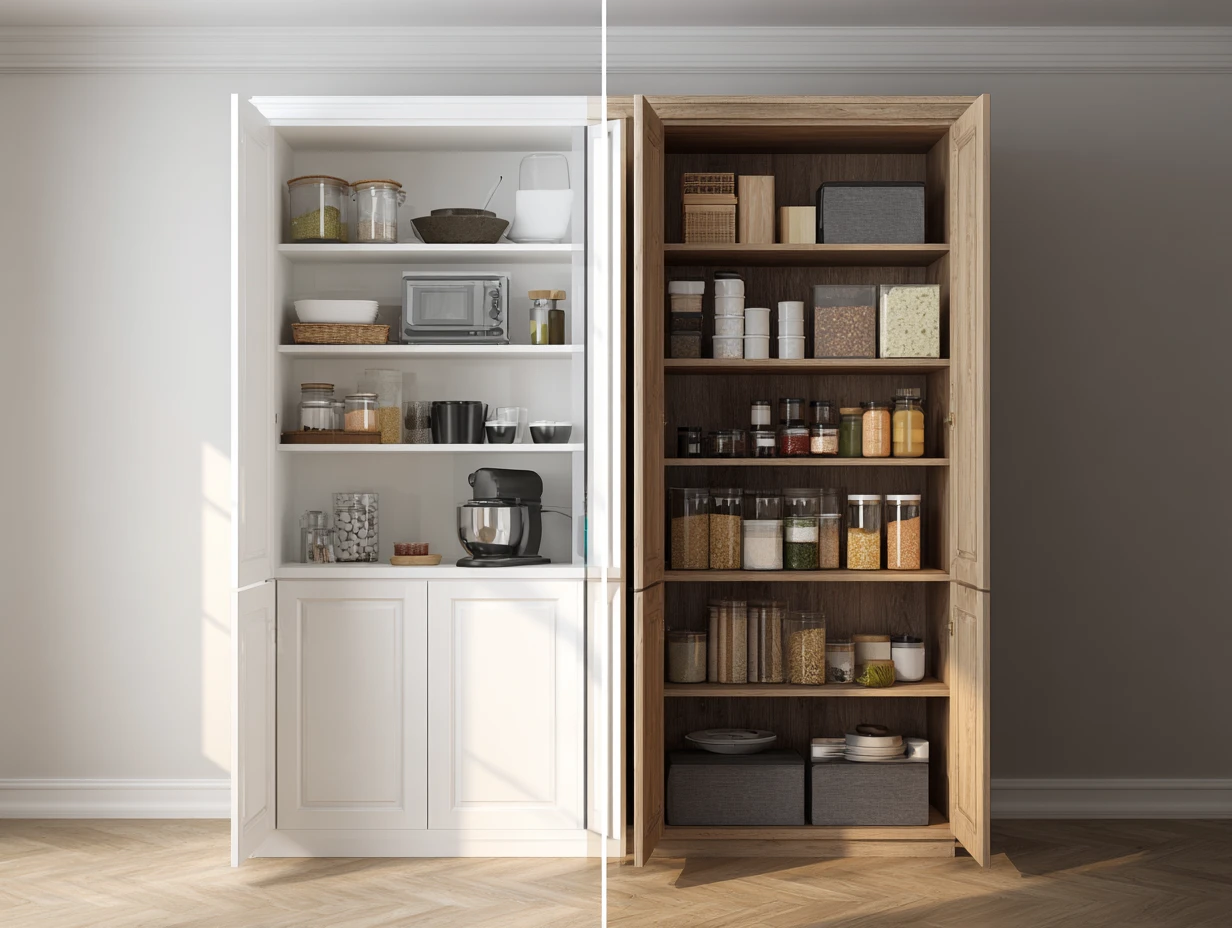
In most homes, nobody notices the difference until they try storing something bulky and it doesn't fit. That moment usually answers the cupboard vs cabinet question faster than any definition.
Scale First
Cabinets are usually compact. They're sized for items you reach for often, which is why they appear in kitchens, work zones and bathrooms. Cupboards don't stick to one scale. Some are small. Others run nearly floor to ceiling. That size flexibility is what creates the real difference between a cabinet and a cupboard in everyday use.
Purpose Behaviour
Cabinets handle frequent access. Spices, toiletries, tools. Cupboards lean toward storage rather than constant retrieval. They're used for items you don't need every hour but still want organised and enclosed.
Construction Style
Most cabinets are modular or wall-mounted. Cupboards can be freestanding, built into niches, or assembled as full-height units. That wider construction range is why conversations about home interior ideas often refer to kitchen units as cabinets while calling bedroom storage cupboards, even when both have doors and shelves.
Also Read: Stylish Wardrobe Door Design Ideas for Your Home
Depth Reality
Cabinets tend to be shallower, so everything inside stays visible. Cupboards can go deeper because they're meant to hold more volume. That extra depth is also why cupboards sometimes end up storing larger or irregular items that wouldn't sit comfortably inside a cabinet.
Cupboard vs Wardrobe
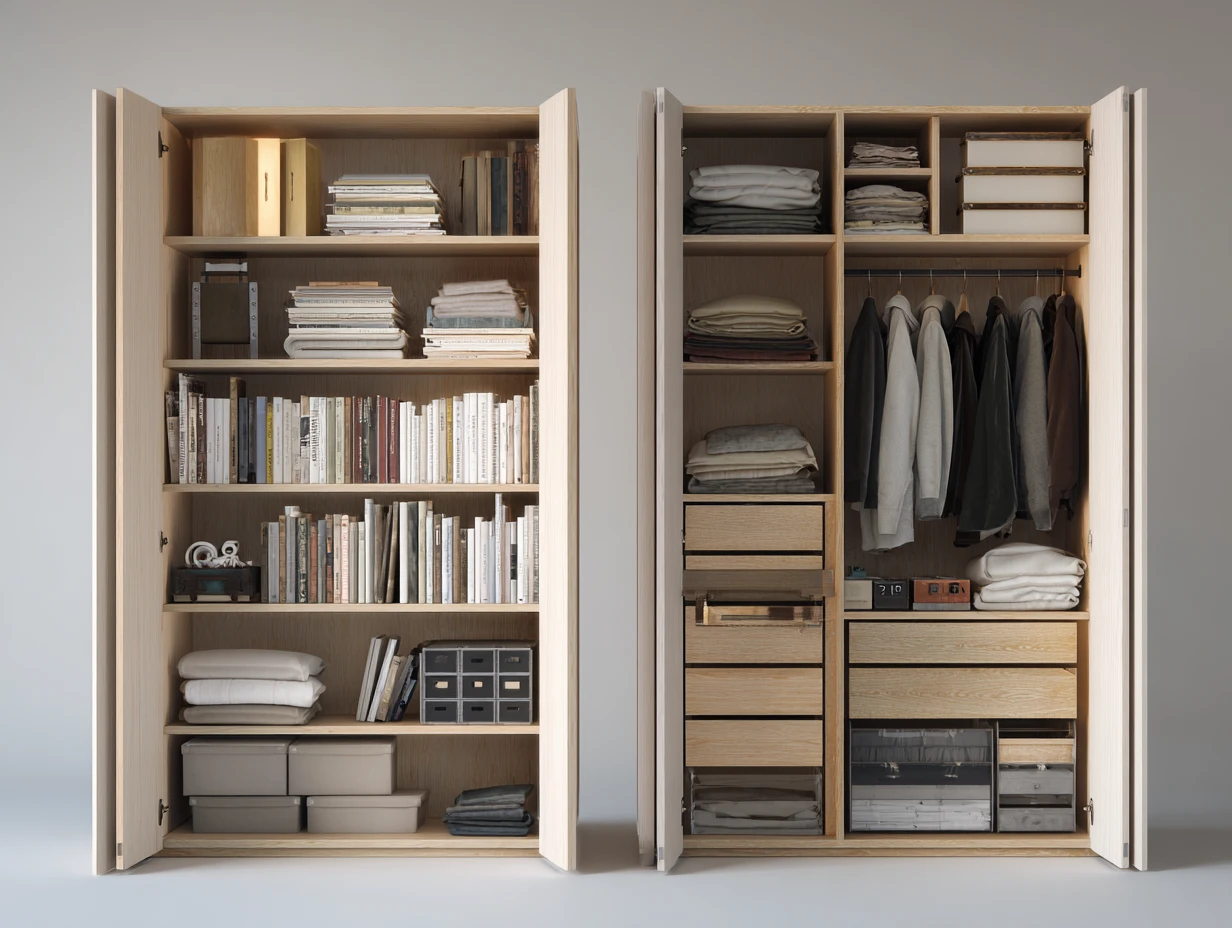
A tall unit with doors can look identical from across the room, yet the moment you open it, the difference becomes obvious. One is arranged for anything that needs storing. The other is arranged specifically for clothes. That's where the cupboard vs wardrobe distinction actually shows up, not in the outer frame but in the inside layout.
Purpose
A cupboard is a general storage. It adapts to whatever you put in it. Linen today, files tomorrow, clothes next month. A wardrobe is built with garments in mind from the start, which is why people comparing the difference between wardrobe and cupboard often realise the decision isn't about size but about function.
Also Read: Easy Wardrobe Organizer Ideas for Small Spaces
Interior Planning
Open a cupboard, and you'll usually see shelves. Open a wardrobe, and you'll see zones. Hanging space, folded sections, smaller compartments. This is why homeowners tend to finalise on the inside wardrobe design early. Once internal divisions are fixed, the rest of the unit follows that structure.
Placement Behaviour
Cupboards slip into leftover spaces. Corners, alcoves, utility walls. Wardrobes rarely do. They tend to define the wall they sit against because clothing storage needs height clearance. Room layouts often start by calculating the ideal wardrobe size before anything else gets positioned.
Daily Use
Cupboards are accessed when needed. Wardrobes are accessed constantly. Morning, evening, sometimes five times in ten minutes while getting ready. That frequency changes practical decisions like shutter movement, handle height, and internal spacing.
Also Read: Different Types of Wardrobe Shutter Design You Should Know
Closet vs Wardrobe
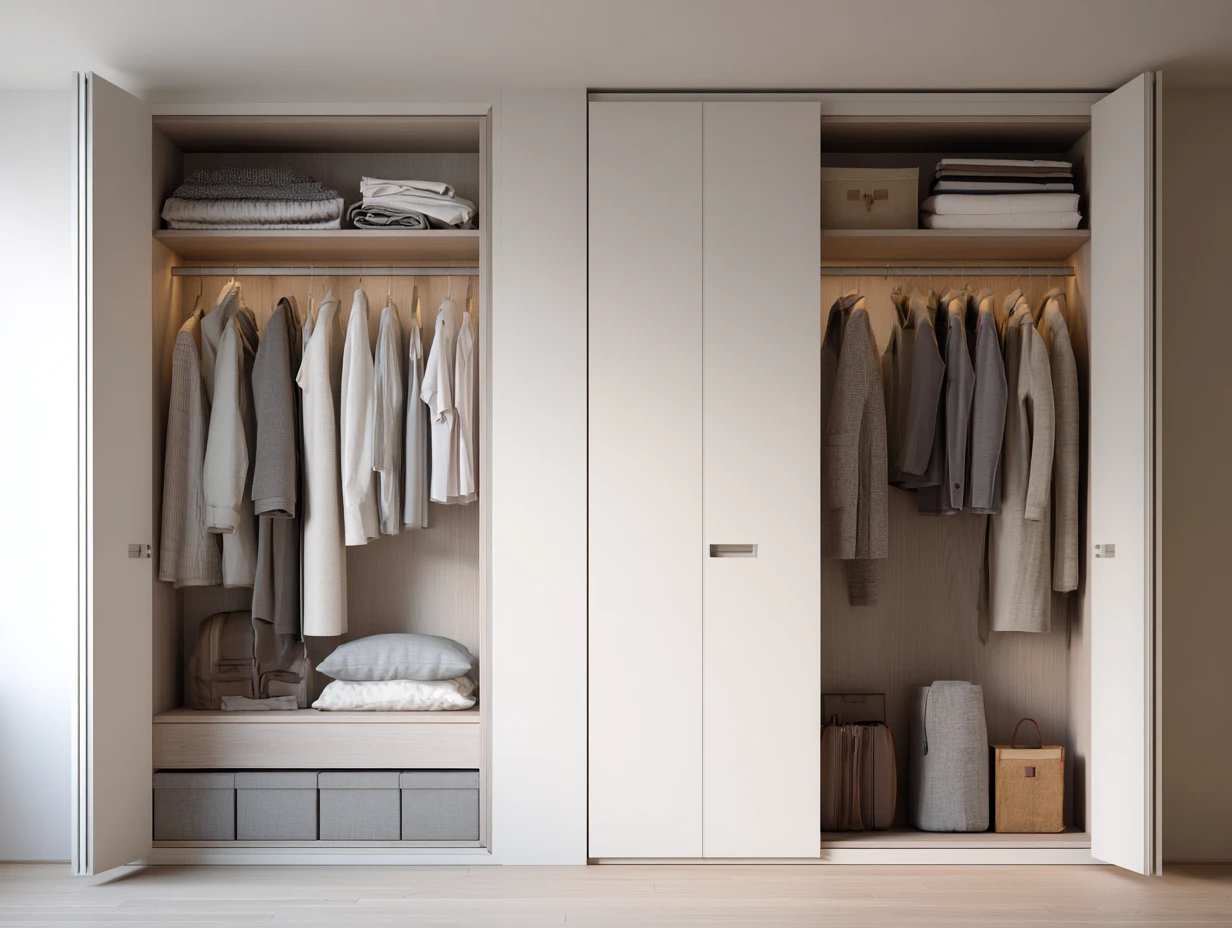
Stand inside one, and you can step around. Stand inside the other, and you'd hit the back panel in seconds. That physical difference is what most people notice first when comparing closets vs wardrobes, even if they've never thought about the terminology before.
How they're built?
A closet is part of the room's structure. It's framed into the wall or carved into an existing recess. A wardrobe is added to the room, either as a freestanding unit or as panels installed against a wall surface. That construction difference is the core of the difference between a closet and a wardrobe, not style or finish.
Must Read: Wardrobe Materials: Choose the Right One for Your Home
Flexibility Later On
Closets stay where they're built. Changing them usually means civil work. Wardrobes allow more freedom. They can be shifted, resized, replaced, or redesigned without altering the room itself.
Depth and Space Use
Closets borrow depth from within the wall line, so they don't push into the room. Wardrobes extend outward, which affects walking clearance, furniture placement, and door swing. In compact rooms, those few inches of projection can decide whether movement feels comfortable or cramped.
Check out: Best Space-saving Wardrobe Design Ideas for Small Bedrooms
Scale Category
Walk-ins fall under closets, not wardrobes. A walk-in closet design functions like a small storage room you enter, not a unit you open. Even large wardrobes still operate from the outside, accessed through shutters rather than by stepping in.
Almirah vs Wardrobe vs Cupboard
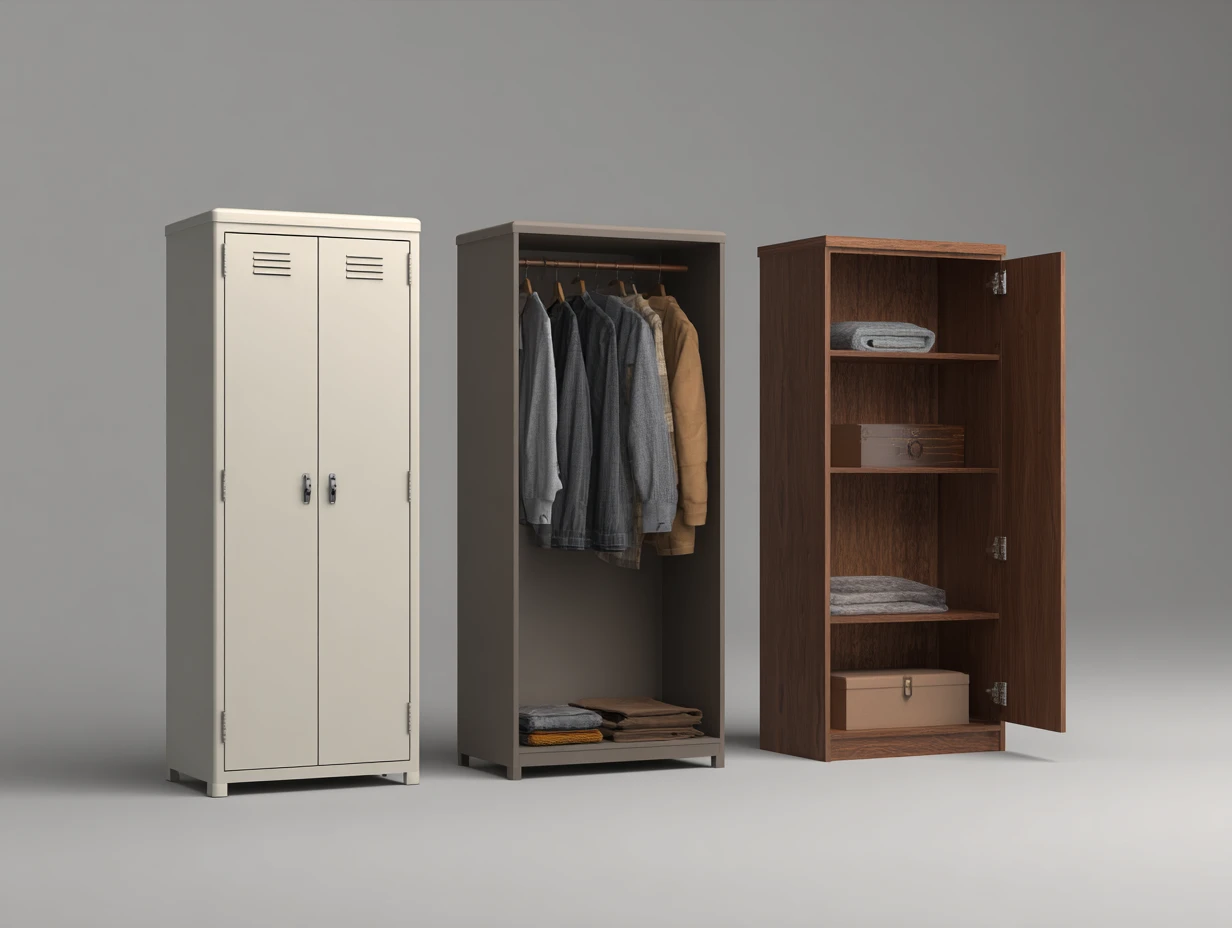
Walk into an older home, and you'll often spot a tall metal unit with a lock and a mirror stuck on the door. Most people call it an almirah without thinking twice. The moment you compare that with modern bedroom storage, the difference between almirah and wardrobe becomes easier to see.
Build Type
An almirah is almost always freestanding. Traditionally, metal, sometimes wood, is usually hinged and often lockable. A wardrobe can be freestanding or wall-installed. A cupboard can be either, depending on its purpose. That construction difference is what separates wardrobe vs almirah decisions more than appearance does.
Storage Role
Almirahs tend to store clothes, documents, jewellery, or valuables. Cupboards are general storage units. Wardrobes are designed around garments, which is why their interiors include hanging sections and compartments rather than only shelves. This functional distinction is what people notice when comparing almirah vs cupboard in real rooms.
Movement and Placement
Almirahs can be moved as a single piece. Wardrobes may need dismantling if they're modular or built-in. Cupboards vary. Some shift easily, others stay fixed once installed.
Design Direction
Traditional almirahs were chosen for durability and security. Modern wardrobes evolved around organisation and layout flexibility. Cupboards developed across multiple rooms, so their appearance changes more than the other two. Contemporary variations now include finishes and detailing similar to what you'd see in an almirah design catalogue.
Which one should you choose for your room?
Most people don't choose the wrong storage because of style. They choose wrong because they picture using it one way and end up using it another. That's usually when comparisons like wardrobe vs cupboard vs closet or cupboard vs wardrobe vs closet start making sense, because each option behaves differently once it's part of daily life.
If the room is compact
Built-in storage tends to feel less intrusive. Closets sit within the wall depth, so walking space stays open. Wardrobes and cupboards project outward, which changes how movement flows around the bed or doorway. In smaller layouts, even a few inches of projection can decide whether the room feels breathable or tight. That's why many layouts begin with bedroom proportions first, especially when planning around a modern bedroom design layout.
If storage needs change often
Cupboards adapt easily. Their shelf-based structure allows contents to change without redesign. Wardrobes are more specialised. They work best when clothing is the main priority, because their sections are planned around garment lengths and folding habits rather than general storage.
If clothing organisation matters most
Wardrobes win simply because they're built for it. Hanging sections prevent creasing. Divided compartments separate categories. Drawer zones keep smaller items contained. This kind of planning usually happens during the inside design stage, before finishes or colours even enter discussion.
If permanence is a factor
Closets are architectural. Once built, they stay. Wardrobes and cupboards can shift, be replaced, or be redesigned later. That flexibility matters in homes where layouts change over time or furniture gets rearranged.
If visual impact matters
Closets blend in. Wardrobes and cupboards contribute to the room's look because they remain visible. Proportion, shutter style, and finish tone affect whether storage fades into the background or becomes part of the room's statement. That's often where decisions start aligning with a broader modern wardrobe design direction rather than treating storage as a separate add-on.
How designers decide between these options?
Most homeowners compare options like cabinet vs cupboard vs wardrobe only after they've seen something that didn't work in a real room. Interior designers usually move in the opposite order. They don't start with the unit. They start with the wall.
Wall Depth Decides the Category
If a wall can accommodate recessed storage, a closet becomes possible. If not, the choice shifts toward wardrobes or cupboards. That single measurement often determines the storage type before style, colour, or finish is even discussed.
Also Read: Top Wardrobe Finishes That Elevate Your Space Aesthetics
Clearance Decides the Shutter Type
Door movement matters more than people expect. If opening panels would hit a bed or block a walkway, hinged shutters get ruled out immediately. In tighter layouts, designers often switch to a sliding wardrobe design simply because it keeps circulation clear. Where space allows full opening, a hinged wardrobe design gives easier access to the entire interior at once.
Ceiling Height Changes Proportions
Rooms with higher ceilings can support tall wardrobes that store seasonal items overhead. Lower ceilings sometimes work better with split storage or shorter units so the room doesn't feel compressed vertically.
Light Reflection and Visual Weight
Surface choice can affect how large the storage looks inside a room. Dark matte shutters absorb light and feel heavier. Reflective panels or a glass wardrobe design can visually reduce bulk, especially in narrower bedrooms where large units might otherwise dominate the wall.
Habits Shape Internal Layout
Someone who hangs most clothes needs vertical space. Someone who folds prefers stacked shelving. This is why designers rarely finalise interiors until they understand routines. Storage planned around real habits usually lasts longer without needing changes.
Common Mistakes People Make When Choosing Storage
Many people only look up terms like the difference between cabinet and closet or the difference between cabinet and wardrobe after they've already installed something that doesn't work the way they expected. Most storage problems don't come from the unit itself. They come from decisions made before understanding how that unit behaves in real use.
- Picking size without checking reach: Tall units seem useful until the top shelves become unreachable. Deep ones feel spacious until items at the back disappear from daily use. Storage that looks generous on paper can turn inconvenient once it's in the room.
- Choosing shutters before layout: Finishes and colours often get decided first because they're visible. Interiors get thought about later. That order usually causes frustration. Storage works better when internal divisions are planned before external panels.
- Assuming all closed storage works the same: From the outside, a cabinet, cupboard, or wardrobe can look similar. Inside, they're built differently. Shelves, rods, compartments, depth. Those structural differences decide how usable they feel after installation.
- Ignoring room alignment: Placement affects comfort more than most people expect. A unit placed where doors clash or light gets blocked slowly becomes annoying to use. Some homeowners even check wardrobe direction as per vastu before fixing placement so positioning feels aligned with the room's natural movement.
- Choosing based only on appearance: Storage is opened dozens of times a day. A unit that looks good but feels awkward to use rarely stays satisfying for long.
Clarity Close
People often start with comparisons like cupboard vs cabinet vs closet vs wardrobe or try to untangle the difference between cupboard, wardrobe and almirah, thinking the answer sits in the wording. In practice, the decision shows up when you picture the unit inside your actual room.
A storage piece built into a wall behaves differently from one that stands against it. A unit planned for garments behaves differently from one meant for mixed items. That's why questions such as closet vs wardrobe, cupboard vs cabinet, or wardrobe vs cupboard vs closet tend to surface while measuring walls, not while browsing catalogues. In real spaces, the choice usually becomes clearer once three things are known: what needs storing, how often it's accessed, and how much room the layout can spare. Names vary, but function doesn't.
This is usually the stage where Interior Company designers narrow the choice down to what actually works for the space.
*Images used are for representational purposes only. Unless explicitly mentioned, the Interior Company does not hold any copyright to the images.*
Wardrobe Design Ideas for You
- Type
- Color
- Finish
- Theme
- Size
- Gender
- Floor Material
- Orange Color Wardrobe Design
- Gold Color Wardrobe Design
- Green Color Wardrobe Design
- Grey Color Wardrobe Design
- Light Brown Color Wardrobe Design
- Multi-Coloured Color Wardrobe Design
- Natural Brown Color Wardrobe Design
- Beige Color Wardrobe Design
- Pink Color Wardrobe Design
- Purple Color Wardrobe Design
- Red Color Wardrobe Design
- Silver Color Wardrobe Design
- White Color Wardrobe Design
- Yellow Color Wardrobe Design
- Black Color Wardrobe Design
- Blue Color Wardrobe Design
- Brown Color Wardrobe Design
- Dark Brown Color Wardrobe Design
- Cashmere Color Wardrobe Design
- Cream Color Wardrobe Design
- Bamboo Floor Material Wardrobe Design
- Medium Hardwood Floor Material Wardrobe Design
- Dark Hardwood Floor Material Wardrobe Design
- Vinyl Floor Material Wardrobe Design
- Laminate Floor Material Wardrobe Design
- Slate Floor Material Wardrobe Design
- Carpet Floor Material Wardrobe Design
- Light Hardwood Floor Material Wardrobe Design
- Ceramic Tile Floor Material Wardrobe Design
- Porcelain Tile Floor Material Wardrobe Design
- Plywood Floor Material Wardrobe Design
- Painted Wood Floor Material Wardrobe Design
- Concrete Floor Material Wardrobe Design
- Marble Floor Material Wardrobe Design

Ready for a home transformation?
Let our designers assist you!
Recent Posts







The difference between closet and cupboard comes down to construction. A closet is built into the room’s structure. A cupboard is added to it. One is part of the architecture. The other is a storage unit placed inside it.
Cupboards store mixed items. Wardrobes are arranged for clothes. Shelves vs hanging sections. That internal layout changes how each feels day to day.
No. The difference between cabinet and wardrobe is mostly scale and purpose. Cabinets are compact and used for smaller items. Wardrobes are larger and structured for garments, which is why they include rods, compartments, and vertical divisions.
The difference between cupboard and almirah usually shows up in build style. An almirah is normally freestanding and often lockable. Cupboards can be fixed or movable and aren’t always meant for valuables or clothing specifically.
Not really. The phrase closet vs wardrobe or cupboard gets used when people are unsure which category a unit belongs to. Closets are wall-integrated. Wardrobes are clothing units. Cupboards are general storage. Similar outside. Different function.
The difference between walk in closet and wardrobe is spatial. A walk-in is large enough to step inside and move around. A wardrobe is accessed from outside through shutters or doors.
Size plays a role, but function matters more. In cabinet vs cupboard vs wardrobe comparisons, cabinets handle small frequent-use items, cupboards handle mixed storage, and wardrobes handle clothing. The naming follows usage patterns.
The difference between cabinet and closet is structural. A cabinet is a small storage unit attached to or placed against a wall. A closet is an enclosed storage space built into the wall itself.
In cupboard vs wardrobe vs closet choices for compact rooms, built-in closets usually save the most space because they don’t project outward. Wardrobes and cupboards extend into the room, which affects movement area.
Related Category
- Balcony
- Bedroom
- Kids Room
- Kitchen
- Living Room