- Design Ideas
- Cities
- Trends
- Guides
- Price Calculators
- Interior DesignersNEW
- Our Portfolio
- More


- Home
- Trends
- Room
- Pooja Room
- Pooja Room Colours As Per Vastu
Pooja Room Colour As Per Vastu: Best Shades For A Peaceful And Positive Prayer Corner

A pooja room is the most sacred corner of a home. It is the place where the family gathers every morning to seek blessings. Since this space is meant for devotion and inner peace, its design is important as well. In Indian homes, the design of a pooja room is mostly guided by Vastu Shastra, the ancient Indian architectural science. According to Vastu, every element in a room matters, such as the location, direction, and even the colours used on the walls.
Colours play a powerful role in shaping the energy of a space. Soft and soothing shades can make the pooja room calm and welcoming. They help you focus during prayer and meditation by attracting peace and spiritual growth. On the other hand, dark or dull colours can disturb the peace of the prayer area.
Table of Content
Why Colour Matters In A Pooja Room?
Best Pooja Room Colours As Per Vastu
- 2.1 White: The Most Auspicious Colour
- 2.2 Why Choose White
- 2.3 Yellow: Colour Of Knowledge And Positivity
- 2.4 Why Choose Yellow
- 2.5 Orange: Colour Of Devotion And Spiritual Energy
- 2.6 Why Choose Orange
- 2.7 Light Blue: Calmness And Serenity
- 2.8 Why Choose Light Blue
- 2.9 Green: Harmony And Balance
- 2.10 Why Choose Green
- 2.11 Cream and Beige: Warm And Elegant
- 2.12 Why Choose Cream and Beige
Vastu-Friendly Colour Combinations For A Pooja Room
Colours To Avoid In A Pooja Room
Smart Tips For Choosing Pooja Room Colours
Paint Your Prayer Room Right
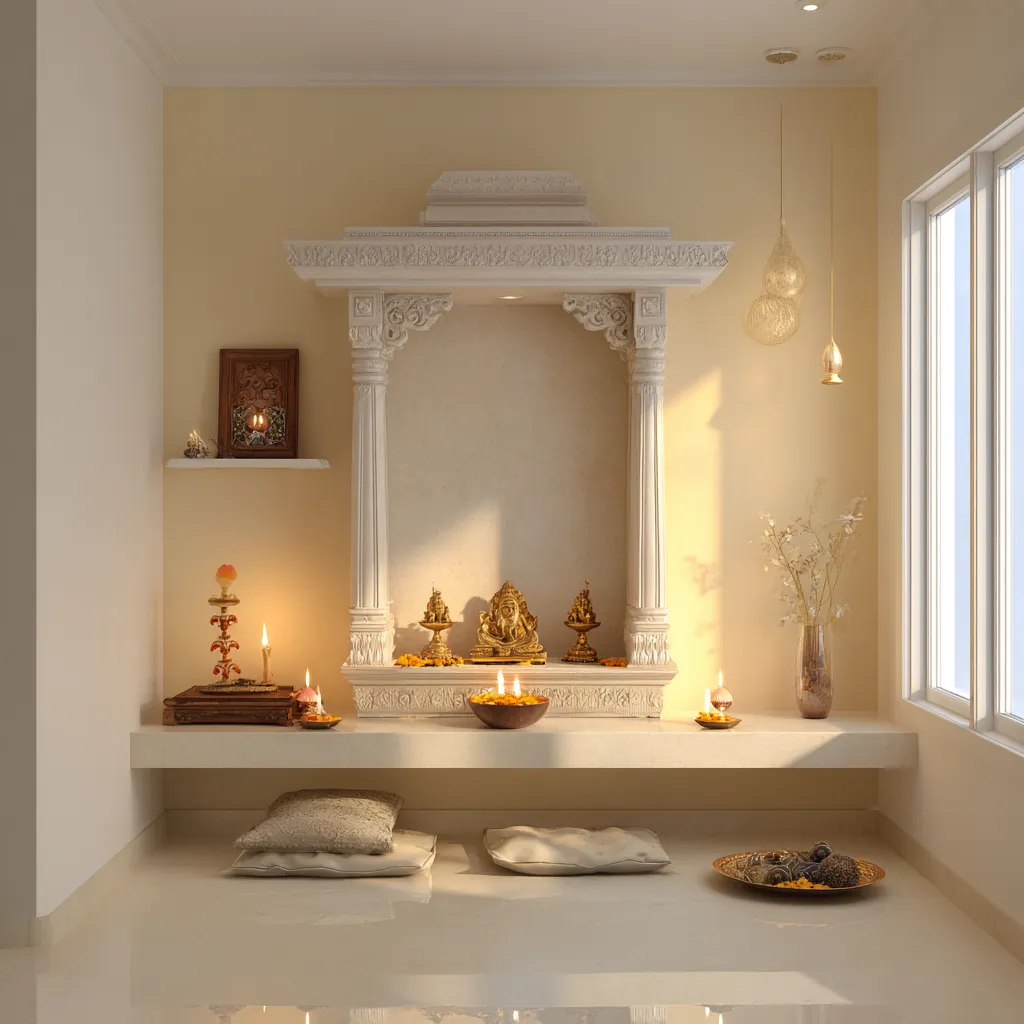
In this article, we will explore the best pooja room colours as per Vastu, what each colour means spiritually, how to use them wisely, colours to avoid, and tips for choosing the perfect colour for your prayer corner.
Why Colour Matters In A Pooja Room?
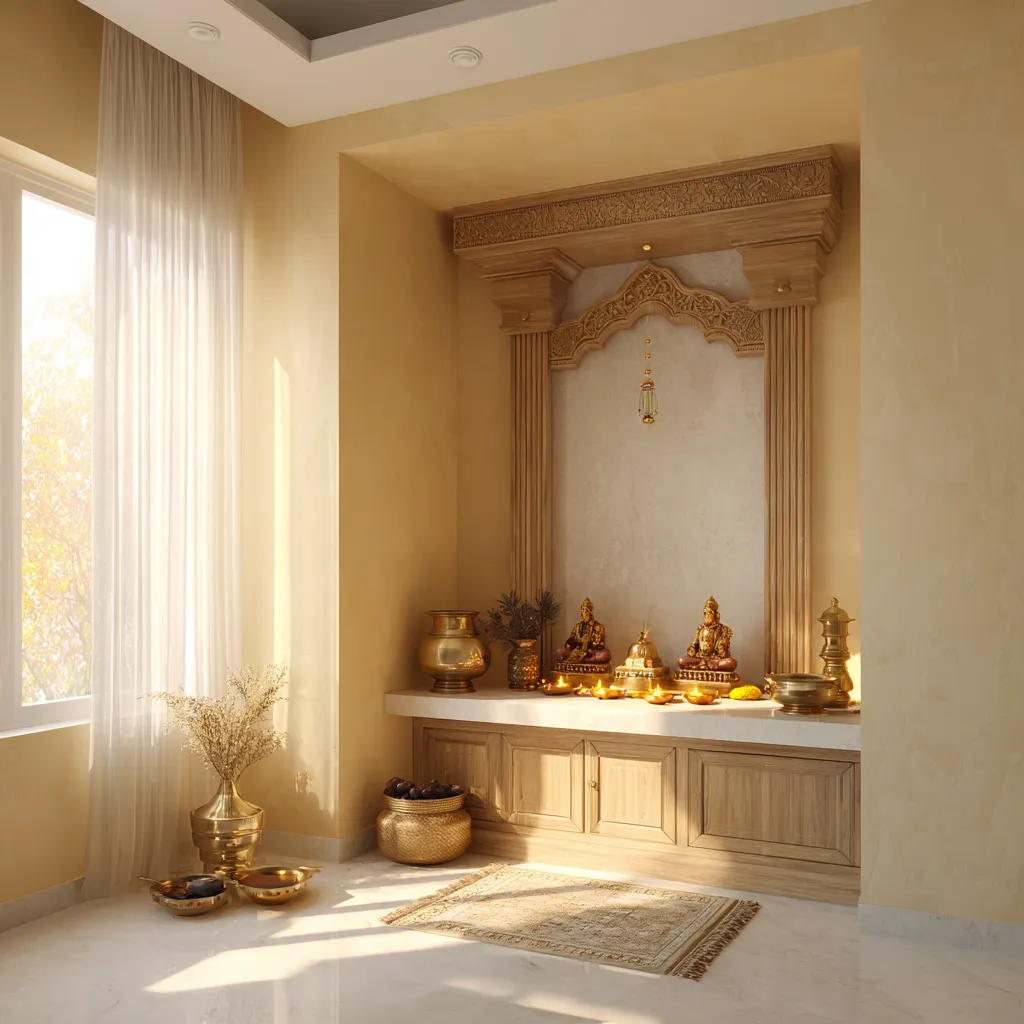
Colour plays a crucial role in Vastu. Every colour is linked to a specific energy and emotion. Each colour carries a different vibration that can influence the room atmosphere.
The pooja room is supposed to be a peaceful and should have the purest spiritual environment. Because of this, soft, light, and soothing colours are recommended. These colours help to create a calm environment for meditation and prayer. They enhance positive energy in the home, making the space brighter and more peaceful.
Best Pooja Room Colours As Per Vastu
Below are some of the best Vastu colours for a pooja mandir room that attract positivity and peace.
White: The Most Auspicious Colour
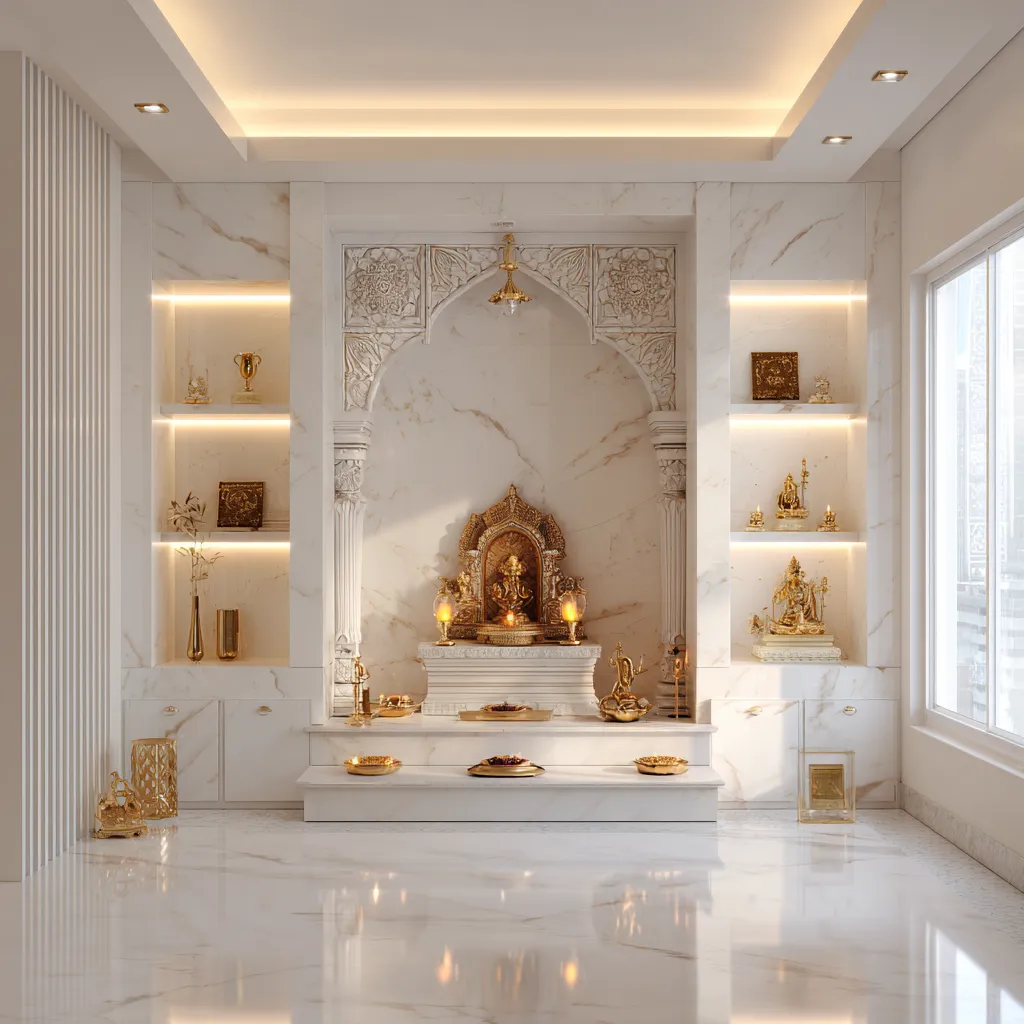
White is one of the most recommended colours for pooja rooms. It symbolises purity, peace, and spiritual clarity. White creates a calm environment that helps you to focus during prayer and meditation. It works well with traditional materials like marble, brass idols, and wooden mandirs.
Why Choose White
- It represents purity and devotion.
- This colour reflects natural light beautifully.
- It makes small pooja rooms look bigger.
- White creates a peaceful spiritual environment.
How to Use White in Your Pooja Room
- Use pure white or cream-white for walls and the ceiling.
- White marble flooring or tiles give a temple-like feel.
- You can pair white with gold accents on shelves and frames.
- Keep white curtains or doors to maintain the pure energy.
- Avoid yellow-tinted or grey-tinted whites as they look dull.
Yellow: Colour Of Knowledge And Positivity
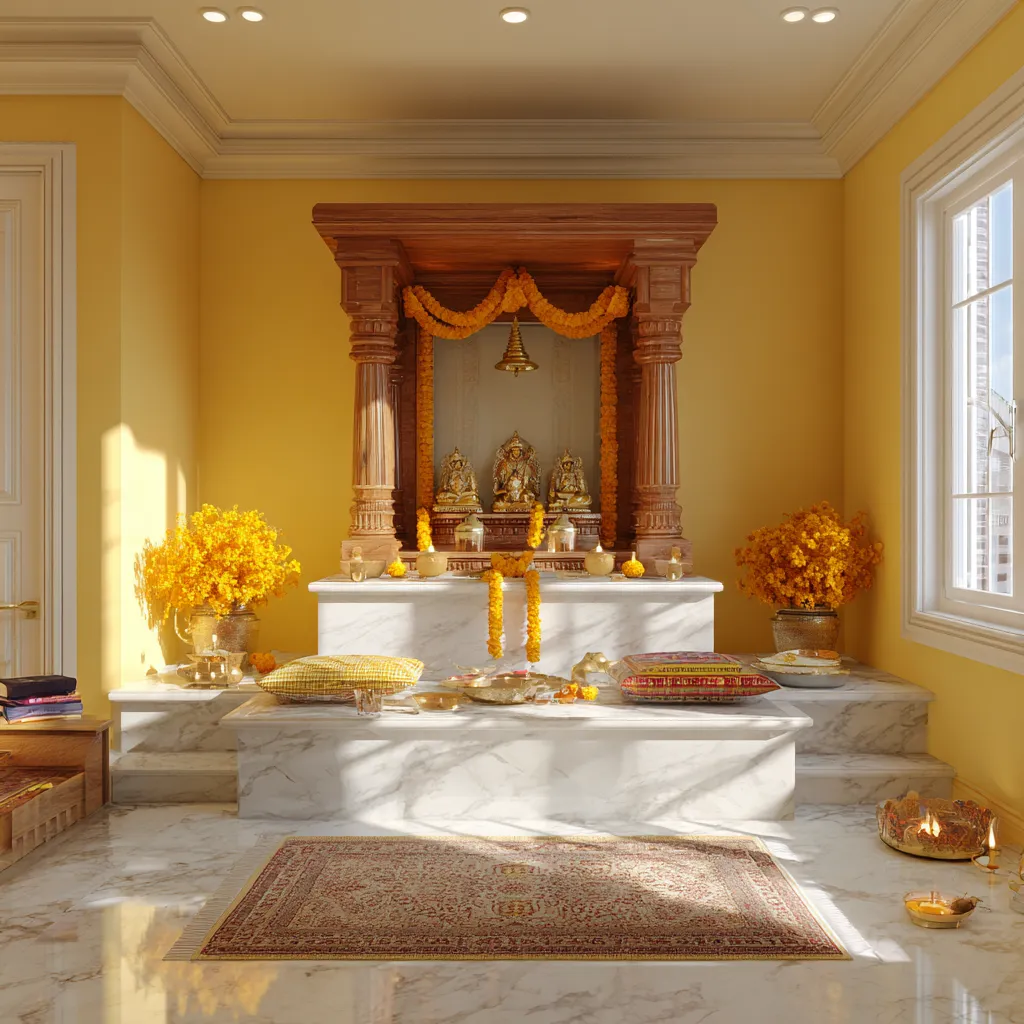
Yellow is another popular colour for pooja rooms, as per Vastu. This colour symbolises knowledge and positivity. It creates a bright atmosphere and improves concentration during prayer. Soft yellow shades work best because they maintain the calm atmosphere.
Why Choose Yellow
- Yellow encourages spiritual focus.
- It brings warmth and happiness.
- The colour creates a bright and welcoming prayer space.
How to Use Yellow in Your Pooja Room
- Paint all four walls in a warm and bright yellow shade.
- If all the yellow walls feel too bold, use yellow only on the wall behind the idols.
- You can also combine yellow walls with white marble flooring for a clean look.
- Add yellow marigold garlands as decoration to enhance the look.
Read Also – Mandir Direction in Home: Finding the Right Place for Daily Prayer
Orange: Colour Of Devotion And Spiritual Energy
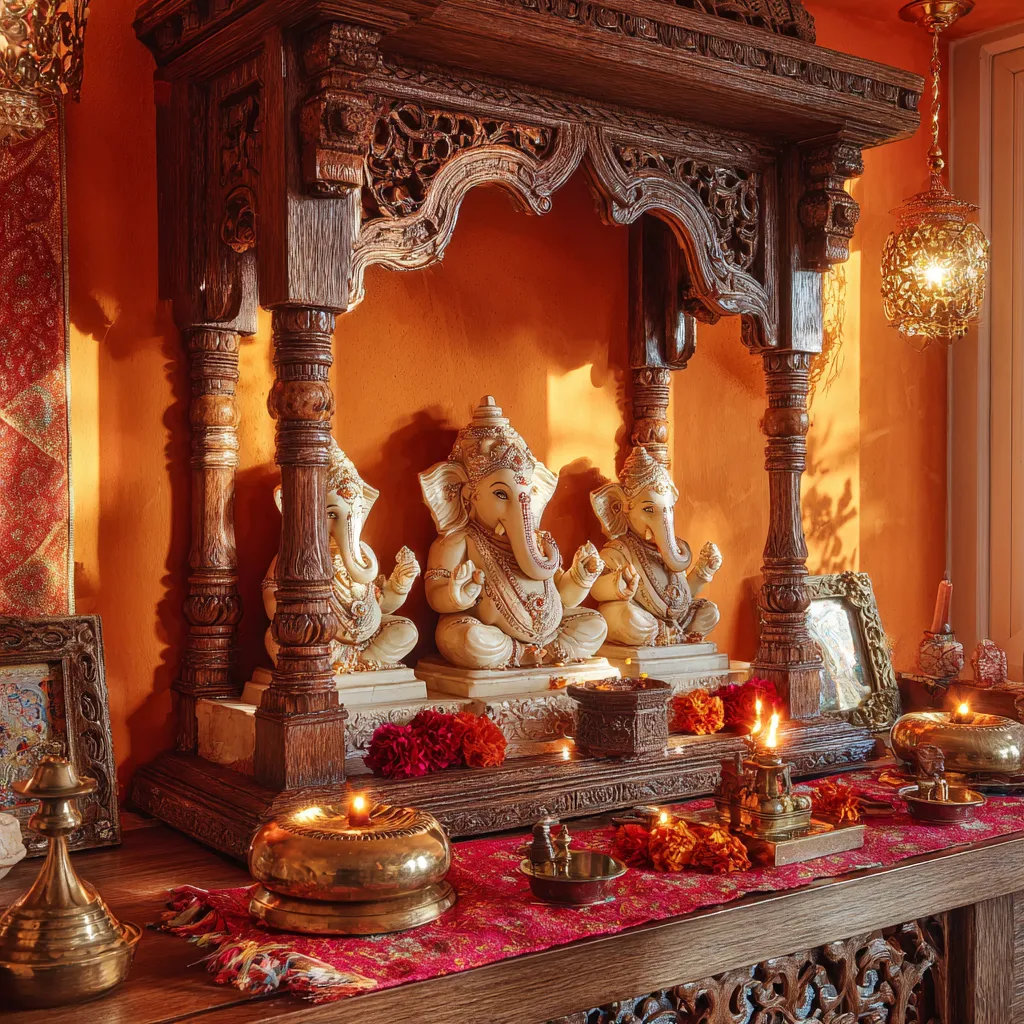
Orange is associated with spirituality in Indian culture. It represents devotion and sacred energy. Many temples and religious symbols use saffron or orange tones, as it reflects faith and spiritual dedication. Soft or muted orange shades work better than very bright tones.
Why Choose Orange
- Orange encourages devotion.
- It adds warmth to the space.
- It also creates a traditional temple-like feel.
How to Use Orange in Your Pooja Room
- Use saffron or peach as the wall colour behind the main idol.
- You can create smaller pooja niches in a full orange backdrop.
- Combine orange with ivory or cream on other walls for balance.
- You can create a very traditional and festive look using orange, brass detailing, and red flowers.
- Use saffron-coloured drapes or a temple cloth for a pop of colour.
Light Blue: Calmness And Serenity
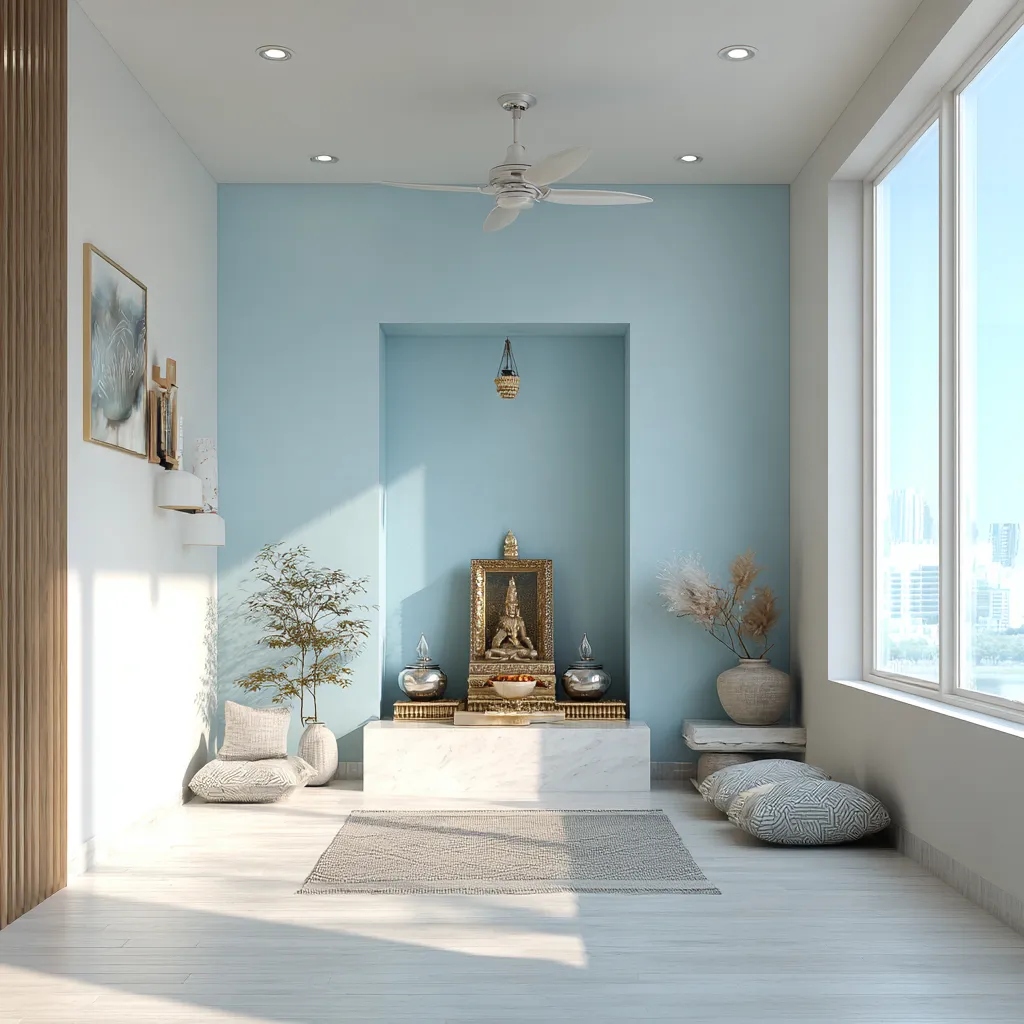
Light blue is a soothing colour that creates a peaceful environment. It represents calmness, peace, and spiritual reflection. This colour is ideal for meditation and prayer. Light blue works really great in pooja rooms with modern interior design.
Why Choose Light Blue
- It reduces stress and anxiety.
- Light blue colour promotes meditation.
- The colour creates a quiet spiritual atmosphere.
How to Use Light Blue in Your Pooja Room
- Use pale sky blue on one wall and white or cream on the others.
- Combine the colour with white and silver accessories for a serene look.
- Avoid using blue on all four walls as it can feel cold.
Don’t miss – Traditional Pooja Room Design Ideas for Home
Green: Harmony And Balance
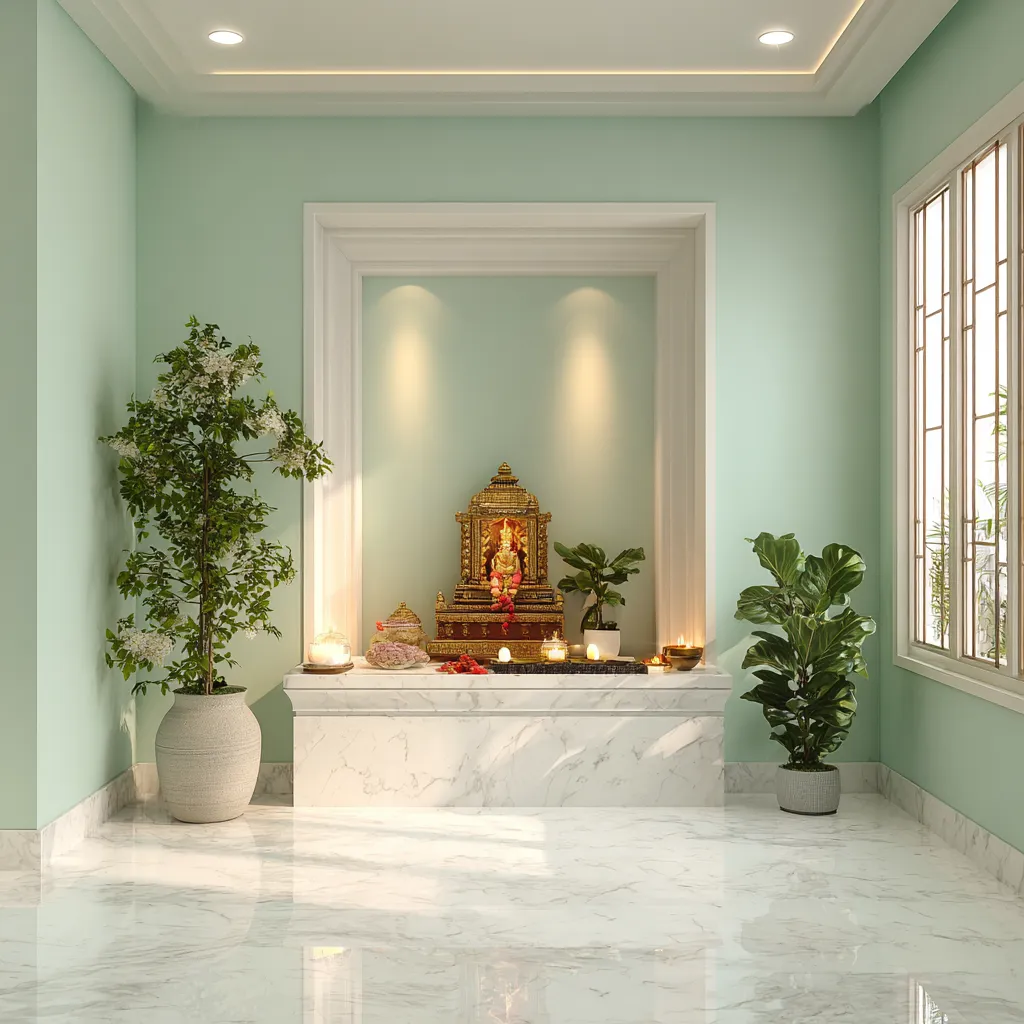
Green represents nature, harmony, and growth. Using green colour in the pooja room gives a refreshing and peaceful environment. It also encourages mindfulness. Green also goes well with gold accents or wooden mandirs.
Why Choose Green
- Green symbolises renewal and balance.
- It creates a connection with nature.
- Green colour improves mental calmness.
How to Use Green in Your Pooja Room
- Use pale mint, sage, or pistachio green on the walls.
- Combine with white marble for a fresh and natural look.
- Add indoor plants or a Tulsi pot near the mandir to complement the colour.
- Avoid dark greens, olive, or mossy tones in pooja rooms.
Cream and Beige: Warm And Elegant
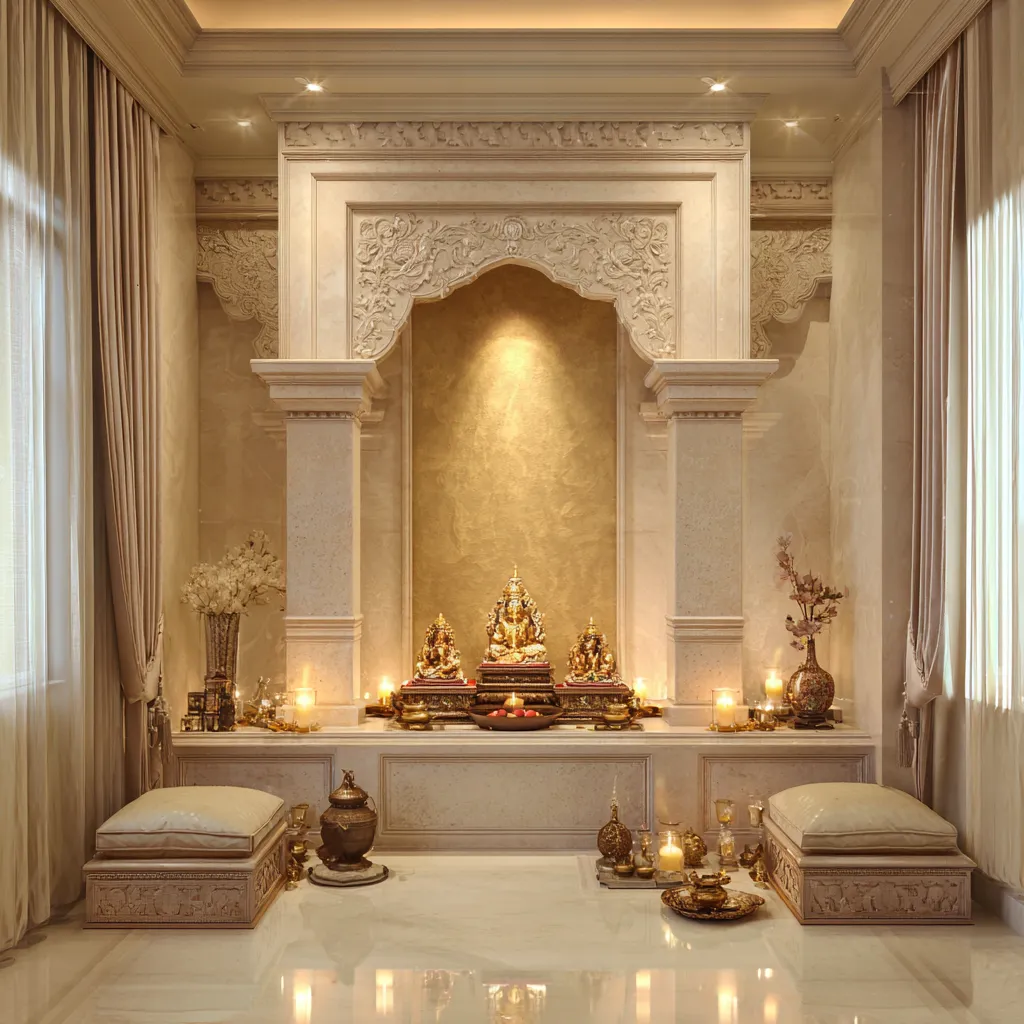
Cream and beige are neutral colours that create a soft atmosphere. These colours are ideal if you want a calm pooja room without using bright shades. Cream walls with marble flooring are a common design for pooja rooms.
Why Choose Cream and Beige
- These colours create a warm spiritual environment.
- It works well with wooden mandirs.
- The combination is suitable for modern homes and interiors.
How to Use Cream & Beige in Your Pooja Room
- Use a warm cream or beige as the base wall colour.
- Golden tiles or a gold mosaic behind the idols look spectacular.
- You can pair it with dark wood shelves and brass lamps for a classic feel.
- Soft gold curtains or fabric can add warmth without overpowering.
Read Also – 12+ Temple Colour Combination: Exploring Harmonious Pooja Room Colour Ideas
Vastu-Friendly Colour Combinations For A Pooja Room
Sometimes a single colour can feel too plain. You can use different colour combinations to enhance the beauty. Here are some popular Vastu-friendly colour combinations for your pooja room:
White And Gold
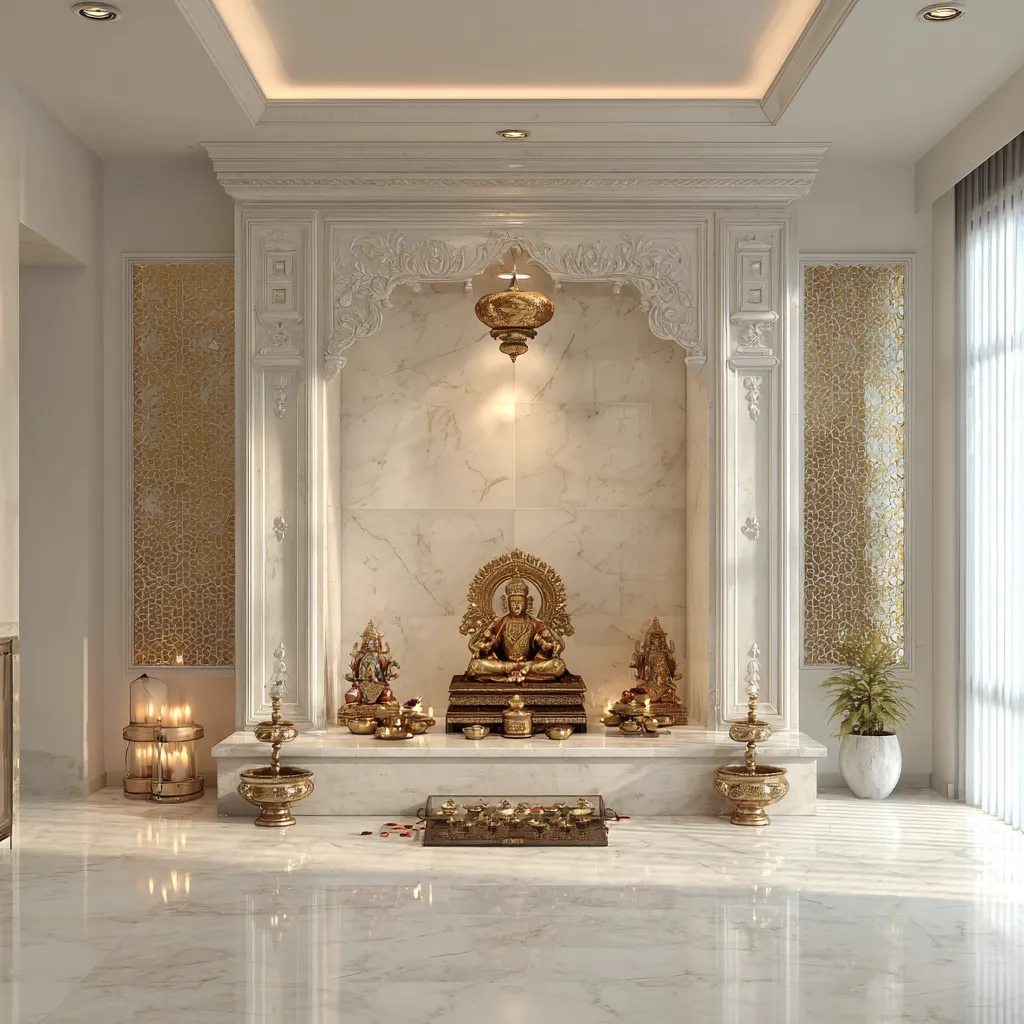
This combination looks elegant and divine. White symbolises purity, while gold adds a sacred and luxurious touch to the space.
Dont miss – 55+ best small pooja room design in apartments
Yellow And Red
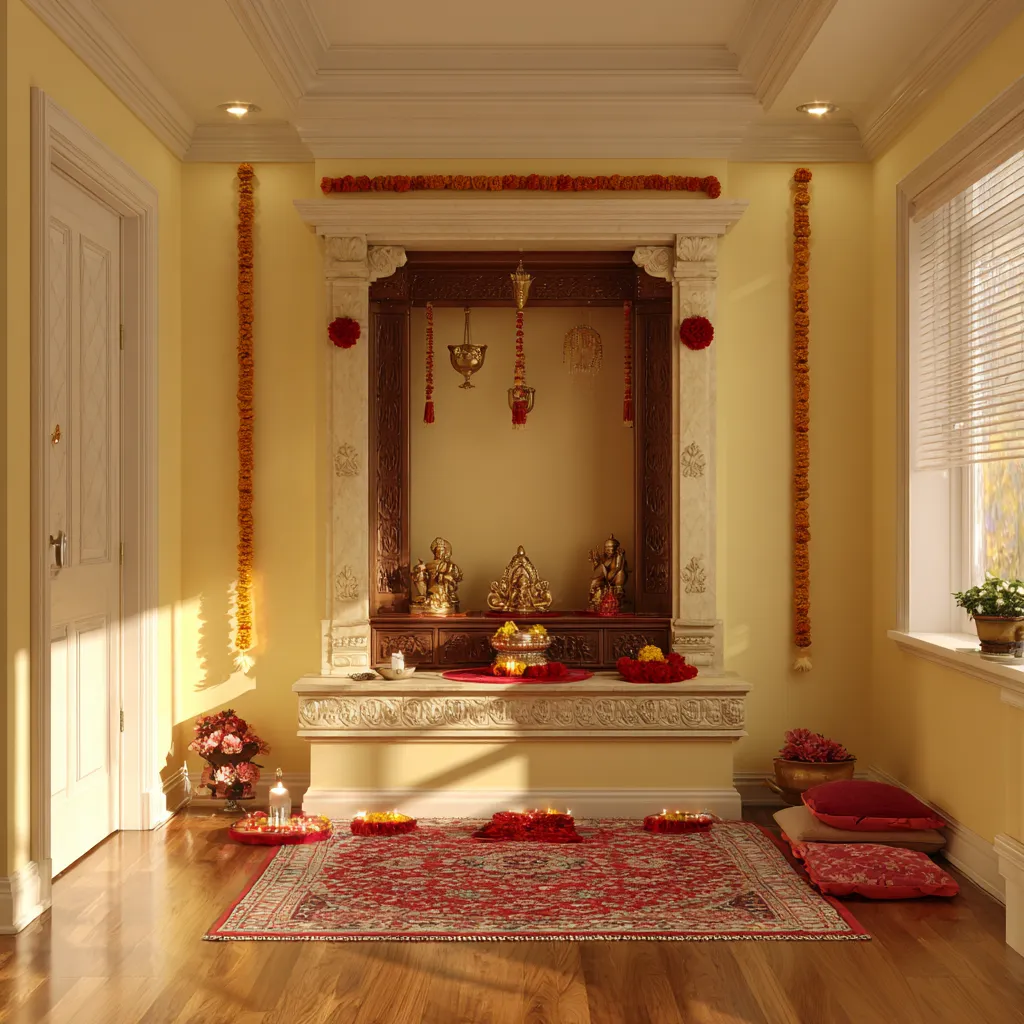
Yellow represents knowledge and positivity, while red signifies strength and energy. Red should be used in small amounts.
Read Also – 60+ Beautiful Wall Mandir Designs That Are Perfect For Indian Homes
Green And Gold
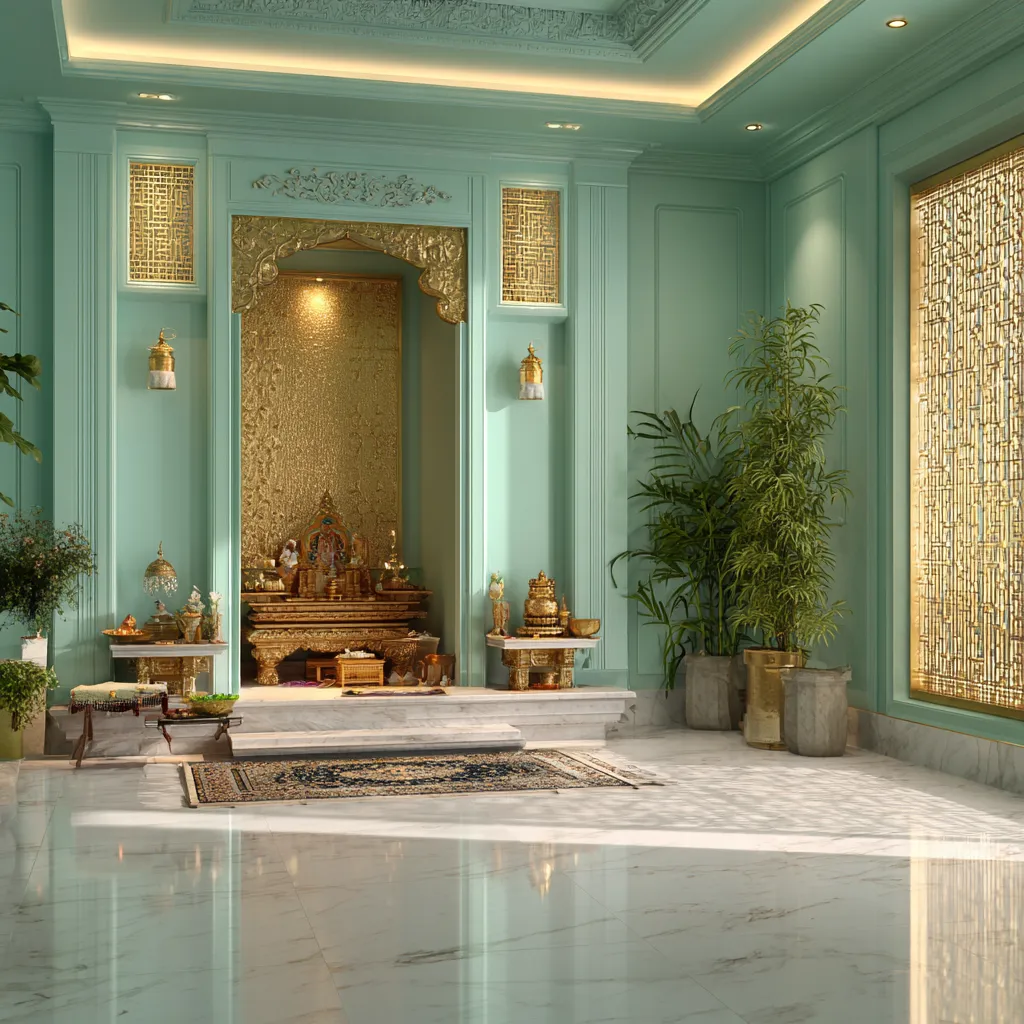
Green brings freshness, while gold highlights the mandir’s spiritual elements.
Read Also – 75+ Pooja Room Door Designs for Indian Homes That Create a Divine Entrance
Blue And White
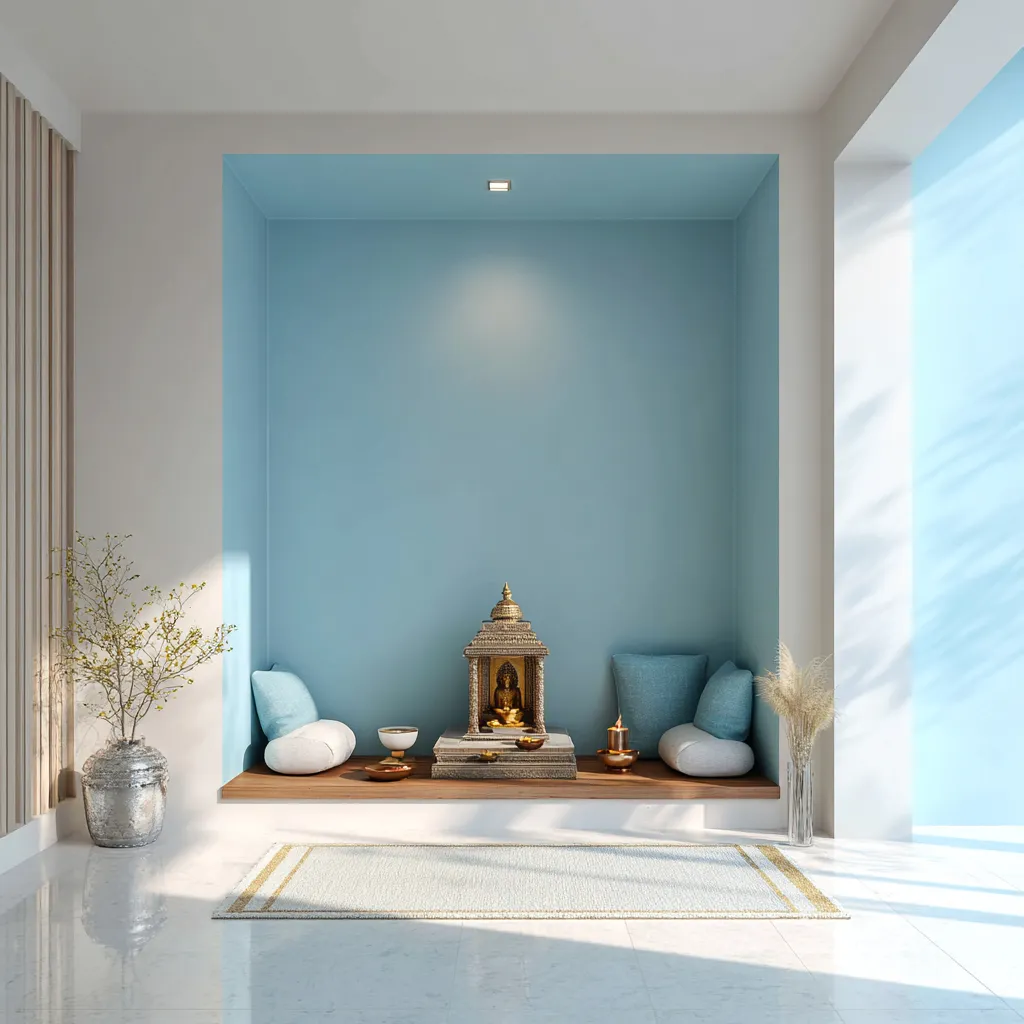
This colour combination creates a calm and peaceful environment for meditation.
Colours To Avoid In A Pooja Room
Just like there are colours that bring calm energy into the pooja room, there are also colours that can disrupt the energy flow and create restlessness.
Black: Avoid At All Costs
Black absorbs energy. A pooja room is supposed to radiate light and openness. Black works against this by making the space feel closed and heavy. It can also affect the mood of the people who use the room. Avoid black completely in the pooja room.
Red: Use Very Sparingly
Red is a powerful colour. It is associated with the fire element and is thus very intense. You can use small touches of red, such as a red dupatta on the idol or red flowers, but don’t paint the entire pooja room red. Red creates agitation; thus, it can make it very difficult to settle and meditate.
Grey: Not Recommended
Grey is a neutral colour, but it lacks the warmth and positivity that a pooja room needs. It creates a dull energy that reduces the vibrant nature of the pooja room. People mostly use grey in modern interiors, but the pooja room is not the right place for it. This place should feel alive and inviting.
Dark Brown And Dark Earth Tones
Dark brown walls in a pooja room can create a heavy atmosphere that pulls energy downward. They make the space feel heavy and not bright and active as a pooka room should feel.
Bright Neon Colours
Colours like neon green, electric blue, hot pink, or fluorescent yellow can disturb visual peace in a pooja room. These exciting colours are meant for entertainment or creative spaces. But in a pooja room, they distract from prayer and meditation. Use soft, muted, and pastel shades rather than flashy ones.
Smart Tips For Choosing Pooja Room Colours
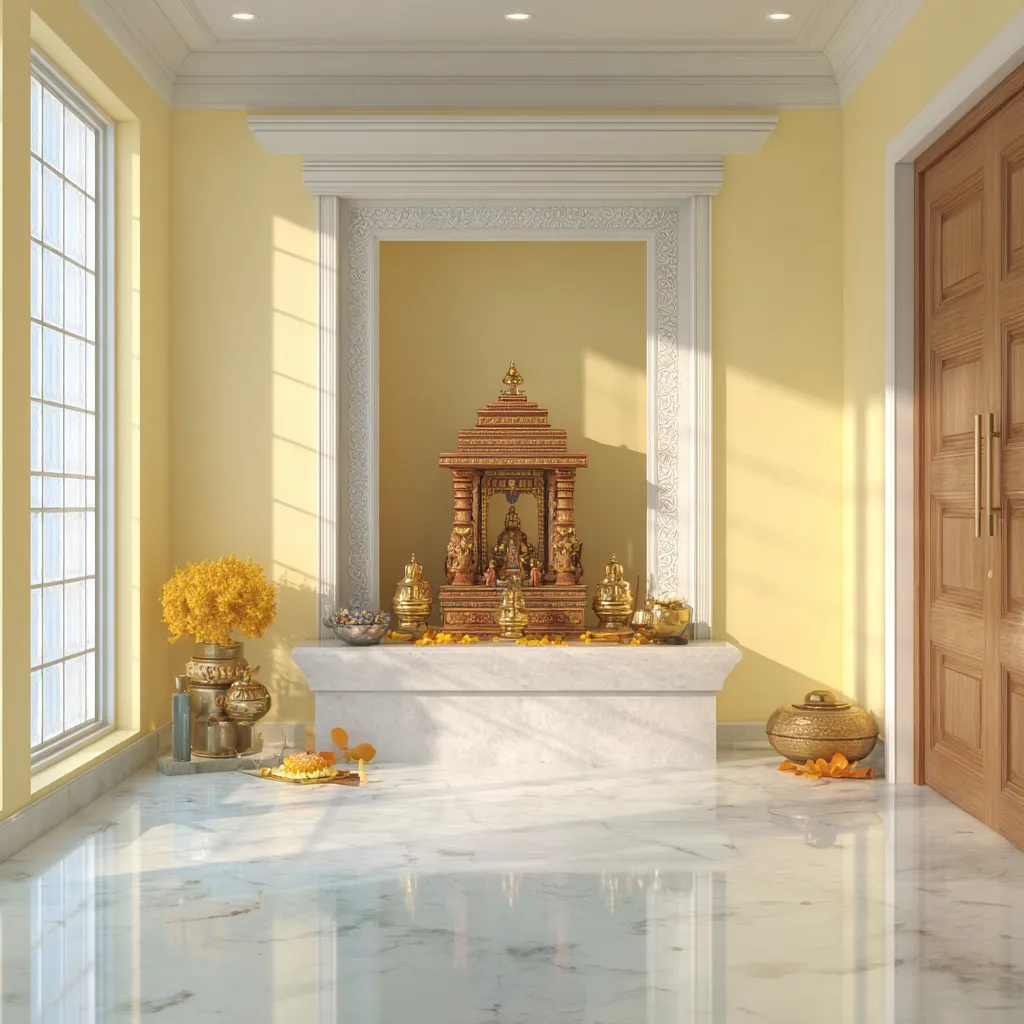
Here are some practical tips to select the best colour for your pooja room as per Vastu:
- Choose light, calming shades: Soft pastels work best because they create a peaceful atmosphere.
- Consider natural lighting: If your pooja room receives good sunlight, light colours will make the room even brighter.
- Match with mandir material: Wooden mandirs go well with cream, beige, or yellow walls. Marble mandirs look best with white or pastel shades.
- Use colours in moderation: Avoid too many colours in the pooja room. Keep the colour palette simple.
- Add gold or brass accents: Using bells, lamps, or frames can enhance the sacred feel of the pooja room.
Paint Your Prayer Room Right
Choosing the right pooja room colour as per Vastu can help to create a calm and positive environment for prayers. Light and soothing colours like white, yellow, cream, and other pastel tones are usually preferred because they bring a sense of peace and purity. These colours make the pooja room brighter, more welcoming, and more positive.
If you are planning to design a pooja room at home, Interior Company can help you create a space that is both beautiful and Vastu-friendly. Our experts can help you design a pooja room that feels peaceful, elegant, and perfect for your home.
'Images used are for representational purposes only. Unless explicitly mentioned, the Interior Company does not hold any copyright to the images.'
Pooja Mandir Design Ideas for You
- Color
- Theme

Ready for a home transformation?
Let our designers assist you!
Recent Posts










White, light yellow, cream, and soft pastel shades are considered the best colours for a pooja room as per Vastu. These colours are soft and symbolise purity, peace, and positivity.
Vastu generally recommends avoiding dark colours like black, dark grey, or deep brown in a pooja room. These colours can make the space feel heavy and may disturb the calm environment of the pooja room.
Yes, yellow is considered a very auspicious colour for a pooja room. It represents knowledge, positivity, and spiritual energy. Thus, it is ideal for prayer rooms.
Red should be used in small amounts as an accent colour because it represents strength. However, it should not be used as the main wall colour as it can feel too intense.
White is one of the most preferred colours for pooja rooms in Indian homes. It symbolises purity and peace and helps to create a calm and sacred environment.
Colours like black, dark grey, and very bright neon shades should be avoided in a pooja room. These colours can create a negative or distracting atmosphere.
Yes, but it is best to keep the ceiling in light shades like white or cream. Light ceilings help to keep the space bright and peaceful.
Popular colour combinations for a pooja room include white and gold, cream and yellow, or light blue and white. These combinations maintain a calm and elegant look.
Yes, Vastu suggests choosing colours based on the direction. For example, light yellow or white works well for north-east facing pooja rooms.
Yes, pastel shades like light blue, mint green, and soft peach can be used in a pooja room. These colours create a peaceful and soothing atmosphere, which is suitable for prayer and meditation.
Related Category
- Door Design
- False Ceilings
- Lighting
- Living Room
- Paint and Color