- Design Ideas
- Cities
- Trends
- Guides
- Price Calculators
- Interior DesignersNEW
- Our Portfolio
- More


Small Kitchen Storage Ideas: Smart Ways To Organise Small Kitchens

Small kitchens are more difficult to maintain than one may think. After you empty the counter once, the situation repeats itself in a day or two. The problem sounds familiar, right? Things don’t have a fixed place, and slowly everything starts piling up. This is where most small kitchen storage ideas you see online don’t fully help. They look good, but real kitchens behave differently.
In most homes, the problem is not just space. It’s how that space is used. Shelves stay half empty while corners are packed. Daily items sit outside because there’s no easy spot for them. That’s why kitchen storage for small spaces needs a slightly different approach. Not more storage, just better use of what’s already there.
Table of Content
Why Small Kitchens Always Feel Messy?
Storage Inside Cabinets
Small Indian Kitchen Storage Ideas
Tiny Kitchen Storage Hacks Most People Ignore
How To Organise A Small Kitchen Without Cabinets?
Budget-Friendly Storage Ideas
Layout Tricks That Change Storage Completely
Common Storage Mistakes People Realise Later
Choosing Storage Based On Your Kitchen Use
Why Small Kitchens Always Feel Messy?
It doesn't start in a messy style. The kitchen becomes messy. Most of the time, the issue is not a lack of space. It's how things are placed. Items used every day stay on the counter because putting them inside feels like extra work. Things used rarely take up the better spots. Slowly, the balance goes off.
Corners get ignored. Upper shelves stay half-used because reaching them is a task. Lower cabinets turn into dumping zones. You push something inside, it disappears behind other things, and then you stop using that space properly.
Another thing is that everything mixes. Cooking items, snacks, utensils, and even random packets end up in the same place. There's no clear separation. That's where confusion starts. Even a slightly organised kitchen begins to look crowded. This is usually where people start thinking about how to organise small kitchen setups, but the problem has already built up by then.
Storage Inside Cabinets
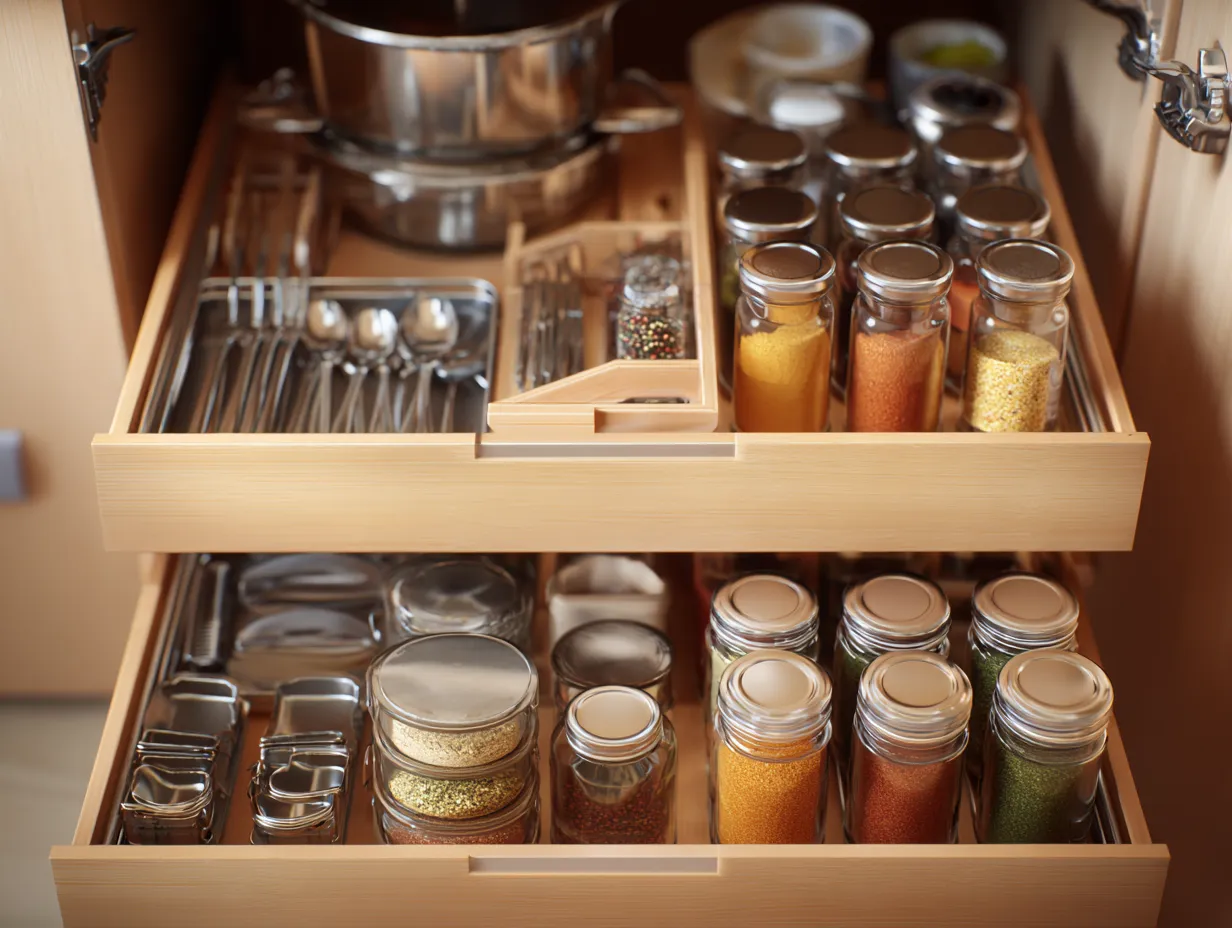
Open a cabinet, and it looks full. But a lot of that space isn't really used.
- Deep shelves are the biggest issue. Things get pushed to the back and then forgotten. You keep using what's in front, and the rest just stays there. Over time, it starts feeling like there's no space left, even when there is.
- Stacking creates another problem. Plates on top of bowls, containers inside containers. It works for a few days. Then it becomes difficult to take things out without moving everything else.
- Drawers are not always used properly, either. They become a mix of different items. No sections, no fixed place. Small things get lost easily.
This is where most small kitchen cabinet storage ideas actually make a difference. Not by adding more cabinets, but by changing how the inside is used. Pull-outs help in deep cabinets where shelves don't work well. Dividers inside drawers make everyday items easier to find. Even small changes inside cabinets can free up a lot of space. When planning storage, this is usually where people start looking into modular kitchen design options. It gives better control over how each section is used. You'll also notice how much difference a simple kitchen drawer design can make once things are divided properly.
Also read – Acrylic Kitchen Cabinets: Know It’s Types, Finishes, Colours, Cost and More
Small Indian Kitchen Storage Ideas
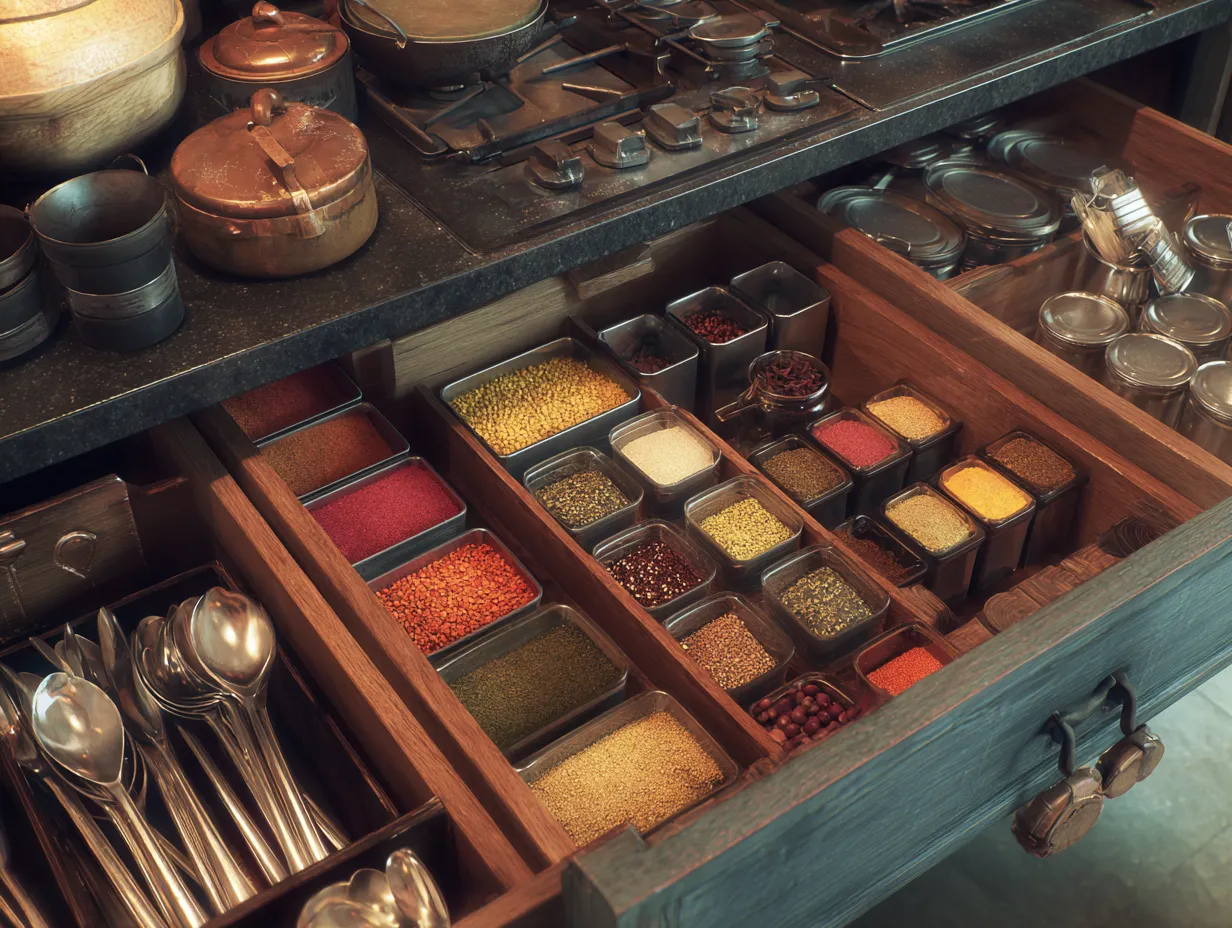
Indian kitchens have more going on. More ingredients, more utensils, more daily use. Things don't stay in place for long.
- Masala storage gets mixed up: Starts with a few boxes. Then packets and refills get added. Soon, everything is in one place with no order. Keeping them in one drawer or one tray keeps them contained.
- Oil bottles don't go back inside: Used daily, so they stay on the counter. That's how space slowly disappears. A fixed spot near the stove keeps it from spreading.
- Steel utensils fill cabinets quickly: Even when stacked, they take up a lot of room. Mixing everything together makes it worse. Keeping plates, bowls, and glasses in separate sections helps.
- Daily-use items keep moving around: Tea, sugar, snacks, etc., are always in use. Without a fixed place, they stay outside, creating clutter.
Read also – Low-Cost Simple Kitchen Design For Everyday Indian Homes
Tiny Kitchen Storage Hacks Most People Ignore
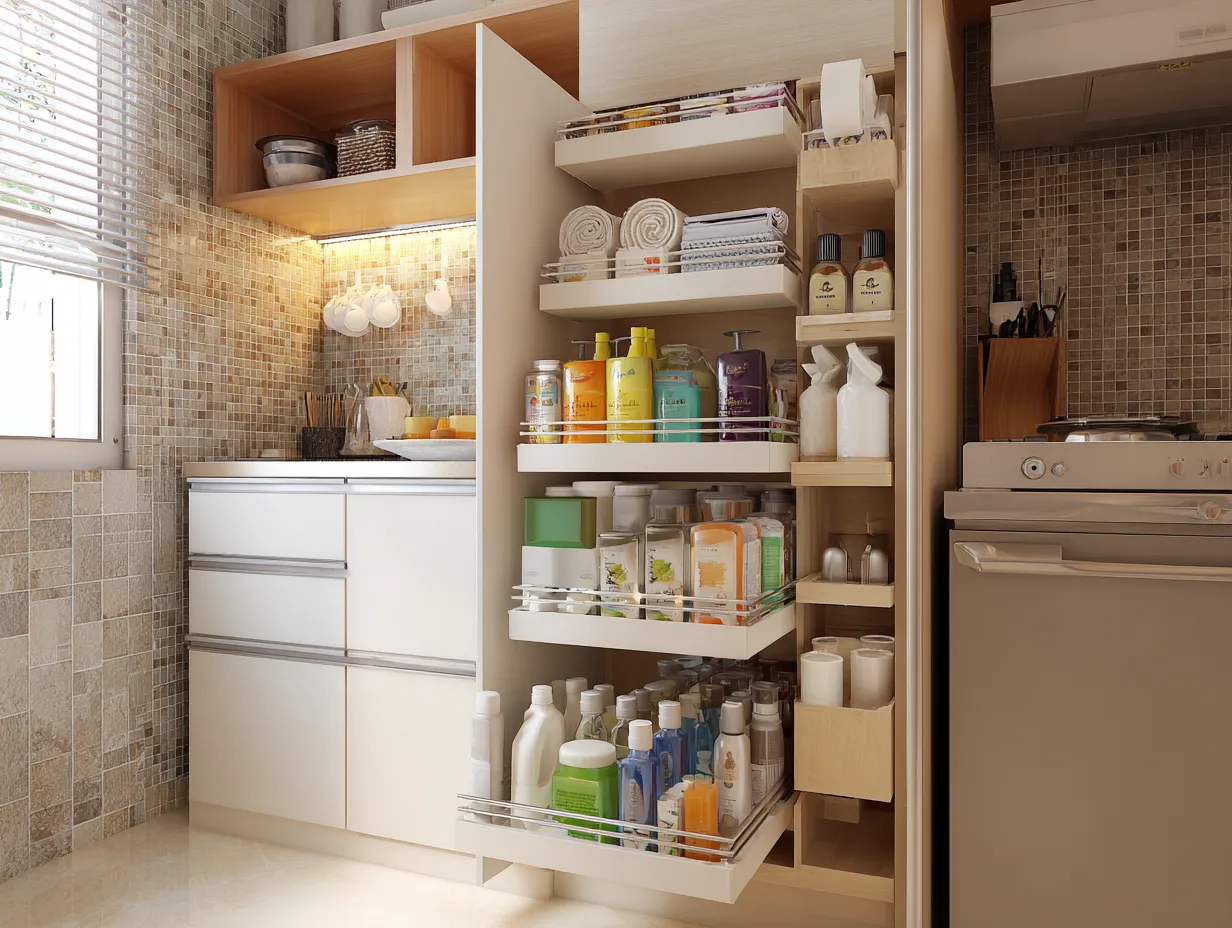
Some spaces don't look useful at first. But once you use them properly, they free up a lot of room. This is where tiny kitchen storage ideas come in, using gaps that are already there.
- Area under the sink: This space often becomes a dumping spot due to pipes. Instead of placing things randomly, add a small rack or stackable trays around the pipe area. Cleaning items, extra scrubbers, and refills can stay here without mixing up.
- Side of the fridge: Most people leave this empty. A slim magnetic rack or a narrow shelf can hold bottles, spice jars, or foil rolls. It doesn't take extra floor space, but still adds storage.
- Inside cabinet doors: The inner side of doors is often ignored. You can attach small holders or hooks here. Lids, small packets, or cleaning cloths fit well. These are things that don't need deep storage.
- Corners that don't get used properly: Corners feel awkward, so they're either left empty or stuffed. A rotating tray or even a simple basket makes it easier to reach things kept inside. Otherwise, items at the back just stay unused.
- Gap between appliances: That narrow space next to the fridge or stove looks useless. But slim pull-out racks fit there easily. Good for storing bottles, jars, or items you don't use every day.
Read also - Modular Kitchen Trends 2026: Latest Kitchen Design Trends That Work in Real Homes
How To Organise A Small Kitchen Without Cabinets?
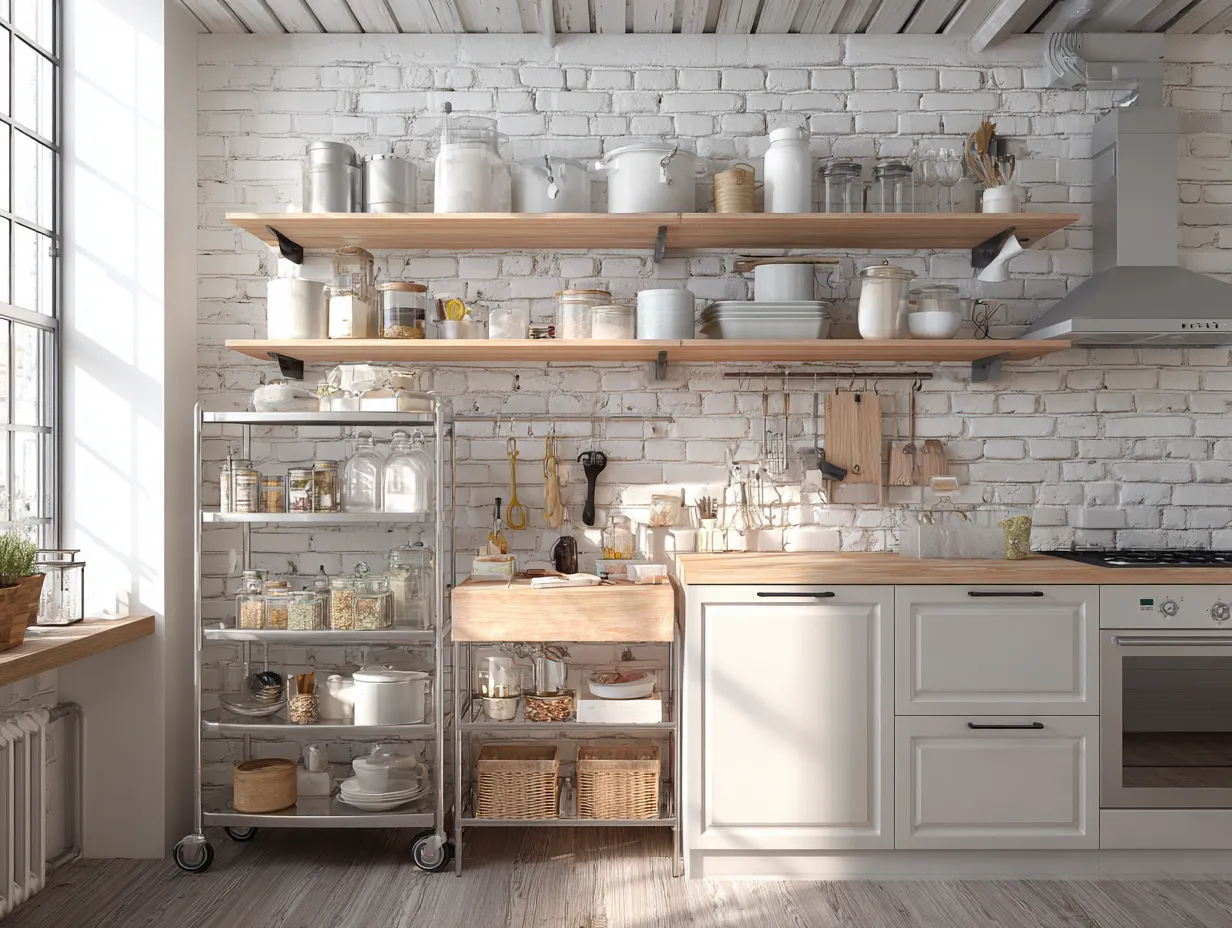
Not every kitchen has proper cabinets. Some have open walls, some just basic shelves. That doesn't mean storage isn't possible. It just works differently. If you're figuring out how to organise a small kitchen without cabinets, the approach changes completely.
Use The Wall, Not The Floor
When cabinets are missing, the wall becomes your main storage. Open shelves, metal racks, or even simple wooden planks can hold daily items. Keep only what you use often here; it starts looking crowded.
Go For Movable Storage Units
Trolleys and small racks help when fixed storage isn't there. You can shift them around depending on use. Useful for keeping vegetables, containers, or extra utensils without taking up a single spot.
Hang What You Can
Hooks and rods make a big difference. Ladles, pans, mugs and all the things you use daily don't need to be inside. Keeping them visible also saves time while cooking.
Use Containers That Stack Properly
Without cabinets, stacking becomes important. Loose packets take up more space. Uniform containers help keep things aligned and easier to manage.
Keep One Zone For Daily Items
When everything is open, things spread fast. Keeping one fixed area for tea, spices, or cooking items helps reduce that mess.
Read more – Modular Kitchen Cost In India for 2026: How Kitchen Pricing Really Works
Budget-Friendly Storage Ideas
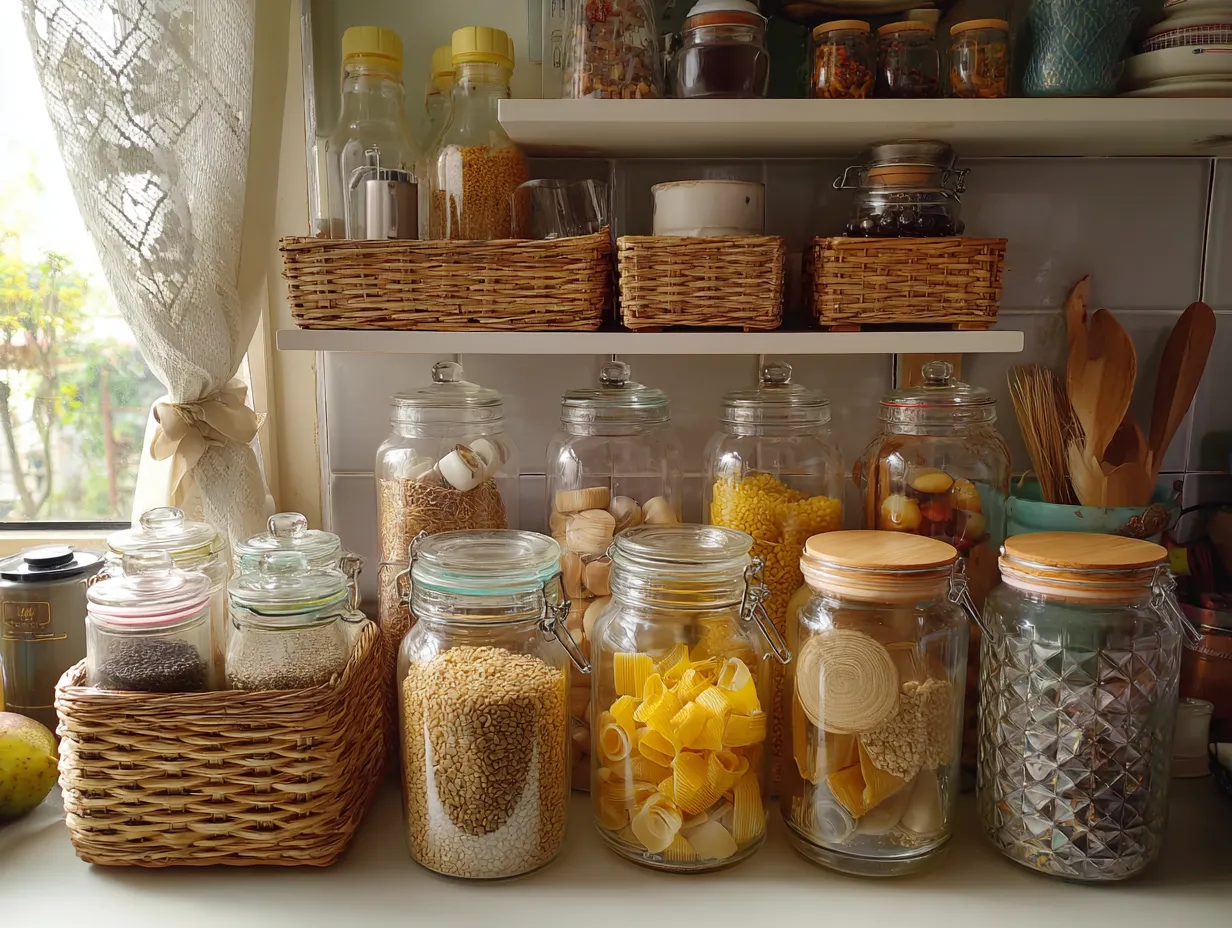
Not everything needs a proper setup. A lot of small kitchen storage ideas on a budget come from small changes, not new fittings.
Also read – 5+ Best PVC Kitchen Cabinets Design: Tough On Mess And Easy On Maintenance
Reuse Containers Instead Of Buying Organisers
Old jars, plastic boxes, even takeaway containers. Once cleaned and matched, they work better than mixed packets lying around. Everything lines up, easier to stack.
Use Baskets For Grouping Items
Instead of keeping things loose inside cabinets, use baskets. One for snacks, one for spices, one for packets. Pull the whole basket out instead of searching inside.
Add Simple Shelf Risers
One shelf often has unused vertical space. A small stand or riser doubles that area. Plates below, bowls above. No need for expensive fittings.
Cloth Or Plastic Organisers For Doors
Hanging organisers are cheap and easy to add. Inside cabinet doors or even on walls. Good for small items that don't need deep storage.
Use A Basic Trolley Instead Of Fixed Units
A simple metal or plastic trolley gives extra storage without any installation. Can be moved when needed. Works well in rented homes. If you're comparing this with a full setup, tools like a modular kitchen cost calculator give a rough idea of how much bigger changes might cost.
Read also – 6 Different Types Of Kitchen Layout – Your Home Is Missing
Layout Tricks That Change Storage Completely
Same kitchen, different layout and the space feels different. Storage issues don't come from a lack of cabinets. It's how the layout is planned. Even small shifts here change how much you can actually use.
- In an L-shaped modular kitchen design, two walls are used. The corner becomes important. If that space is ignored, things pile up on one side. When used properly, it balances storage across both sides.
- A straight kitchen design works in one line. Everything sits on a single wall. Storage feels limited here, so vertical space matters more. Upper cabinets, wall racks, and even small shelves start doing more work.
- With an open kitchen design, things are always visible. Closed storage becomes more important. If too many items stay outside, the space starts looking cluttered quickly.
Also read – 20+ Best Kitchen Design Tips: Everything You Need To Plan The Perfect Kitchen
Common Storage Mistakes People Realise Later
Things look sorted at first. Then slowly, space starts feeling tight again. This is where most problems with space organisation in kitchen setups begin to show up.
- People add organisers, thinking it will fix everything. After a point, it does the opposite. Too many dividers, too many boxes. You try to fit items into fixed spaces, and that's where it starts getting frustrating.
- Vertical space is usually ignored. Lower shelves get crowded. Upper space stays empty because reaching it feels like extra effort. That's a lot of unused room right there.
- Another thing is that everything ends up together. Cooking items, snacks and even containers. There is no separation. For a few days, it feels manageable. Then finding things becomes a task.
- Open shelves follow a similar pattern. Start with a few items. Then more get added. Slowly, it begins to look cluttered, and cleaning becomes difficult.
- Daily-use items are the first to come out and stay outside. If they don't have a fixed place, they never go back.
Read also: Kitchen Appliances: Essentials, Upgrades And Smart Picks For Every Home
Choosing Storage Based On Your Kitchen Use
A kitchen doesn't stay the same after you start using it. Things move. Some items come out more often, some stay inside. What feels organised in the beginning changes with daily use.
In homes where cooking happens regularly, access matters more than design. Items need to be easy to reach; they end up staying outside. In kitchens used less often, storage can stay more compact without causing much trouble.
When more than one person uses the kitchen, the space starts feeling tighter. Movement becomes important. Where things are placed begins to matter more than how much space is available. Interior Company can be your best companion to tackle these storage problems.
Even small decisions around layout or planning, sometimes linked with things like kitchen colour as per Vastu or overall interior design, affect how storage works later. Over time, it's not about adding more storage. It's about adjusting what's already there so it fits how the kitchen is actually used.
*Images used are for representational purposes only. Unless explicitly mentioned, the Interior Company does not hold any copyright to the images.*
kitchen Design Ideas for You
- Shape
- Color
- Finish
- Theme
- Backsplash Color
- Backsplash Material
- Cabinet Style
- Counter Colour
- Floor Material
- Size
- Almond Brown Color Kitchen Design
- Beige Color Kitchen Design
- Black Color Kitchen Design
- Blue Color Kitchen Design
- Brown Color Kitchen Design
- Charcoal Black Color Kitchen Design
- Charcoal Grey Color Kitchen Design
- Coral Color Kitchen Design
- Cream Color Kitchen Design
- Dark Grey Color Kitchen Design
- Gold Color Kitchen Design
- Green Color Kitchen Design
- Grey Color Kitchen Design
- Ivory Color Kitchen Design
- Light Brown Color Kitchen Design
- Multicolour Color Kitchen Design
- Natural Brown Color Kitchen Design
- Nude Color Kitchen Design
- Off White Color Kitchen Design
- Olive Color Kitchen Design
- Olive Green Color Kitchen Design
- Olive Rust Color Kitchen Design
- Orange Color Kitchen Design
- Pink Color Kitchen Design
- Purple Color Kitchen Design
- Red Color Kitchen Design
- Silver Color Kitchen Design
- Smokey Blue Color Kitchen Design
- Smokey Grey Color Kitchen Design
- Stone Color Kitchen Design
- Teal Color Kitchen Design
- White Color Kitchen Design
- Wooden Brown Color Kitchen Design
- Yellow Color Kitchen Design
- Contemporary Theme Kitchen Design
- Cottage-Style Theme Kitchen Design
- Countryside Theme Kitchen Design
- Industrial Theme Kitchen Design
- Luxurious Theme Kitchen Design
- Mid-Century Modern Theme Kitchen Design
- Minimalist Theme Kitchen Design
- Modern Theme Kitchen Design
- Modern -Industrial Theme Kitchen Design
- Rustic Theme Kitchen Design
- Scandinavian Theme Kitchen Design
- Traditional Theme Kitchen Design
- Beige Backsplash Color Kitchen Design
- Black Backsplash Color Kitchen Design
- Blue Backsplash Color Kitchen Design
- Brown Backsplash Color Kitchen Design
- Gray Backsplash Color Kitchen Design
- Green Backsplash Color Kitchen Design
- Metallic Backsplash Color Kitchen Design
- Multi Backsplash Color Kitchen Design
- Orange Backsplash Color Kitchen Design
- Red Backsplash Color Kitchen Design
- White Backsplash Color Kitchen Design
- Yellow Backsplash Color Kitchen Design
- Brick Backsplash Material Kitchen Design
- Cement Tile Backsplash Material Kitchen Design
- Ceramic Tile Backsplash Material Kitchen Design
- Engineered Quartz Backsplash Material Kitchen Design
- Glass Tile Backsplash Material Kitchen Design
- Granite Backsplash Material Kitchen Design
- Marble Backsplash Material Kitchen Design
- Matchstick Tile Backsplash Material Kitchen Design
- Mosaic Tile Backsplash Material Kitchen Design
- Porcelain Tile Backsplash Material Kitchen Design
- Stone Slab Backsplash Material Kitchen Design
- Stone Tile Backsplash Material Kitchen Design
- Subway Tile Backsplash Material Kitchen Design
- Terra-Cotta Tile Backsplash Material Kitchen Design
- Travertine Backsplash Material Kitchen Design
- Window Backsplash Material Kitchen Design
- Wood Backsplash Material Kitchen Design
- Beige Counter Colour Kitchen Design
- Black Counter Colour Kitchen Design
- Blue Counter Colour Kitchen Design
- Brown Counter Colour Kitchen Design
- Gray Counter Colour Kitchen Design
- Green Counter Colour Kitchen Design
- Multi Counter Colour Kitchen Design
- Pink Counter Colour Kitchen Design
- Red Counter Colour Kitchen Design
- White Counter Colour Kitchen Design
- Yellow Counter Colour Kitchen Design
- Carpet Floor Material Kitchen Design
- Cement Tile Floor Material Kitchen Design
- Ceramic Tile Floor Material Kitchen Design
- Dark Hardwood Floor Material Kitchen Design
- Light Hardwood Floor Material Kitchen Design
- Marble Floor Material Kitchen Design
- Medium Hardwood Floor Material Kitchen Design
- Painted Wood Floor Material Kitchen Design
- Porcelain Tile Floor Material Kitchen Design
- Terrazzo Floor Material Kitchen Design
- Travertine Floor Material Kitchen Design

Ready for a home transformation?
Let our designers assist you!
Recent Posts






Usually, items don’t have fixed places. Daily-use things stay outside, and cabinets get filled with things you don’t use often. That mix makes the kitchen feel more crowded than it is.
Keep them close to where they are used. Oil near the stove, tea and sugar in one spot. If basic things are spread out, they don’t go back after use.
Most shelves are not used fully. The front gets used, the back stays untouched. Over time, things get pushed inside and it starts feeling full.
A few daily-use items are fine. Too many things on the counter make the space look messy and harder to manage.
Items need fixed places. If they don’t, they slowly spread again after use, and the same problem comes back.
Related Category
- Dining Room
- False Ceilings
- Paint and Color
- Tips and Advice
- Walls and Texture