- Design Ideas
- Cities
- Trends
- Guides
- Price Calculators
- Interior DesignersNEW
- Our Portfolio
- More


25+ Best Small Kitchen Design: Embracing Simplicity, Openness And Modern Ideas On A Budget

A small kitchen can feel tricky. Like you turn once and bump into a drawer. Turn again, and suddenly the fridge door blocks everything. This happens in so many homes, especially in apartments and small houses. But honestly, a small kitchen design isn’t a problem. It’s just a puzzle. And once you figure out the layout, storage, colours, and materials properly, even a tiny kitchen will feel organised, calm, and nice to be in.
You don’t need a big space. You just need smart planning. A few clever cabinet tricks. Maybe the right kitchen colour combination. And layouts that actually make sense instead of just looking good on Pinterest. And honestly, most homes today do not have huge kitchens anyway, so this situation is very normal.
Table of Content
What Really Makes A Small Kitchen Look Bigger?
Key Decisions Before Designing A Small Kitchen
A Smart Layout Can Fix Half Your Kitchen Problems
Standard Small Kitchen Dimensions You Should Know
Modular Kitchen Design For Small Spaces
- 5.1 Use Vertical Cabinets
- 5.2 Add Pull-Out Pantry Units
- 5.3 Corner Carousel Units
- 5.4 Drawer Storage Instead Of Shelves
- 5.5 Replace Upper Cabinets With Open Shelving
- 5.6 Utilise Corners With Floating Corner Shelves
- 5.7 Install Long Floating Shelves
- 5.8 Add A Pull-Out Pantry Unit
- 5.9 Position The Microwave Under The Counter
- 5.10 Use Handleless Cabinets
- 5.11 Add Cubbies Above The Window
- 5.12 Build An Appliance Garage
- 5.13 Use Floor-To-Ceiling Cabinetry
- 5.14 Opt For Multi-Functional Furniture
- 5.15 Choose High-Gloss Finishes
- 5.16 Layer With Glass Cabinet Doors
- 5.17 Install Large Format Wall Tiles
- 5.18 Enhance Natural Light With A Window
- 5.19 Use Neutral And Light Colour Schemes
- 5.20 Choose Slimline Appliances
- 5.21 Paint A Wall With Accent Colour
- 5.22 Hang Wooden Cutting Boards
- 5.23 Place A Rug With A Bold Pattern
- 5.24 Feature Geometric Patterns
Storage, Units, And Daily Workflow In Small Kitchens
Tiny Decor Touches For Small Kitchens
Smart Kitchen Colour Combinations For Small Spaces
Choosing The Right Materials: MDF vs HDF vs Laminates
Smart Lighting Ideas For Small Kitchen Spaces
Smart Appliance Choices For Compact Kitchens
Open vs Closed Storage: What Works Better?
Where Most Small Kitchen Designs Go Wrong?
A Little Planning Goes A Long Way
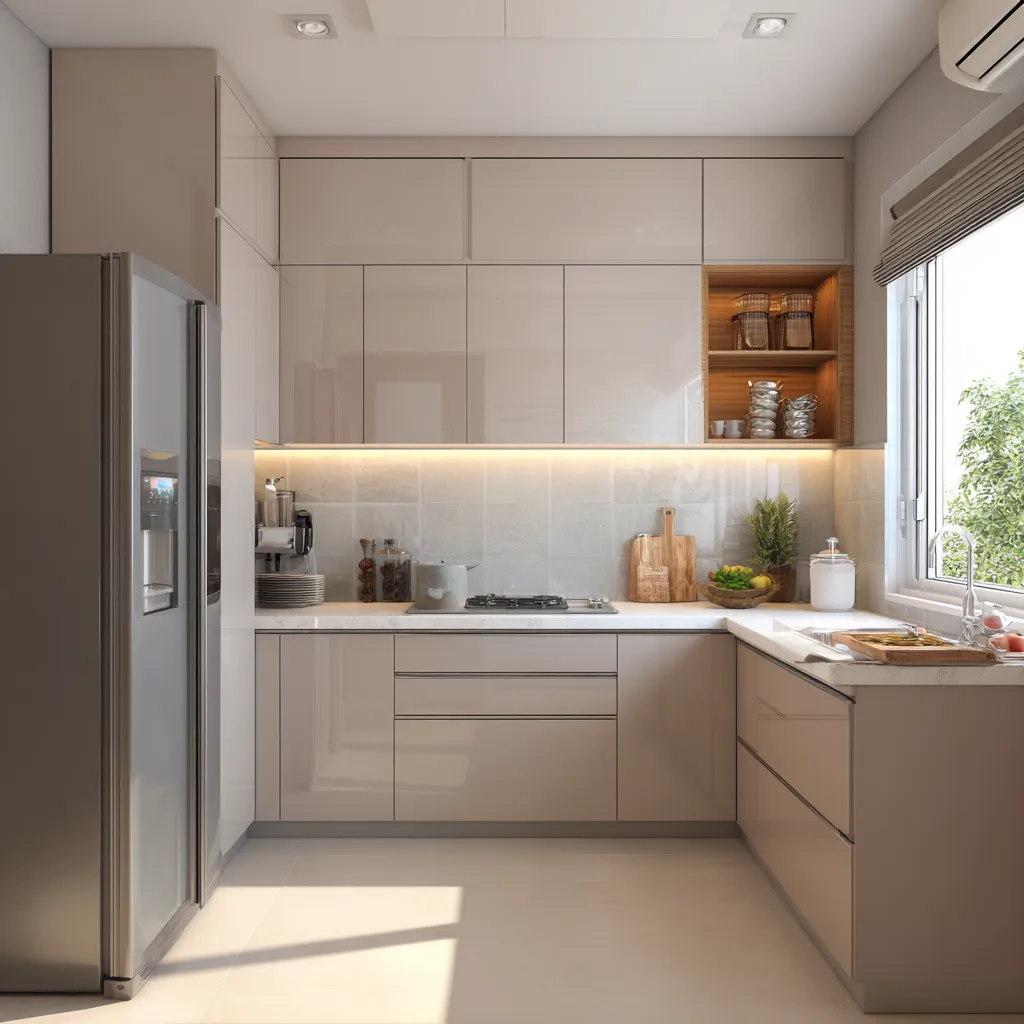
So let's go step by step through what actually works in real homes.
What Really Makes A Small Kitchen Look Bigger?
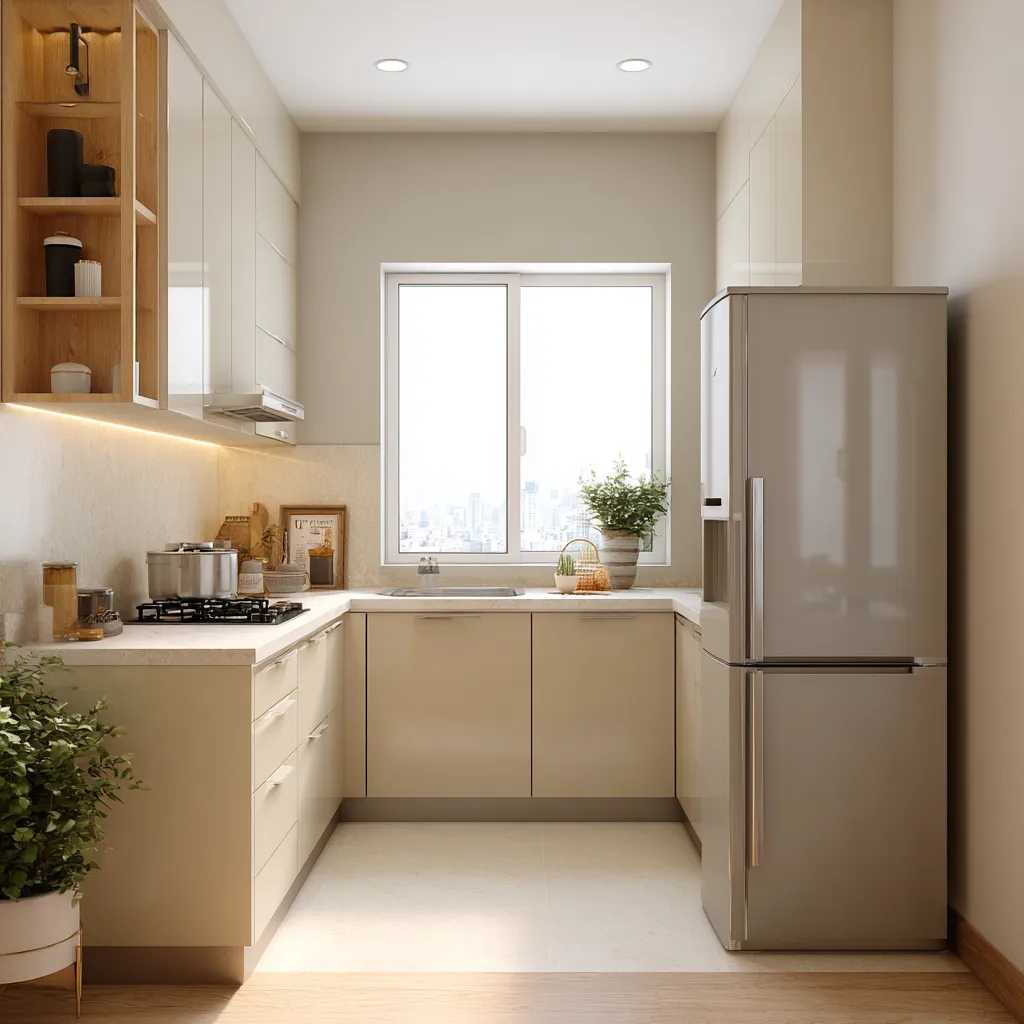
Before layouts and cabinets and finishes, this part matters most. A small kitchen feels spacious when:
- Movement is easy.
- Cabinets don't look bulky.
- Counters stay clutter-free.
- Light reflects properly.
- Storage is vertical, not horizontal.
- Colours are balanced and not loud everywhere.
That's basically the foundation of small kitchen interior design ideas that succeed. Once that's sorted, everything else becomes easier to plan.
Key Decisions Before Designing A Small Kitchen
Small kitchens demand clarity before anything else. Once cabinets are fixed and appliances are placed, options reduce quickly. In a small kitchen design, early decisions around layout, storage depth, and circulation matter far more than finishes or colours.
This is also the stage where assumptions cause problems. Expecting storage to be adjusted later or believing decor can compensate for poor planning usually leads to congestion. In kitchen design for small spaces, mistakes made early tend to surface daily.
It is equally important to recognise limits. Design cannot increase floor area or change structural walls, but it can organise space more efficiently when constraints are acknowledged upfront. Good small kitchen design ideas begin with honest planning, not visual references.
Read also – 15+ Attractive Kitchen Glass Door Designs for Your Modern Home
A Smart Layout Can Fix Half Your Kitchen Problems
The layout decides whether your kitchen feels smooth or stressful. Here are the best kitchen design options for small-space homes.
L-Shaped Kitchen Design
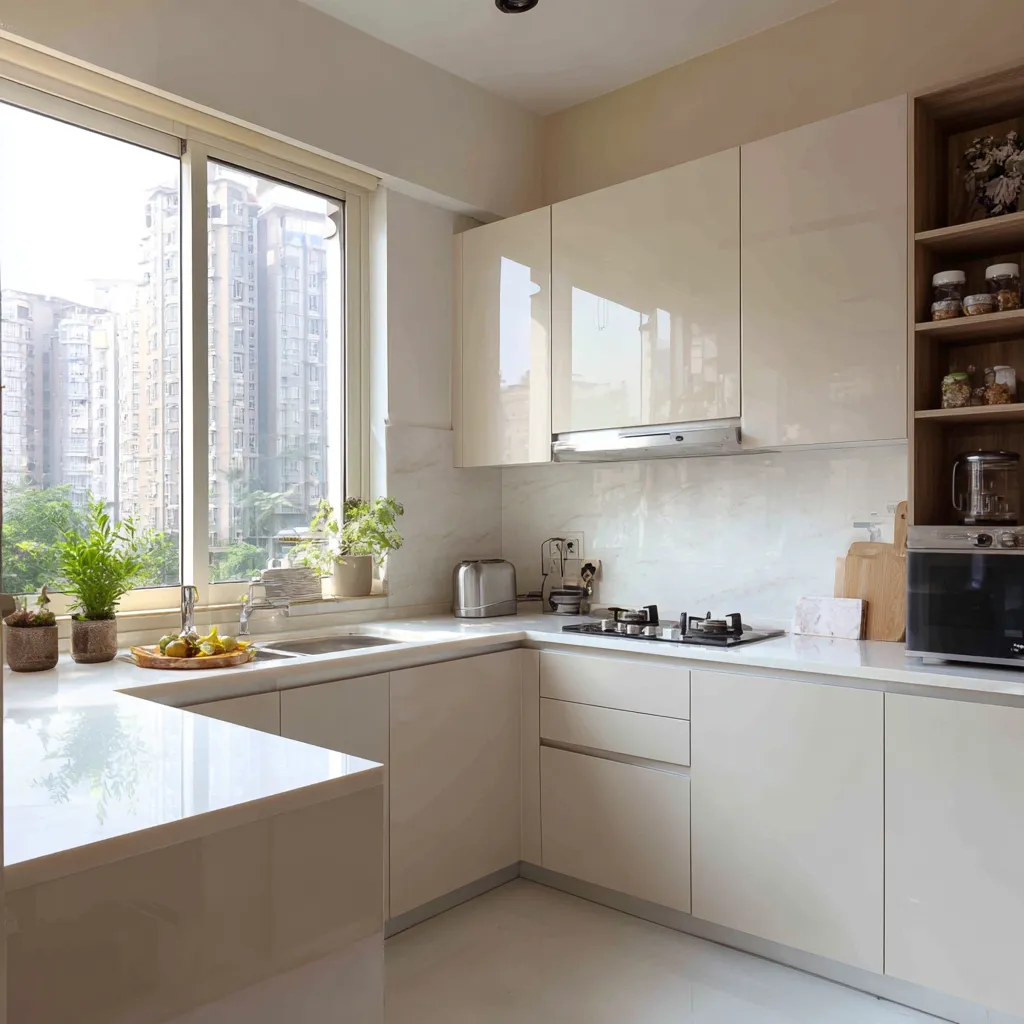
It is probably the safest choice for most houses. An L-shaped kitchen design:
- Uses corner space properly.
- Keeps movement open.
- Leaves room for dining or walking.
- Works great in small home kitchen design plans.
Add corner carousel storage, and suddenly that awkward corner becomes useful. It works especially well in simple kitchen design and small modular kitchen design setups.
Straight Kitchen Design
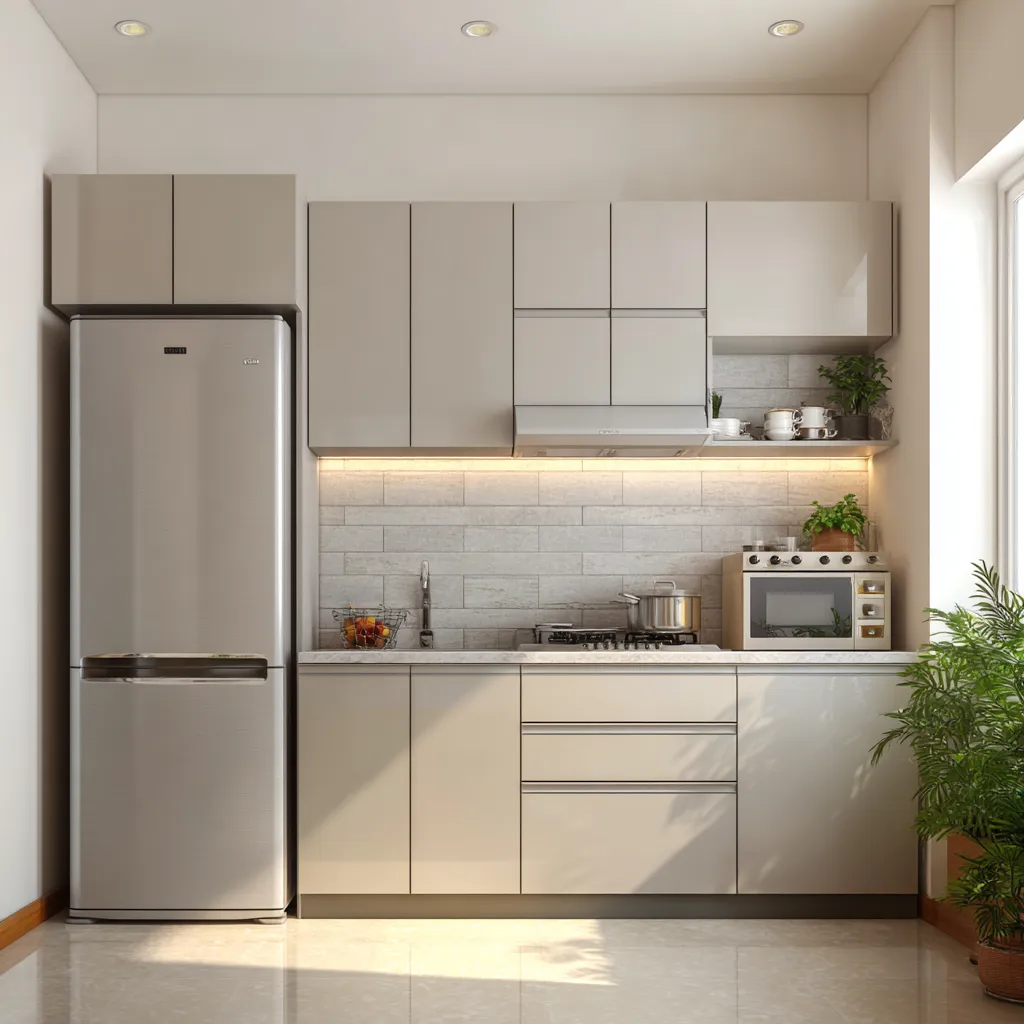
Single-wall kitchens look basic, but honestly, they're super efficient.
A straight kitchen design is perfect when:
- The kitchen is narrow.
- Studio apartments.
- Small flats.
- Open kitchen layouts.
Just stack overhead cabinets vertically and use tall units. Done. It's a great example of a small space kitchen design done right.
Parallel Kitchen Design
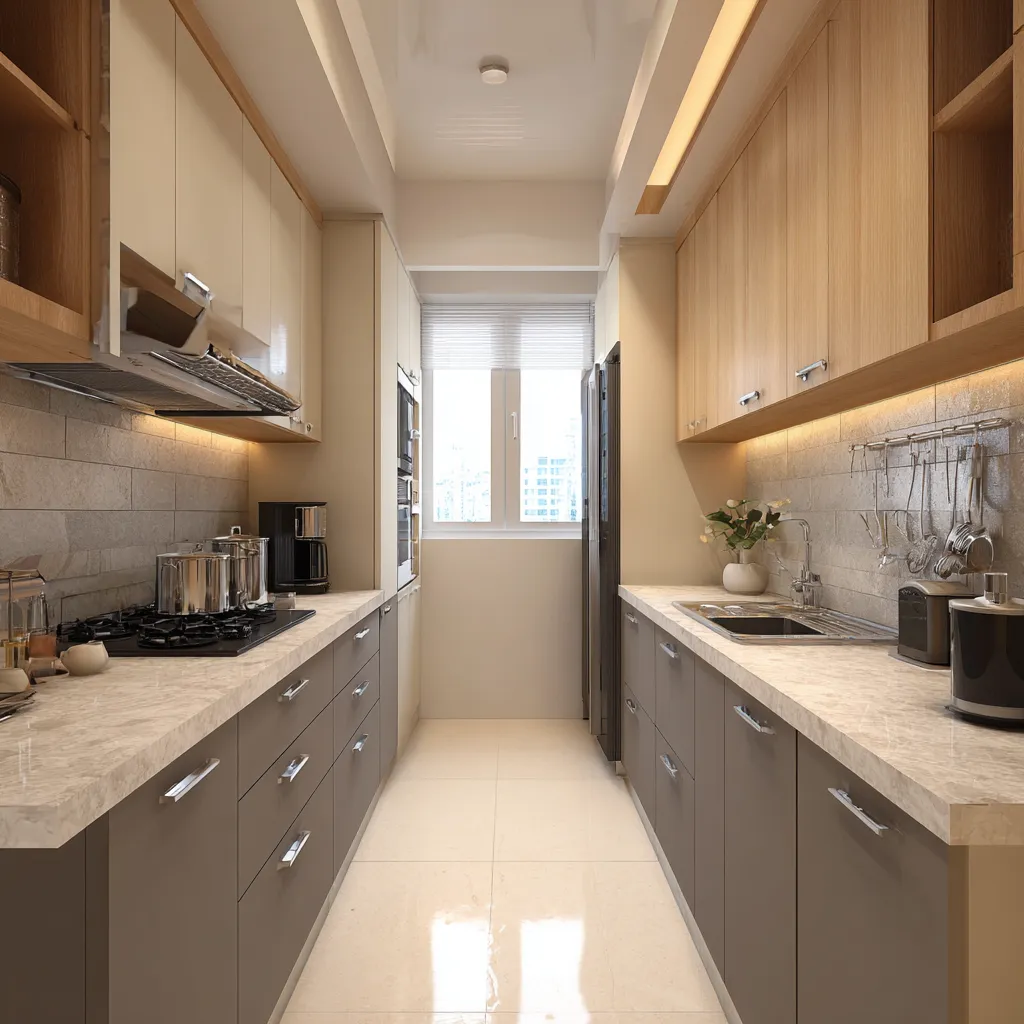
They are also called galley kitchens. A parallel kitchen design gives:
- Double counter space.
- Better workflow.
- More storage on both sides.
It is ideal for a modular kitchen in small homes where the width allows two slim counters.
U-Shaped Kitchen Layout
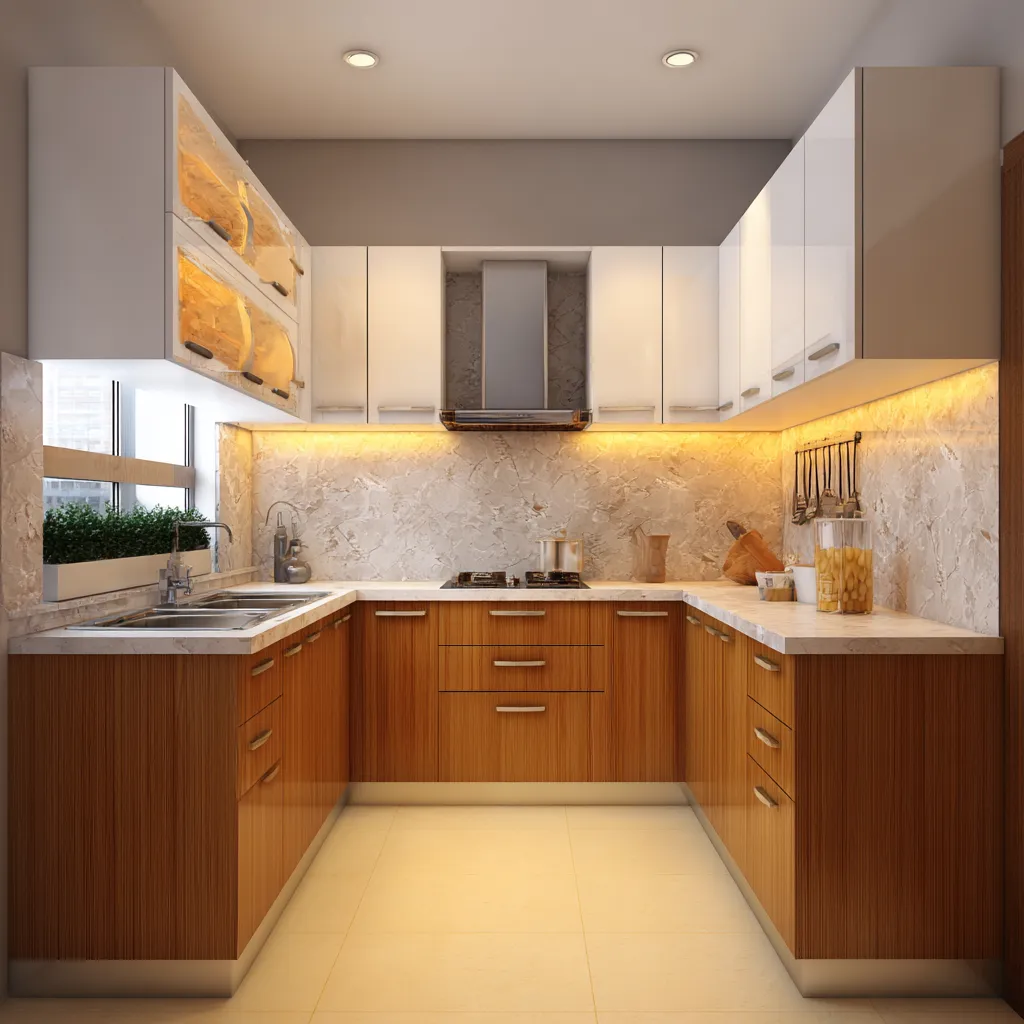
If your kitchen has space for three walls, go for a U-shaped kitchen design. Why? Because storage triples instantly.
It is perfect for:
- Serious cooking homes.
- Joint families.
- People who need extra cabinets.
It is one of the smartest kitchen unit designs for small kitchens, when planned well.
Read also – 30+ Beautiful Kitchen Wall Decor Ideas to Upgrade the Blank Walls
Standard Small Kitchen Dimensions You Should Know
This part people usually skip. But then they regret it later. Following standard kitchen dimensions helps prevent those problems early.
Some basic standard kitchen dimensions:
- Counter height: 32-36 inches
- Counter depth: 24 inches
- Overhead cabinet height above counter: 18 inches
- Walkway space minimum: 36 inches
- Tall unit depth: 24 inches
Following these makes your small kitchen arrangement ideas practical instead of cramped.
Modular Kitchen Design For Small Spaces
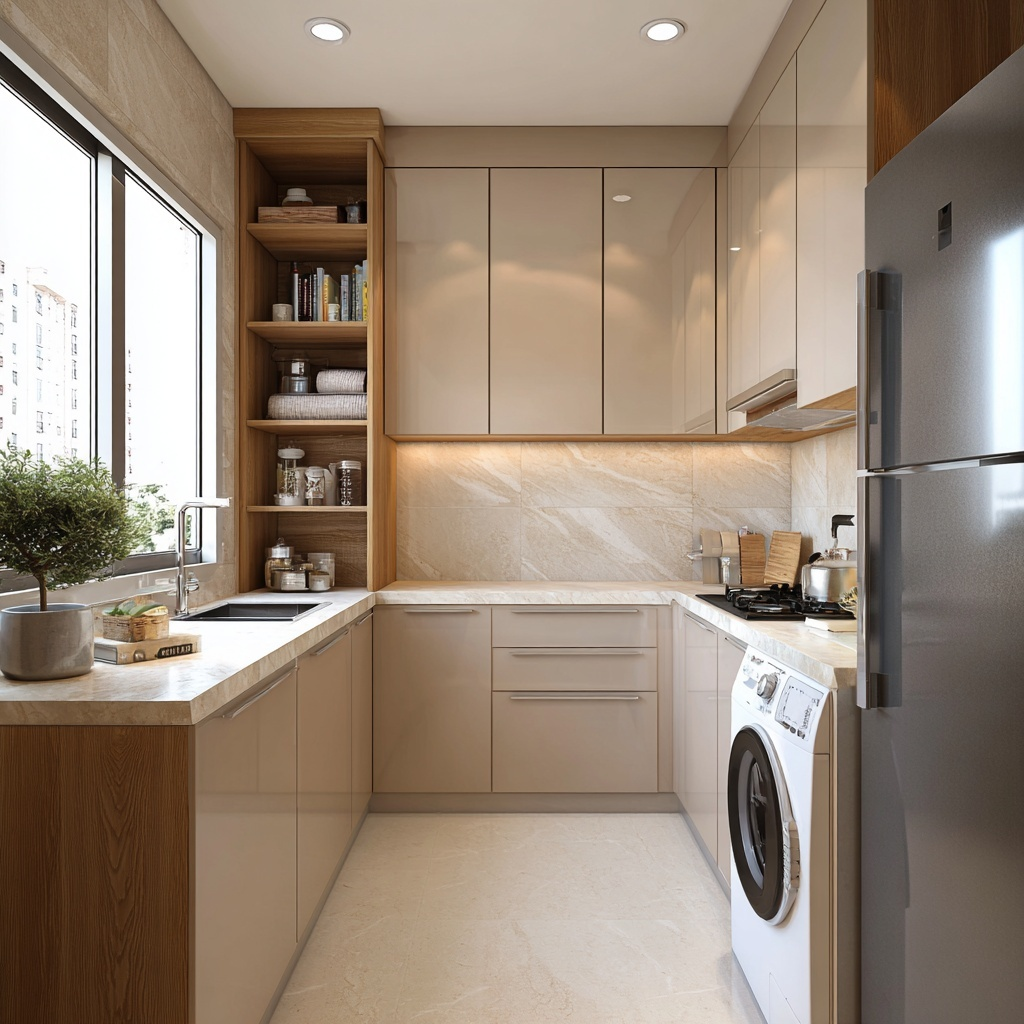
In small kitchens, modular design is not a default solution. It works only when the kitchen has already been planned around layout, movement, and counter use. Without that clarity, modular units tend to add bulk rather than efficiency. Modular kitchens make sense when dimensions are fixed early, and storage needs are predictable. Standard unit sizes help organise drawers, cabinets, and appliances without last-minute improvisation, which is difficult in compact spaces. When planned well, this brings consistency and reduces clutter instead of spreading it.
Smart storage is key to making a compact kitchen work. These design choices create order and openness in what would otherwise be limited spaces.
Read also – 10+ Best Open Shelves Kitchen Design Ideas in 2026
Use Vertical Cabinets
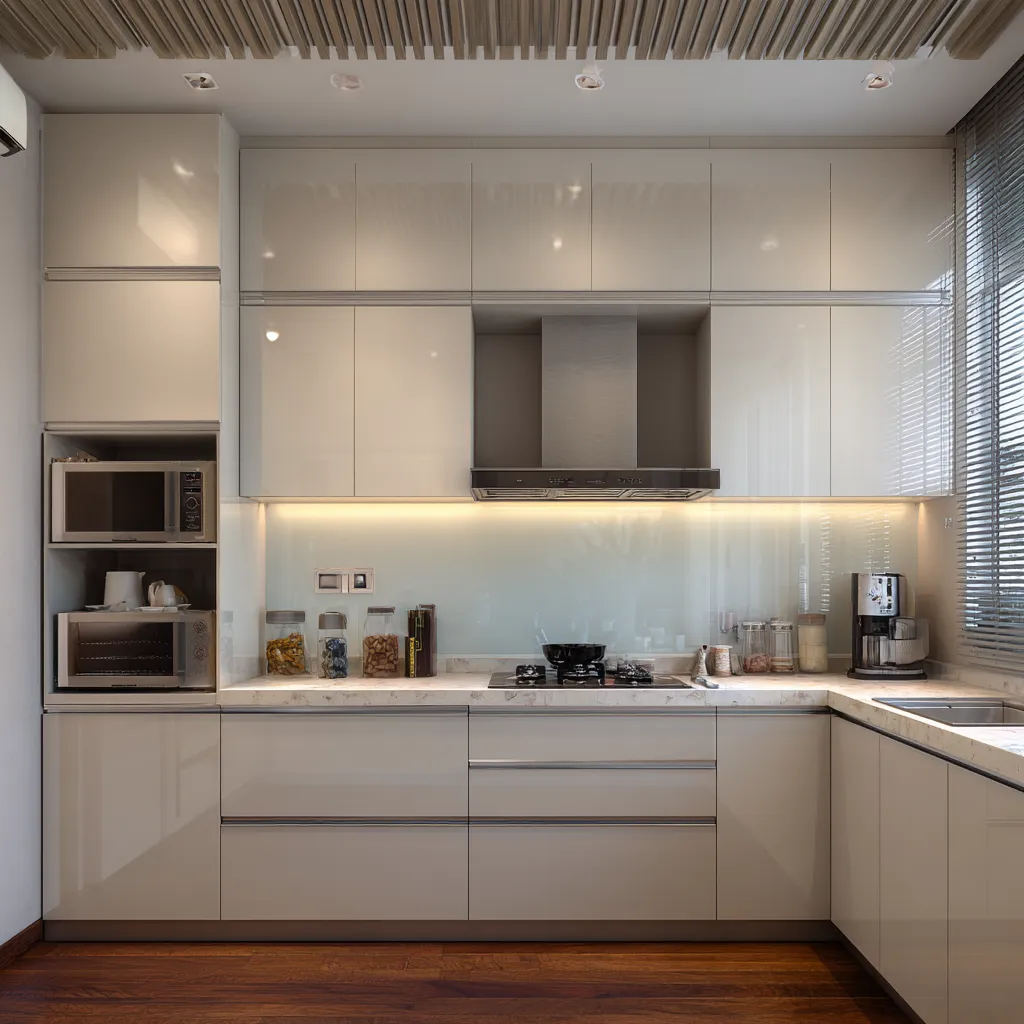
Go till ceiling height. It will lead to:
- Less dust.
- More storage.
- Cleaner look.
It works beautifully in small kitchen cupboard designs and modern small kitchen ideas setups.
Read also – 5+ Latest Semi-Modular Kitchen Design Ideas in 2026
Add Pull-Out Pantry Units
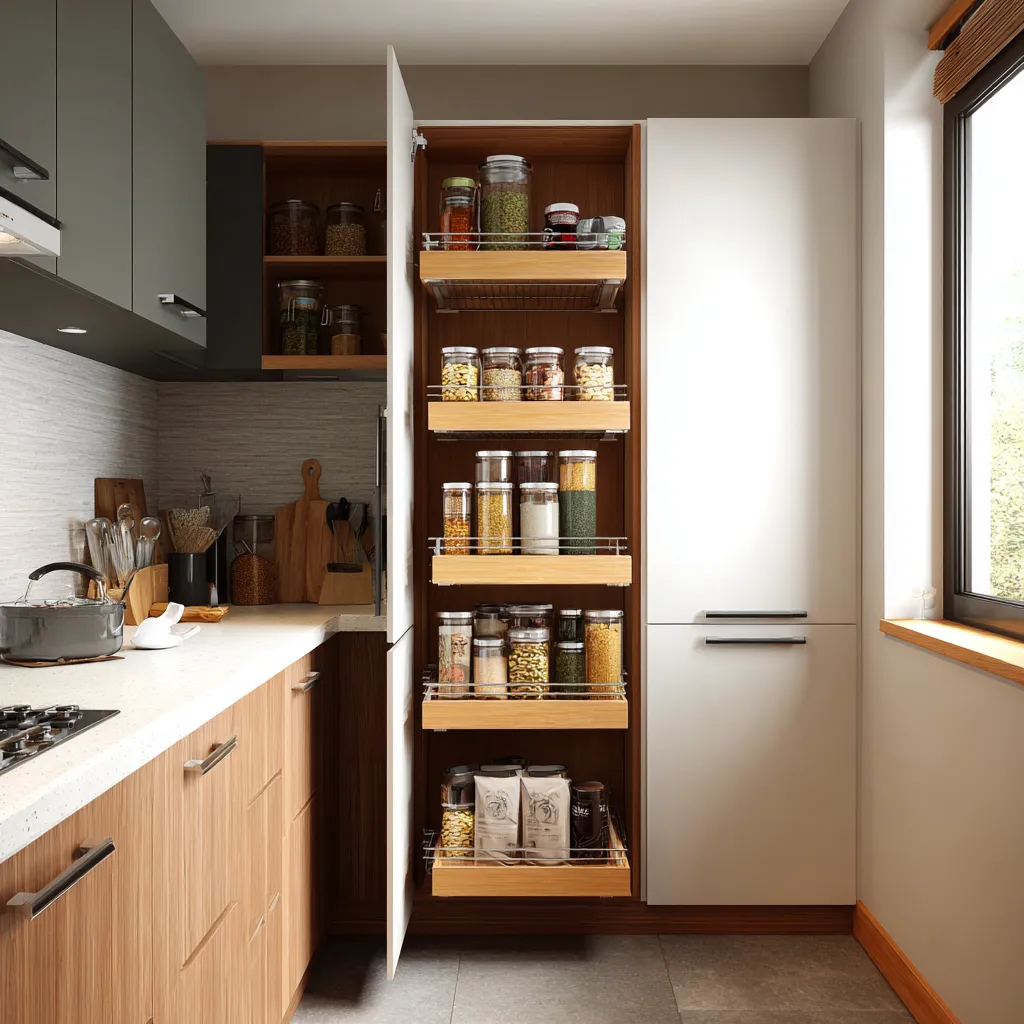
These are underrated. They are slim but have deep storage. They are perfect for:
- Spices
- Oils
- Jars
- Snacks
These are ideal for small house kitchen layouts.
Corner Carousel Units
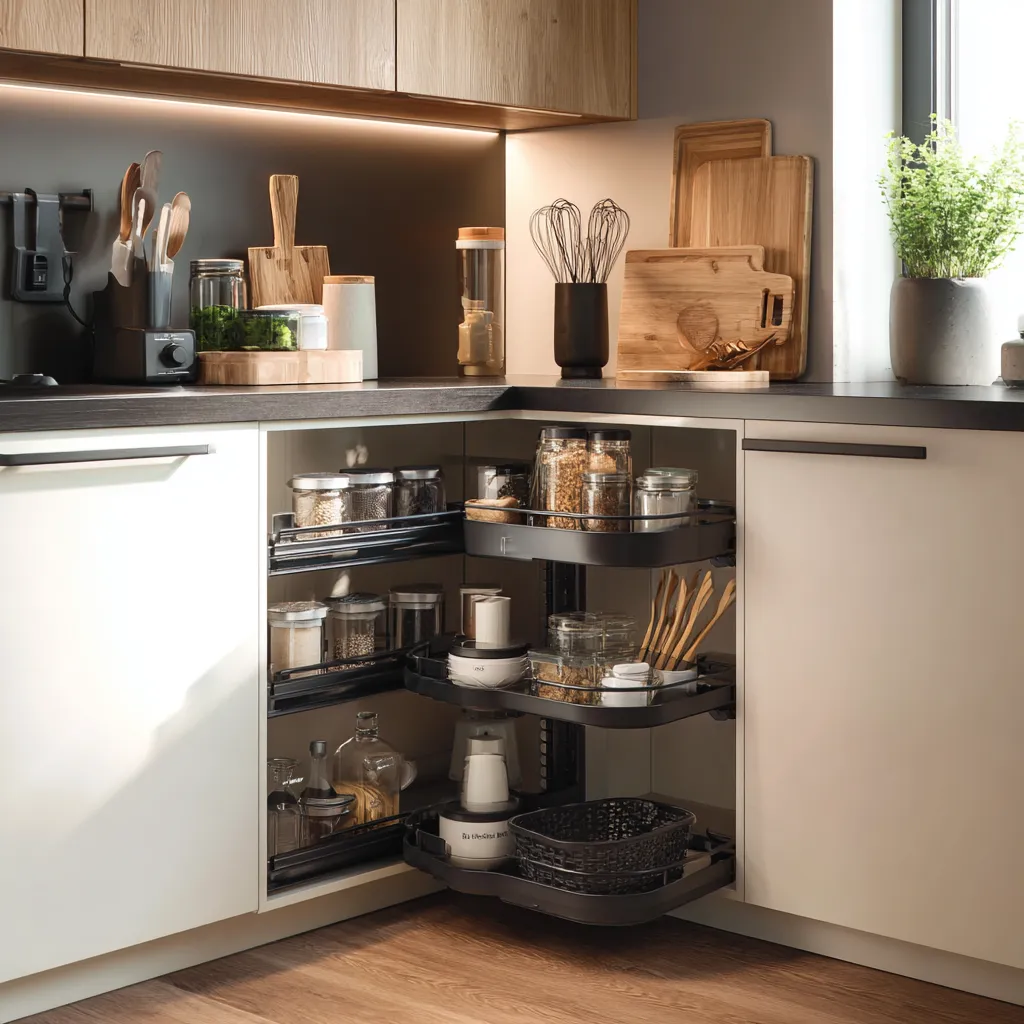
Corners usually waste space. Carousel trays fix that instantly. They are very helpful in kitchen unit designs in small spaces.
Drawer Storage Instead Of Shelves
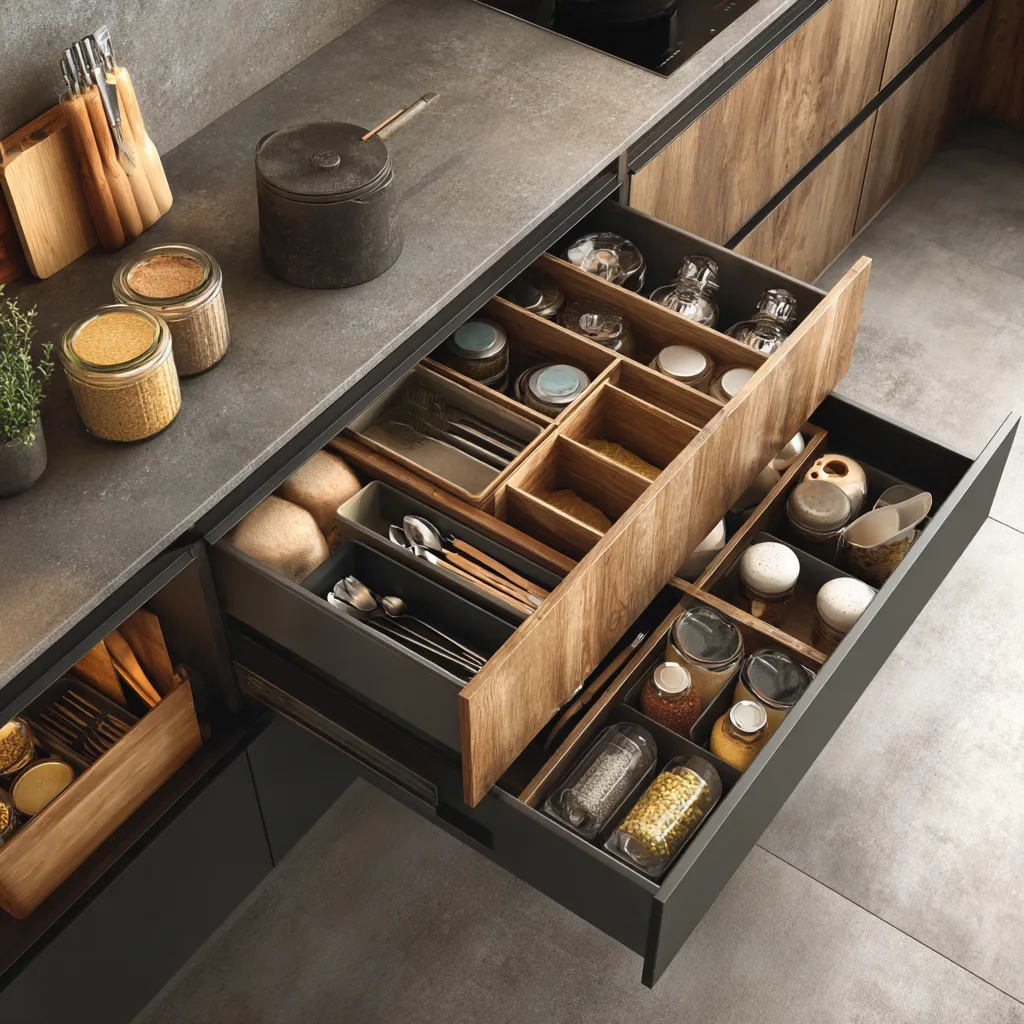
Drawers are better than shelves. Always. The reason being:
- Easier to access.
- Better organised.
- Cleaner looking.
They are especially useful in compact kitchen designs and modular kitchen ideas for small kitchen layouts.
Replace Upper Cabinets With Open Shelving
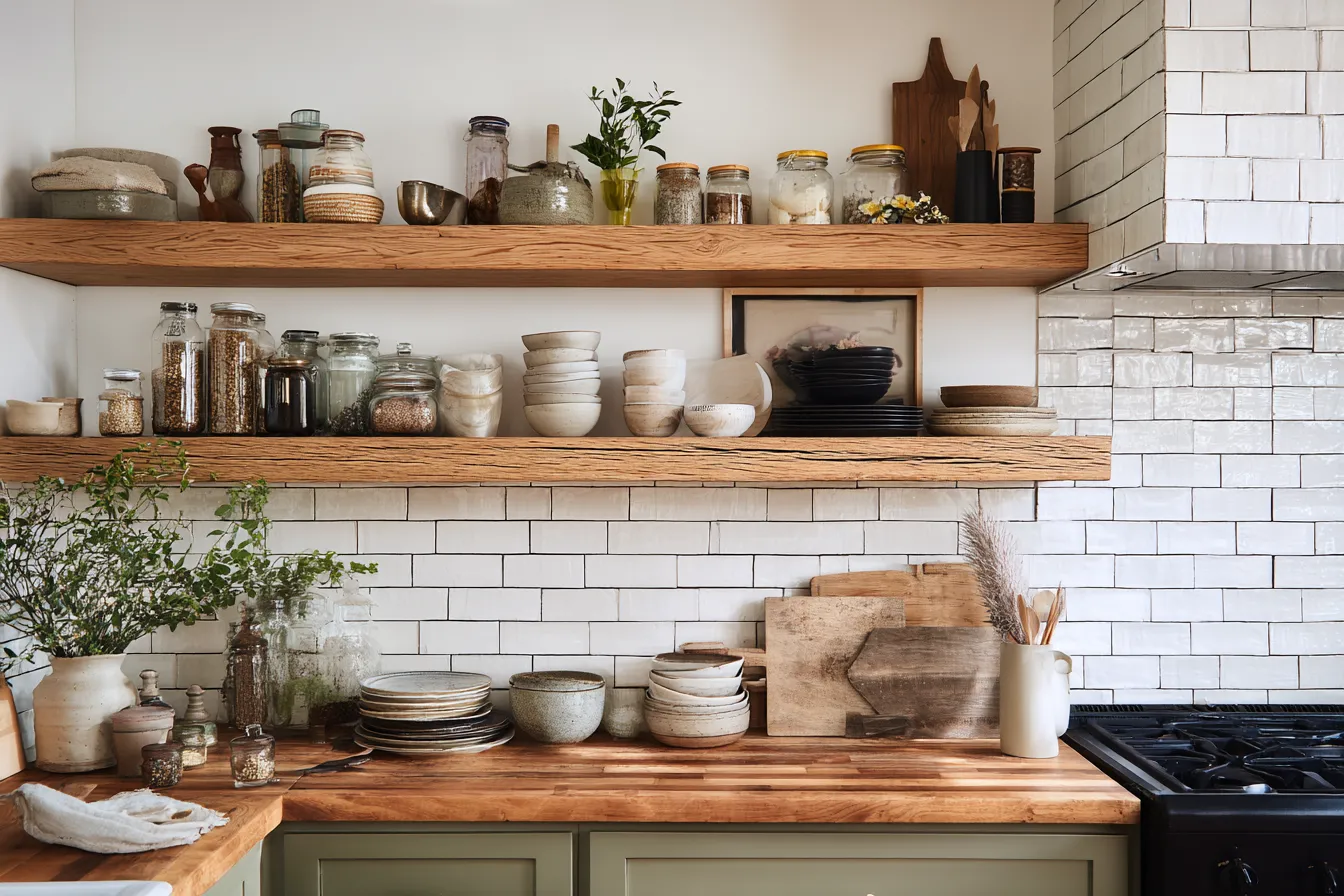
Open shelving removes visual barriers and makes a small kitchen interior design feel more expansive. Wooden or metal shelves along the backsplash offer storage and display space without enclosing the walls. This approach adds a feeling of lightness while providing access to daily-use items like dishes and jars.
Read also – 10+ Stunning Kitchen Floor Tile Designs for Modern Home
Utilise Corners With Floating Corner Shelves
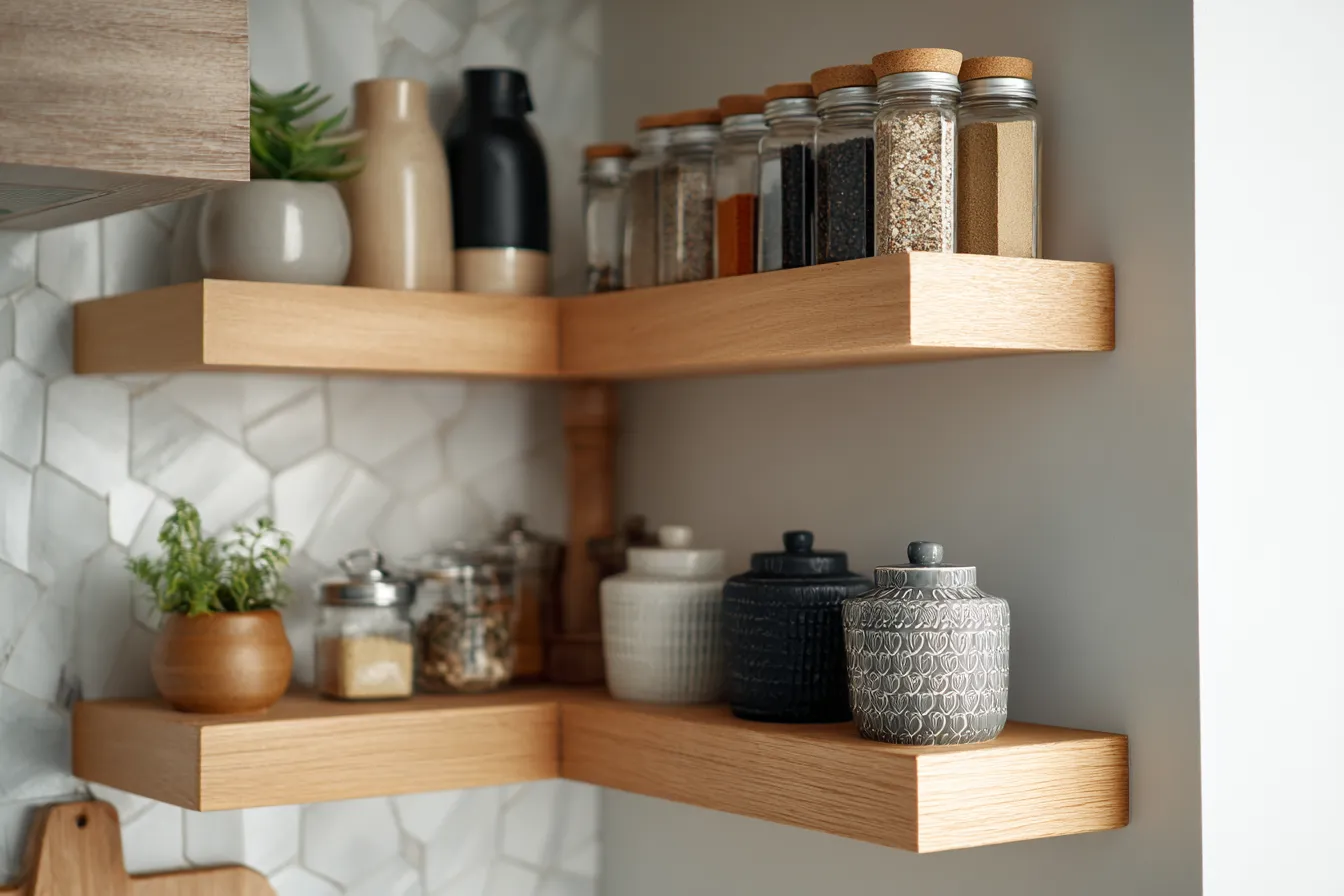
Incorporating corner shelves transforms overlooked areas into functional space. Floating shelves placed in kitchen corners help store spices, jars and cooking tools. This method enhances small kitchen ideas by efficiently utilising L-shaped corners that are generally underutilised in compact layouts.
Install Long Floating Shelves
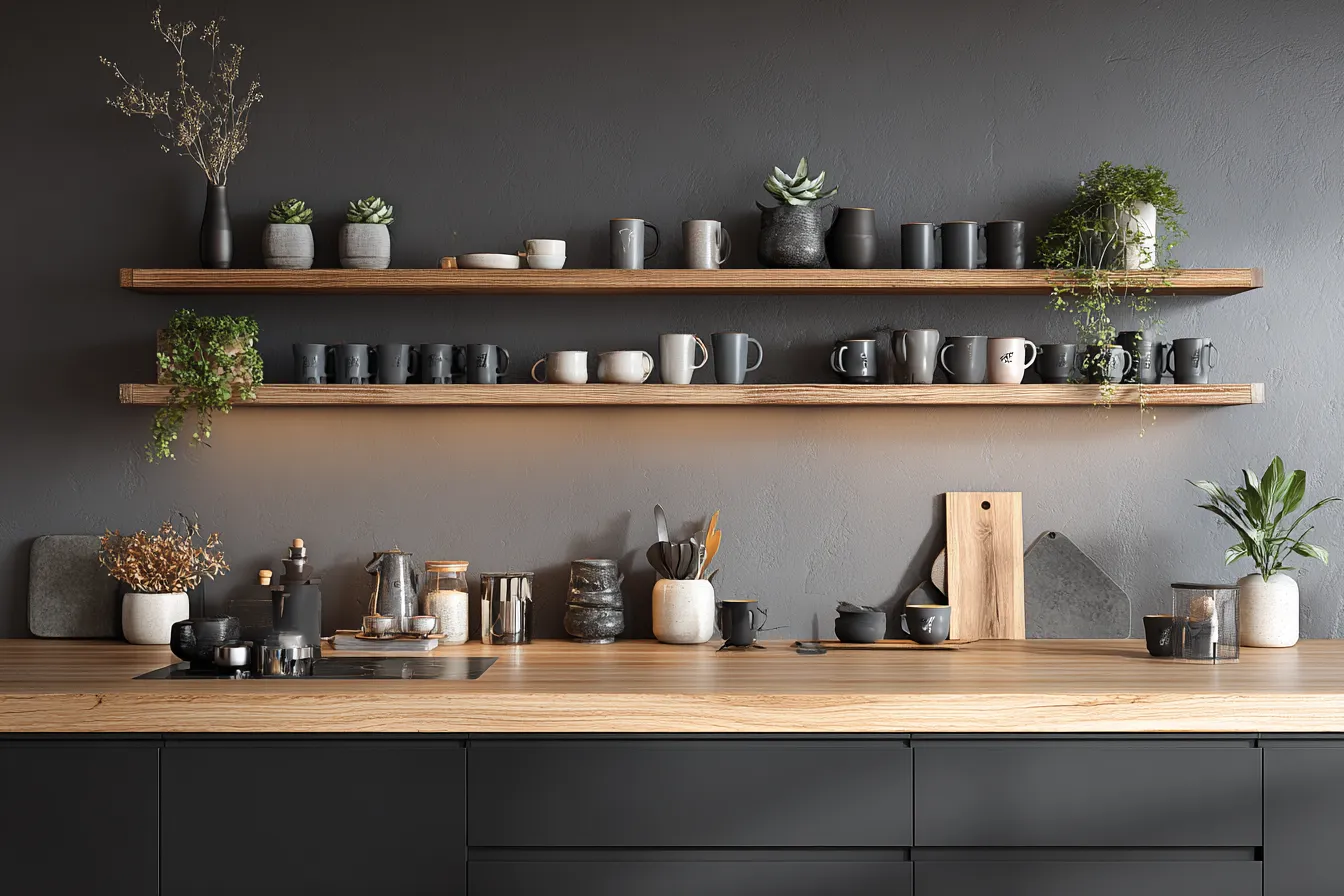
Long, wall-spanning floating shelves replace upper cabinets, bringing a minimalist visual to the kitchen. They provide storage while maintaining open sightlines, which is essential for small open kitchen design. This simple alteration also keeps frequently used items accessible and organised.
Add A Pull-Out Pantry Unit
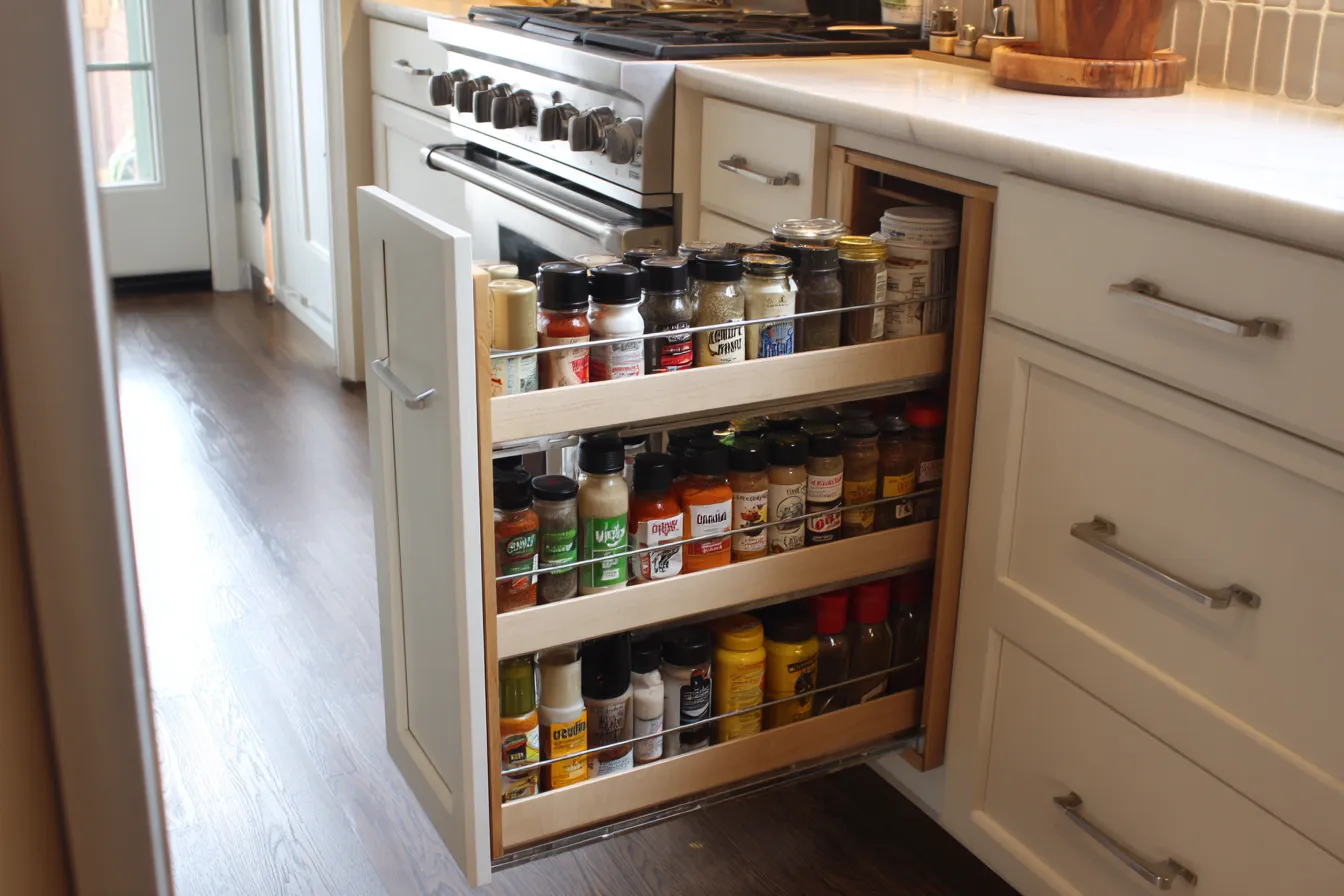
Pull-out pantry units offer narrow, vertical storage that is ideal for tight gaps between appliances or cabinets. These units help take full advantage of the utility of limited space, fitting neatly into kitchen cabinet designs for small spaces. They are especially useful for storing dry goods or cooking oils.
Position The Microwave Under The Counter
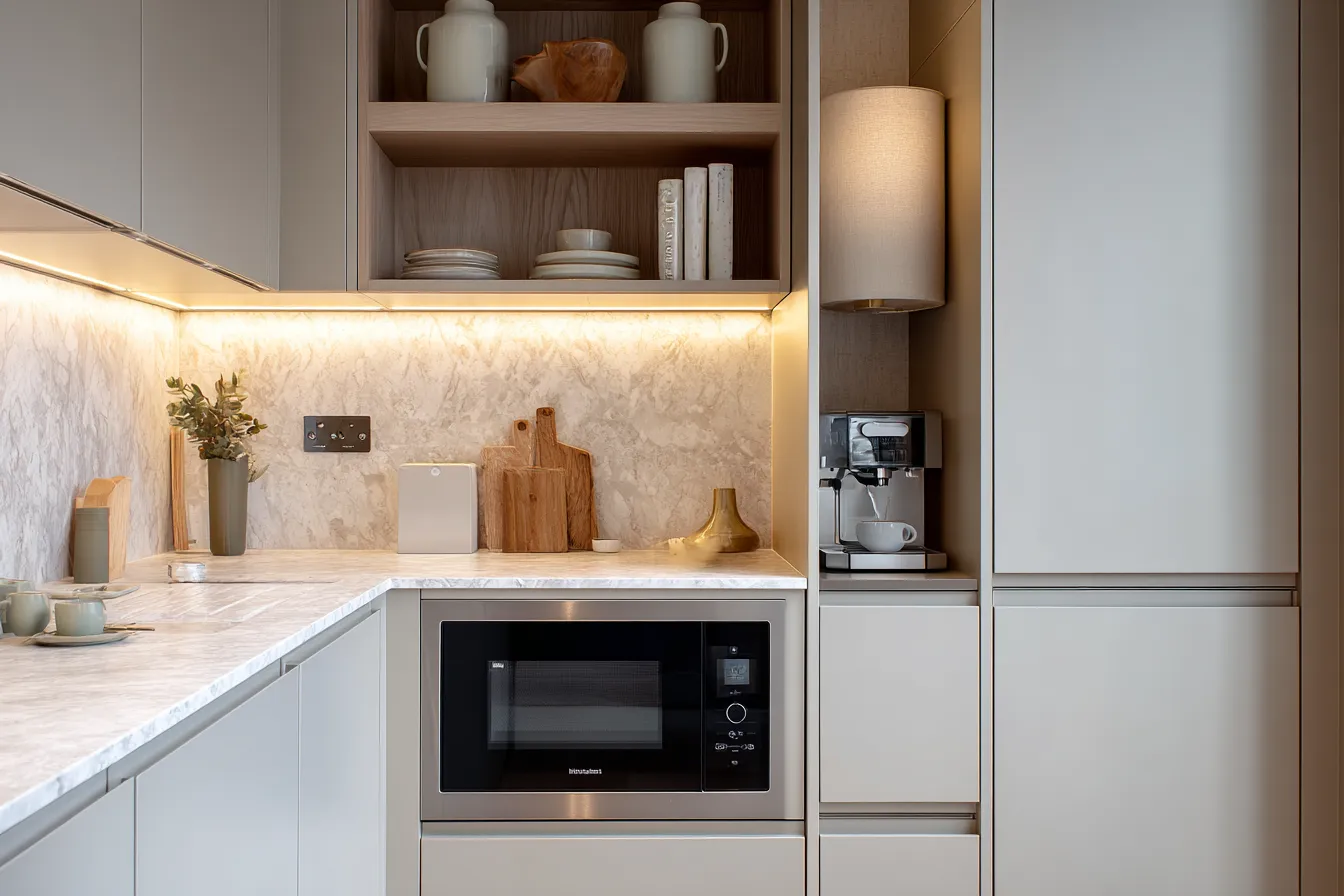
Installing a microwave below the countertop frees up valuable surface area and keeps the eye level clutter-free. This adjustment contributes to a more streamlined modular kitchen design for a small area, blending appliances into cabinetry for a modern, integrated look.
You may also like!
| Kitchen Wallpaper Design | Best Kitchen wallpaper Design to Suit Your Mood |
| Kitchen Chimney Design | Creative Modular Kitchen Chimney Designs and Ideas |
| Kitchen Remodeling Ideas | Best Kitchen Renovation Ideas and Designs |
| Kitchen Sink Ideas | Best Sink Designs and Ideas For Your Kitchen |
Use Handleless Cabinets
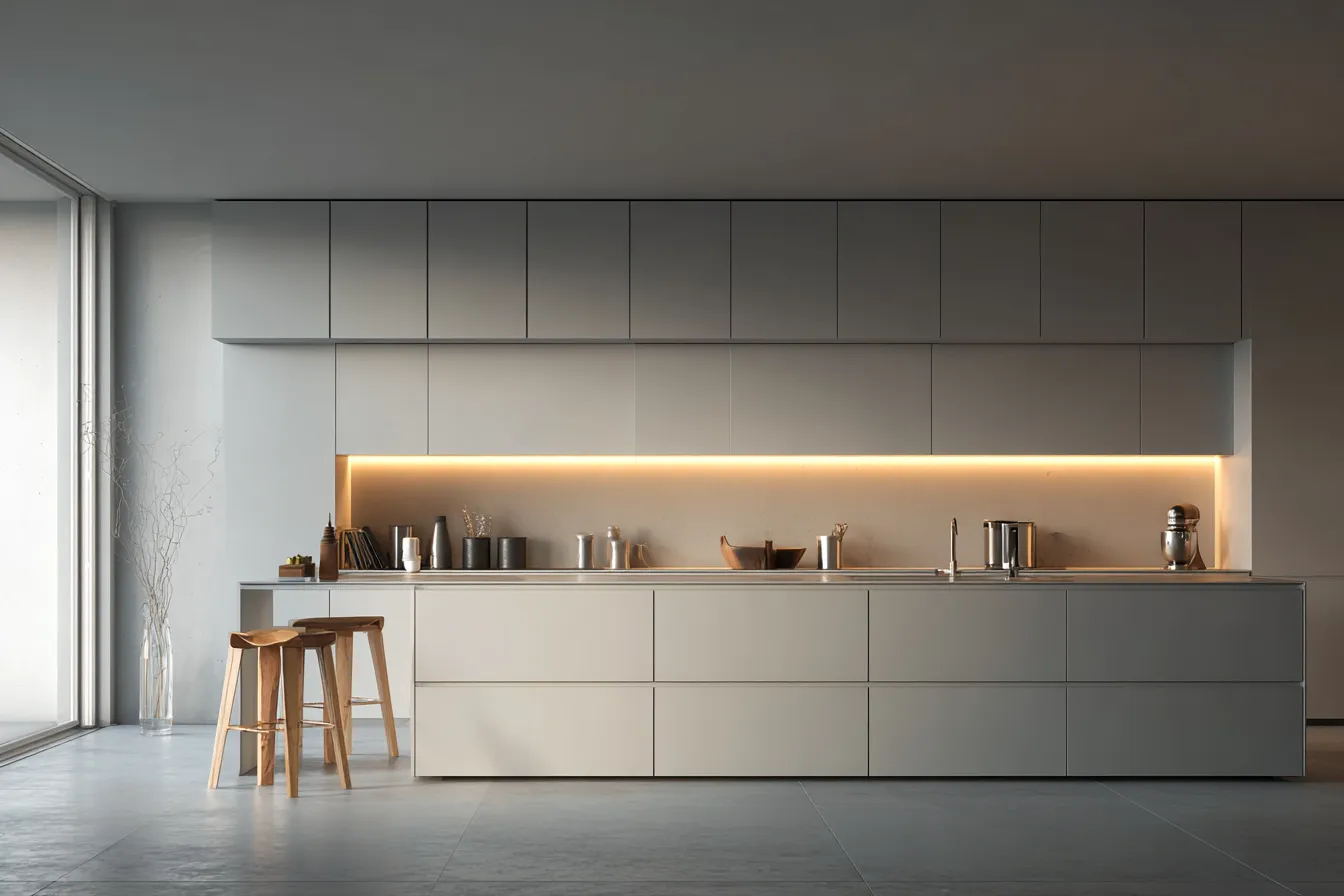
Cabinets without handles create a smooth, unified look that helps them disappear into the background. This style enhances a clean aesthetic in a small kitchen cupboard design layout while reducing visual noise. The flat surfaces also contribute to a modern appearance and safer navigation in tight spaces.
Add Cubbies Above The Window
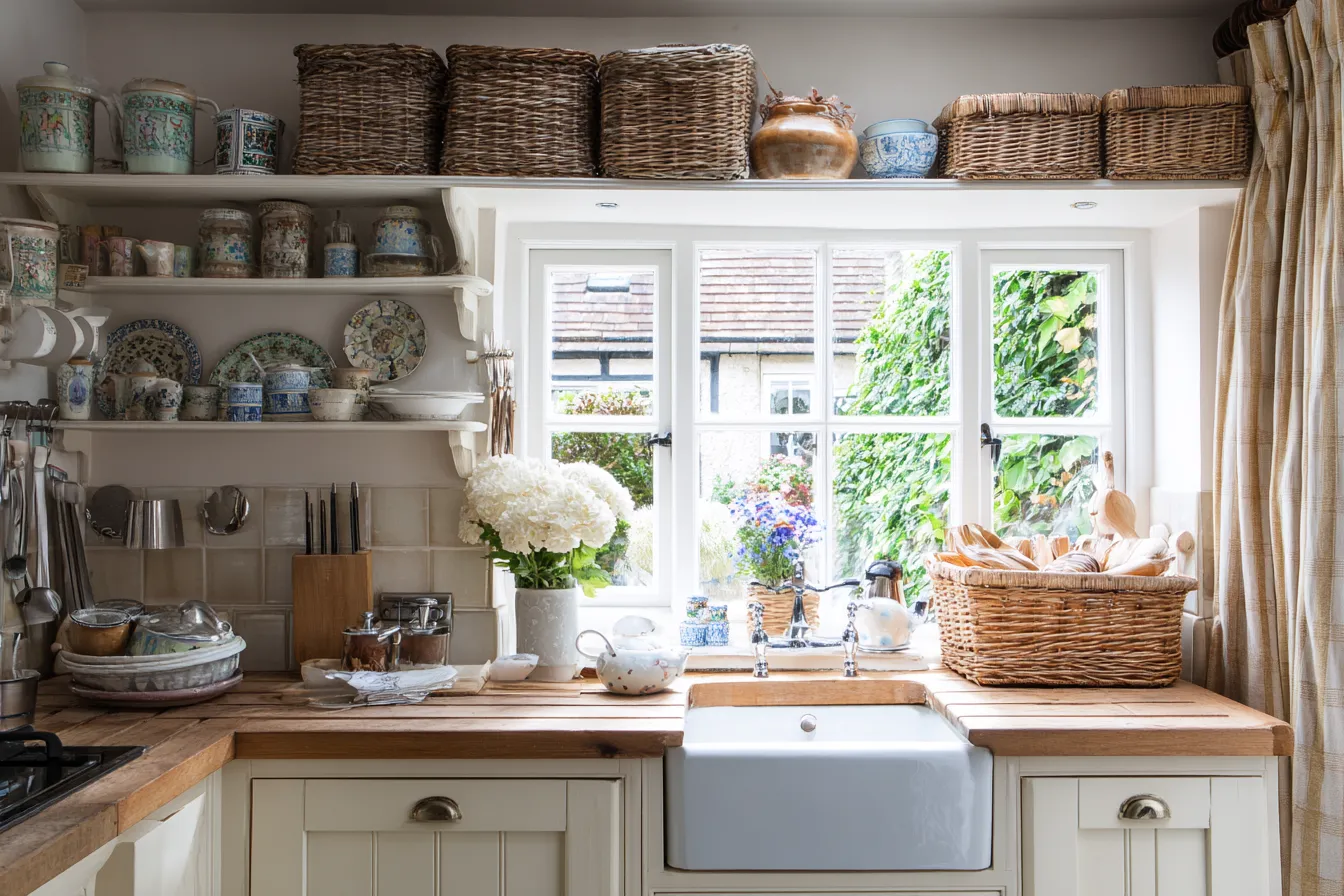
Cubbies placed above kitchen windows make excellent use of vertical space. Ideal for items that are not used daily, this solution contributes to a clutter-free look in kitchen unit designs for small spaces. These overhead shelves are both decorative and functional.
Build An Appliance Garage
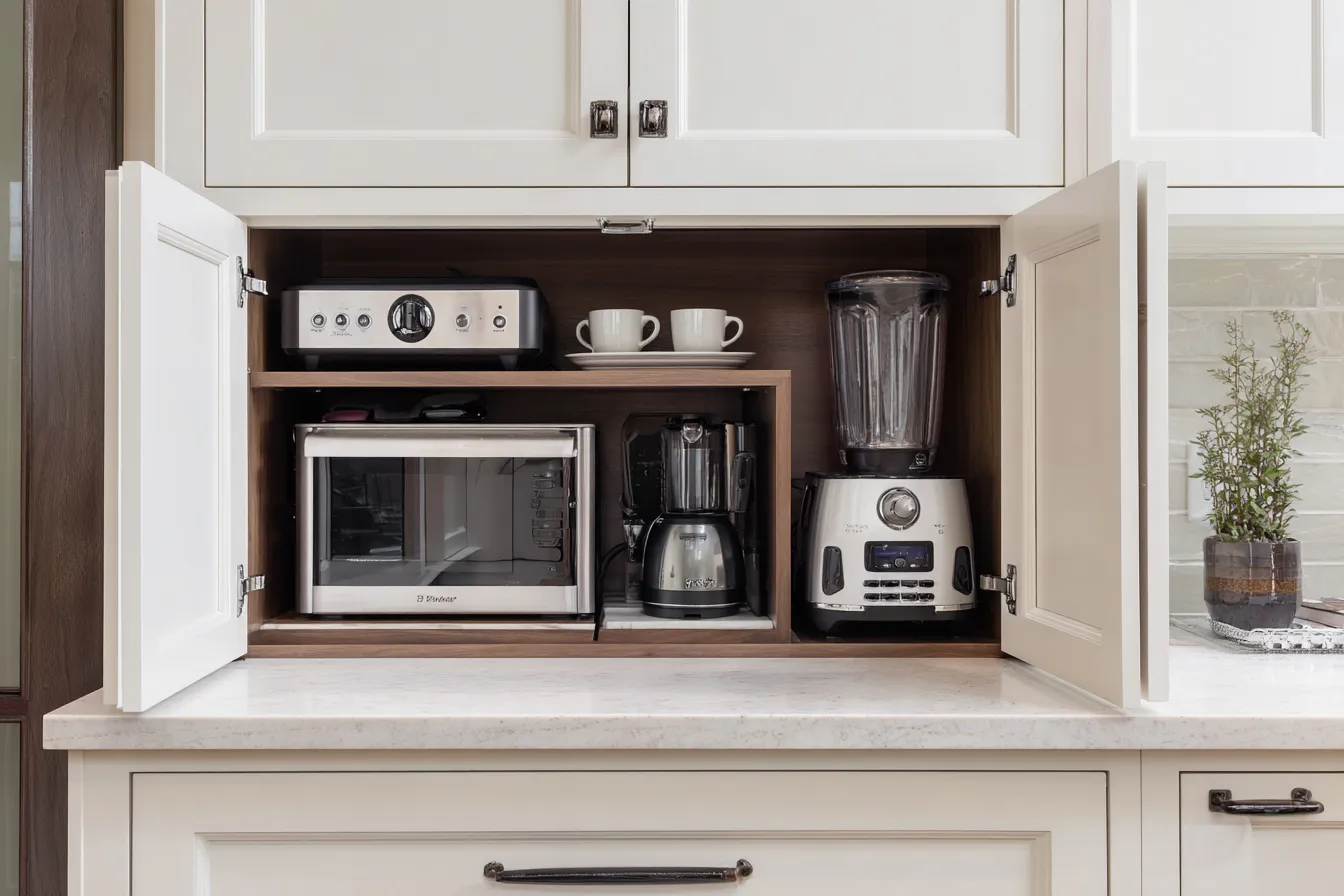
An appliance garage keeps small appliances, such as mixers and toasters, hidden behind cabinet doors. This design element supports tiny kitchen renovation ideas by ensuring countertops stay clear and the kitchen remains visually tidy.
Use Floor-To-Ceiling Cabinetry
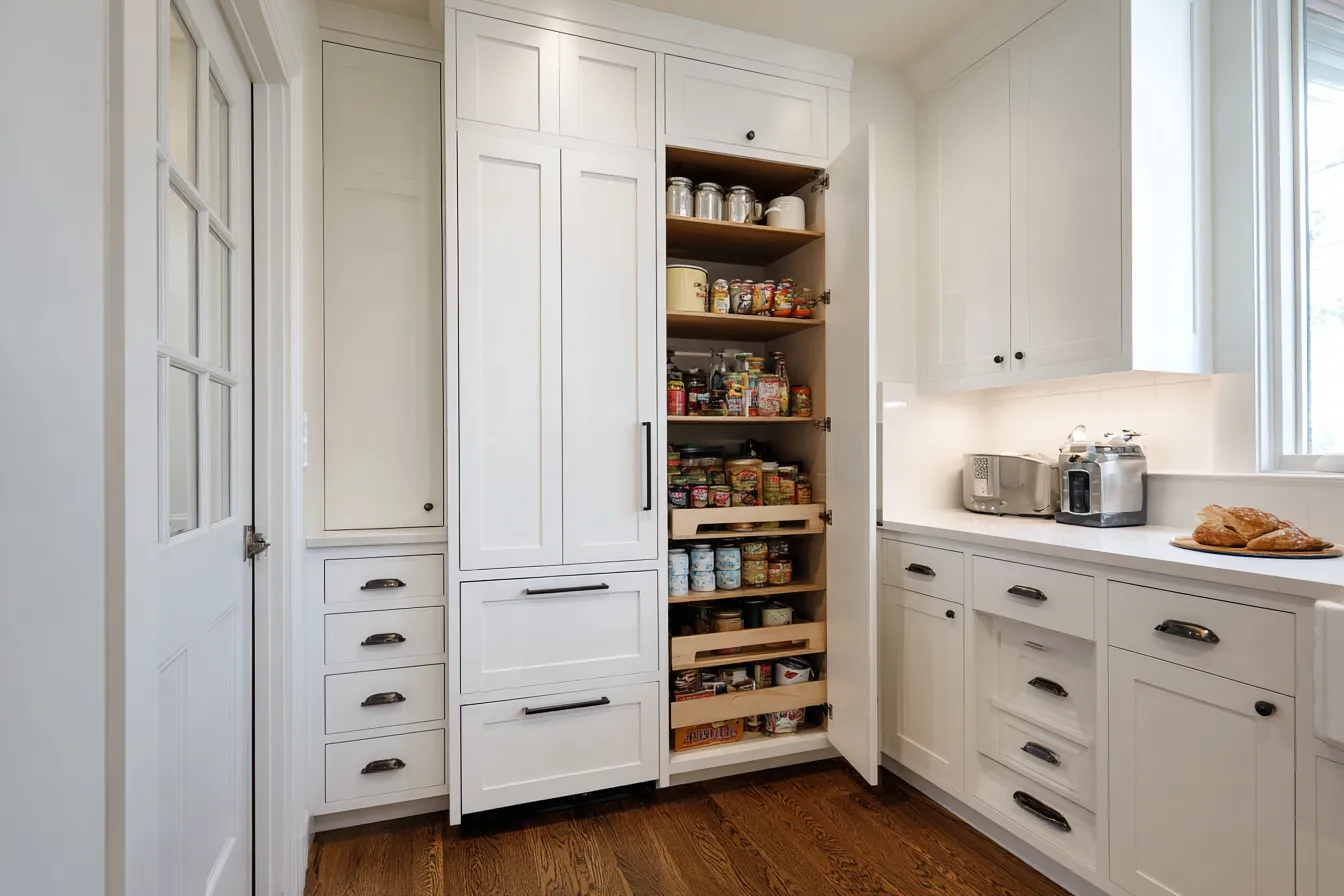
Tall cabinets provide substantial storage and draw the eye upward, giving an illusion of height in small kitchen layouts. This design style is particularly useful in kitchens with limited floor space but ample vertical clearance.
Opt For Multi-Functional Furniture
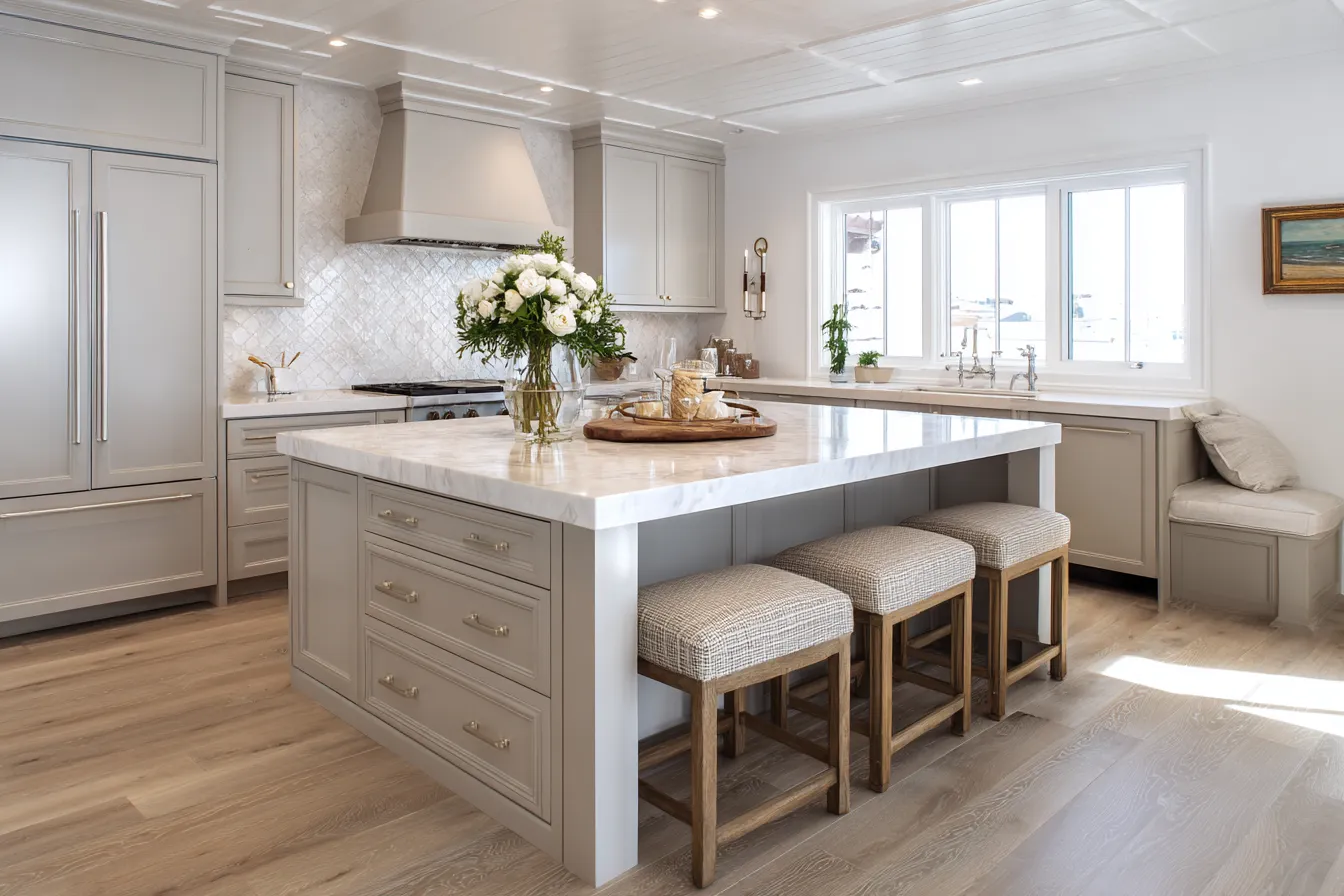
Select pieces that can perform more than one function. A kitchen island with storage beneath or a bench with drawers supports small kitchen furniture design while saving space. This kind of practicality is ideal for compact homes.
Choose High-Gloss Finishes
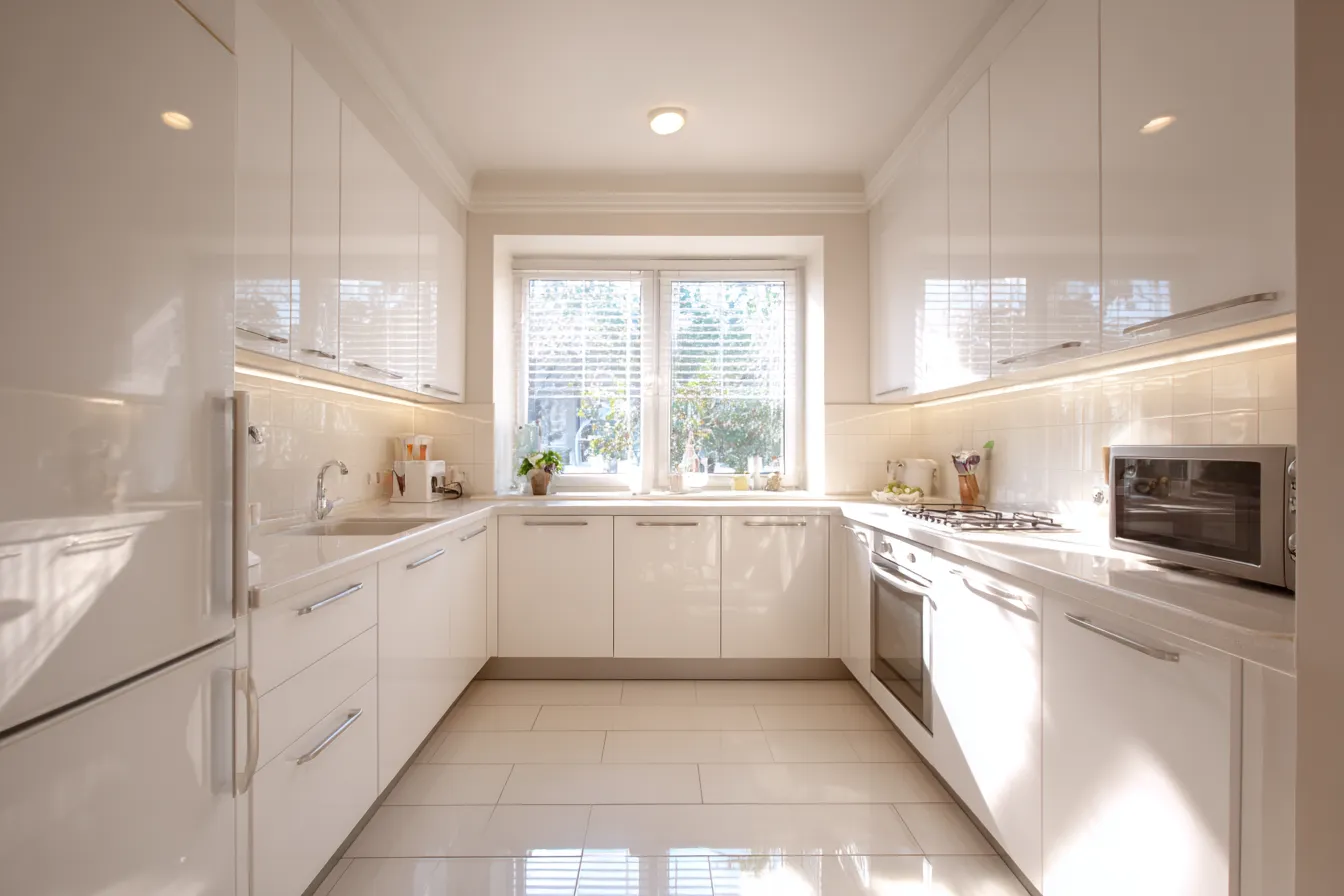
Glossy finishes reflect light, making the kitchen feel more spacious. Surfaces such as lacquered cabinets and polished tiles contribute to a sleeker small kitchen decor while improving the sense of openness.
Layer With Glass Cabinet Doors
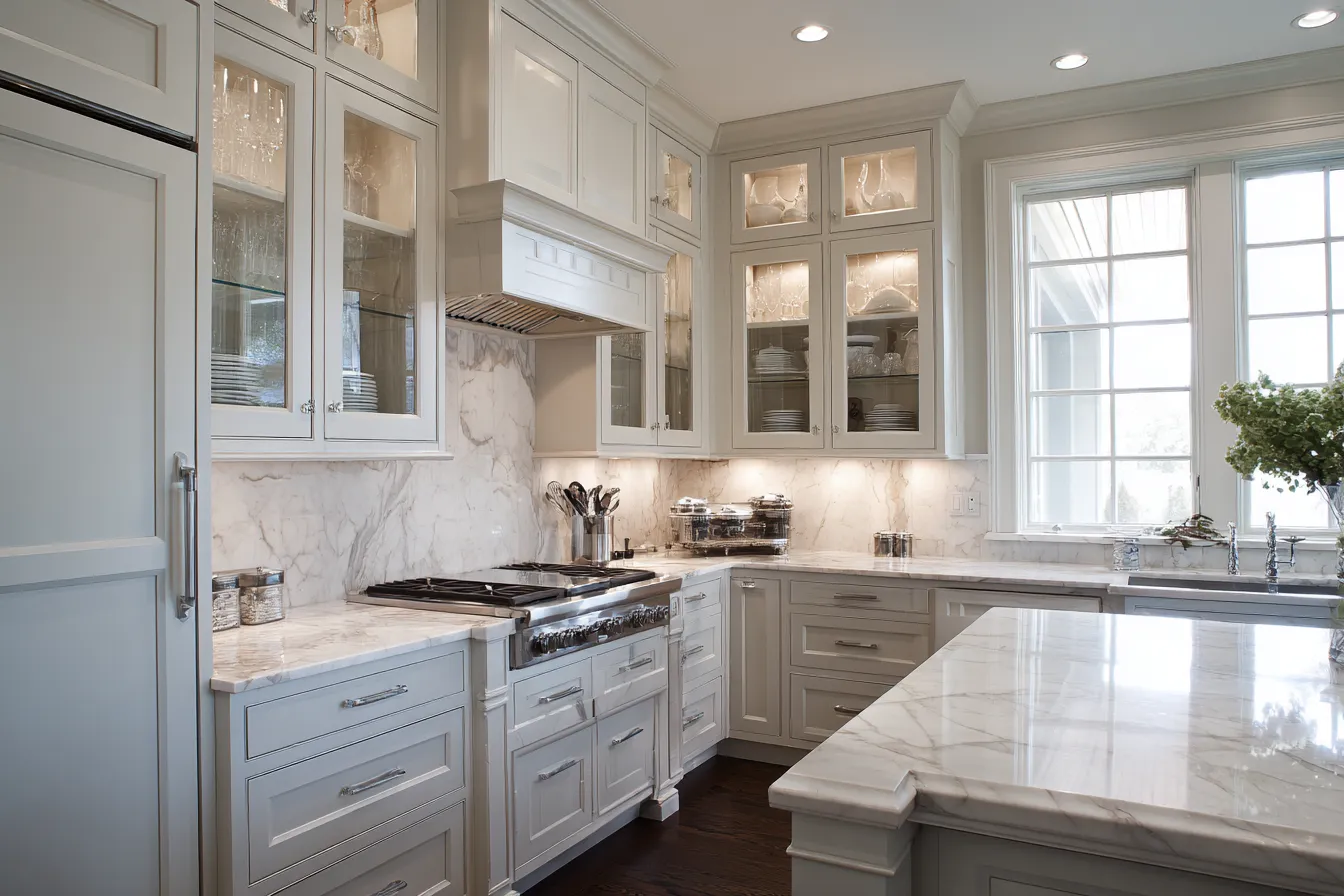
Glass-fronted cabinets visually lighten the room and allow you to showcase your well-arranged kitchenware. This feature supports small kitchen architecture design by avoiding heavy-looking storage units and improving overall visibility.
Read also - Modular Kitchen Trends 2026: Latest Kitchen Design Trends That Work in Real Homes
Install Large Format Wall Tiles
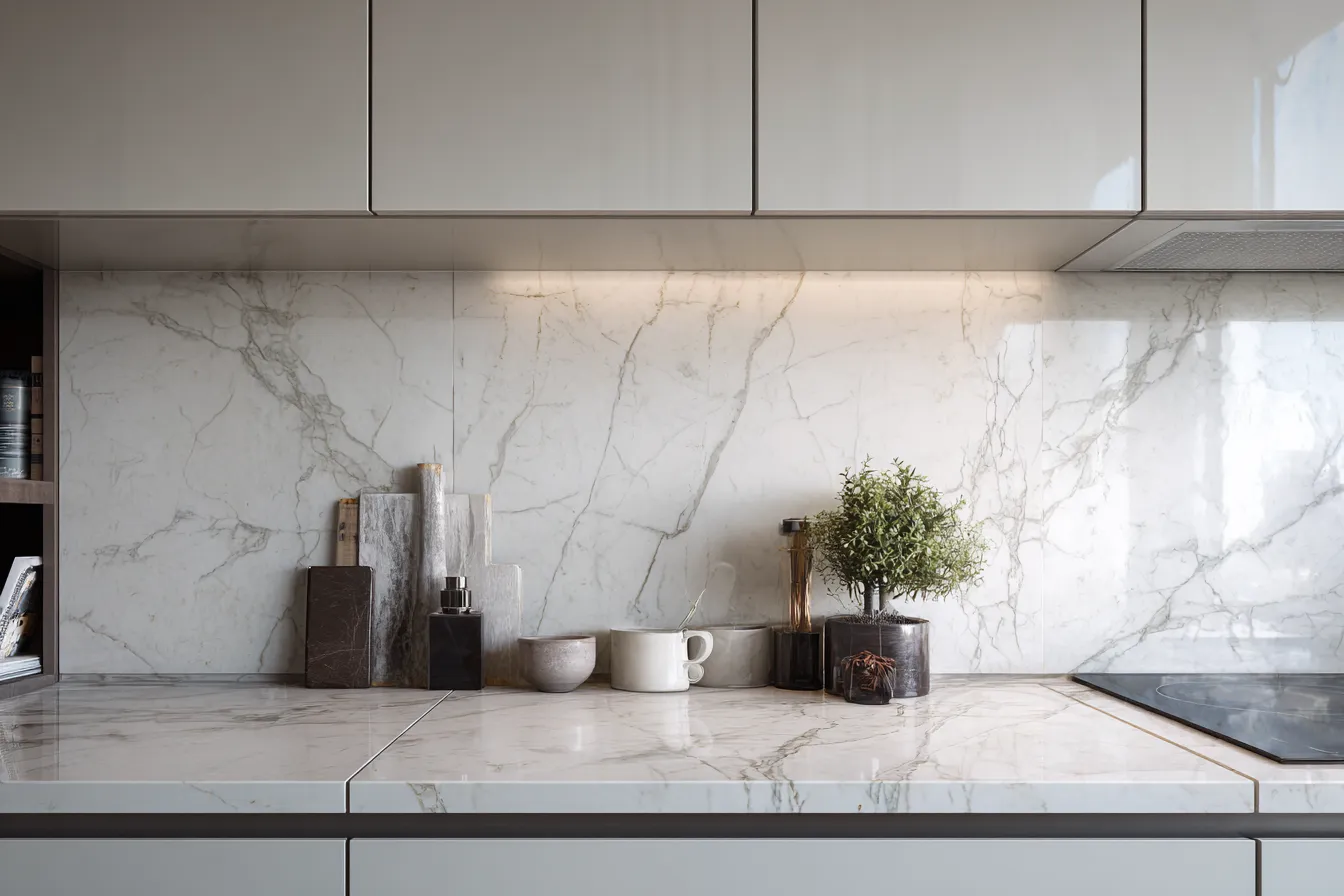
Using large tiles on the backsplash or walls reduces grout lines, creating a continuous look. This technique adds elegance and supports kitchen design in small rooms by creating a cleaner, more unified surface.
Enhance Natural Light With A Window
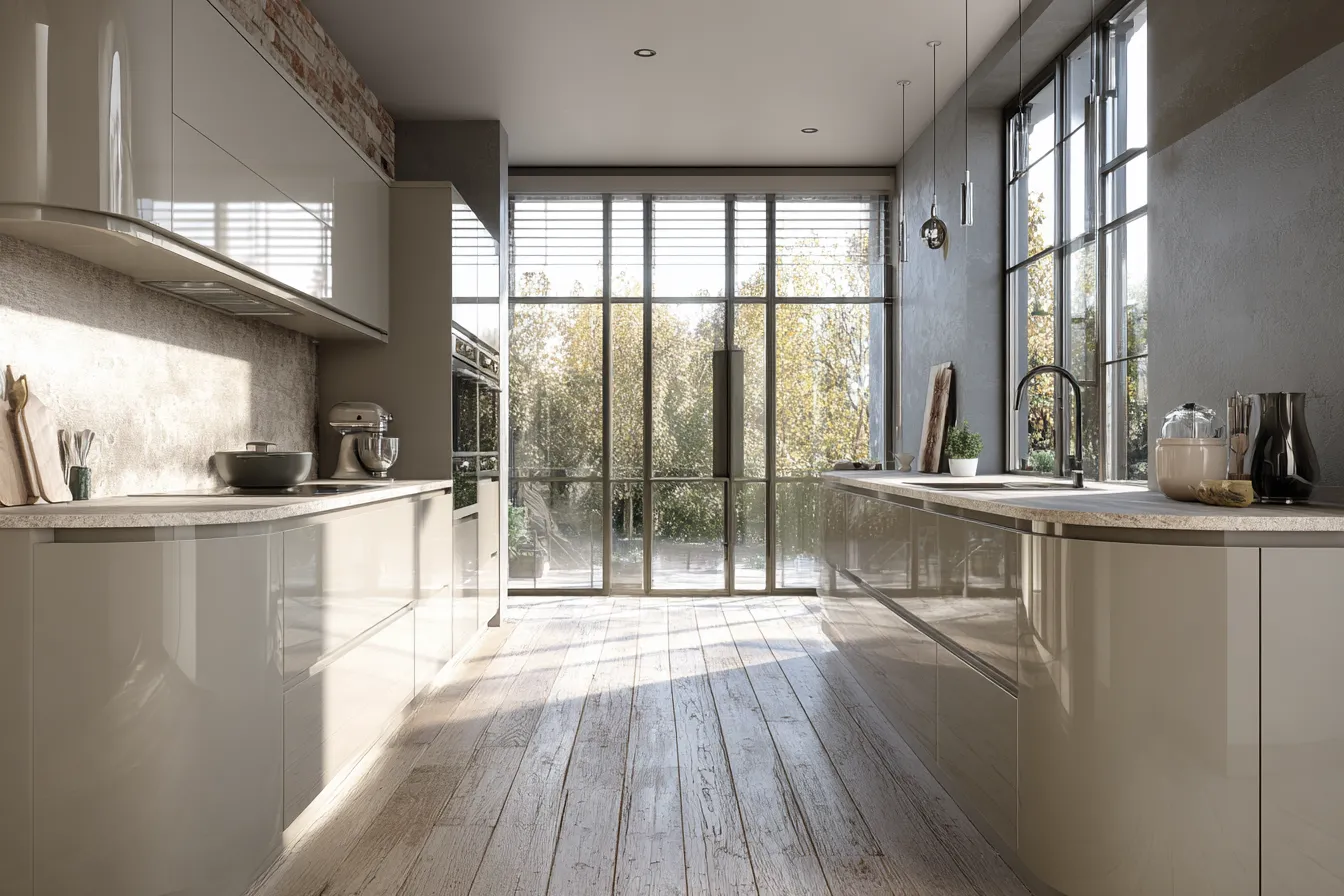
Natural light can make a small space feel much larger. Having at least a single window is a smart approach in small kitchen window design, as it helps improve ventilation and provides a visual connection to the outside.
Read also – Modular Kitchen Cost In India for 2026: How Kitchen Pricing Really Works
Use Neutral And Light Colour Schemes
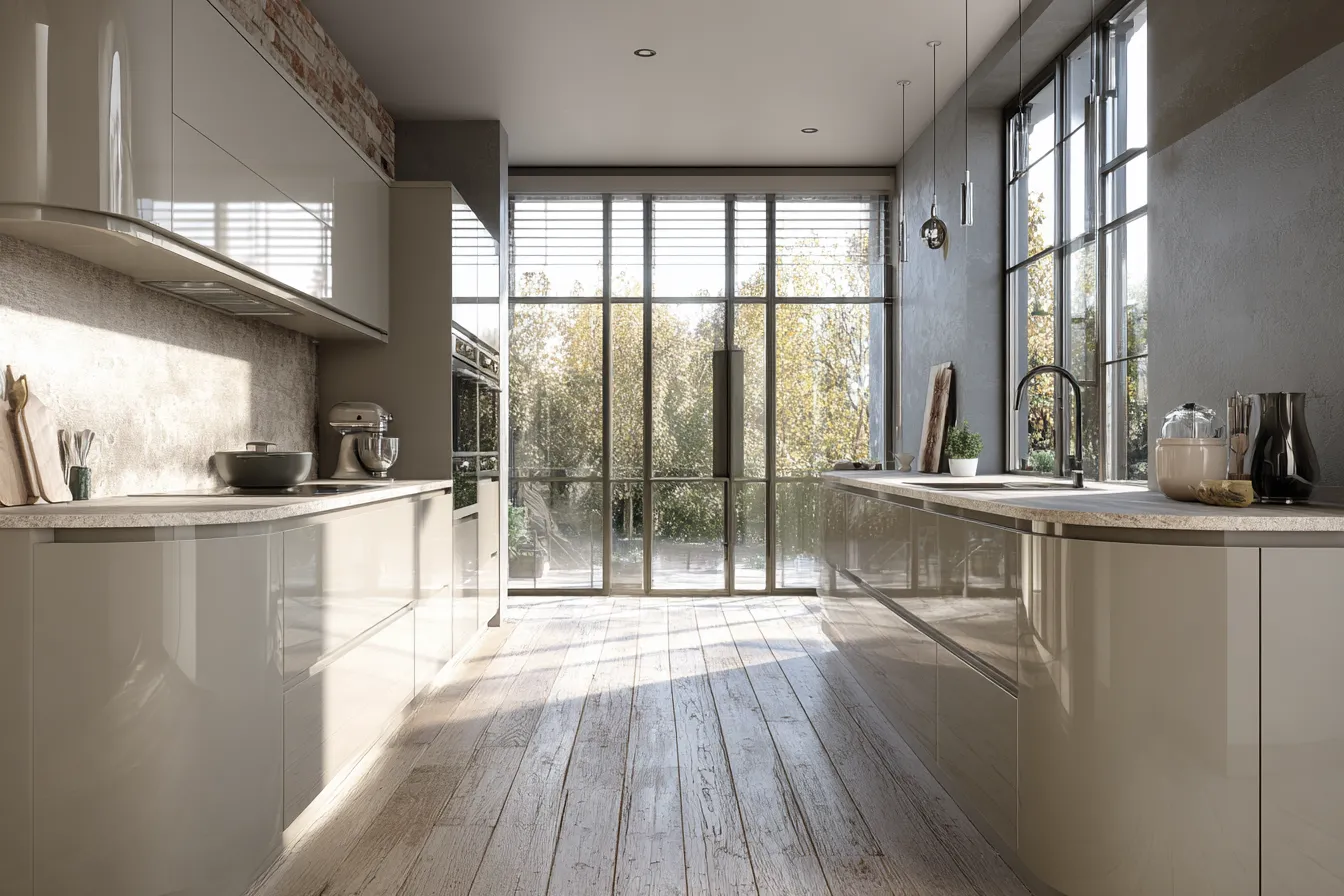
Neutral tones visually expand a room and reflect light effectively. Cream, beige and light grey are excellent choices for a small kitchen colour combination, promoting calm and creating a sense of more space.
Choose Slimline Appliances
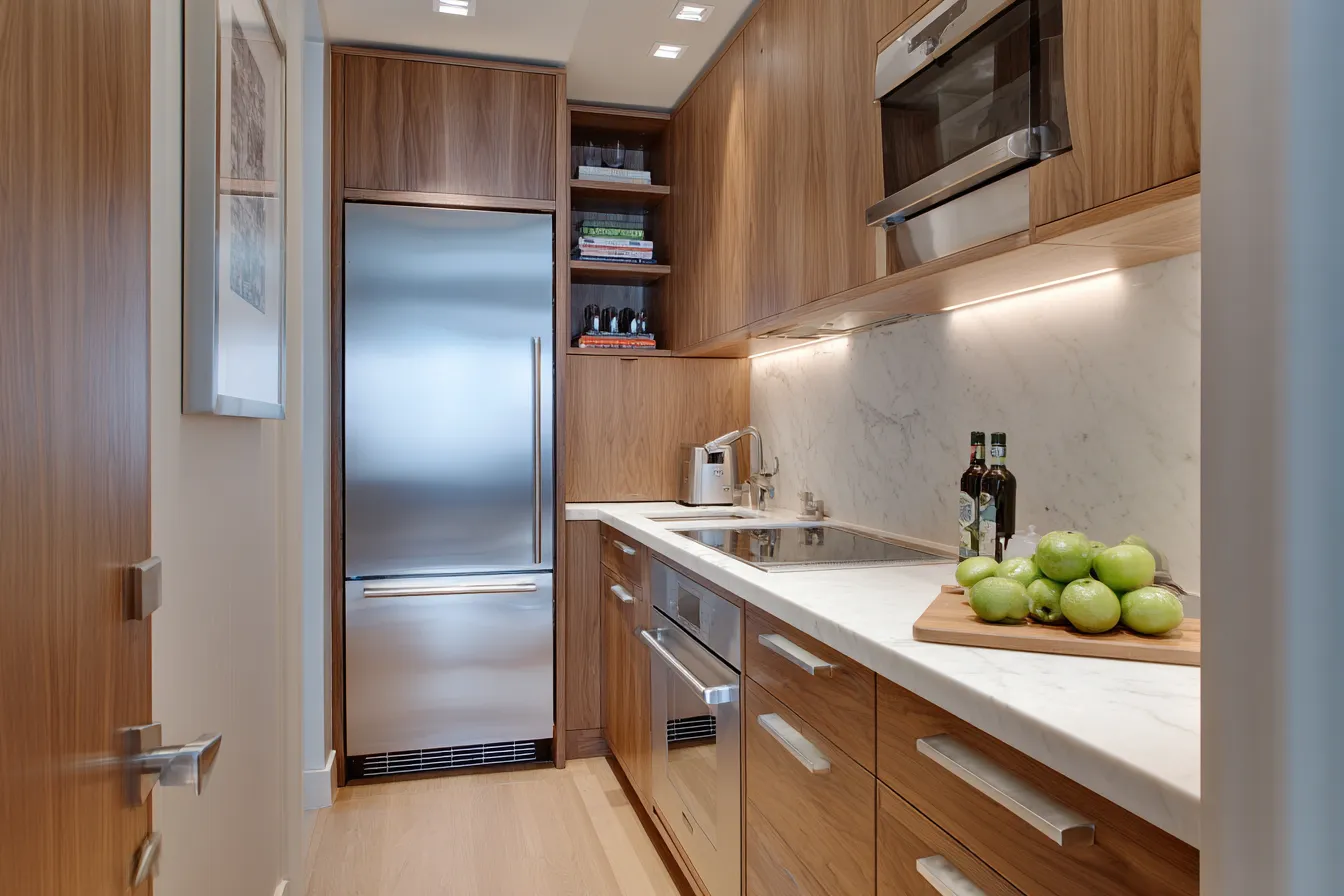
Appliances designed with reduced depth and width are perfect for space-saving kitchen design. From narrow refrigerators to compact dishwashers, these installations make room for movement without compromising utility.
Also read – 10+ Unique Kitchen Themes: Creative Ways To Give Your Kitchen Its Own Personality
Paint A Wall With Accent Colour
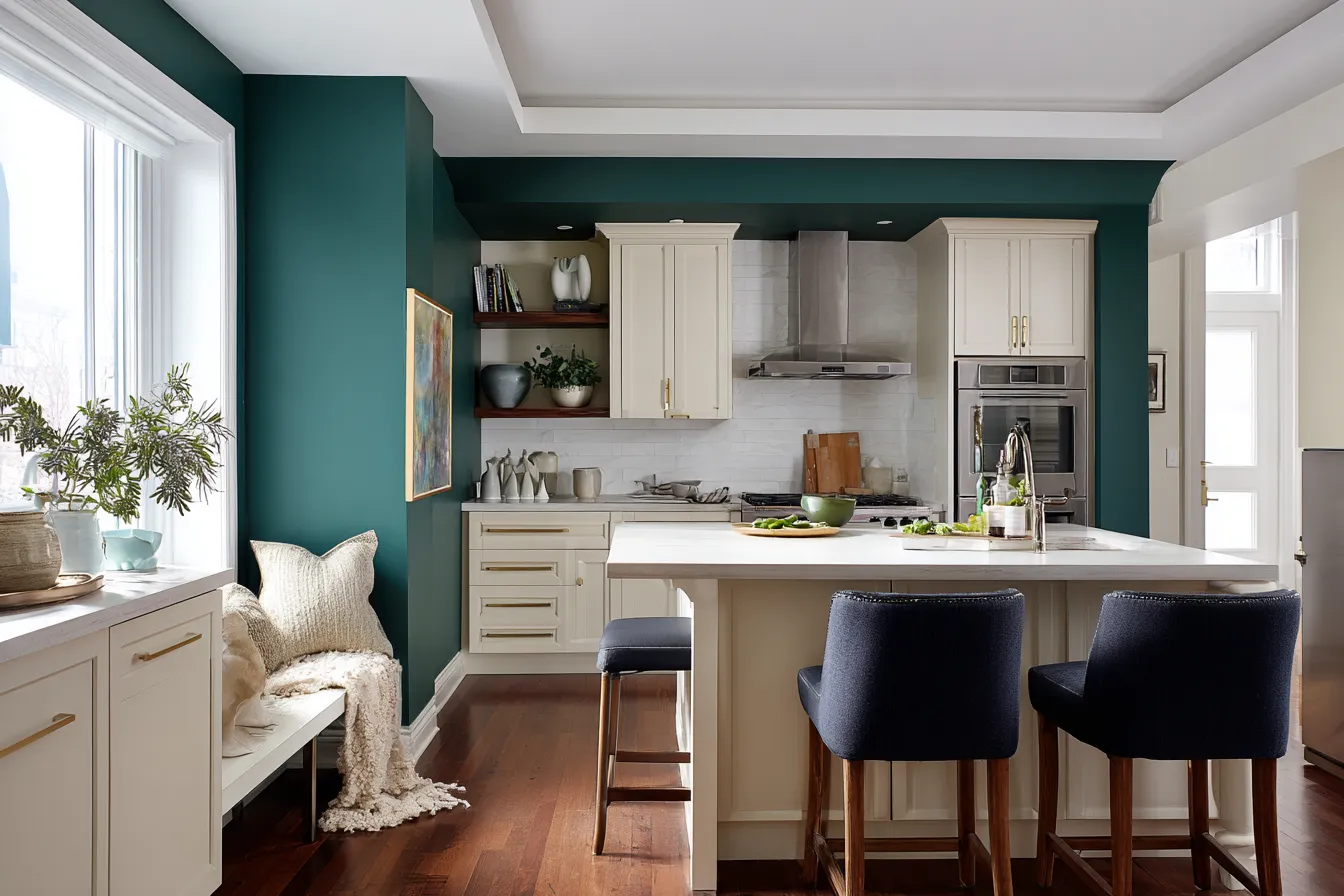
Introducing a single bold colour to one wall can inject depth into a small kitchen interior design. It also draws attention and can redefine the room’s proportions, making it feel more balanced and intentional.
Read also – 6 Different Types Of Kitchen Layout – Your Home Is Missing
Hang Wooden Cutting Boards
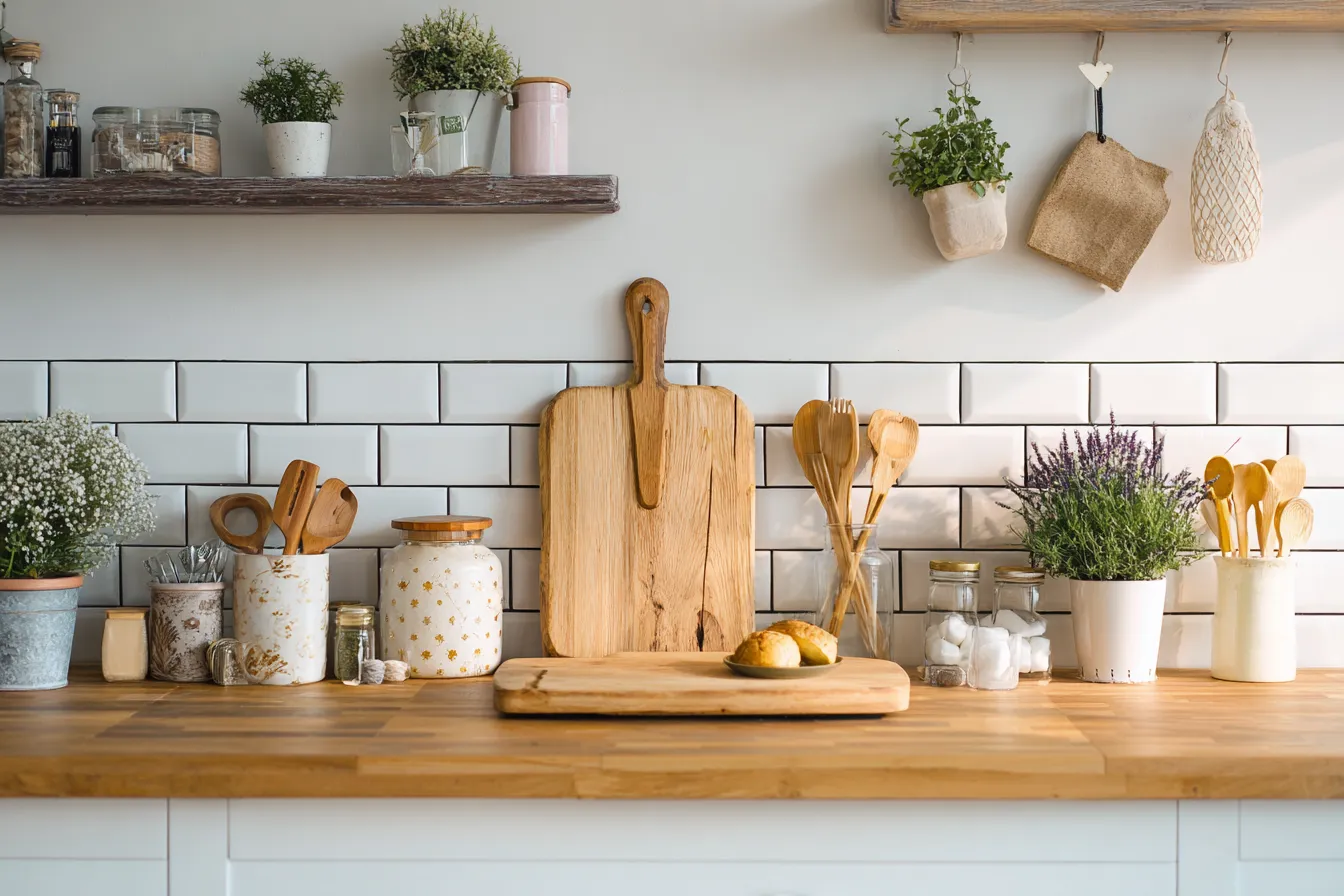
Rather than storing them away, wooden boards can be hung on an open wall for both accessibility and visual texture. This styling technique adds an organic element to a tiny kitchen design and keeps surfaces clear.
Read also: Kitchen Appliances: Essentials, Upgrades And Smart Picks For Every Home
Place A Rug With A Bold Pattern
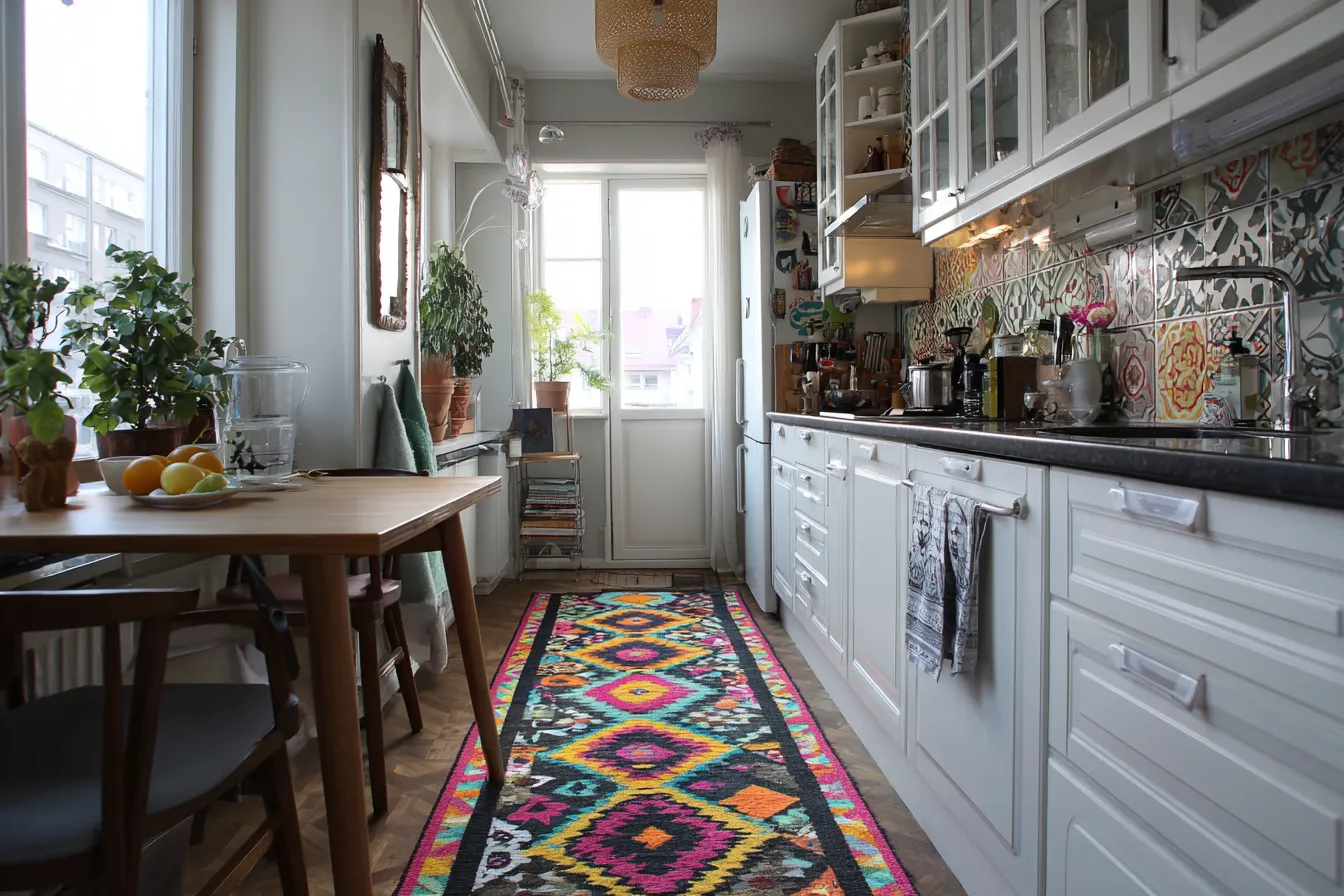
A statement rug softens the floor area and adds warmth without sacrificing square footage. This is particularly effective in small kitchen ideas on a budget, bringing in colour and design without costly renovations.
You may also like!
| Low Cost Small Kitchen Design | Easy and Simple Kitchen Designs for Your Small Space |
| Kitchen Curtain Ideas | Simple Kitchen Curtain Designs Ideas for Indian Home |
| Kitchen Arch Design | Amazing Kitchen Arch Design Ideas For Open Kitchen |
| Kitchen Partition Ideas | Stylish Kitchen Partition Ideas for Modern Homes |
Feature Geometric Patterns
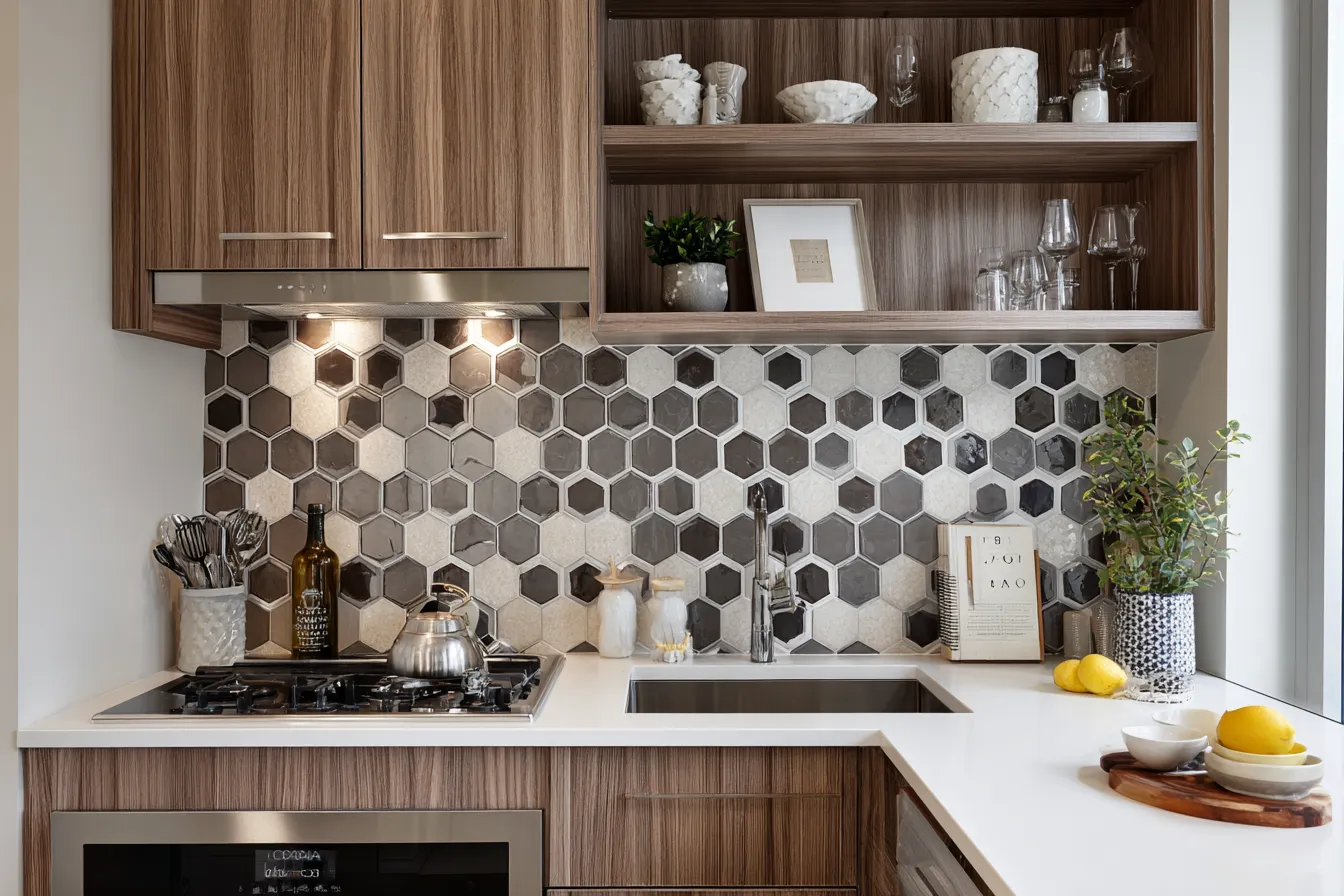
Geometric tiles or decor patterns offer visual stimulation and break the monotony. Whether used on the floor, backsplash, or accessories, these motifs enhance kitchen door design and interior layering in compact kitchens.
Storage, Units, And Daily Workflow In Small Kitchens
In small kitchens, storage and workflow cannot be separated. The way units are placed directly affects movement, counter use, and how easily the kitchen stays organised over time.
Cabinet Depth And Circulation
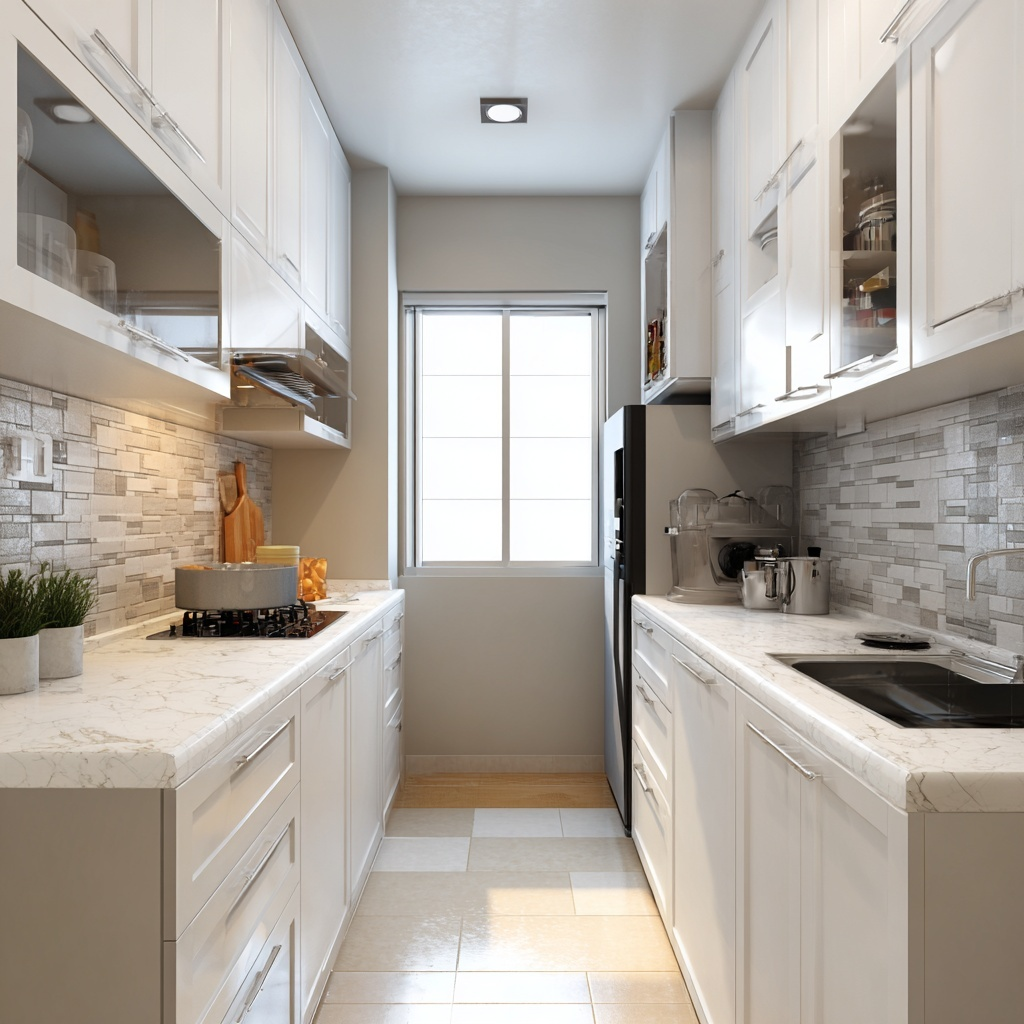
Cabinet depth plays a critical role in how comfortable a small kitchen feels. Deep base units reduce walking clearance and make narrow kitchens feel tighter. Slightly shallower cabinets often work better, even if they reduce internal storage. In small kitchen interior design, ease of movement usually matters more than maximising volume.
Upper Units And Visual Weight
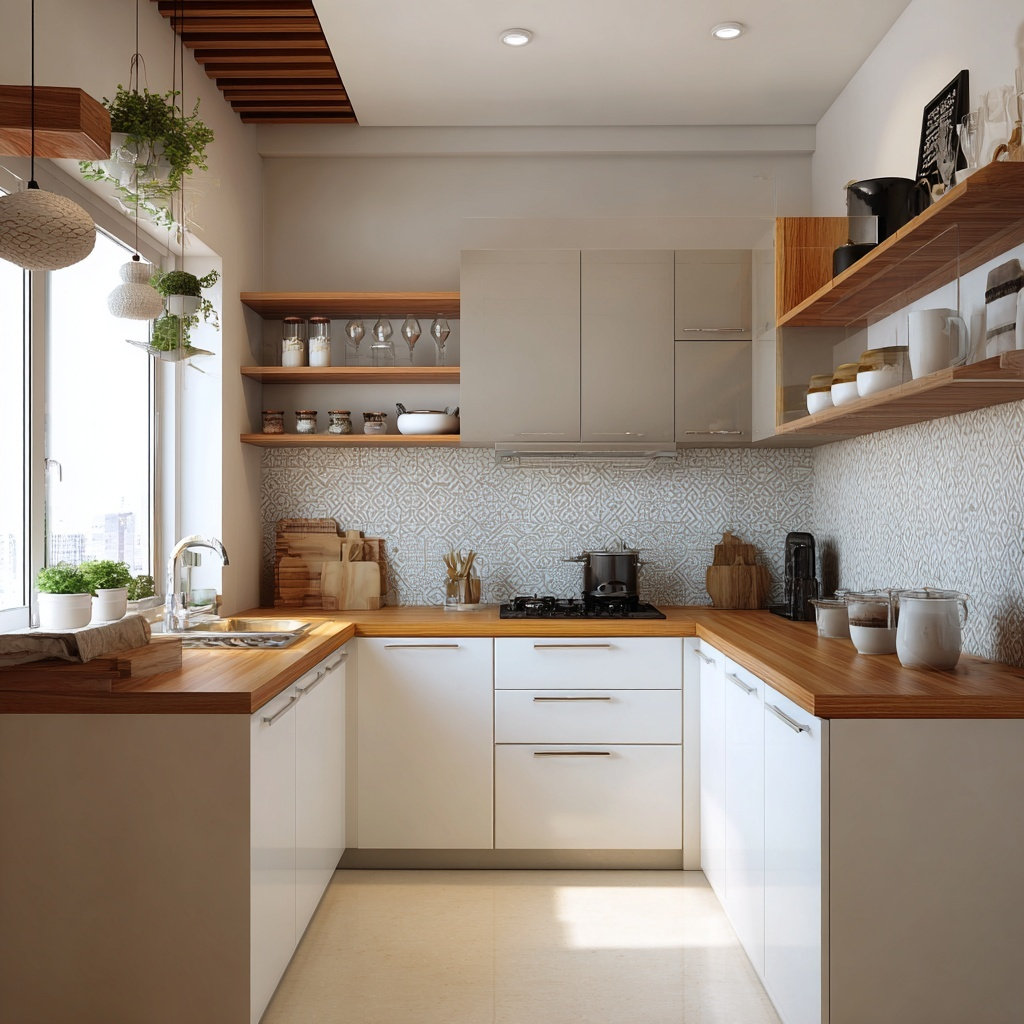
Upper units require careful control. Full-height cabinets can be useful, but only when they don't overpower the space or block light. Too many upper units make small kitchens feel closed and visually heavy, even when storage capacity increases. Balancing storage with openness is essential in kitchen interior design for small spaces.
Also read – 22+ Best Kitchen Backsplash Ideas That Do More Than Just Sit Behind The Counter
Cupboard Design And Internal Organisation
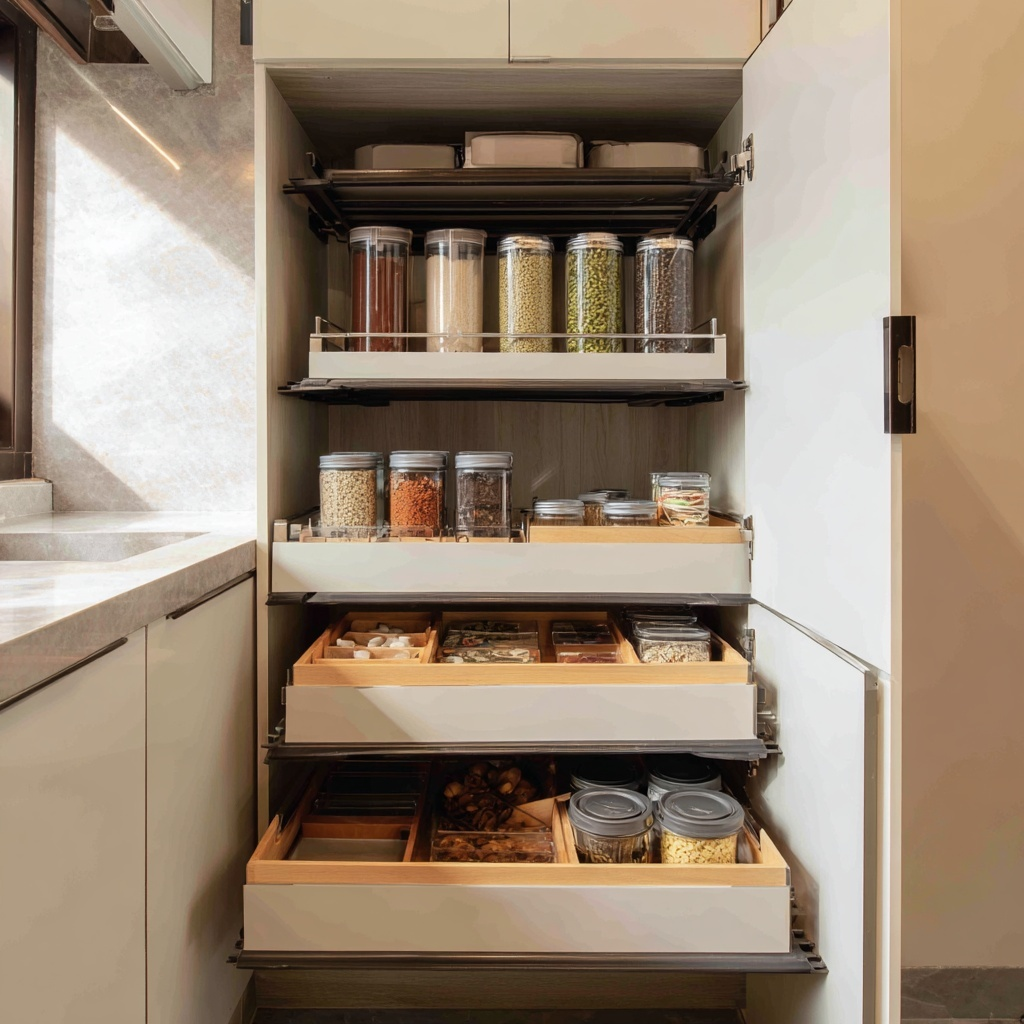
Cupboard design affects daily use more than appearance. Sliding shutters, lift-up doors, and handle-less finishes reduce obstruction in tight zones. Inside the cabinets, pull-out trays and vertical dividers often work better than deep shelves, where items disappear. These details quietly improve workflow without adding clutter.
Appliance Size And Placement
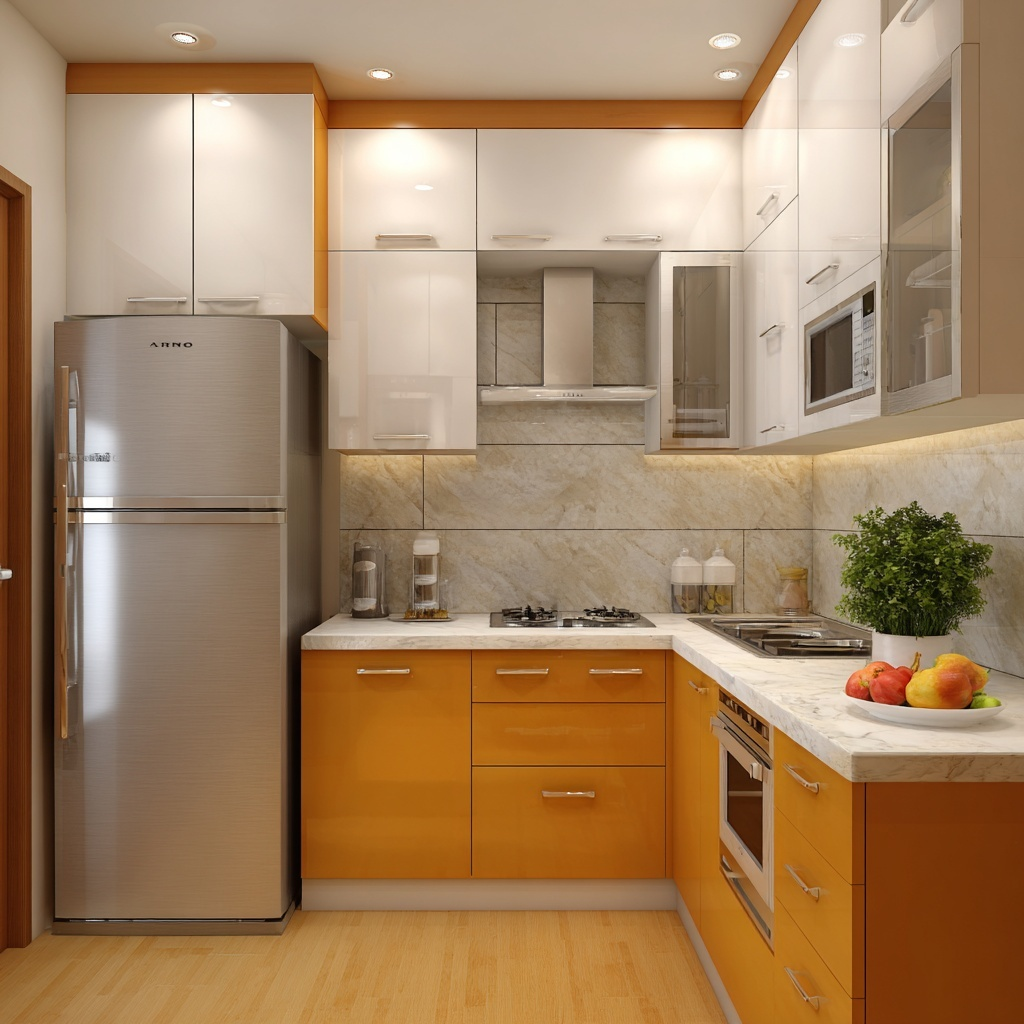
Appliances should be chosen for actual use, not scale. Oversized refrigerators or unnecessary built-ins occupy space without improving efficiency.
Also read – Acrylic Kitchen Cabinets: Know It’s Types, Finishes, Colours, Cost and More
Tiny Decor Touches For Small Kitchens
Decor matters. But lightly. In small kitchens, you have to be very particular with the decor you want to add, as it can make the space look cluttered.
Try:
- Under-cabinet lighting.
- Open spice racks.
- Small indoor plants.
- Magnetic knife strips.
- Wall hooks for mugs.
These tiny touches improve kitchen interior design for small spaces instantly.
Smart Kitchen Colour Combinations For Small Spaces
Colour changes everything. Seriously. Try these combinations to make your small kitchen look bigger:
White + Wood
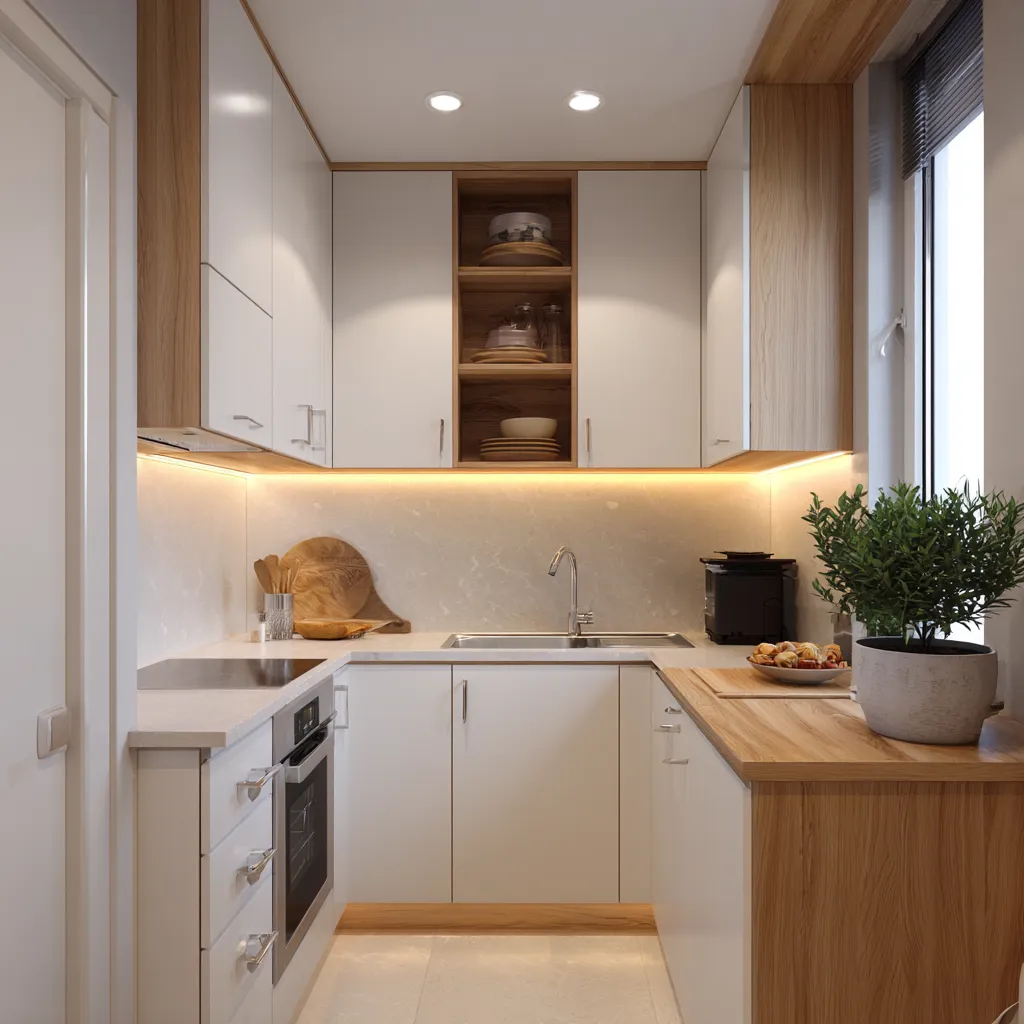
Warm but bright. This combination is perfect for modern small kitchen design lovers.
Read also – Gloss vs Matte Kitchen Cabinets: What Actually Works in a Real Kitchen?
Light Grey + White
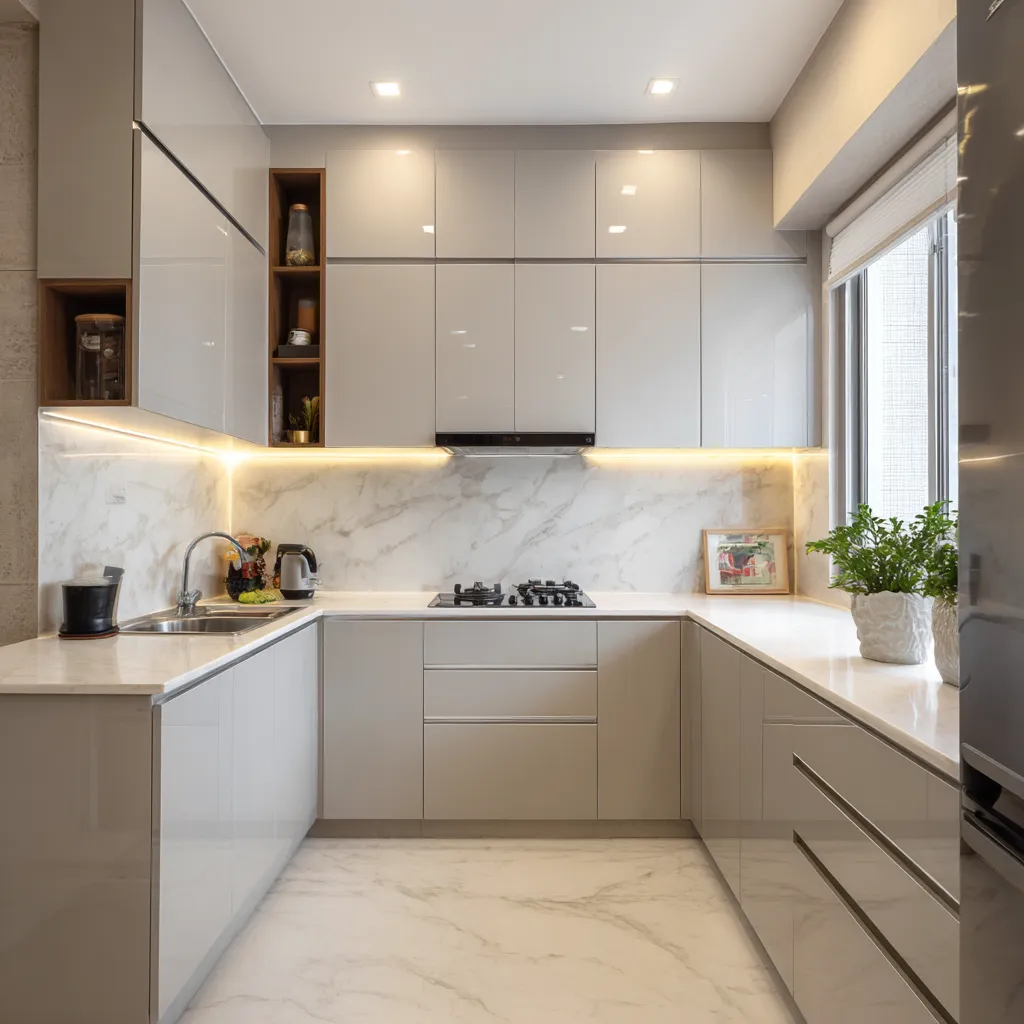
It's minimal, clean, and calm. It is great for small kitchen architecture design themes.
Beige + Gloss Finish
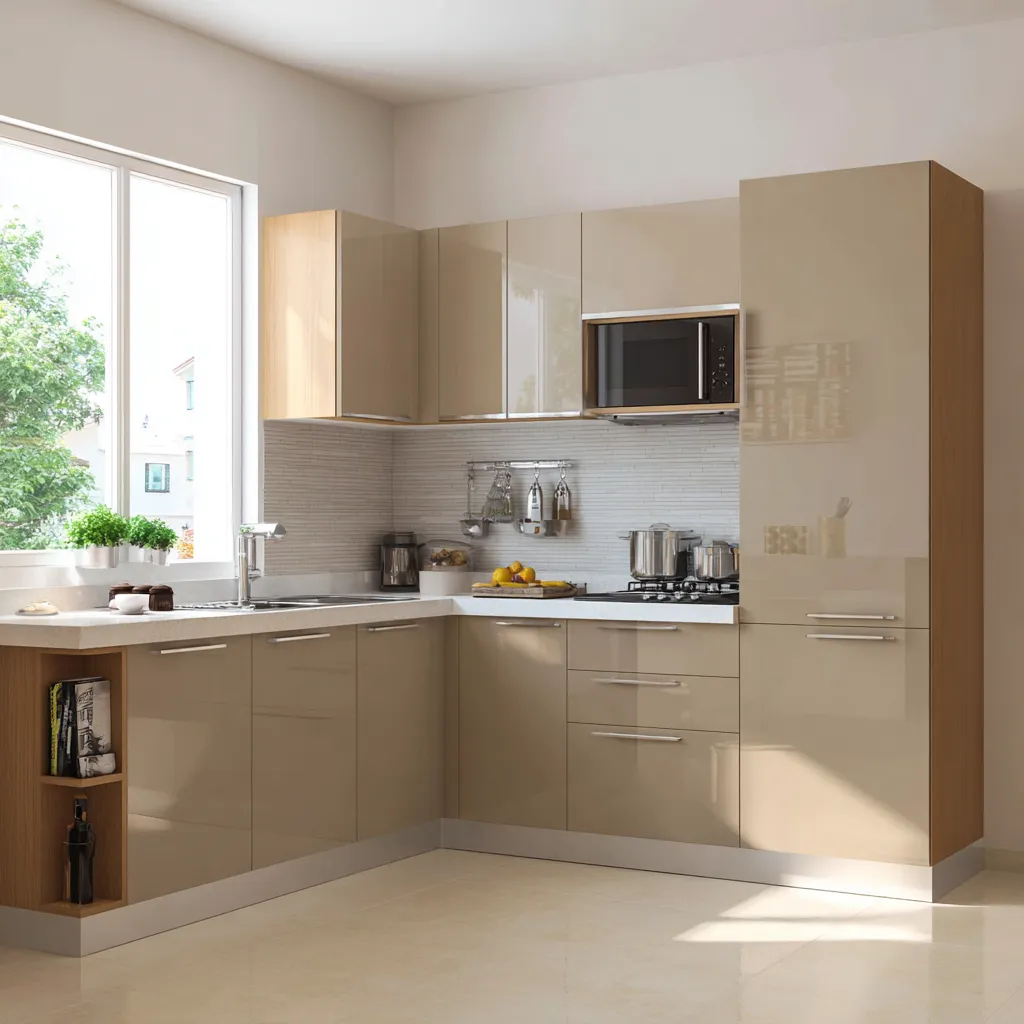
This combination will reflect light nicely. It works well in a simple model kitchen design.
Pastel Green + Blue
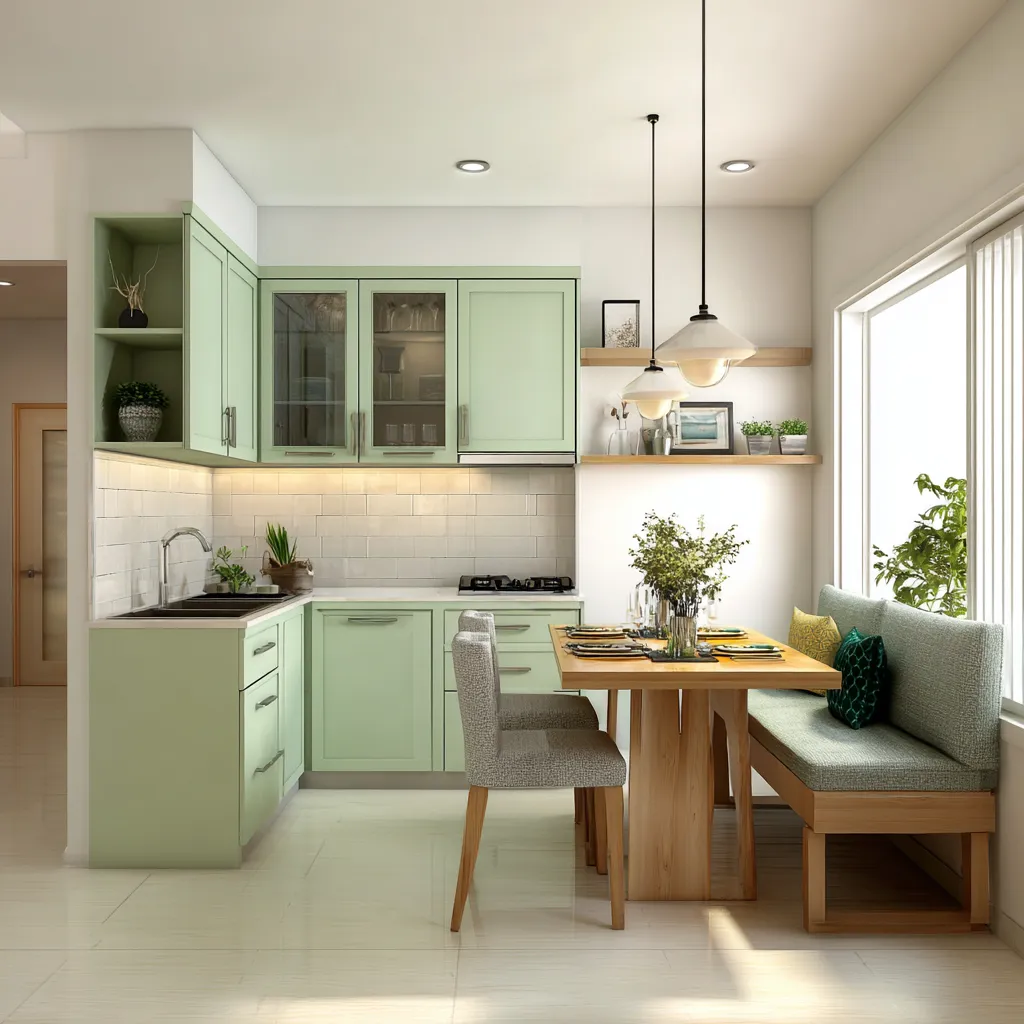
Soft colours mean a relaxed vibe. This combination is a nice option for small kitchens connected to dining or living areas.
Also read – 20+ Best Kitchen Design Tips: Everything You Need To Plan The Perfect Kitchen
Choosing The Right Materials: MDF vs HDF vs Laminates
Material choice matters more than people think. Here are a few material choices commonly used in kitchens:
MDF
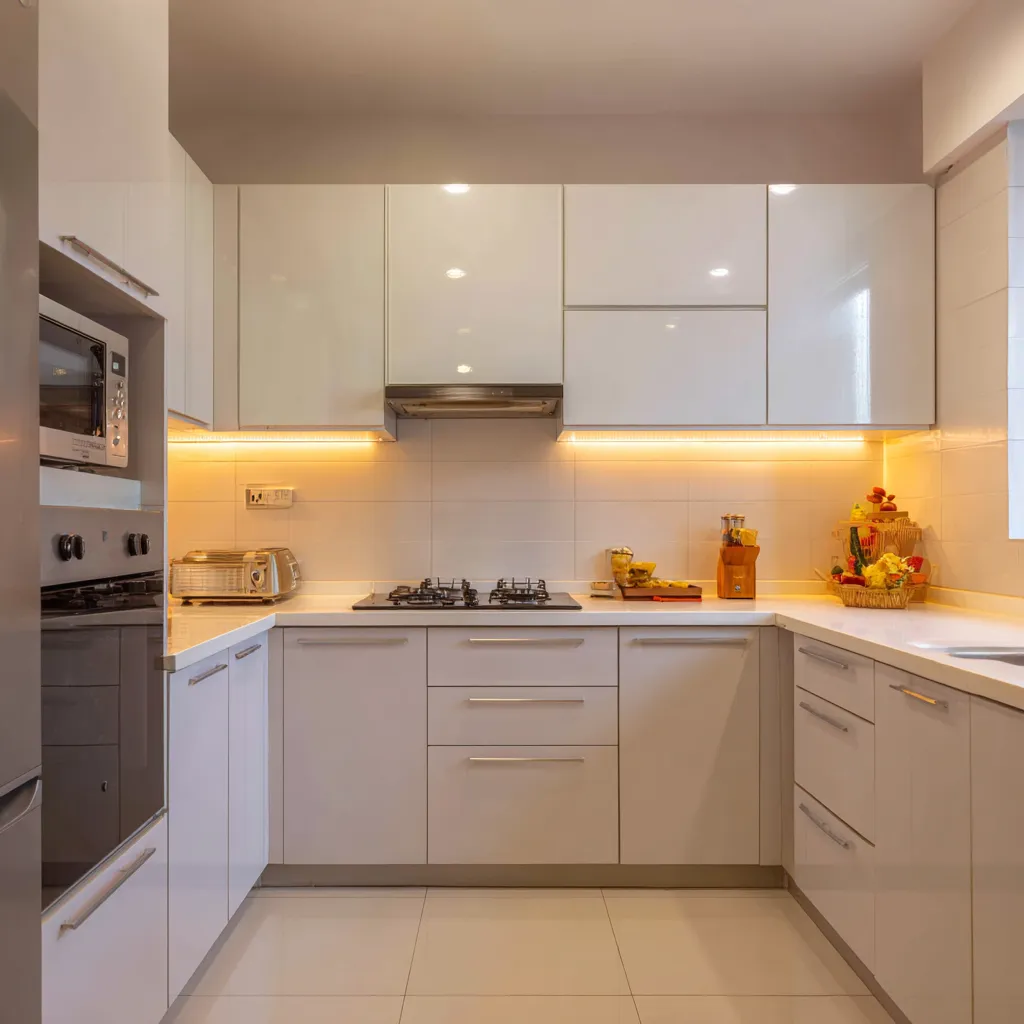
It is good for:
- Painted shutters.
- Budget kitchens.
- Smooth finishes.
It is common in simple, small modular kitchen layouts.
HDF
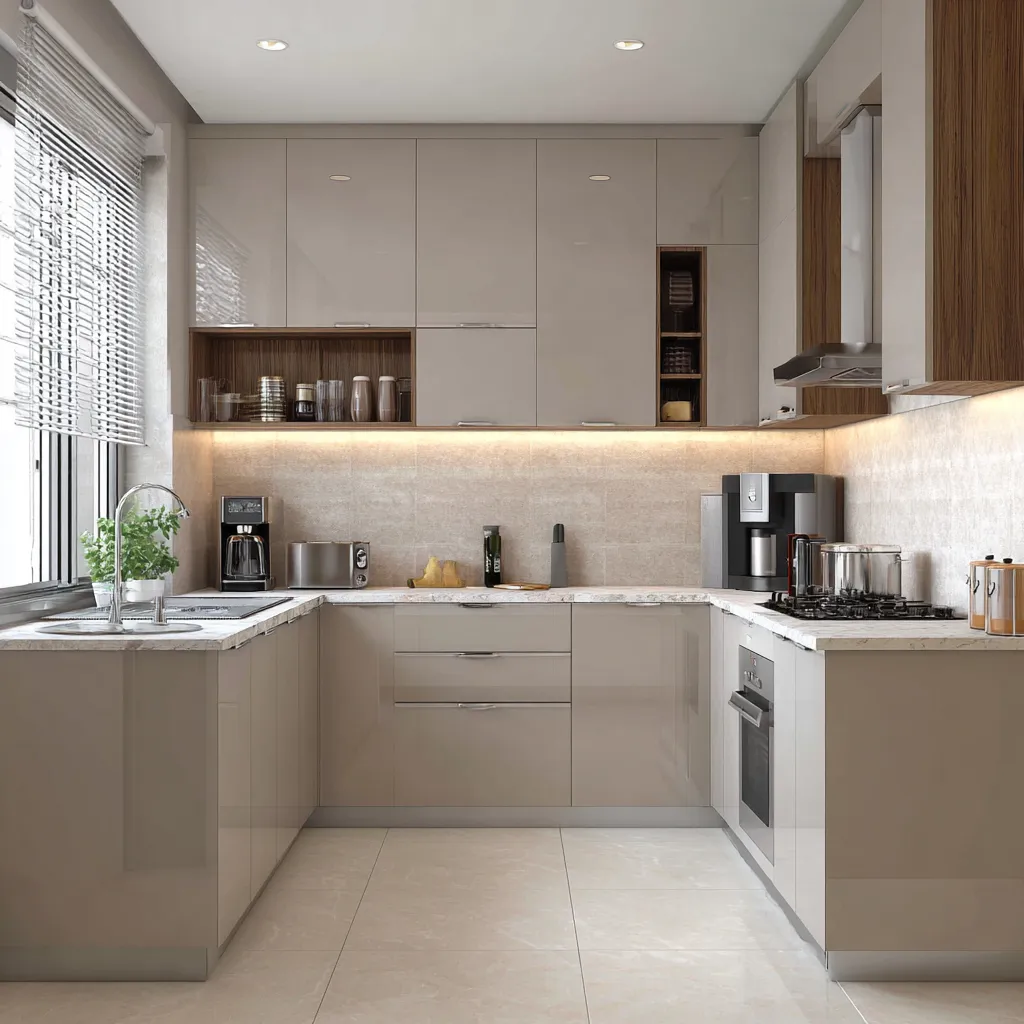
HDF is stronger than MDF. It has:
- Better durability.
- Better long-term investment.
It works well in small modern kitchen design homes.
Laminates
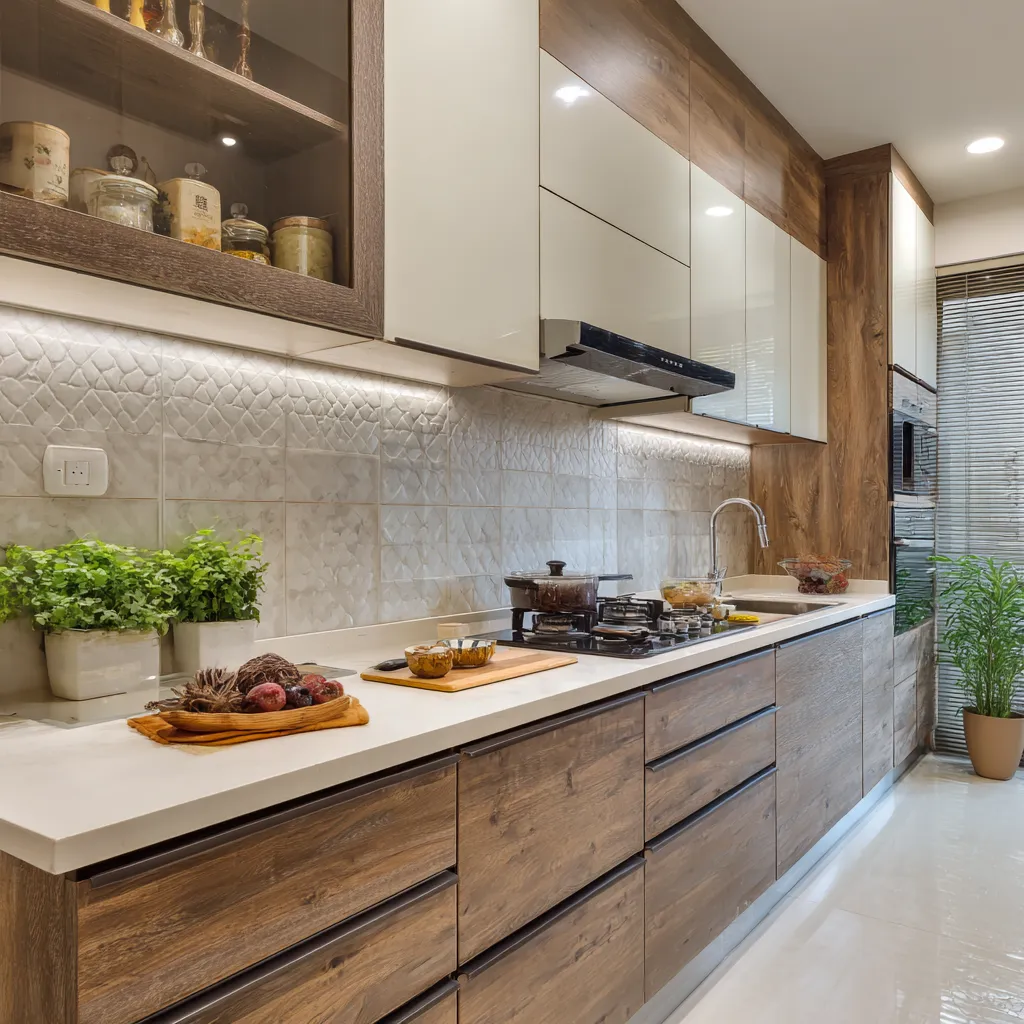
These are the most popular choices. It is:
- Affordable
- Stylish
- Easy maintenance.
It's the best option for small kitchen interior design projects on a budget.
Smart Lighting Ideas For Small Kitchen Spaces
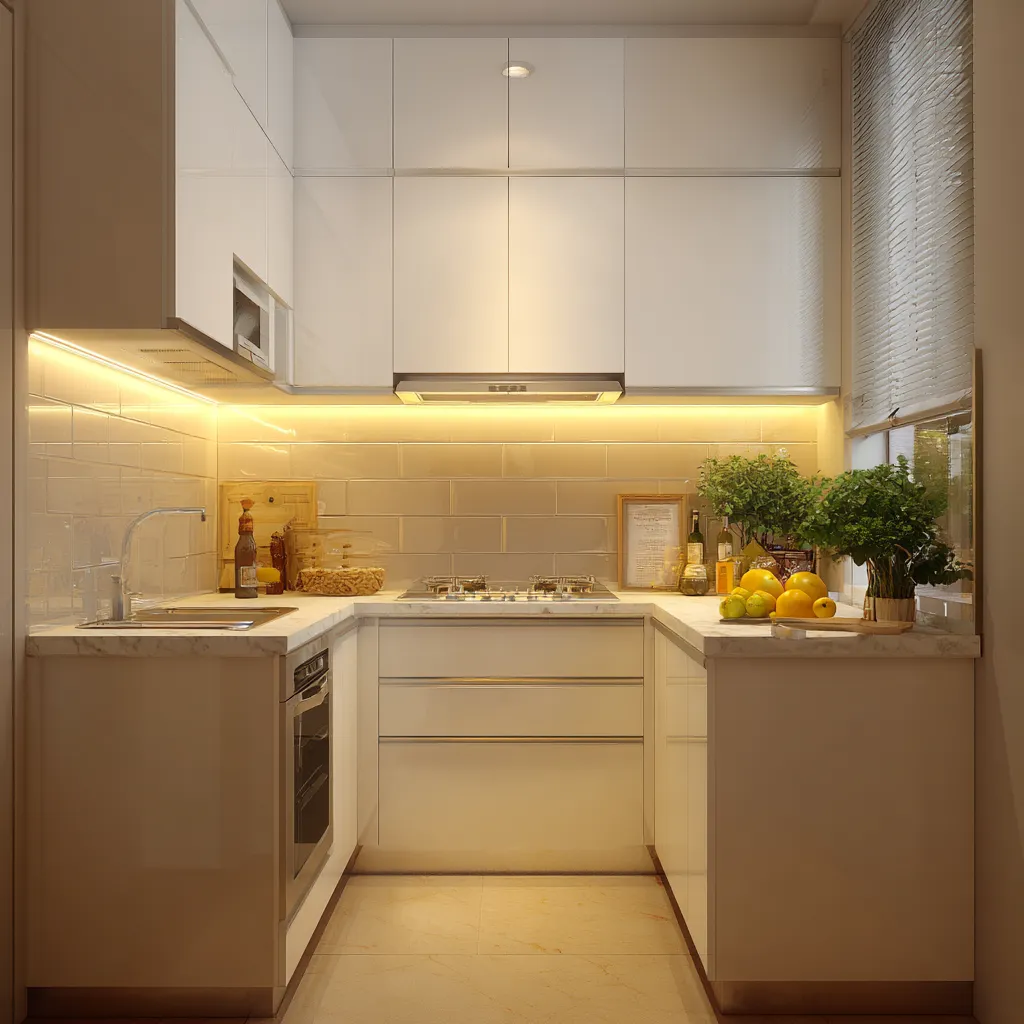
Lighting is underrated. But it has a strong effect on how the space feels. It improves visibility while preparing food and also makes countertops look more spacious.
Add:
- Under-cabinet LED strips.
- Ceiling panel lights.
- Warm white task lighting.
- Reflective backsplash tiles.
These ideas work wonders in kitchen design ideas in small spaces.
Read also – What is a Modular Kitchen – Everything You Need to Know Before Planning One
Smart Appliance Choices For Compact Kitchens
Choose compact appliances whenever possible. Large appliances can make a small kitchen feel crowded.
Go for:
- Slim chimneys.
- Built-in microwave units.
- 2-burner hobs.
- Tall refrigerators instead of wide ones.
These appliances will save space and will make your kitchen more functional.
Open vs Closed Storage: What Works Better?
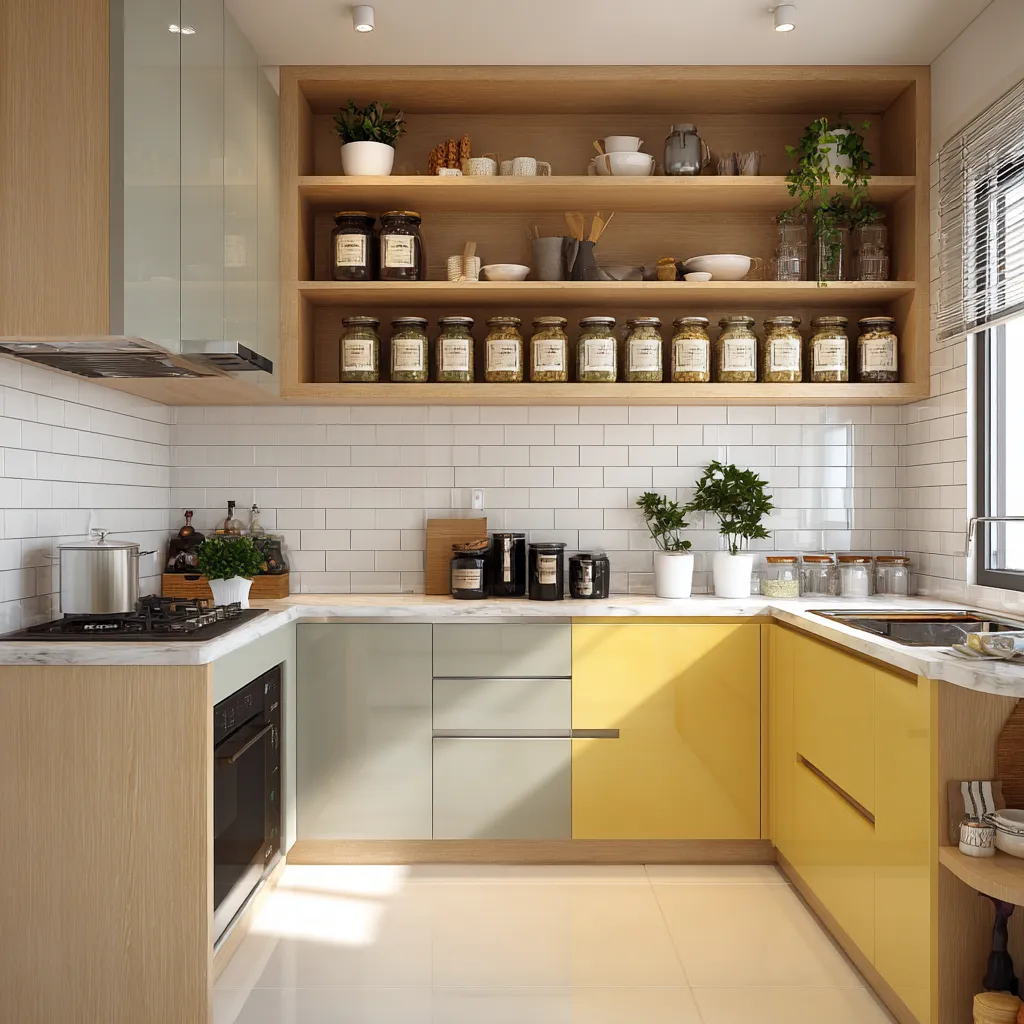
Both can work honestly. It depends on how you use your kitchen and how much stuff you have in the kitchen.
Open shelves:
- Feel lighter.
- Look stylish.
- Reduce bulkiness.
Closed cabinets:
- Hide clutter.
- Cleaner look.
- Easier maintenance.
Best approach? Mix both. This approach works really well in small area kitchen ideas.
Where Most Small Kitchen Designs Go Wrong?
We all have seen these mistakes too often. Avoid:
- Dark cabinets everywhere.
- Too many open shelves.
- Oversized handles.
- Deep counters in narrow kitchens.
- Ignoring corner storage.
- Poor lighting placement.
Fix these, and your tiny kitchen design improves instantly.
A Little Planning Goes A Long Way
A small kitchen really doesn't have to feel tight or frustrating all the time. Once the layout starts making sense, like maybe a parallel kitchen design, or an L-shaped kitchen design, or even just a simple straight kitchen design, things already start feeling easier. Then you add better storage, lighter colours, maybe a few smarter cabinets here and there. And suddenly the whole space feels bigger, calmer, more usable. Not perfect obviously, but way more comfortable to cook in every day.
And if planning all this feels confusing (which it usually does), getting help from professionals makes everything easier. That's where Interior Company can help you. The team specialises in practical, stylish modular kitchen solutions that actually fit real homes, and not just showroom kitchens.
*Images used are for representational purposes only. Unless explicitly mentioned, the Interior Company does not hold any copyright to the images.*
kitchen Design Ideas for You
- Shape
- Color
- Finish
- Theme
- Backsplash Color
- Backsplash Material
- Cabinet Style
- Counter Colour
- Floor Material
- Size
- Almond Brown Color Kitchen Design
- Beige Color Kitchen Design
- Black Color Kitchen Design
- Blue Color Kitchen Design
- Brown Color Kitchen Design
- Charcoal Black Color Kitchen Design
- Charcoal Grey Color Kitchen Design
- Coral Color Kitchen Design
- Cream Color Kitchen Design
- Dark Grey Color Kitchen Design
- Gold Color Kitchen Design
- Green Color Kitchen Design
- Grey Color Kitchen Design
- Ivory Color Kitchen Design
- Light Brown Color Kitchen Design
- Multicolour Color Kitchen Design
- Natural Brown Color Kitchen Design
- Nude Color Kitchen Design
- Off White Color Kitchen Design
- Olive Color Kitchen Design
- Olive Green Color Kitchen Design
- Olive Rust Color Kitchen Design
- Orange Color Kitchen Design
- Pink Color Kitchen Design
- Purple Color Kitchen Design
- Red Color Kitchen Design
- Silver Color Kitchen Design
- Smokey Blue Color Kitchen Design
- Smokey Grey Color Kitchen Design
- Stone Color Kitchen Design
- Teal Color Kitchen Design
- White Color Kitchen Design
- Wooden Brown Color Kitchen Design
- Yellow Color Kitchen Design
- Contemporary Theme Kitchen Design
- Cottage-Style Theme Kitchen Design
- Countryside Theme Kitchen Design
- Industrial Theme Kitchen Design
- Luxurious Theme Kitchen Design
- Mid-Century Modern Theme Kitchen Design
- Minimalist Theme Kitchen Design
- Modern Theme Kitchen Design
- Modern -Industrial Theme Kitchen Design
- Rustic Theme Kitchen Design
- Scandinavian Theme Kitchen Design
- Traditional Theme Kitchen Design
- Beige Backsplash Color Kitchen Design
- Black Backsplash Color Kitchen Design
- Blue Backsplash Color Kitchen Design
- Brown Backsplash Color Kitchen Design
- Gray Backsplash Color Kitchen Design
- Green Backsplash Color Kitchen Design
- Metallic Backsplash Color Kitchen Design
- Multi Backsplash Color Kitchen Design
- Orange Backsplash Color Kitchen Design
- Red Backsplash Color Kitchen Design
- White Backsplash Color Kitchen Design
- Yellow Backsplash Color Kitchen Design
- Brick Backsplash Material Kitchen Design
- Cement Tile Backsplash Material Kitchen Design
- Ceramic Tile Backsplash Material Kitchen Design
- Engineered Quartz Backsplash Material Kitchen Design
- Glass Tile Backsplash Material Kitchen Design
- Granite Backsplash Material Kitchen Design
- Marble Backsplash Material Kitchen Design
- Matchstick Tile Backsplash Material Kitchen Design
- Mosaic Tile Backsplash Material Kitchen Design
- Porcelain Tile Backsplash Material Kitchen Design
- Stone Slab Backsplash Material Kitchen Design
- Stone Tile Backsplash Material Kitchen Design
- Subway Tile Backsplash Material Kitchen Design
- Terra-Cotta Tile Backsplash Material Kitchen Design
- Travertine Backsplash Material Kitchen Design
- Window Backsplash Material Kitchen Design
- Wood Backsplash Material Kitchen Design
- Beige Counter Colour Kitchen Design
- Black Counter Colour Kitchen Design
- Blue Counter Colour Kitchen Design
- Brown Counter Colour Kitchen Design
- Gray Counter Colour Kitchen Design
- Green Counter Colour Kitchen Design
- Multi Counter Colour Kitchen Design
- Pink Counter Colour Kitchen Design
- Red Counter Colour Kitchen Design
- White Counter Colour Kitchen Design
- Yellow Counter Colour Kitchen Design
- Carpet Floor Material Kitchen Design
- Cement Tile Floor Material Kitchen Design
- Ceramic Tile Floor Material Kitchen Design
- Dark Hardwood Floor Material Kitchen Design
- Light Hardwood Floor Material Kitchen Design
- Marble Floor Material Kitchen Design
- Medium Hardwood Floor Material Kitchen Design
- Painted Wood Floor Material Kitchen Design
- Porcelain Tile Floor Material Kitchen Design
- Terrazzo Floor Material Kitchen Design
- Travertine Floor Material Kitchen Design

Ready for a home transformation?
Let our designers assist you!
Recent Posts







Usually, an L-shaped kitchen design works for most homes because it keeps the centre area open and still gives enough counter space to cook properly. But if the kitchen is long instead of square, then a parallel kitchen design often feels easier to move around in. And honestly, sometimes even a simple straight kitchen design along one wall works perfectly fine if storage is planned smartly.
Mostly it’s small changes, not big ones. Lighter cabinet colours help a lot. Gloss finishes reflect light. Even adding under-cabinet lights makes the counter feel wider somehow. And when storage goes upward instead of spreading across walls, the kitchen automatically starts feeling less crowded.
White with wood tones almost always looks nice because it feels warm but still open. Light grey and white also work if you want something more modern. Some people try darker colours everywhere, and then the kitchen starts feeling smaller than it actually is. Softer shades usually feel safer.
Light colours help reflect light, but consistency and good planning matter more than colour choice alone.
Yes, honestly, it helps more than people expect. A small modular kitchen design uses corners properly, adds pull-out storage, and keeps things organised without making the kitchen bulky. Especially in apartments, modular layouts just make daily cooking easier.
The best thing is using vertical space. Tall cabinets, corner units, and pull-out pantry sections store way more than normal shelves. Once those are added, things stop piling up on the counter all the time. The kitchen starts looking calmer automatically.
MDF works if you want painted shutters and a lower budget setup. HDF is stronger and lasts longer, so better if the kitchen is for long-term use. Laminates are the easiest option, though. Simple to clean, lots of designs available, and they handle everyday cooking mess pretty well.
It can work, but only if there’s enough walking space left in the middle. A U-shaped kitchen gives lots of storage, which is great, but if counters come too close together, then movement becomes uncomfortable. So it depends on the room size, honestly.
Compact ones make life easier. A two-burner hob instead of a big stove. Slim chimney. Tall fridge instead of a wide fridge. These things don’t sound important at first, but they change how much space you actually get to move around.
Even a kitchen around 6×8 feet can work properly if the layout is planned well. With the right small kitchen design, storage and cooking space both fit in without making the room feel packed all the time.
Oversized cabinets, fragmented counters, late storage planning, and choosing finishes before layout are common issues.
Not always required, but it helps, honestly. A good interior designer can fix storage problems before they even happen and suggest layouts that actually suit your kitchen shape. Especially when space is tight, their planning makes a big difference later.
Related Category
- Dining Room
- False Ceilings
- Paint and Color
- Tips and Advice
- Walls and Texture