- Design Ideas
- Cities
- Trends
- Guides
- Price Calculators
- Interior DesignersNEW
- Our Portfolio
- More


- Home
- Trends
- Furniture And Decor
- Home Decor
- Rangoli Designs For Diwali
Rangoli Design For Diwali: Easy Diwali Rangoli Design Ideas For Every Home

Diwali is a festival of light, and Indian families fill their homes with it. Diyas glow on windowsills, lamps line the balcony, and a small rangoli waits at the door. Rangoli is the star of the day. A bright rangoli design for Diwali makes a house look happy and welcomes guests. It also brings the family together, since children, parents, and grandparents can all join in. Many beautiful Diwali decoration ideas start right on the floor. Here you will find easy designs, tools, colours, day-wise ideas, places, and care tips.
Table of Content
How To Plan Your Diwali Rangoli?
Rangoli Tools and Tricks for Neat Designs
Geometric Rangoli Designs for Beginners
Flower Rangoli Designs
Divine and Symbolic Rangoli Designs
Rangoli Designs with Diyas
Small, Corner and Modern Rangoli Designs
Dot Rangoli, Kolam and Regional Styles
Rangoli Ideas for Each Day of Diwali
Where to Make Rangoli at Home
Rangoli Competition Tips
How to Make Rangoli Colours at Home?
How to Make Your Rangoli Last and Clean It Up?
Conclusion
How To Plan Your Diwali Rangoli?
A little planning makes rangoli stress-free. Decide who is making it, pick the material, and choose a size that fits the spot. These steps take only a few minutes. They also stop common problems, like a design that is too big for the doorway.
Who Is Making It
Kids, beginners, and busy parents can all make a rangoli. The trick is to match the design to the maker. Young children enjoy filling colours, while older ones can draw the outlines.
- Kids under 8: Fill in colours with an adult close by
- Beginners: Start with circles and straight lines
- Teens and adults: Try dots, flowers, and symbols
Choosing the Material
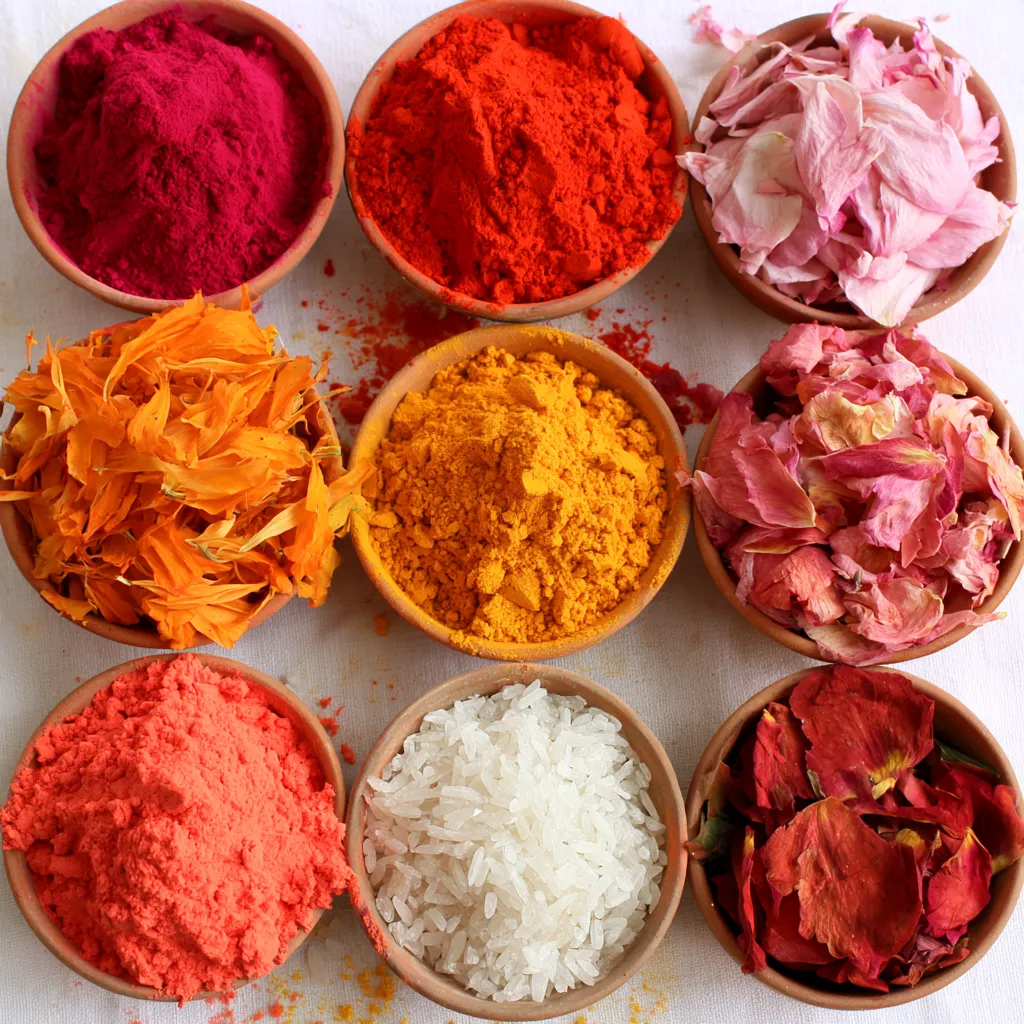
Common rangoli materials include colored powder, rice flour, flower petals, colored rice, and salt. Petals look fresh and smell lovely, while powder gives sharp colours. Homemade rangoli colours are cheap and safe for children.
- Powder: Bright and easy to control
- Petals: Soft, natural, and good for rooms
- Rice or salt: Good for borders and filling
Choosing the Design and Size
Pick a size that fits the space. A doorstep needs a smaller design, while a hall can hold a big one. Keep the pattern simple if you’re short on time, and add details only after you’ve finished the basics.
- Doorstep: About 45 to 60 cm wide
- Living room: About 90 to 120 cm wide
- Pooja room: About 30 to 45 cm wide
Rangoli Tools and Tricks for Neat Designs
Good tools make a rangoli look neat, even for a first-timer. Many of them are already in the kitchen. Some DIY home decor ideas work the same way, because simple household items often do the job as well as shop-bought ones. These rangoli design tricks save time and keep lines clean.
Compass or Thali for Circles
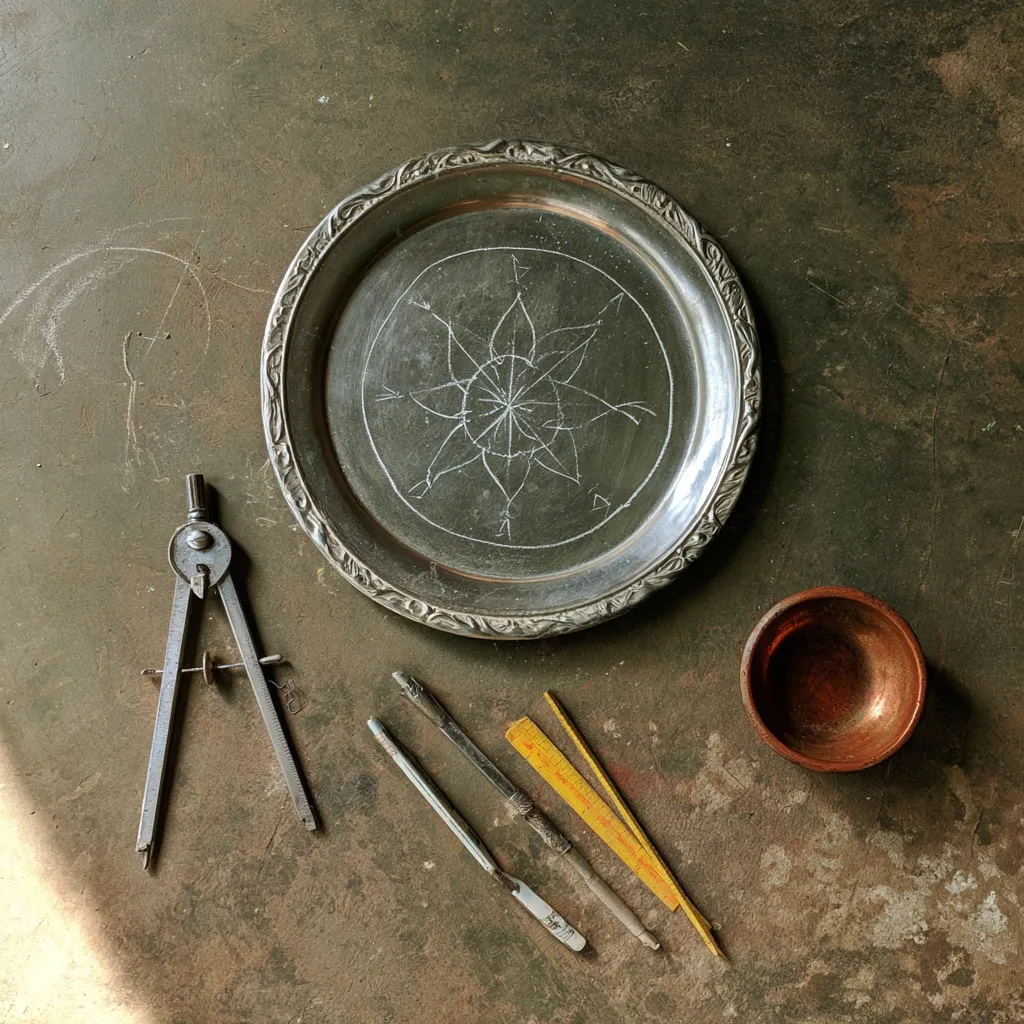
Place a thali on the floor and trace around it with chalk. A compass gives smaller, exact circles. Draw lightly so you can rub out extra lines.
Ruler for Lines
A ruler keeps lines straight and even. Lay it on the floor, then draw or pour along its edge. Use it for borders and squares.
Comb for Waves
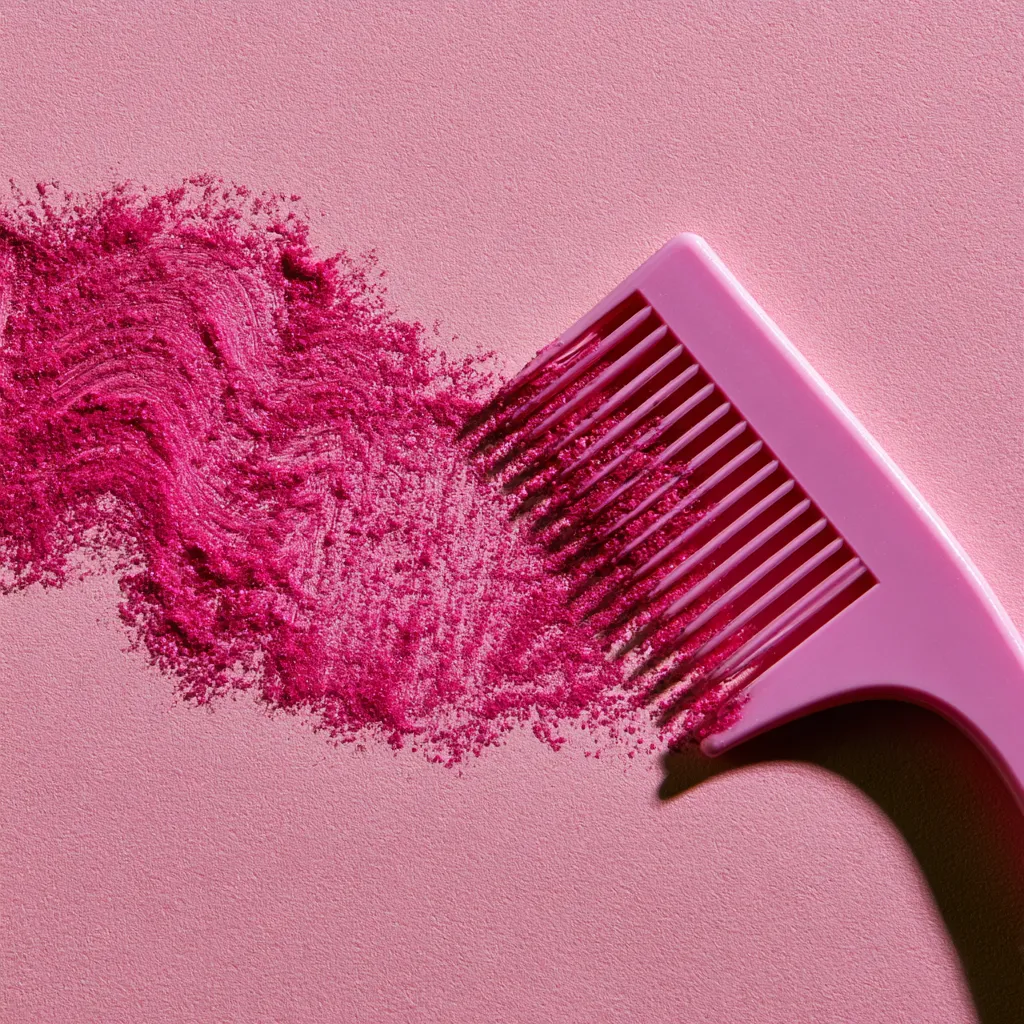
Pour a line of colour, then drag a comb gently through it. This makes neat waves in one move. It works best on dry powder.
Spoon for Petals
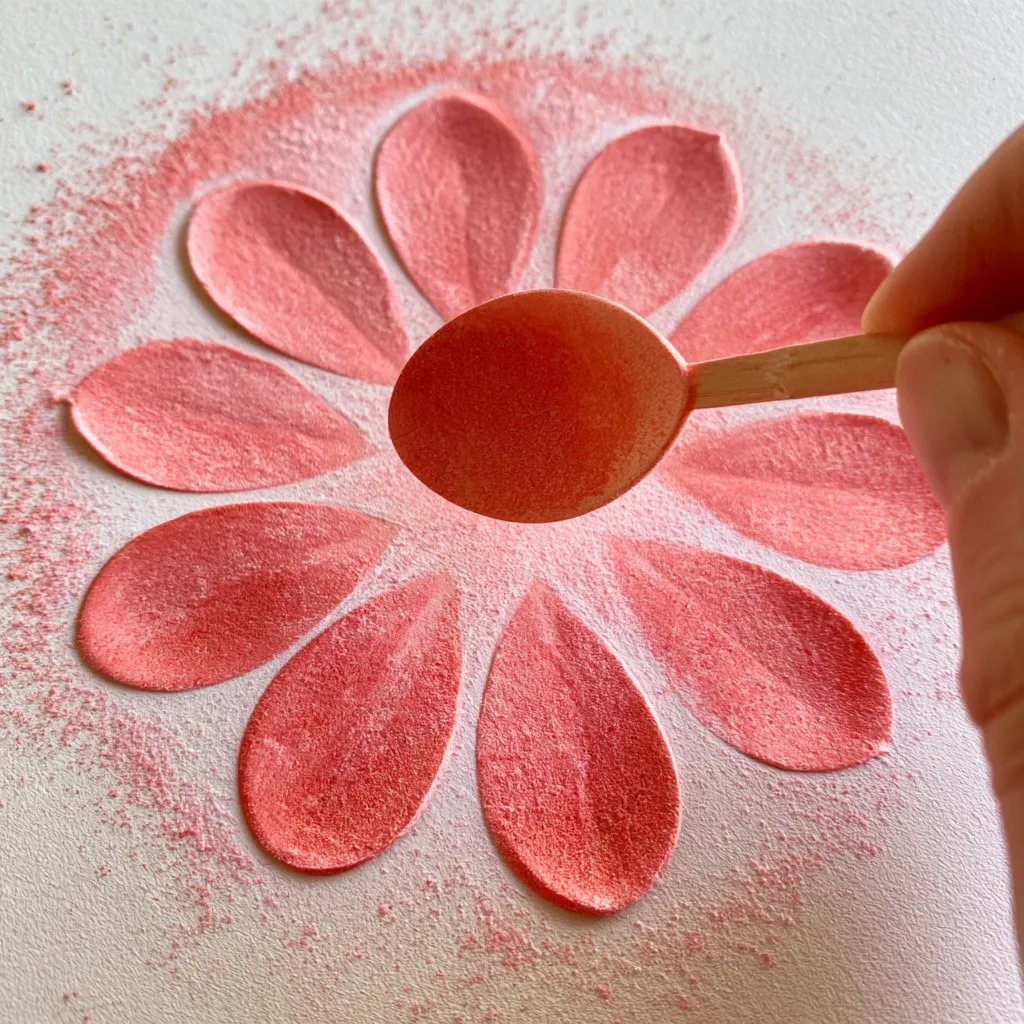
Press the back of a small spoon into colored powder, then lift. This leaves a clean petal shape. Repeat around a circle to make a flower.
Cotton Swab and Toothpick for Fine Lines
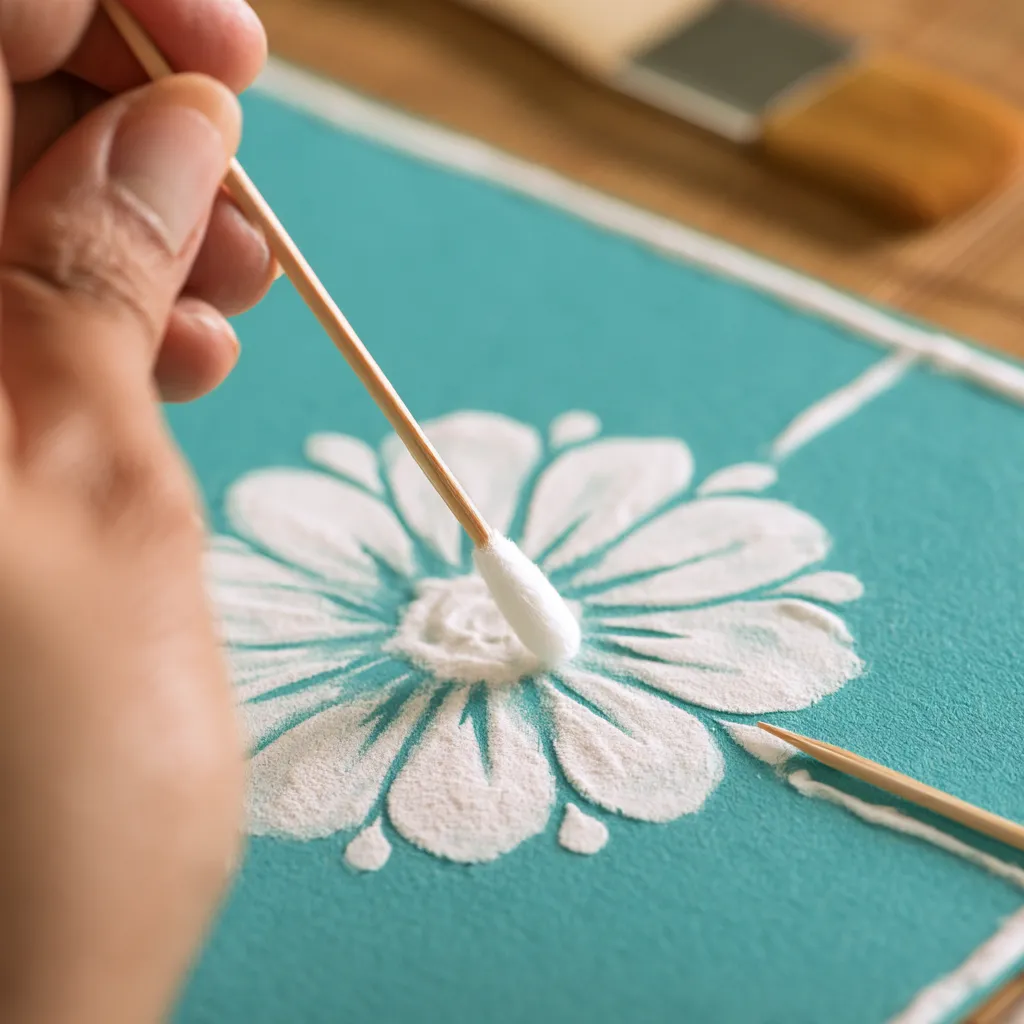
Use a cotton swab to fix smudges and a toothpick to draw thin lines. They help with small details, like eyes and edges.
Cones, Sieves, and Stencils
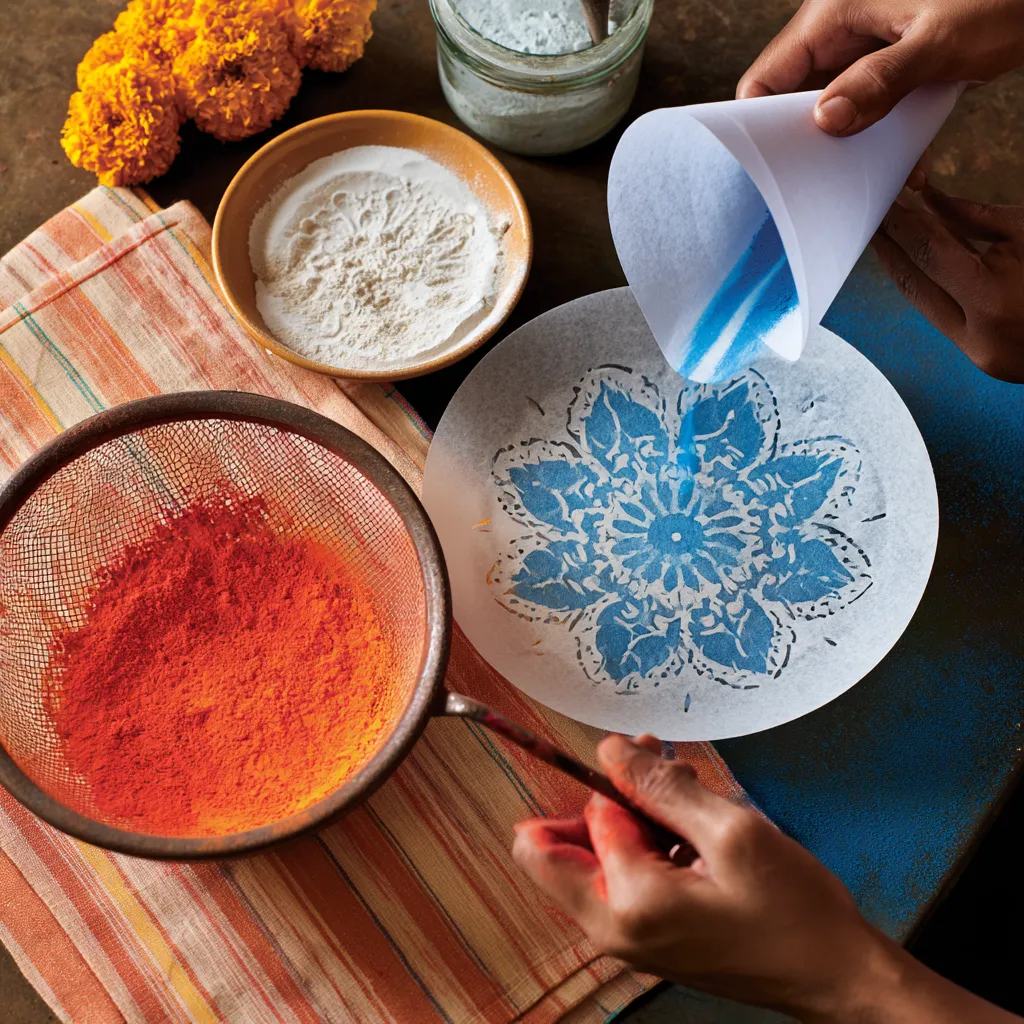
Roll paper into a cone to pour thin lines of colour. A sieve spreads powder evenly. Stencils give perfect shapes in seconds, and they suit young children.
Geometric Rangoli Designs for Beginners
Geometric rangoli designs use circles, lines, squares, and triangles. There is no need to draw faces or flowers by hand. The shapes repeat, so mistakes are easy to hide. This makes them a good first step for anyone new to rangoli.
Simple Circle Rangoli
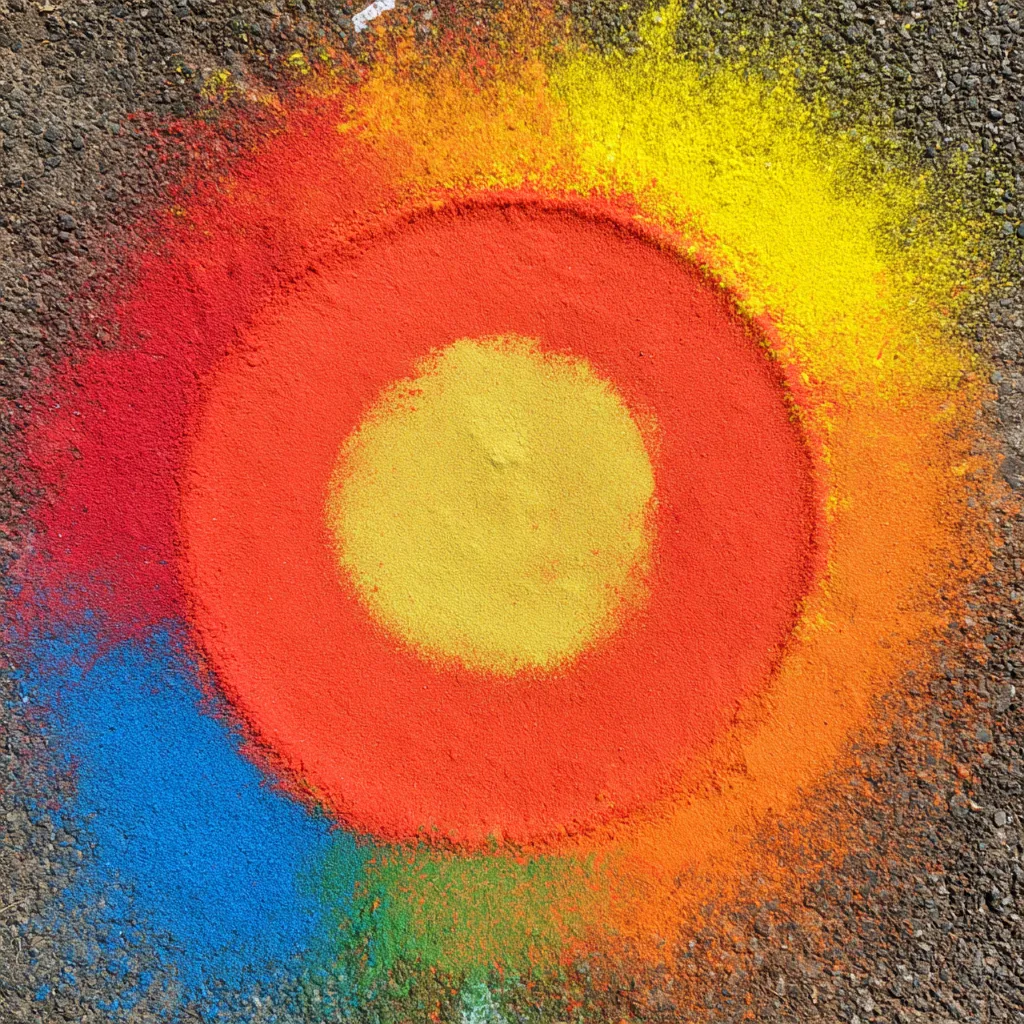
Draw one big circle with a thali. Draw a smaller circle inside it. Fill the ring between them with one colour, and the centre with another. It takes about ten minutes.
Compass Flower Rangoli
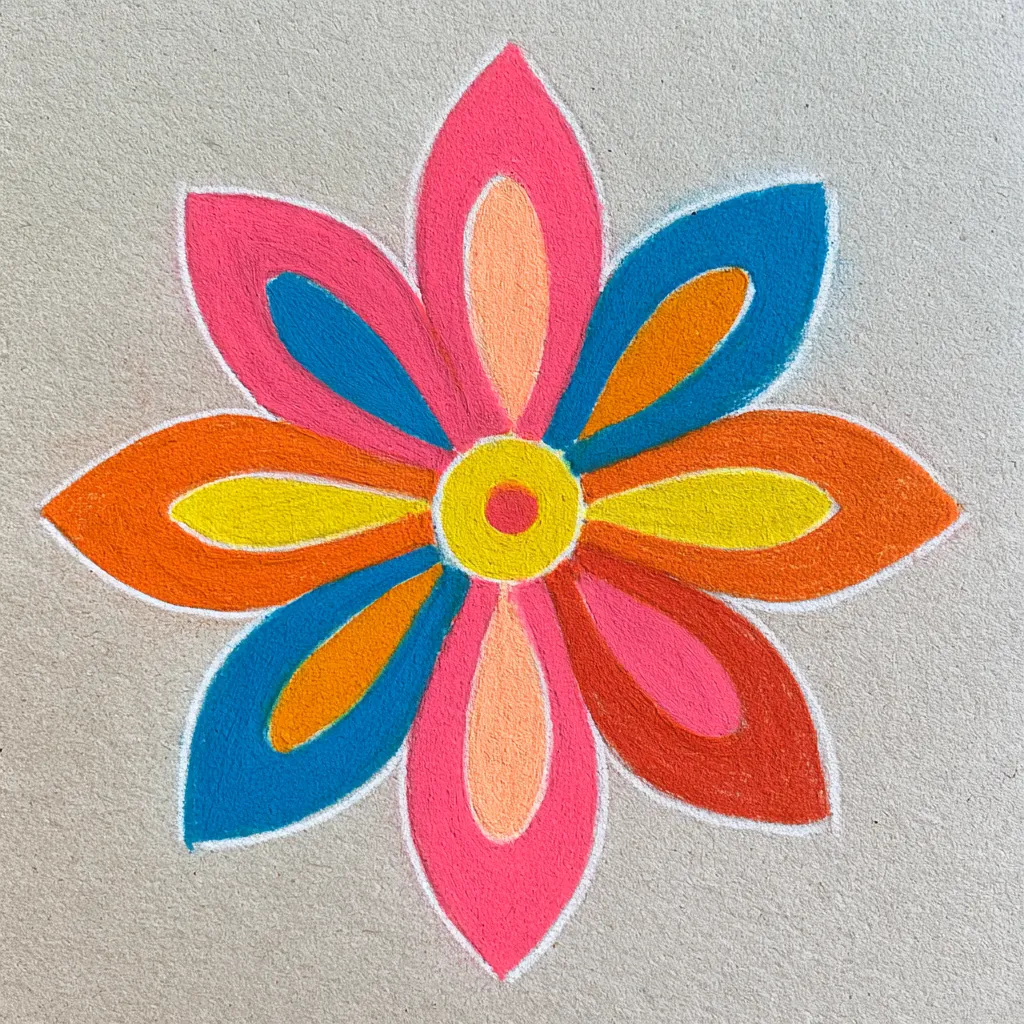
Draw a circle with a compass. Without changing the width, mark six points around the edge. Draw arcs between them to form petals. Colour each petal, and add a small dot in the middle.
Squares and Diamonds Rangoli
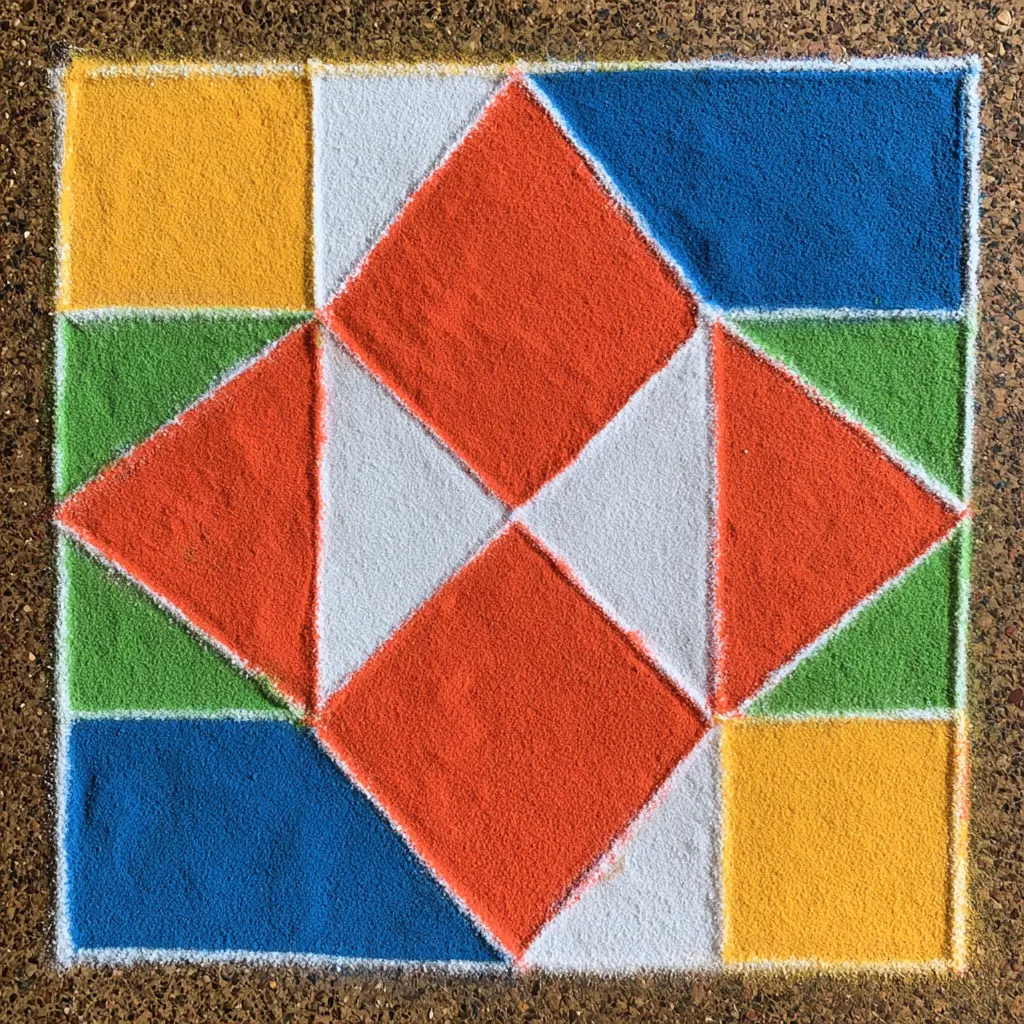
Draw a square, then turn a second square on top at an angle to make a star. Fill the shapes in alternate colours. The pattern looks bold, and it is simple to repeat.
Straight-Line Rangoli
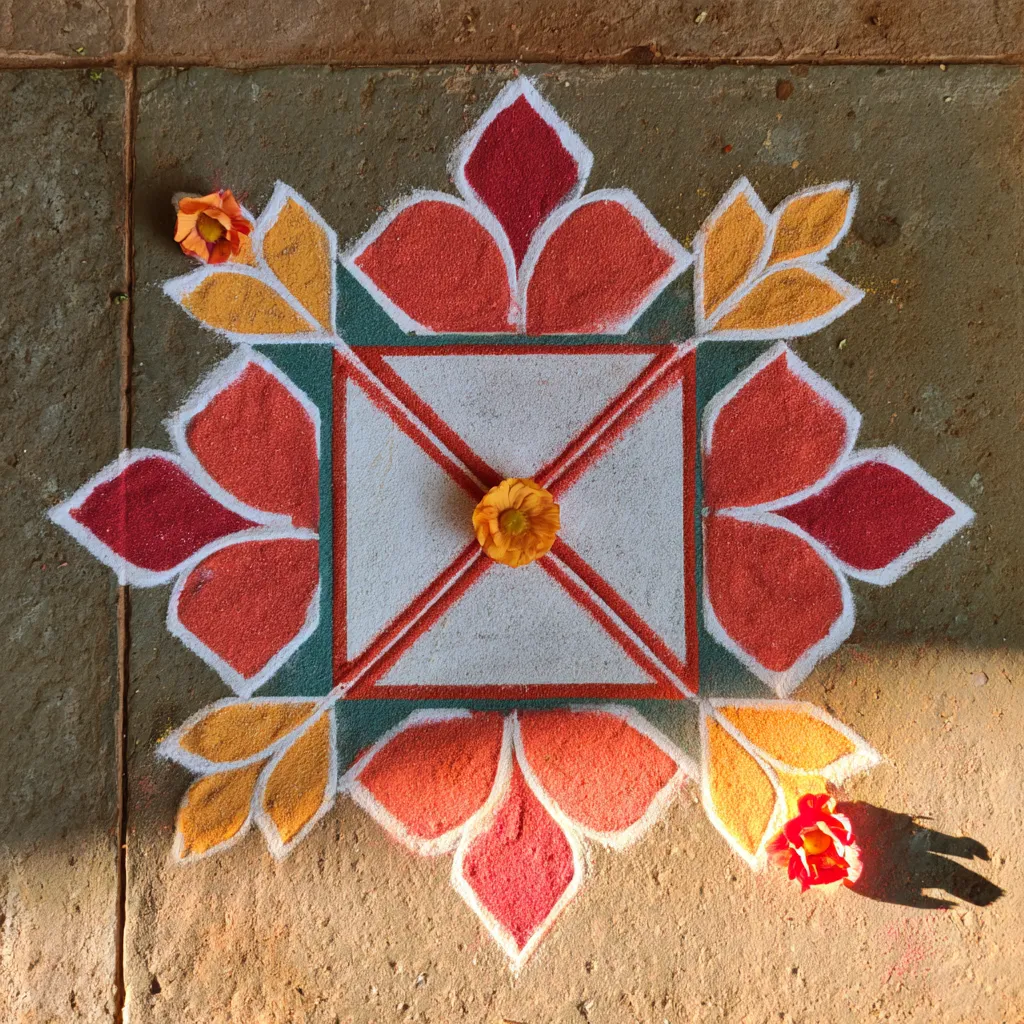
Use a ruler to draw parallel lines in different colours. Cross them in the middle to make a neat grid. This pattern suits narrow doorsteps and corridors.
Paisley Rangoli
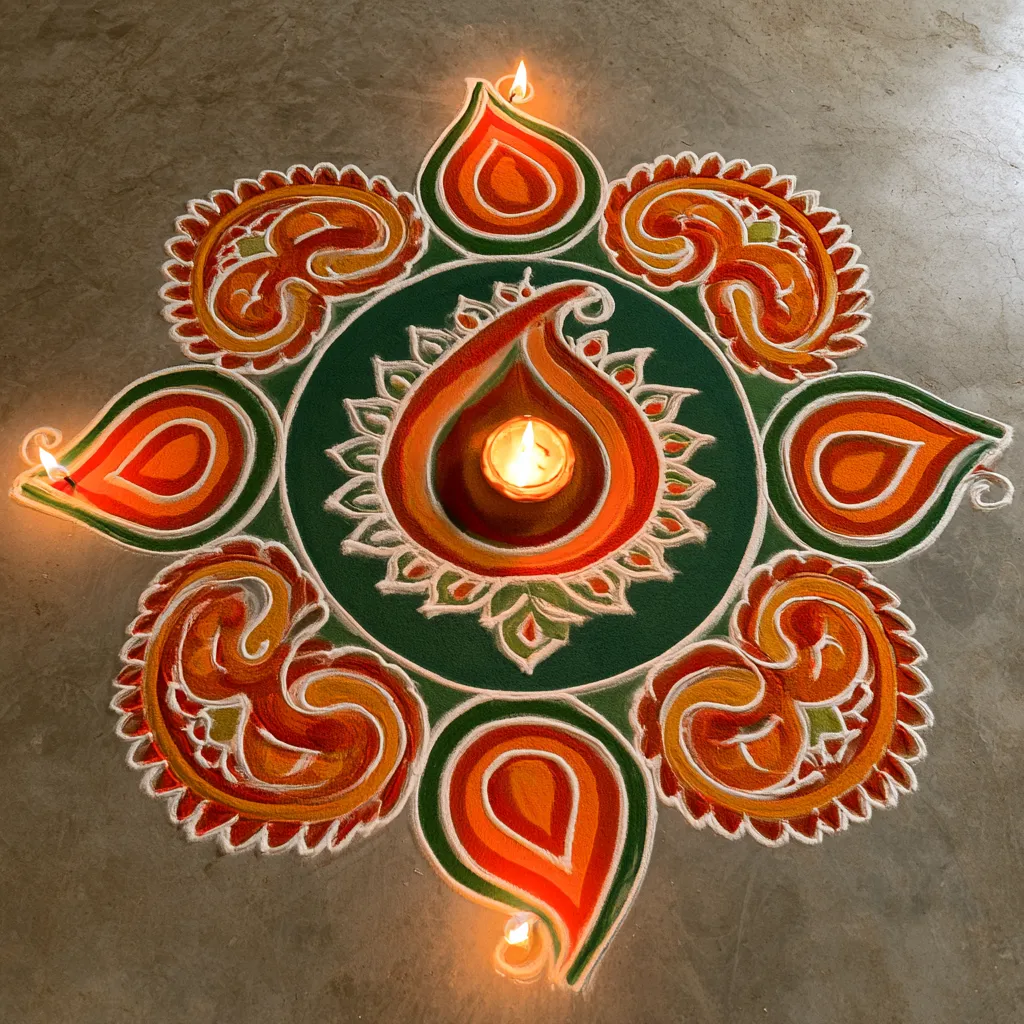
Draw a teardrop shape with a curl at the tip. Repeat it around a circle, with each tip pointing the same way. Fill each paisley with two colours, and outline it with white.
Fan-Shaped Rangoli
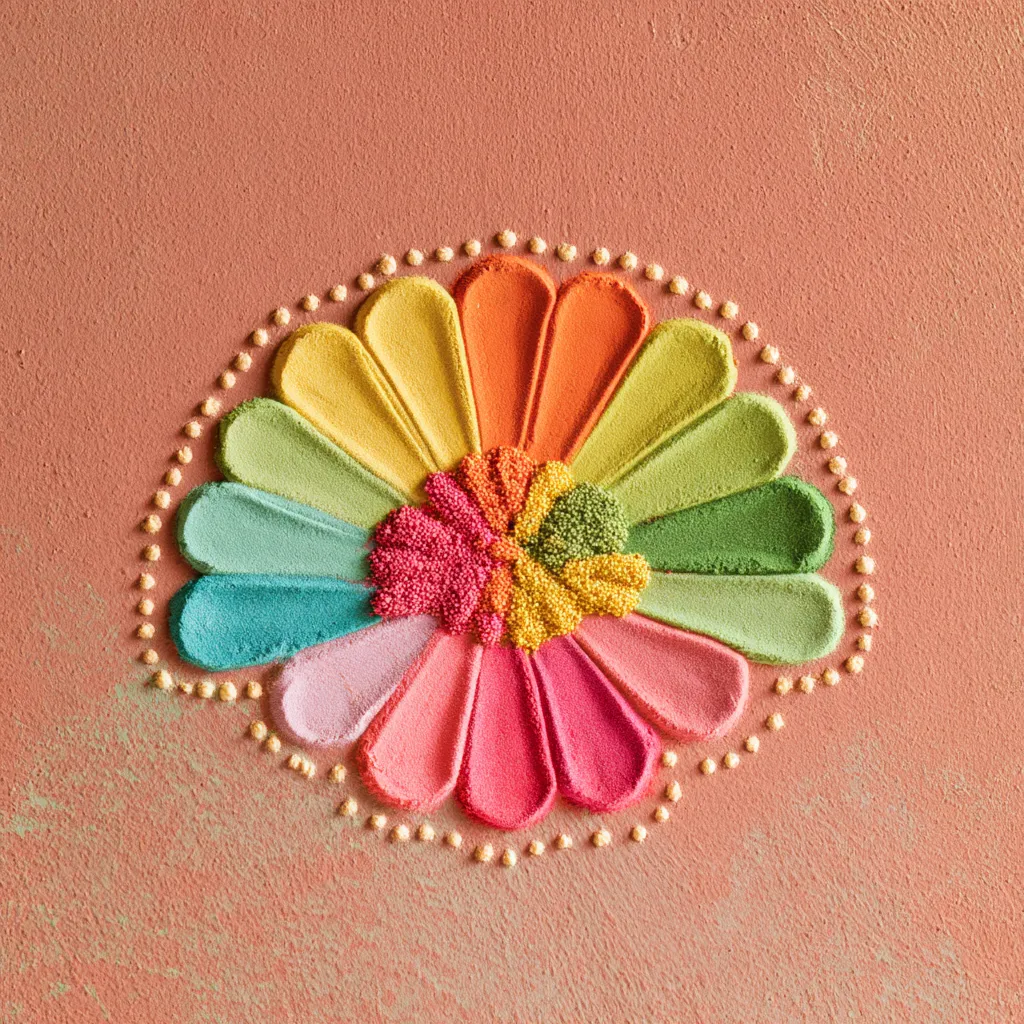
Draw a half circle against a wall. Divide it into slices, like a hand fan. Fill each slice with a different colour, and add a dotted border.
Flower Rangoli Designs
Flower rangoli uses real petals instead of powder. It is soft, fresh, and fragrant, and it fits nicely with home flower decoration ideas for the festival. Marigold, rose, lotus, and mogra are the most popular. Each colour suits a different room, so choose with care.
Marigold Petal Spiral
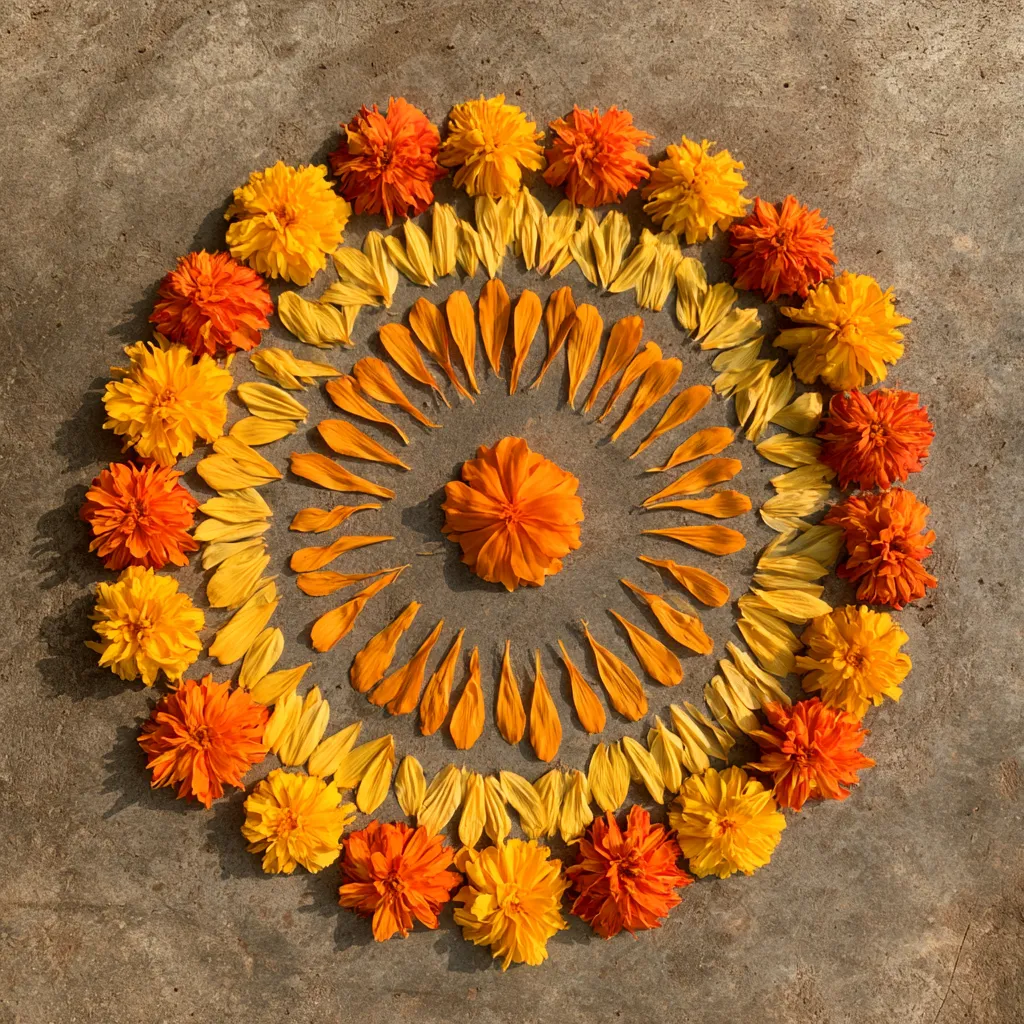
Start at the centre with one orange petal, and spiral outward, alternating orange and yellow. Keeping a marigold plant at home means fresh petals are always close by. This bright design suits the main entrance, since it can be seen from far away.
Lotus Rangoli
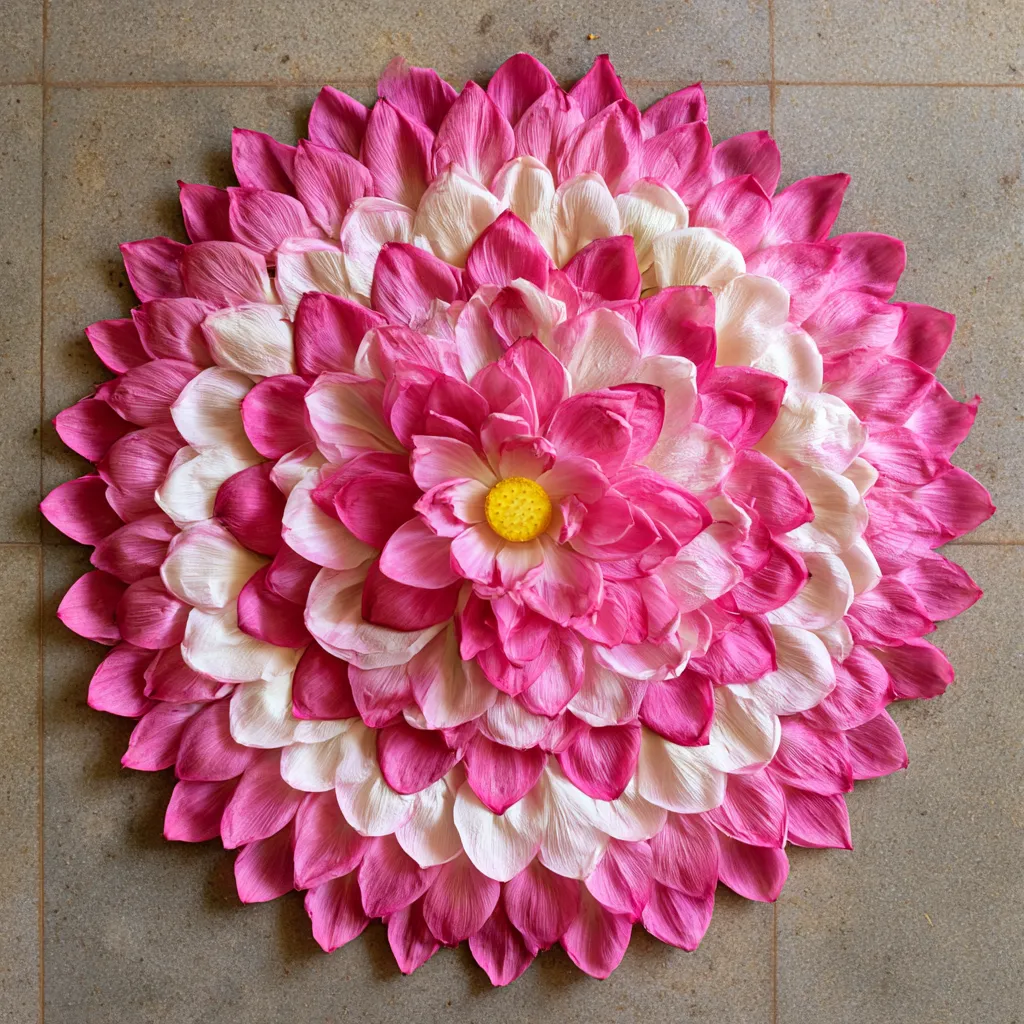
Arrange pink or white petals in layers, with the largest ring at the bottom. Add a yellow centre. A lotus is linked with Goddess Lakshmi, so it suits the pooja room and the living room.
Marigold Square Rangoli
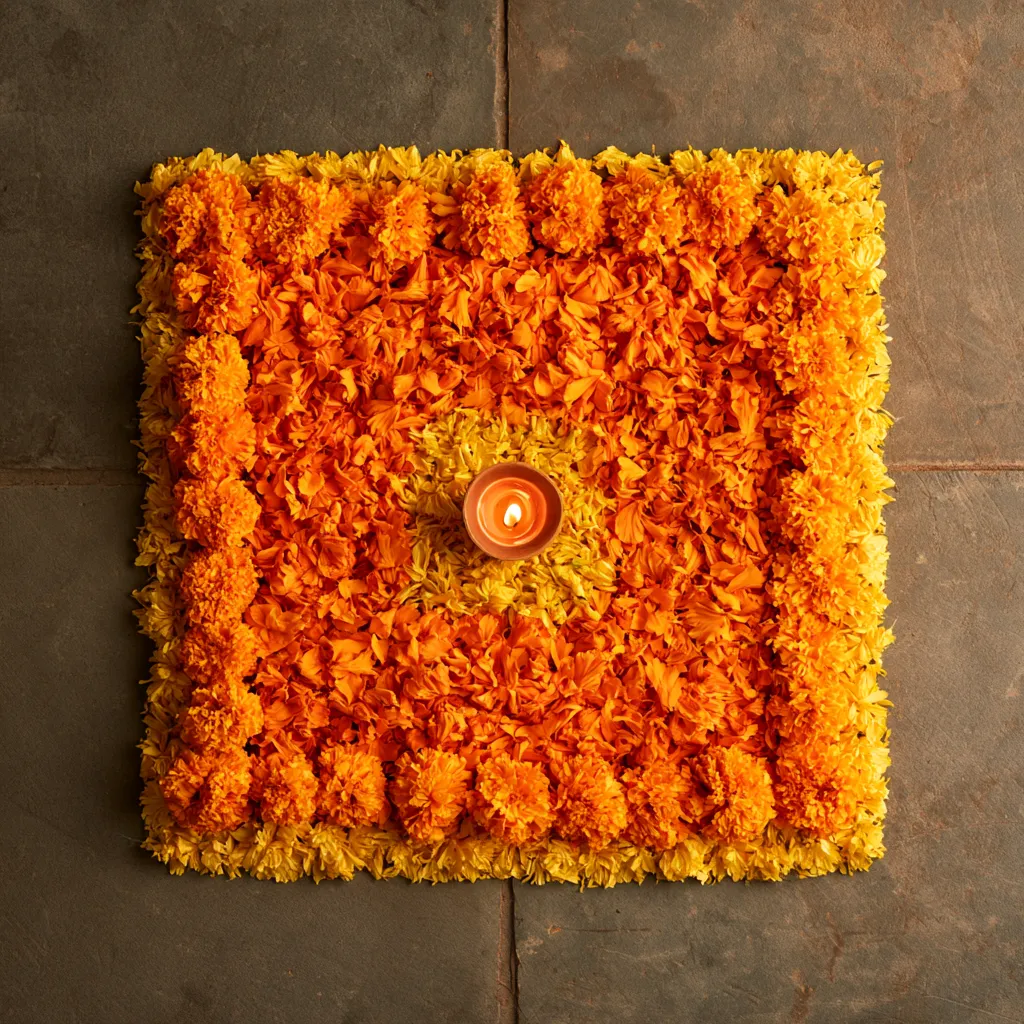
Fill a square with orange petals, and edge it with yellow. Add a small diya in the middle. The clean shape works well on a doorstep or in a hallway.
Pink and White Floral Rangoli
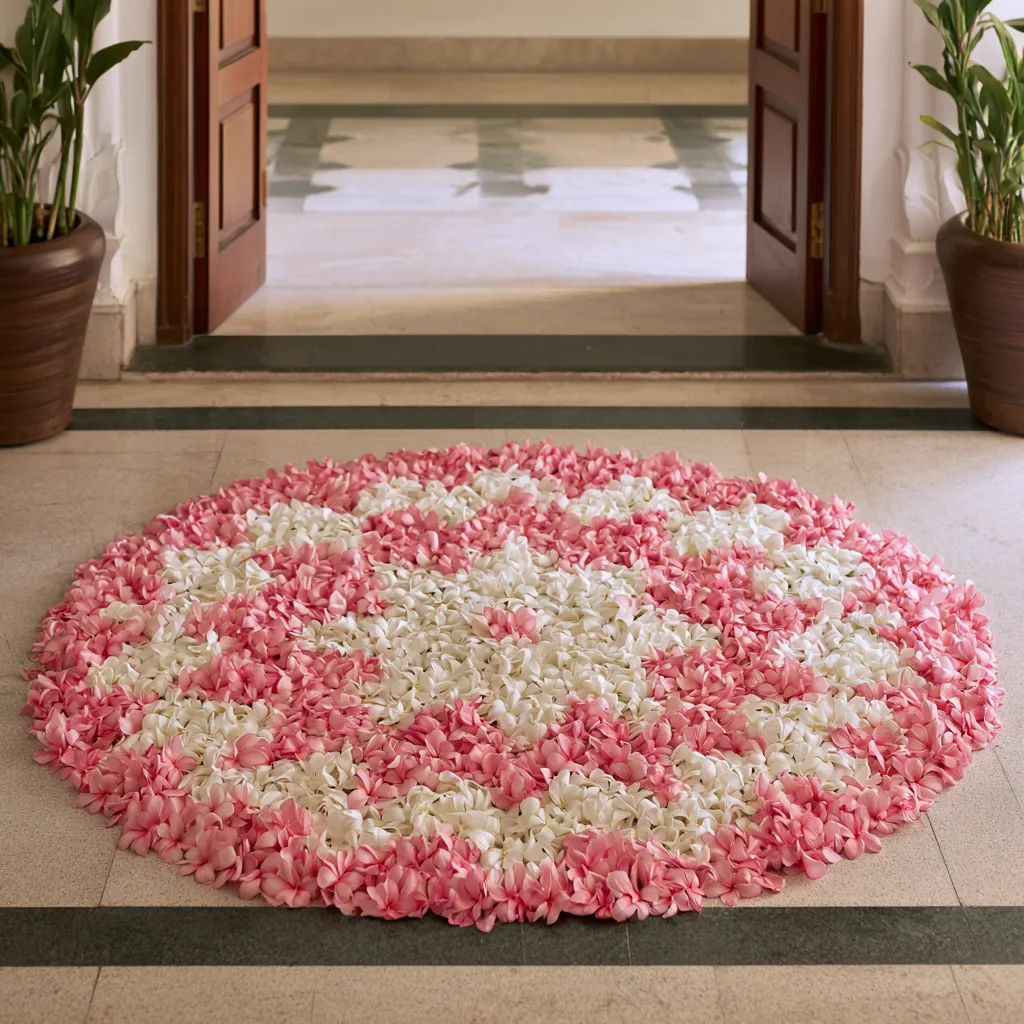
Use pink and white petals in alternating rings. The soft colours feel calm and look lovely in a bedroom entrance or a quiet corner of the living room.
Rose Petal Mandala
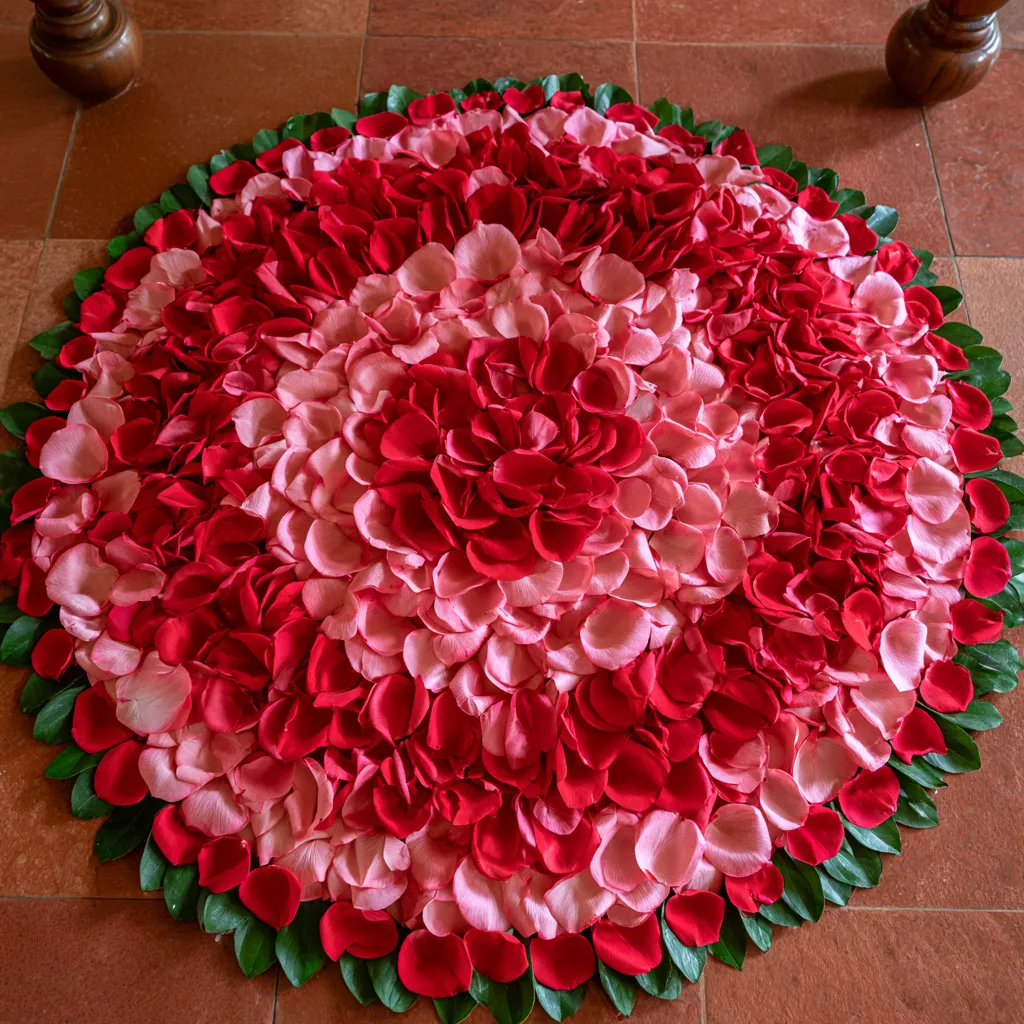
Lay red and pink rose petals in rings, from the centre outward. Finish with a ring of green leaves. This rich design suits a living room centre or a guest area.
Flower Swastik Rangoli
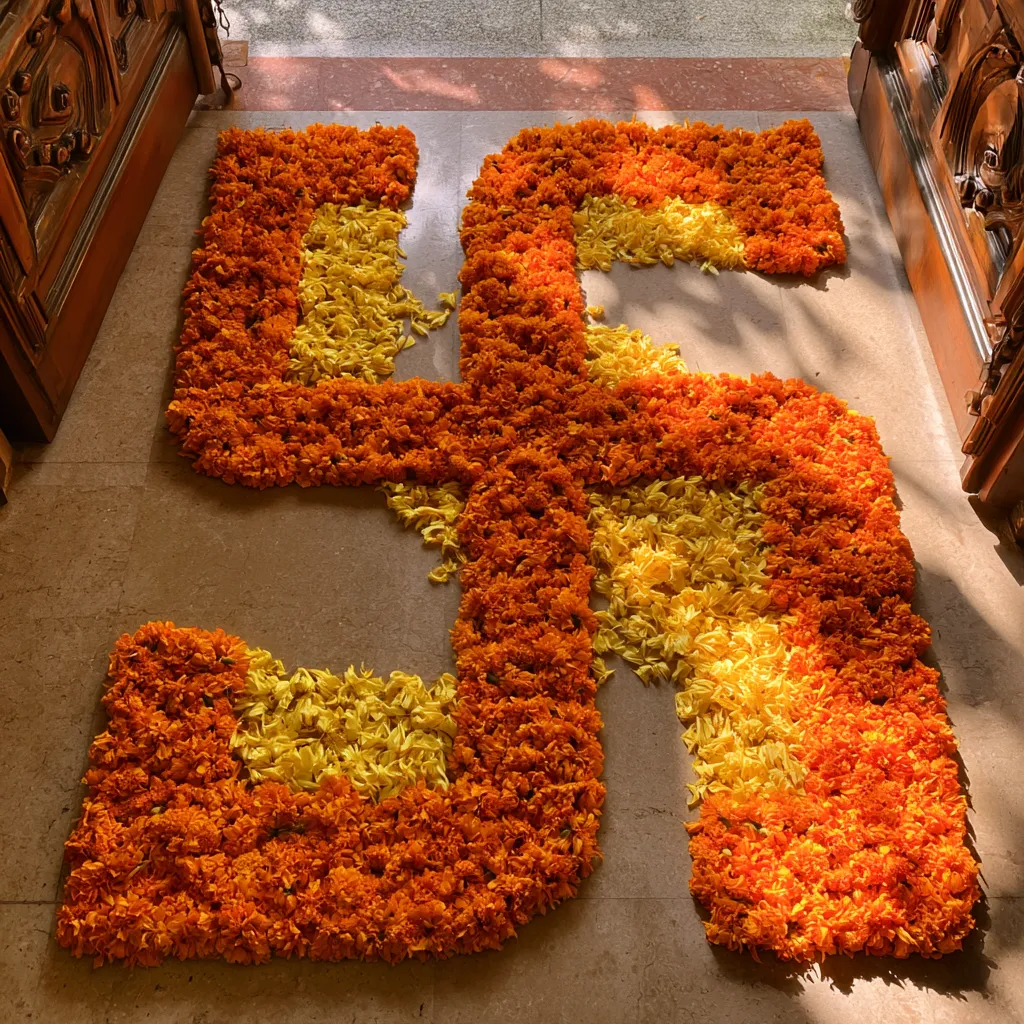
Form a swastik with orange marigold petals, and place yellow petals in the four gaps. It is a sign of good luck and suits the main entrance or the pooja room.
Divine and Symbolic Rangoli Designs
Some rangoli designs carry a blessing. Symbols like Ganesha, Om, and Lakshmi’s footprints are part of puja traditions. They suit the doorstep, the pooja room, and any space where the family prays. Drawing them also helps children learn the meaning behind the festival.
Simple Ganesha Rangoli (Step-by-Step “C” Method)
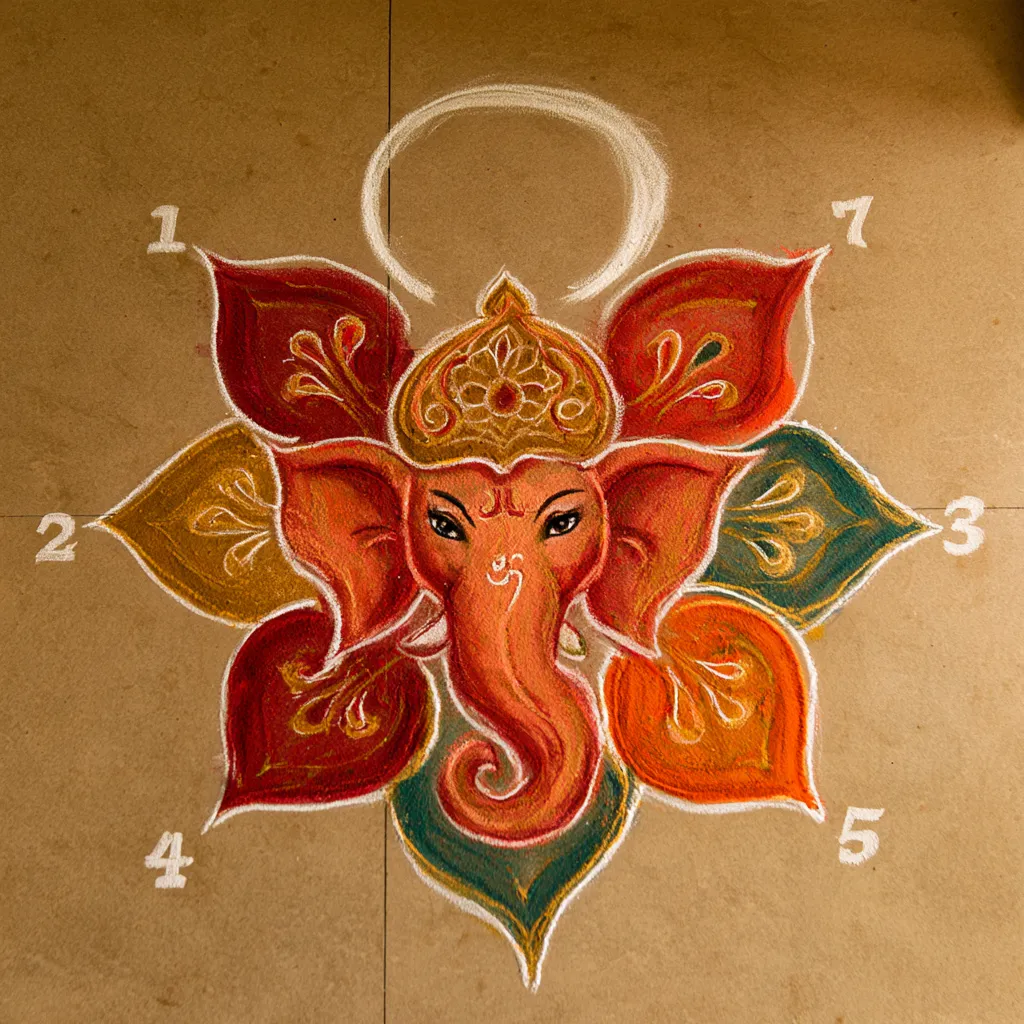
To make this on Diwali, draw a big “C” in chalk. Draw a backward “C” on the other side to form the head.
Add a long trunk, two round eyes, and a crown. Fill with colour. Check the Lord Ganesha murti placement at home before choosing where the rangoli goes, so both face the same direction.
Ganesha Flower Rangoli
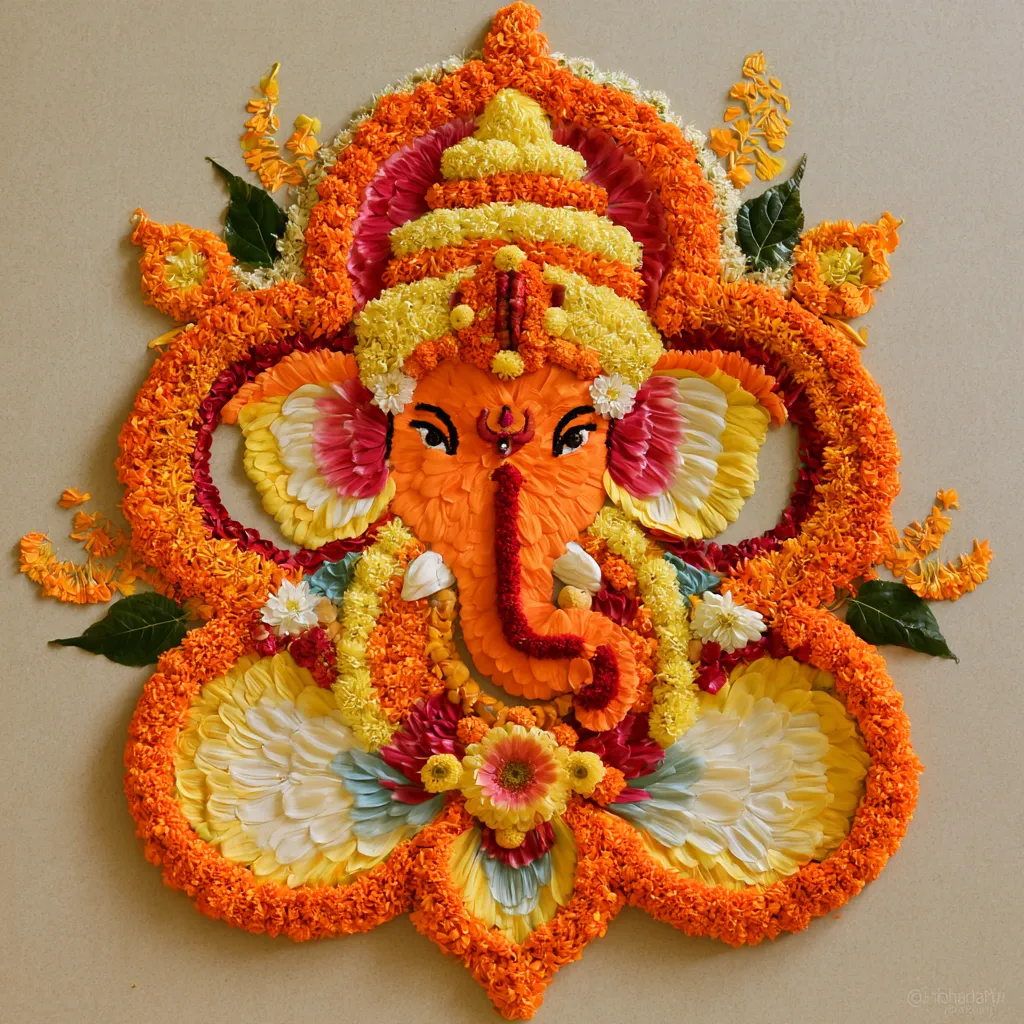
Use the same “C” outline, but fill it with petals. Use orange for the face, yellow for the crown, and red for the trunk. It is soft and bright, and suits the pooja room.
Om Rangoli
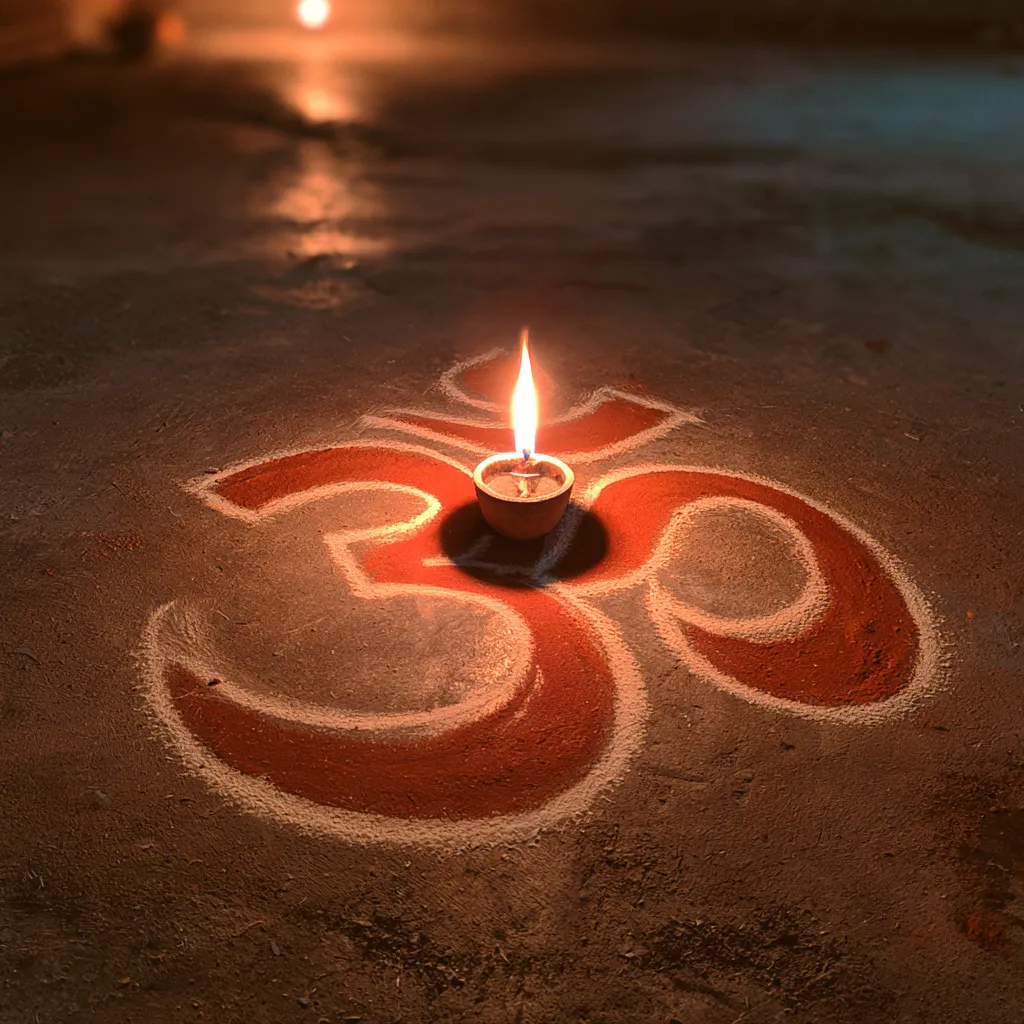
Draw a large Om in chalk. Fill it with one colour, such as saffron, and outline it in white. Place a diya next to it. Its calm shape suits the pooja room and quiet corners.
Shubh Labh Rangoli
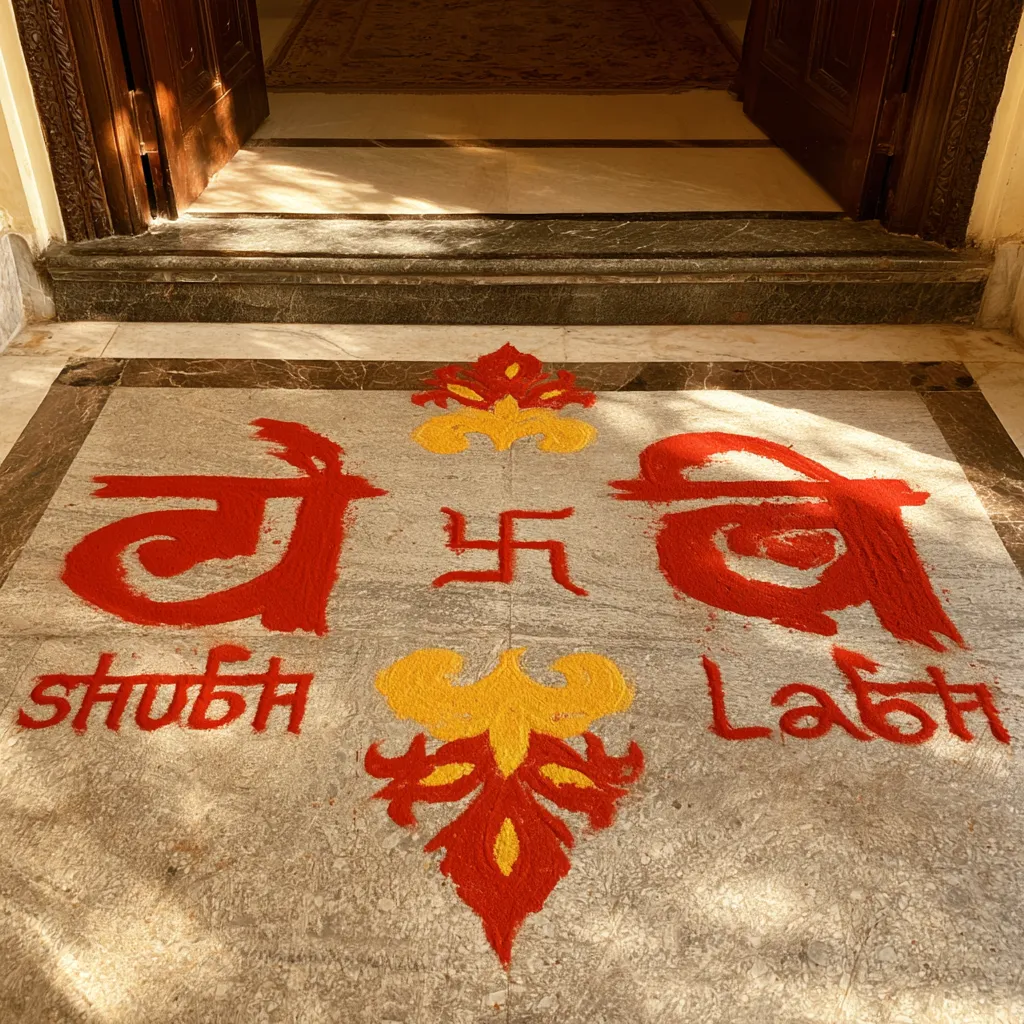
Write “Shubh” on one side and “Labh” on the other, with a swastik in between. Use red and yellow powder. These words mean good and gain, and they suit the main entrance.
Kalash with Shubh Deepawali
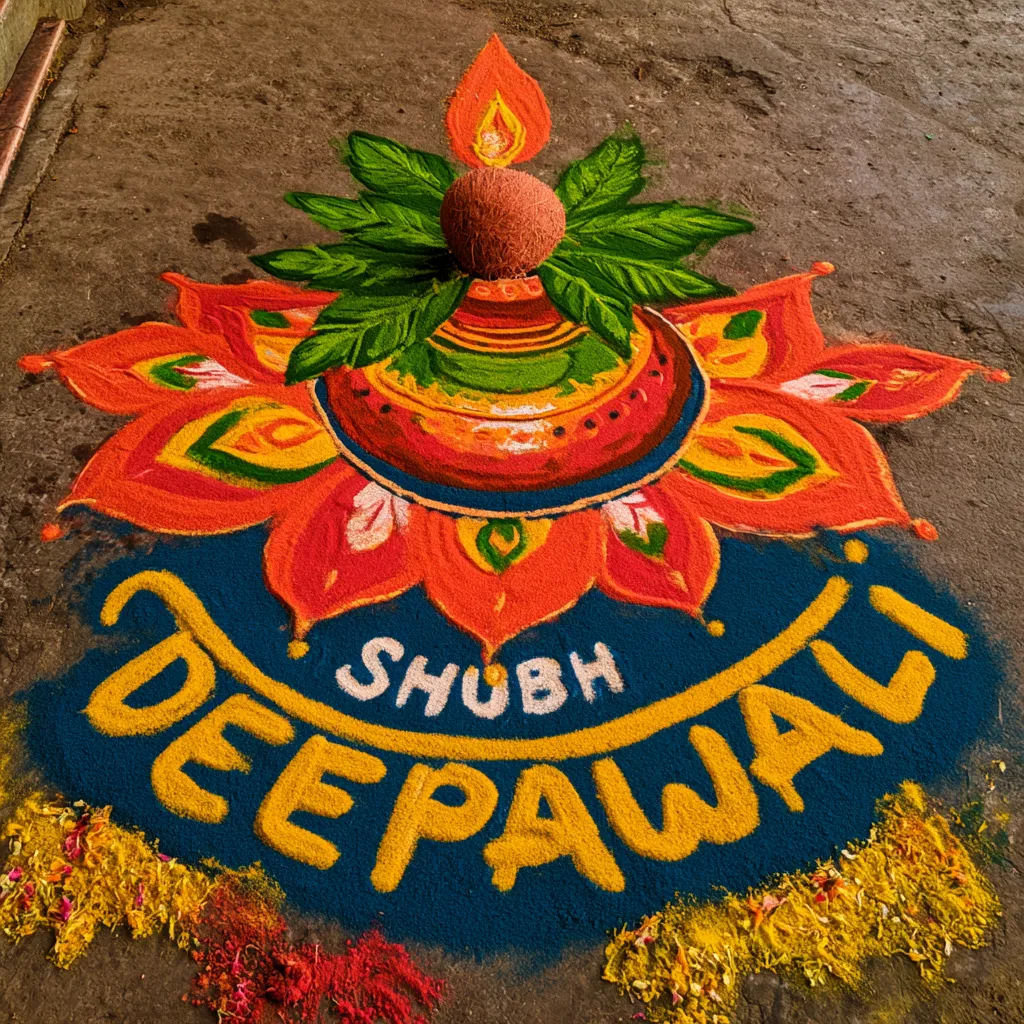
Draw a pot with mango leaves and a coconut on top. Write Shubh Deepawali below it in bright colours. This is a classic Shubh Deepawali rangoli, and it fits the doorstep.
Lakshmi Charan Rangoli
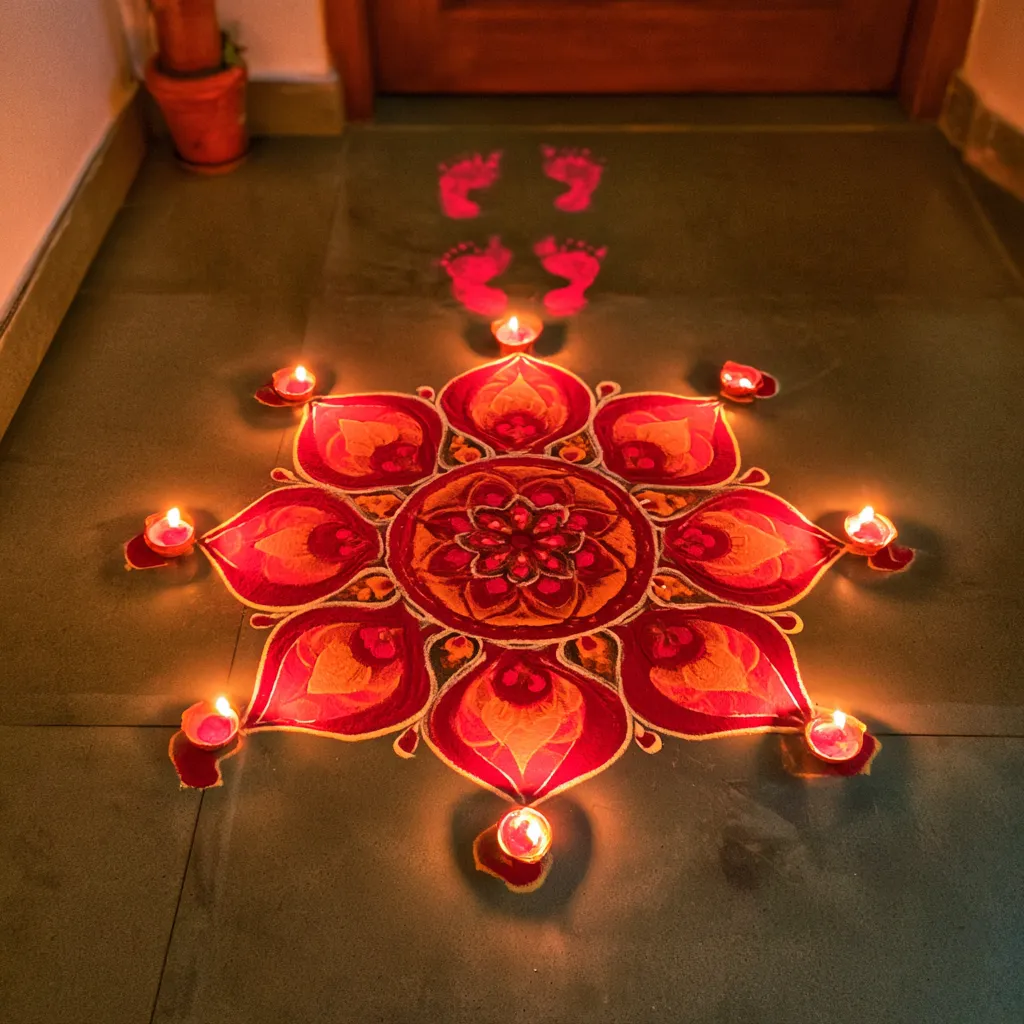
Draw small footprints from the door towards the house, with toes pointing in. Use red or pink powder. A clean, clutter-free entrance decorated with rangoli in auspicious colours like red and yellow, along with diyas on either side of the doorway, is among the traditional door entrance Vastu tips believed to invite positivity and prosperity. The footprints welcome the Goddess into the home.
Rangoli Designs with Diyas
Diyas turn a rangoli into a glowing welcome. They light up the colours after sunset, and they make the whole doorstep feel warm. Many Diwali diya decoration ideas use rangoli as a base. Keep a safe gap between flames, powder, and flowers.
Diya-Centred Circle Rangoli
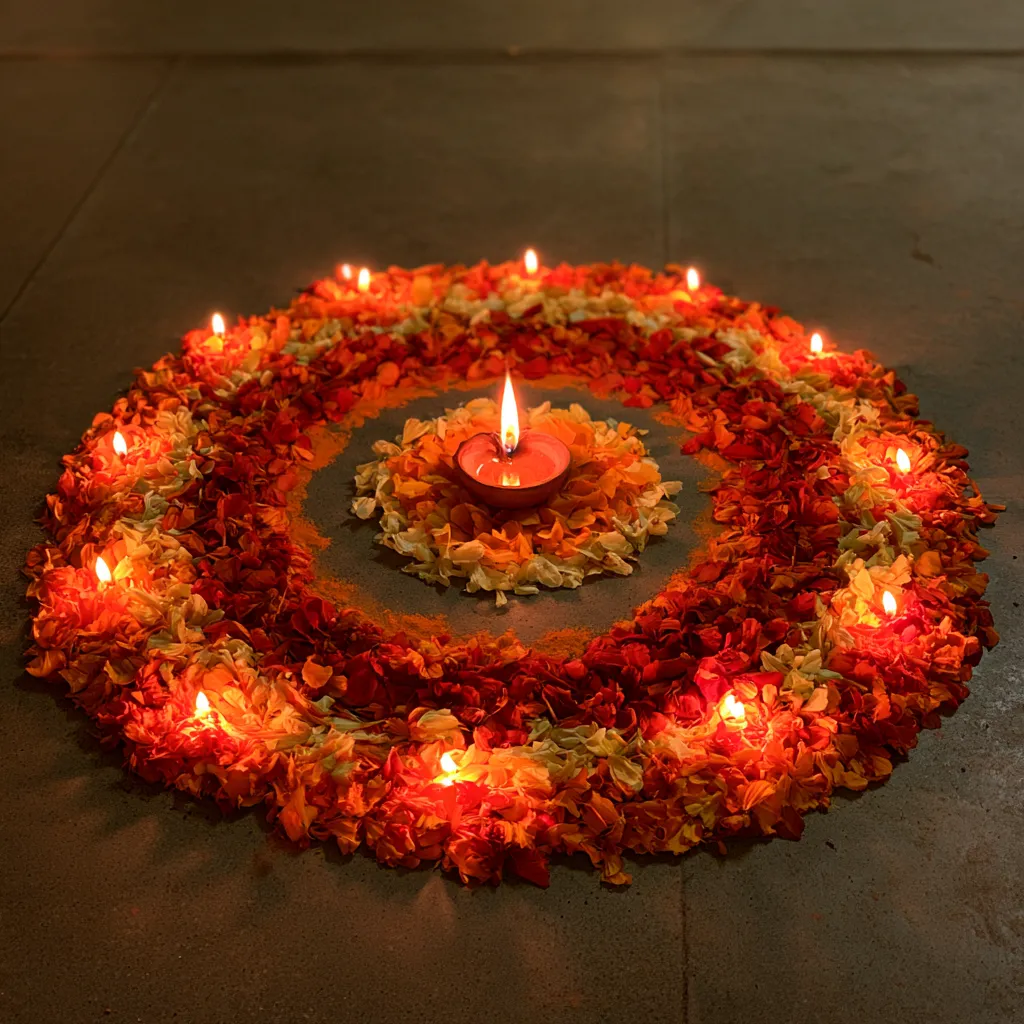
Place one large diya in the middle of a circle. Surround it with rings of petals or coloured powder. The light draws every eye to the centre. It suits the main entrance.
Peacock Rangoli with Diyas
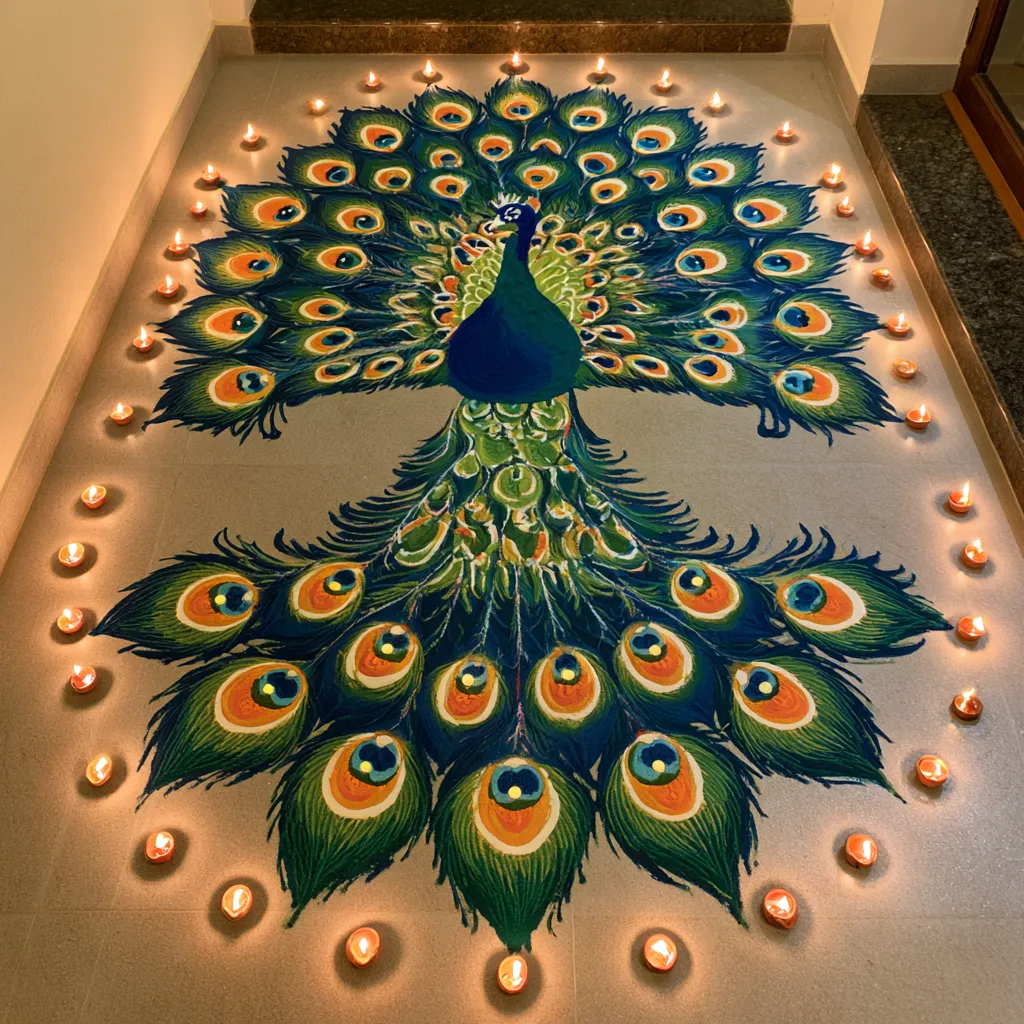
Draw a peacock body in blue and green. Make the feathers with small diyas placed in a fan. This peacock rangoli glows beautifully at night, and it suits a wide doorstep.
Lamps Around a Floral Rangoli
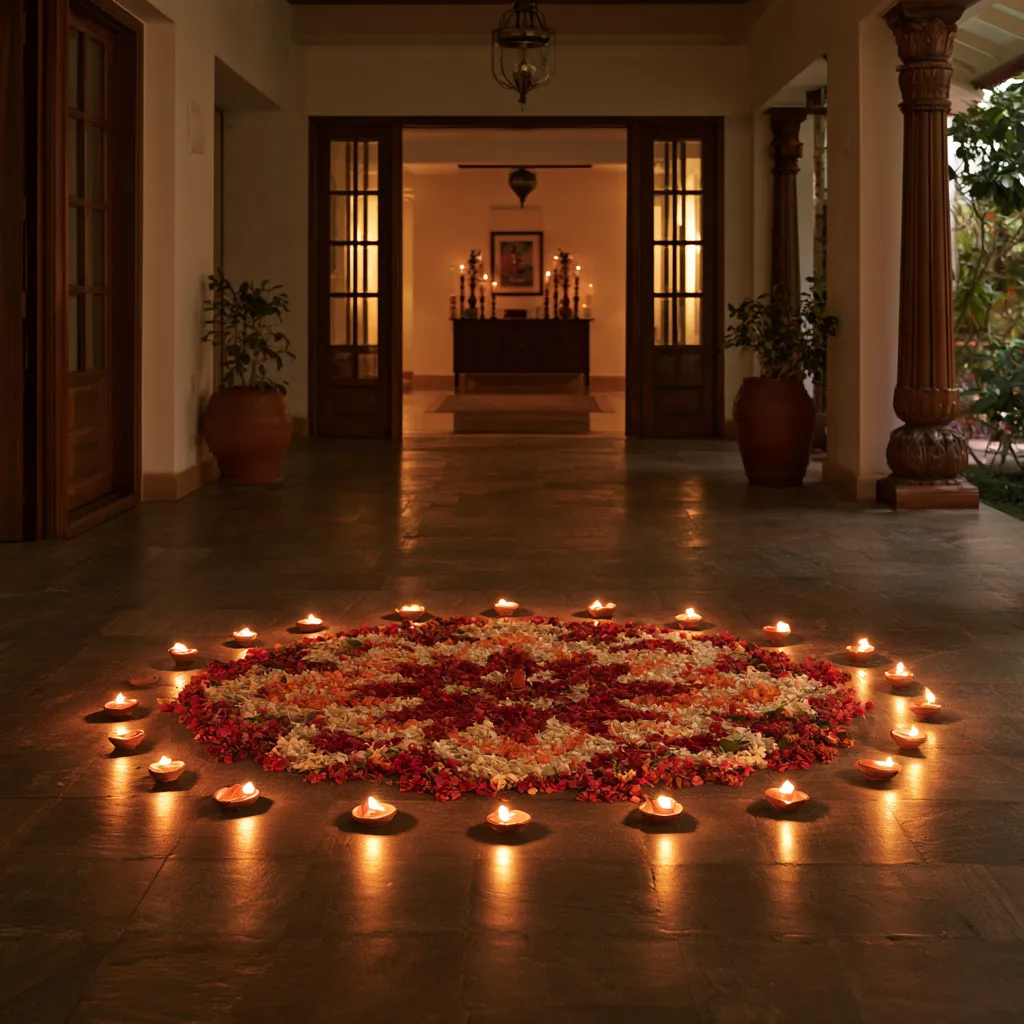
Make a flower rangoli first. Then set eight to twelve diyas in a ring around it. The petals stay safe, and the lamps frame the design. It works well in a hall or a courtyard.
Rangoli with a Candle Pond
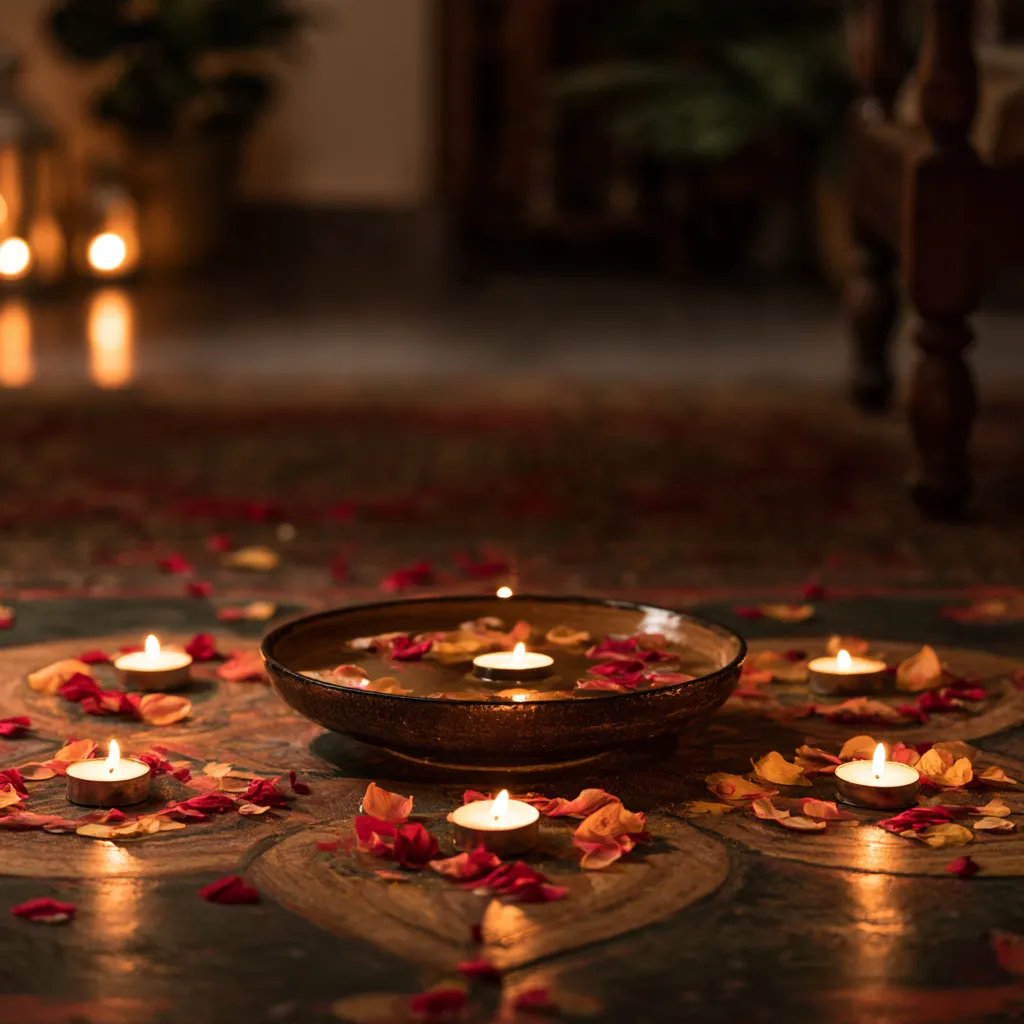
Fill a wide bowl with water, and float petals and tea lights on top. For homes with small children, LED light decoration ideas are safer, since LED tea lights never burn. Place the bowl in the centre of the rangoli.
Diya Border Rangoli
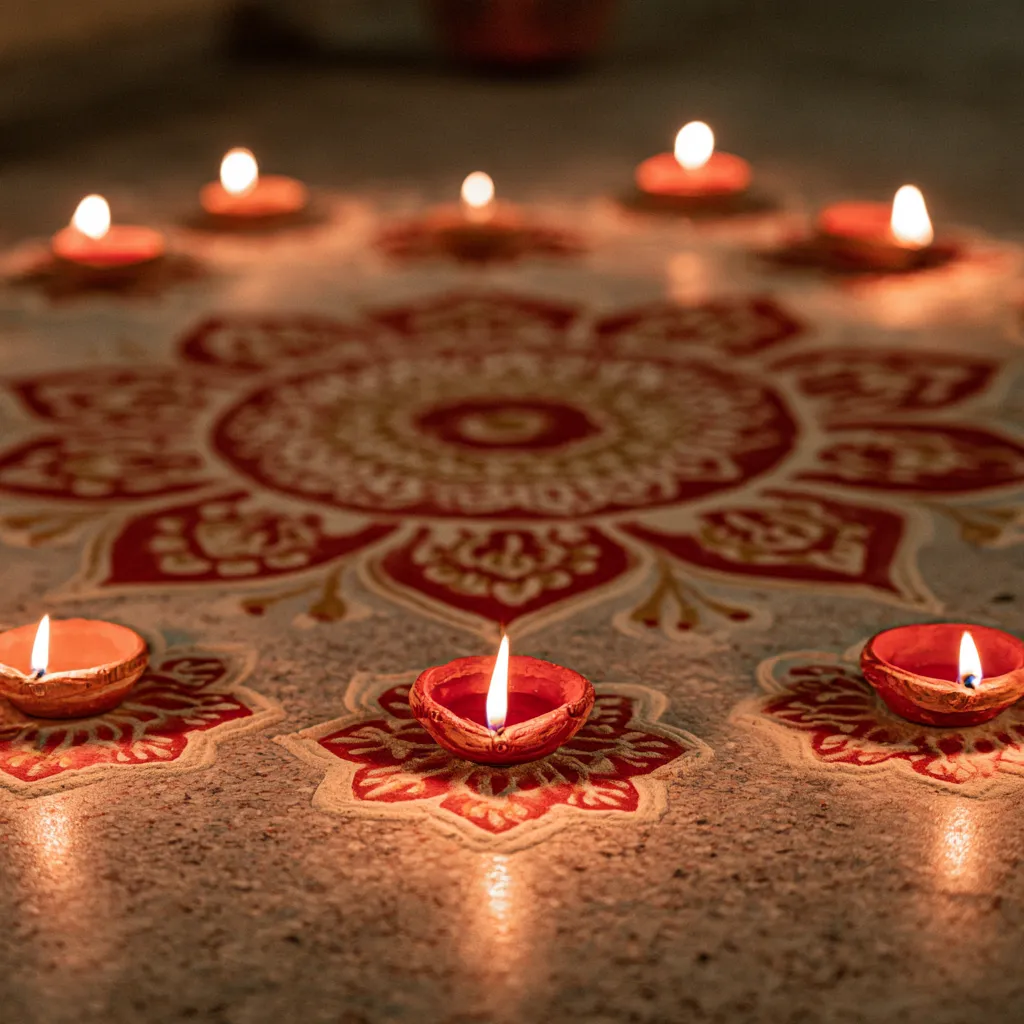
Line diyas along the rangoli’s edge. Painted clay diyas make it extra special, and many families enjoy simple pot painting ideas with kids. Use white, red, and gold paint. The border gives a neat finish.
Corner Mandala with Diyas and Fairy Lights
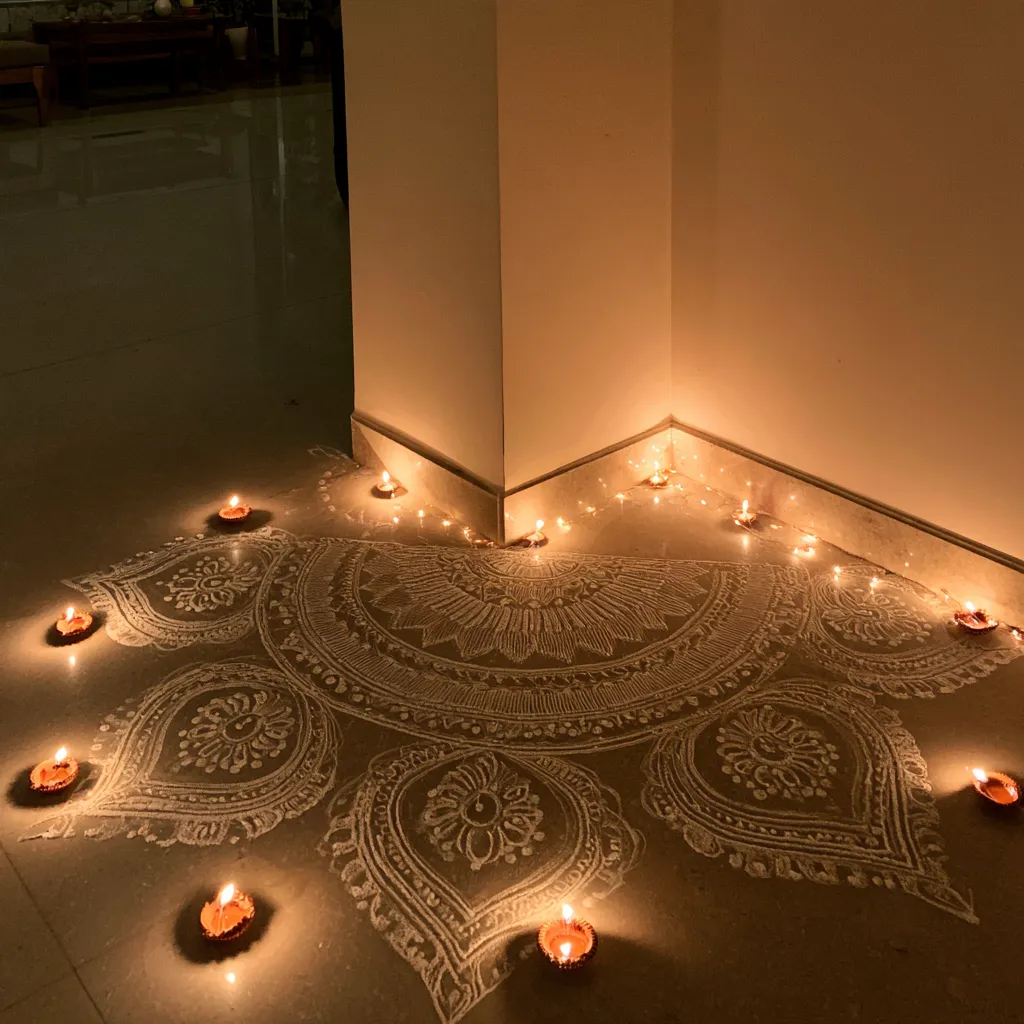
Draw a quarter-circle mandala in a corner. Add a warm glow to your corner mandala by placing diyas around the design and exploring simple fairy lights decor ideas to brighten the space. The glow wraps around the corner. It suits a living room or a balcony.
Small, Corner and Modern Rangoli Designs
Not every home has a wide doorstep. Apartments, balconies, and small corners need smaller designs. Modern rangoli also uses fresh shapes and soft colours. These ideas fit tight spaces and still look festive.
Corner Rangoli with Comb Waves
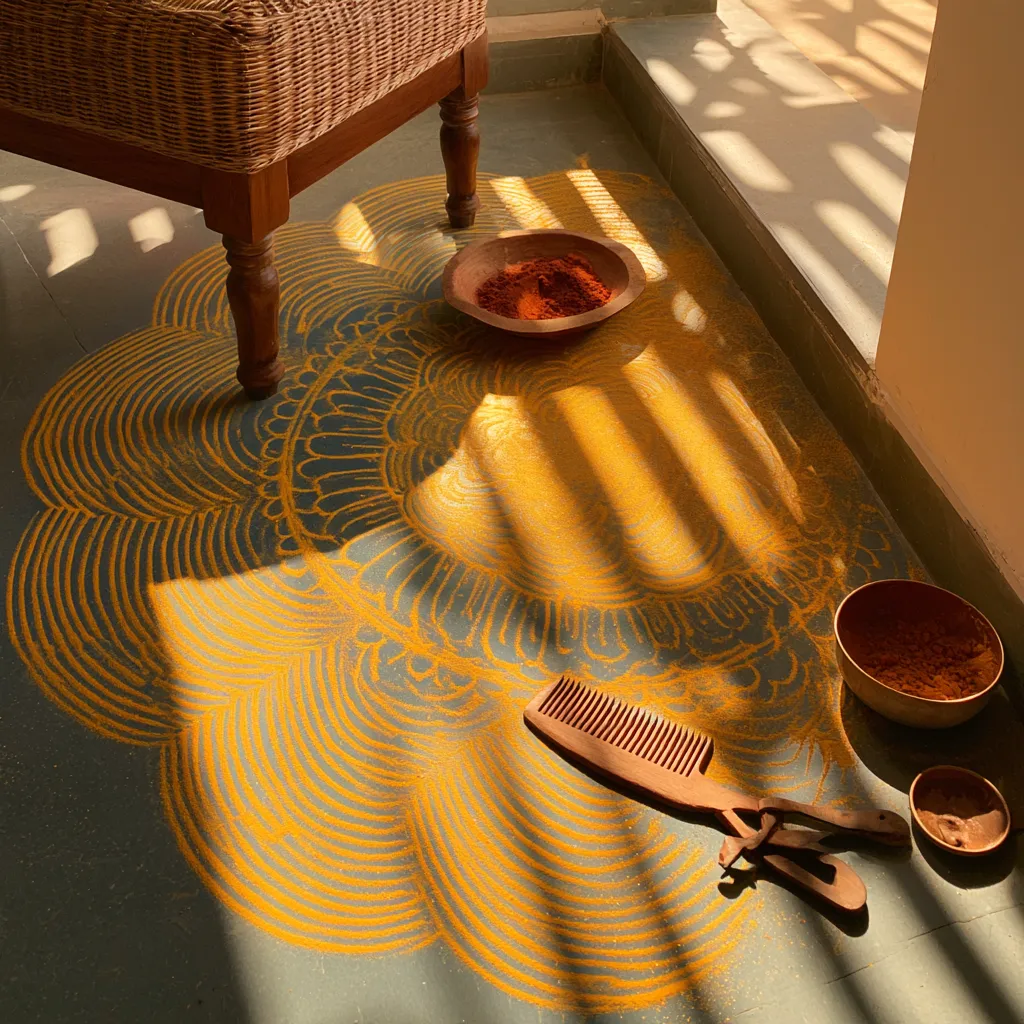
Draw a quarter circle in the corner. Pour two or three colours in curved lines. Drag a comb through them to make waves. It looks tidy and takes very little space.
Leaf and Flower Border Rangoli
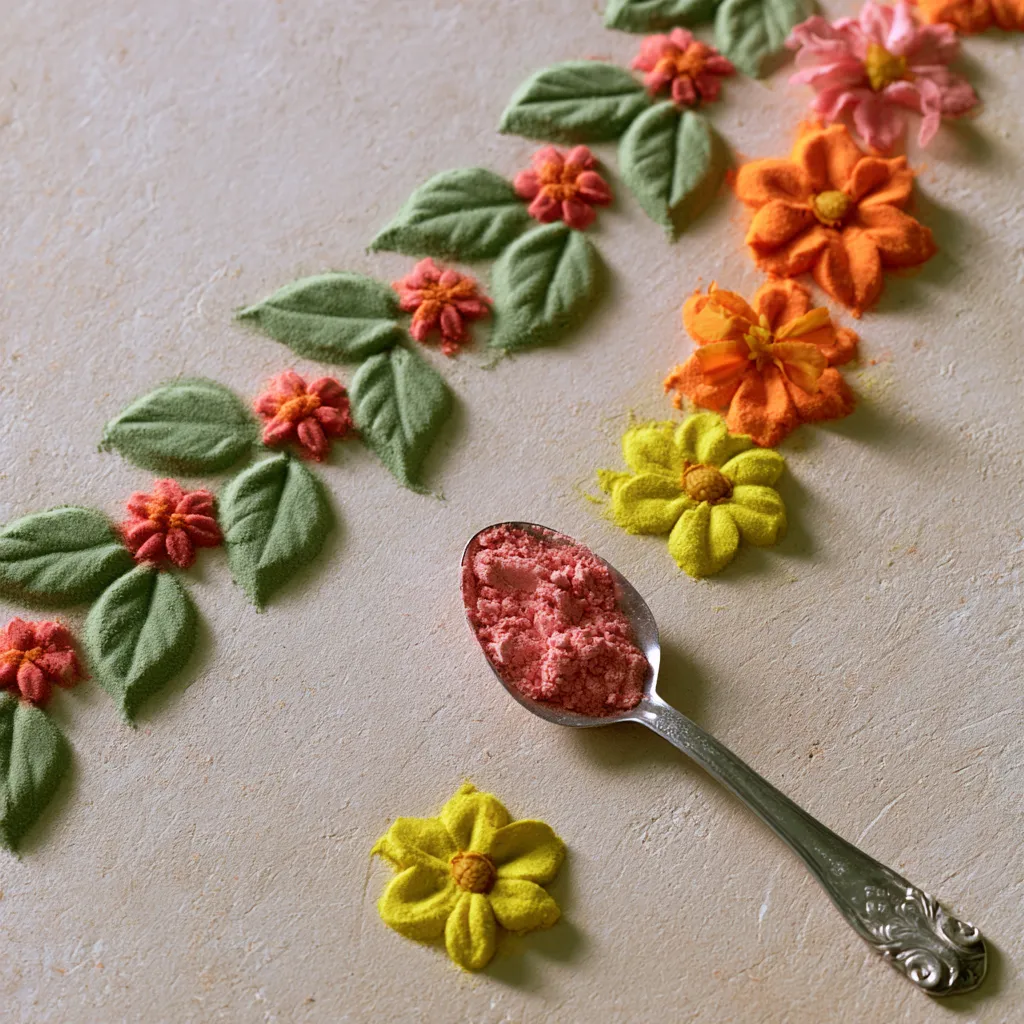
Make a thin border with green leaf shapes and small flowers. Run it along a doorstep or around a room. Use a spoon to press out each leaf.
Small Doorstep Rangoli for Apartments
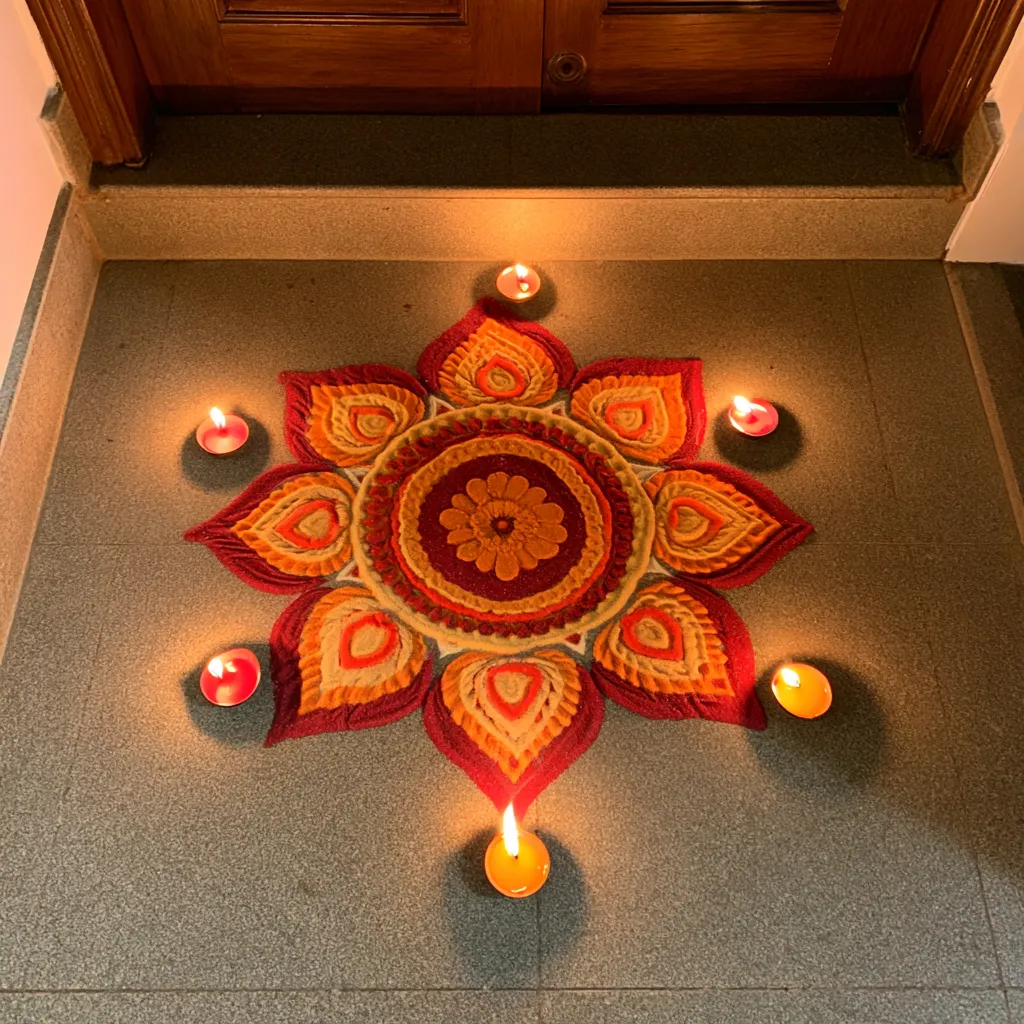
Keep it about 30 to 45 cm wide. Use a small circle with a floral centre and a few diyas. Choose a simple design, so it stays tidy in a shared corridor. It is a good small rangoli for doorstep spaces.
Sticker and Stencil Rangoli
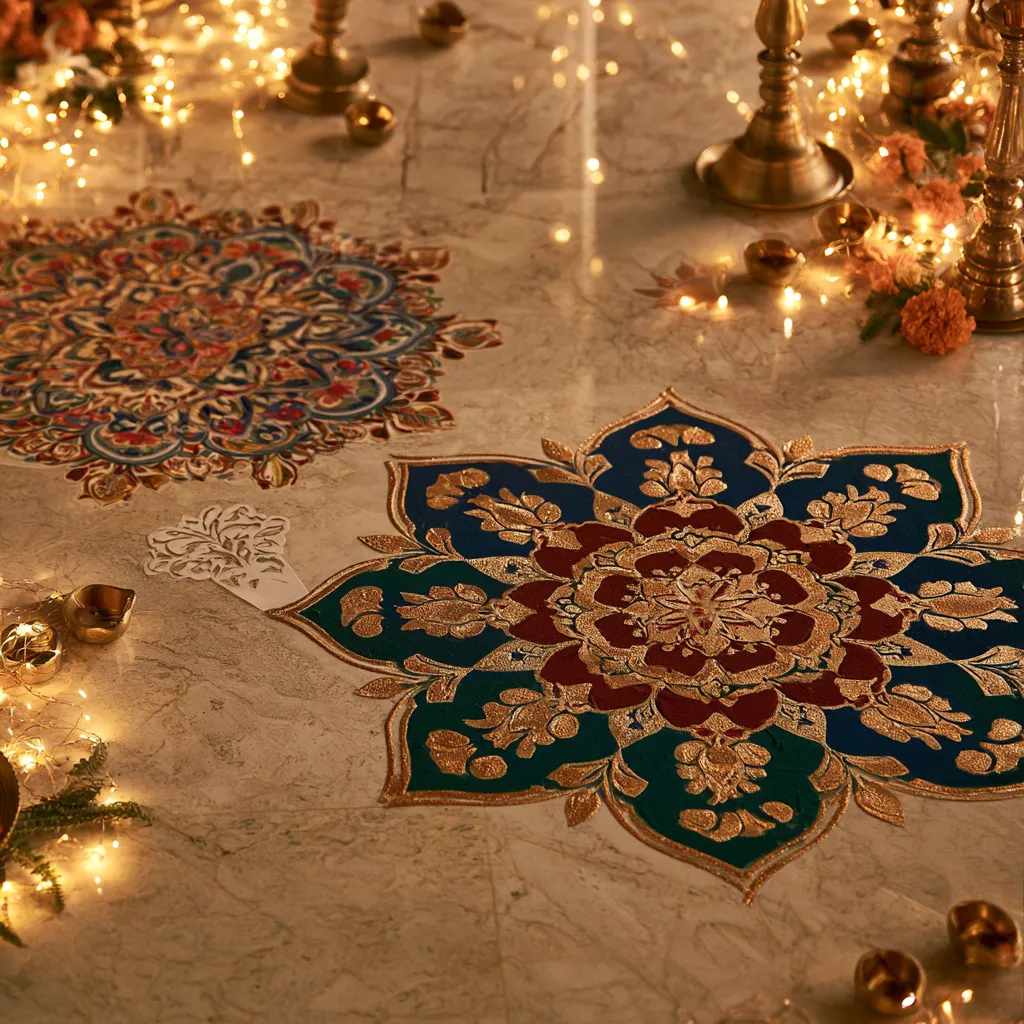
Peel a rangoli sticker onto the floor, or place a stencil and pour powder over it. Lift the stencil slowly. The shapes come out sharp, and kids love it.
Abstract Modern Rangoli
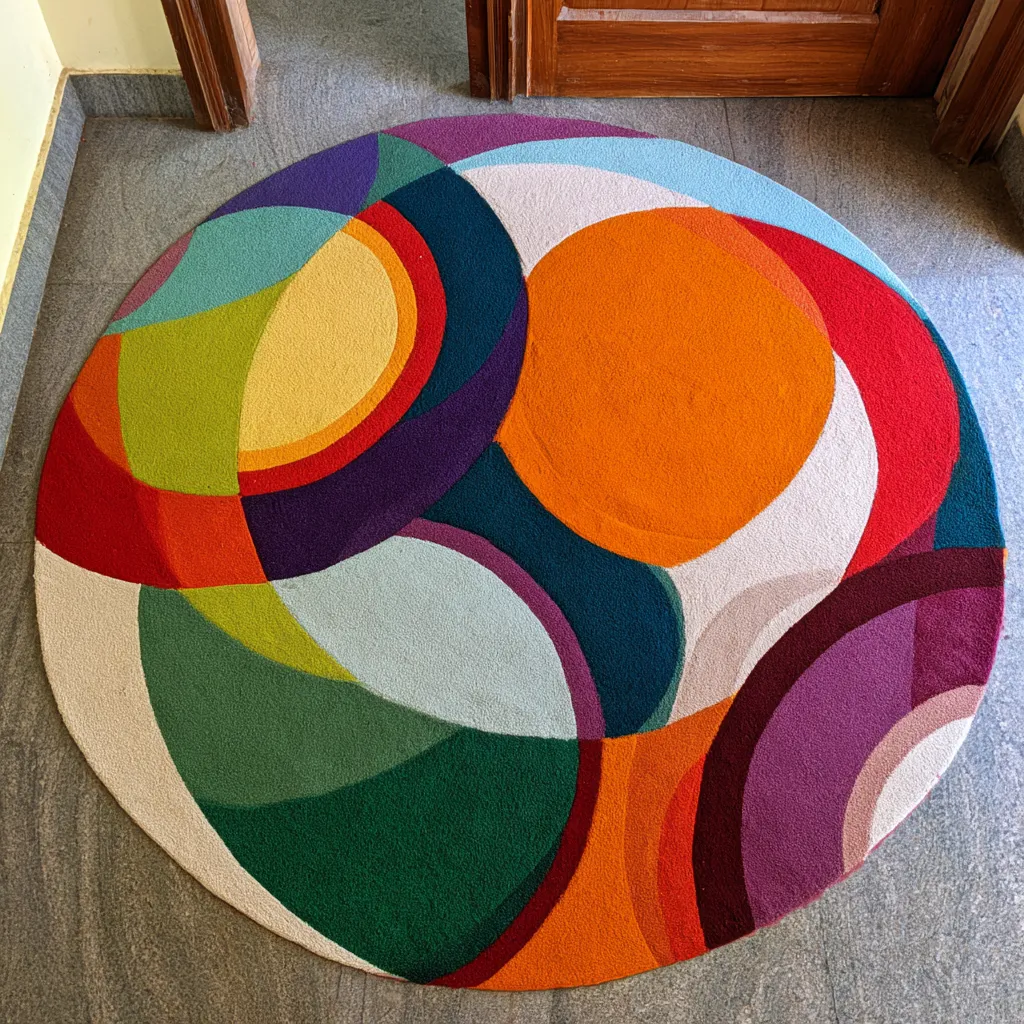
Use bold shapes, like overlapping circles and curved lines, in mixed colours. There is no set pattern. This abstract rangoli suits modern homes and young families.
Pastel Modern Rangoli
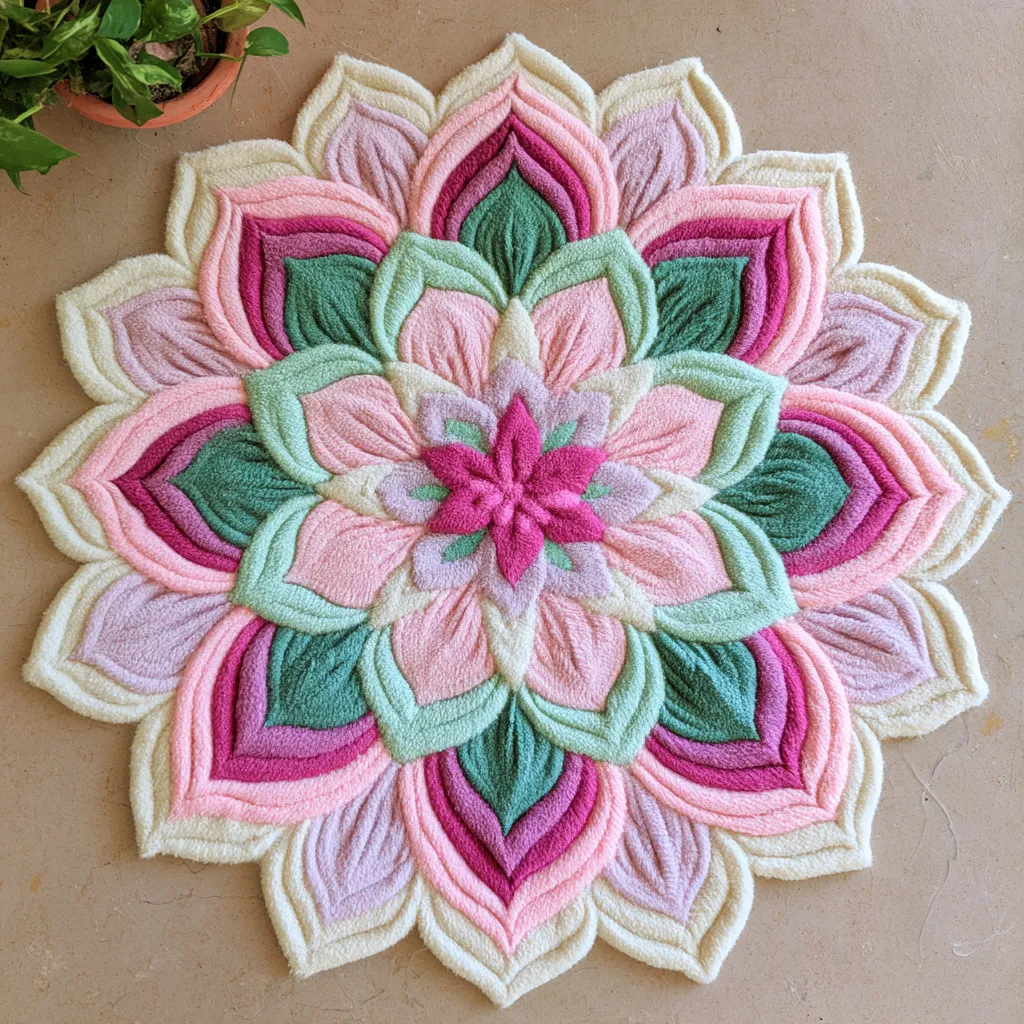
Choose soft pink, mint, lavender, and cream. Make a circle with a gentle gradient. It looks calm and fits apartments with light interiors.
Dot Rangoli, Kolam and Regional Styles
Rangoli has different names across India, and each region has its own style. Some use dots, some use lines, and some use paint. Learning a few of them adds fun and meaning to the festival.
How to Make Dot Rangoli
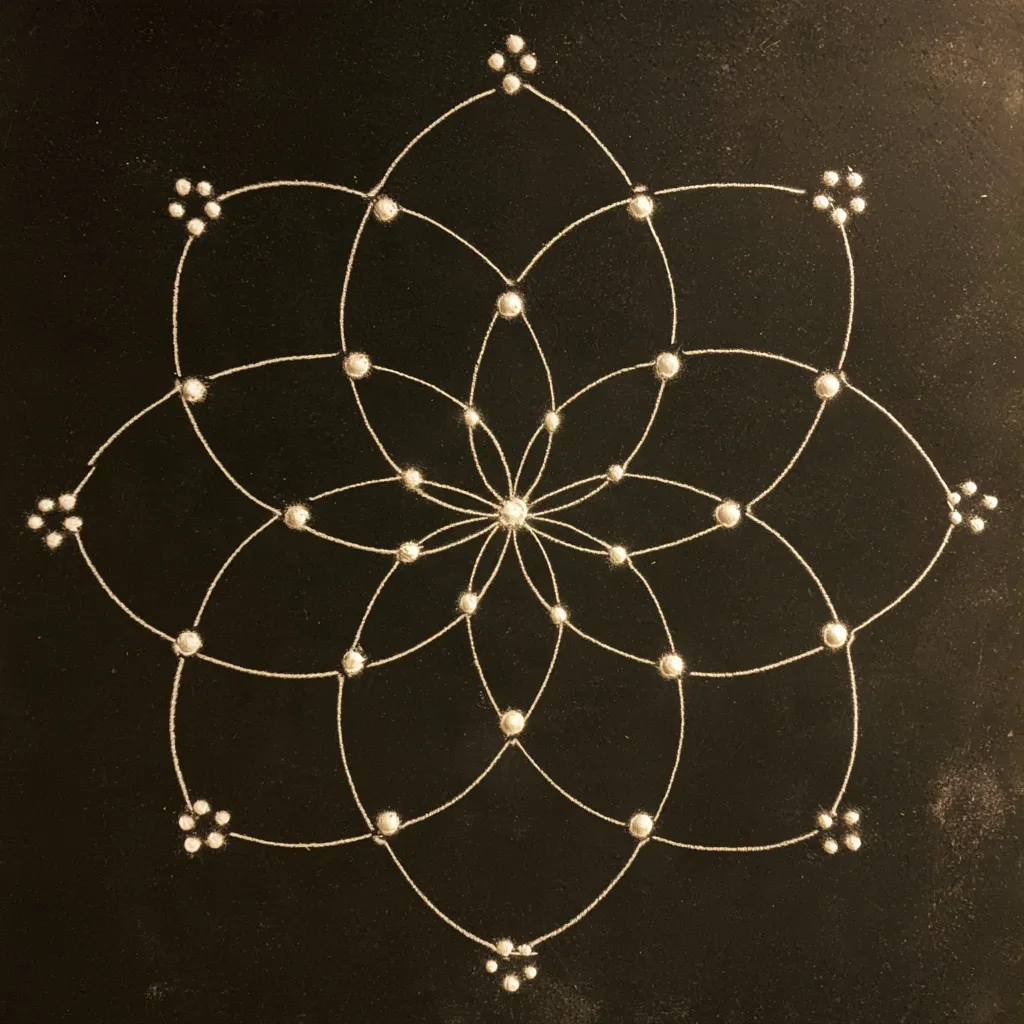
Draw a grid of dots with equal gaps. A 7-by-7 grid is easy for beginners. Join the dots with curved or straight lines to form flowers and diamonds. For a diamond shape, try rows of 1, 3, 5, 7, 5, 3, and 1 dots.
Kolam, Alpana, Mandana and Muggulu at a Glance
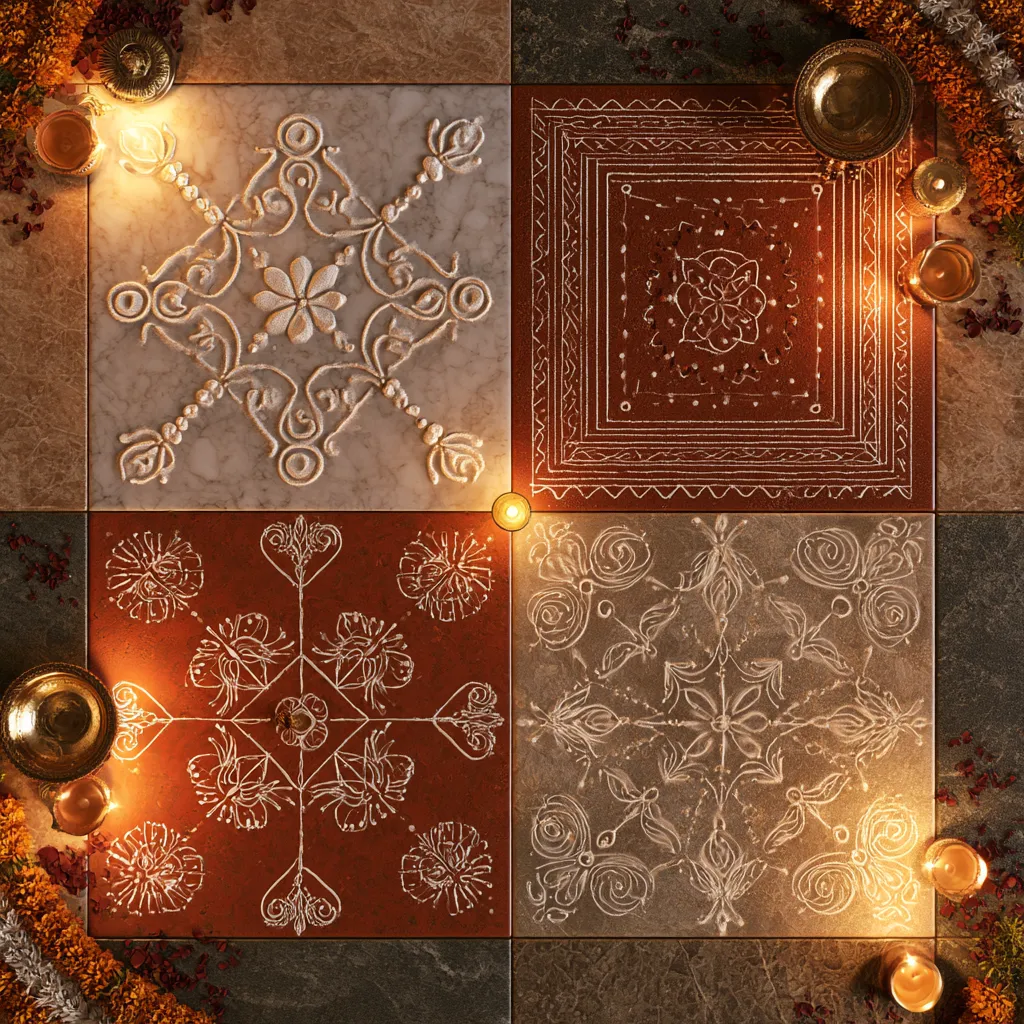
Kolam from Tamil Nadu uses rice flour and loops around dots. Many families love kolam designs for their neat patterns. Alpana from Bengal uses white rice paste painted by hand. Mandana from Rajasthan and Madhya Pradesh uses white and red clay on walls and floors. Muggulu from Andhra and Telangana uses flowing lines in rice flour.
Rangoli Ideas for Each Day of Diwali
Diwali lasts for several days, and each day has its own mood. A new rangoli each day keeps the excitement going. It also helps children understand the story behind each festival.
Dhanteras (Lakshmi Charan)
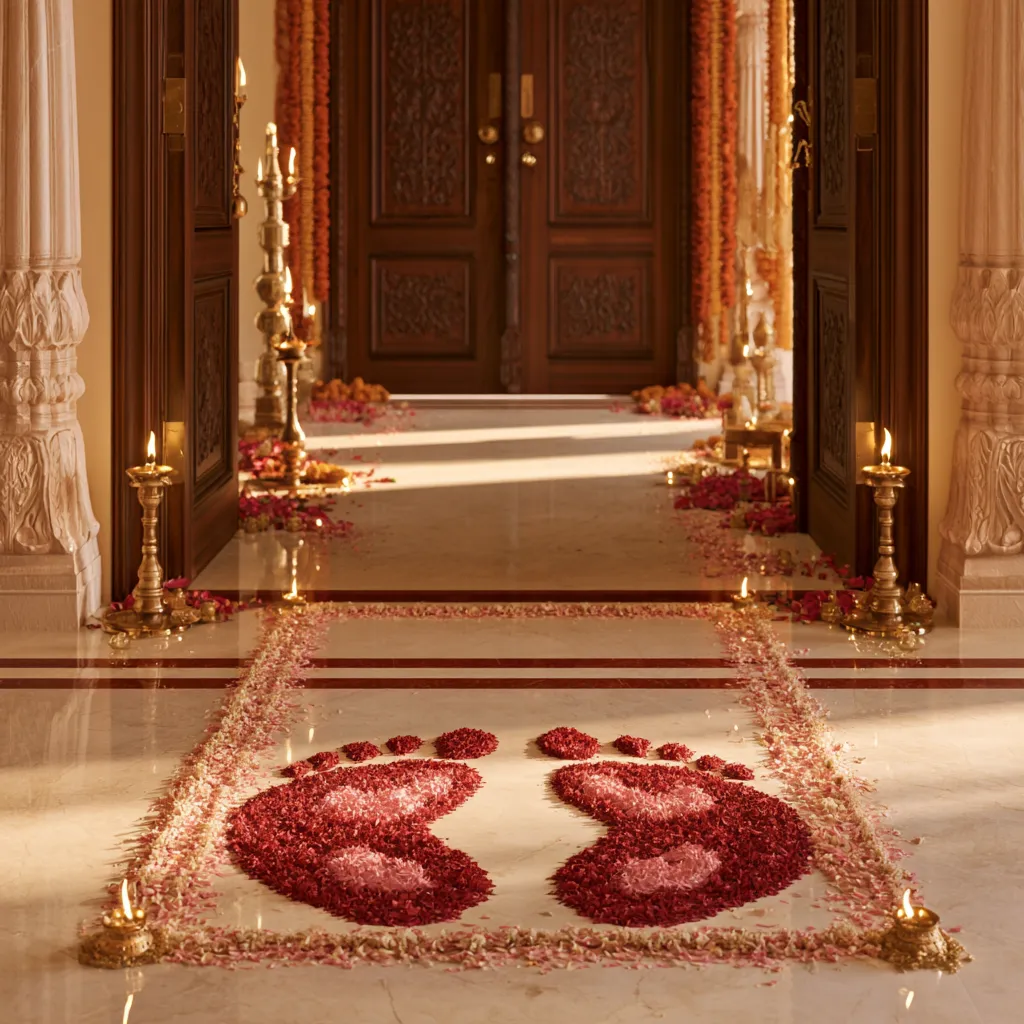
Make Lakshmi’s footprints from the door inward, in red or pink. Add a diya at the door. This Dhanteras rangoli welcomes prosperity into the house.
Choti Diwali
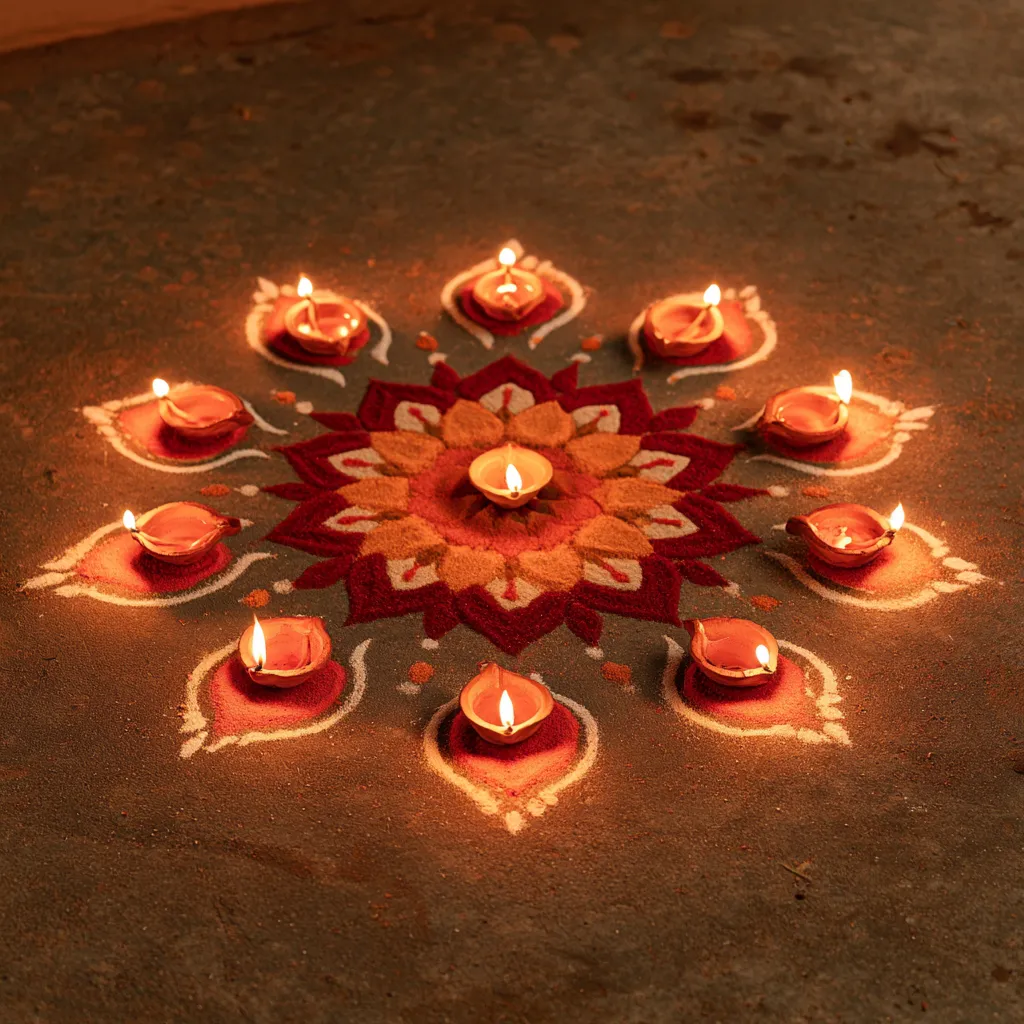
Create a small rangoli with lines of diyas. Use bright colours to match the lights. Keep the design simple, since the main festival comes next.
Lakshmi Puja (Main Entrance Design)
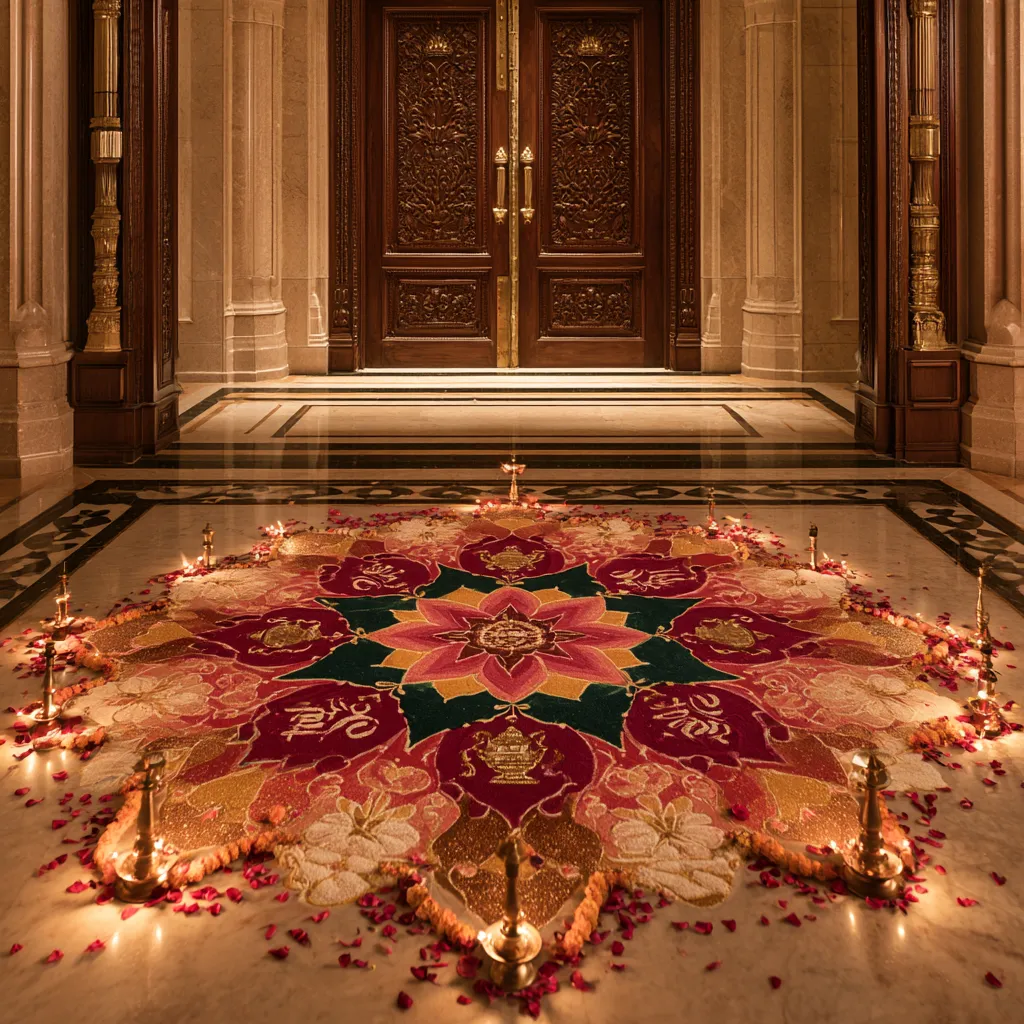
Make the biggest design at the main entrance. Use a lotus, a kalash, or a Shubh Labh pattern. Add diyas and flowers so it glows on puja evening.
Govardhan Puja
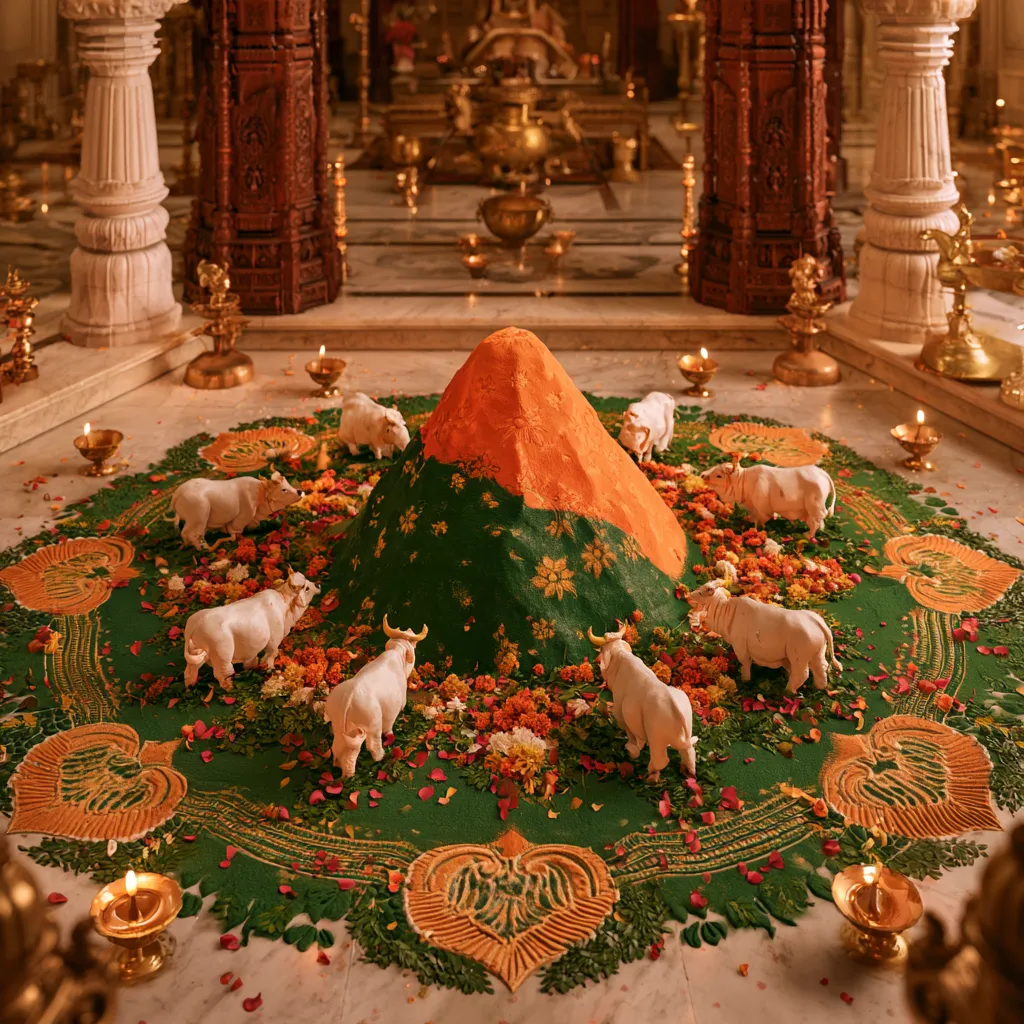
Make a small hill shape with orange and green. Add little cows and flowers around it. It tells the story of Govardhan Hill in a simple way.
Bhai Dooj
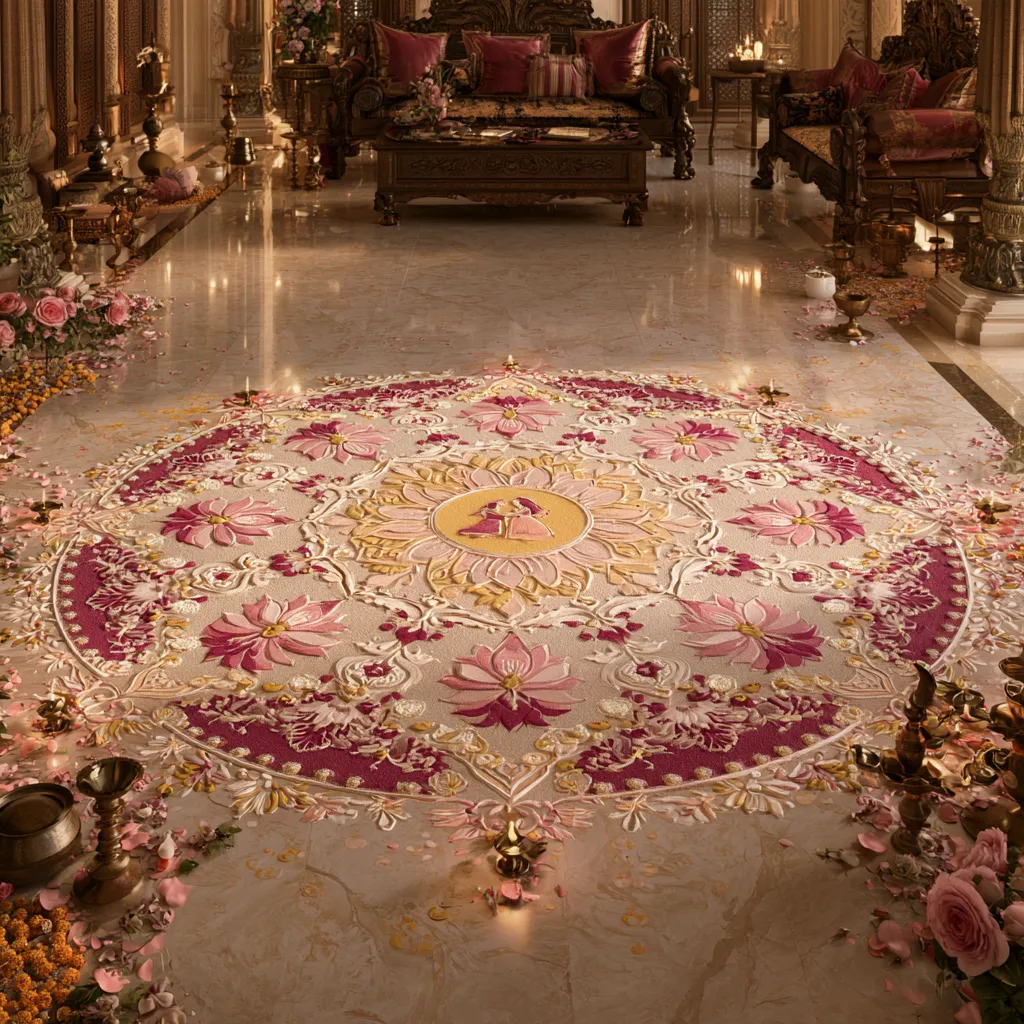
Draw a sun, a flower, and two small figures to show a brother and sister. Use warm yellows and pinks. This Bhai Dooj rangoli suits a living room centre.
Where to Make Rangoli at Home
The right place changes the design’s look. A big doorstep rangoli greets guests, while a tiny one in the pooja room is for the family. Choose the spot first, and then decide the size. Here are the five best places and their ideal sizes.
Main Entrance (60 to 90 cm)
The main door is the first place guests look. Use bright, wide designs. Many home entrance design ideas use rangoli to add warmth and colour. Keep a clear path for walking.
Pooja Room (30 to 45 cm)
Keep it small and calm. A lotus, Om, or Ganesha rangoli works best. Browse Indian style pooja room designs for ideas that match the puja space. Place this pooja room rangoli in front of the idols without blocking the way.
Living Room Centre (90 to 120 cm)
A large mandala or flower design works well in the middle of the room. Place a low table or diya on top for a festive look. Keep it away from the walking path.
Balcony (45 to 60 cm)
Choose designs that handle wind, like heavy petals or dry colours. Many people mix rangoli with balcony lighting ideas such as fairy lights and lamps. The glow looks lovely from outside.
Corridor (20 to 30 cm Borders)
Use a thin border or a row of small motifs. Corridors are shared, so keep the pattern narrow and neat. A line of diyas finishes the look.
Rangoli Competition Tips
Competitions reward neatness, colour use, and creativity. A good plan beats a complicated design. These rangoli competition ideas help in building a design that stands out, even when time is short.
Pick a Theme: Choose one clear idea, like peacocks, lotus, or Diwali lights. A strong theme makes the design easy to understand.
Plan Your Colours: Pick three or four colours that go well together. Too many colours can look messy. Keep one bright colour for the centre.
Manage Your Time: Draw the outline first, fill the large areas next, and add small details last. Leave ten minutes at the end for cleaning.
Finish Neatly: Clean edges make a big difference. Use a cotton swab to fix smudges, and sweep loose powder away from the border.
How to Make Rangoli Colours at Home?
Homemade colours are cheap, safe, and fun to make. Most of them use things already in the kitchen. They are a good choice for children because they contain no harsh chemicals.
Coloured Rice, Wheat, Dals, and Salt
Mix rice with a little water and food colour. Spread it on paper and dry it in the sun. Wheat, dals, and salt can be coloured in the same way. Use them for borders and filling.
Natural Colours from Turmeric, Roli, Beetroot, and Flowers
Turmeric gives yellow, and roli gives red. Dried beetroot powder gives pink, and crushed flower petals give soft shades. Mix them with rice flour to make the colours go further.
How to Make Your Rangoli Last and Clean It Up?
Wind, feet, or pets can ruin a rangoli. A few small steps help it last through the festival. When the festival ends, cleaning is easy and can even be useful. Knowing how to protect rangoli saves effort.
Protecting It from Wind and Footfall
Choose a spot away from the main walking path. Close nearby doors on windy days. Press the colour gently with your palm, so it stays in place.
Fixing Smudges
Use a cotton swab or toothpick to clean small smudges. For larger ones, pour a little fresh colour over the area and level it with a card.
Sweeping and Reusing Materials
Sweep dry powder and rice into a tray. Colours can often be reused for the next design. Petals go into the compost. Families who love the best out of waste ideas can also use old diya wax and dried petals for crafts.
Conclusion
Rangoli turns a plain floor into a happy welcome. Start with a simple design, use safe colours, and pick a size that fits the space. Add flowers or diyas for extra glow, and let children join in. Wishing you a bright and joyful Diwali. For more ideas, read our guides on Diwali decoration and diya decoration. From all of us at the Interior Company, Happy Diwali.
Disclaimer: 'Images used are for representational purposes only. Unless explicitly mentioned, the Interior Company does not hold any copyright to the images.'

Ready for a home transformation?
Let our designers assist you!
Recent Posts







A lotus, a diya-centred circle, or a Lakshmi charan design is a lovely choice. Pick a size that fits the doorstep.
Draw a circle with chalk, add a smaller circle inside, and mark petals around it. Fill each part with colour, and add a diya in the middle.
Powder gives sharp colours, and petals look fresh. Colored rice and salt work well for borders. Choose based on the room and the weather.
Mix rice flour with turmeric for yellow or roli for red. For other colours, use dried beetroot or crushed petals. Sun-dry coloured rice before using it.
It starts with a grid of dots. Join them with lines or curves to make flowers and diamonds. A 7-by-7 grid is a good start.
The lotus is linked with Goddess Lakshmi. The swastik is seen as a sign of good luck and well-being.
The main entrance is the most popular spot. The pooja room, living room centre, balcony, and corridor are also good choices.
Try a small circle with a flower centre, a corner comb-wave design, or a thin border of leaves. Keep it about 30 to 45 cm wide.
Choose a spot away from heavy footfall. Close nearby doors on windy days, and press the colour gently with your palm.
Give them safe colours, a stencil, and a simple design. Keep real diyas out of their reach, and use LED lights instead.
Related Category
- Bedroom
- Indoor Plants
- Lighting
- Living Room
- Tips and Advice