- Design Ideas
- Cities
- Trends
- Guides
- Price Calculators
- Interior DesignersNEW
- Our Portfolio
- More


- Home
- Trends
- Furniture And Decor
- Home Decor
- Diya Decoration Ideas
Diya Decoration Ideas: Easy, Beautiful and Handmade Designs For Diwali

You can pick up a box of plain clay diyas for next to nothing at the local market. But if you just set them out as they are, your balcony ends up looking identical to every other flat on the floor. Terracotta lamps are basically a blank canvas. Taking ten or fifteen minutes to deck them out before Dhanteras gives your home a genuine, warm holiday feel without needing expensive store-bought stuff.
Table of Content
What Is a Diya?
Types of Diyas You Can Decorate
Diya Decoration Tips: How to Decorate a Diya for Diwali, Step by Step
Beautiful Diya Painting Designs
Diya Colour Design: Combinations That Work
Handmade and Unique Diya Decoration Ideas
Diwali Diya Decoration with Flowers
Where to Place Decorated Diyas at Home?
Big Diya Decoration Ideas
Diya Stand Decoration Ideas
Brass Diya Decoration
Eco-Friendly Diya Decoration
Deepam and Deepak Decoration Ideas Across India
Diya Safety Tips
Caring for Decorated Diyas After Diwali
Interior Company Tip: Give Your Diyas a Permanent Place
Conclusion
This guide goes over the whole setup from scratch. We will cover how to prep the clay so your paint actually stays on, quick painting tricks, handmade mirror work, flower pairings, and safe spot placement. Whether you want a simple project for a Sunday afternoon or something special for your mandir, these ideas are straightforward to do yourself.
The absolute quick version: wipe the dust off, slap on a coat of white acrylic primer, paint your base shade, and add dots or little craft mirrors once it dries. Do not paint the inside where the oil goes. Give them a day to dry before pouring in oil and lighting the wicks.
What Is a Diya?
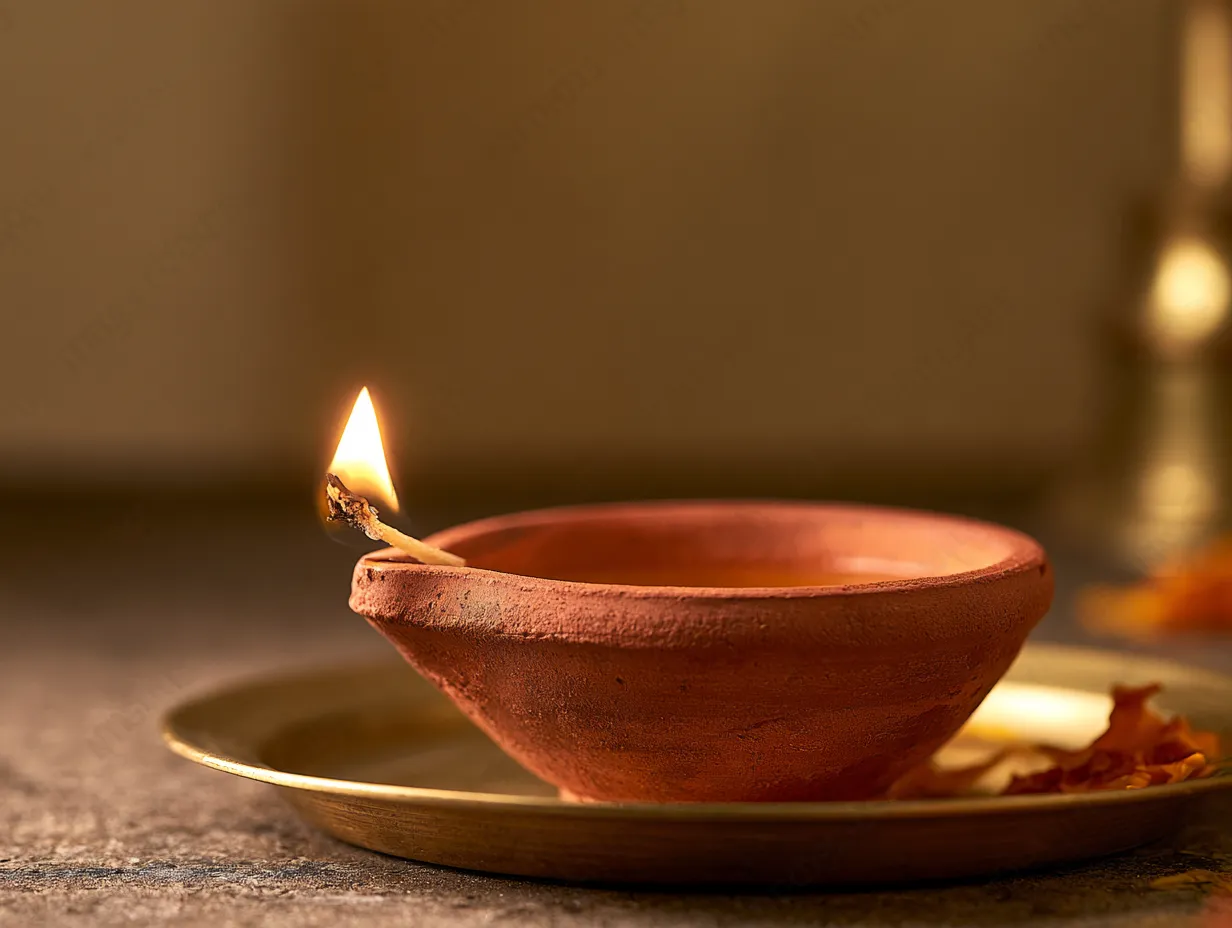
A diya is a traditional oil lamp made of baked clay. It has a shallow bowl for ghee or oil and a small lip to hold a cotton wick. Lighting them on Diwali night is about welcoming Goddess Lakshmi and celebrating good over bad. Depending on where your family comes from, you might call it a deepak in North India or a deepam or vilakku down South.
Types of Diyas You Can Decorate
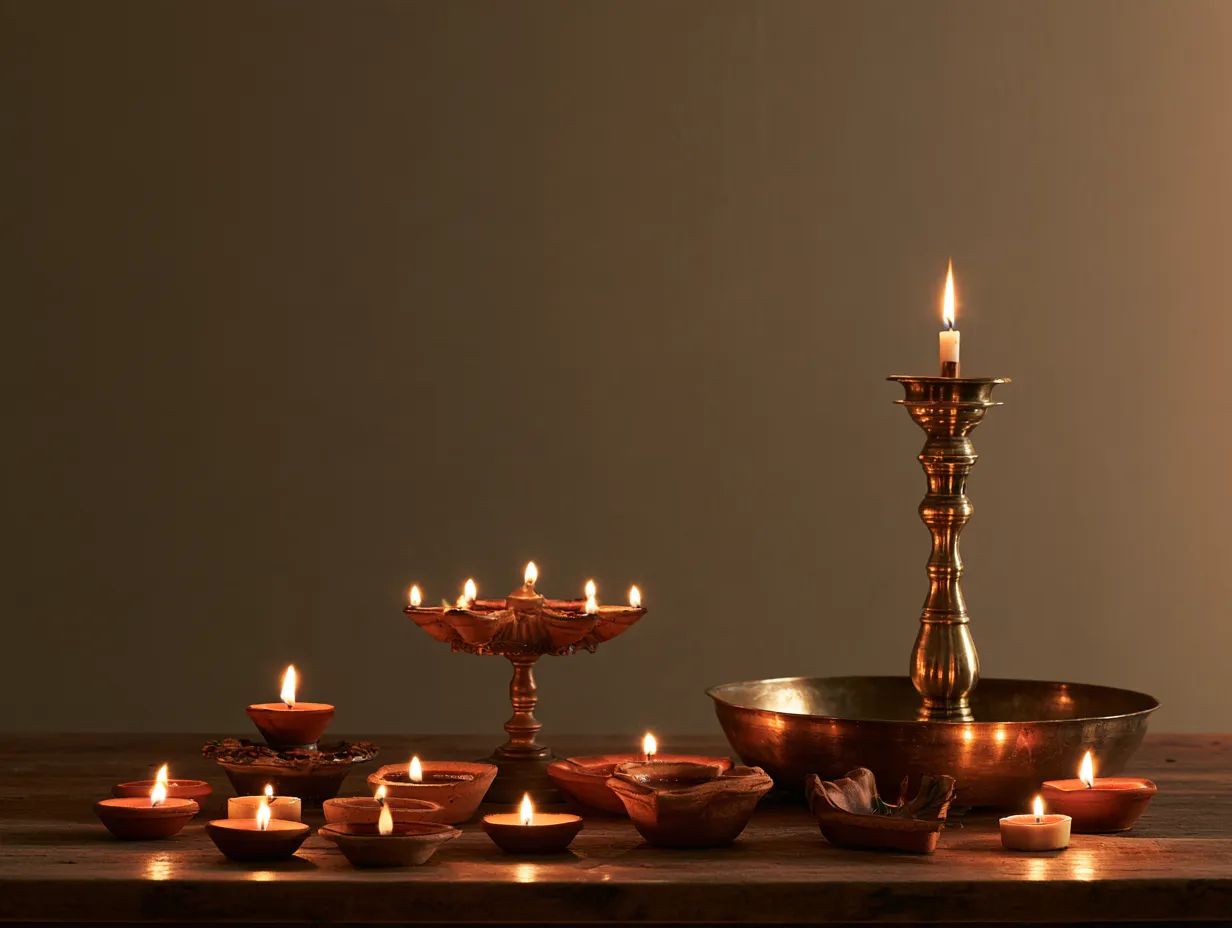
The exact lamp you start with changes how you should decorate it. Terracotta loves acrylics, brass just needs a good scrub, and big centerpieces take more planning than small tea-lights.
- Plain clay diya: Raw terracotta. These are best for acrylic paint, dot work, mirrors, and kundan stones. Great on doorstep steps, window ledges, and along rangolis.
- Agal vilakku: Deeper terracotta lamps common in Southern homes. They look best with simple coloured bands or white kolam lines.
- Panchmukhi diya: Five-spouted lamps in clay or metal. Since you use these for main aarti rituals, keep the paint minimal with subtle gold lines on the rim.
- Brass diya and kuthu vilakku: Heavy metal lamps. Skip the paint entirely here. Scrub them till they shine and wrap a string of fresh marigolds or mogra around the base.
- Big diya (Urli or akhand style): Broad clay or metal bowls that sit as main visual anchors in the foyer or living room floor.
- Wax and gel diyas: Pre-filled candle cups. You do not need oil for these; just set them inside wide water bowls with flower petals.
- Cow-dung (gomaya) and atta diyas: Organic lamps made from cow dung or wheat dough. Leave them plain and add two dots of haldi and kumkum for prayers.
When picking clay diyas at the shop, check the rims with your finger. Skip anything cracked or rough, or your oil will leak right onto the floor tiles.
Diya Decoration Tips: How to Decorate a Diya for Diwali, Step by Step
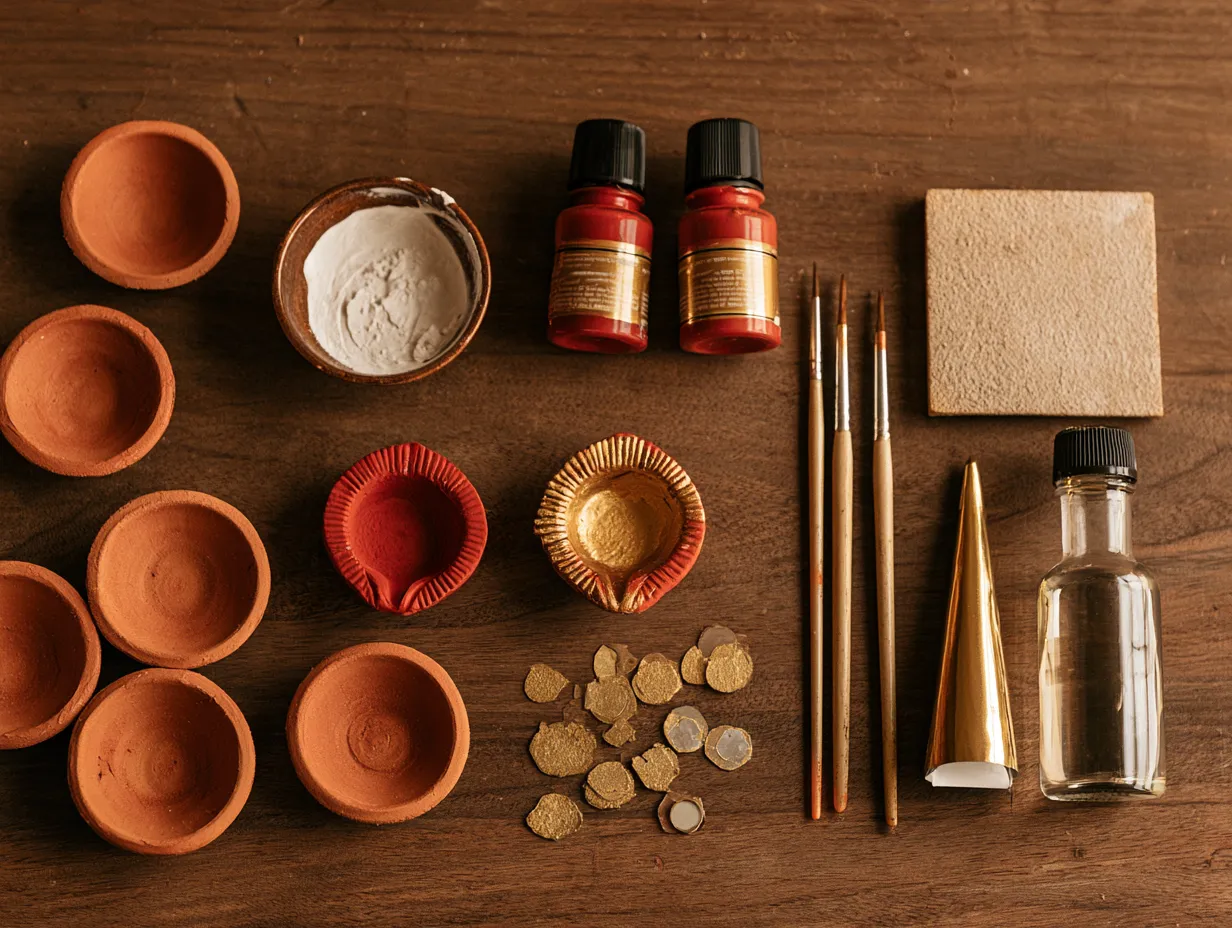
If your painted diyas chip or get greasy, it is usually because the clay was not prepped. Doing these basic prep steps keeps your work looking neat all week long.
- Clean and dry: Wipe off all the loose clay dust with a damp cloth. Let the diyas dry in the shade for a bit.
- Smooth the rough parts: Take fine sandpaper and lightly rub down any jagged edges or uneven bottoms so the lamp sits flat.
- Prime the outside: Paint a layer of white acrylic or gesso over the outside. This stops the raw clay from drinking up your coloured paint like a sponge.
- Paint the base colour: Apply your main colour to the outer body and rim. Two thin coats always look cleaner than one gloppy layer.
- Add the design: Use a thin brush, an outliner cone, or even the blunt end of a toothpick to make dots and simple borders.
- Embellish last: Stick on small mirrors or kundan stones using fabric glue after the paint dries completely.
- Seal it up: Spray or brush a clear acrylic varnish over the outside so oil drips do not ruin your paint job.
- Let it cure: Leave the diyas alone for 24 hours before filling them with oil.
The big rule: Keep paint far away from the inside of the bowl where oil and wicks sit. Heat on paint makes it blister, smell bad, and fume up the room. Keep the inner bowl plain clay.
Beautiful Diya Painting Designs
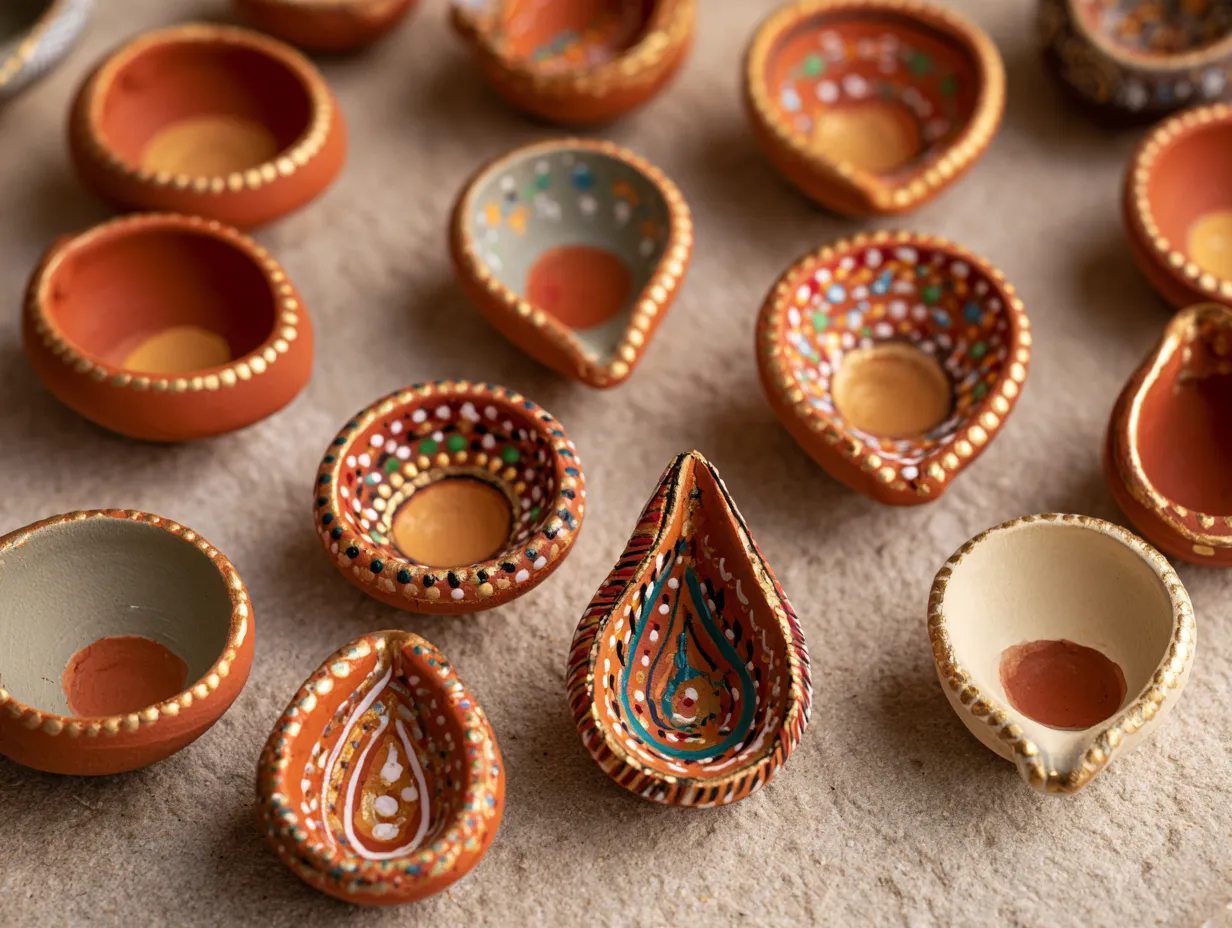
You do not need to be an artist to make these look good. The trick is repeating basic shapes, lines, and dots.
Simple Diya Design: Dots and Borders
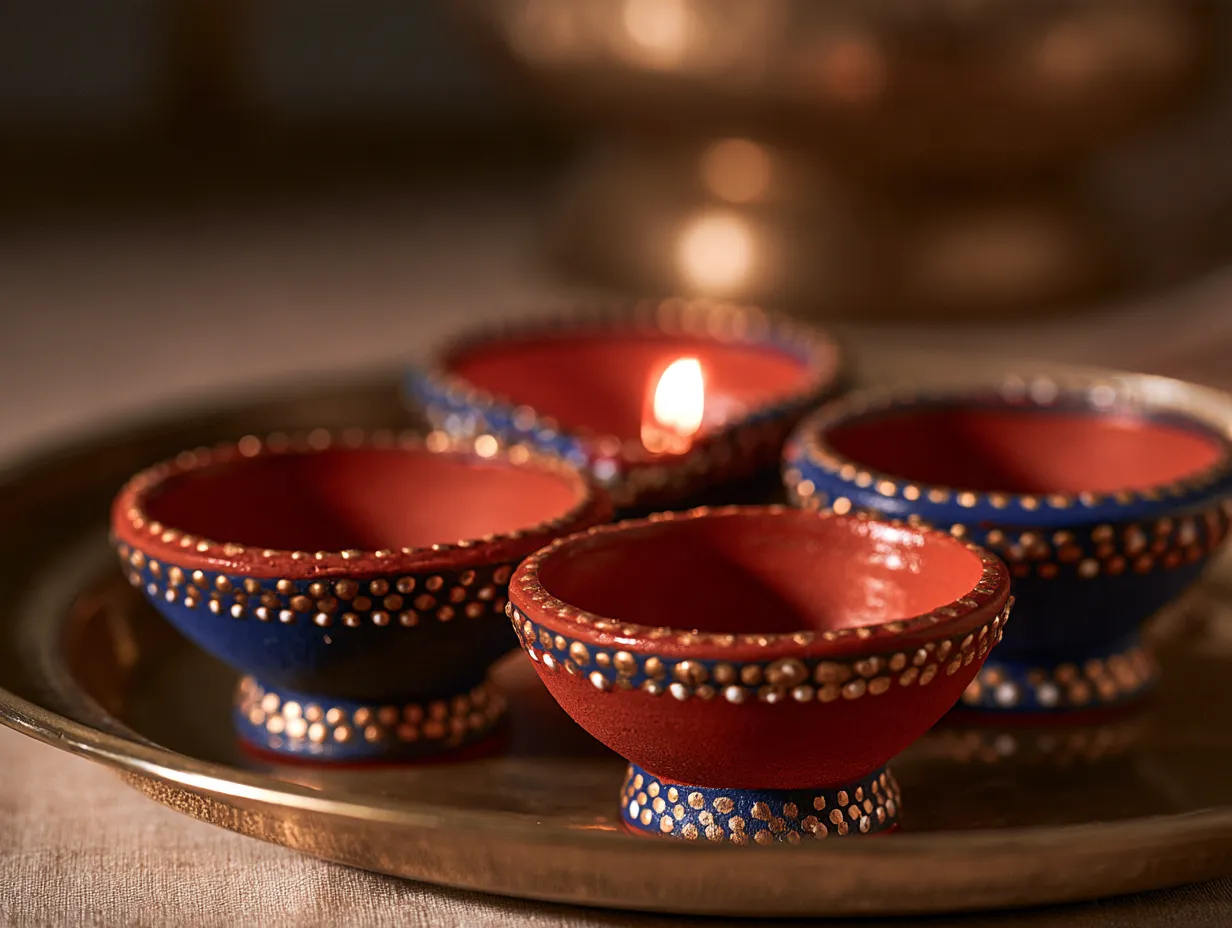
Time: 10 minutes · Skill: very easy
Paint the whole outside a solid shade like royal blue or deep red. Once dry, dab a row of gold or white dots right along the rim and base. It takes ten minutes flat and looks great when you set out a big group of 11 or 21.
Dot Mandala
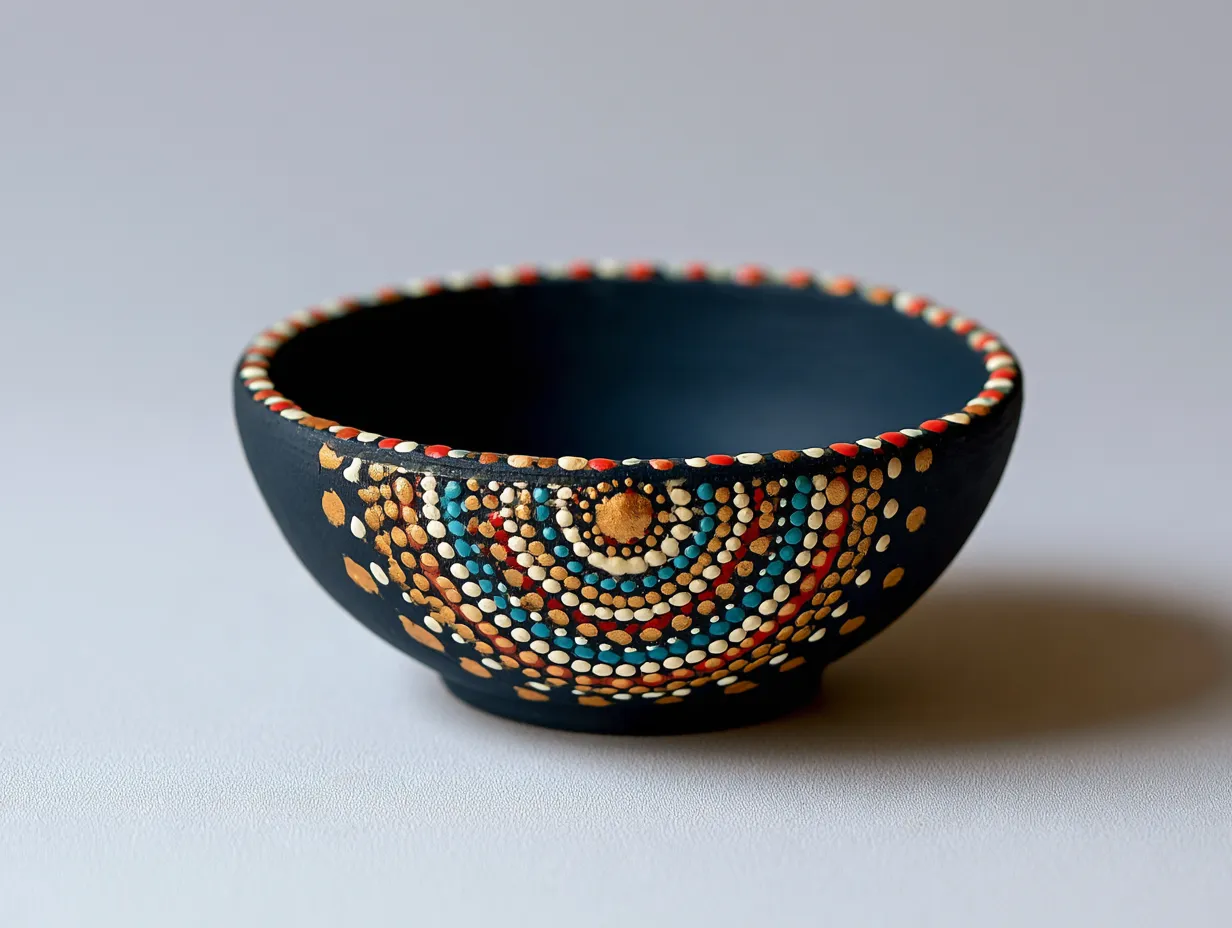
Time: 20 minutes · Skill: easy
Start with a dark base like navy, maroon, or black. Put one big dot right on the outer curve using the back end of a paintbrush, then build rings of smaller dots around it in different colours.
Paisley and Leaf Motifs
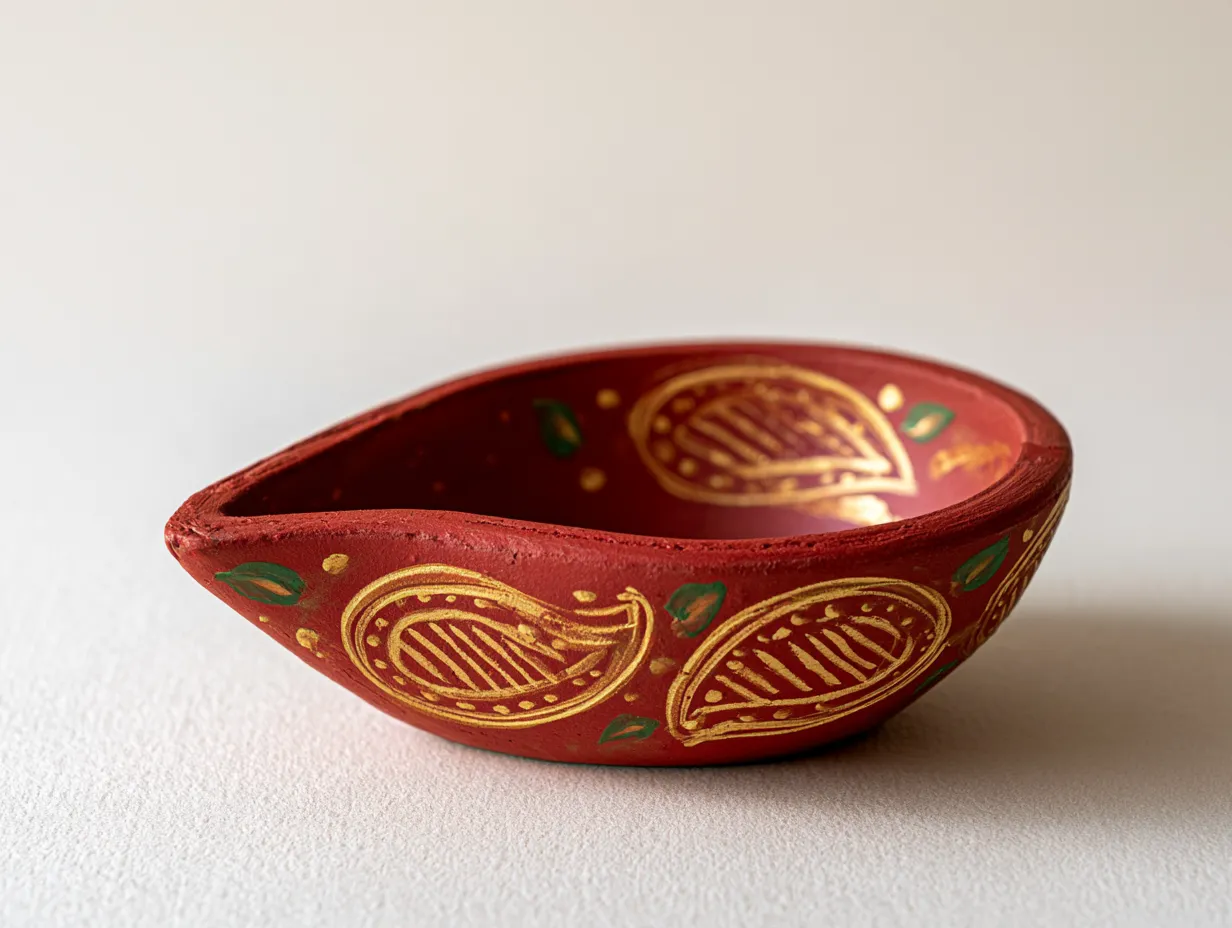
Time: 20 minutes · Skill: easy
Squeeze a teardrop paisley outline on the side using a gold 3D outliner cone. Fill it with tiny dots or diagonal lines, then add small green leaf shapes in the empty spaces.
Warli and Madhubani Diyas
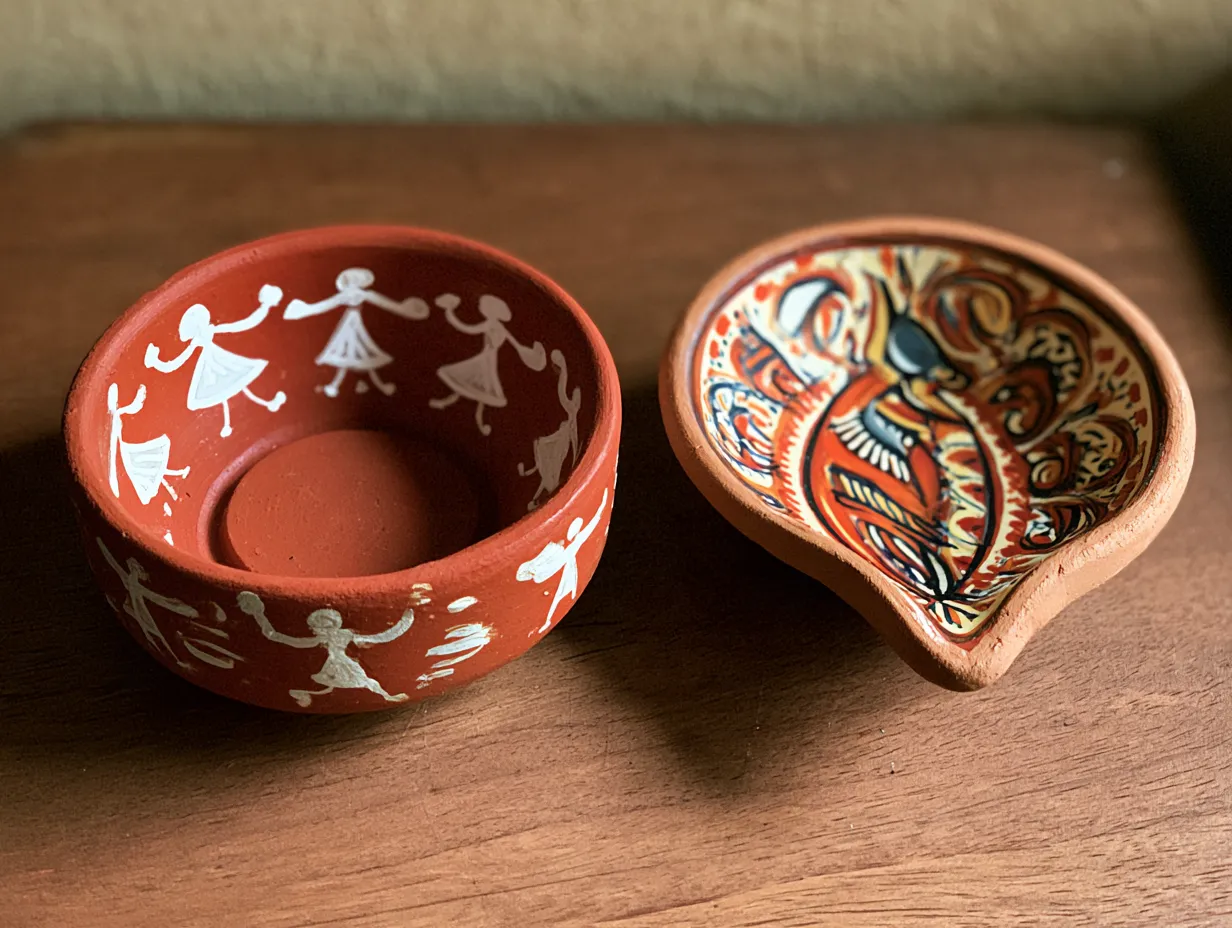
Time: 30 minutes · Skill: medium
Paint the diya traditional terracotta red, then use a thin brush to draw white stick-figure Warli dancers. If you prefer Madhubani, use a bright yellow base and draw simple fish or peacocks with double black lines.
Ombre and Two-Tone Diyas
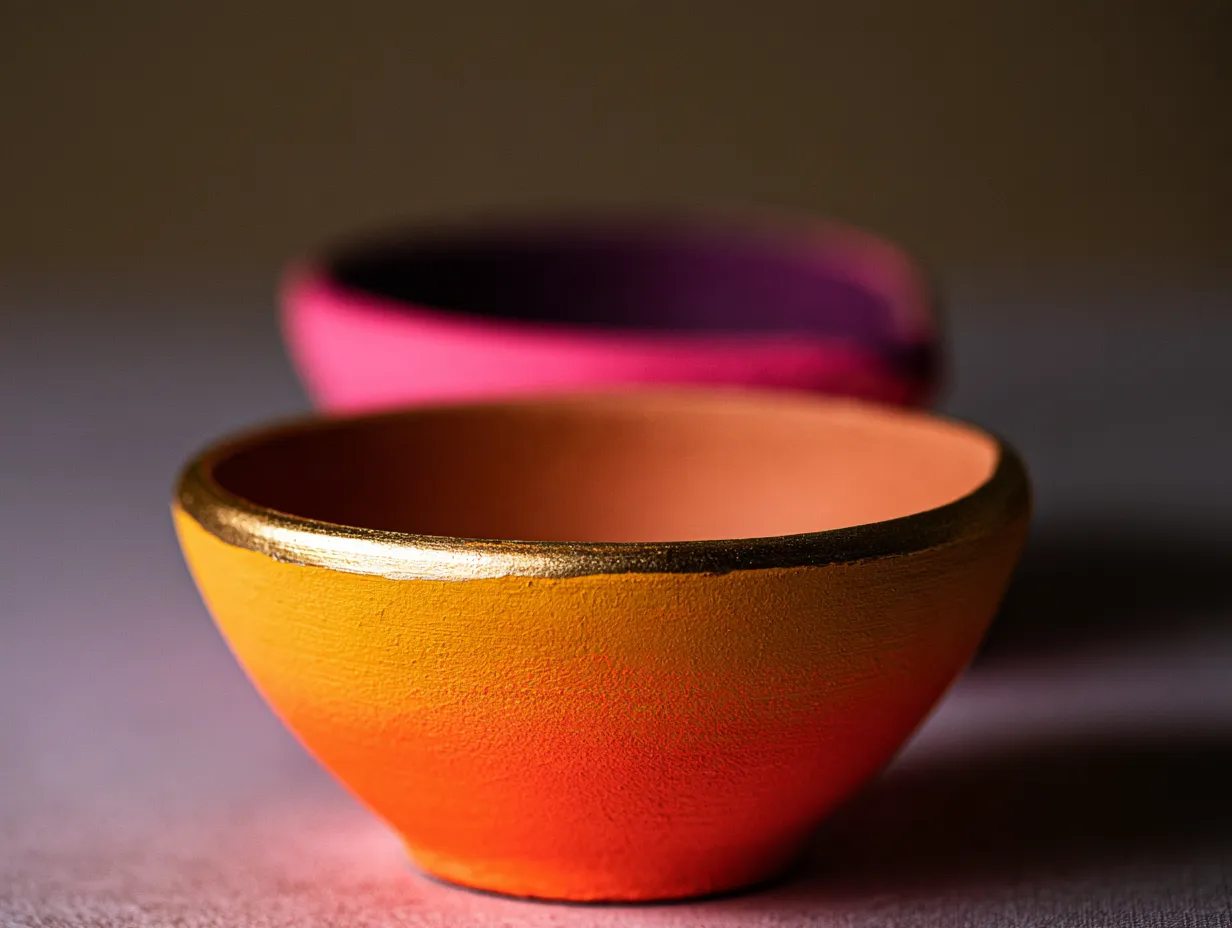
Time: 15 minutes · Skill: easy
Take a damp kitchen sponge and blend two colours together along the side'like yellow fading into orange, or pink into deep purple. Stroke a clean gold line along the rim to finish it off.
Gold Leaf and Metallic Finish
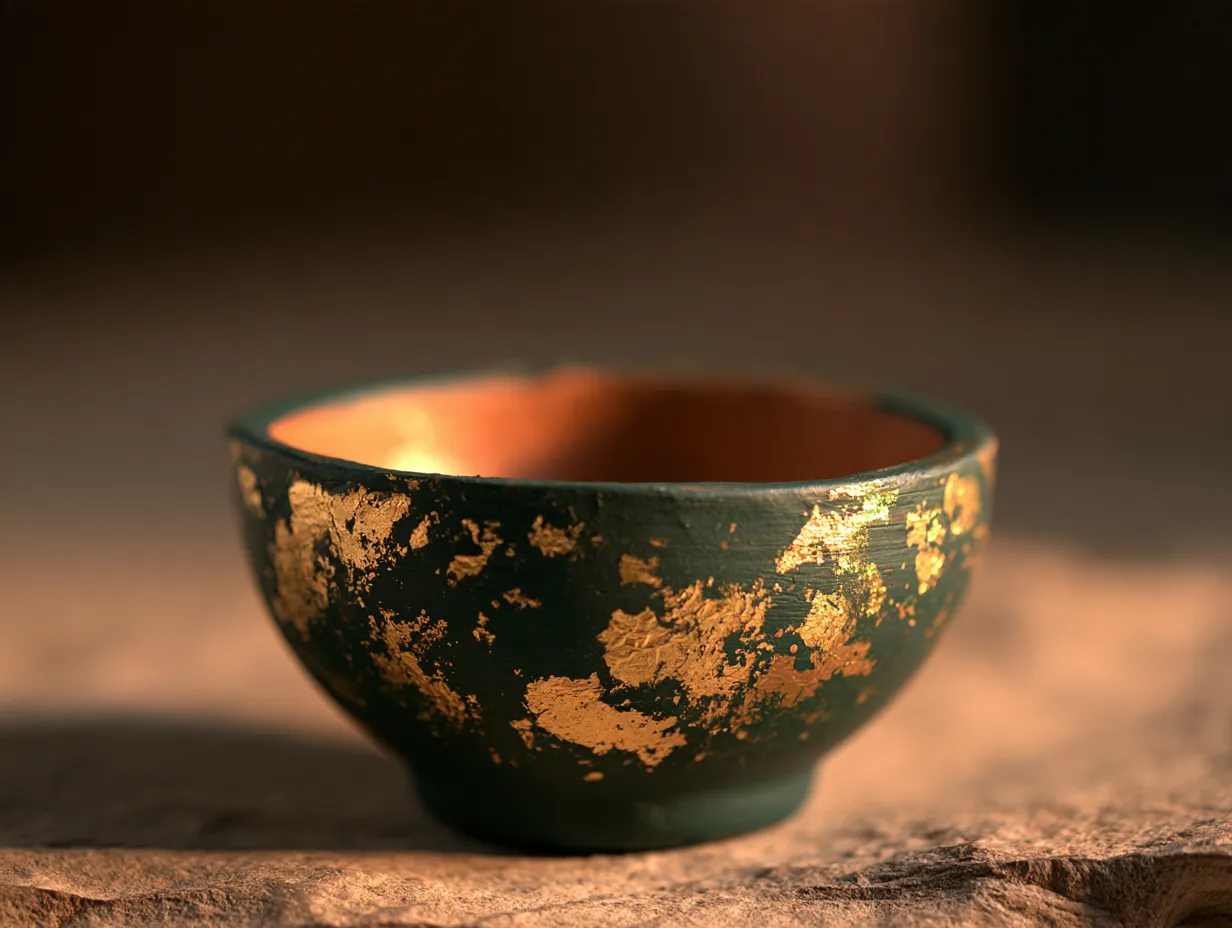
Time: 20 minutes · Skill: easy
Dab gilding glue randomly over a matte black or dark green painted diya. Press sheets of faux gold leaf over the tacky spots, then sweep away the extra bits with a dry brush.
Diya Colour Design: Combinations That Work
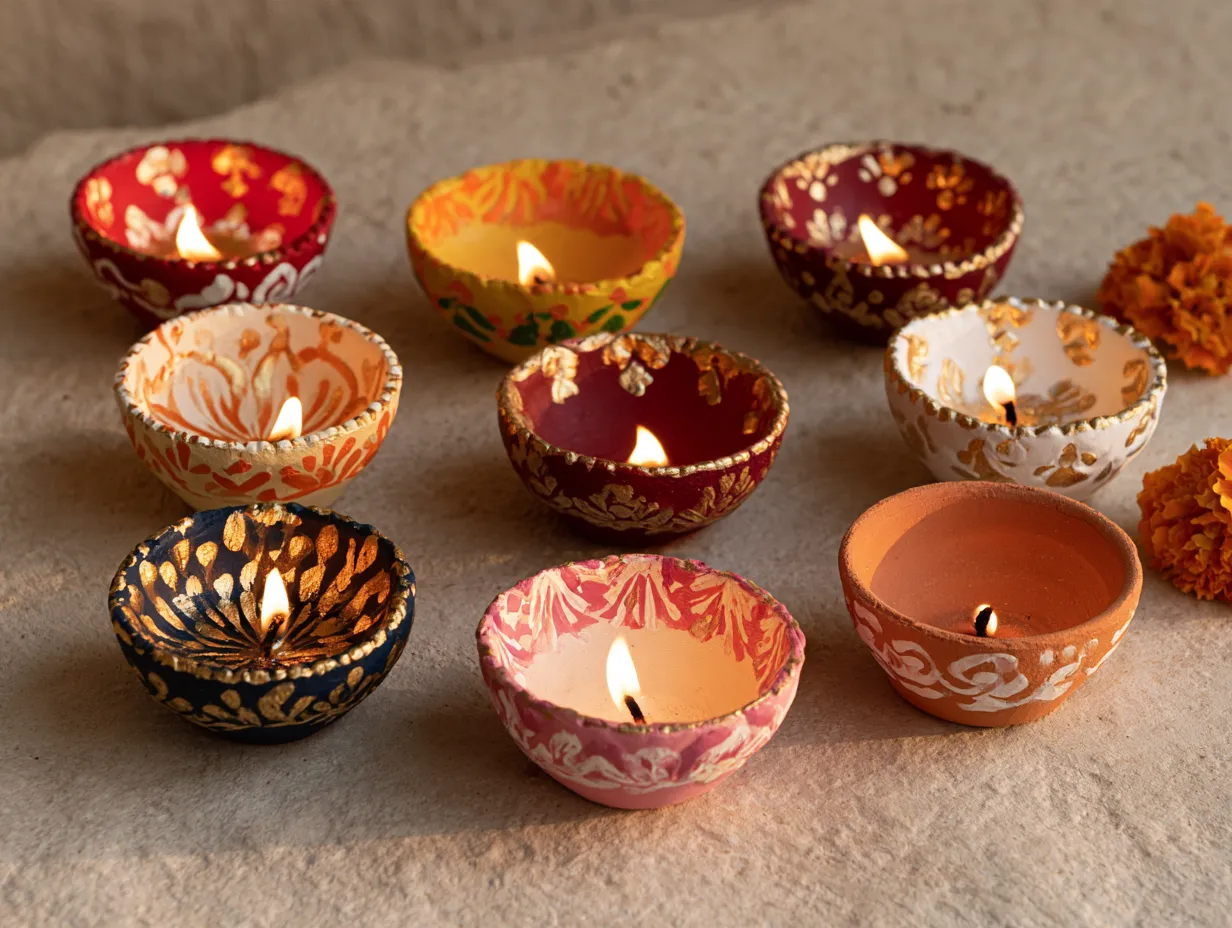
Matching your diya shades to your entrance flowers or rangoli makes everything look like you actually planned it out ahead of time.
- Red, gold and white: Classic Indian holiday colours. Looks great alongside marigold garlands and brass bowls.
- Yellow, orange and green: Bright and cheery. Pairs naturally with green mango leaf torans at the main door.
- Maroon and gold: Rich and quiet. Fits dark wooden mandirs and prayer rooms well.
- White and gold: Clean and minimal. Perfect for modern flats styled with white jasmine.
- Pink, magenta and orange: Fun and loud. Ideal for party food tables and lounge areas.
- Navy or black with gold: Sharp and modern. Pops really well against light floor tiles or grey walls.
- Natural terracotta with white: Ideal for balcony floors, open patios, and eco-friendly setups.
Handmade and Unique Diya Decoration Ideas
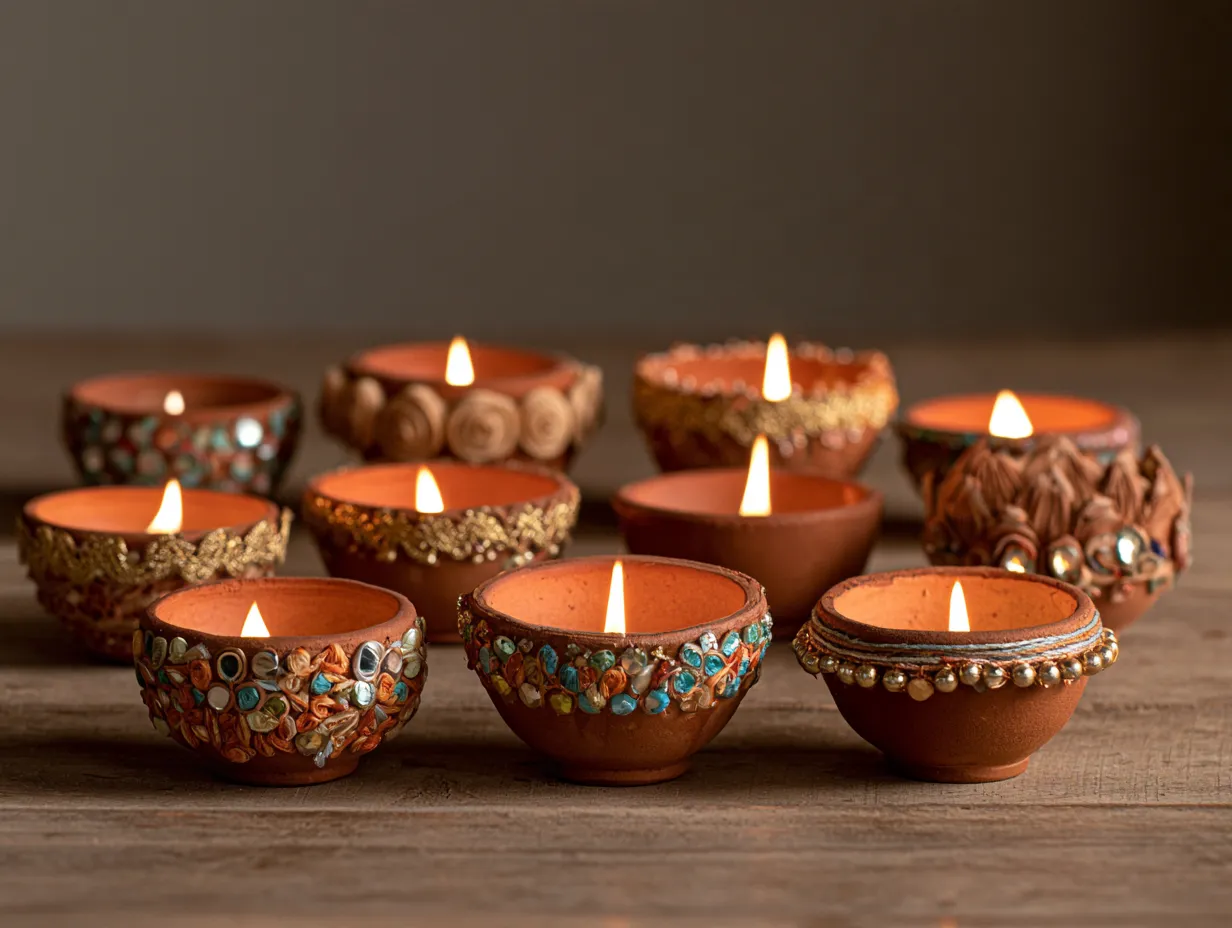
Adding small items from the local craft shop turns simple painted clay into something people actually pause to look at.
Mirror-Work Diyas
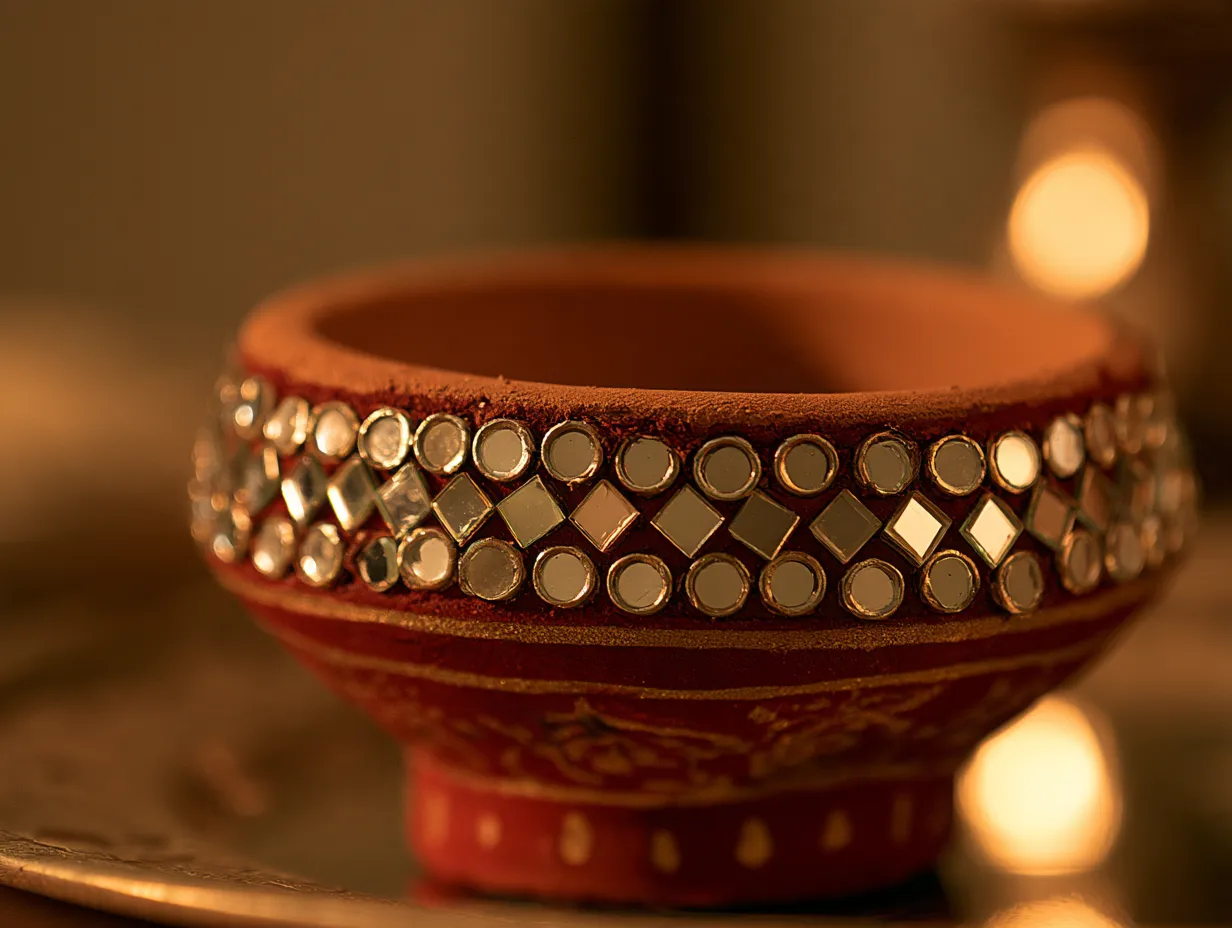
Glue tiny round or diamond craft mirrors around the belly of the diya. The mirrors bounce the open flame light around, so these look brilliant lined up on window sills or doorstep steps.
Kundan and Stone Diyas
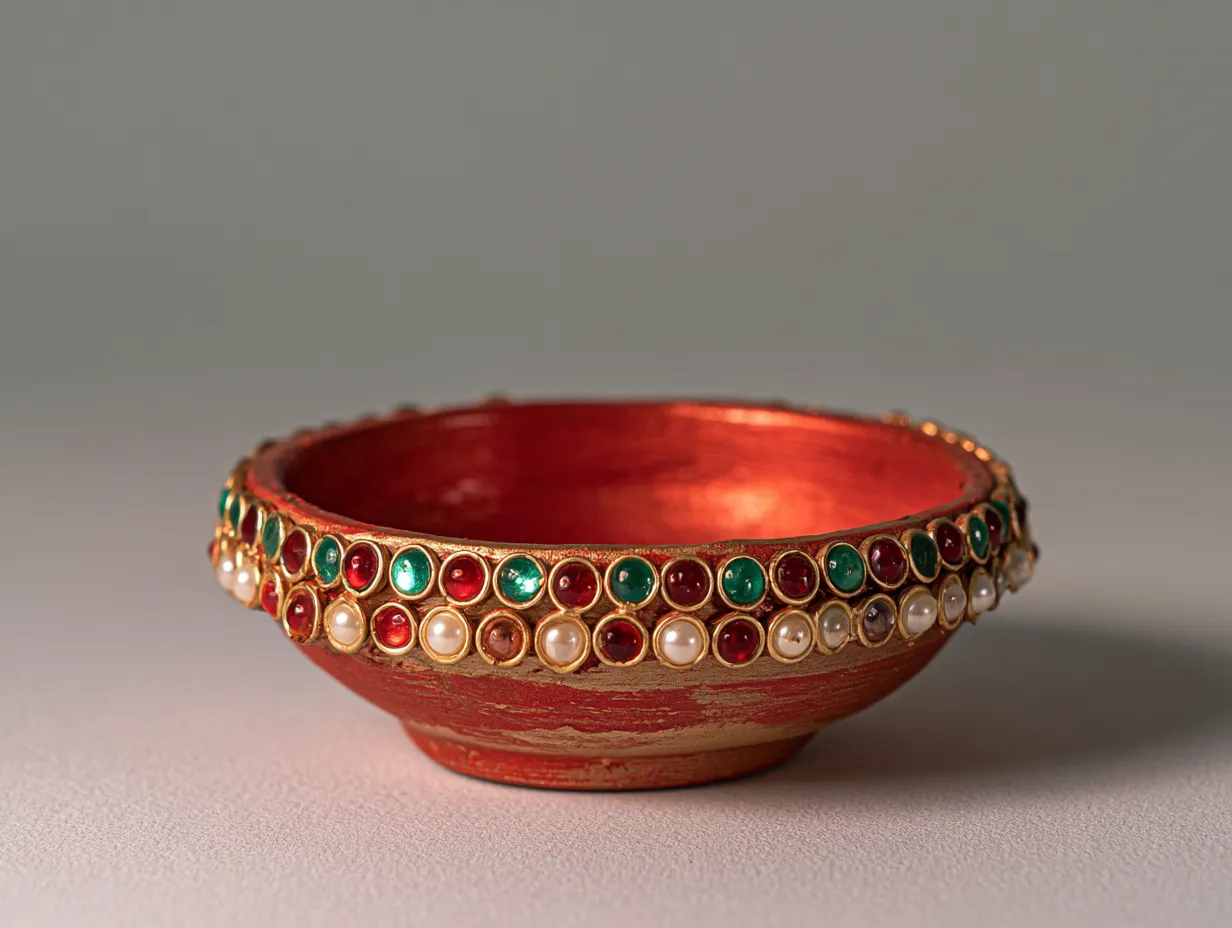
Press kundan stones or faux pearls into a line of fabric glue right along the top edge. Gold paint with red and green stones gives a traditional jewelry look for the puja room.
Lace and Gota Patti Diyas
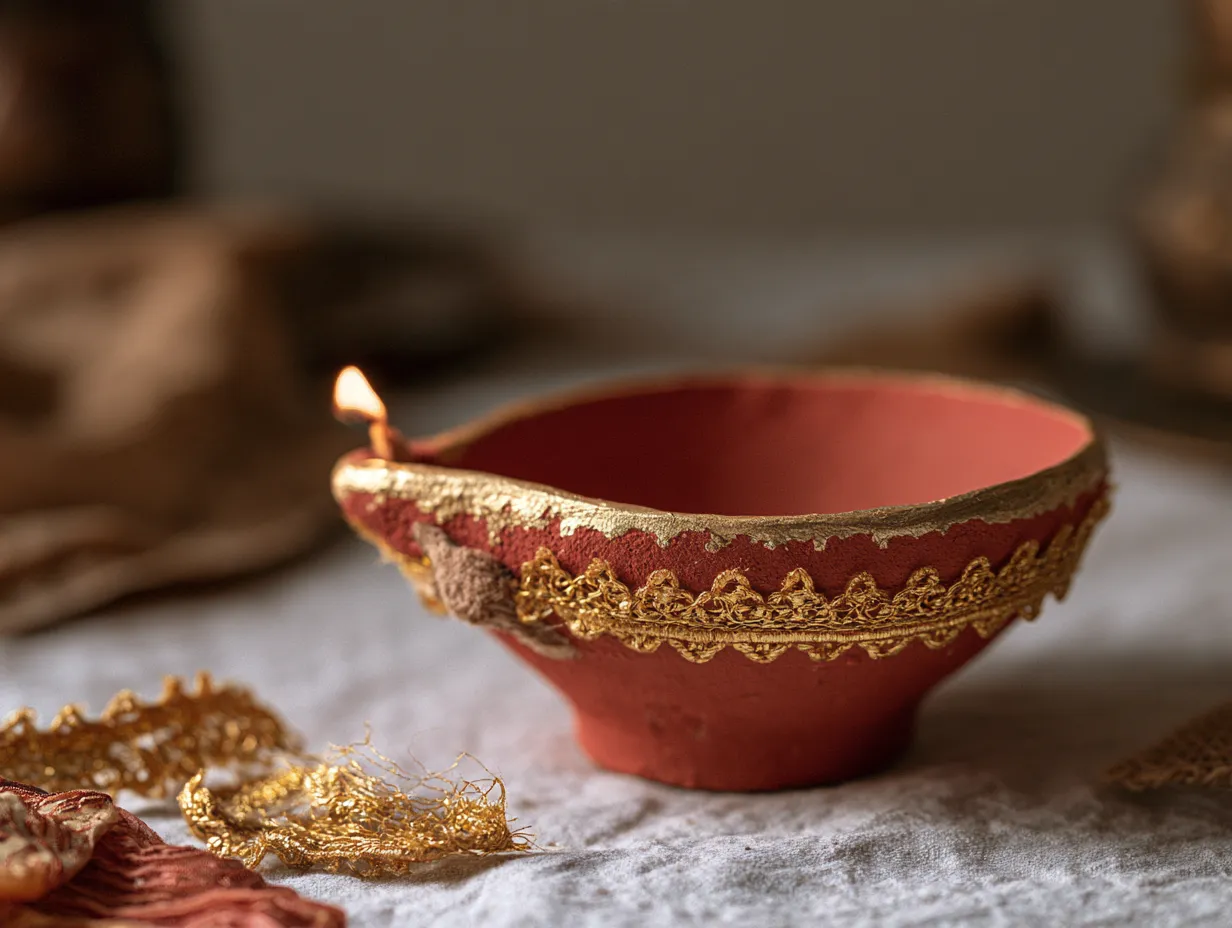
Wrap a strip of thin gold lace or gota patti ribbon around the middle and stick it down with fabric glue. It is an easy way to use up old clothing scraps.
Quilling Diyas
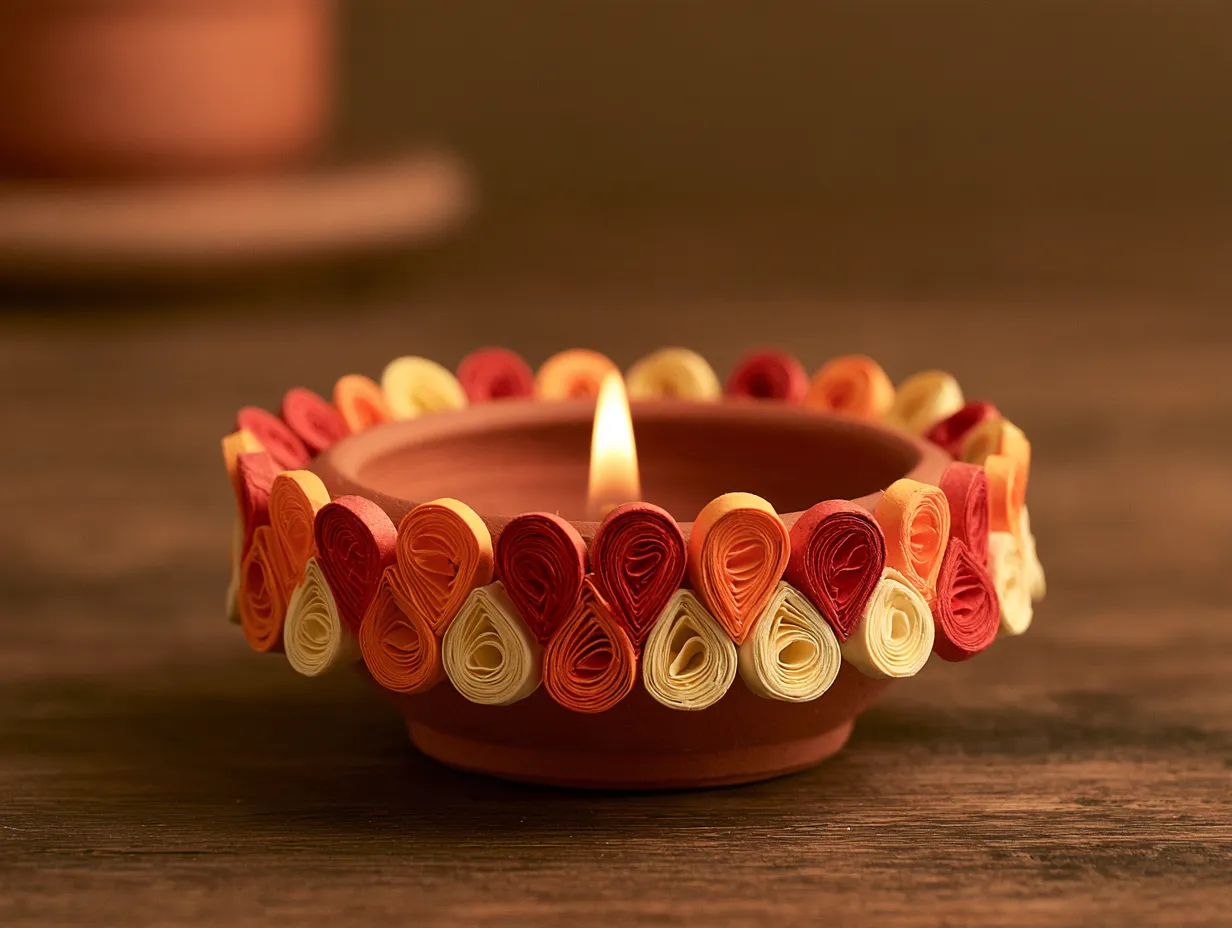
Roll paper quilling strips into tight teardrop shapes and glue them around the lamp body in a flower shape. Dab a bit of varnish over the paper so it does not soak up dampness.
Clay Relief Diyas
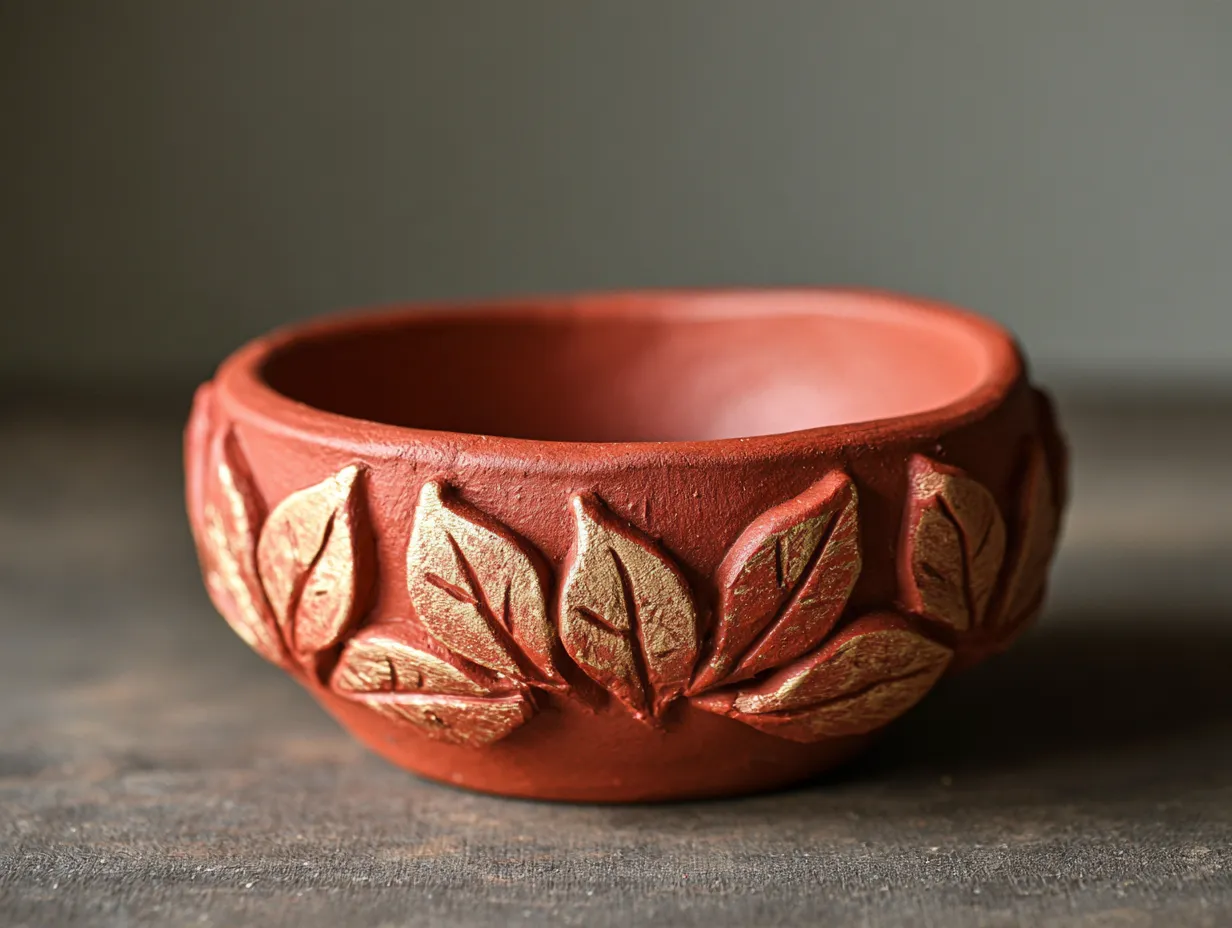
Take tiny bits of air-dry clay and shape them into little leaves or petals right on the raw diya before painting. Once it dries, paint over the whole thing for a raised, carved feel.
Thread and Bead Wrapped Diyas
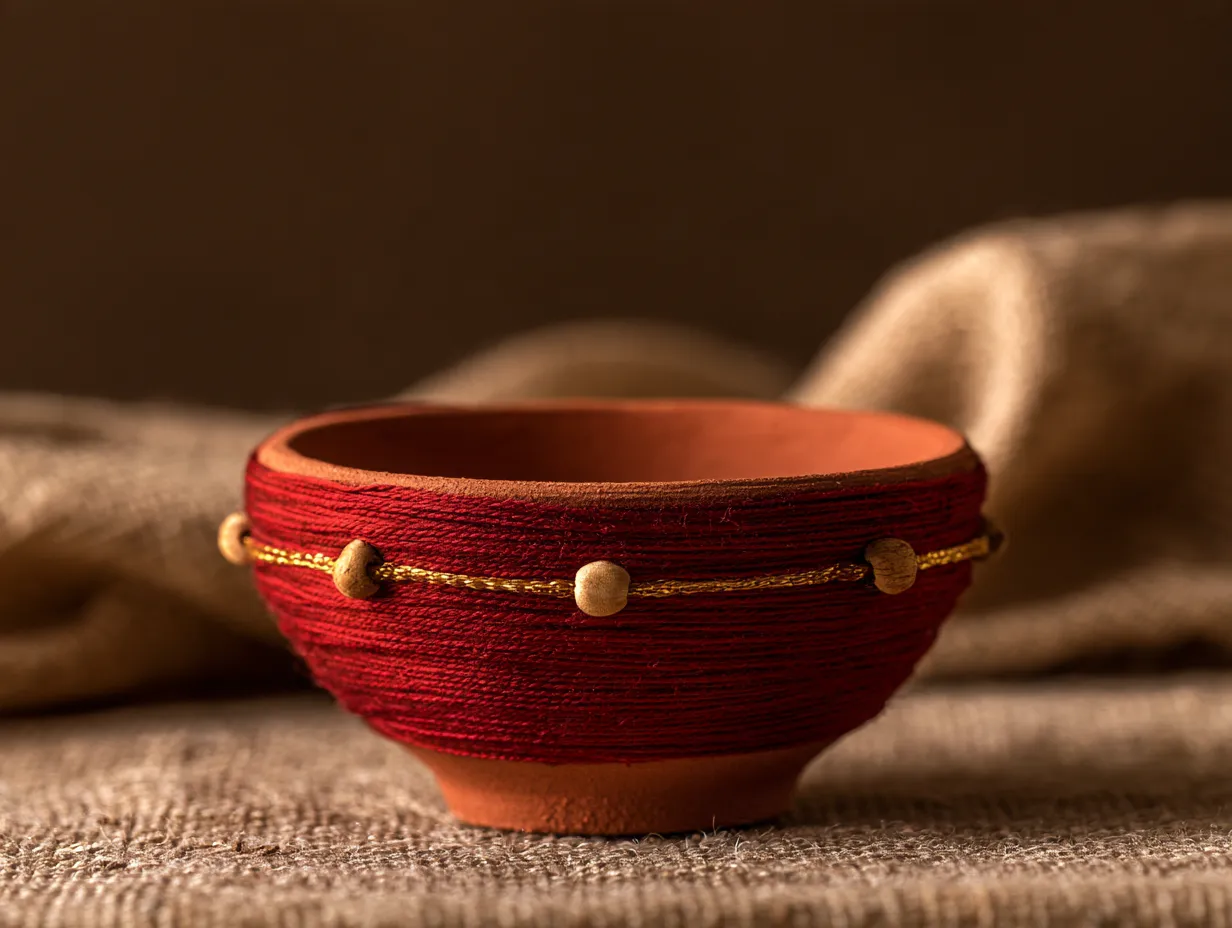
Wind thick silk thread or red mauli thread tight around the middle section, slipping a few wooden beads into the wrap as you go. This looks great on bigger clay lamps.
Diyas for Children to Decorate
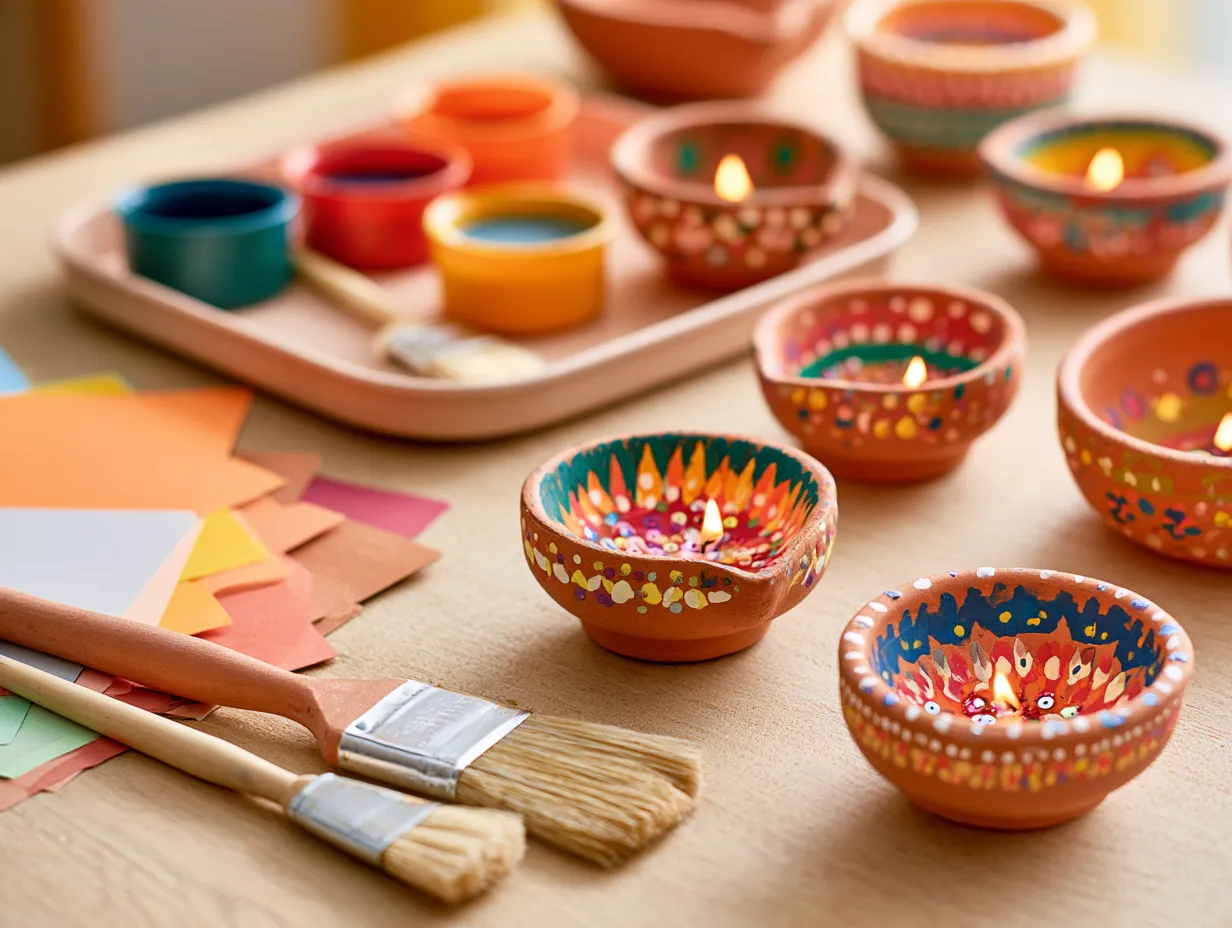
Give kids plain diyas, washable poster paints, sequins, and stickers on a tray. Sure, the lines will not be perfectly straight, but setting their creations out in a group makes them feel part of the prep.
Diwali Diya Decoration with Flowers
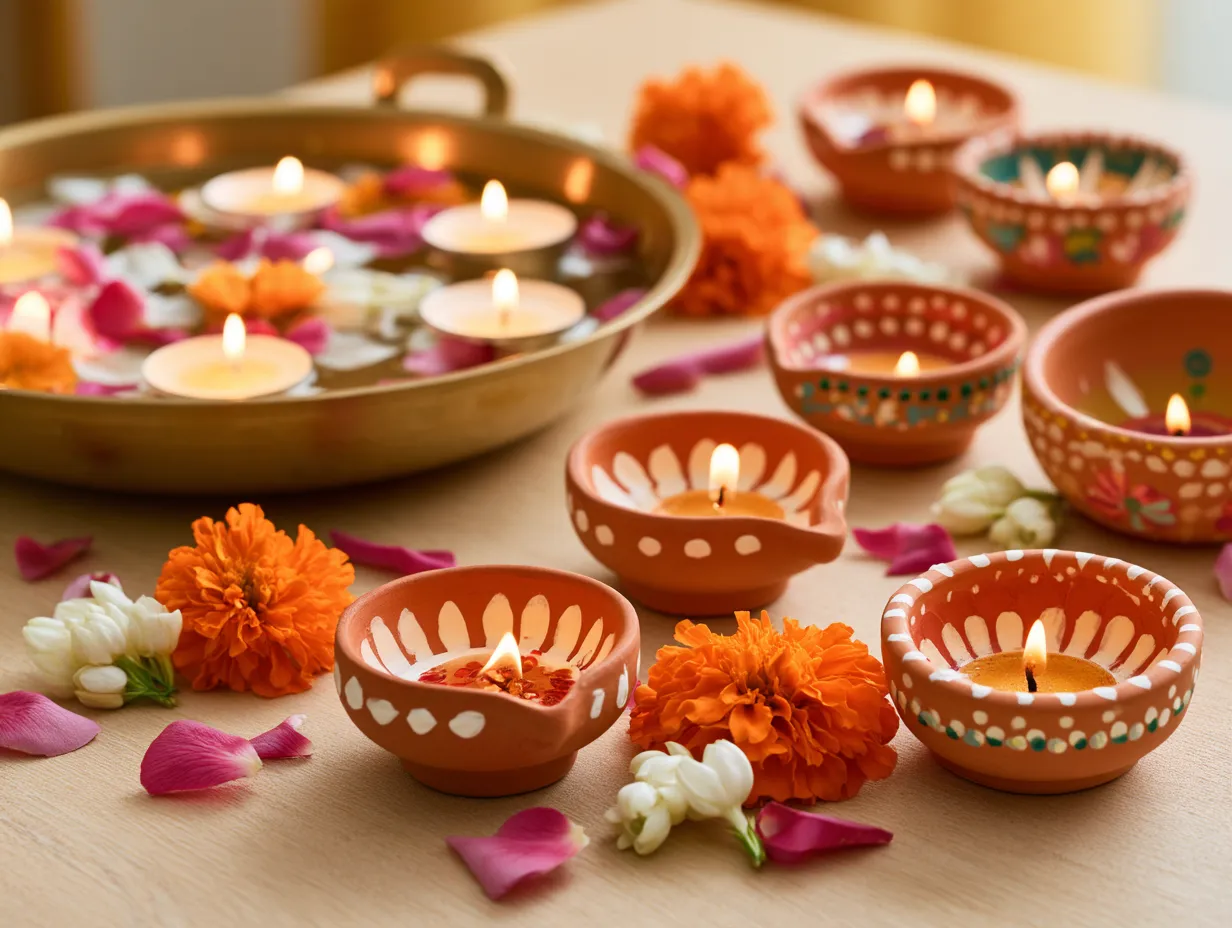
Flowers hide rough clay bases fast and make the home smell fresh all evening.
- Marigold ring: Put an individual lit diya inside a tight circle of marigolds on a small metal plate.
- Floating diyas in an urli: Fill a wide brass bowl with water, drop in rose and marigold petals, and float wax tea-lights on top.
- Rangoli with diyas: Set lit diyas directly on the outer points and middle of your floor rangoli.
- Mogra and jasmine strings: Wrap a short string of fragrant mogra around the base of brass lamps in your prayer room.
- Banana leaf base: Set a row of clay diyas on a fresh strip of banana leaf on your entry table.
Where to Place Decorated Diyas at Home?
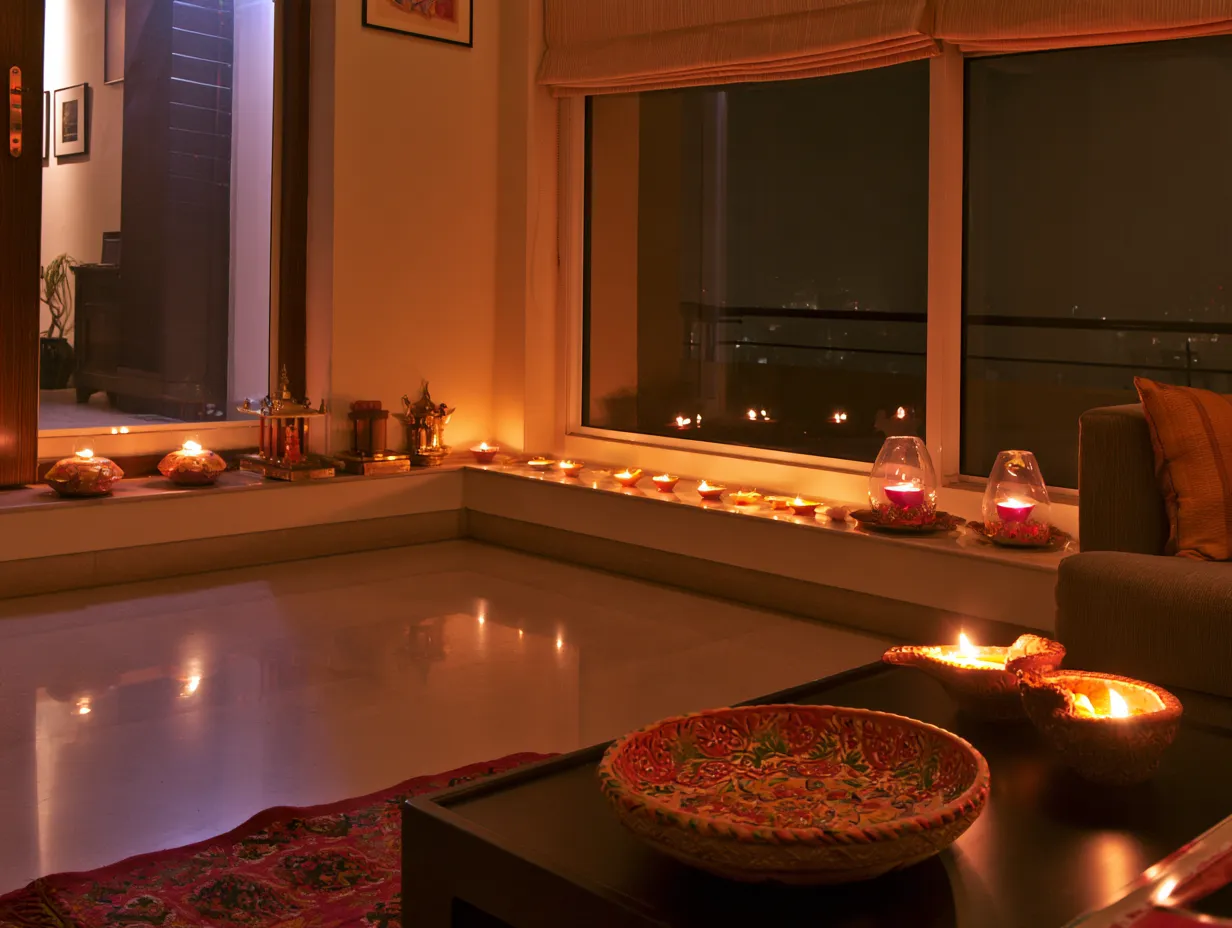
Festive lights work better when you group lamps together instead of scattering single diyas in random corners. Stick to odd numbers like 5, 11, or 21.
- Main entrance: Put matching pairs on both sides of the door frame and group a few around your rangoli. Make sure guests have a clear spot to step.
- Puja room: Put a main multi-wick or brass lamp in front of the idols, then line smaller painted lamps along the mandir steps.
- Window ledges and sills: Set out a straight line of matching lamps across window sills so the warm glow shows from the street.
- Balcony and terrace: Line lamps along the balcony wall, but drop them inside glass holders so the wind does not blow them out.
- Living room: Put a tray of mirror-work diyas right on the coffee table, far away from thin curtains or couch cushions.
- Staircase: Use battery-operated LED candles on indoor steps so long dupattas or sarees do not catch fire.
Big Diya Decoration Ideas
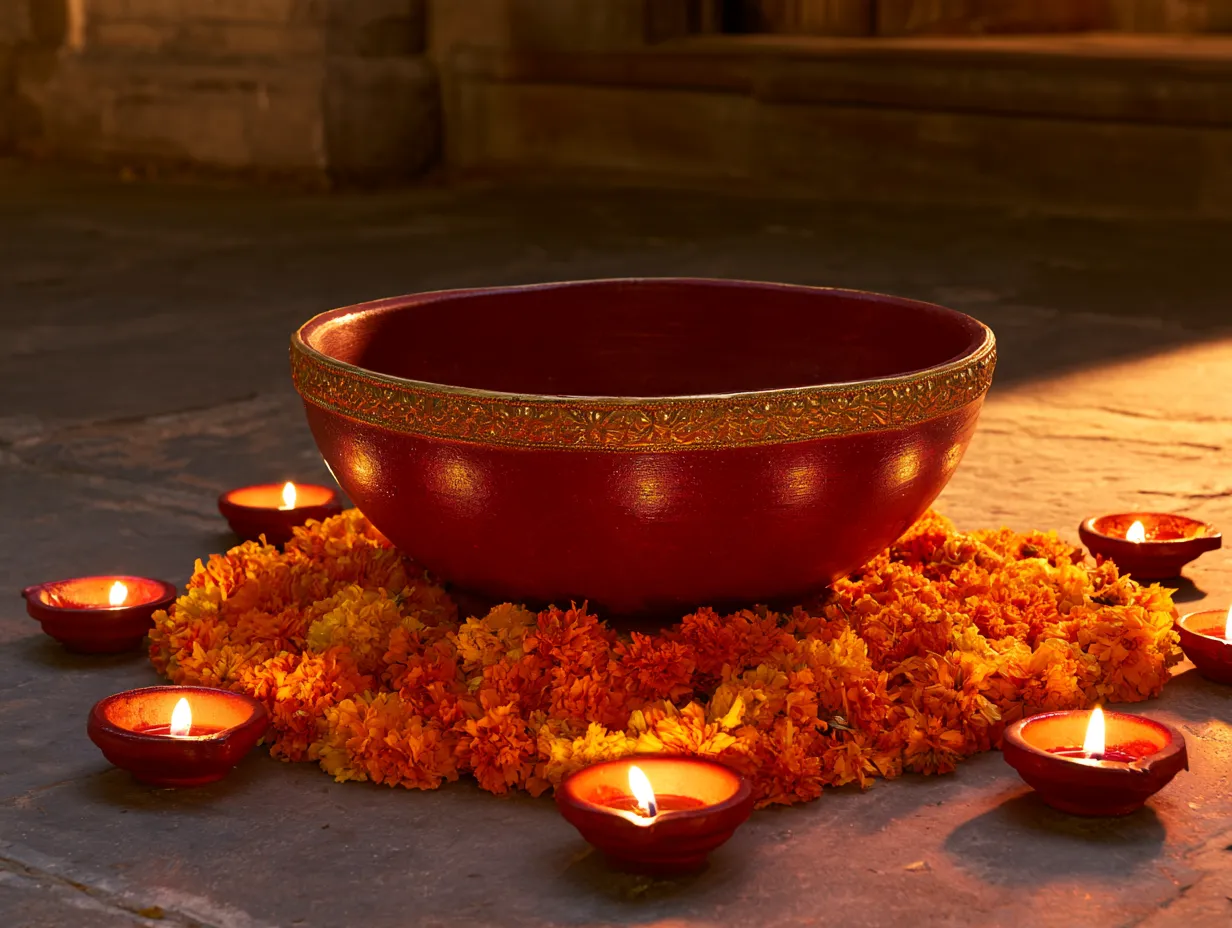
A broad clay bowl or large multi-wick diya works as a main centerpiece, so you can do a lot more detail on it than on tiny ones.
- Painted band and flower ring: Paint a broad border in deep red and gold along the rim, then set the whole bowl on a bed of marigolds right at the foyer.
- Multi-wick big diya: Fill a large multi-wick vessel with oil to throw a big, warm glow across your courtyard on Lakshmi Puja night.
- Surround of small diyas: Ring one big painted lamp with eleven smaller matching ones arranged in a neat circle.
- Mirror and kundan panel: Use the extra space on a big diya to make a full mandala pattern with craft mirrors and stones.
Diya Stand Decoration Ideas
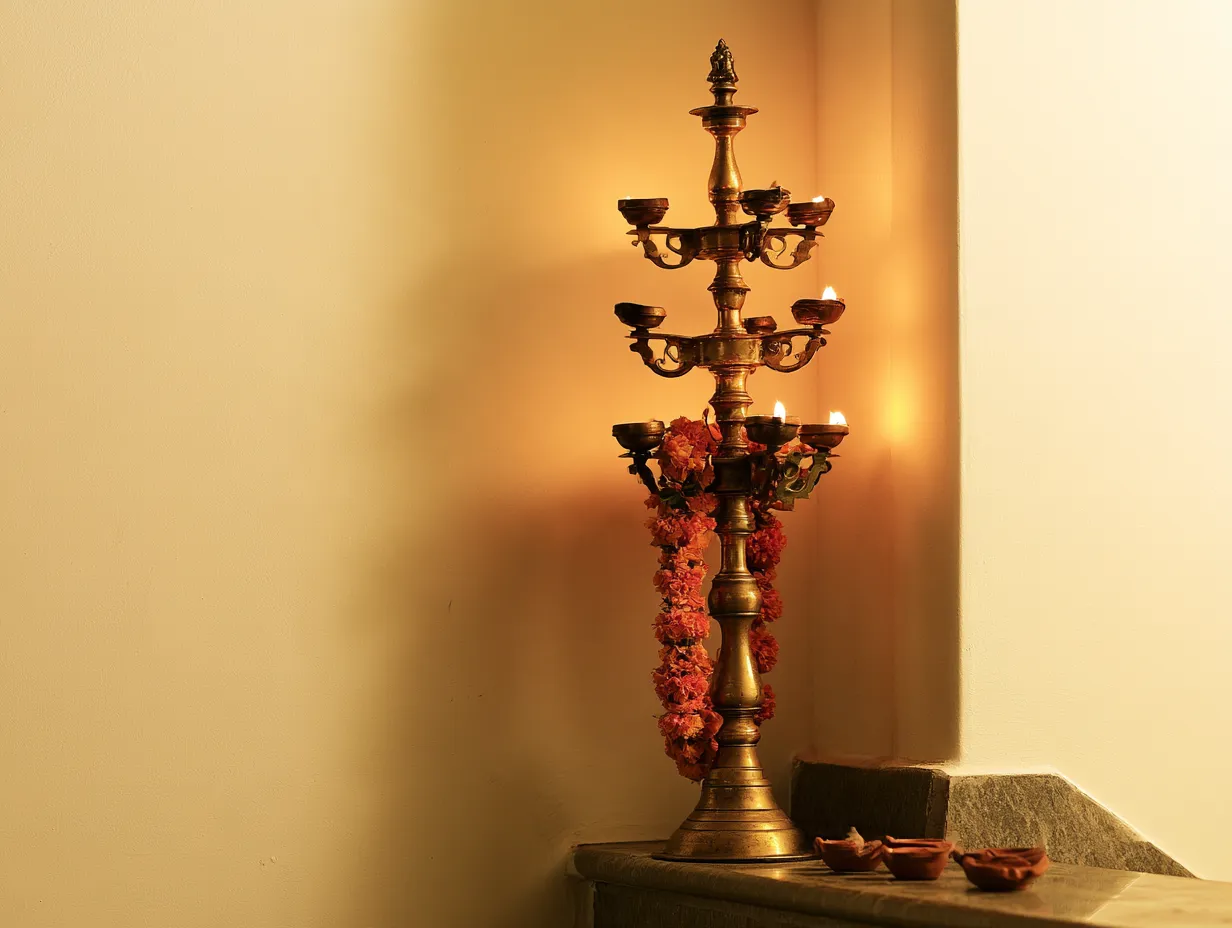
Lifting lamps off the floor keeps open flames out of reach of pets and toddlers while putting the light right at eye level.
- Tiered pot stand: Take three clay pots of different sizes, stack them upside down with strong glue, and paint them to make a tiered stand.
- Brass or wooden diya stand: Wrap a garland of fresh marigolds around the vertical post of a tall stand.
- Glass hurricane holder: Put oil lamps inside tall glass cylinders on breezy balconies so the flames stay lit.
- Floating shelf or wall bracket: Put up small wall-mounted brackets to hold lamps at eye level in small flats with low floor space.
Brass Diya Decoration
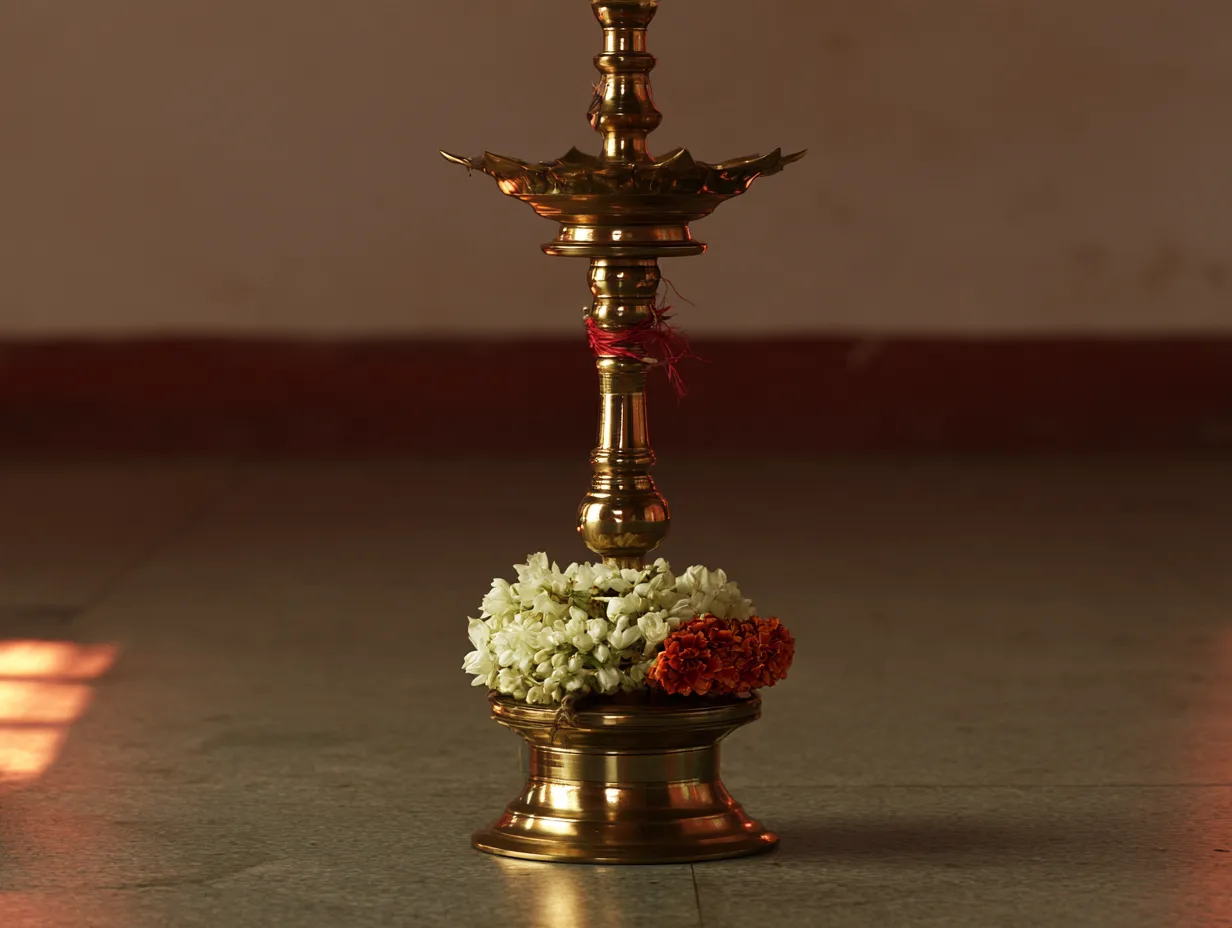
Do not paint brass or bell-metal lamps. Just clean off the tarnish so the metal shines.
Scrub off dark spots using tamarind pulp, lemon with salt, or Pitambari powder, then rinse and dry. Keep the styling simple: put a marigold ring at the bottom, wrap a mogra string around the post, or tie a red mauli thread around the neck joint. For tall kuthu vilakku lamps, light your family’s usual number of wicks and tie a short flower garland right under the top piece.
Eco-Friendly Diya Decoration
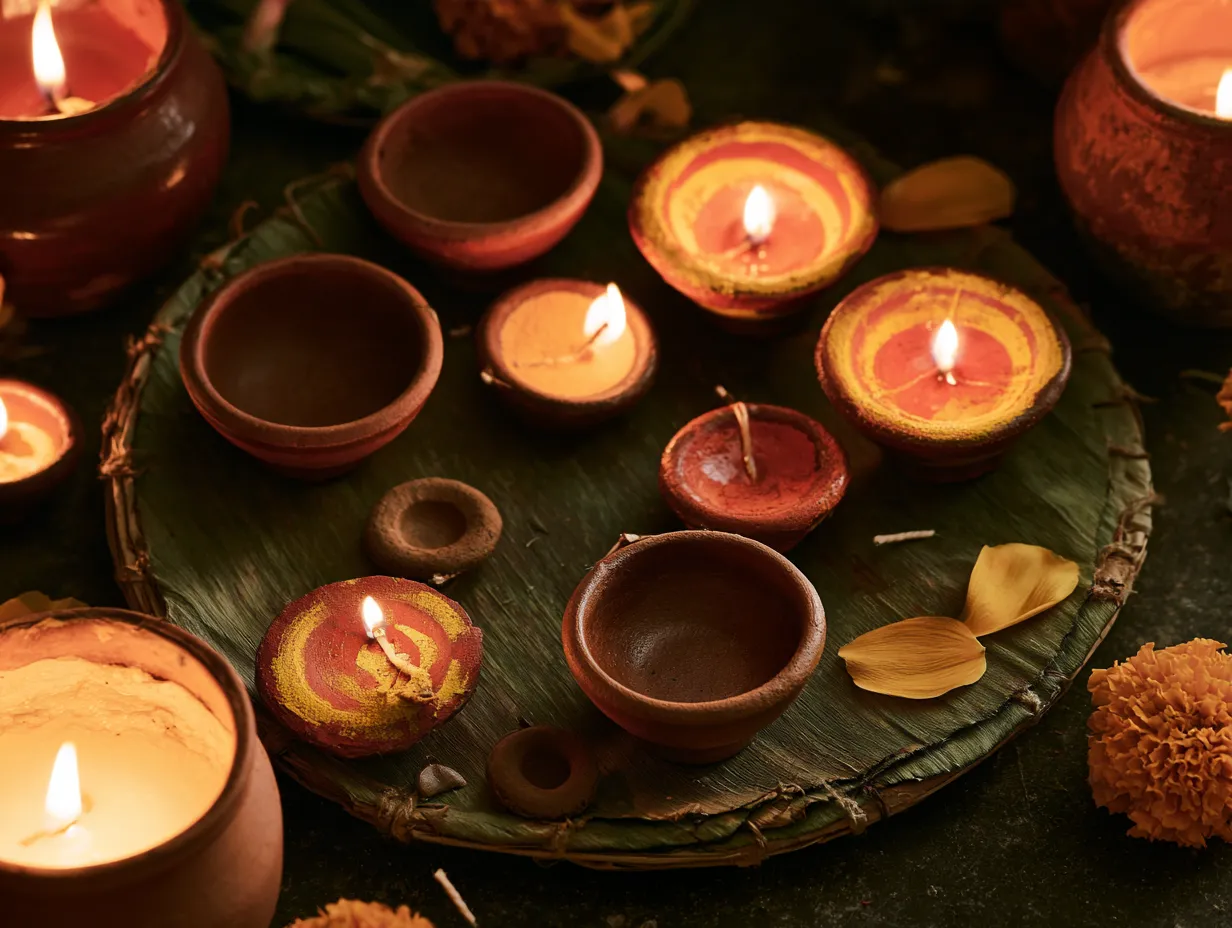
Raw clay is already biodegradable. What you put on it determines if it stays eco-friendly.
- Keep some diyas natural: Plain clay lamps with simple dots of haldi and kumkum paste look classic and go right back into the soil.
- Use natural colours: Pick earth pigments like geru (red ochre), turmeric, and lime (chuna) instead of synthetic bottle paints.
- Try cow-dung (gomaya) diyas: Organic lamps made from cow dung burn well and can be crushed directly into garden plant pots after use.
- Make atta diyas for the puja: Wheat-flour dough shaped into small lamps works for specific prayers and composts easily.
- Skip plastic glitter and thermocol: Stick to real gold leaf, glass mirrors, or cotton lace that you can pull off and reuse.
- Reuse painted diyas: Wipe the soot out of painted clay lamps after the festival, wrap them in newspaper, and store them in a dry box for next year.
Deepam and Deepak Decoration Ideas Across India
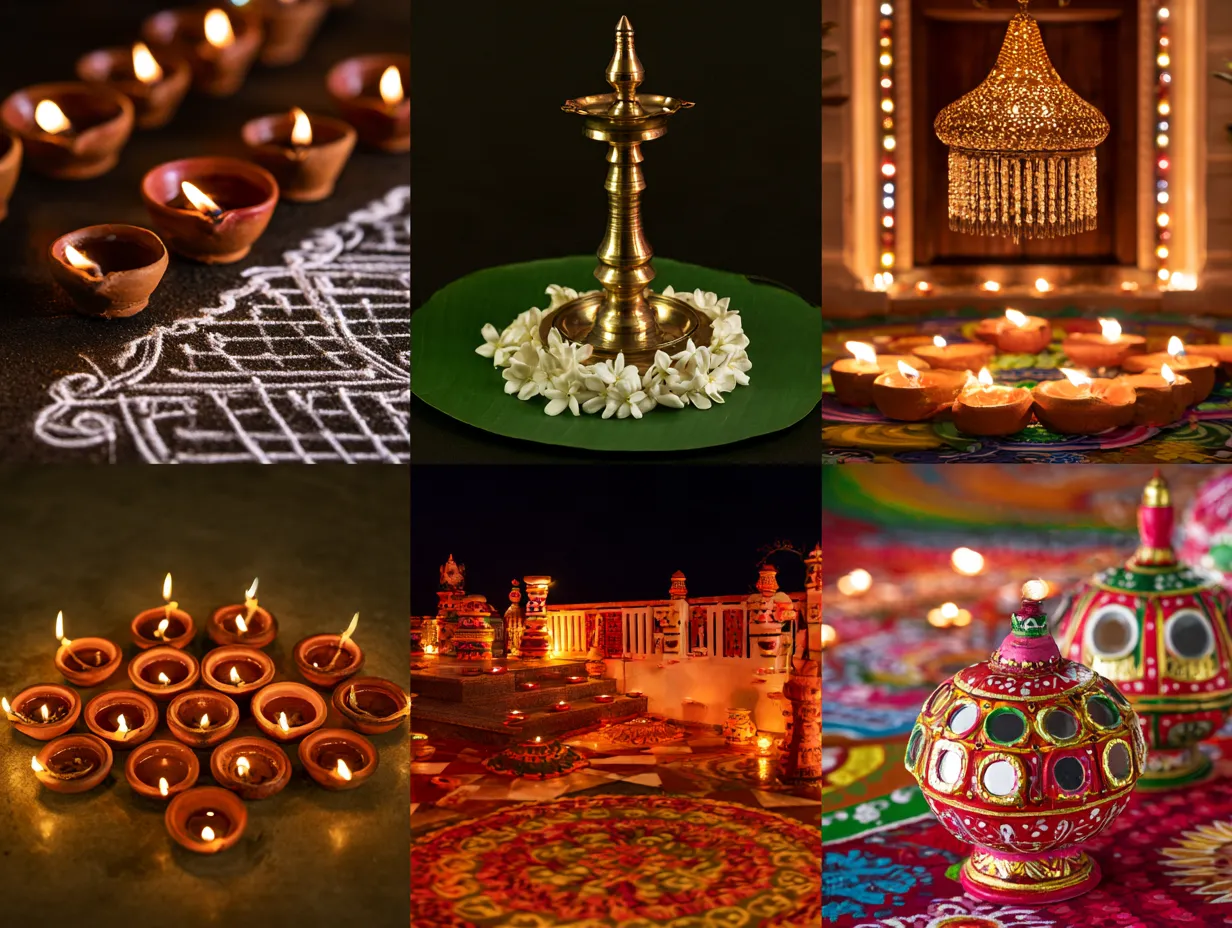
Traditional festival lighting changes depending on the state you are in. Borrowing an idea from another region is a fun way to try something fresh.
- Tamil Nadu (Agal vilakku, kuthu vilakku): Neat, long rows of clay deepams along doorstep thresholds and white kolams for Karthigai Deepam.
- Kerala (Nilavilakku): Clean brass lamps set over a fresh green banana leaf with white jasmine buds scattered around.
- Maharashtra and Goa (Panti): Small terracotta lamps set around doorstep rangolis, anchored under a hanging akash kandil
- West Bengal (Prodip): Lighting fourteen distinct clay lamps (Choddo Prodip) in dark corners on the eve of Kali Puja.
- North India (Deepak): Rows of painted clay deepaks along rooftop parapets, boundary walls, and entry steps.
- Gujarat and Rajasthan (Diya, kodiyu): Bright mirror-work and detailed paint patterns made to match bold, colourful floor rangolis.
Diya Safety Tips
Open flames need basic common sense so your evening stays fun and hassle-free.
- Keep lit lamps at least 2 to 3 feet away from curtains, drapes, and hanging paper lanterns.
- Set lamps on stone, tile, or metal trays'never directly on bare wooden tables or laminate shelves.
- Keep mirrors, beads, and glue on the outer belly of the lamp, away from the inner oil rim.
- Fill oil up to three-quarters capacity so it does not slosh over when you move the lamps.
- Keep open oil lamps out of reach of small kids and pets. Use LED candles in narrow hallways and staircases.
- Keep a small bucket of sand or water nearby on the balcony on main festival nights.
Caring for Decorated Diyas After Diwali
You can save painted and embellished clay lamps for next year if you store them right:
- Let the lamps and leftover oil cool down completely after the prayers.
- Wipe soot and oil residue out of the inside using dry paper towels and a damp cloth. Do not soak painted clay in water.
- Let the lamps dry out completely in the shade.
- Wrap each painted lamp by itself in newspaper or tissue paper so the paint does not stick together.
- Store them upright in a sturdy cardboard box kept in a dry place.
Interior Company Tip: Give Your Diyas a Permanent Place
Homes where Diwali setup feels easy usually have places built for lamps. Adding stone-topped ledges in your mandir, wall brackets by the foyer, and deep window sills means your lamps sit safely every night without searching for spare plates.
If you are planning new interiors, ask your designer for heat-safe stone surfaces in the pooja room and a dedicated storage drawer just for festive lamps, oil, and wicks.
Conclusion
Good diya decoration does not take expensive supplies or endless hours. All you need is a clean, primed clay lamp, a colour scheme that matches your room, and a little patience while the paint dries. Start with eleven simple dot-and-border lamps, make a few mirror-work pieces for the prayer room, and place one big centerpiece at the door. For complete room-by-room styling advice across the rest of your home, check out our guide to Diwali decoration ideas for home. From all of us at Interior Company, Happy Diwali!

Ready for a home transformation?
Let our designers assist you!
Recent Posts









Wipe the clay lamp clean, smooth rough edges with fine sandpaper, and prime the outside with white acrylic paint. Apply a base colour, add details like dots or borders with an outliner cone, and glue on craft mirrors or kundan stones. Keep the inner bowl unpainted and let the lamp dry for 24 hours before filling it with oil.
Paint the outside a solid colour and add a row of gold dots along the rim, wrap narrow gold lace around the middle, or set unpainted lamps inside a ring of fresh marigold petals. These quick designs take roughly 10 minutes per lamp.
Always clean and prime the clay first so colours dry bright and stick well. Apply thin coats of acrylic paint, seal the outside with clear varnish, and never paint the inside where oil sits. Allow the paint to dry for a full day before lighting.
Acrylic paint works best on terracotta because it dries fast, covers well, and grips clay. Use 3D outliner cones or fine brushes for details, and seal the finished design with clear acrylic varnish.
Simple dot-and-border patterns, dot mandalas, basic paisleys, two-tone sponge blends, and Warli stick figures are great for beginners. They rely on repeating basic lines and dots rather than drawing skills.
Classic red, gold, and white is timeless. Maroon and antique gold suit traditional prayer rooms, crisp white and gold matches modern minimal homes, and yellow, orange, and green goes well with fresh marigold entrance garlands.
Try clay relief patterns using air-dry putty, paper quilling bands, silk thread and bead wrapping, or gold leaf gilding over a matte black base. Mirror-work and kundan embellishments also stand out, especially in the puja room.
Paint a wide border in red and gold around the rim, build a mirror-work mandala along the outer curve, and set the vessel over a thick ring of fresh marigolds at the center of your entrance floor art. Surround it with eleven smaller matching lamps for a layered look.
Clean tarnished metal using tamarind pulp, a paste of lemon and salt, or a brass cleaner like Pitambari. Once the metal shines, keep styling minimal—add a marigold ring at the base, wrap a string of fresh mogra around the stem, or tie a red mauli thread around the neck.
Use unpainted terracotta or cow-dung lamps, colour them with natural pigments like red ochre (geru), turmeric, and lime, and avoid plastic glitter or thermocol. Store your painted lamps carefully after the festival so you can reuse them next year.
Related Category
- Bedroom
- Indoor Plants
- Lighting
- Living Room
- Tips and Advice