- Design Ideas
- Cities
- Trends
- Guides
- Price Calculators
- Interior DesignersNEW
- Our Portfolio
- More



- Home
- Trends
- Furniture And Decor
- Paint And Color
- Simple Wall Painting Ideas
5 Simple Wall Painting Design Ideas For A Weekend Makeover

Most people think changing a wall means full repainting, a big budget, and calling painters. This is where the idea stops working. It doesn’t have to be like that.
If you’re just looking for a wall paint design easy enough to try on a weekend, all you need are basic tools and options to choose from. That’s right, they don’t require heavy prep and complicated finish. A lot of easy wall painting ideas today focus on small changes that shift the whole feel of a room. Let it be a curve behind the bed, a darker band across the wall or even a few sharp lines done with tape; they don’t cost much.
This is the reason why more people are trying simple wall painting ideas at home. You can test colours, try patterns, and see what works for your space without committing too much. If you’ve been saving wall painting ideas at home, easy enough to try but never got around to it, this is a good place to start.
Table of Content
Quick Ideas You Can Actually Try This Weekend
Arch And Halo Simple Wall Painting For Bedroom
Two-Tone Simple Wall Painting For Living Room
Geometric Simple Wall Painting Ideas With Tape
Colour Block Simple Wall Painting Design
Simple Wall Painting At Home Using Texture
Which Design Should You Pick?
Common Mistakes To Avoid
Start Small, Then Go Bigger
Keep It Simple, Try One Wall First
Quick Ideas You Can Actually Try This Weekend
You don't need to overthink this. Most of these ideas come down to how much time you have and how steady your hand is. This is it. Right now, no one wants a plain grey wall. Warmer shades are being used a lot recently. Shades that are in demand can be soft browns, muted greens, or even light earthy tones. They just feel right to live with, especially in suitable lighting.
Even a small change like this can shift your house interior design without doing much. These are simple wall paint design ideas that don't need professional help.
If you're looking for a simple wall painting option that won't take your whole weekend, this gives you a quick idea:
|
Design Idea |
Time Needed |
Skill Level |
Best For |
|
Painted Arch |
2 Hours |
Beginner |
simple wall painting designs for the bedroom |
|
Two-Tone Wall |
3 Hours |
Beginner |
Simple wall painting designs for the living room |
|
Geometric Blocks |
5 Hours |
Intermediate |
Creative corners or feature walls |
|
Sponge Texture |
3 Hours |
Easy |
Soft finish, works in most rooms |
Arch And Halo Simple Wall Painting For Bedroom
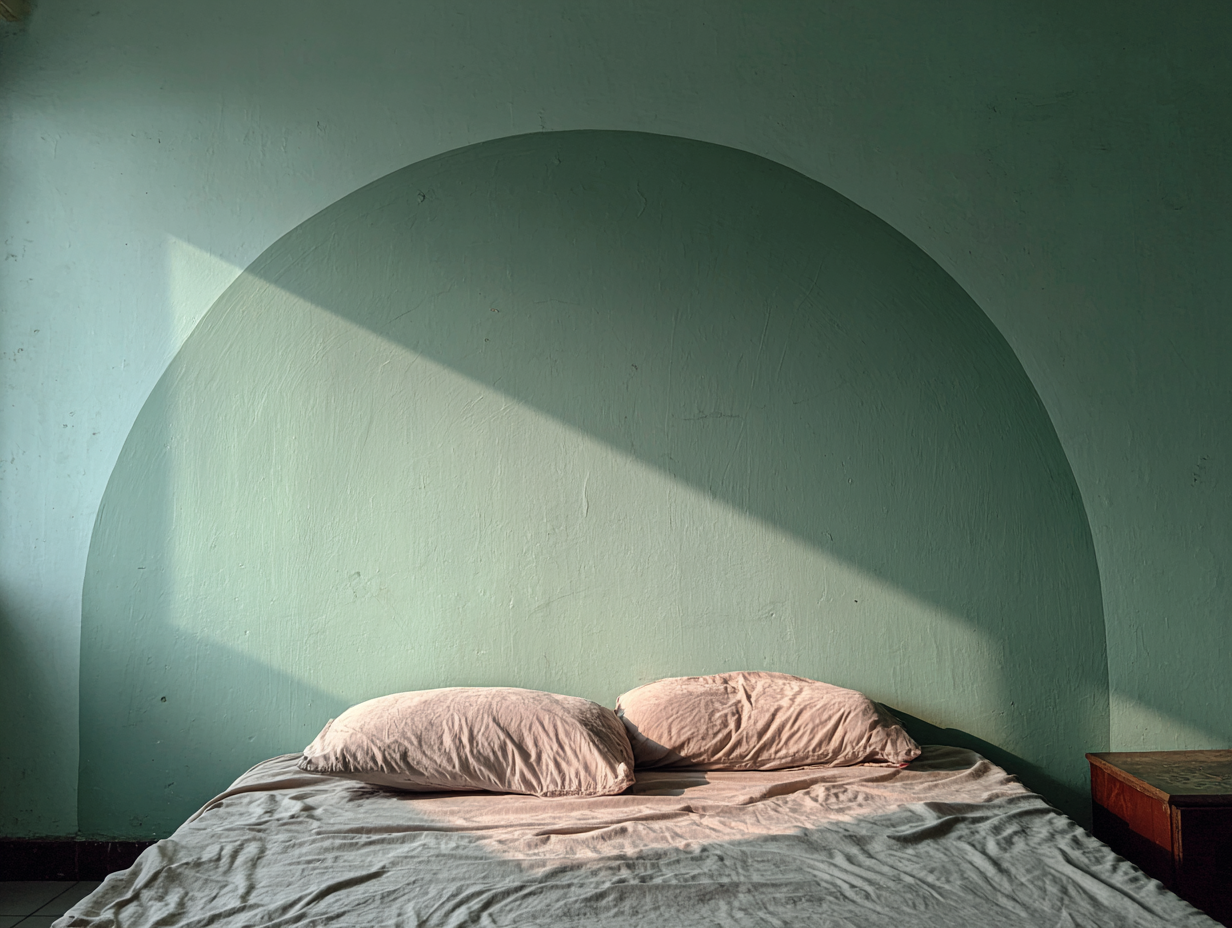
This one is trending everywhere right now. You've probably seen it behind beds or study tables. It's basically a curved shape painted on the wall. Just simple with no complex pattern. This is one of those easy wall painting designs for the bedroom that looks more difficult than it actually is.
A lot of people use this as a simple bedroom wall painting idea because it creates a focus without adding furniture. It also works if you're trying out simple wall painting for a bedroom, if the space feels empty.
The Concept
You draw a half circle or a soft arch on the wall. This is usually placed behind the bed or a chair. This works well if you're exploring bedroom wall paint design ideas, but don't want something loud.
How To Do It?
- Find the centre point of your wall or the furniture you're placing it behind.
- Tie a string to a pencil.
- Fix the other end at the centre point.
- Move the pencil in a curve to draw the arch.
- Fill the inside with paint using a roller.
- Don't rush and take your time with the curve. That's the only part that needs a steady hand.
One Small Tip
Use a brush for the curved edge first. Then fill the rest with a roller. If you try doing everything with a roller, the curve won't come out clean.
Two-Tone Simple Wall Painting For Living Room
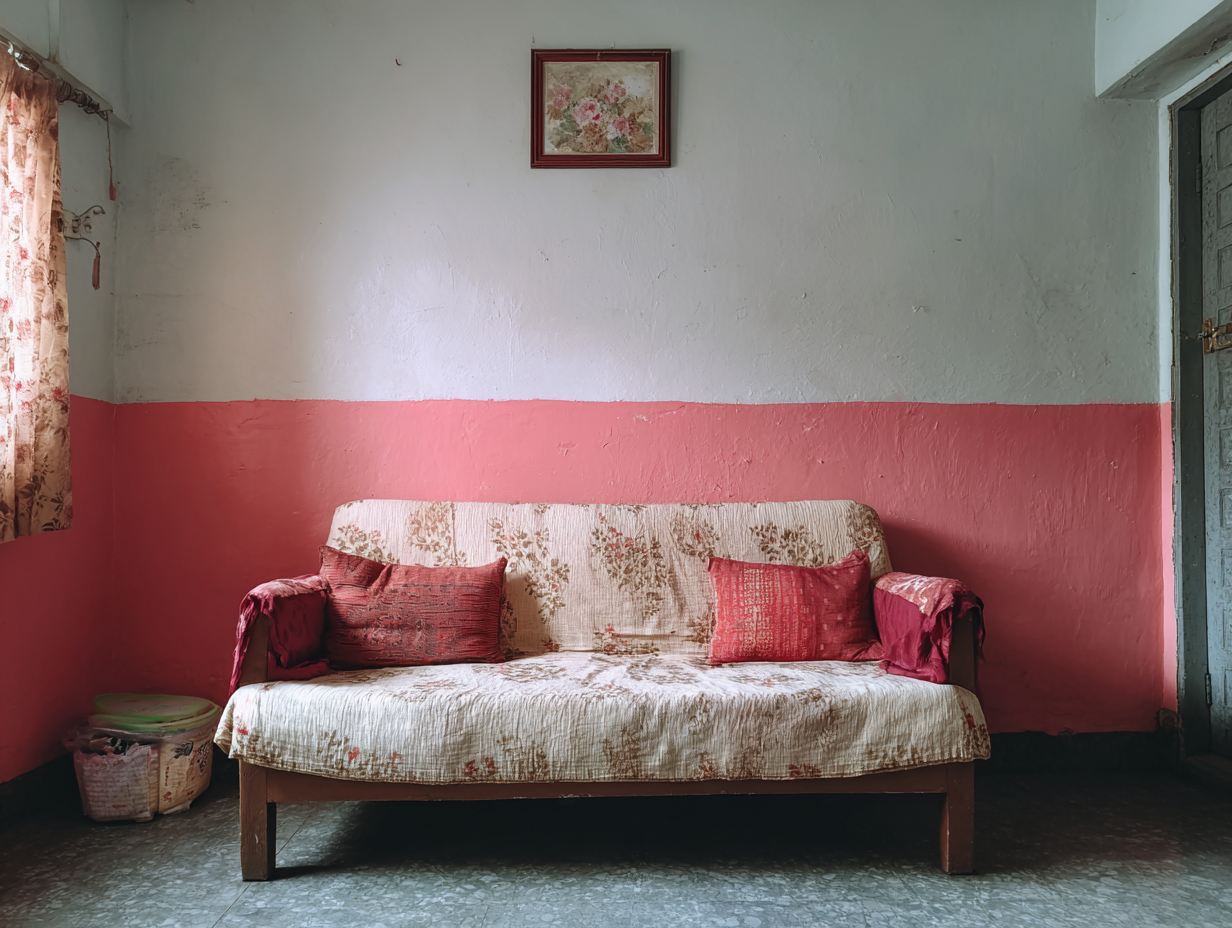
This one is simple and very practical. You divide the wall into two parts. The bottom part is painted in a darker shade, and the top stays lighter.
A lot of people use this as a simple wall painting for the living room because walls in common areas get dirty faster. Marks, dust, and even mop splashes are enough to ruin the aesthetics. A darker bottom section helps hide all that.
It also works well if you're trying simple wall painting ideas for a living room in smaller homes. The line creates a break, and the wall doesn't look flat anymore.
The Concept
You paint the lower 35-40% of the wall in one colour. The upper part stays a lighter shade of the same colour or just plain white. This is often used in living room wall paint design, where you want something clean but still noticeable.
How To Do It?
- Measure the height of your wall.
- Mark a straight line across using a level or tape.
- Apply masking tape along the line.
- Paint the lower section first.
- Let it dry slightly, then remove the tape.
The line needs to be straight. That's where most people mess up.
One Small Tip
Don't go exactly half-half. Keep the bottom part slightly less. Around 40% will work better.
Geometric Simple Wall Painting Ideas With Tape
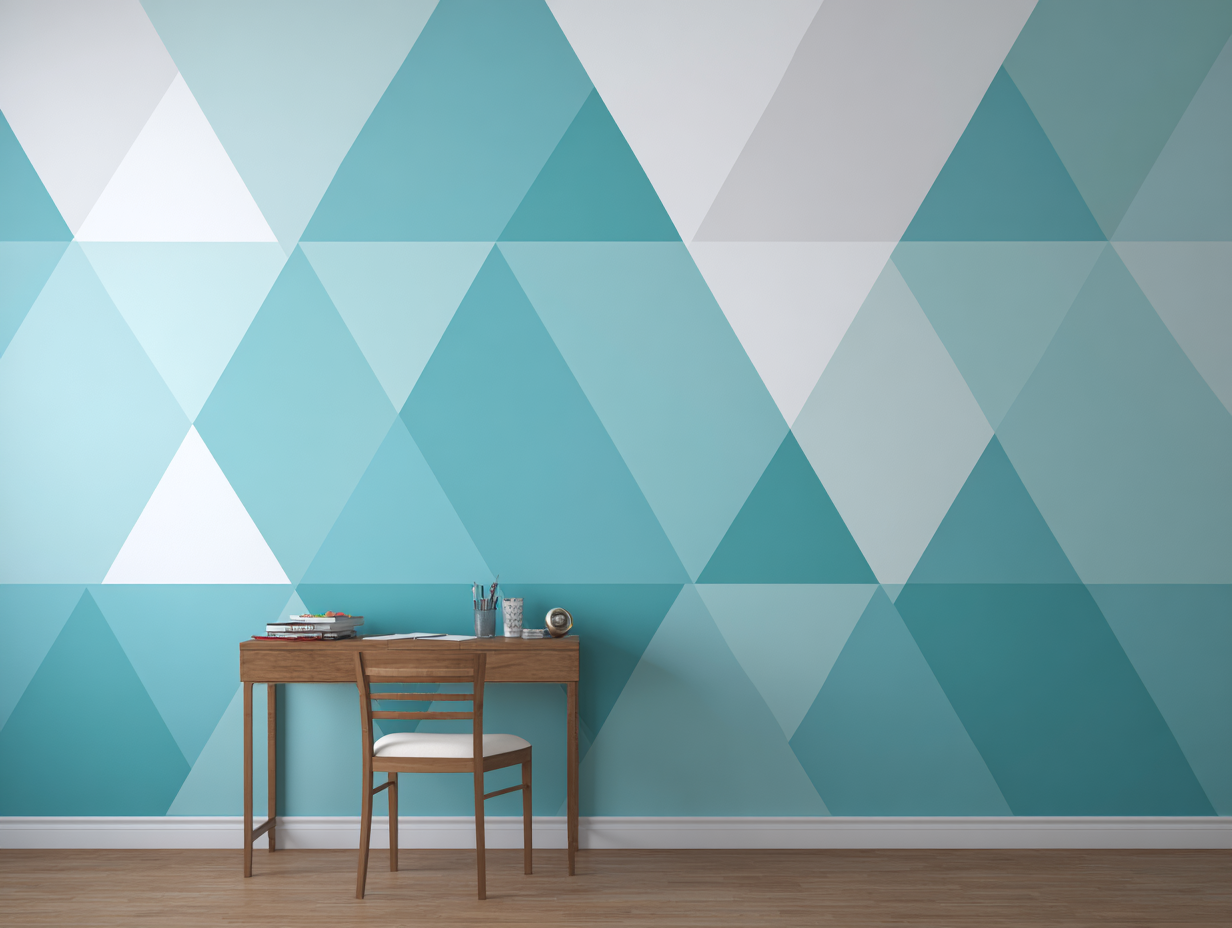
This one is a real deal. It looks sharp when done right and messy if rushed.
Here, you use tape to create shapes on the wall. These shapes can be triangles, lines, blocks, etc. Anything works as long as the lines are clean. That's why a lot of people try this when they want creative and beautiful, simple wall paintings without doing anything too complex.
It also works for smaller areas. Corners, side walls, and even sections behind a desk. It is easily a good option if you're trying simple small wall paintings and don't want to cover the full wall.
The Concept
You mark out a pattern using tape. Then fill different sections with colour. Once the tape is removed, the shapes appear clean and sharp. That's the idea.
This kind of pattern is often used in office wall paint design where the space needs to look neat but not plain.
How To Do It?
- Decide the pattern first. Don't start randomly.
- Stick the tape firmly on the wall in your chosen design.
- Press the edges properly so the paint doesn't go inside.
- Paint the sections slowly.
- Remove the tape while the paint is still slightly wet.
One Small Tip
After applying the tape, paint a thin layer of the base wall colour over the edges first. Let it dry. Then apply your new colour. This seals the edges. Otherwise, the paint will bleed under the tape and ruin the lines.
Colour Block Simple Wall Painting Design
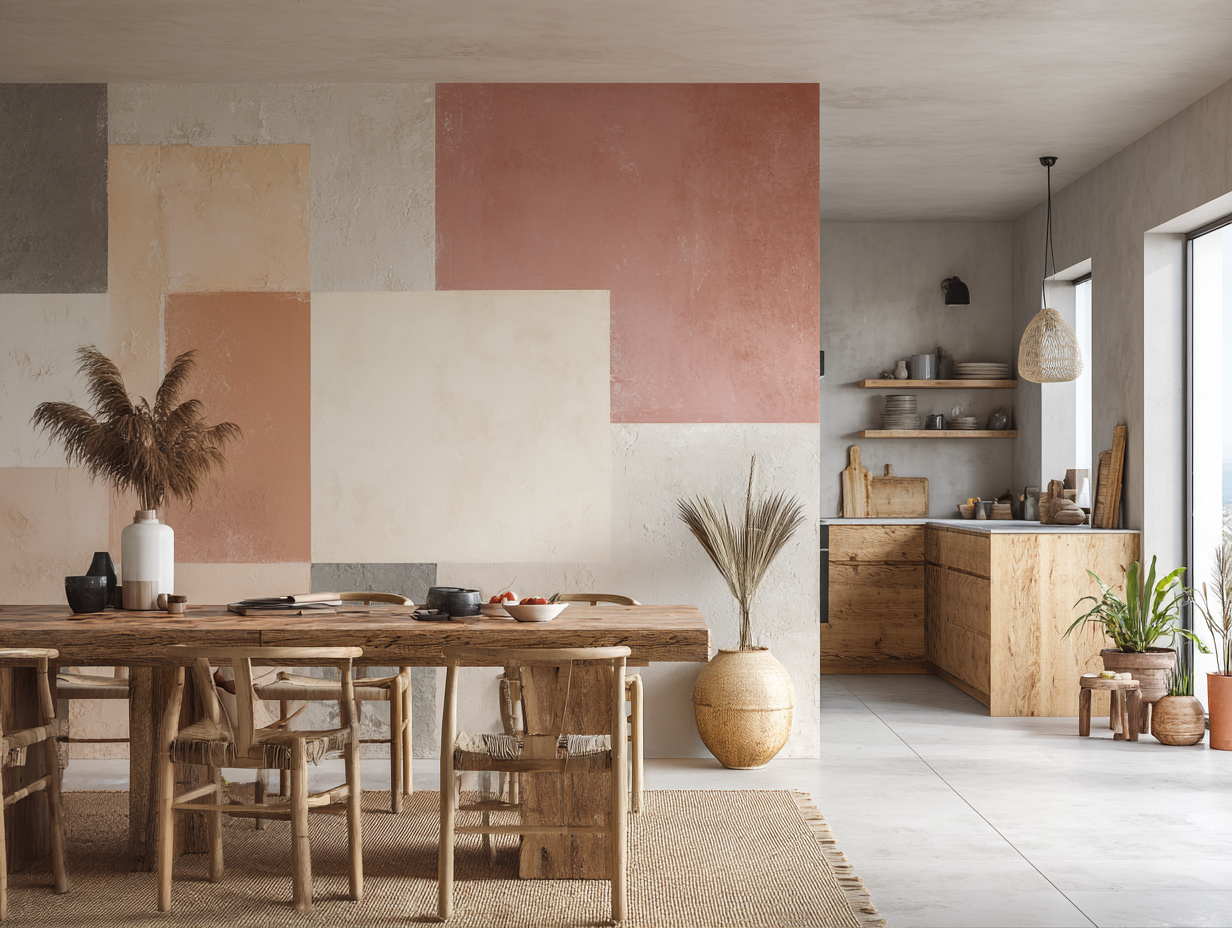
This one is simple and doesn't need perfect lines. You paint random or planned blocks on the wall using 2-3 colours. Squares, rectangles, even uneven shapes. It doesn't have to be exact.
A lot of people try this when they want a simple room paint design without getting into detailed patterns. It also works if you're looking for a simple wall colour design that adds variation without feeling too hard. This also works well if your wall connects with a kitchen colour combination in open layouts.
The Concept
You divide the wall into sections. Not evenly. Just visually balanced. Each section gets a different colour.
How To Do It?
- Mark rough sections using a light pencil.
- Use tape only if you want sharper edges.
- Start painting one section at a time.
- Let each section dry before moving to the next.
One Small Tip
Stick to 2 or 3 colours. Too many colours will make it look random instead of planned.
Simple Wall Painting At Home Using Texture
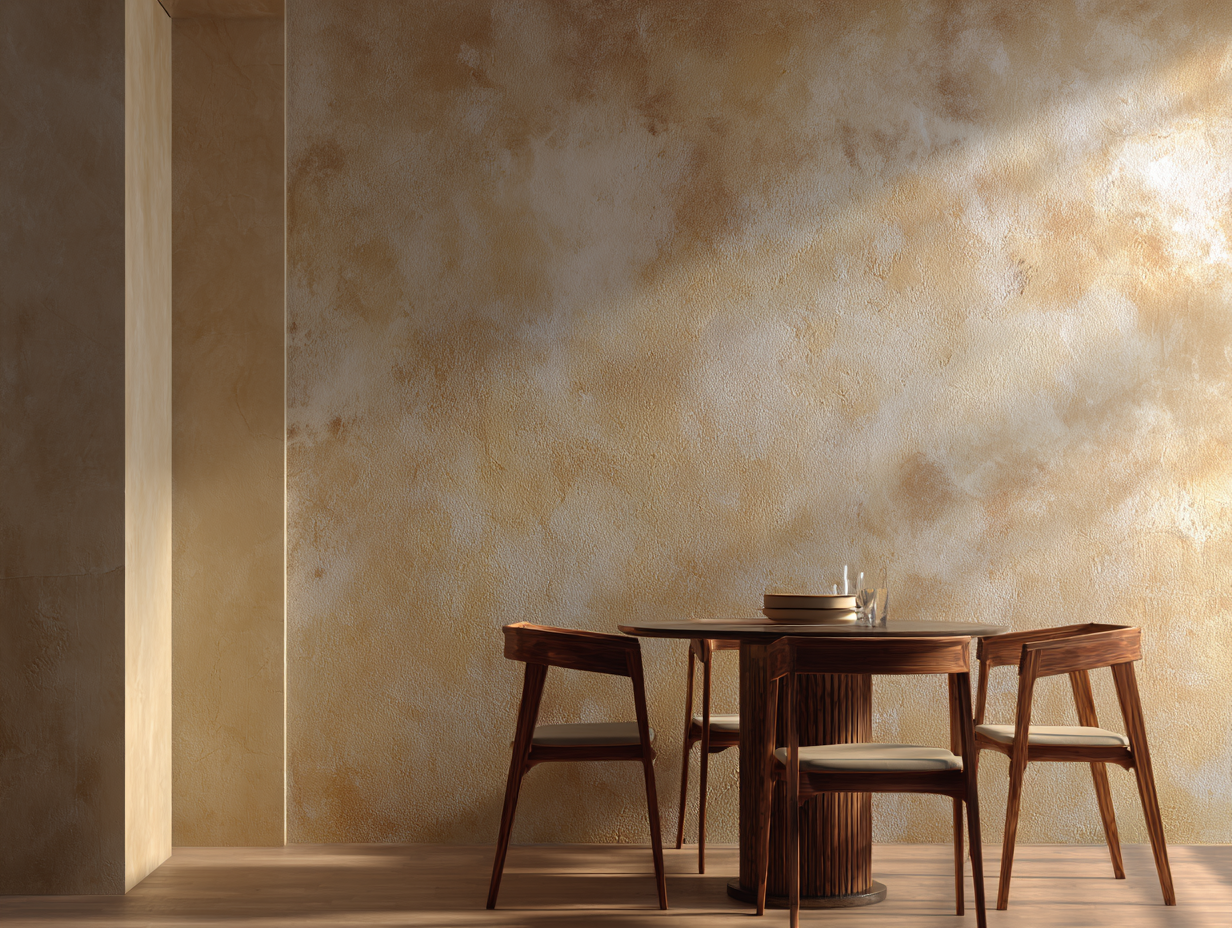
This one doesn't need perfect lines. That's the whole point. You're not drawing anything here. You're just creating a finish on the wall using basic things at home. A sponge, a cloth, even an old rag. This works well if you're trying a simple home paint design without worrying too much about neat shapes.
A lot of people go for this when they want a softer look. Not flat colour, not sharp lines. Something in between.
The Concept
You apply one base colour first. Then use a sponge or cloth to dab a second colour on top. It creates a slightly uneven texture. That's what gives it a different feel.
You'll see similar finishes used in dining room wall paint design where lighting changes how the wall looks through the day.
How To Do It?
- Paint the wall with a base colour and let it dry.
- Dip a sponge or cloth lightly into the second colour.
- Dab it gently on the wall. Don't press too hard.
- Keep moving randomly. Don't follow a pattern.
One Small Tip
Don't use too much paint on the sponge. If it's too wet, it will leave patches instead of texture.
Which Design Should You Pick?
This part is simple. If you're confused between options, don't think too much about design names. Just look at your wall and how it's used.
- If it's a master bedroom and the wall feels empty, go for the arch. It works well as a simple wall painting for bedroom and doesn't need much effort.
- If it's a living room wall that gets used a lot, the two-tone option makes more sense. It hides marks and still looks clean. Good choice if you're thinking about simple wall painting designs for living room.
- If you just want to try something without committing too much, go for tape designs. You can keep it small and still get a good result.
- If you don't trust your hand with straight lines or curves, texture is safer. It doesn't need perfection.
- For smaller areas like the pooja room wall paint design, simpler patterns work better. Too much detail can make the space feel crowded.
- And for moisture-prone areas like bathroom wall paint design, it's better to avoid tape designs completely. They don't hold well over time.
Common Mistakes To Avoid
Most problems don't come from the design. They come from small things people ignore.
Skipping The Patch Test
This is where things go wrong before you even start. A colour that looks good in the shop can look completely different on your wall. Especially under warm lights. Greens can look dull. Some purples turn muddy. If you're following vastu colour for home, this becomes even more important. The shade has to look right in your actual space, not just on a sample card.
Removing Tape Too Late
People usually wait for the paint to dry fully. That's a mistake. When the paint dries completely, it sticks to the tape. So when you pull it off, the edges don't stay clean. Remove the tape when the paint is slightly wet. Not dripping, just not fully dry.
Painting During Humid Weather
This gets ignored a lot. In high humidity, paint doesn't dry properly. It can form bubbles or start peeling after a few days. This matters in simple house painting projects where you're not using heavy equipment or controlled conditions.
Rushing The Finish
Trying to finish everything quickly usually makes it look worse. Uneven strokes, messy edges, patchy colour. All of it shows once the wall dries. This happens a lot in simple wall painting at home because people assume it's quick and easy. Take your time. Even basic designs need patience.
Start Small, Then Go Bigger
You don't need to plan the whole house. Start with one wall. See how it turns out. That's enough. Most people realise this after trying once. What looks difficult at first is usually manageable. These are all easy, simple wall painting ideas. They don't need perfect skill, just a bit of patience.
Once you see the result, it gets easier to decide what to do next. Maybe another wall. Maybe a different colour. Or maybe you stop there because it already feels better. If you're planning to match it with other areas later, think about how it connects with your kitchen colour combination. Small changes start to link up when you look at the house as a whole.
Keep It Simple, Try One Wall First
You don't need a big budget to change how your home feels. Most of these ideas are simple. A bit of tape, a brush, and some time. That's enough to see a difference. You don't have to get everything perfect on the first try, either. Even small changes can make a wall feel less plain.
If one wall works, you can always try more later. And if it doesn't, it's still easy to repaint and fix. If your DIY ideas start turning into bigger plans, Interior Company can help you take them further without the trial and error.
*Images used are for representational purposes only. Unless explicitly mentioned, the Interior Company does not hold any copyright to the images.*
Wall Paint Design Ideas for You
- Theme
- Color
- Room Type

Ready for a home transformation?
Let our designers assist you!
Recent Posts







The easiest option is a simple wall painting like a painted arch or a two-tone wall. They don’t need perfect skill and can be done with basic tools. If you’re starting for the first time, these are safer than detailed patterns.
Yes, most simple wall painting at home ideas can be done on your own. You just need basic tools like tape, a brush, and a roller. The result depends more on patience than experience.
For small spaces, simple wall painting ideas for bedroom like arches or soft colour blocks work better. They add some detail without making the wall feel crowded.
Start with one base colour and one contrast colour. That’s enough. If you’re unsure, neutral shades work better for simple wall colour design because they are easier to match with furniture later.
This usually happens because of lighting. Under warm lights, some colours look dull or slightly different. Always test before doing a full simple house painting project.
Press the tape edges properly before painting. A better trick is to seal the edge with the base colour first. This works well for easy simple wall painting designs that use tape.
You can, but results won’t be very clean. Designs like geometric patterns need smooth walls. For uneven surfaces, texture-based simple home paint design options work better.
Related Category
- Bathroom
- Bedroom
- Kitchen
- Living Room
- Walls and Texture