- Design Ideas
- Cities
- Trends
- Guides
- Price Calculators
- Interior DesignersNEW
- Our Portfolio
- More


7+ Best Kitchen Cabinet Materials: What Works Best For Your Modern Kitchen

When people start planning a kitchen, they usually think about colours first. Or maybe layout or handles. Or that perfect kitchen design inspiration they saw somewhere online. But honestly, none of that matters if the kitchen cabinet material underneath is wrong. Because cabinets deal with heat, steam, oil, water spills, and daily opening and closing. Sometimes even pressure from overloaded utensils. So the material you choose decides whether your kitchen lasts five years or twenty.
Table of Content
Carcass vs Shutters: The First Thing To Understand
Kitchen Cabinet Material Options For Modern Homes
Plywood: The Safest Choice For Most Kitchens
MDF: Smooth Finish But Needs Care
HDF And HMR Boards: A Better Upgrade Over MDF
Particle Board: Budget Option Only
Stainless Steel: Extremely Durable But Not For Everyone
Aluminium: Modern But Slightly Limited
PVC: Fully Waterproof But Not Heavy Duty
Solid Wood: Premium But High Maintenance
Picking The Right Material For Kitchen Cabinets
A Practical Comparison Of Kitchen Cabinet Materials
Finishes That Shape Your Cabinets
Pick Materials That Last!
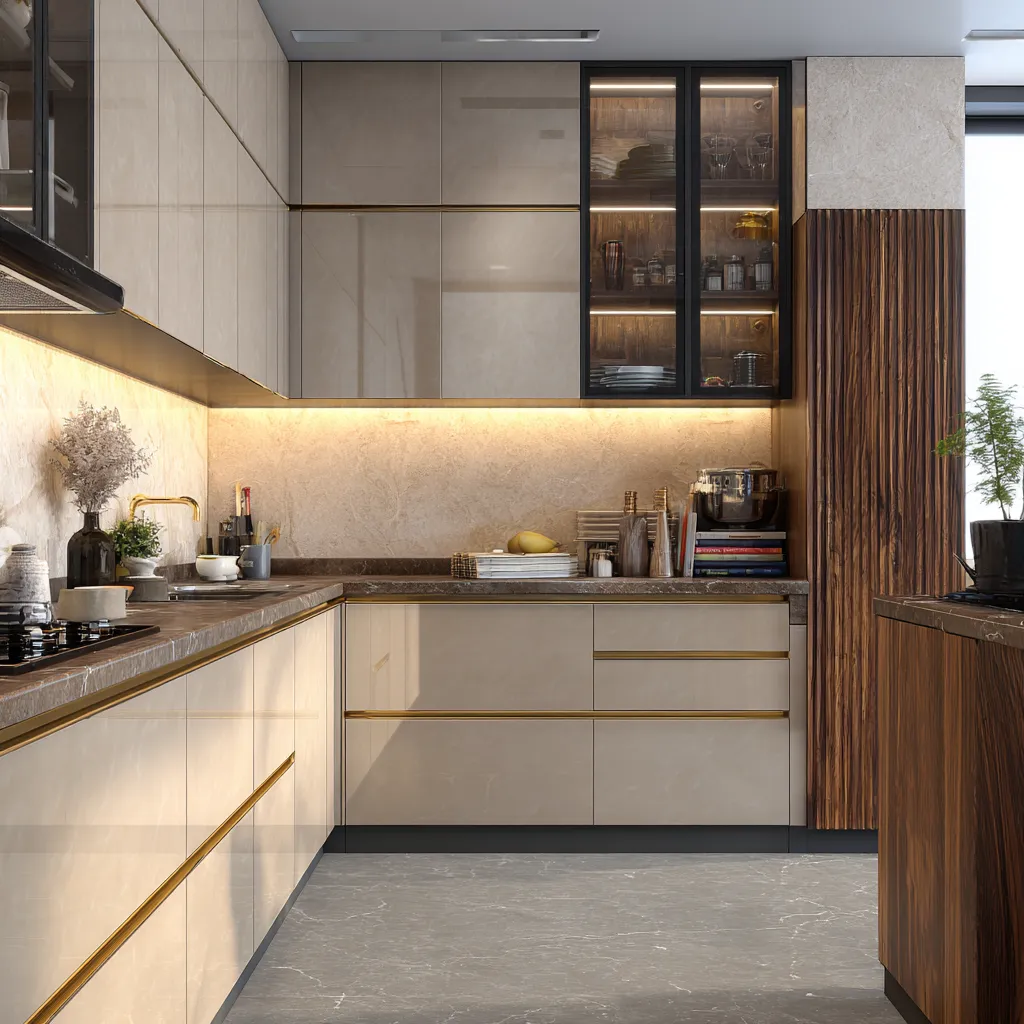
And there's no single answer to which material is best for kitchen cabinets. It depends on where the cabinet sits, how much cooking happens, and your budget, too. A modular kitchen usually uses multiple boards together. One for the carcass. Another for shutters. Sometimes, something completely different for kitchen drawer material or sink cabinets. That's why understanding the types of kitchen cabinet materials first makes the whole planning process much easier.
Carcass vs Shutters: The First Thing To Understand
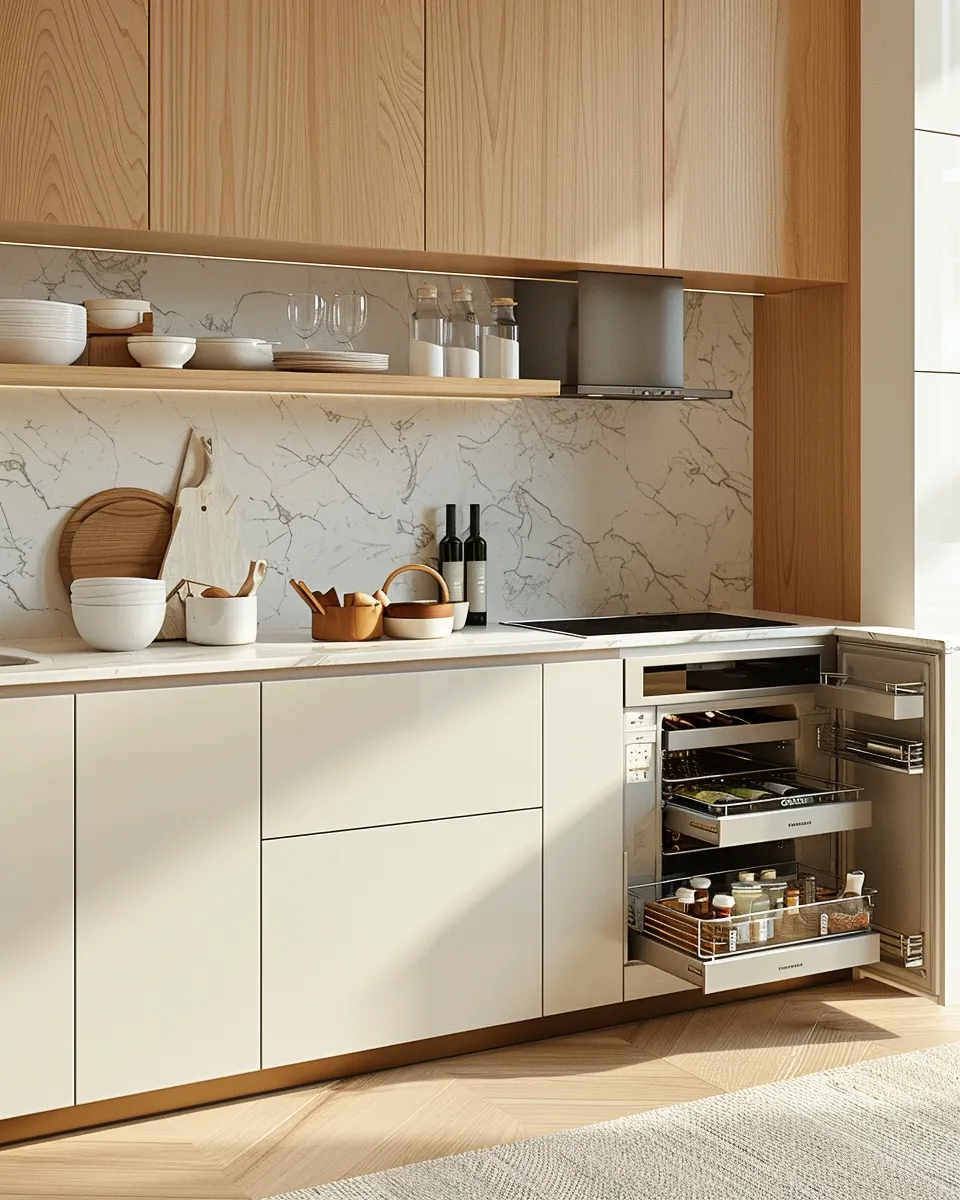
Before jumping into the modular kitchen materials list, one small thing people usually miss. It's the structure of the kitchen cabinet. Every cabinet has two parts:
- Carcass: The internal structure or body of the cabinet.
- Shutter: The outer visible door panels of the cabinet.
These two don't need the same material. Actually, they shouldn't. Carcass needs strength. The shutter needs a finish quality. Once you get this, choosing the best material for modular kitchen cabinets becomes much easier.
Read also – Trending White Kitchen Design Ideas for Modern Living
Kitchen Cabinet Material Options For Modern Homes
Here are the real kitchen cabinet materials designers normally work with:
- Plywood
- MDF
- HDF / HMR board
- Particle board
- Stainless steel
- Aluminium
- PVC board
- Solid wood
Each one solves a different problem. None is perfect everywhere. Let's break them down properly.
You may also like!
| Kitchen Sunmica Design | Latest Kitchen Sunmica Designs for a Modern Look |
| Colourful Kitchen Ideas | Coloured Kitchen Ideas to Brighten Your Home |
| PVC Cupboard Design | Modern PVC Kitchen Cabinet Design Ideas |
| Kitchen Arch Design | Amazing Kitchen Arch Design Ideas For Open Kitchen |
Plywood: The Safest Choice For Most Kitchens
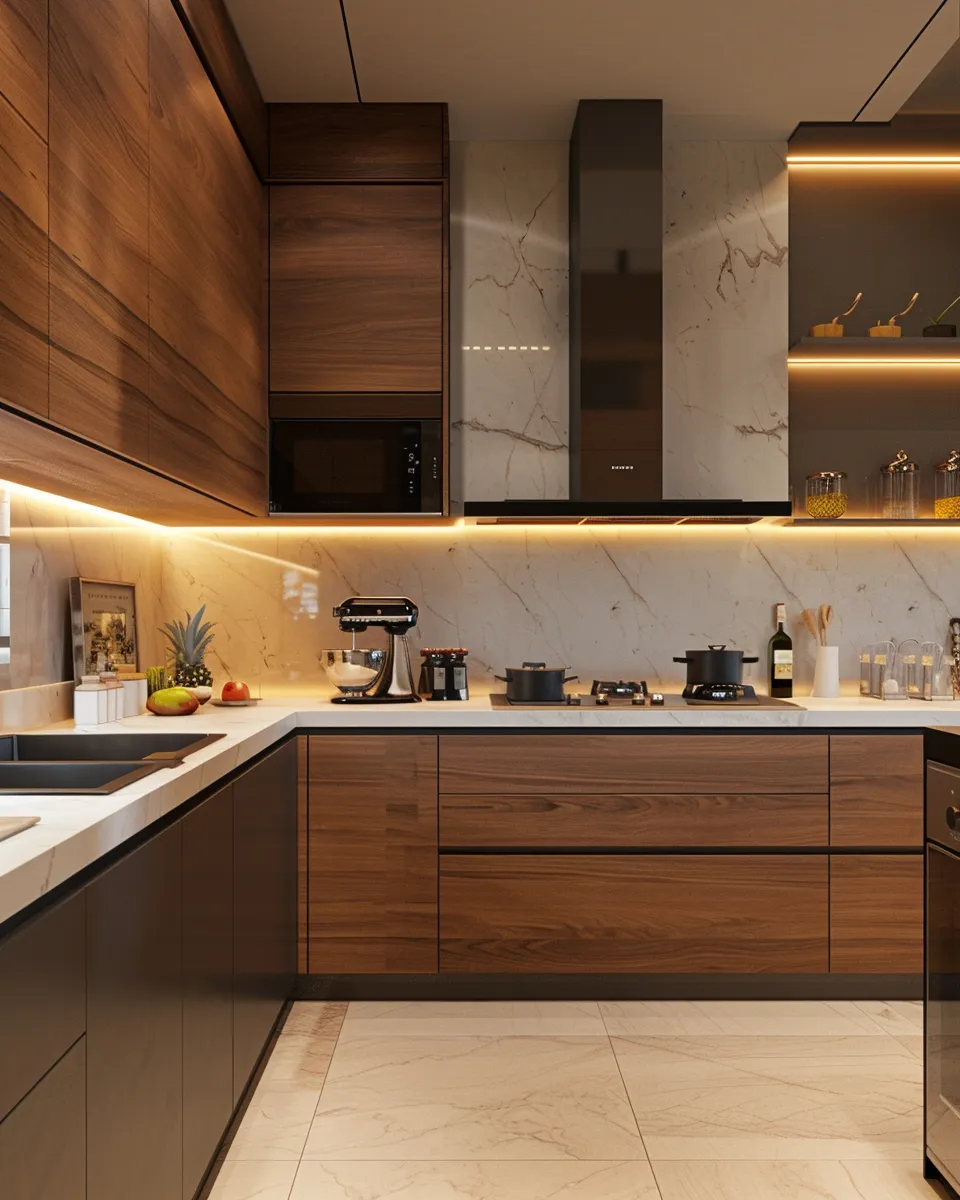
If someone asks which board is best for kitchen cabinets, plywood is usually the first answer. And there's a reason. It's layered. Cross-grained and strong. It handles screws well. Doesn't bend easily. It works even near sink areas if sealed properly.
That's why plywood sits at the top of almost every modular kitchen materials list.
Why Plywood Works So Well?
- Strong structure.
- Good moisture resistance.
- Long life.
- Termite-resistant when treated.
- Supports heavy kitchen drawer material loads.
That's also why most durable kitchen cabinets still use plywood carcasses.
Where Plywood Works Best?
- Base cabinets
- Sink units
- Tall units
- Kitchen trolley design storage sections
- Heavy utensil drawers
Honestly, if the budget allows, plywood is the best material for Indian modular kitchens.
Read also – 25+ Top Kitchen Colour as per Vastu for Health, Wealth and Harmony
MDF: Smooth Finish But Needs Care
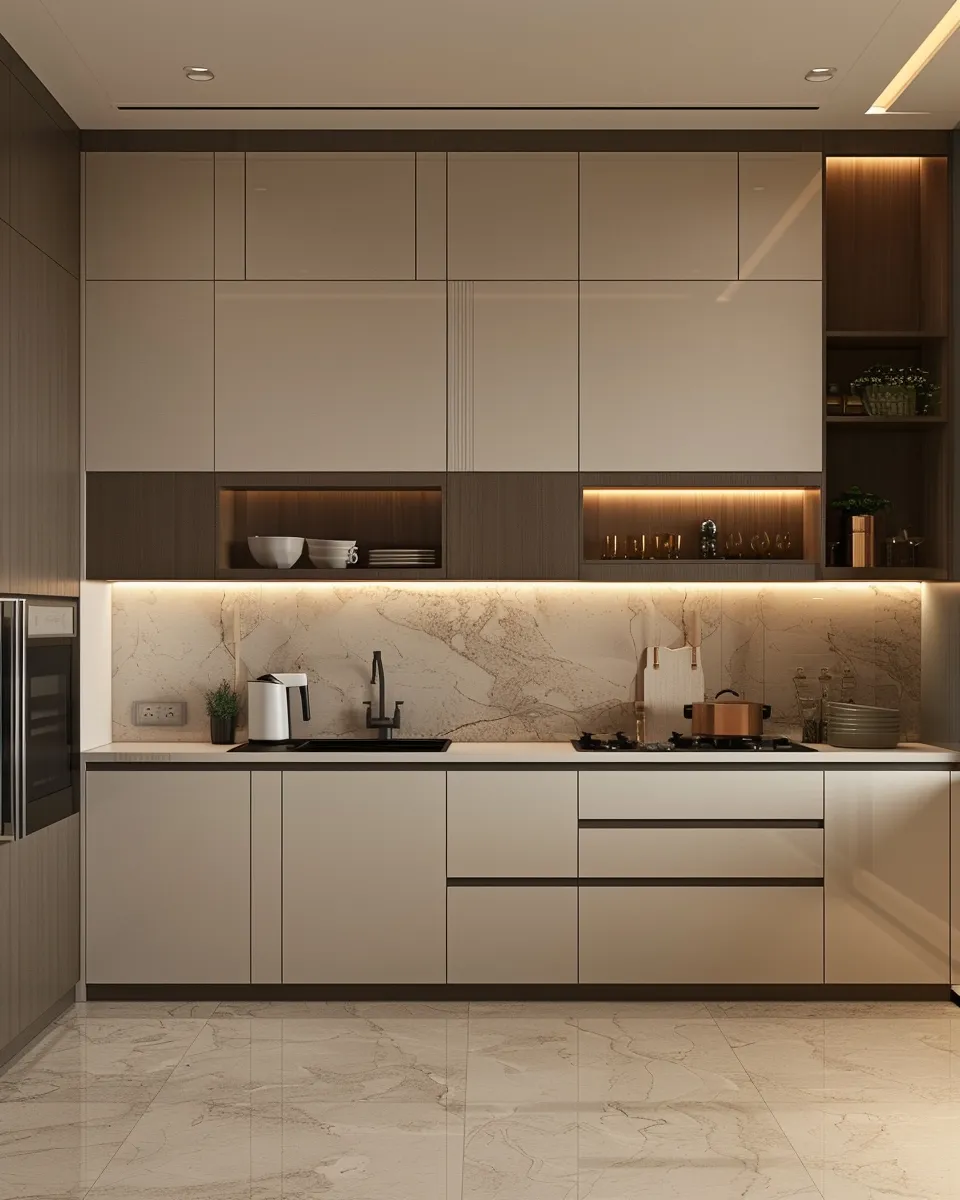
MDF is everywhere now. Especially in modern style kitchen design projects. It's not stronger than plywood. But it gives a smoother surface. That's why it's popular for shutters. Painters love it. Membrane finished kitchen doors, love it even more.
Where MDF Performs Well?
- wall cabinets
- shutter panels
- decorative surfaces
- PU painted kitchens
- acrylic kitchen design shutters
But it's not a naturally moisture-resistant kitchen cabinet material. It needs sealing, always. So avoid MDF near sinks.
Read also – Quartz Kitchen Countertops: Types, Dimensions, Designs and Prices
HDF And HMR Boards: A Better Upgrade Over MDF
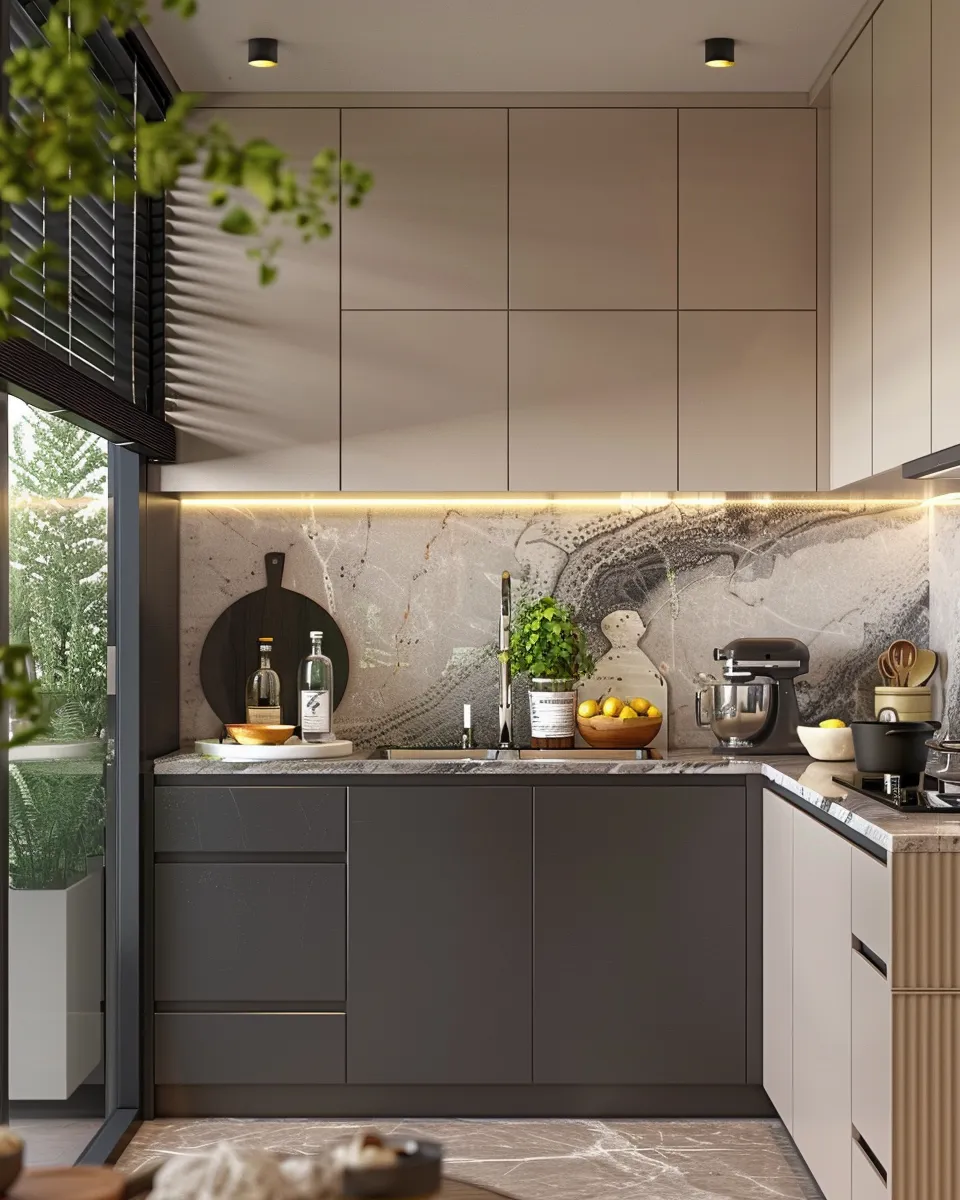
If someone wants something between plywood and MDF, HMR usually enters the conversation. HMR means high moisture resistance. Not waterproof. But better. That makes it one of the latest materials for kitchen cabinet structures in many modular setups.
Why Designers Use HMR Boards?
- Smoother than plywood.
- Stronger than MDF.
- Better humidity tolerance.
- Works with high-gloss cabinet material finishes.
So yes, for shutters and sometimes carcasses, HMR is becoming a strong modular kitchen cupboard material option.
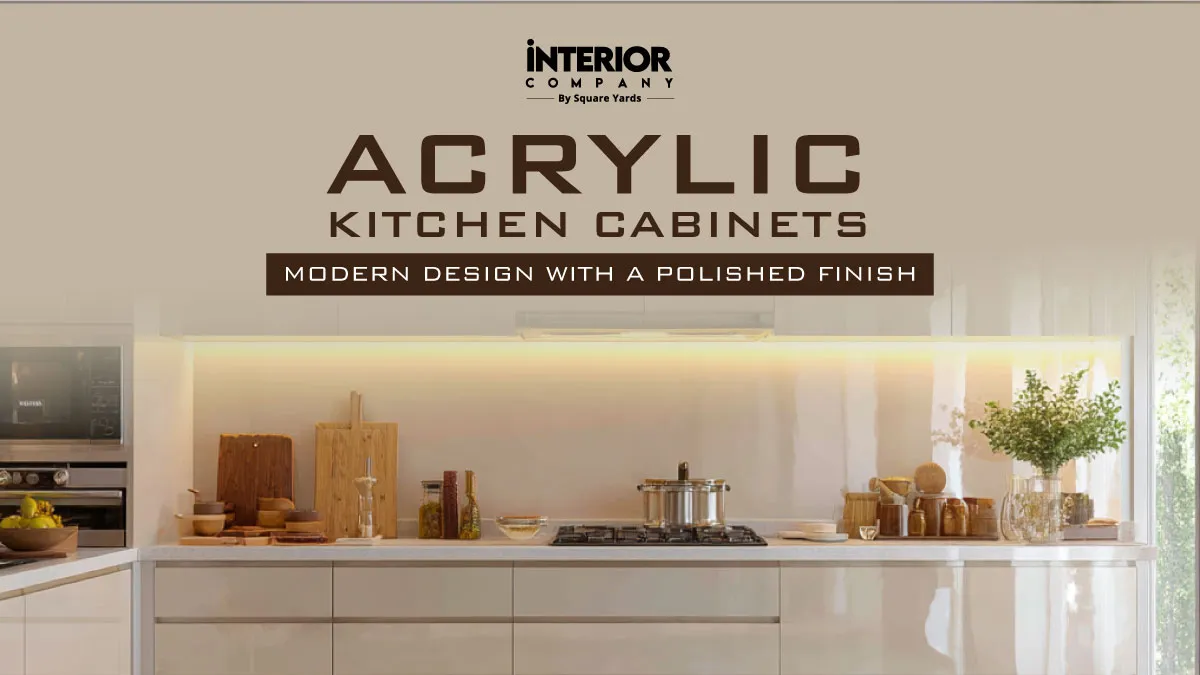
Also read – Acrylic Kitchen Cabinets: Know It’s Types, Finishes, Colours, Cost and More
Particle Board: Budget Option Only
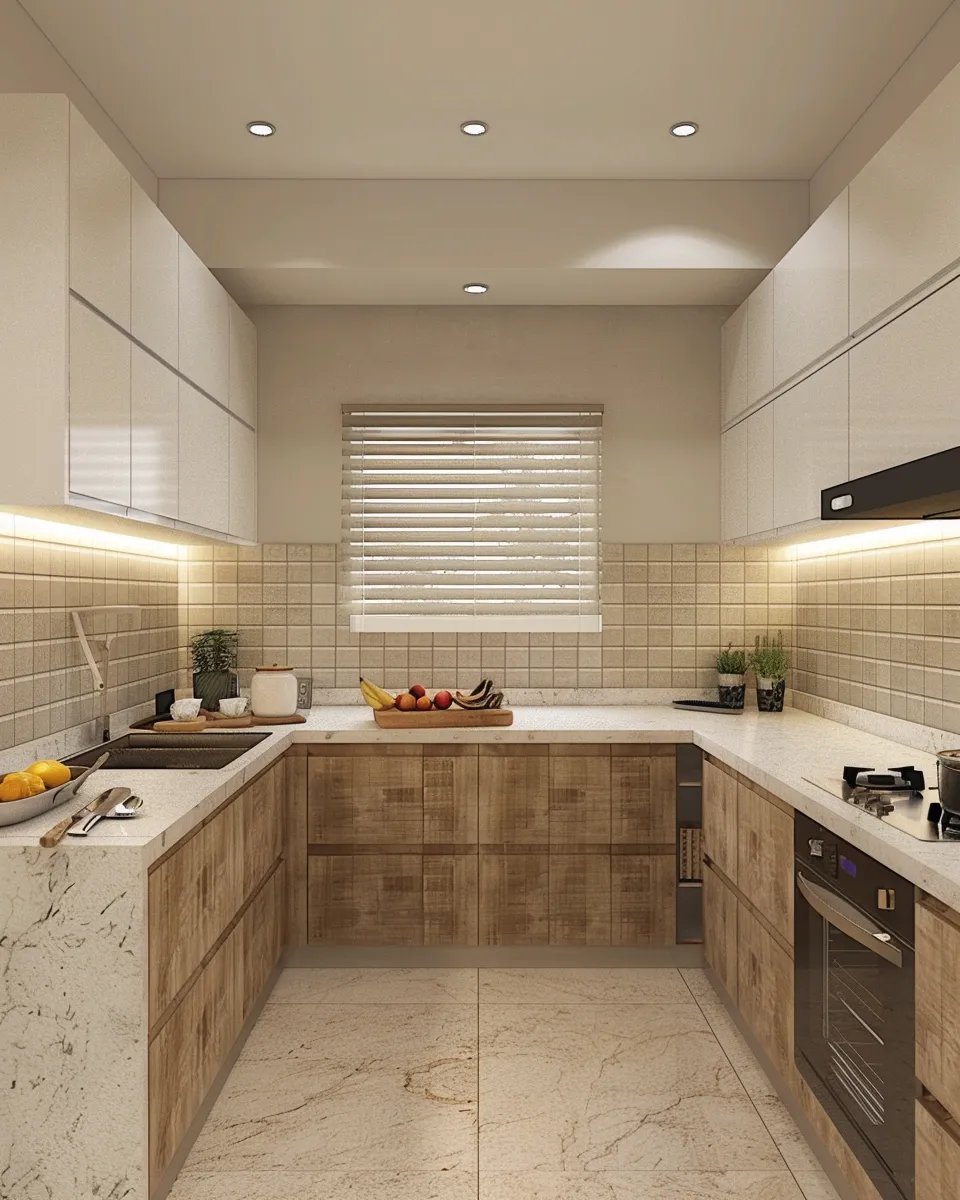
Particle board exists mainly because kitchens need cheaper alternatives. It's part of almost every discussion of entry-level modular kitchen materials.
But realistically? Not for heavy-use kitchens.
Where Particle Board Works?
- Rental homes
- Dry storage cabinets
- Temporary kitchens
- Low usage zones
It struggles with water. It has a weak screw holding too. So, not the best board for modular kitchen cabinets long term.
Read also - Modular Kitchen Cost In India for 2026: How Kitchen Pricing Really Works
Stainless Steel: Extremely Durable But Not For Everyone
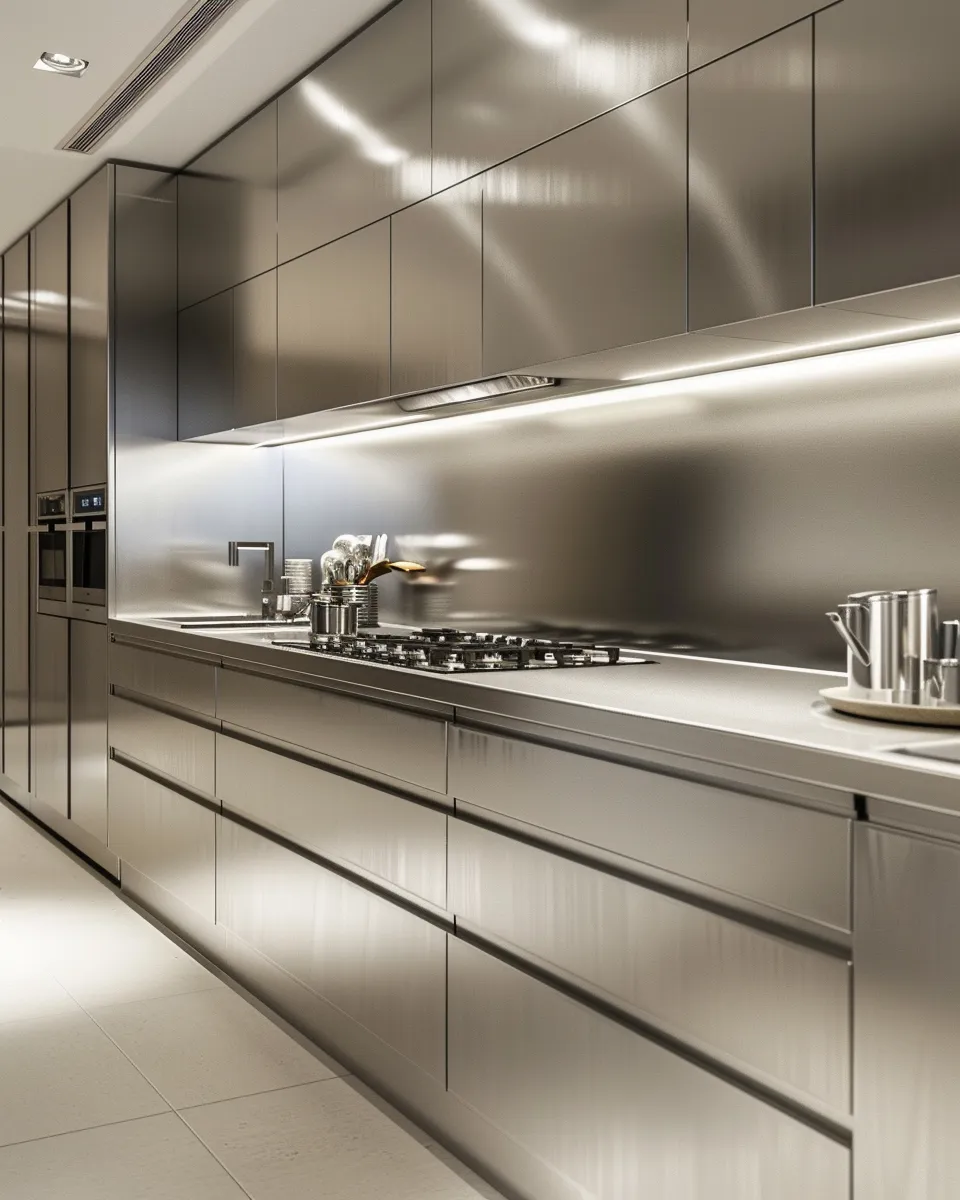
Some homeowners now prefer stainless steel kitchens completely. Especially when hygiene matters more than aesthetics. Because stainless steel door cabinets are:
- Waterproof kitchen cabinet material
- Termite proof
- Fire resistant
- Long lasting
But visually, they feel industrial. Not everyone wants that in their home interiors. Still, for utility kitchens and heavy cooking households, they're amazing.
Read also – Gloss vs Matte Kitchen Cabinets: What Actually Works in a Real Kitchen?
Aluminium: Modern But Slightly Limited
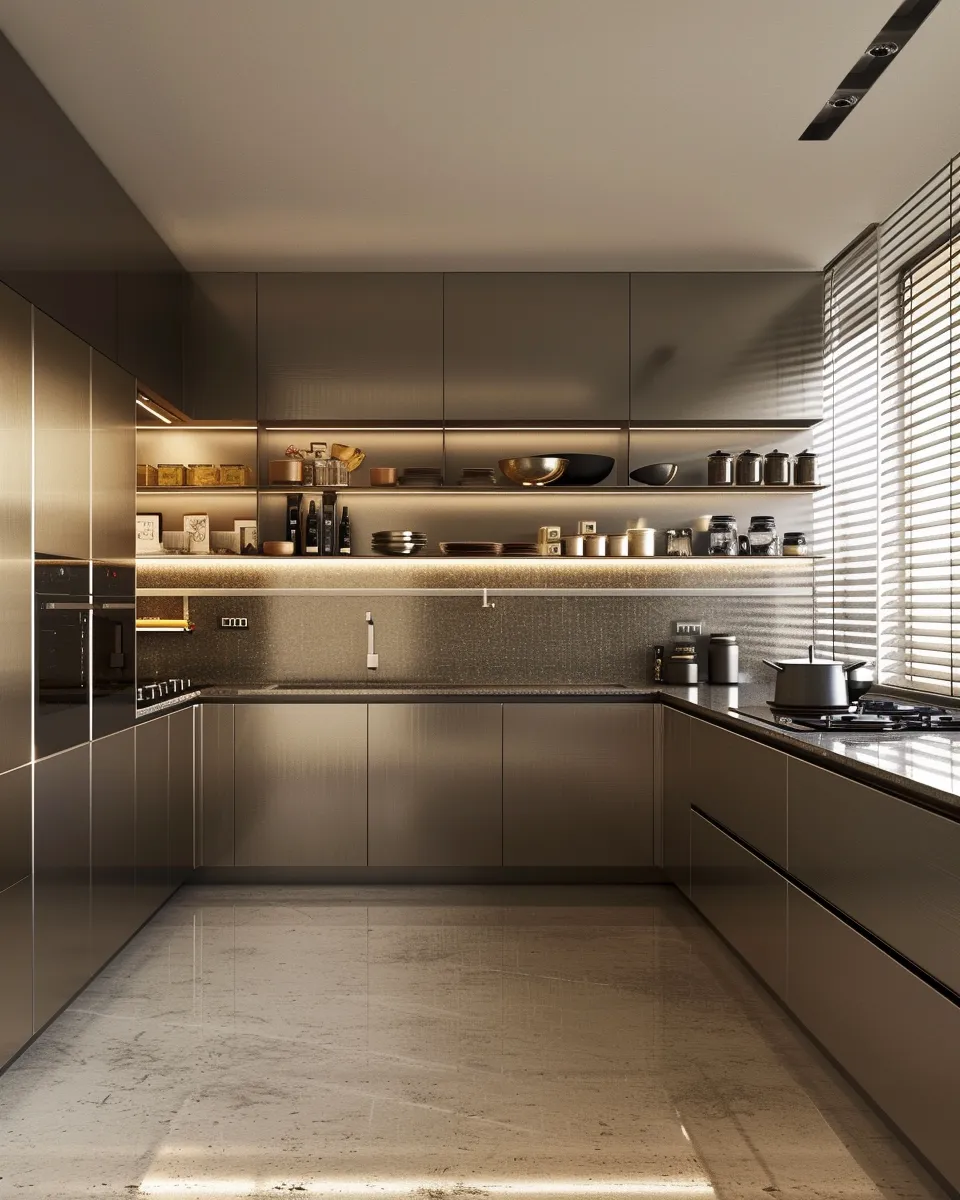
Aluminium cabinets are growing in popularity as a modular kitchen design material. It is mostly paired with glass-finish kitchen shutters. They don't rust or absorb moisture. They stay stable for years. But they don't give the same warm feel as wood-based cabinet materials.
So, aluminium is best used in:
- Contemporary kitchens
- Minimal kitchens
- kitchen tall unit storage
- Lightweight upper cabinets
Also read – 20+ Best Kitchen Design Tips: Everything You Need To Plan The Perfect Kitchen
PVC: Fully Waterproof But Not Heavy Duty
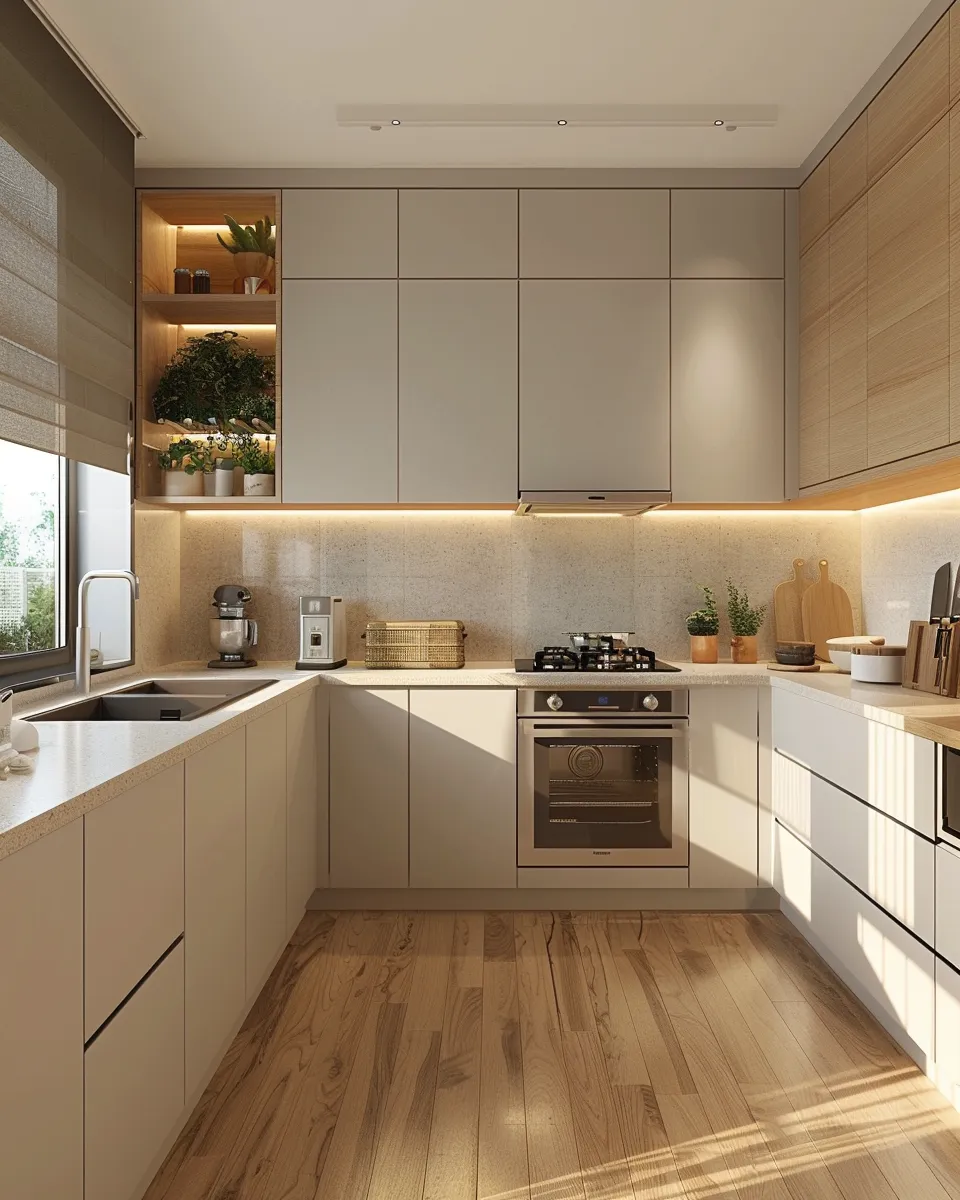
PVC kitchen cabinets are popular for one reason. Zero moisture problems. Seriously. It's one of the few true waterproof materials for kitchen cabinets. Also, termite-proof. But strength is limited.
The material is suitable for:
- Under-sink cabinets
- Utility kitchens
- Small kitchens
- Budget modular setups
- Fibre cupboard for kitchen storage sections
It is not ideal for heavy drawers.
Read also – 22+ Best Kitchen Backsplash Ideas That Do More Than Just Sit Behind The Counter
Solid Wood: Premium But High Maintenance
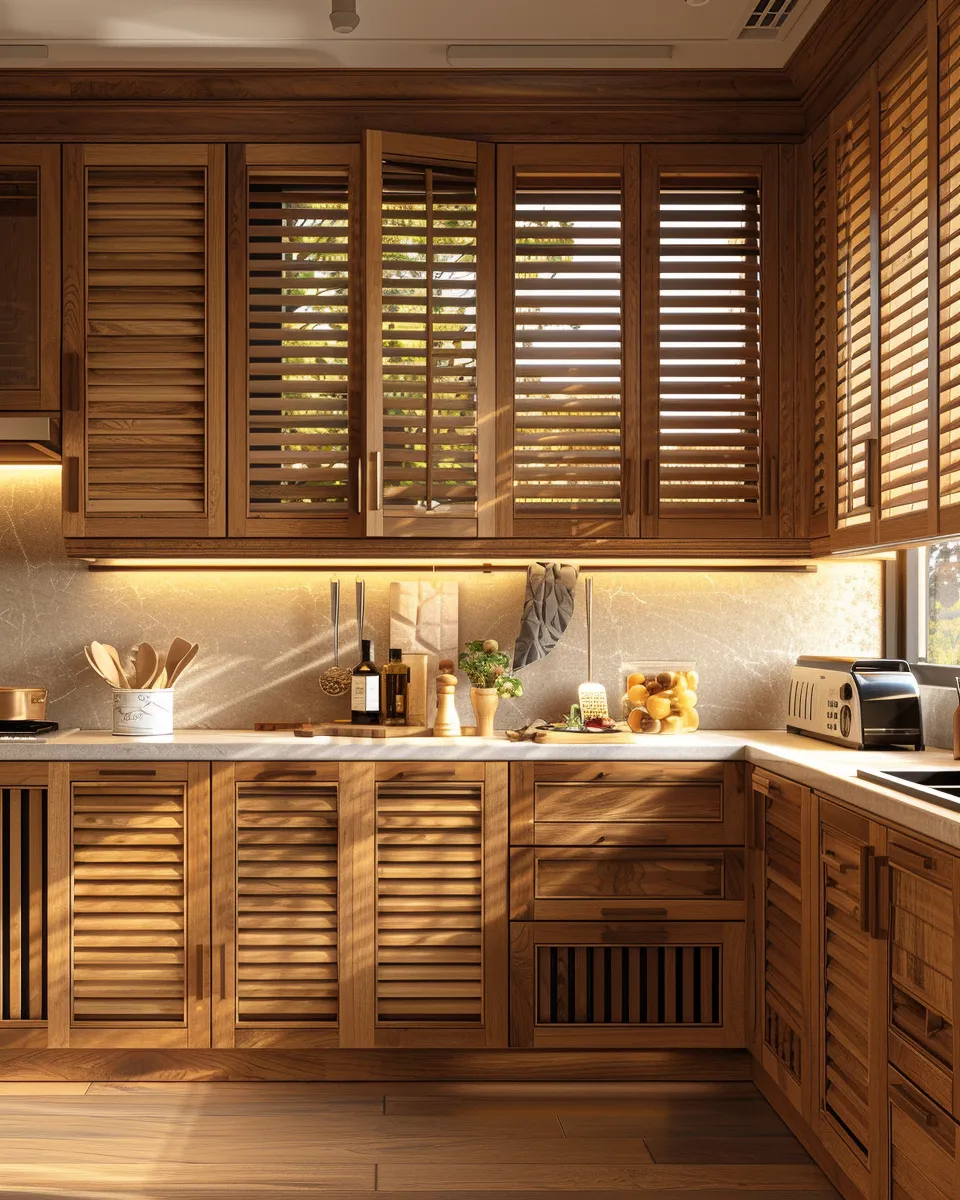
Solid wood looks beautiful. Always. It is still one of the high-end materials for kitchen cabinets. But Indian weather doesn't always cooperate with wood. Humidity causes movement, expansion, and sometimes cracks.
So, it is mostly used as:
- Decorative shutters
- Luxury kitchens
- Feature storage walls
- Classic kitchen cabinets
It is rarely used as a carcass today.
Read also – Best Small Kitchen Storage Ideas: Smart Ways To Organise Small Kitchens
Picking The Right Material For Kitchen Cabinets
Choosing the right kitchen cabinet materials gets easier when you consider a few practical factors instead of trying to find one perfect board for everything.
- Check moisture exposure first: Sink areas always need moisture-resistant kitchen cabinets, such as plywood, PVC, or HMR boards. Avoid MDF in wet zones because it can swell.
- Choose a strong material for the cabinet structure: For the carcass, plywood is usually the best material for modular kitchen cabinets since it handles weight and daily use better than particle board.
- Select shutters based on finish: Shutters depend on design choice. MDF and HMR work well with laminate, acrylic kitchen design panels, and membrane finish kitchen shutters.
- Match material to kitchen usage: Heavy-cooking kitchens need durable cabinets, such as plywood. Light-use kitchens can manage with MDF or engineered boards.
- Use waterproof options near the sink: PVC is a reliable waterproof kitchen cabinet material for under-sink storage and utility areas.
- Think about maintenance before choosing finishes: Laminate is easy to maintain. High-gloss cabinet material looks premium but needs more cleaning.
- Plan materials according to cabinet location: Wall cabinets can use lighter boards. Base cabinets and kitchen drawer material should always be stronger.
- Follow a safe material combination: A practical setup for most homes is a plywood carcass, MDF or HMR shutters, laminate finish, and PVC near sink areas. This works well for Indian modular kitchen conditions.
Read also – 6 Different Types Of Kitchen Layout – Your Home Is Missing
A Practical Comparison Of Kitchen Cabinet Materials
There's no single winner when it comes to types of kitchen cabinet materials. Each one solves a different problem. So, here is a simple comparison of different materials based on strength, moisture resistance, and finish compatibility.
|
Material |
Strength |
Moisture Resistance |
Best Use Area |
Budget Level |
|
Plywood |
Very strong |
Good |
Carcass, base units, drawers |
Medium – High |
|
MDF |
Moderate |
Low |
Shutters, wall cabinets |
Medium |
|
HMR Board |
Strong |
Better than MDF |
Shutters, humid zones |
Medium – High |
|
Particle Board |
Low |
Very low |
Dry storage only |
Low |
|
PVC |
Light strength |
Excellent |
Under-sink cabinets |
Low – Medium |
|
Stainless Steel |
Extremely strong |
Excellent |
Utility & heavy-use kitchens |
High |
|
Aluminium |
Moderate |
Excellent |
Modern shutters & frames |
High |
|
Solid Wood |
Strong |
Sensitive to humidity |
Premium shutters |
High |
Most Balanced Choice For Indian Kitchens
If you’re still unsure which is the best material for modular kitchen cabinets, this combination works almost everywhere:
- Plywood carcass
- HMR or MDF shutters
- Laminate as a kitchen cabinet finishing material
- PVC near sink areas
Simple and reliable setup. And it fits almost all modular kitchen designs without overcomplicating things.
Read also – Modular Kitchen Design Trends 2026: Latest Kitchen Trends That Work in Real Homes
Finishes That Shape Your Cabinets
Cabinet material gives strength and structure to the kitchen. But the finish adds style and enhances the kitchen’s appearance. It also improves resistance to stains, scratches, and moisture. So, here are common kitchen cabinet finishing materials used over plywood, MDF or HMR boards.
Laminate Finish
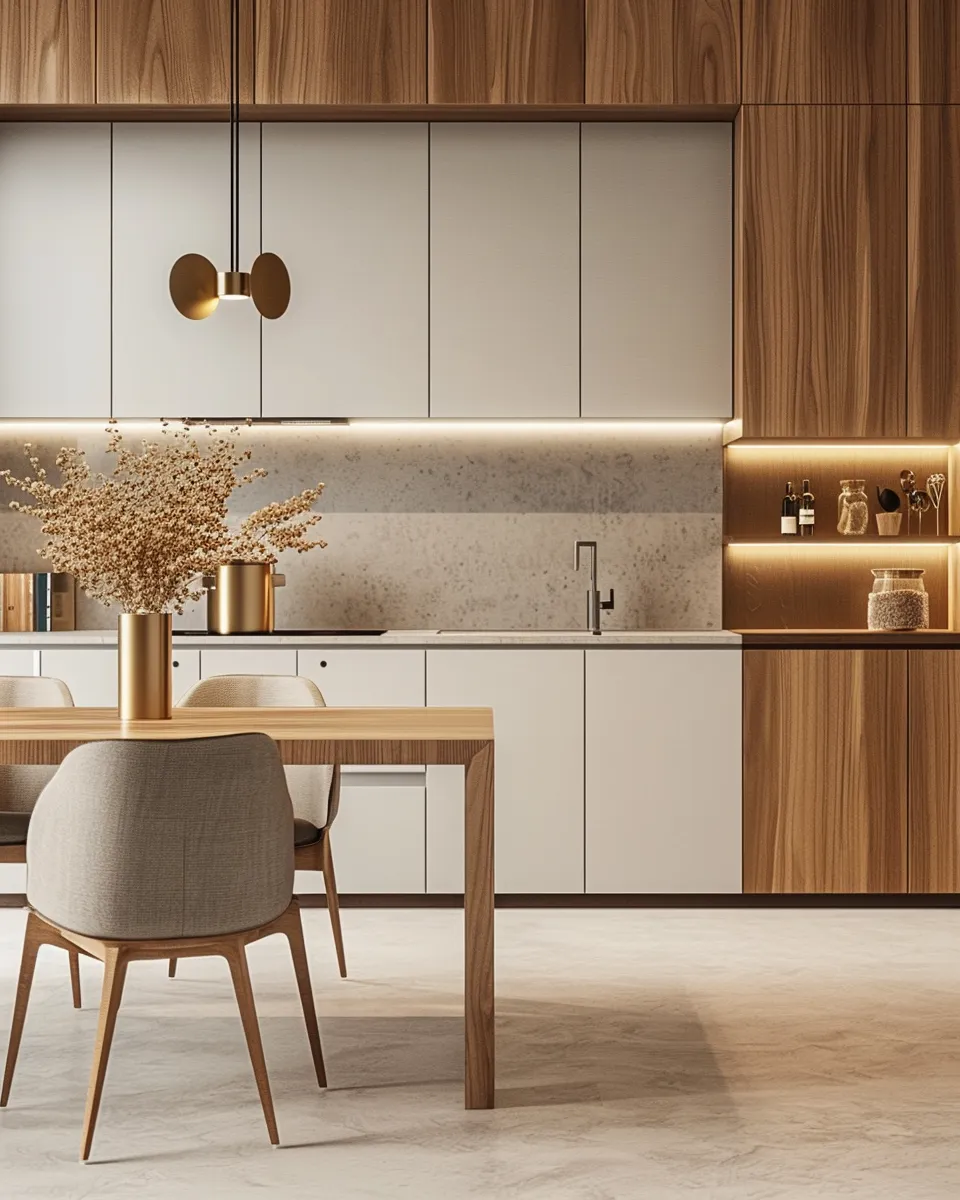
It is still the most practical option. Affordable, durable, and easy to clean. Laminate works well in simple kitchen design layouts. It also fits almost any kitchen colour combination.
Read also – Stylish Grey Kitchen Design Ideas for Every Home
Acrylic Finish
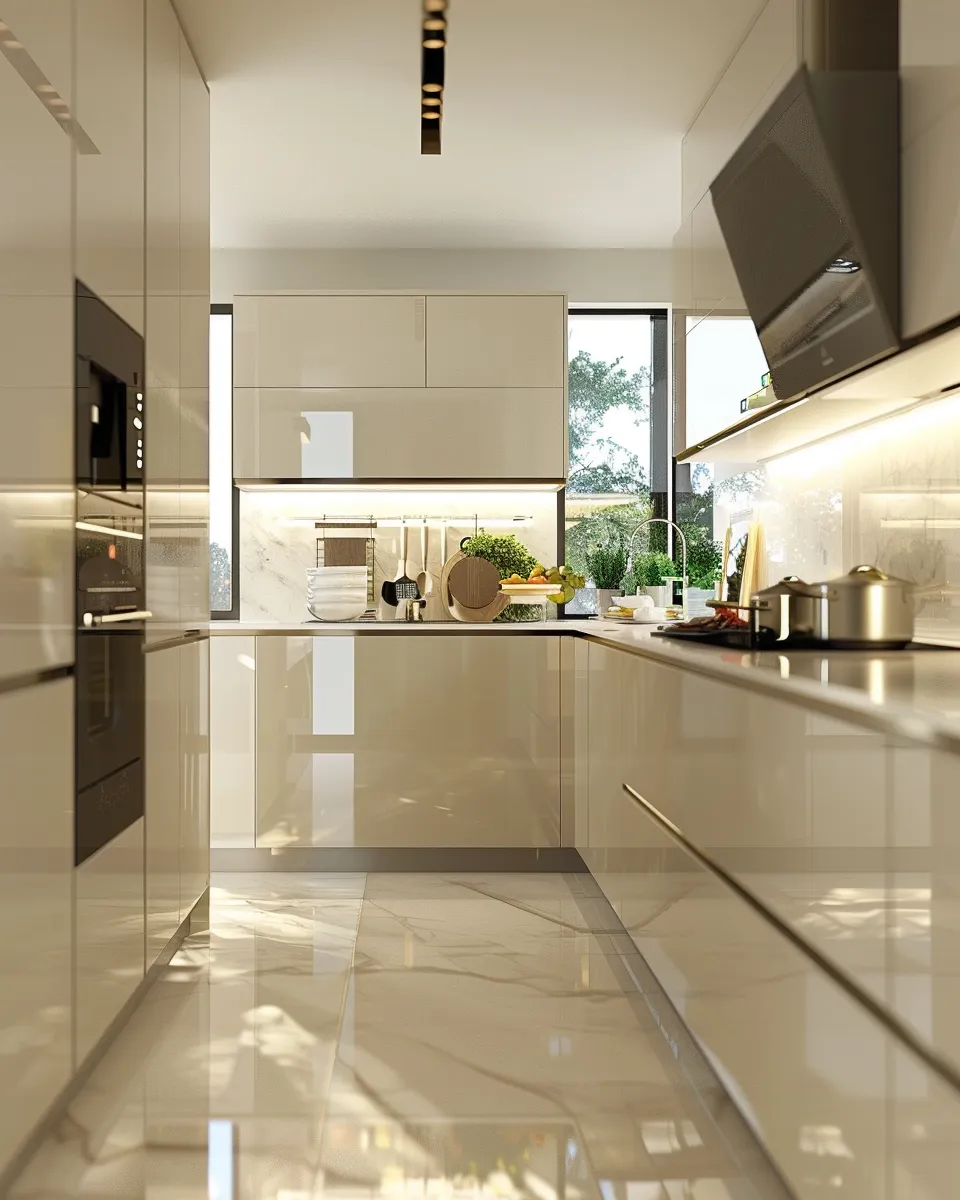
It is super glossy. This finish reflects light beautifully and is popular in acrylic kitchen design projects and compact kitchens. However, it needs careful maintenance, though. Fingerprints show easily. It is still a favourite glossy material for kitchen cabinets.
Read also – 5+ Latest Semi-Modular Kitchen Design Ideas in 2026
Membrane Finish
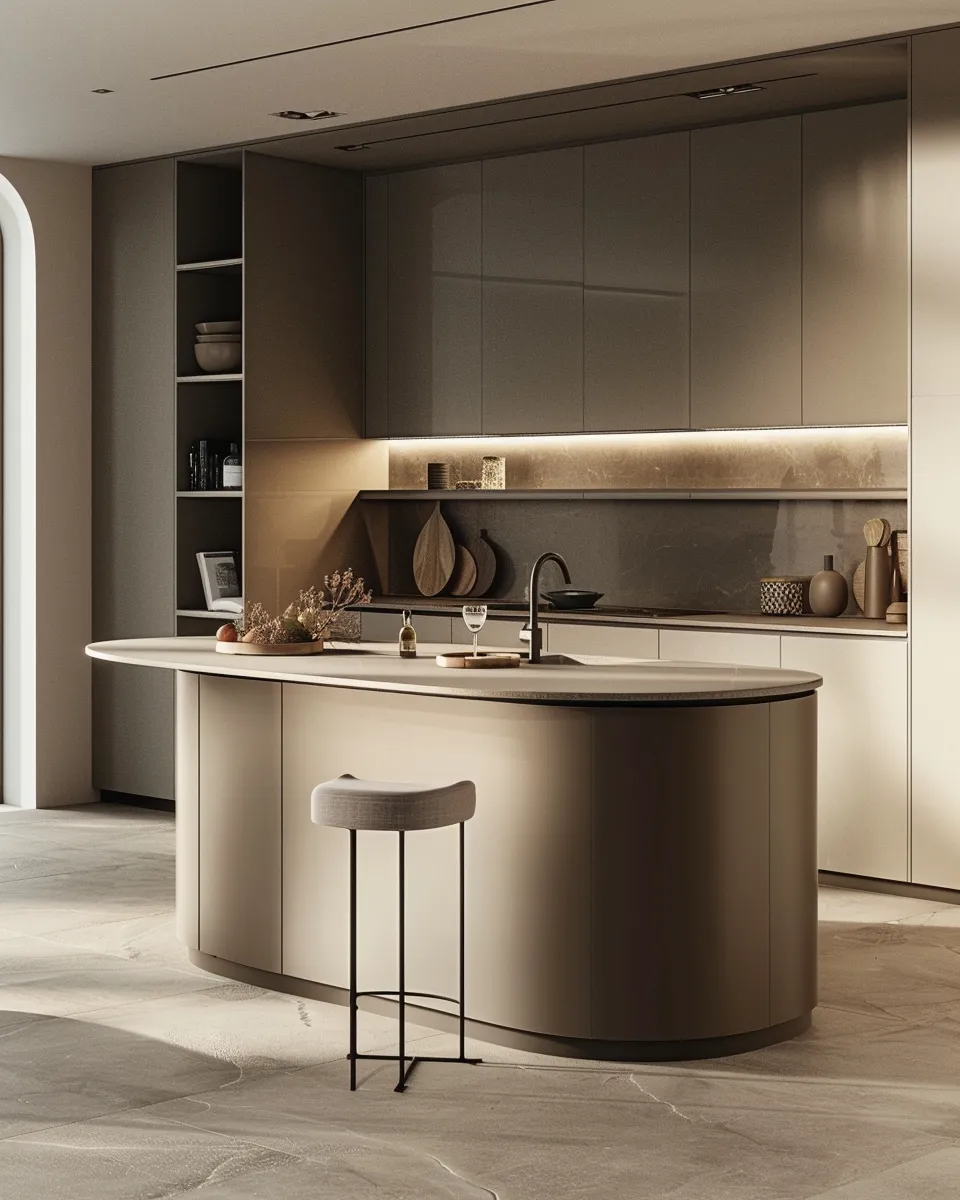
Membrane finish kitchen shutters look seamless. No visible joints. They usually have a soft matte appearance. But heat resistance is lower than that of the laminate.
PU Paint Finish
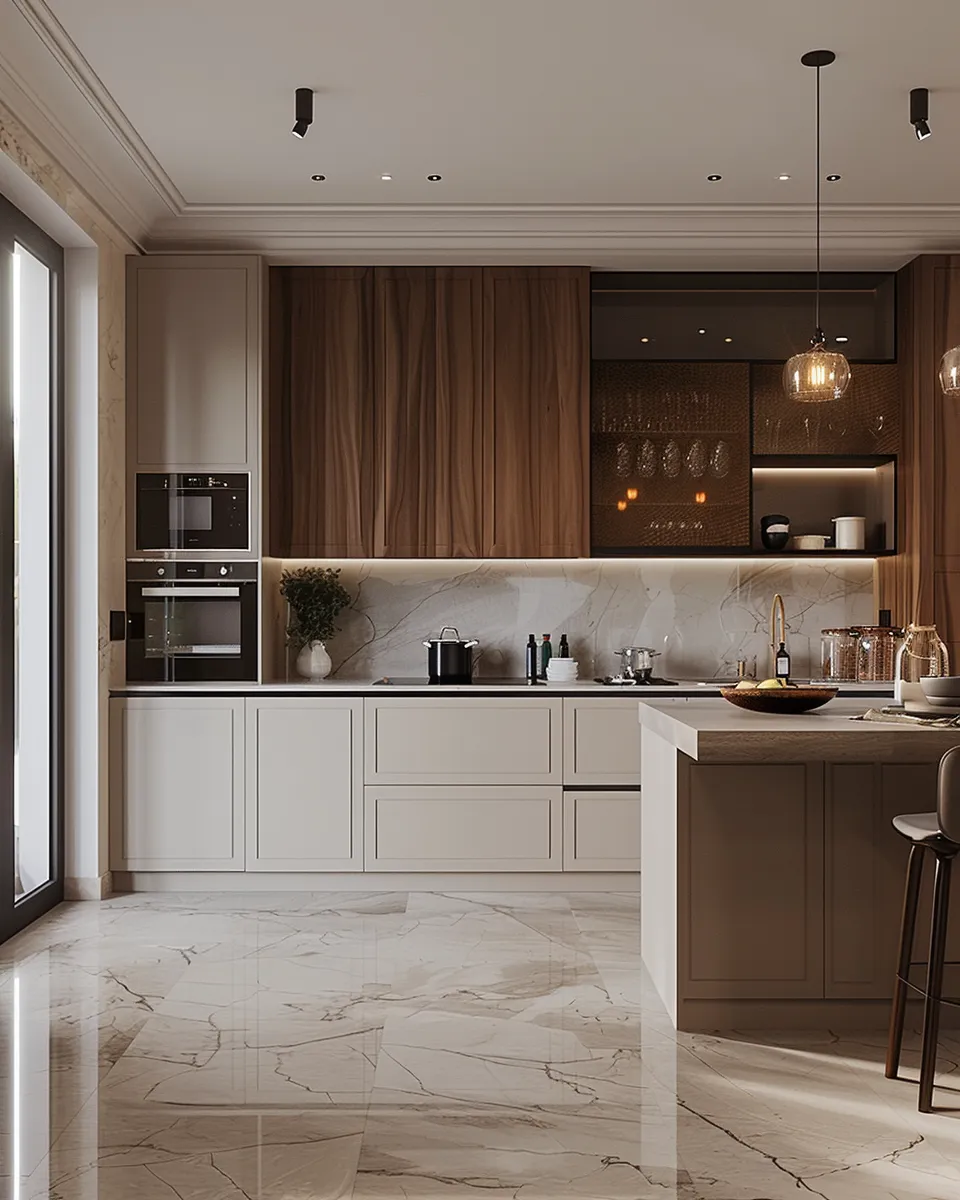
It has a premium feel and a smooth surface. It is often used in luxury modular kitchen glass door material choices. The finish is available in matte and gloss.
Read also – Latest Wooden Kitchen Design Ideas for Indian Homes
Veneer Finish
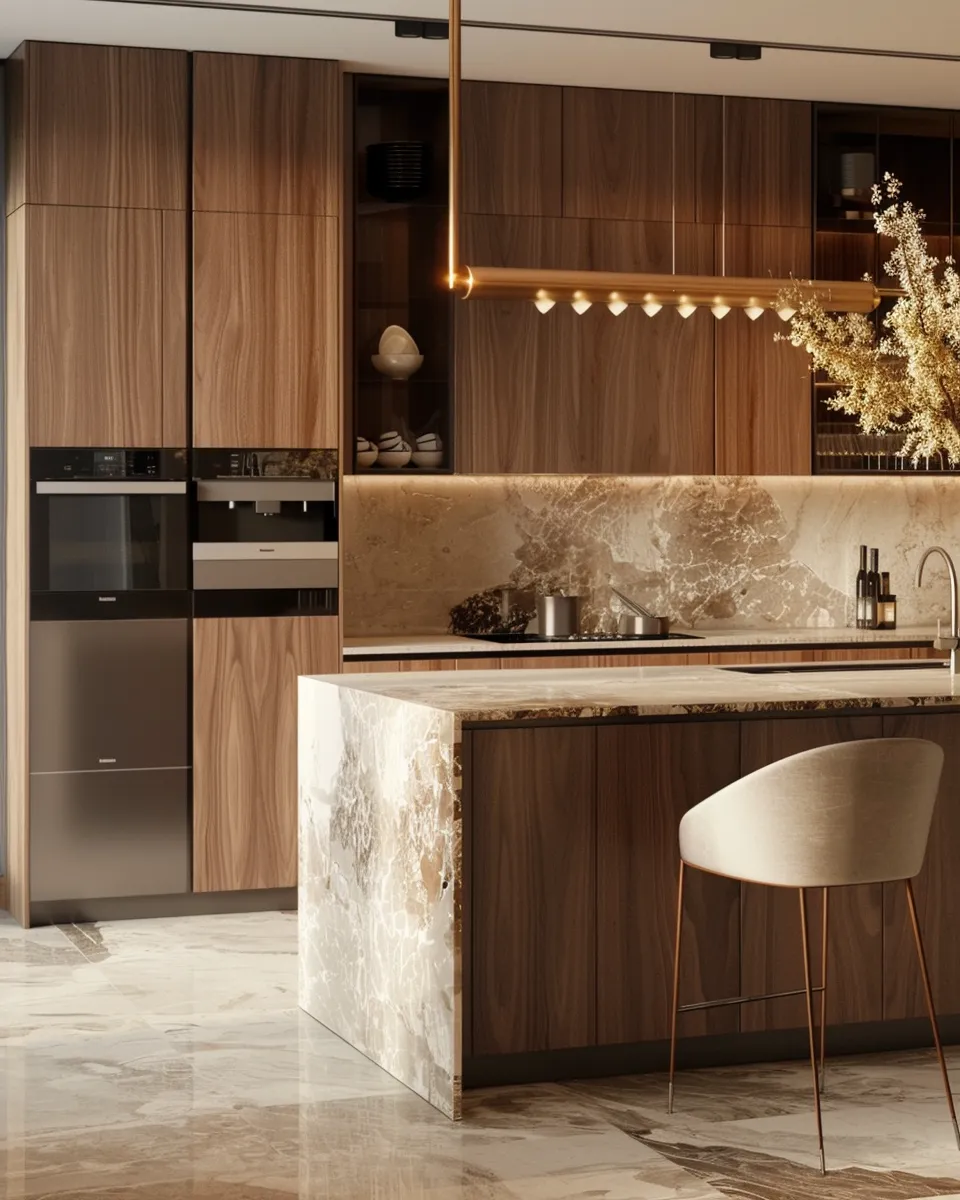
Veneer gives a real-wood feel without the full cost of solid wood. It is used in high-end kitchen cabinet materials. However, it needs maintenance, though.
You may also like!
| Kitchen Window Design | Stylish Kitchen Window Ideas for Every Kind of Kitchen |
| Kitchen Lighting Design | Best Kitchen Lighting Ideas and Trends |
| Open Shelves Kitchen Design | Open Kitchen Shelving Ideas for Perfect Space |
| Kitchen Laminate Design | Perfect Two Colour Combination for Kitchen Laminates |
Pick Materials That Last!
There's no single best kitchen cabinet material for everyone. Some kitchens need waterproof cabinets. Some need budget setups. Some need luxury finishes. So if you're trying to figure out which material is best for kitchen cabinets, the answer really depends on your kitchen layout, storage needs, and how heavily it is used every day. A mix of materials always performs better than choosing just one board for everything.
That's where working with the right design team makes things easier. At Interior Company, the team usually plans kitchen materials based on real usage, not just what looks nice in catalogue photos. Things like moisture-prone areas, storage load, finishes, even kitchen colour combinations and layout are all considered together. So the kitchen doesn't just look good at installation time. It keeps working properly for years.
'Images used are for representational purposes only. Unless explicitly mentioned, the Interior Company does not hold any copyright to the images.'
kitchen Design Ideas for You
- Shape
- Color
- Finish
- Theme
- Backsplash Color
- Backsplash Material
- Cabinet Style
- Counter Colour
- Floor Material
- Size
- Almond Brown Color Kitchen Design
- Beige Color Kitchen Design
- Black Color Kitchen Design
- Blue Color Kitchen Design
- Brown Color Kitchen Design
- Charcoal Black Color Kitchen Design
- Charcoal Grey Color Kitchen Design
- Coral Color Kitchen Design
- Cream Color Kitchen Design
- Dark Grey Color Kitchen Design
- Gold Color Kitchen Design
- Green Color Kitchen Design
- Grey Color Kitchen Design
- Ivory Color Kitchen Design
- Light Brown Color Kitchen Design
- Multicolour Color Kitchen Design
- Natural Brown Color Kitchen Design
- Nude Color Kitchen Design
- Off White Color Kitchen Design
- Olive Color Kitchen Design
- Olive Green Color Kitchen Design
- Olive Rust Color Kitchen Design
- Orange Color Kitchen Design
- Pink Color Kitchen Design
- Purple Color Kitchen Design
- Red Color Kitchen Design
- Silver Color Kitchen Design
- Smokey Blue Color Kitchen Design
- Smokey Grey Color Kitchen Design
- Stone Color Kitchen Design
- Teal Color Kitchen Design
- White Color Kitchen Design
- Wooden Brown Color Kitchen Design
- Yellow Color Kitchen Design
- Contemporary Theme Kitchen Design
- Cottage-Style Theme Kitchen Design
- Countryside Theme Kitchen Design
- Industrial Theme Kitchen Design
- Luxurious Theme Kitchen Design
- Mid-Century Modern Theme Kitchen Design
- Minimalist Theme Kitchen Design
- Modern Theme Kitchen Design
- Modern -Industrial Theme Kitchen Design
- Rustic Theme Kitchen Design
- Scandinavian Theme Kitchen Design
- Traditional Theme Kitchen Design
- Beige Backsplash Color Kitchen Design
- Black Backsplash Color Kitchen Design
- Blue Backsplash Color Kitchen Design
- Brown Backsplash Color Kitchen Design
- Gray Backsplash Color Kitchen Design
- Green Backsplash Color Kitchen Design
- Metallic Backsplash Color Kitchen Design
- Multi Backsplash Color Kitchen Design
- Orange Backsplash Color Kitchen Design
- Red Backsplash Color Kitchen Design
- White Backsplash Color Kitchen Design
- Yellow Backsplash Color Kitchen Design
- Brick Backsplash Material Kitchen Design
- Cement Tile Backsplash Material Kitchen Design
- Ceramic Tile Backsplash Material Kitchen Design
- Engineered Quartz Backsplash Material Kitchen Design
- Glass Tile Backsplash Material Kitchen Design
- Granite Backsplash Material Kitchen Design
- Marble Backsplash Material Kitchen Design
- Matchstick Tile Backsplash Material Kitchen Design
- Mosaic Tile Backsplash Material Kitchen Design
- Porcelain Tile Backsplash Material Kitchen Design
- Stone Slab Backsplash Material Kitchen Design
- Stone Tile Backsplash Material Kitchen Design
- Subway Tile Backsplash Material Kitchen Design
- Terra-Cotta Tile Backsplash Material Kitchen Design
- Travertine Backsplash Material Kitchen Design
- Window Backsplash Material Kitchen Design
- Wood Backsplash Material Kitchen Design
- Beige Counter Colour Kitchen Design
- Black Counter Colour Kitchen Design
- Blue Counter Colour Kitchen Design
- Brown Counter Colour Kitchen Design
- Gray Counter Colour Kitchen Design
- Green Counter Colour Kitchen Design
- Multi Counter Colour Kitchen Design
- Pink Counter Colour Kitchen Design
- Red Counter Colour Kitchen Design
- White Counter Colour Kitchen Design
- Yellow Counter Colour Kitchen Design
- Carpet Floor Material Kitchen Design
- Cement Tile Floor Material Kitchen Design
- Ceramic Tile Floor Material Kitchen Design
- Dark Hardwood Floor Material Kitchen Design
- Light Hardwood Floor Material Kitchen Design
- Marble Floor Material Kitchen Design
- Medium Hardwood Floor Material Kitchen Design
- Painted Wood Floor Material Kitchen Design
- Porcelain Tile Floor Material Kitchen Design
- Terrazzo Floor Material Kitchen Design
- Travertine Floor Material Kitchen Design

Ready for a home transformation?
Let our designers assist you!
Recent Posts







Particle board is the cheapest option in the kitchen cabinet material list. It works if the kitchen doesn’t get heavy use. Or maybe for rental homes. But it doesn’t last as long as plywood. So better to upgrade to MDF if possible.
Honestly, most Indian kitchens still work best with plywood. It handles moisture better. Takes weight easily. And doesn’t start to bend after a few years, like cheaper boards sometimes do. Usually, people don’t use just one material, though. A common setup is plywood inside, MDF or HMR for shutters, and laminate outside. That combination stays practical for daily cooking in kitchens.
Plywood is stronger. That’s the biggest difference. It works better for cabinet structure and drawers where weight matters. MDF looks smoother, though. So it’s often used for cupboard door material, especially when someone wants membrane finish kitchen shutters or painted surfaces. Just avoid MDF near sinks because water can slowly damage it.
PVC works really well in wet areas, actually. It’s a waterproof, termite-resistant material for kitchen cabinets. So under-sink cabinets are a good place for it. But it’s not as strong as plywood. So, better not use it for heavy storage sections.
The simple answer is marine plywood. It is usually the safest choice. It handles moisture better and stays strong for years. That’s why many designers still prefer it for modular kitchen cupboard materials, especially for base cabinets and tall storage units.
Most kitchens today use a mix of plywood, MDF, HMR board, and sometimes PVC in sink areas. For the outside finish, laminate is still very common. Acrylic kitchen design panels and membrane-finish kitchen shutters are also popular now because they give a cleaner, more modern look.
Depends what you want, honestly. Stainless steel cabinets last very long and are completely moisture-resistant. No termite issues either. But they look slightly industrial. Wood-based cabinet materials feel warmer and suit home kitchens better in most cases.
For shutters, MDF and HMR boards usually work nicely. They easily support laminate, acrylic, and membrane finishes. If someone wants glossy material for kitchen cabinets or a high-gloss cabinet finish, these boards are usually the base.
Start by checking where water exposure happens the most. Sink cabinets require stronger boards such as plywood, PVC, or HMR. Those areas should never use MDF or particle board. Making this one change itself significantly increases cabinet life.
Most people go with plywood for the cabinet structure, MDF or HMR for shutters, laminate outside, and PVC near sink units. It’s simple. It works in almost every Indian kitchen. And it keeps cabinets strong without making the kitchen interior design cost too high.
Related Category
- Dining Room
- False Ceilings
- Paint and Color
- Tips and Advice
- Walls and Texture