- Design Ideas
- Cities
- Trends
- Guides
- Price Calculators
- Interior DesignersNEW
- Our Portfolio
- More


- Home
- Trends
- Furniture And Decor
- Home Decor
- Diwali Flower Decoration Ideas
Diwali Flower Decoration Ideas for Home: Marigolds, Lotus, Rangoli and More

Decorating with flowers on Diwali is as much about colour palette and proportion as it is about tradition. Pairing rich marigold yellows and deep rust oranges with cool green mango leaves or crisp white jasmine creates an immediate contrast that highlights your home’s architecture. Whether you are working with an open-plan living room or a compact apartment entryway, thoughtful flower placement elevates basic festive lighting and gives every room a curated, cohesive look.
Table of Content
Best Flowers For Diwali Decoration
Buying and Keeping Flowers Fresh
Diwali Door Decoration with Flowers
Flower Rangoli and Floor Decoration for Diwali
Flower Decoration with Diyas
Flower Decoration for Lakshmi Pooja
Diwali Wall Decoration with Flowers
Diwali Floral Arrangements for the Living Room and Dining Table
Diwali Flower Decoration for Office
Simple Flower Decoration for Diwali
Artificial Flowers for Diwali Decoration
Eco-Friendly Flower Decoration Tips
Interior Company Tip: Plan the Spots Before the Flowers
Conclusion
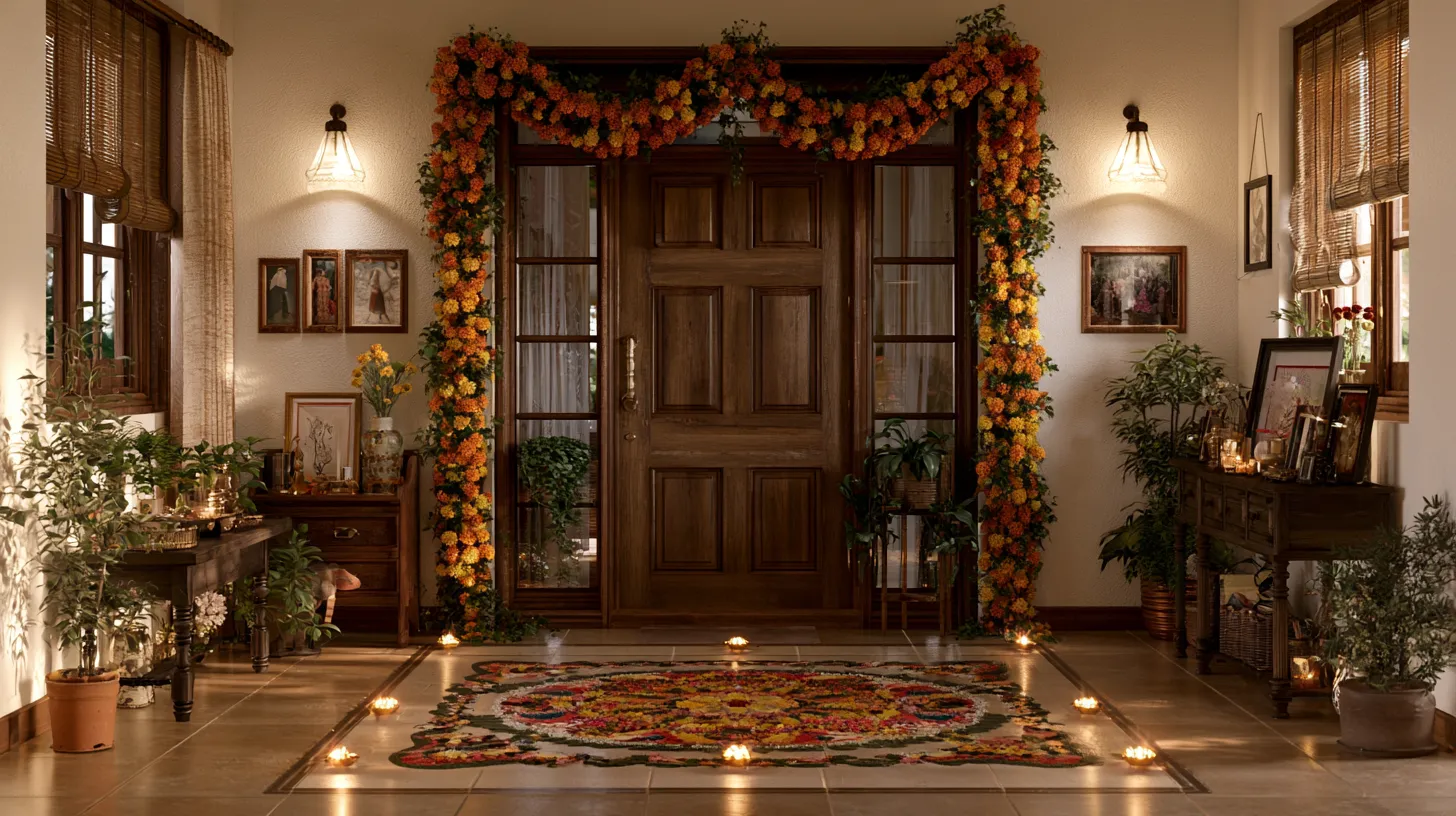
To achieve a balanced result without overspending or drowning in loose petals, focus on high-impact anchor points: the main entry threshold, the floor rangoli, oil lamps, and the prayer altar. Here is your complete room-by-room guide to choosing, styling, and preserving fresh floral arrangements for Diwali.
Best Flowers For Diwali Decoration
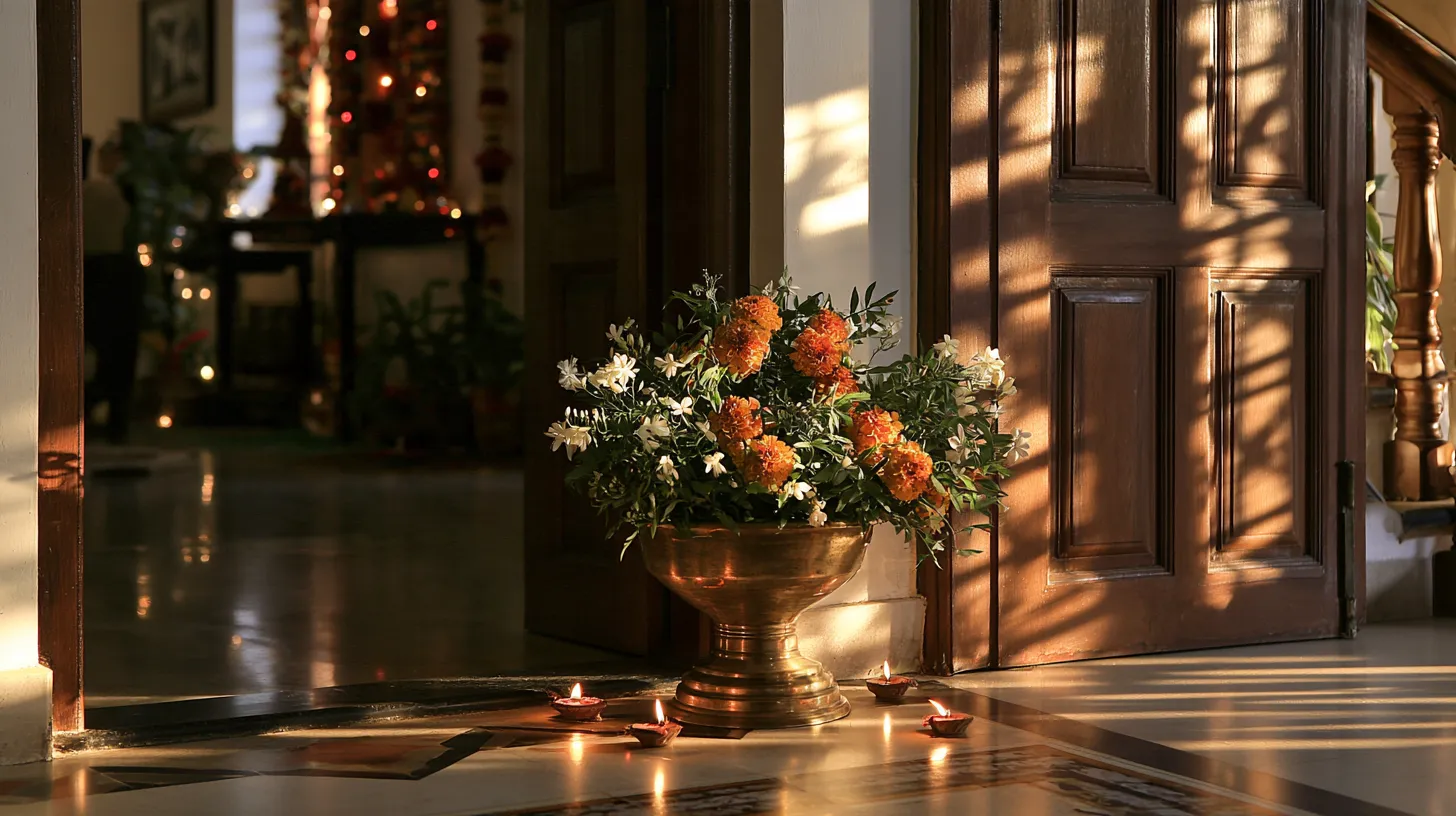
Selecting the right bloom varieties ensures your floral displays remain crisp and structural through long evening prayers and family gatherings.
- Marigold (Genda): The primary colour anchor for Diwali decor. Available in bright lemon yellow, deep rust orange, and rich bronze. Their thick, durable heads make them perfect for heavy doorway trims, framing clay lamps, or pulling apart for floor art.
- Rose: Adds deep crimson, pink, or burgundy contrast against bright marigold yellow. Loose rose petals work exceptionally well in floating water bowls, worship trays, and geometric floor art.
- Mogra and Jasmine: Fragrant, delicate white blossoms that offer sharp visual contrast against warm tones. Ideal for short deity garlands, looping around brass lamps, or accenting prayer altars.
- Lotus: A sacred bloom representing Goddess Lakshmi. Use one or three stems directly before the main deity or float them in a central water urli. Fresh lotus buds hold their shape beautifully for two days.
- Rajnigandha (Tuberose): Tall, elegant white stalks that provide vertical structure in vase arrangements while filling the room with a rich fragrance after dark.
- Shevanti (Chrysanthemum): Available in autumn shades of yellow, purple, and white. Their dense, ruffle-textured blooms make thick, durable door garlands or long-lasting potted balcony displays.
- Orchids: Excellent for modern, contemporary interiors. They look sharp in clear glass cylinders on foyer consoles or office reception desks.
- Mango and Ashoka Leaves: Deep green foliage that breaks up heavy orange and yellow hues while adding natural architecture to torans and rangoli borders.
For a cohesive colour palette, use marigolds and green leaves for eighty percent of your arrangements, reserving roses, jasmine, and lotus for high-priority accent zones.
Buying and Keeping Flowers Fresh
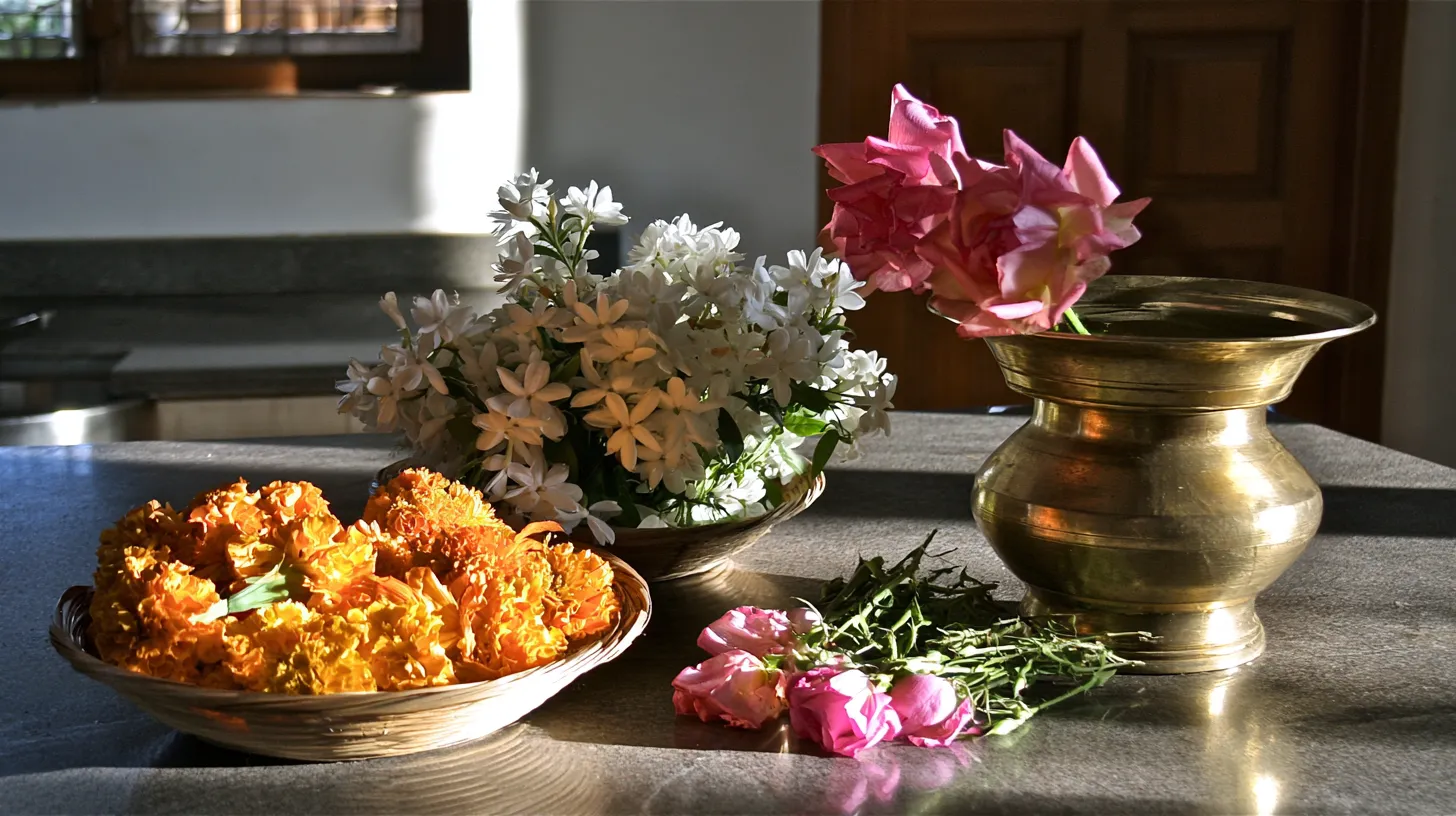
Achieving a fresh, editorial finish relies on simple cold-chain storage and calculated timing rather than last-minute rushing.
- Map your placements first: Calculate the exact quantities you need for each zone'door archway, entryway floor, coffee table, and prayer room'before placing an order.
- Order twenty-four hours in advance: Schedule your deliveries via quick-commerce apps or wholesale suppliers early the day before Lakshmi Puja to ensure first pick of fresh stock.
- Check for firm heads: Select marigold garlands with tight, springy heads rather than soft or papery ones. For lotus, select tight buds that are just beginning to show colour.
- Store in cold, damp conditions: Unpack flowers immediately upon arrival. Wrap loose heads and strung garlands in damp cotton towels or light newspaper, then store them in a cool, dark room or the crisper drawer of your refrigerator.
- Assemble on puja morning: Hang doorway garlands and lay out floor petal art on the morning of Lakshmi Puja so everything stays crisp through late-night celebrations.
- Mist periodically: Spray hung garlands and floor petal designs lightly with clean water in the late afternoon to prevent petal edges from curling in dry indoor air.
Diwali Door Decoration with Flowers
The front entrance defines the initial transition into your home. Strategic floral placement here anchors the entire entryway setup.
Marigold and Mango-Leaf Toran
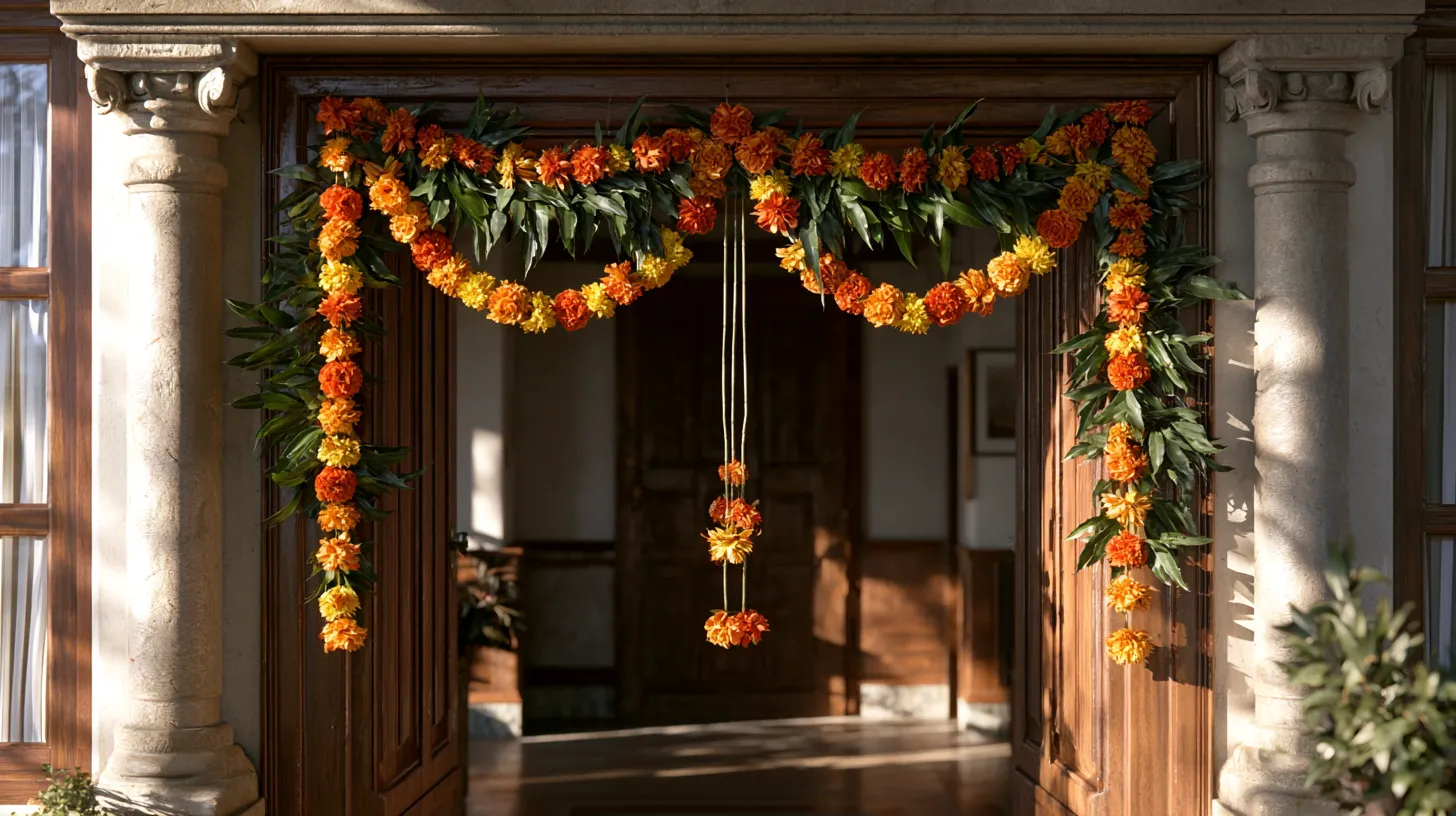
Thread alternating orange and yellow marigold heads alongside folded green mango leaves onto strong cotton cord. Fasten it taut across the top door frame. For added vertical dimension, drop three or five short vertical strands down from the main horizontal line.
Diwali Flower Garland on the Door Frame
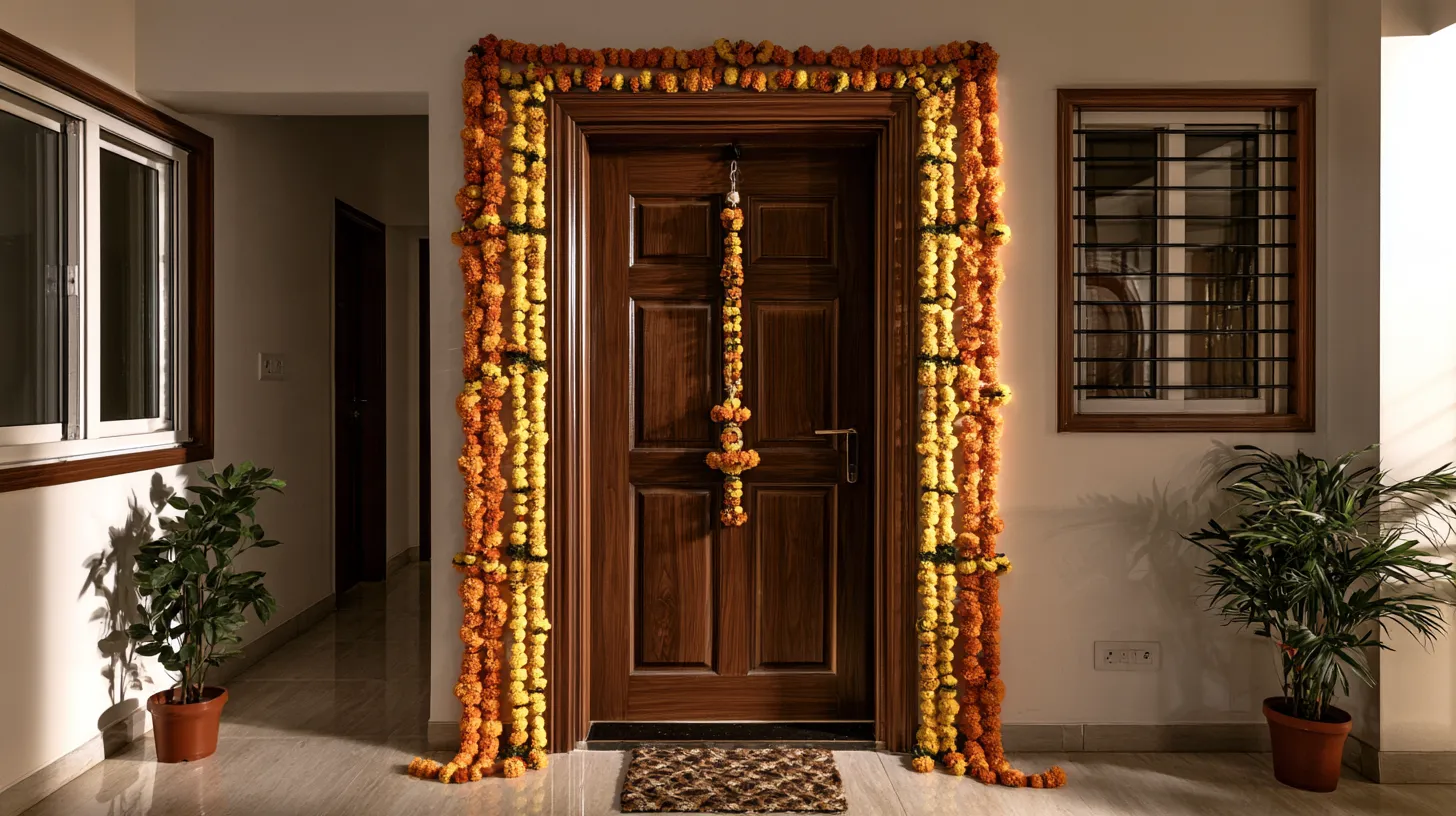
Run a thick marigold or chrysanthemum garland down both vertical sides of the door frame, joining it neatly at the top corners. In compact apartment hallways, pin the garland flush against the frame so it remains structured and out of the walking path.
Rose and Mogra Accent
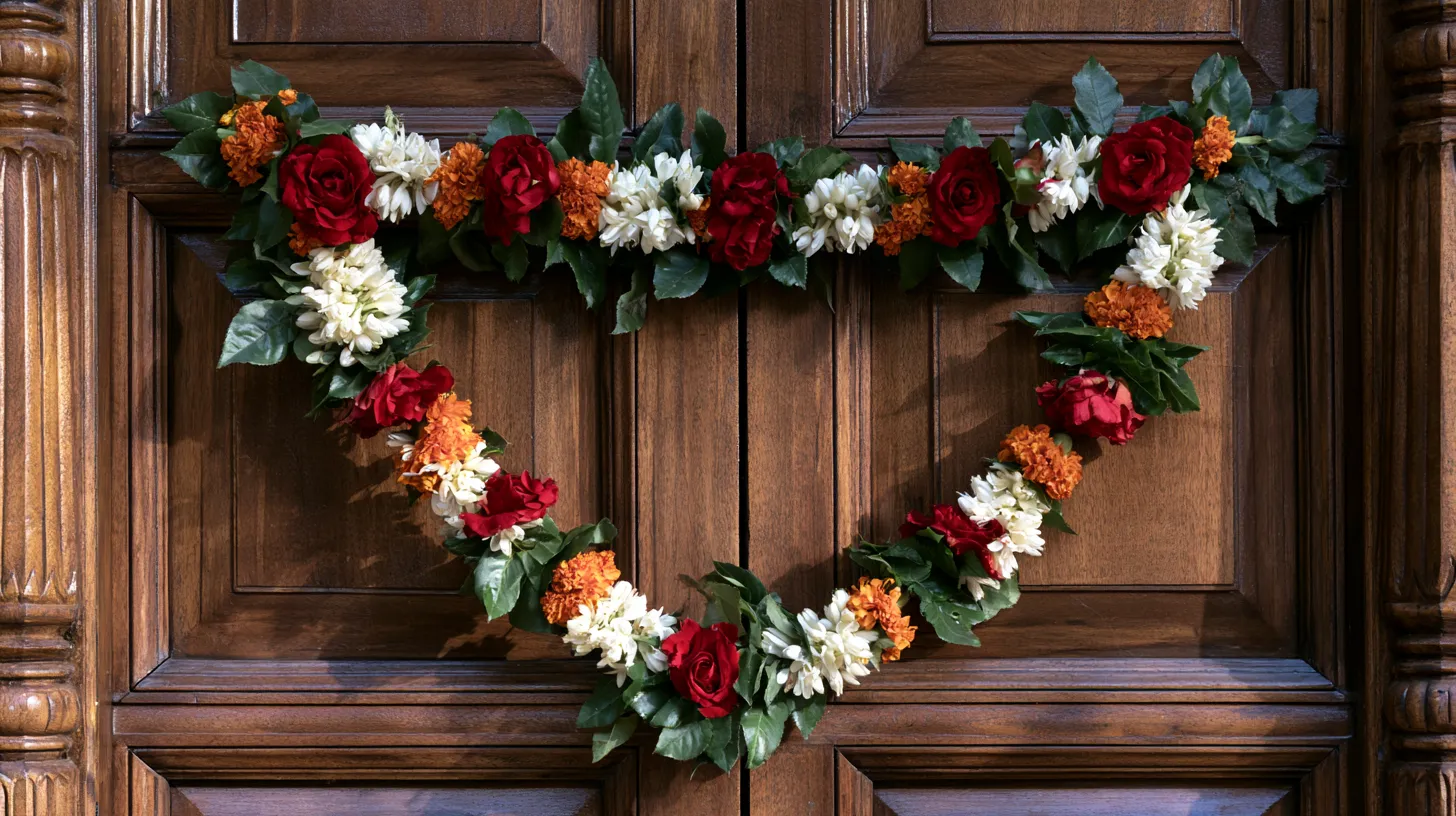
Tuck small clusters of deep red roses or a short strand of white mogra into the central point of your top door toran. The white and crimson break up heavy orange tones while offering a subtle fragrance at the threshold.
Flower Urli Beside the Door
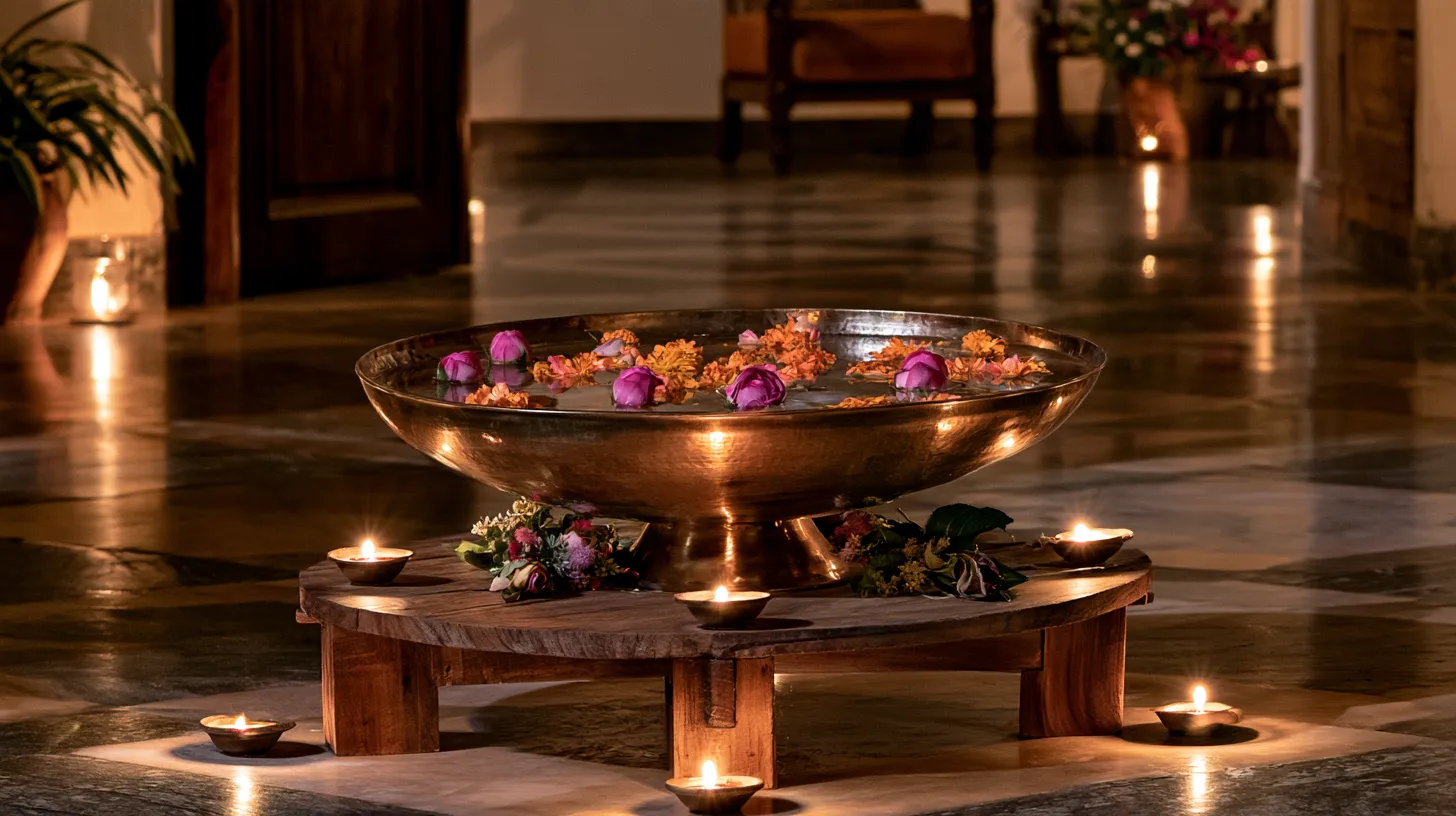
Place a broad brass or terracotta urli on a low wooden stool next to the entryway. Fill it three-quarters full with clean water, scatter loose marigold petals, and let a few rose heads and two floating tea-lights rest on top.
Flower Rangoli and Floor Decoration for Diwali
A floor rangoli made entirely of flower petals provides soft texture underfoot, releases a subtle fragrance, and eliminates chalk stains on stone or wooden flooring.
How to Make a Flower Rangoli
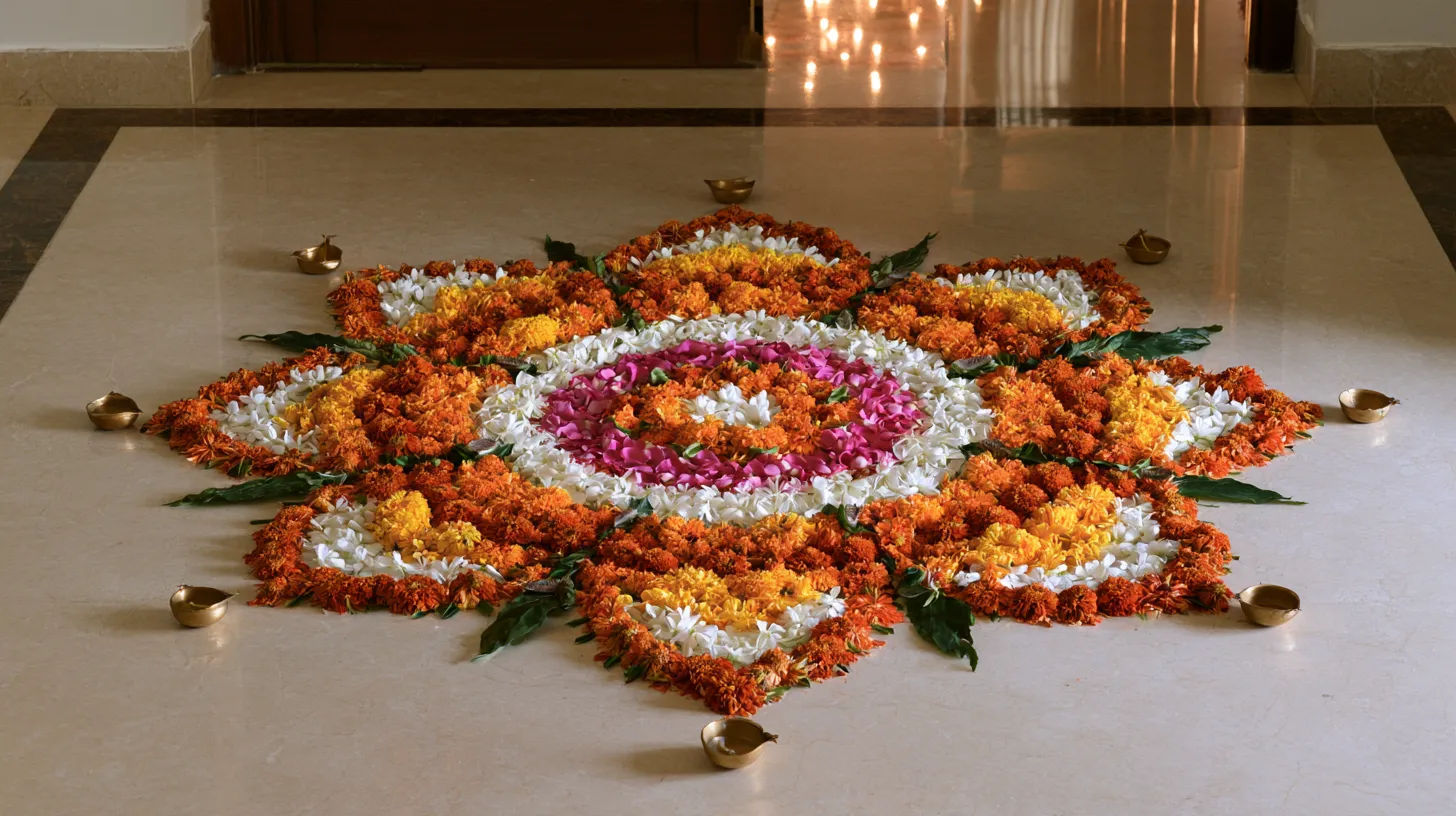
Sweep and mop the tile floor thoroughly to create a clean canvas. Lightly sketch your main geometric outline using a piece of white chalk. Separate your petals into shallow bowls by colour: yellow marigold, orange marigold, red rose, white chrysanthemum, and green leaves.
Work from the center dot outward, packing petals closely together so no floor shows through. Outline the outer geometric edges with dark green mango or ashoka leaves to lock the pattern visually, then set a lit clay lamp in the center. Mist the design gently with water once finished to keep the petals weighted down.
Designs That Work
- Concentric Marigold Rings: Alternating circles of bright orange and deep yellow petals centered around a red rose core. Simple, forgiving to assemble, and visually striking.
- Lotus Pattern: Pink rose petals arranged in teardrop shapes to form a lotus motif, set against a background of crushed green leaves.
- Diya Silhouette: A large lamp outline filled with yellow marigold petals, featuring a flame shape built from red rose petals and orange marigolds.
- Kolam Border Hybrid: Draw a fine white rice-flour kolam pattern first, then fill the open geometric gaps with colourful petals for a South Indian touch.
Keep loose petal paths clear of main walking routes so guests do not slip or scatter the design across the hallway.
Flower Decoration with Diyas
Pairing natural blooms with glowing oil lamps creates a balance between soft organic texture and warm directional light.
Marigold Ring Diyas
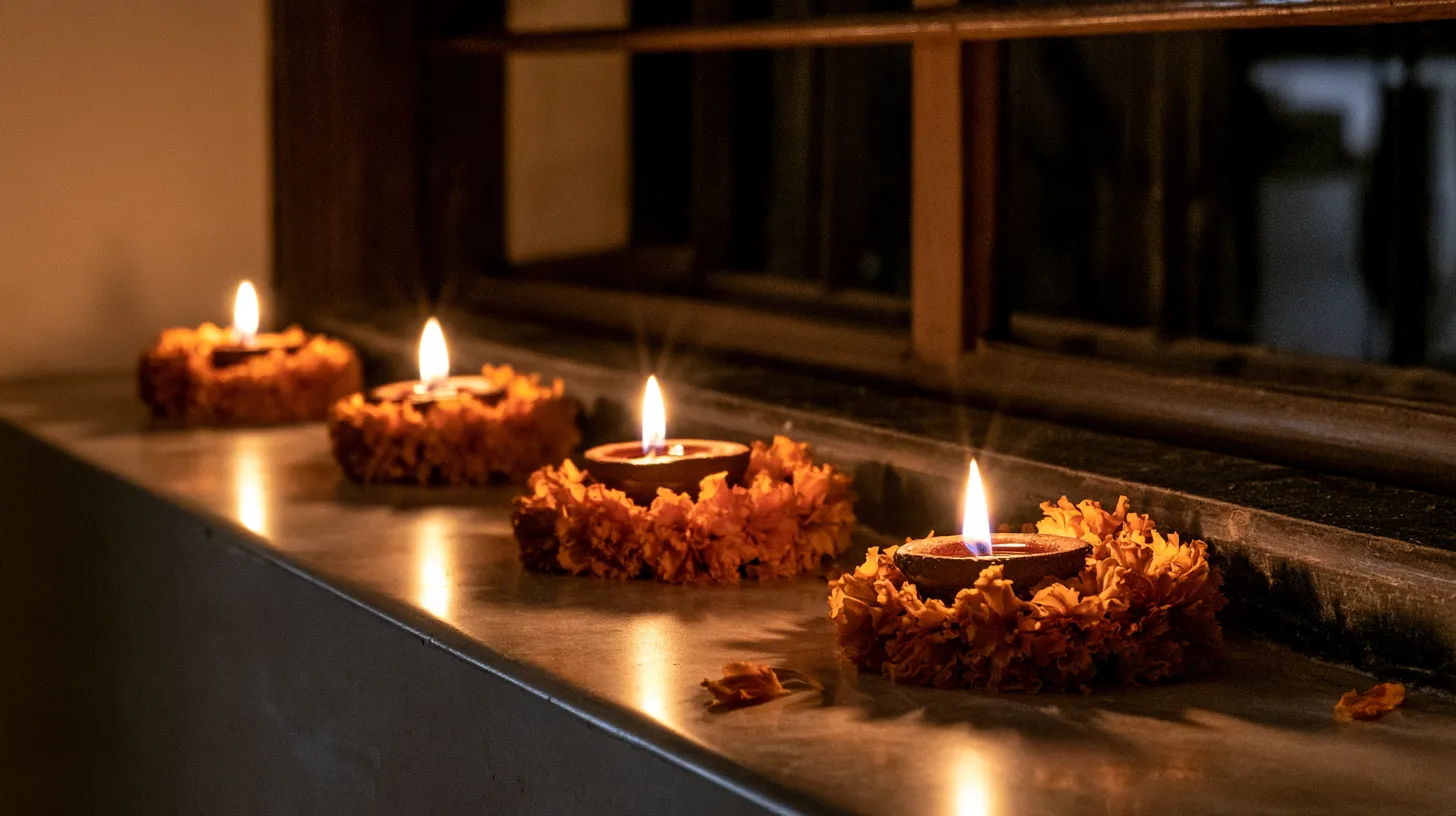
Set individual clay or painted diyas inside a tight ring of orange marigold heads placed on brass plates or floor tiles. Arranging a row of these framed lamps along window ledges or balcony parapets creates a beautiful reflection from the street.
Diwali Floating Diyas with Flowers
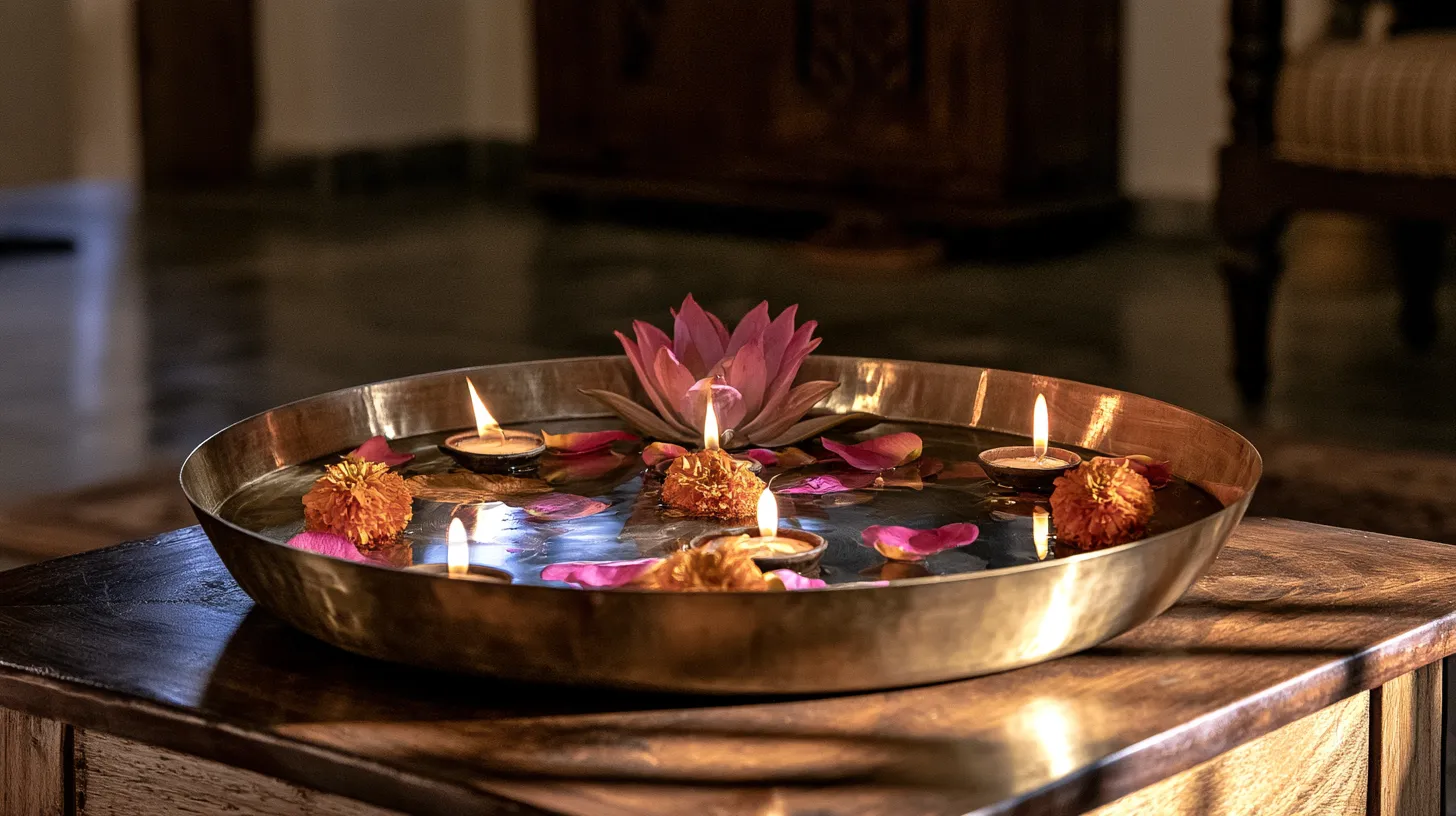
Fill a wide brass bowl, glass dish, or metal basin with fresh water. Scatter loose rose and marigold petals across the surface, add a few whole flower heads, and set floating wax tea-lights in foil cups right in the middle. Placing a single open lotus at the center creates an ideal display for Lakshmi Puja night.
Petal-Lined Diya Path
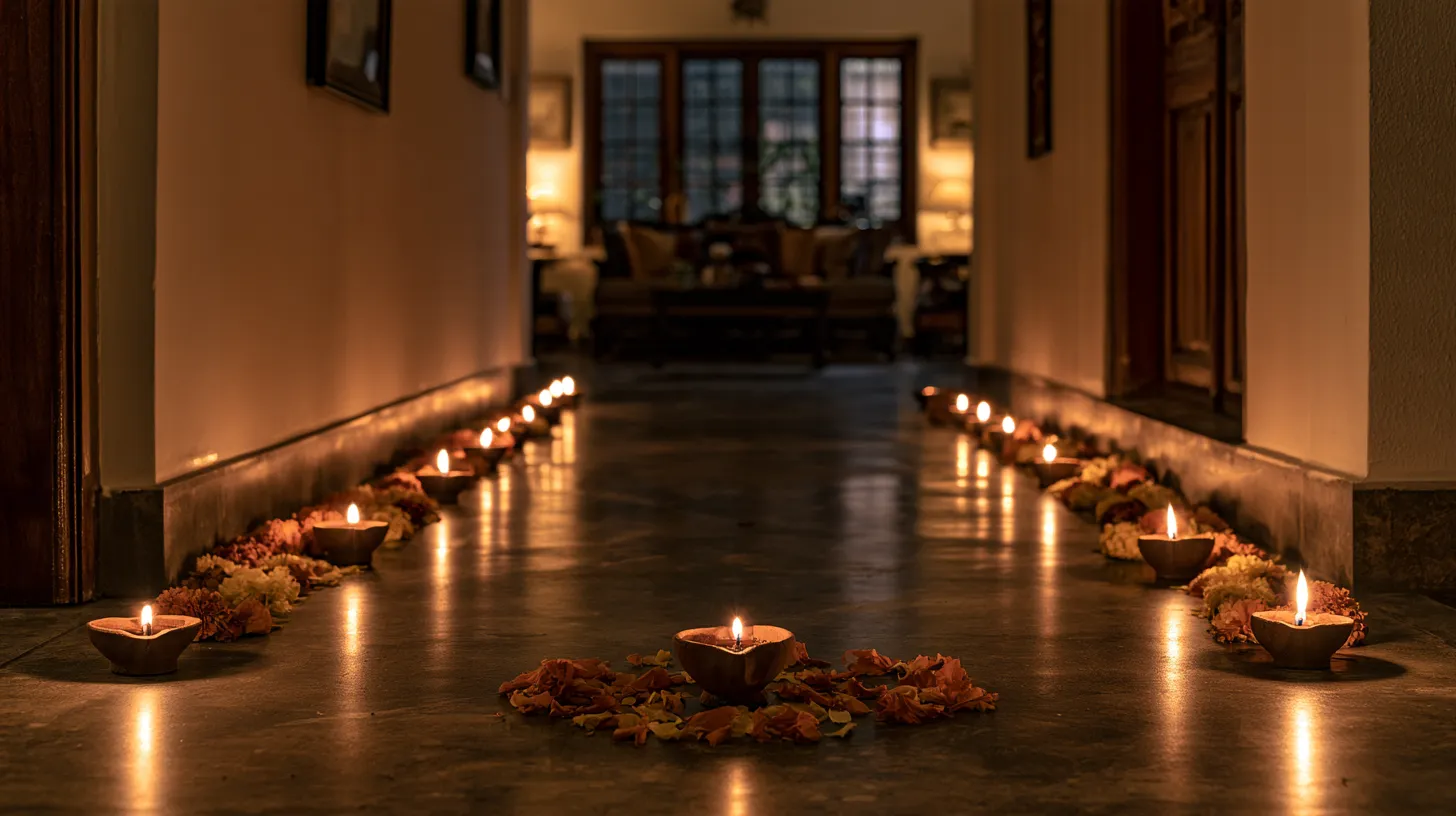
Line the walking path from your entrance gate or lobby to the front door with oil lamps, filling the open gaps between each lamp with loose marigold petals. For indoor hallways, swap open oil lamps for battery-operated LED tea-lights to keep long dupattas or curtains safe.
Flower and Diya Tray
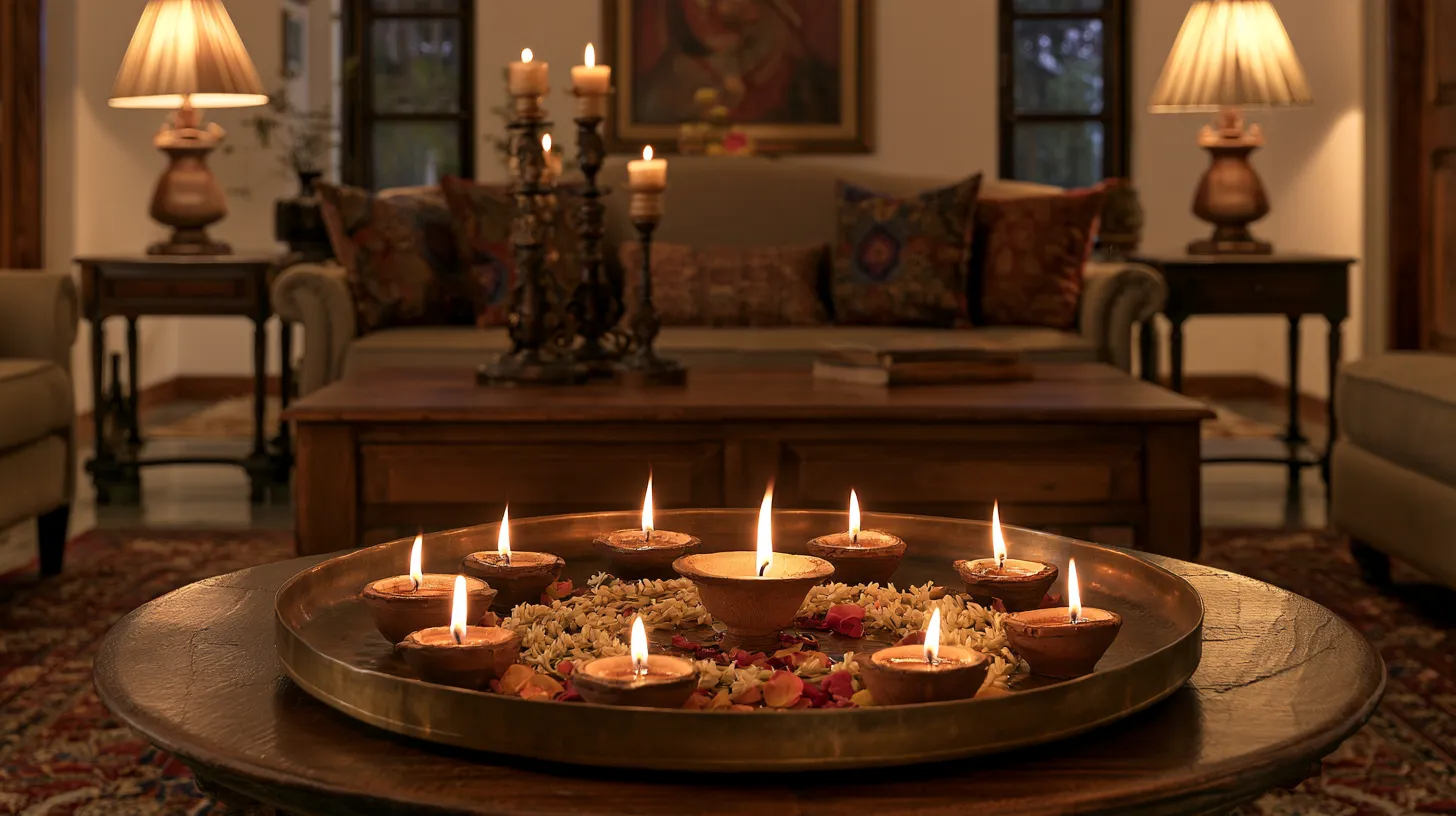
Arrange five, eleven, or twenty-one lamps across a wide brass tray, weaving short mogra or jasmine strands around the bases. This serves as a quick coffee table centerpiece during the evening and doubles as an aarti plate for prayers.
Safety Warning: Keep dry petals, leaves, and hanging garlands at least a hand’s width away from open flames. Dry marigolds can ignite quickly if a breeze pushes the flame.
Flower Decoration for Lakshmi Pooja
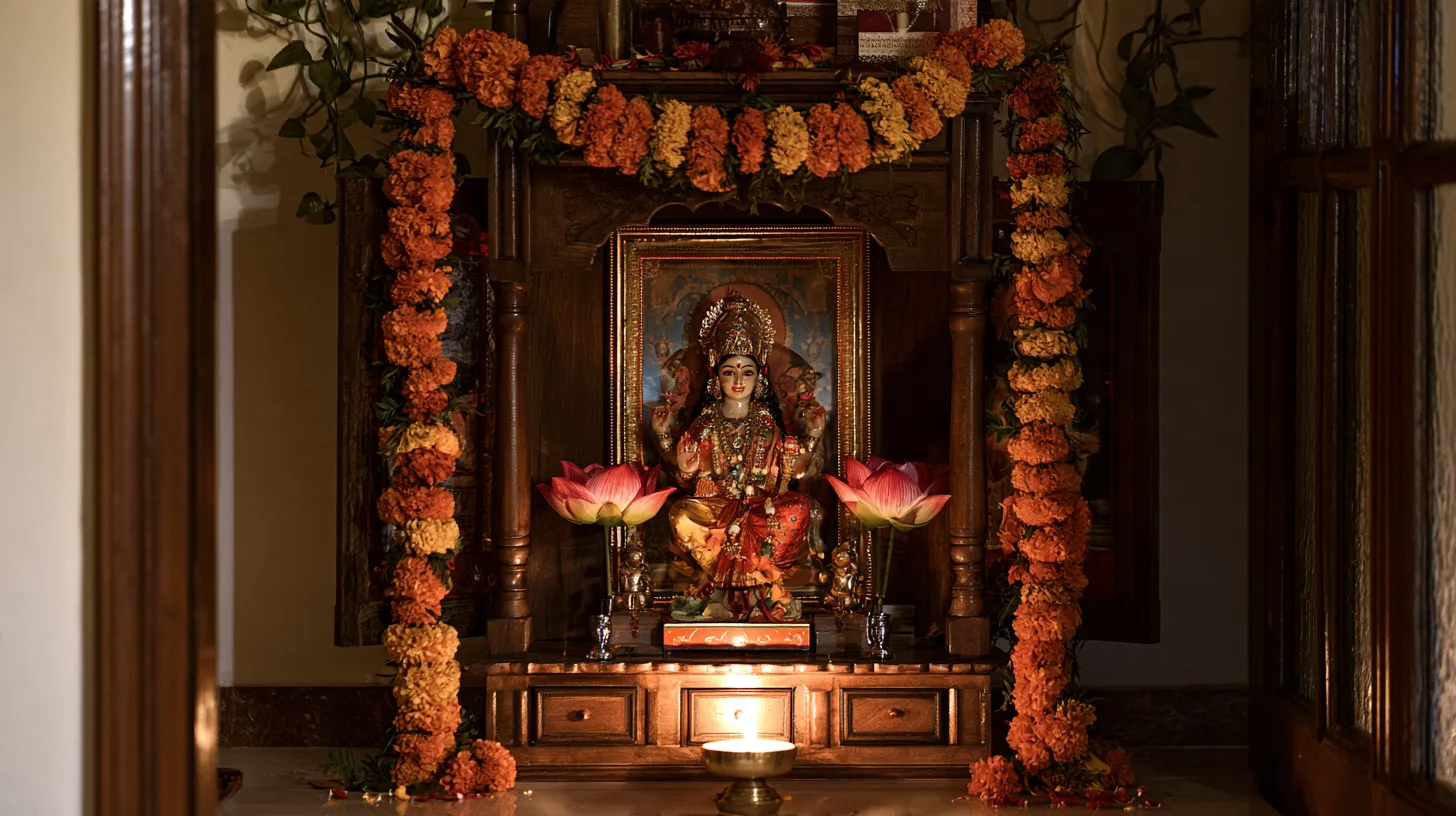
The prayer area calls for high-contrast, immaculate blooms arranged with restraint to keep the altar feeling calm and dignified.
- Mandir Frame and Backdrop: Drape fresh marigold garlands across the top arch and sides of your prayer unit. If you have a plain wall behind the idols, hang a few vertical strands of white rajnigandha or marigold spaced evenly apart to build a soft backdrop curtain.
- Garlands for the Idols: Use fine mogra, small-headed marigolds, or delicate rose garlands proportioned to fit each idol. Red and yellow are traditionally offered to Goddess Lakshmi and Lord Ganesha.
- Lotus Setup: The lotus represents the sacred seat of Goddess Lakshmi, making it deeply symbolic for the main puja. Place one or three lotus stems directly in front of the deity, float one in your water urli, or rest a bud on the kalash. If the lotus buds arrive tightly closed, gently peel back the outer green sepals with your fingers an hour before prayers begin.
- Puja Thali Styling: Circle the outer rim of your metal prayer thali with fresh rose petals and a tight strand of mogra. Place your diya, roli, rice, and sweets right in the center, filling any remaining gaps with loose marigold heads.
Diwali Wall Decoration with Flowers
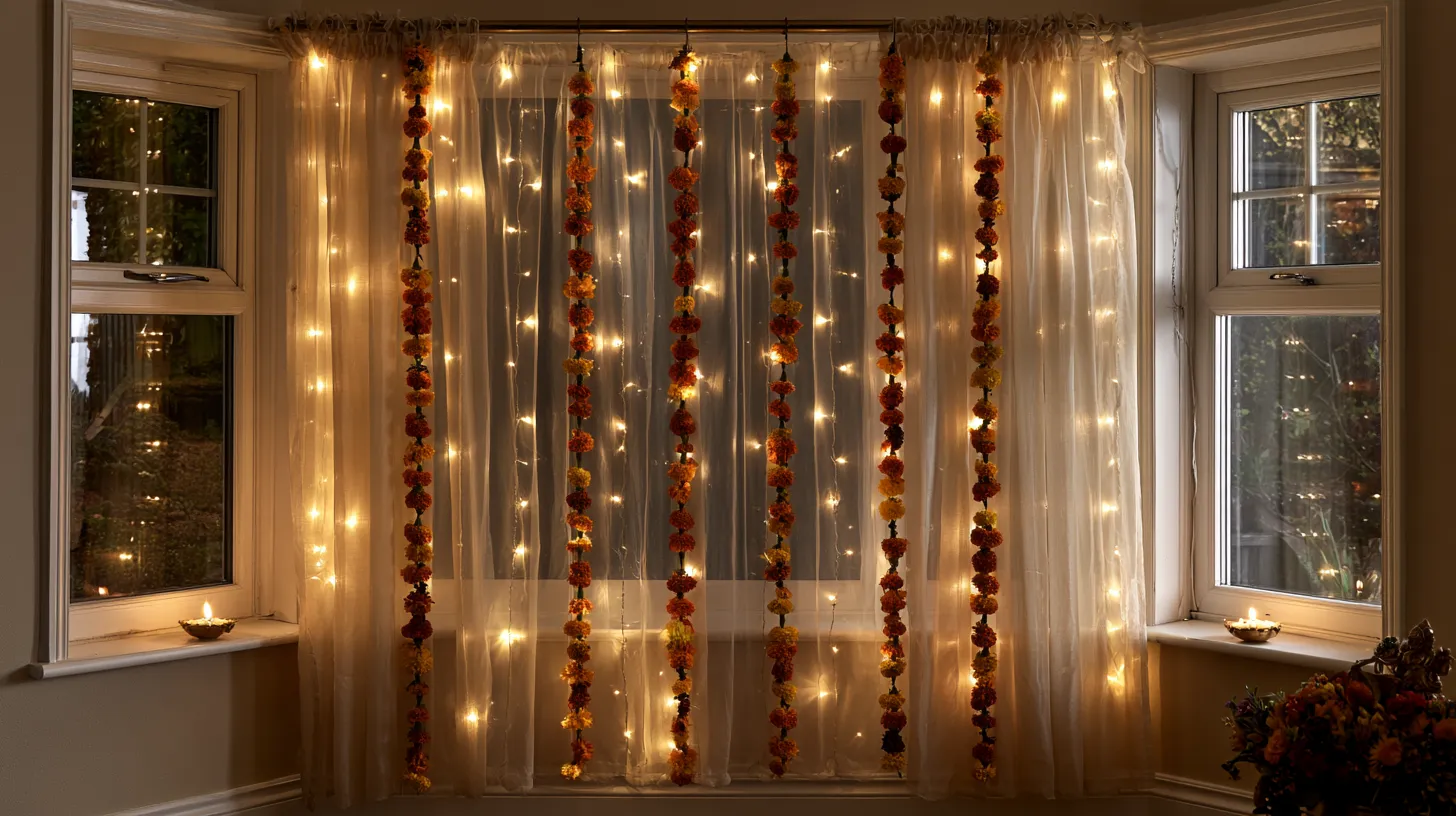
In compact city apartments where floor space is limited, vertical walls offer plenty of room for bold floral features.
- Marigold Ladi Backdrop: Hang vertical marigold strands (about five to six feet long) close together against a bare living room wall. Place a low wooden bench with brass lamps in front of it to create a simple, vibrant backdrop for family photographs.
- Flower and Fairy-Light Curtain: Alternate vertical marigold strands with warm-white fairy light strings behind sheer window drapes for a glowing feature wall.
- Floral Wreath: Secure marigold and rose heads onto a round rattan or wire hoop using thin green florist wire, then hang the wreath on a focal wall or the door to your prayer room.
- Staircase Railings: Wrap long marigold garlands along outdoor or indoor stair railings, tying the strands with natural thread at every few posts.
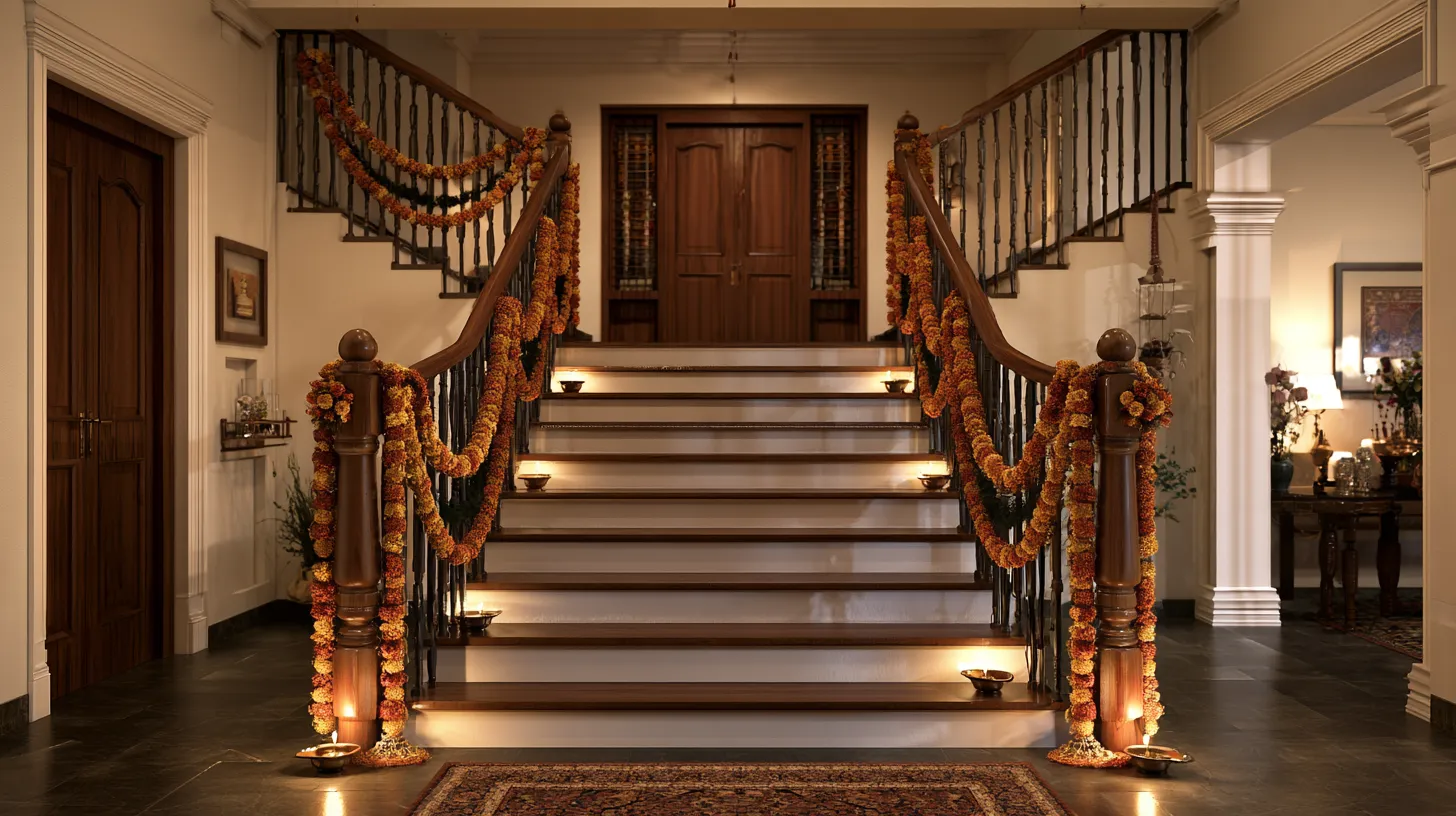
When mounting wall hangings in rented flats, use high-quality damage-free adhesive hooks to protect your wall paint.
Diwali Floral Arrangements for the Living Room and Dining Table
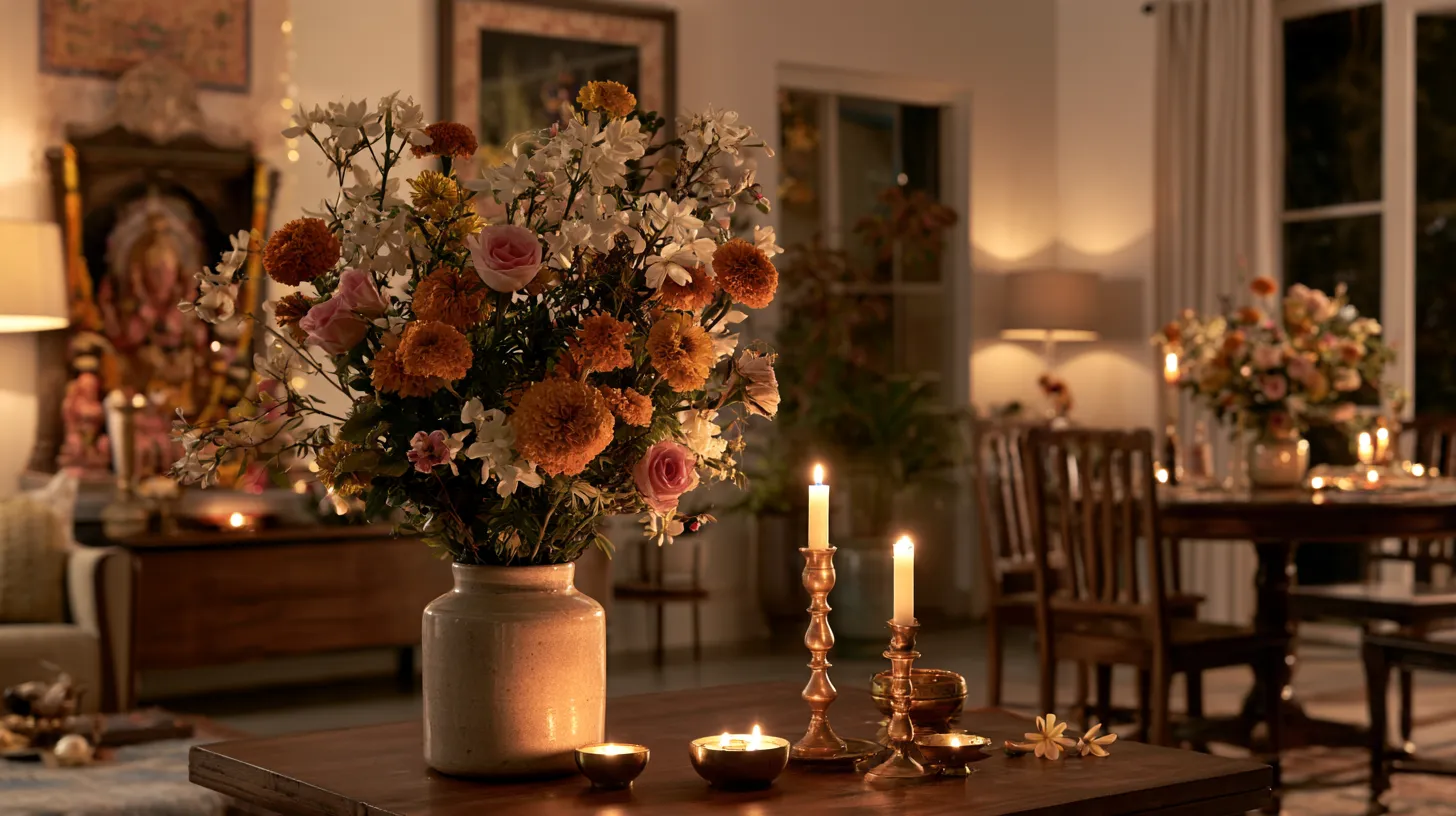
Vase-based floral displays stay fresh much longer than strung garlands, keeping your living space festive straight through to Bhai Dooj.
- Rajnigandha in Brass Vessels: Place tall tuberose stalks inside a polished brass or copper vessel. They add height while releasing a sweet fragrance throughout the living room every evening.
- Low Dining Table Bowls: Build low-profile arrangements using rose heads, marigold petals, and green leaves in shallow ceramic dishes. Keeping the arrangement low ensures guests can talk easily across the table during dinner.
- Orchids for Modern Spaces: A single stem of white or purple orchids set inside a clear glass cylinder complements minimalist, contemporary interiors effortlessly.
- Potted Chrysanthemums: Place a pair of potted shevanti plants near the sofa or along the balcony. They require simple watering and continue blooming long after the festival ends.
Diwali Flower Decoration for Office
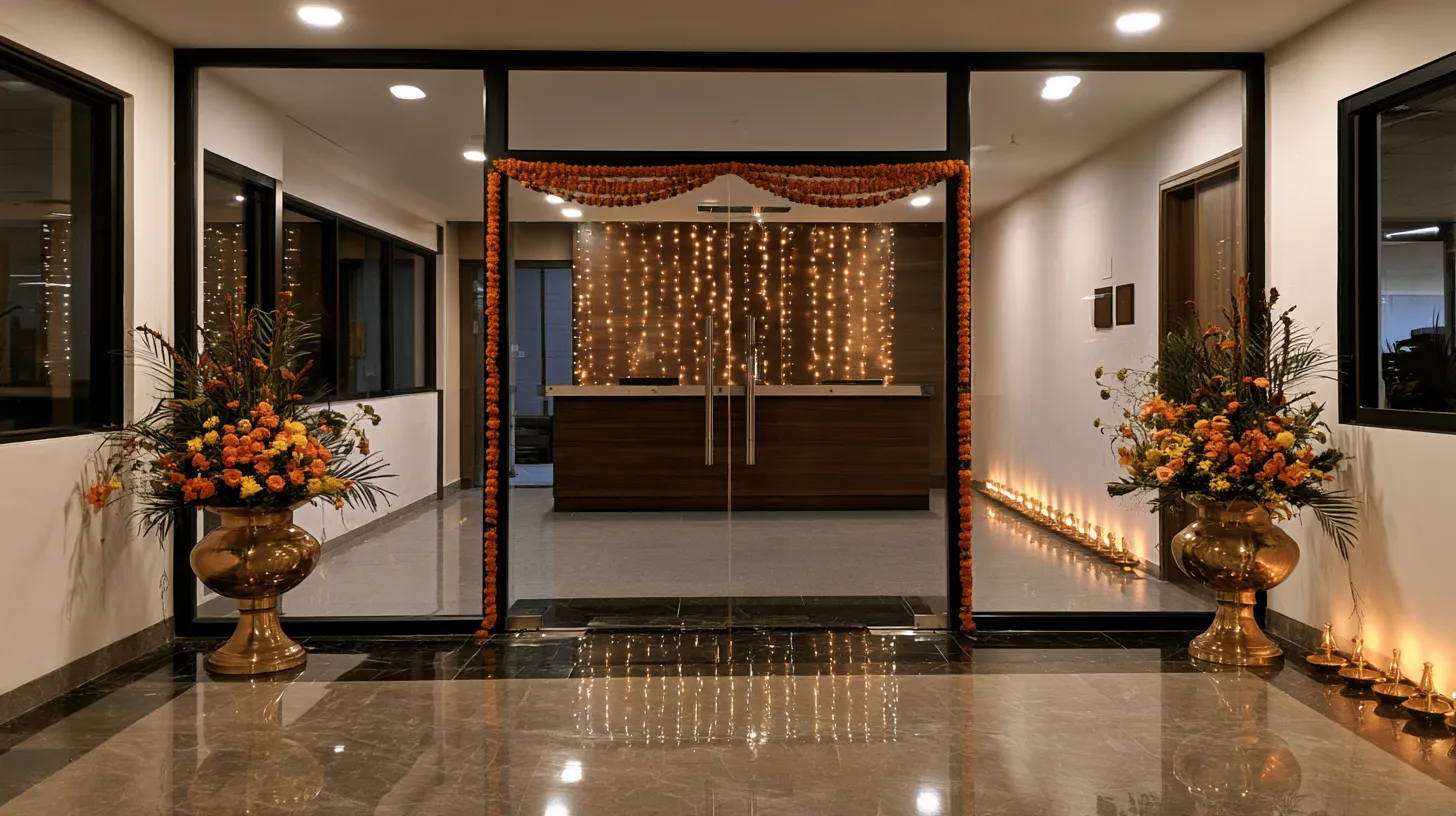
Office spaces require floral setups that look professional, hold up well over several days, and do not overwhelm air-conditioned rooms with heavy scents.
- Hang a clean marigold and mango-leaf toran across the main reception entryway and glass doors.
- Set a large brass urli filled with water, floating petals, and battery-operated LED floating votives right on the main reception desk.
- Place a small ceramic bud vase holding a single marigold and a sprig of green on individual work desks.
- Build a flower-petal rangoli near the main elevator lobby or reception entrance so it can be swept away cleanly at the end of the work day.
- Opt for long-lasting orchids, rajnigandha, or high-end artificial fabric garlands for setups that need to stay up all week.
Avoid heavily fragrant blooms like mogra in enclosed, central-air meeting rooms, as strong scents can cause discomfort during long work hours.
Simple Flower Decoration for Diwali
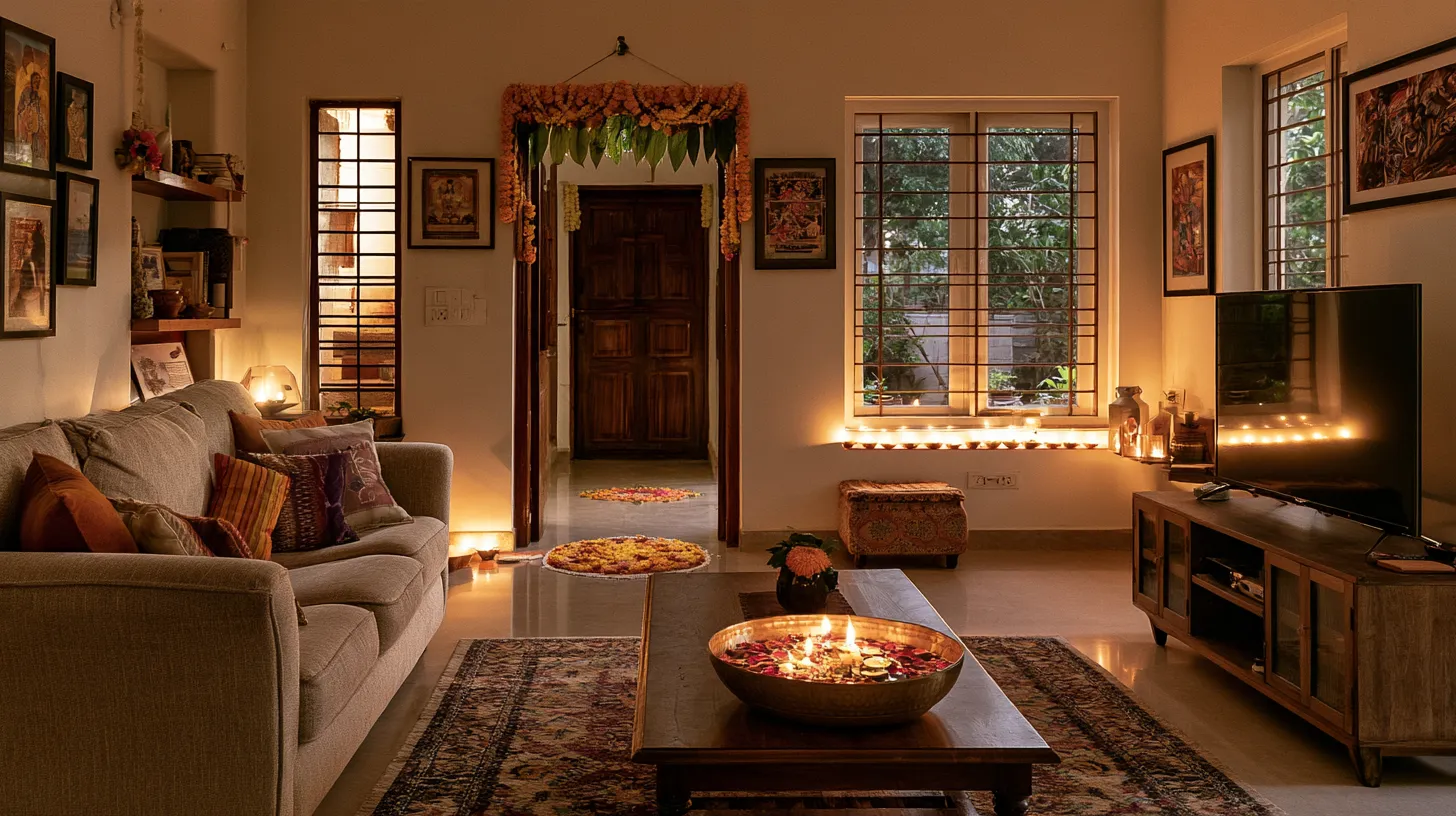
Short on time or working with a modest budget? You can execute a clean, curated setup with just two kilograms of marigolds and an hour of effort:
- Hang one marigold and mango-leaf toran on the main entrance door.
- Lay a small two-foot flower-petal rangoli right at the threshold.
- Frame eleven clay diyas with individual rings of orange marigold heads along window sills.
- Set a shallow bowl of water with floating petals and tea-lights on your main coffee table.
- Place one short mogra strand in the prayer area.
This basic routine covers the entrance, the floors, the lamps, and the mandir, bringing an authentic holiday mood to your space without unnecessary stress.
Artificial Flowers for Diwali Decoration
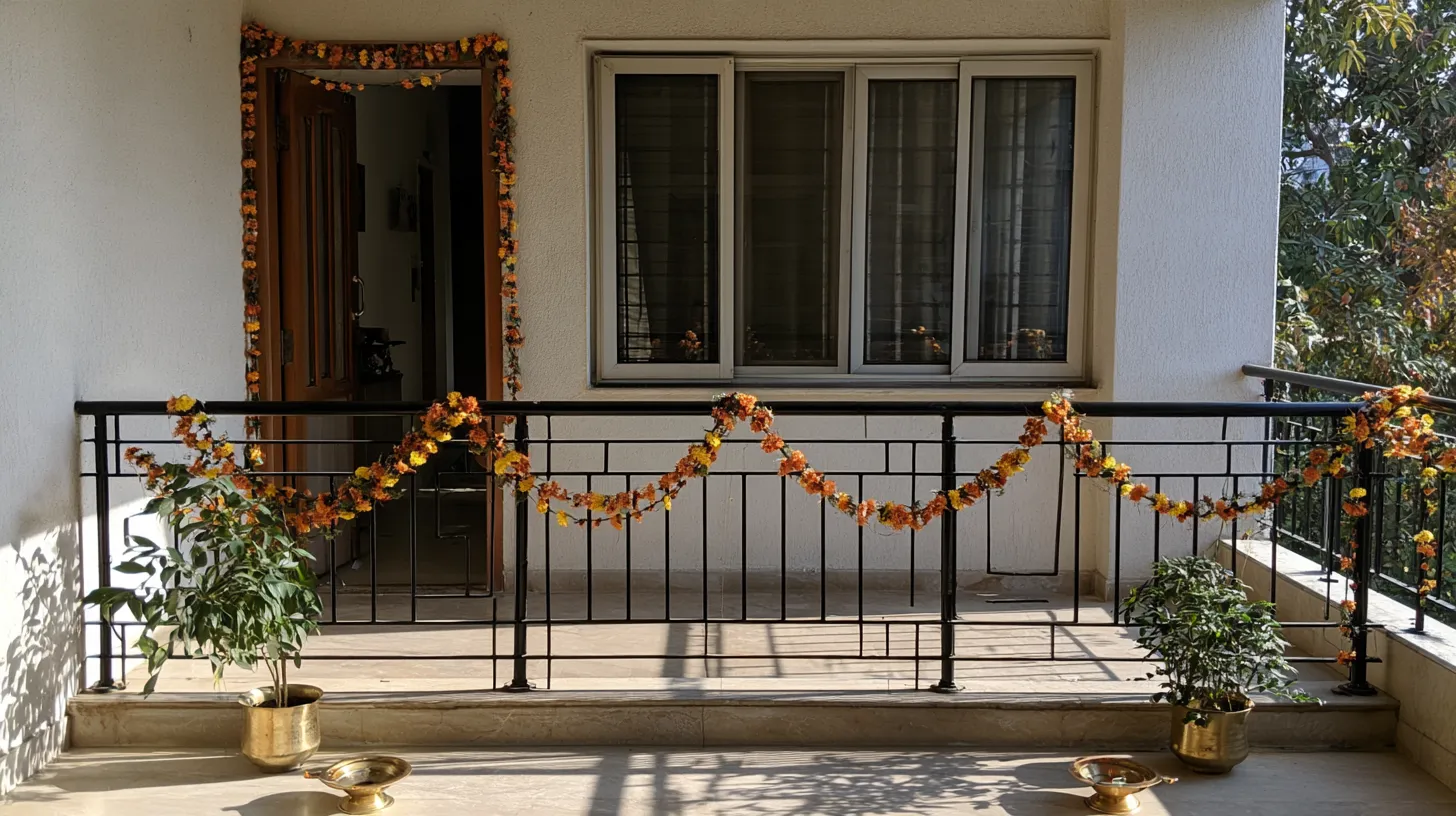
High-quality artificial flowers make practical sense in locations where natural blooms wilt quickly, such as sunny balconies, high structural beams, or office spaces that remain closed over the extended weekend.
| Feature | Fresh Flowers | Artificial Flowers |
| Fragrance & Feel | Authentic natural scent and soft texture | Visual colour without fragrance |
| Lifespan | 1 to 3 days depending on care | Lasts for years when stored well |
| Puja Suitability | Essential for altar offerings and rituals | Ideal for door frames and backdrops |
| Cost Structure | Recurring seasonal expense | One-time investment, reusable |
| Environmental Impact | Fully compostable natural waste | Fabric or plastic; reuse to minimize waste |
A balanced approach works best: use durable fabric marigold garlands for high balcony railings or outdoor gates, and save real marigolds, roses, and lotus for the main door, floor rangolis, and prayer altar. Choose matte fabric flowers over shiny plastic versions so they look natural in family photos.
Eco-Friendly Flower Decoration Tips
- Estimate your needs: Plan your requirements by spot beforehand to avoid over-buying flowers that end up in the bin.
- Compost spent blooms: Collect used marigolds and petals after the festival and add them directly to your home compost bin or garden beds.
- Use natural thread: String your garlands using natural cotton thread or jute twine instead of plastic fishing line.
- Opt for potted plants: Buy flowering potted chrysanthemums or marigolds that keep blooming on your balcony long after Diwali.
- Dispose of puja flowers thoughtfully: Return sacred mandir flowers to garden soil or community compost collection points rather than throwing them into household trash.
Interior Company Tip: Plan the Spots Before the Flowers
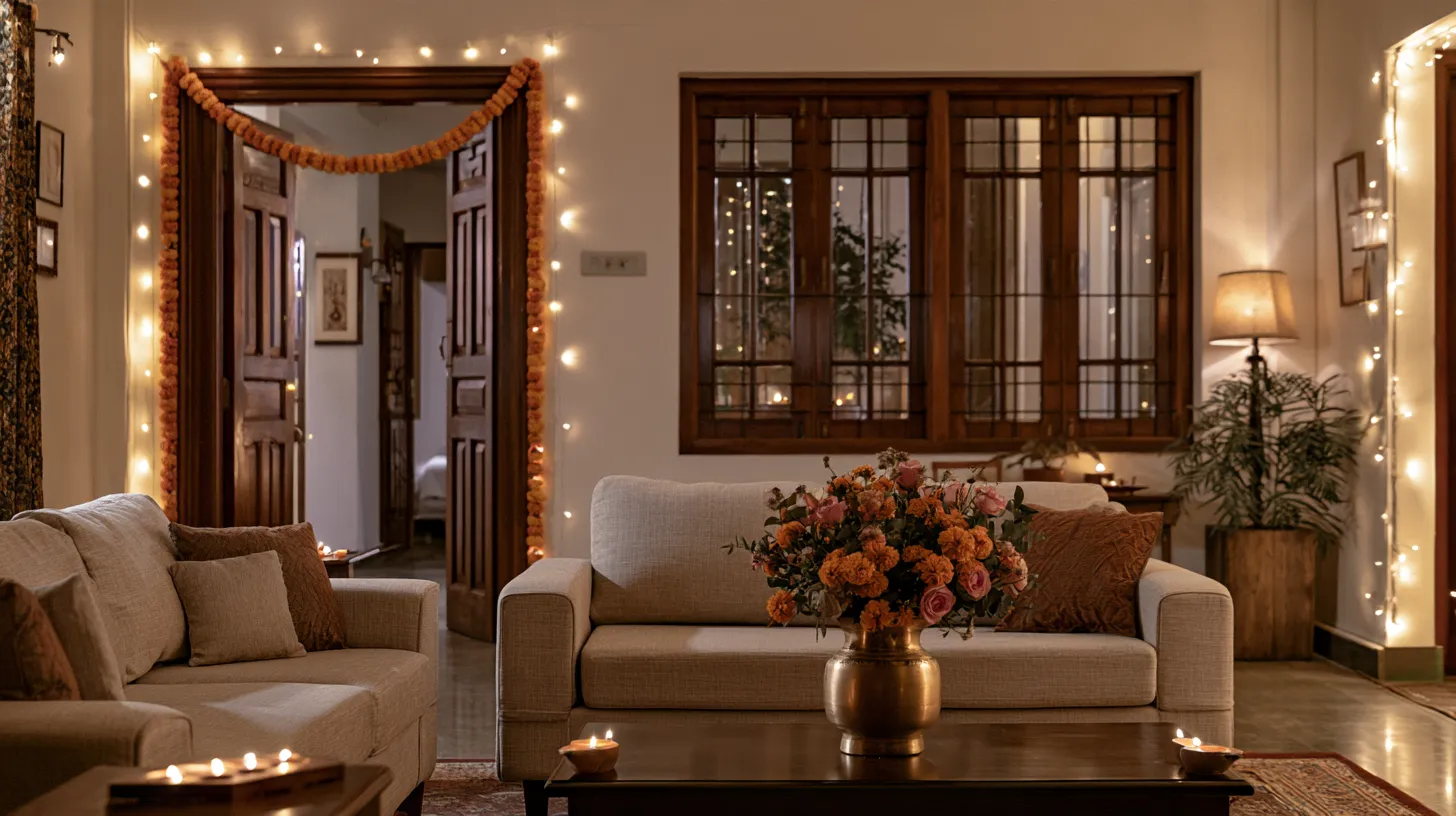
Floral decor always looks best when a home features built-in spots designed to hold it. Installing discreet brass hooks above main door frames for torans, creating stone ledges inside prayer units, and keeping entryway consoles uncluttered makes seasonal decorating effortless. When designing new home interiors, incorporating these small architectural details saves you from resorting to makeshift fixes every year.
Conclusion
Creating memorable Diwali flower decorations is not about buying out the market. It comes down to sourcing the right varieties a day early, keeping them cool, and placing them where they matter most: the front entrance, the doorway rangoli, around your oil lamps, and within the mandir.
Start with those core areas, then add a simple vase arrangement or wall backdrop if time permits. For more room-by-room styling advice across your home, explore our main guide on Diwali decoration ideas for home, or check out our practical tips for diya decoration ideas. Wishing you and your family a bright, fragrant, and Happy Diwali!

Ready for a home transformation?
Let our designers assist you!
Recent Posts









A marigold and mango-leaf toran at the front door, a loose flower-petal rangoli at the entryway, clay diyas framed by marigold rings, a wide urli filled with floating petals and tea-lights, and fresh lotus stems placed at the Lakshmi Puja altar cover all the primary festive spots in most homes.
Orange and yellow marigolds (genda phool) are the most popular due to their durability and bright color. Red roses, fragrant mogra, lotus, tuberose (rajnigandha), and chrysanthemums (shevanti) are also widely used alongside fresh green mango or ashoka leaves.
Hang a single marigold toran over the main entrance, place a small petal rangoli inside the doorway, frame eleven clay lamps with marigold heads, and set a floating petal bowl on your coffee table. This entire setup takes under an hour and uses just one or two kilograms of flowers.
String a marigold and mango-leaf garland taut across the top frame of your main entrance, run matching garlands down both sides, and tuck red roses or white mogra into the central point. Complete the threshold with a low urli bowl filled with water, petals, and floating tea-lights.
Outline your pattern on a clean floor using white chalk, separate your petals by color into small bowls, and fill the design from the center outward, packing the petals closely together. Edge the outer lines with green leaves, place a lit diya in the middle, and mist lightly with water to keep the petals fresh.
The lotus is considered the most auspicious flower for Lakshmi Puja as it represents Goddess Lakshmi’s seat. Red roses, yellow marigolds, and white mogra strands are also widely used for idol garlands, thali setups, and framing the mandir.
Buy your flowers a day early, wrap them in damp cotton cloth or newspaper, and store them in a cool, dark room or the vegetable crisper drawer of your fridge. Hang garlands on the morning of the main puja and lightly mist them with water in the afternoon.
Place individual lit diyas inside a ring of marigold heads on brass plates, float wax tea-lights among rose and marigold petals inside a water-filled urli, or line a brass tray with diyas interspaced with mogra strands. Always keep dry petals at least a hand’s width away from open flames.
Artificial fabric flowers work well for outdoor balconies, main entrance gates, and office setups where natural blooms wilt quickly in heat or sunlight. Use real flowers for the prayer altar, floor rangolis, and ritual offerings.
Hang marigold torans across reception glass doors, set a brass urli with floating petals and LED votives at the reception counter, place bud vases on individual desks, and create a petal rangoli near the main elevator lobby.
Related Category
- Bedroom
- Indoor Plants
- Lighting
- Living Room
- Tips and Advice