
- Design Ideas
- Cities
- Trends
- Guides
- Price Calculators
- Interior DesignersNEW
- Our Portfolio
- More


- Home
- Interior Design Ideas
- Tv Units Design Ideas
- Brown TV Unit Design Ideas
Brown TV Unit Design Ideas
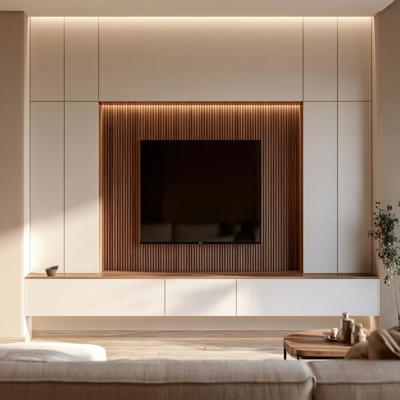
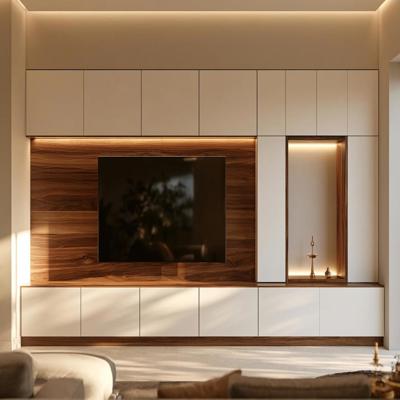
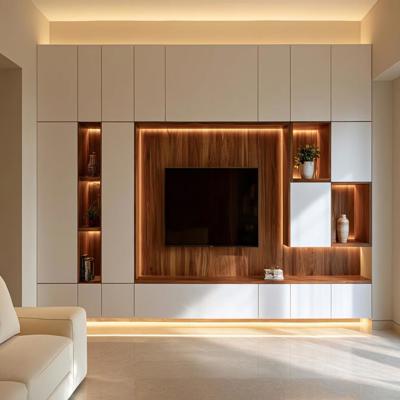
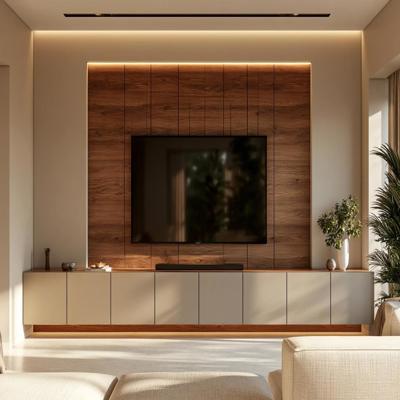
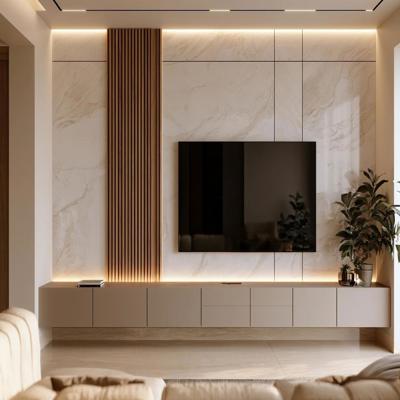
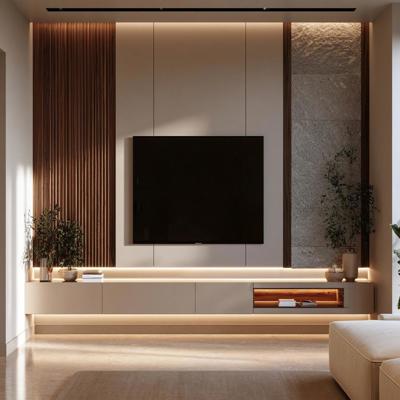
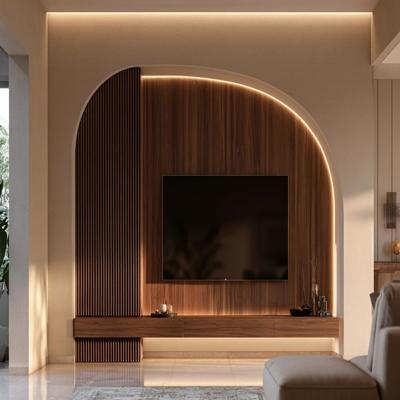
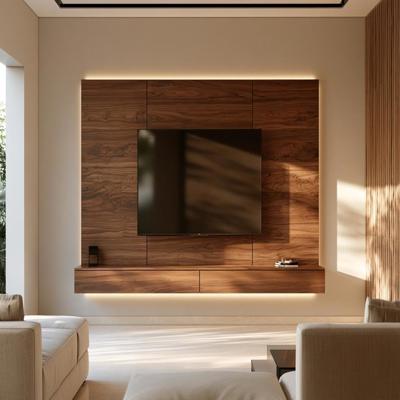
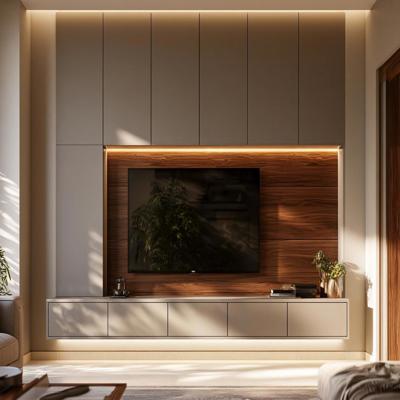
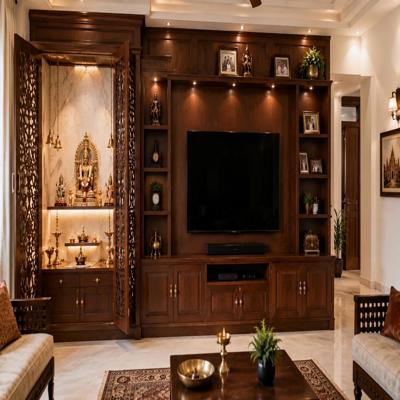
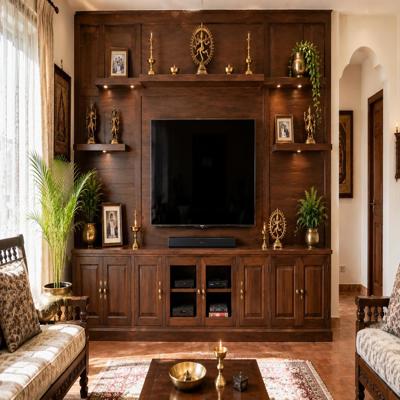
A brown TV unit uses natural wood-tone finishes to make the TV cabinet feel like a genuine piece of furniture rather than purely functional storage, a distinction that matters in Indian living rooms where wood furniture already carries significant visual weight. A brown colour TV unit works especially well in homes with existing wooden furniture, dining tables, bookshelves, and wooden flooring, since it extends that same material language to the TV area instead of introducing an unrelated laminate colour. At Interior Company, brown TV cabinet work uses wood-grain laminate rather than solid wood, delivering the same warm look at lower cost and with better resistance to daily wear. A brown tv unit design built this way suits both traditional Indian interiors and more contemporary spaces wanting one warm material accent against an otherwise neutral room. A brown tv panel design extending onto the wall behind the unit ties the whole media wall into the same wood-tone language rather than treating the cabinet as an isolated piece. Find a wood tone and finish that matches your existing furniture....Read More
Filter







Vastu Insights by Our Experts
Watch our designers decode the balance between design, energy, and harmony for your home.









TV Units Design Ideas for You
- Color
- Theme
- Red Color Tv Units Design
- Beige Color Tv Units Design
- Off White Color Tv Units Design
- Olive Green Color Tv Units Design
- Orange Color Tv Units Design
- Peach Color Tv Units Design
- Pink Color Tv Units Design
- Pista Green Color Tv Units Design
- Purple Color Tv Units Design
- Neutral Color Tv Units Design
- Royal Blue Color Tv Units Design
- Skin Color Tv Units Design
- Teal Color Tv Units Design
- Terracotta Color Tv Units Design
- White Color Tv Units Design
- Wooden Brown Color Tv Units Design
- Yellow Color Tv Units Design
- Grey Color Tv Units Design
- Black Color Tv Units Design
- Blue Color Tv Units Design
- Dark Blue Color Tv Units Design
- Gold Color Tv Units Design
- Green Color Tv Units Design
- Navy Blue Color Tv Units Design
- Ivory Color Tv Units Design
- Light Beige Color Tv Units Design
- Mint Green Color Tv Units Design
- Multi-Colour Color Tv Units Design
- Multicolour Color Tv Units Design
- Natural Brown Color Tv Units Design
Rejuvenate Your Space with a Variety of Options
- Color + Theme


A TV is usually the most used thing in a living room. But many homes still treat it like an afterthought. A plain wall with visible wires and random shelves. A good TV panel des
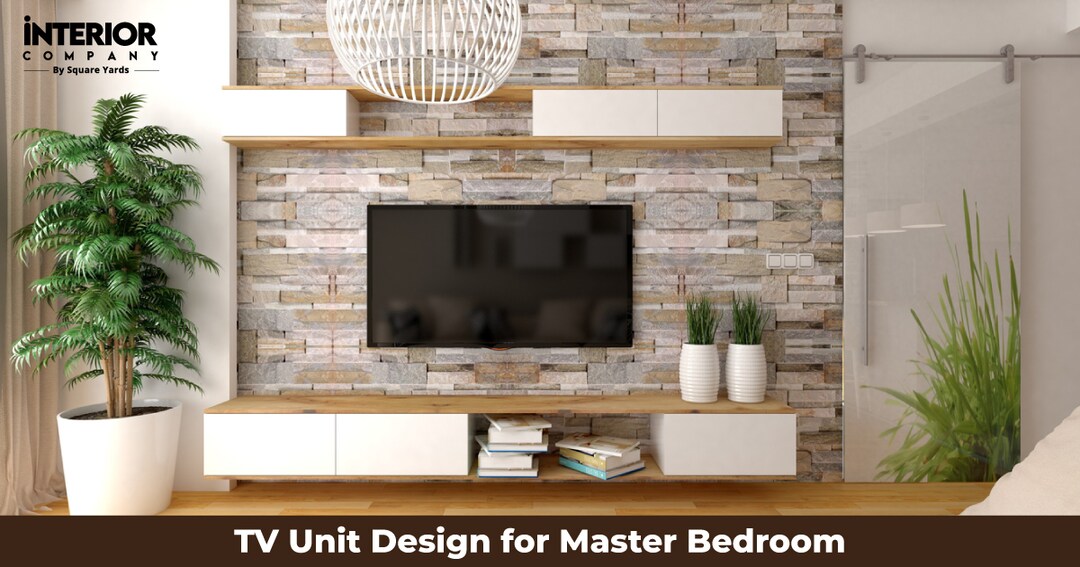
Create an amazing bedroom TV unit design that helps you visualise and add up to your streaming experience.
The bedroom is where you head after an exhausting, busy day. An
The living room is often considered the heart of a home, where people can relax, entertain and connect with one another. Families spend time catching up, watching movies, and un
Brown TV Unit Design Ideas for Indian Homes
Choosing a brown tv unit design is not really a colour decision. It is a material matching exercise. White TV unit designs, black TV unit designs, and grey TV unit designs each represent a finish choice that can work independently of what else is in the room. Brown does not work that way. The question is not whether you like the colour; it is what wood tones are already on the floor, in the furniture, and on the ceiling, and how closely the unit's shade can match or complement those tones.
Beige TV unit designs come closest to brown in the neutral palette, but beige is a painted or laminate colour that sits near wood rather than reading as wood. A brown-coloured TV unit goes further: it uses a wood-grain finish that actively reads as furniture material rather than cabinet colour. In homes where the living room already has wooden furniture, this distinction is what makes a brown TV unit feel like part of the room rather than an addition to it.
What Is a Brown TV Unit Design?
TV unit design in brown colour uses wood-grain finishes, ranging from light honey tones to deep walnut, to give the cabinet a natural, furniture-like appearance rather than a flat, painted surface.
- TV unit design brown work spans a genuinely wide tonal range, from light oak-style finishes at roughly 40 to 50% lightness to much darker walnut or teak tones closer to 15 to 20%, letting the exact shade be matched to existing furniture rather than settling for an approximate match.
- A brown TV cabinet design typically uses the wood-grain finish across the entire visible cabinet body, sometimes paired with a contrasting matte black hardware detail or metal pull for definition against the warm surface.
- Unlike white, black, or grey, which are finish colour choices that can stand independently in any room, brown TV units are fundamentally about matching or complementing existing wood material in the room. This makes shade selection more consequential here than for any other colour in this cluster.
- One caveat worth naming: a mismatched brown can look more jarring than a neutral colour that simply doesn't match anything specific. A grey unit in a room with warm wood floors reads as a deliberate contrast. A brown unit that clashes with the floor reads as a mistake.
Brown TV Cabinet: Material and Finish Choices
A brown TV cabinet can use genuine wood veneer, wood-grain laminate, or a combination of both, each offering a different balance of cost, durability, and authenticity. Wooden brown TV unit designs and natural brown TV unit designs represent two distinct shade families within the broader brown range, the former leaning warmer and more orange-toned, the latter cooler and closer to raw timber.
- Wood-grain laminate delivers a convincing brown wood-tone look at a considerably lower cost than genuine timber, with better resistance to daily scratches and moisture than solid wood. For most households, this is the practical choice.
- Genuine wood veneer provides the most authentic texture and grain pattern, usually reserved for a single accent panel or the unit's front face rather than the entire structure, given the higher material and finishing cost.
- Matching the brown tone to existing furniture is the single most important decision in this category. Start with the wood that dominates the room, floor, dining table, or bookshelf, and match or closely complement that shade rather than choosing a brown that looks good in isolation.
Modern Brown TV Unit Design
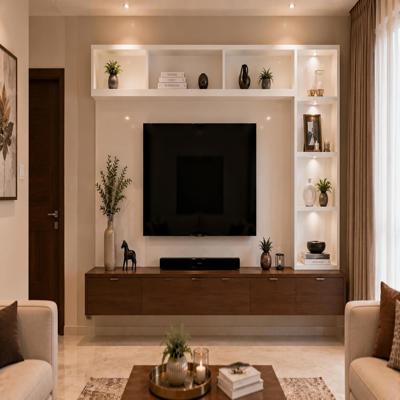
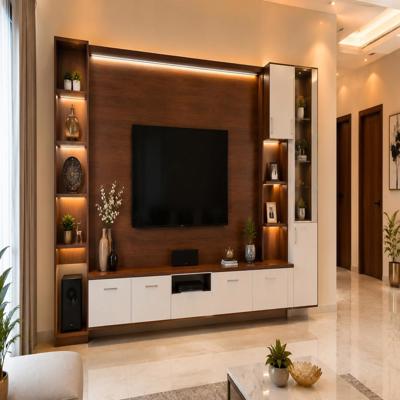
A modern brown TV unit design pairs a wood-grain finish with slim-profile edges, handleless drawers, and often a two-tone combination, brown with white tv unit designs, black TV unit designs, or grey TV unit designs, rather than an all-wood-tone unit throughout. Browse modern tv unit designs more broadly if you want to compare this approach against other finish options in the modern style.
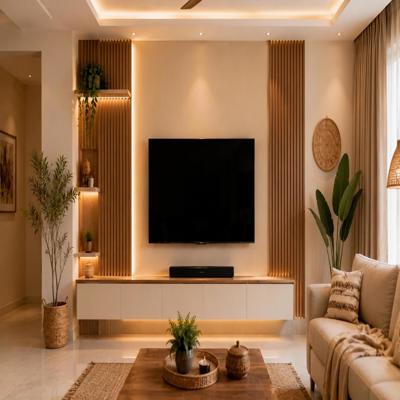
- The two-tone approach keeps the design feeling current. An entirely brown unit can read as more traditional than a household wants; a wood-tone accent against a lighter or darker neutral base reads more contemporary without abandoning the warmth that makes brown worth choosing.
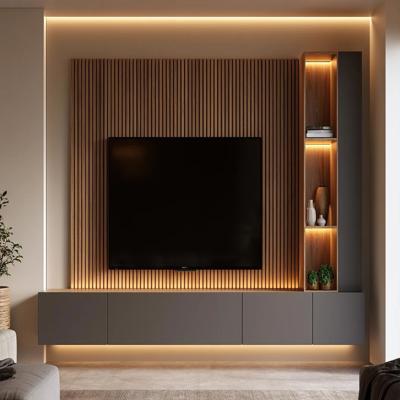
- Integrated LED lighting along the unit's underside works particularly well against darker brown or walnut tones. The strong contrast highlights the wood grain after dark in a way that lighter finishes, beige, white, or light oak , do not achieve as dramatically.
- The bottom edge of the TV should sit between 60 and 80 cm from the floor for comfortable seated viewing. A low-profile modern brown unit keeps that positioning while leaving the wood-grain surface visible rather than hidden behind a taller cabinet stack.
For alternate styles in the brown range, contemporary brown tv unit designs use ribbed or fluted wood panels and glass fronts rather than flat grain surfaces, while traditional brown tv unit designs suit homes where wood furniture already carries carved or ornamental detail. Browse contemporary TV unit designs and traditional tv unit designs to see the full style range.
Brown TV Panel Design
A brown tv panel design extends the wood-tone finish onto the wall behind the TV, creating a cohesive backdrop that ties the whole media wall into one consistent material language rather than treating the cabinet as an isolated piece against a differently finished surface.
- This wall-panel extension works especially well in living rooms with existing wood ceiling details, wooden flooring, or wood-finish furniture elsewhere. The TV wall reads as part of the same design story rather than a separate element that happened to use a similar colour.
- A slatted or fluted wood-panel texture behind the unit adds genuine depth beyond a flat wood-tone laminate surface. The shadow lines from the slats change across the day as room light shifts, giving the wall more visual presence than a continuous flat sheet would.
- For rooms without existing wood elements, the panel approach still works, but the wood tone needs to stand alone as a design choice rather than reinforcing something already present. In that case, a lighter oak or natural brown tone tends to read better than a dark walnut, which can make the TV wall feel heavier than the rest of the room.
Brown TV Unit, Stand, Rack, and Cabinet Designs for Living Room
These terms describe distinct furniture approaches, and the right one depends on how much storage, display space, and living hall design integration your room actually needs.
- A brown TV stand design typically refers to a freestanding, low unit the TV rests on or is wall-mounted above, without integrating into a fuller wall treatment. It is the right choice when the TV wall already has enough going on and you want the unit to add warmth without dominating.
- A brown TV rack design emphasizes open shelving over fully enclosed cabinets, letting the wood grain itself stay visible across open surfaces rather than being hidden behind doors. The open format also improves ventilation around AV equipment and set-top boxes.
- Brown TV cabinet designs for living room spaces should account for the room's existing wood furniture tone before finalizing the shade. Brown's whole appeal depends on this coordination rather than working as a standalone universal neutral.
Brown TV Unit Ideas Worth Considering
A few principles apply when exploring brown TV unit ideas more broadly.
- Match the exact wood tone to existing furniture in the room rather than choosing a shade that simply looks good on its own. A brown unit that coordinates with the dining table and flooring reads as intentional. One that doesn't can look like it belongs in a different house.
- Consider a two-tone combination, brown with white, black, or grey, for a more contemporary feel than an all-wood-tone unit. The neutral base anchors the design while the wood-grain section provides the warmth.
- Choose wood-grain laminate over genuine veneer for most budgets, reserving real wood veneer for a single accent panel if material authenticity matters most.
- Extend the wood tone onto the surrounding wall panel if the room already has other wood elements worth tying together visually. If the room has none, keep the wood finish to the unit itself.
At Interior Company, every brown TV unit project starts by identifying the wood tones already in the room- flooring, other furniture, ceiling details- since getting this match right is what separates a brown unit that looks intentional from one that simply looks like a different piece of furniture that ended up in the same room. Home decor design ideas across the site can help review what existing materials and tones a room is already working with before locking in a shade.
Brown TV Unit for Bedroom
A modern tv unit designs for bedroom in brown works particularly well when the bedroom already has wood furniture, a bed frame, wardrobe, or study table in a matching or complementary wood tone. The material-matching logic that applies in the living room applies just as strongly here: a brown unit that coordinates with existing bedroom wood reads as part of the room's design. A new bedroom design built around warm wood tones gives a brown TV unit the material context it needs to sit naturally rather than simply appearing dark against the wall.
Brown TV Unit with Mandir Design
Among all the TV unit colour options, brown is the strongest natural fit for a combined TV and mandir unit. Carved or ornamental mandir niches have traditionally used teak, rosewood, and dark walnut, all shades within the brown range. A wood-tone tv unit with mandir designs in a matching or complementary brown shade reads as a cohesive design choice rather than two furniture pieces awkwardly joined. The sheet identifies this as the best fit for the mandir link across the entire colour cluster, and the material reasoning backs that up.
Frequently Asked Question (FAQs)
Should my brown TV unit match my existing furniture exactly?
Ideally yes, or at least closely. Brown’s main appeal is reading as furniture rather than a standalone colour choice, so matching the tone to your existing wood furniture, flooring, or ceiling detail makes the unit feel intentional rather than mismatched. A slight variation in grain pattern is fine; laminates rarely match solid wood perfectly, and the eye accepts that. A clear tonal mismatch, say a warm honey-oak unit against dark walnut flooring, is harder to read as deliberate.
Is wood-grain laminate or genuine wood veneer better for a brown TV unit?
Wood-grain laminate is the practical choice for most homes. It delivers a convincing brown wood-tone look at considerably lower cost, resists daily scratches and moisture better than solid wood, and is easier to maintain. Genuine veneer offers the most authentic texture and grain pattern, but the cost is substantially higher and is usually applied to a single accent panel rather than the full cabinet. If authenticity matters, reserve veneer for the most visible surface, the front face or the panel behind the TV, and use laminate for the rest.
Does a brown TV unit look too traditional for a modern living room?
Not if paired thoughtfully. A modern brown TV unit design uses a two-tone combination, brown with white, black, or grey, alongside slim profile edges and handleless drawers, which keeps the look current. The wood grain provides warmth; the neutral partner keeps it from feeling heavy or dated. Avoid all-brown-tone units if the room’s other furniture leans contemporary, since an entirely wood-tone unit can read as furniture from a different decade.
What's a brown TV panel design?
It extends the wood-tone finish onto the wall behind the TV, creating a cohesive backdrop rather than treating the cabinet as an isolated piece. This works especially well in rooms with existing wood flooring, ceiling details, or furniture, since the panel ties the TV wall into the same material story. A slatted or fluted wood-panel texture adds depth beyond a flat laminate surface, with shadow lines that shift across the day as light in the room changes.
What's the difference between a brown TV stand and a brown TV rack?
A stand is a freestanding low unit the TV rests on or is mounted above, typically with closed storage below. A rack emphasizes open shelving over closed storage, letting the wood grain stay visible across open surfaces rather than being hidden behind cabinet doors. The rack format also tends to allow better ventilation around AV equipment, which matters when multiple devices are stacked in a compact space.
How do I choose the right brown shade for my TV unit?
Start with the wood tones already in your room, flooring, dining table, bookshelves, any other significant furniture and match or closely complement that shade. Light oak floors suit a unit in the same honey-to-medium range. Dark walnut or teak furniture suits a deeper brown unit. Choosing a shade that looks appealing on its own, without reference to the room, is the most common mistake in this category.
Does brown work well with LED lighting?
Yes, particularly darker brown or walnut tones. Integrated LED lighting along the unit’s underside creates strong contrast against deep wood grain, highlighting the texture and tone especially well after dark. Warm-toned LEDs at around 2700K complement brown better than cool white light at 5000K or above, which can make warm wood tones look slightly greenish under certain conditions.