- Design Ideas
- Cities
- Trends
- Guides
- Price Calculators
- Interior DesignersNEW
- Our Portfolio
- More


- Home
- Trends
- Construction
- Materials
- Cnc Cutting Designs
40+ Modern CNC Cutting Design Ideas for Indian Homes

A CNC cutting design is now a common part of modern homes. You see it on doors, walls, ceilings, and even outside elevations. Earlier, such work needed a lot of manual effort. Today, a CNC design machine cuts clean patterns with proper shape and size every time. This makes the work faster and more reliable. Many homeowners prefer modern CNC design because it suits both small flats and large houses. From simple panels to detailed CNC jali design, the options are wide. These designs are not only about looks. They also help with light flow, air movement, and space division. This blog covers popular CNC cutting design ideas, where they are used, and how to choose the right one for your home.
Table of Content
Benefits of CNC Cutting for Home Interiors
Types of CNC Cutting Designs
CNC Cutting Design for Entryway Framing Without Closing
Highlight Staircase Wall with CNC Cutting Design
CNC Cutting Design for Dining Room Passage- Built-In Artwork
CNC Design for Bedroom- Privacy Screens for Odd Corners
CNC Laser Cutting Design for Wardrobe- Updating Modular Furniture with Personality
CNC Ceiling Design- Ceilings That Filter Light Softly
Modern CNC Design for Balcony- Screens That Glow After Dark
CNC Partition Design for Kitchens That Are Semi-Open
CNC Design for Main Entrance- Exterior Echoes of Interior Patterns
Steel CNC Design for Wardrobe That Adds Elegance
CNC Cutting Sheet Design for Utility Rooms
CNC Interior Design for AC Door
CNC Cutting Design for TV Unit
Modern CNC Designs for Plain Flush Door
CNC Cutting Design for Studio Layouts That Use Pattern to Define Flow
CNC Cutting Materials Used in Homes
CNC Cutting Design Categories: By Pattern and
Applications for CNC Cutting
- 20.1 CNC Cutting Designs for Main Doors
- 20.2 CNC Designs for Safety Doors and Grills
- 20.3 CNC Cutting Designs for Pooja and Mandir Areas
- 20.4 CNC Cutting Designs for Walls and Decorative Panels
- 20.5 CNC Designs for Partitions and Dividers
- 20.6 CNC Designs for Ceilings
- 20.7 CNC Cutting Designs for Windows, Balconies, and Partitions
- 20.8 CNC Cutting Designs for Exterior, Gate, and Elevation
CNC Cutting Design
Mistakes to Avoid in CNC Cutting Design
Conclusion
Benefits of CNC Cutting for Home Interiors
One of the main reasons people choose a CNC cutting design is accuracy. The machine follows a fixed path, so every cut comes out clean and even. This helps when the design has small gaps or repeated shapes. It also saves time compared to hand work.
Another benefit is flexibility. A single CNC design can be used on doors, walls, partitions, or ceilings without changing the overall look of the house. This makes planning easier, especially in new homes.
CNC work also supports detailed patterns. Traditional symbols, jali work, and modern lines are easier to achieve with a CNC laser cutting design. Because the cuts are precise, light and air pass through better in spaces like living rooms and passages.
Material choice is another advantage. CNC works well on wood, MDF, metal, and sheets, which makes CNC woodworking designs and CNC sheet design useful for both interior and exterior areas. This mix of control, speed, and material range is why CNC designs are now widely used in homes.
Types of CNC Cutting Designs
CNC cutting designs are used in different parts of a home based on need and placement. Some designs focus on strength, while others are meant for light, privacy, or decoration. Grouping CNC designs by purpose makes it easier to understand where each type works best. It also helps avoid using the wrong pattern or material in the wrong space. Below are the most common uses of CNC cutting in homes, explained in a simple and practical way.
CNC Cutting Design for Entryway' Framing Without Closing
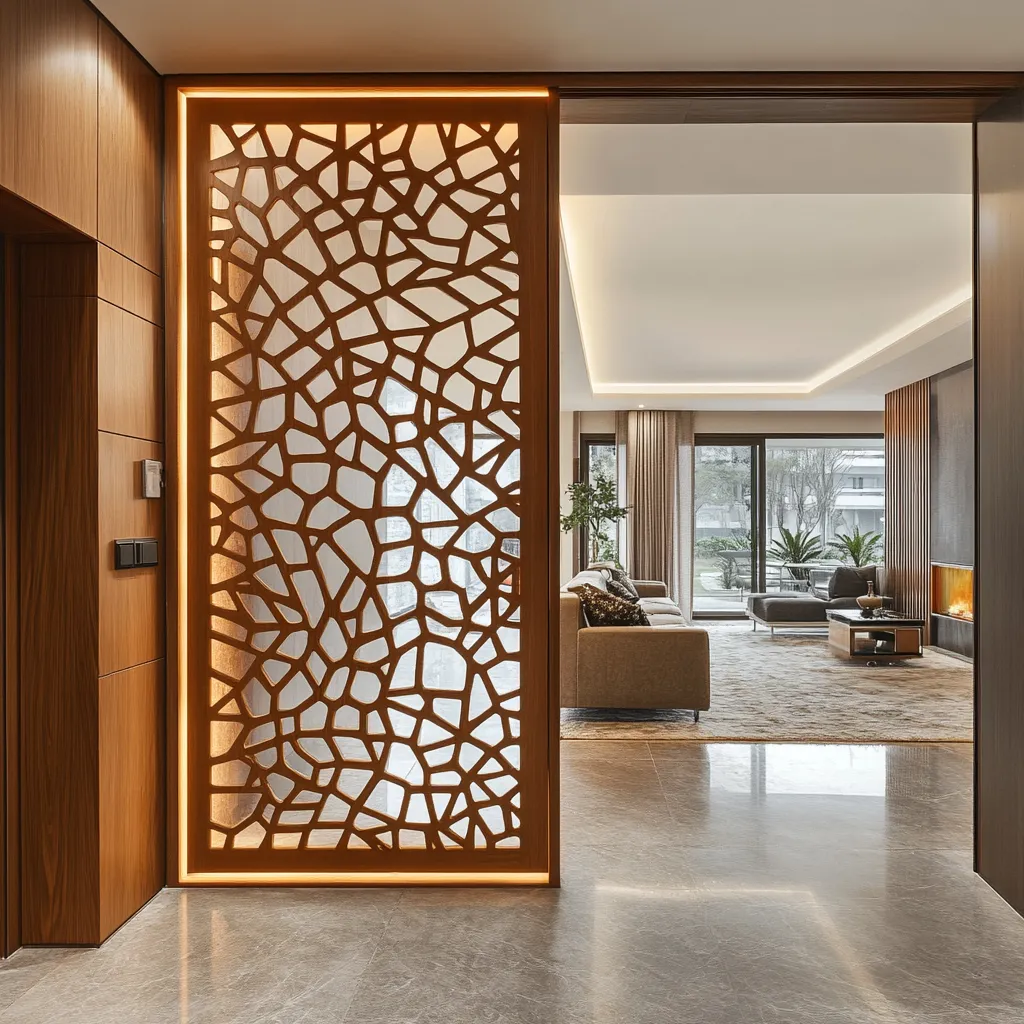
Most modern flats open straight into a living area. Instead of a full wall or a heavy console, a slim vertical CNC panel near the entrance can act as a visual buffer. Choose a pattern that is semi-open, not ornamental. Wood or WPC CNC cutting designs in muted tones work well here. It sets the tone without calling for attention.
Highlight Staircase Wall with CNC Cutting Design
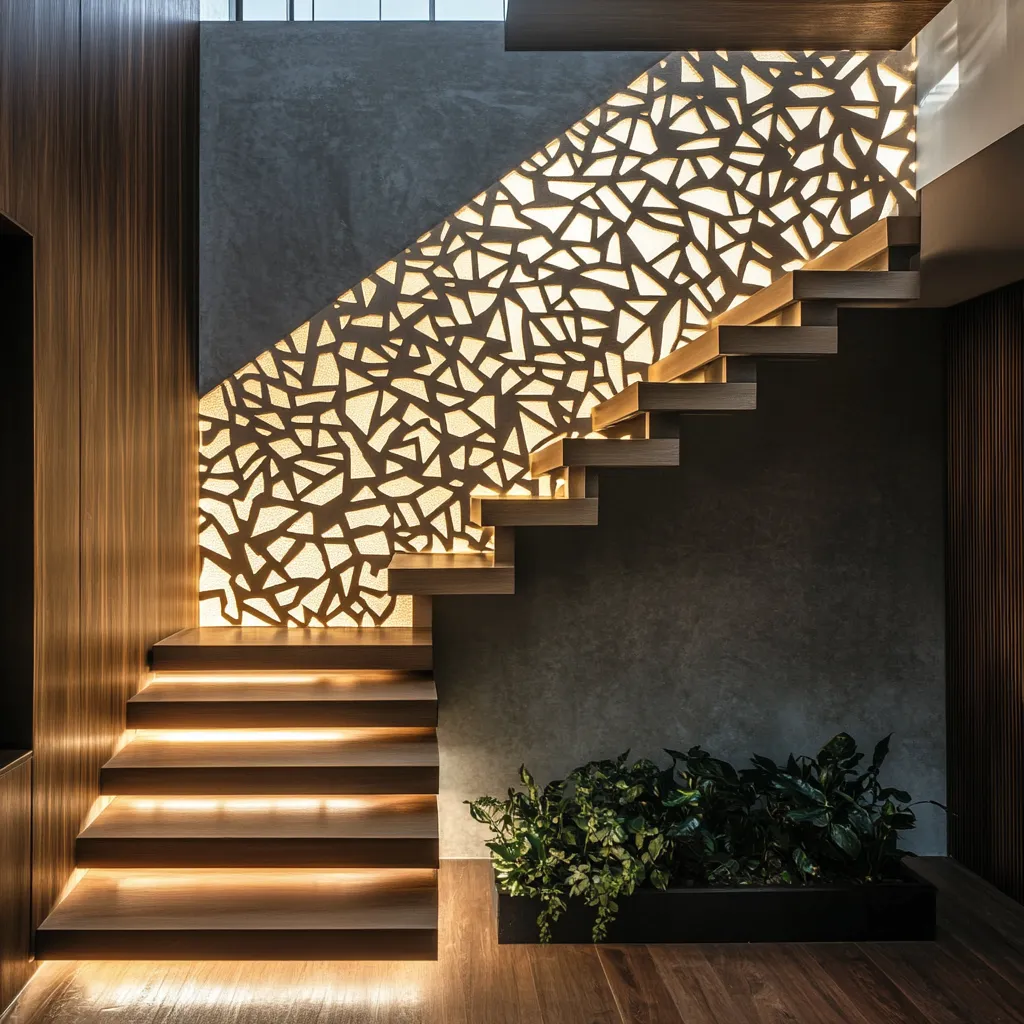
Space beneath staircases is often neglected. A textured CNC cutting sheet with a backlight can instantly turn this space into a soft-lit focal point. The play of light through the pattern creates shadow movement. It can also double up as a display or shoe console screen, giving functionality without adding bulk.
CNC Cutting Design for Dining Room Passage- Built-In Artwork
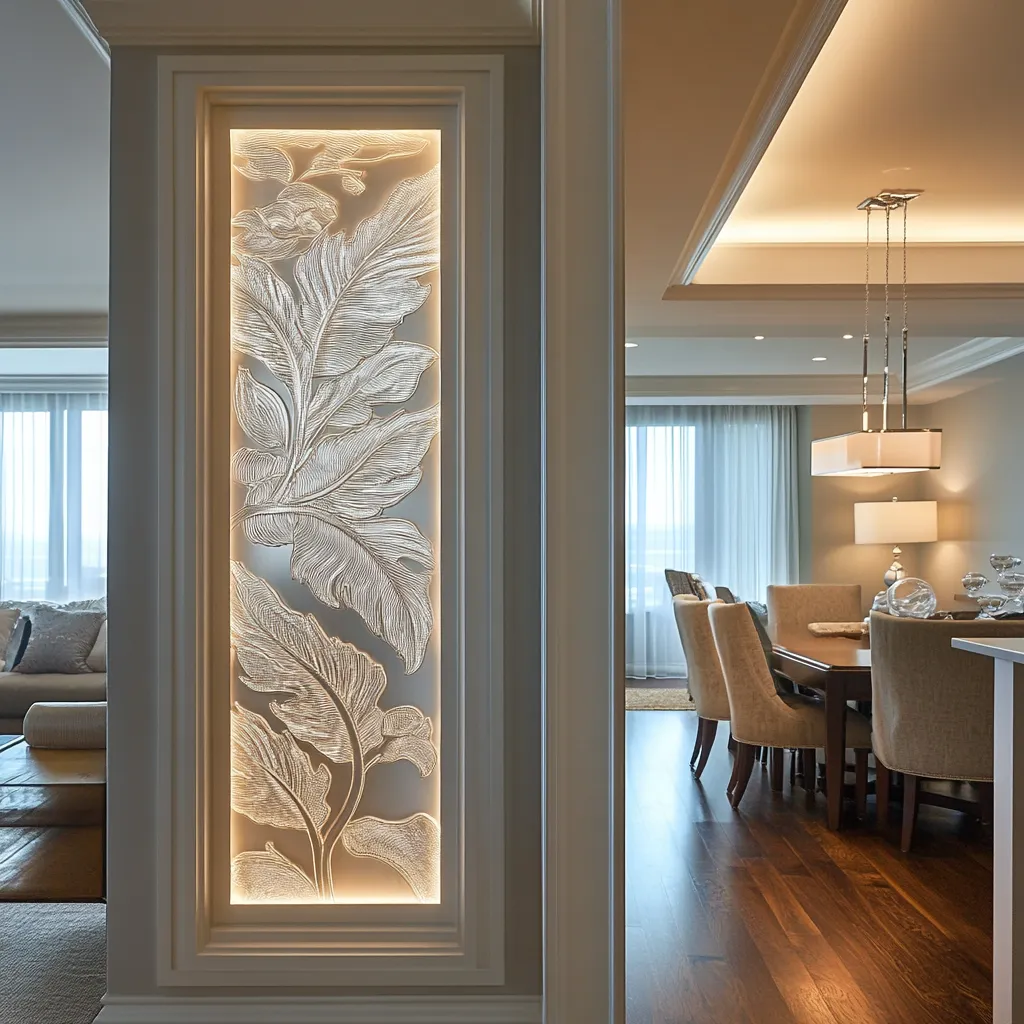
Instead of hanging frames, carve the art into the wall. Install a recessed CNC design for the wall in powder-coated metal or layered acrylic. This works well in dining passages or as a soft backdrop for open living spaces. Match the tone of your flooring or ceiling to ensure a smooth transition.
CNC Design for Bedroom- Privacy Screens for Odd Corners
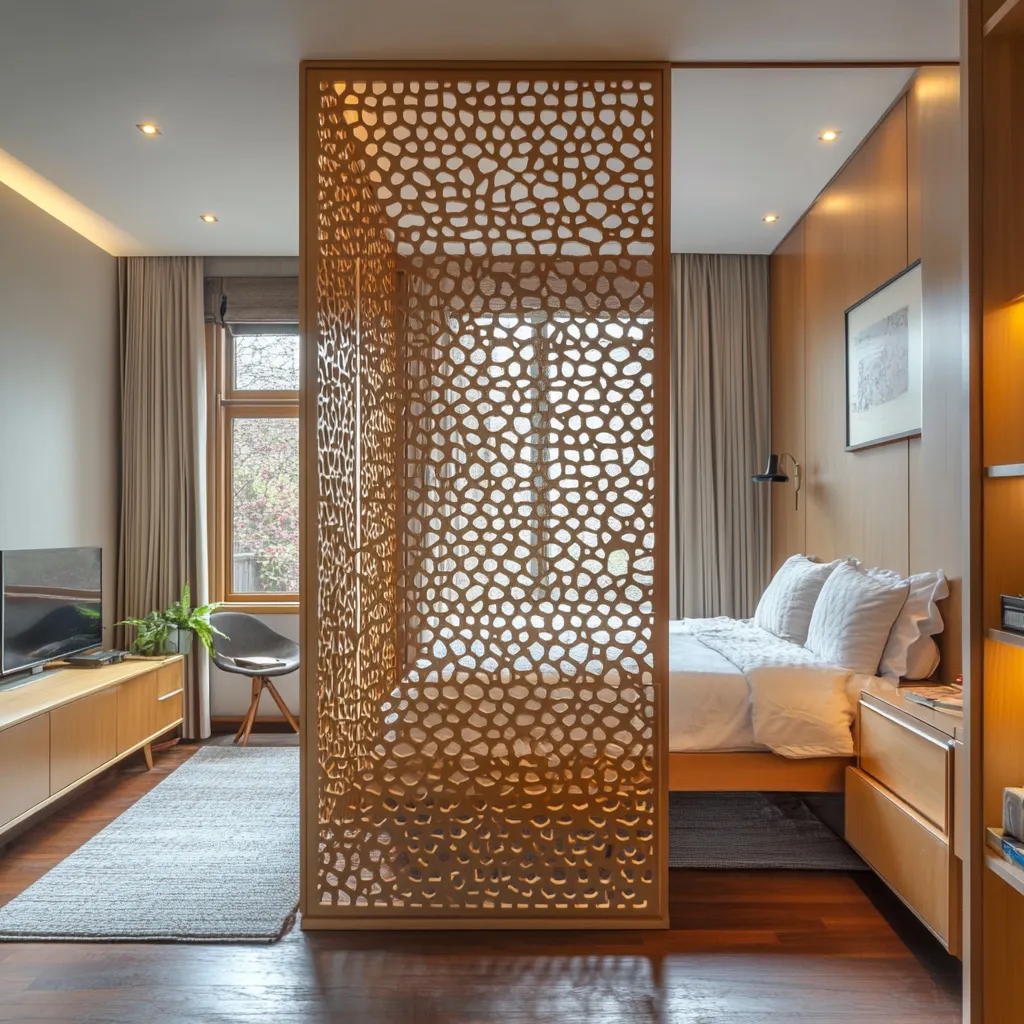
Have you ever needed a little more division around the dressing zone in your master bedroom, or between a study nook and the living area? A short CNC partition wall might be the simplest answer. It avoids the visual weight of a solid screen, allowing ventilation and visibility where needed.
CNC Laser Cutting Design for Wardrobe- Updating Modular Furniture with Personality
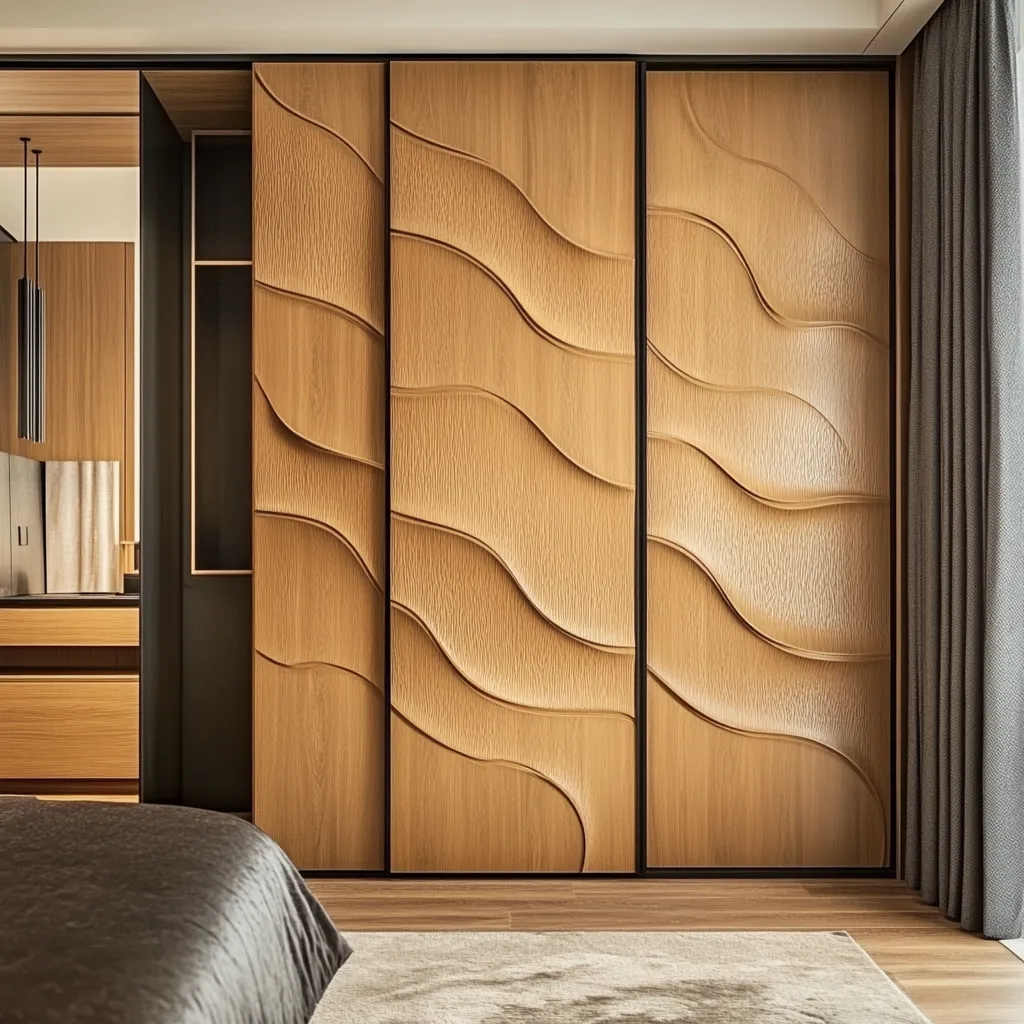
Standard modular furniture often lacks detail. Try adding a CNC panel design to wardrobe shutters or the upper panel of kitchen units. These can be mirrored, wood-toned, or even layered with fabric behind for extra depth. This approach gives character to otherwise plain modular setups.
CNC Ceiling Design- Ceilings That Filter Light Softly
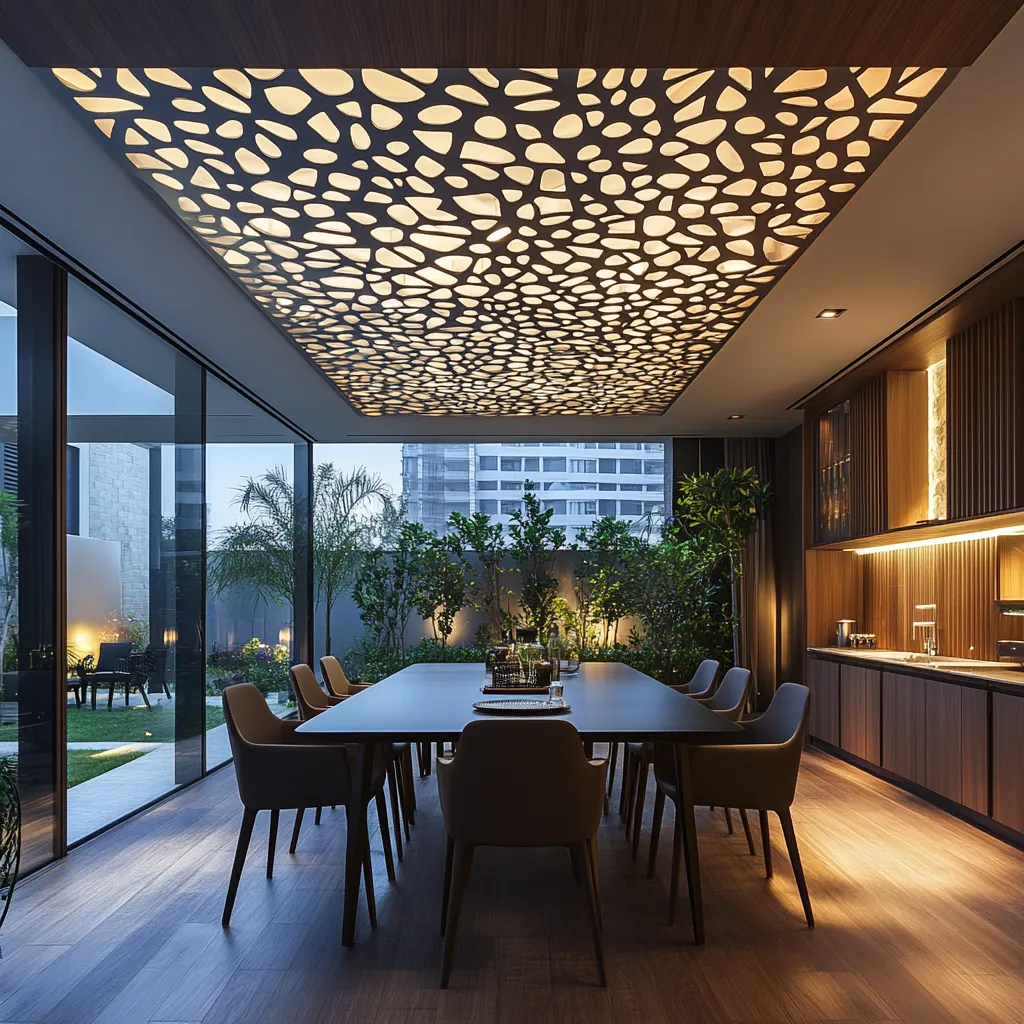
A large backlit ceiling piece using CNC sheet design adds ambient lighting without harsh fixtures. This is especially useful in dining rooms and lounges. Choose floral or geometric patterns that match the room's furniture lines. It is also energy-efficient when used with diffused LED strips.
Modern CNC Design for Balcony- Screens That Glow After Dark
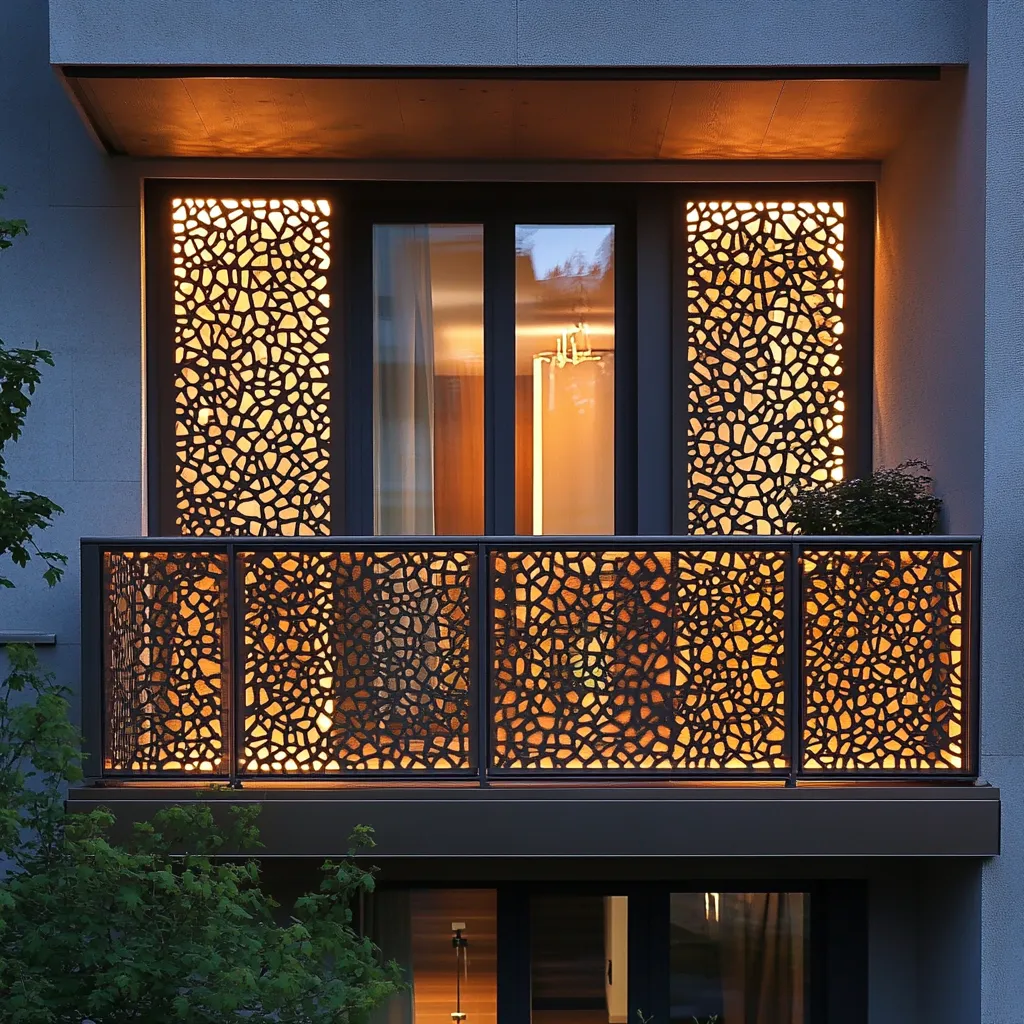
Install a weatherproof CNC cutting design for kitchen windows or balconies. These not only offer privacy but can be illuminated from behind for a soft glow at night. Select UV-treated materials for enhanced longevity, particularly if the panels are exposed to rain and direct sunlight.
CNC Partition Design for Kitchens That Are Semi-Open
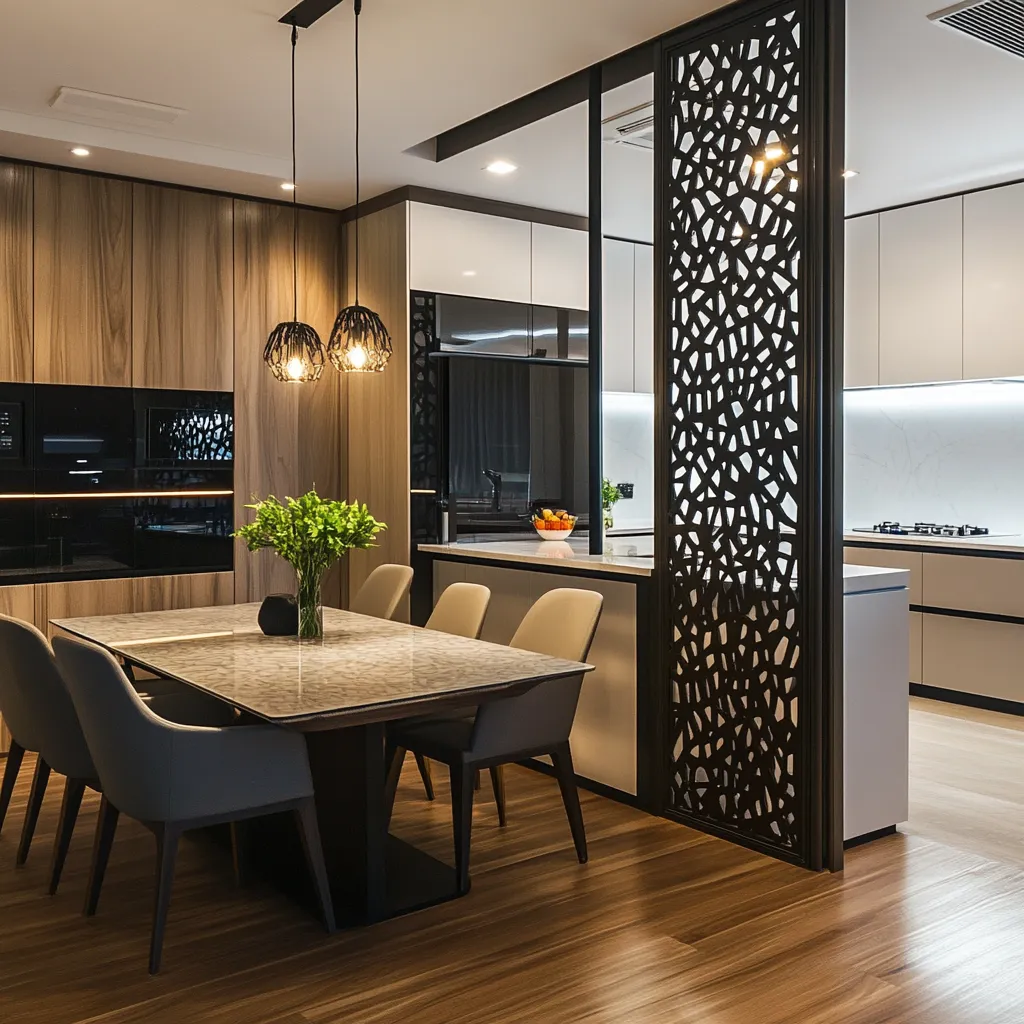
Many urban homes now use open kitchen formats. If you are not keen on a full wall, a modern CNC partition design between the cooking zone and the dining area offers just enough separation. Match it to the cabinetry or flooring tone for visual cohesion.
CNC Design for Main Entrance- Exterior Echoes of Interior Patterns
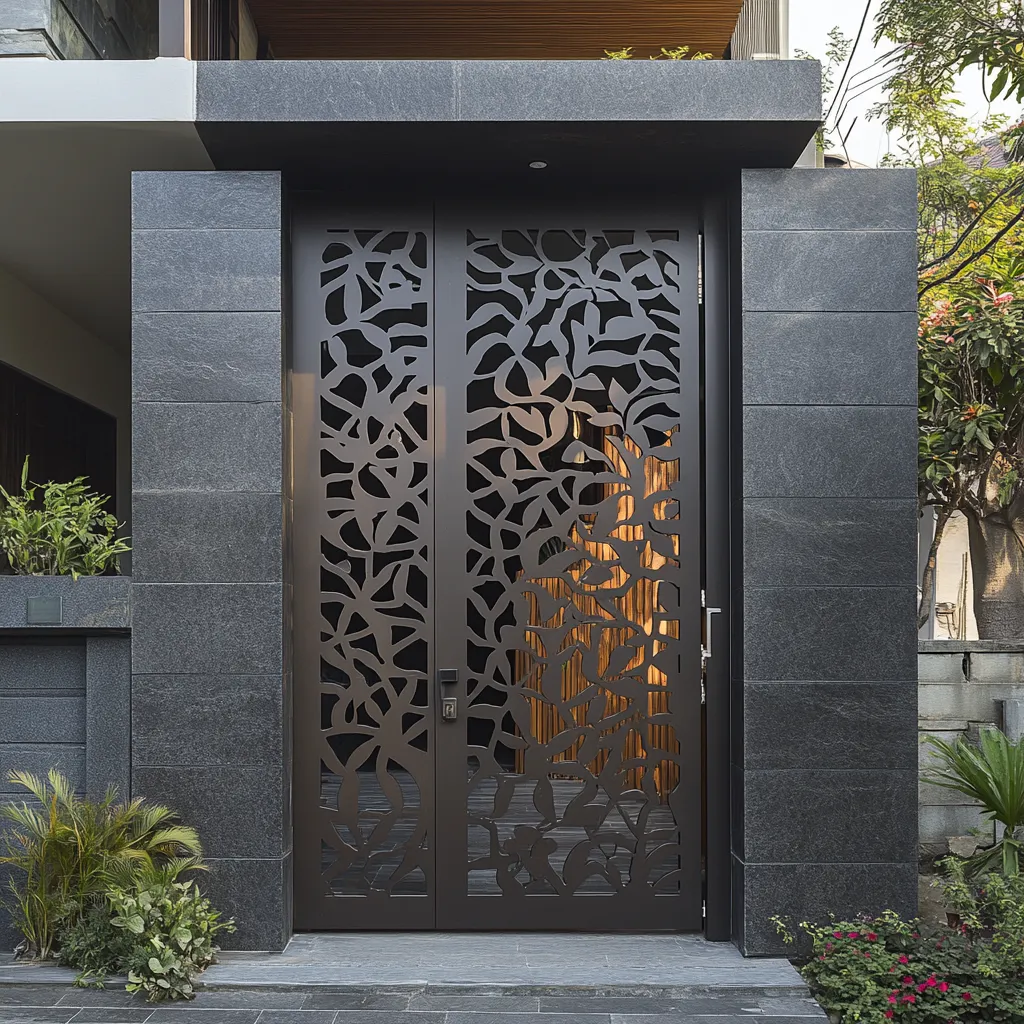
Repeating the same CNC design for the gate that you have used in your living room divider or CNC wall panel gives the home a unified look. This especially works well in duplexes and villas, where the gate, grills, and staircase railing can carry a single, unified design thread.
Steel CNC Design for Wardrobe That Adds Elegance
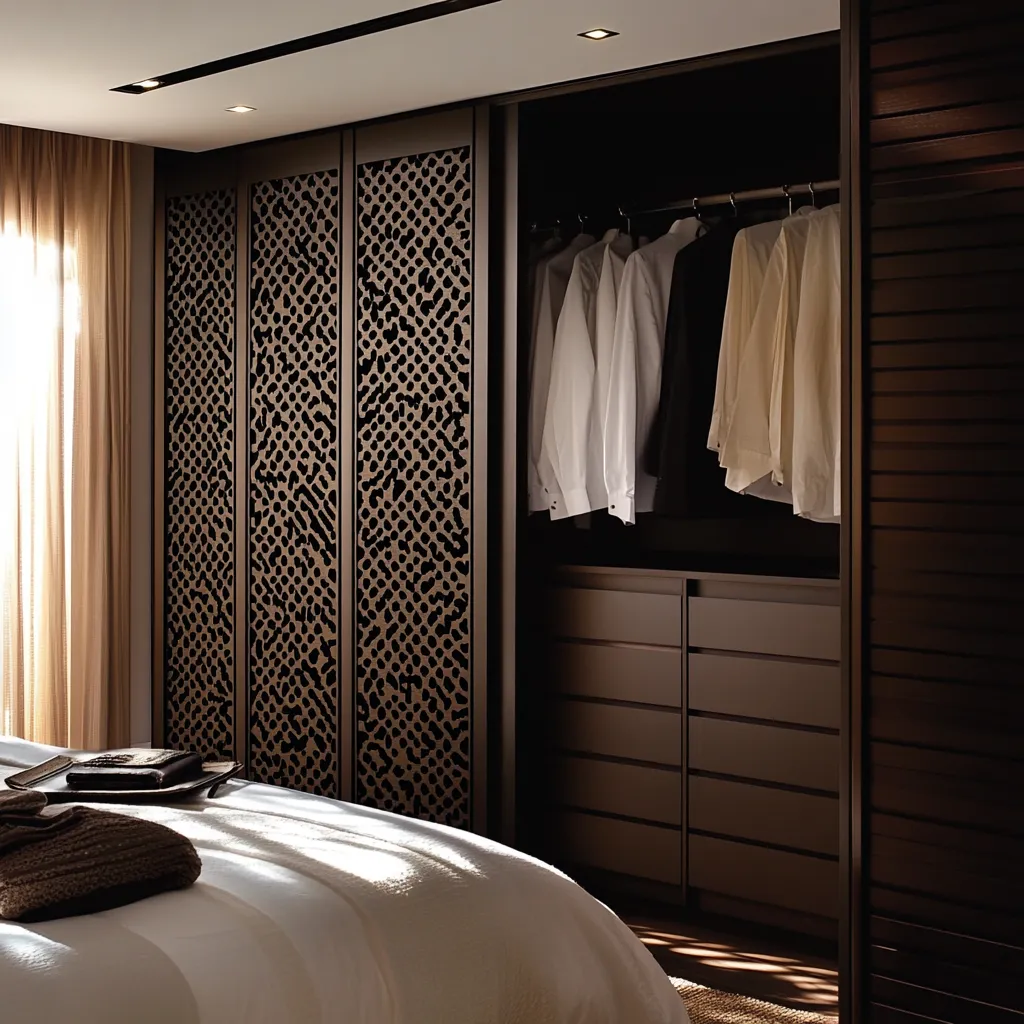
Shutters of floor-to-ceiling wardrobes look imposing. Introducing narrow strips of CNC design in alternating shutters can break that block. For instance, three full shutters and one patterned insert work better than a symmetrical arrangement. Consider steel CNC designs if the room's palette is monochrome or features metal accents.
CNC Cutting Sheet Design for Utility Rooms
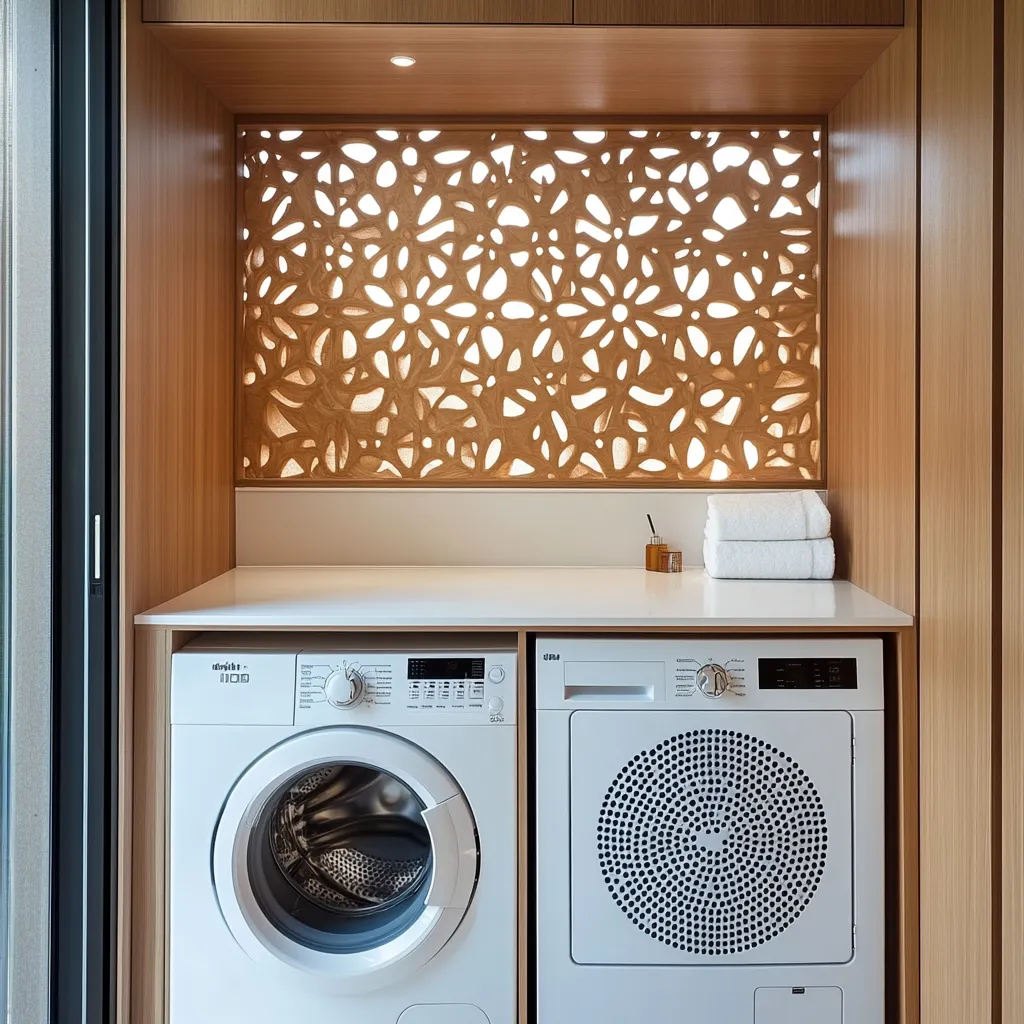
A laundry area with a patterned CNC cutting sheet above the counter not only looks better, it also subtly hides plumbing lines or wires. In studio flats or compact homes, it becomes an instant style cue in what would otherwise be a plain corner.
CNC Interior Design for AC Door
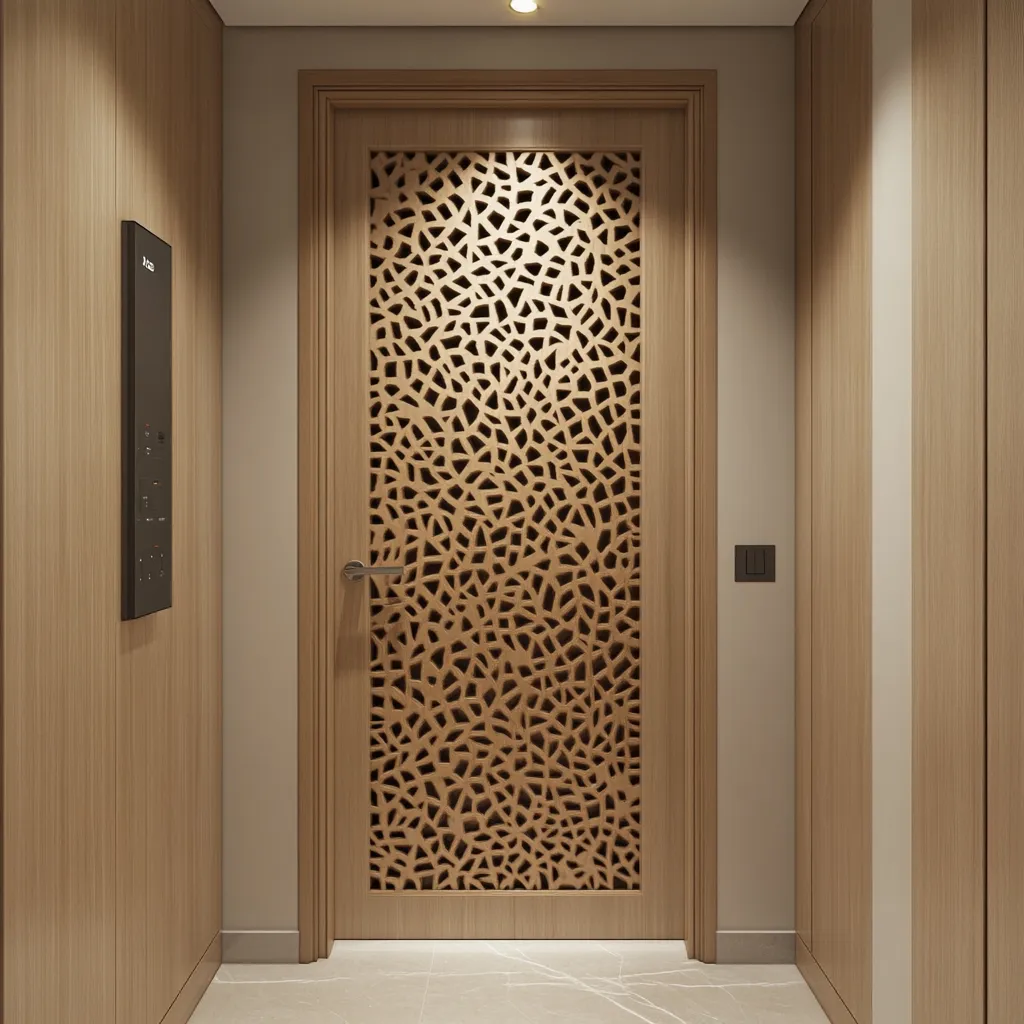
Yes, even your AC door or vent panel can become a design feature. A simple CNC interior design on MDF or metal can blend the vent into the overall room aesthetic. Instead of looking like an add-on, it becomes a hidden part of your ceiling or cupboard.
CNC Cutting Design for TV Unit
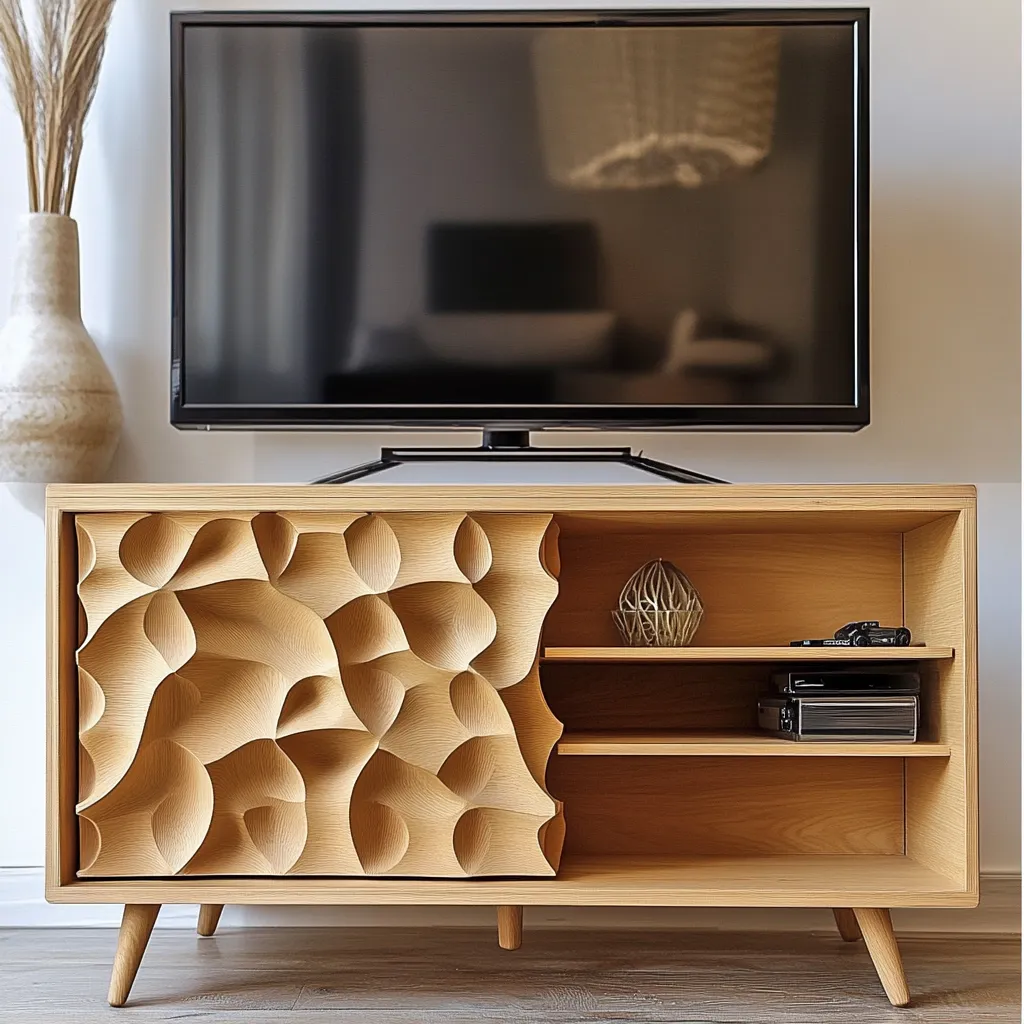
From side tables to media units, smaller pieces of furniture can carry a hint of CNC work design to tie them to the larger theme. Avoid overuse; sometimes, just the drawer fronts or side panels are enough. Less is more when the pattern is precise.
Modern CNC Designs for Plain Flush Door
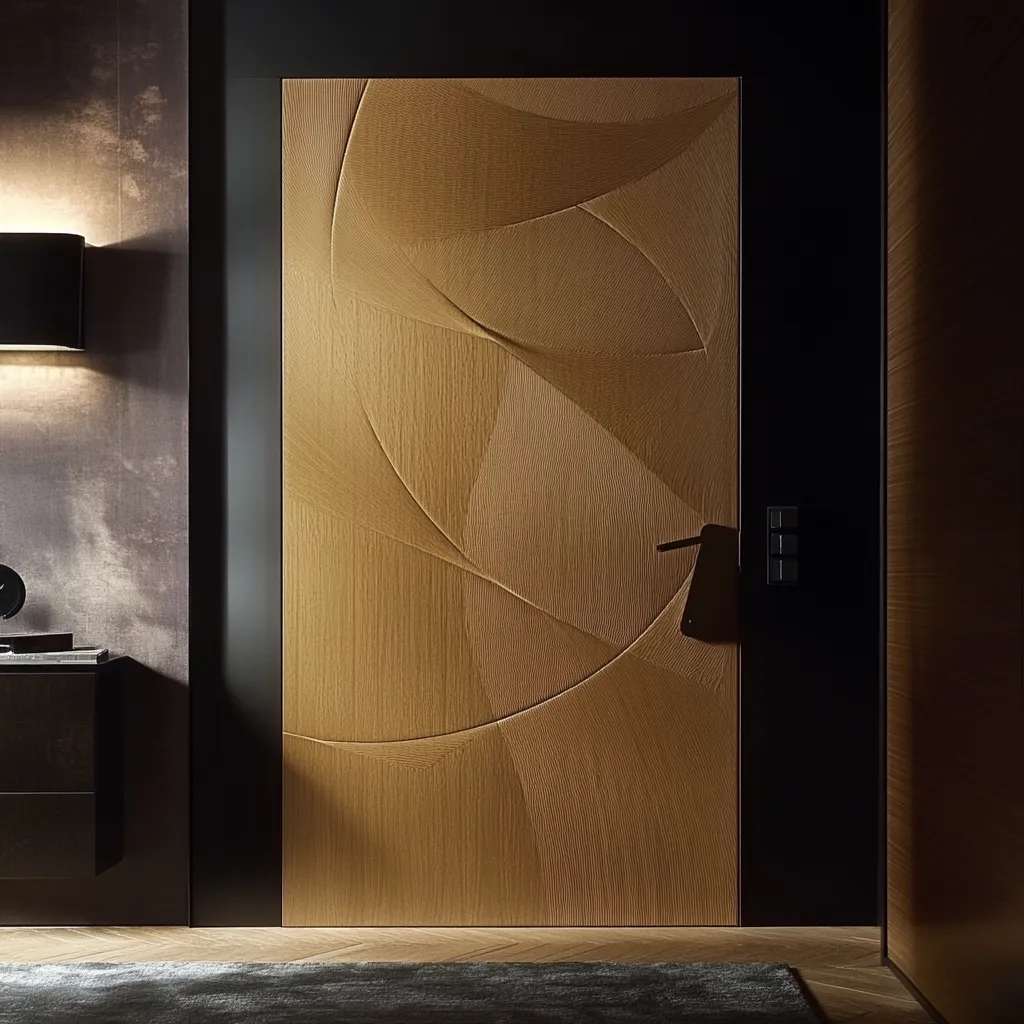
A plain flush door can be instantly transformed into a modern CNC door design. Use a single band of pattern across the width or a full front panel with contrasting laminate behind. This adds visual value without altering the door structure significantly.
CNC Cutting Design for Studio Layouts That Use Pattern to Define Flow
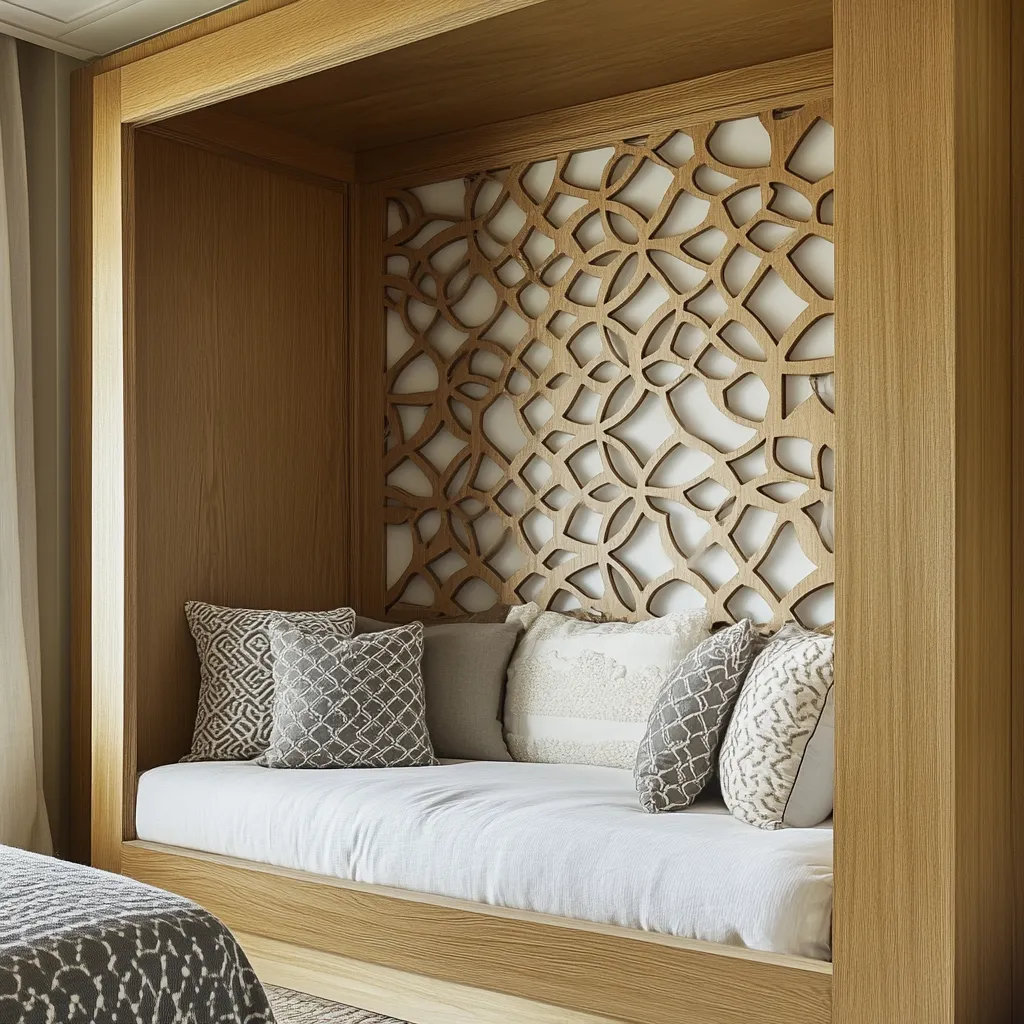
In a compact home or CNC studio layout, using strategically designed CNC panels helps guide the eye’s movement. Instead of filling every wall, place one panel at the entry or behind the headboard. This approach avoids clutter while still delivering character.
CNC Cutting Materials Used in Homes
In real homes, material choice usually comes down to where the design will sit, how much use it will see, and how much trouble you want to avoid later.
MDF
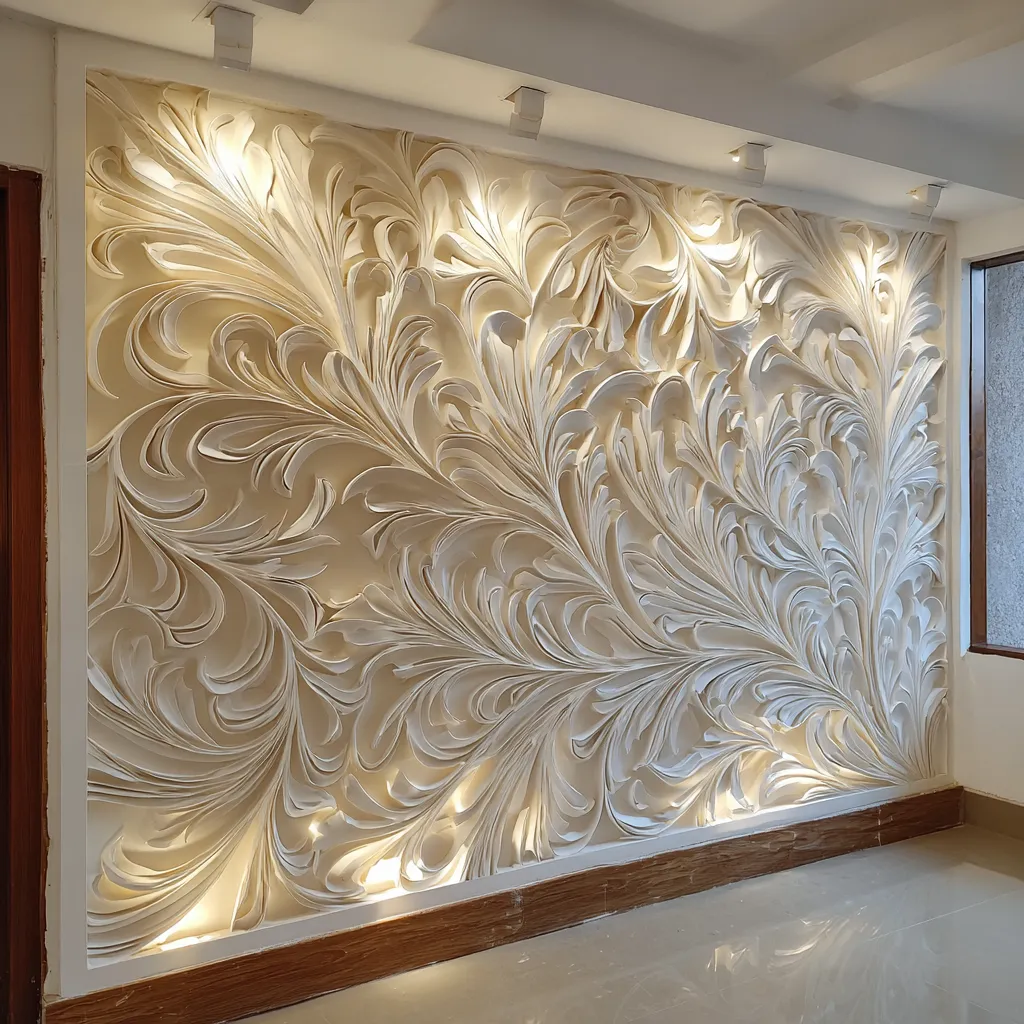
Image Caption: Indoor CNC wall panel made in MDF.
Most CNC work inside homes is done on MDF. Living room walls, pooja doors, TV panels, and partitions usually start here. A CNC design on MDF cuts clean and holds shape well, which is why installers prefer it. A mdf cutting design is generally done on 12 mm or 18 mm boards. Thinner sheets feel weak once fixed. MDF looks good when painted and stays neat if the wall behind is dry. The problem shows up with moisture. Seepage, damp corners, or balcony-adjacent walls can ruin it. That is why MDF belongs strictly indoors. Floral patterns, mandir designs, and simple geometry suit it best.
WPC
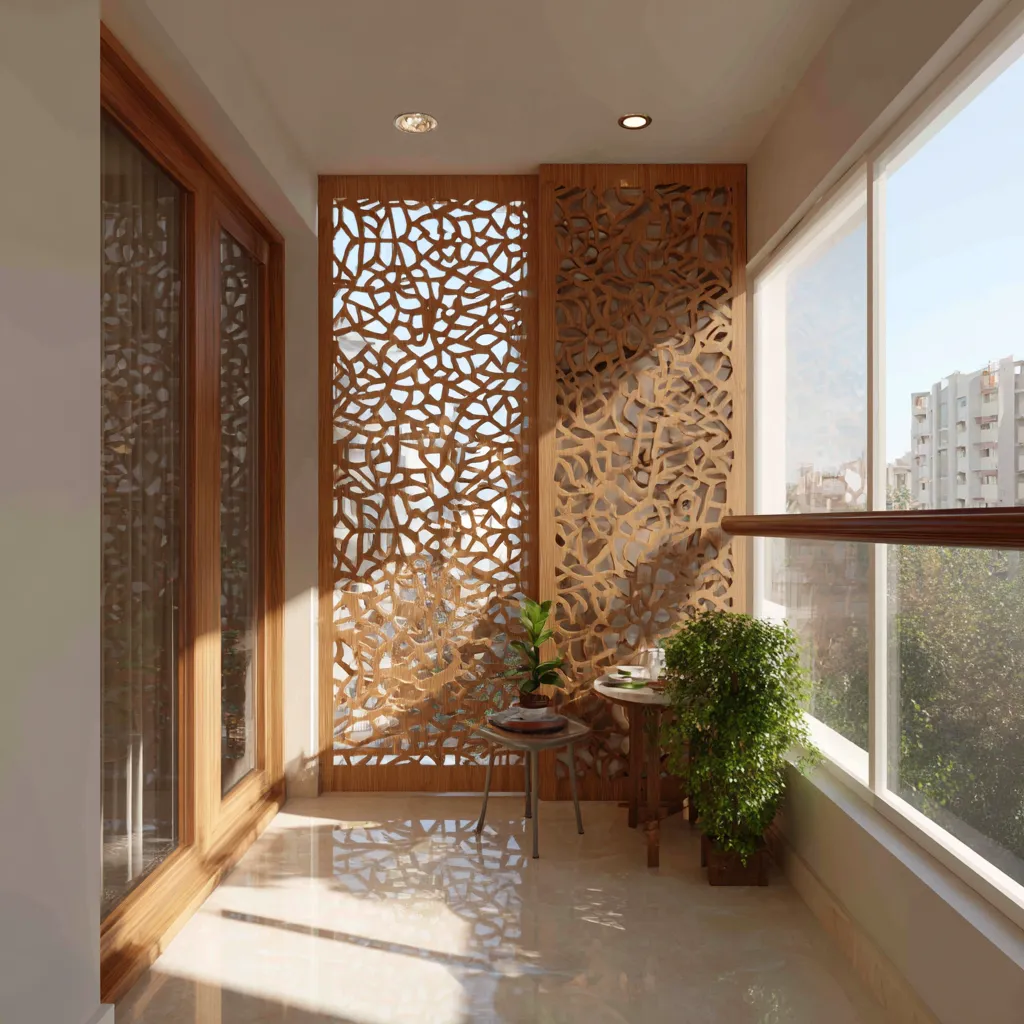
Image Caption: WPC CNC panel installed near a balcony.
WPC comes into the picture when MDF feels risky. Homes with open balconies, windows near pooja units, or areas that trap moisture often move to this option. It does not swell easily and handles humidity better. Thickness usually stays between 12 mm and 18 mm. WPC costs more, but people choose it to avoid replacement later. The finish is slightly different from MDF. Not as smooth, but more stable. Clean jali cuts and straightforward mandir patterns work better here than very fine detailing.
Metal (MS, SS, Aluminium)
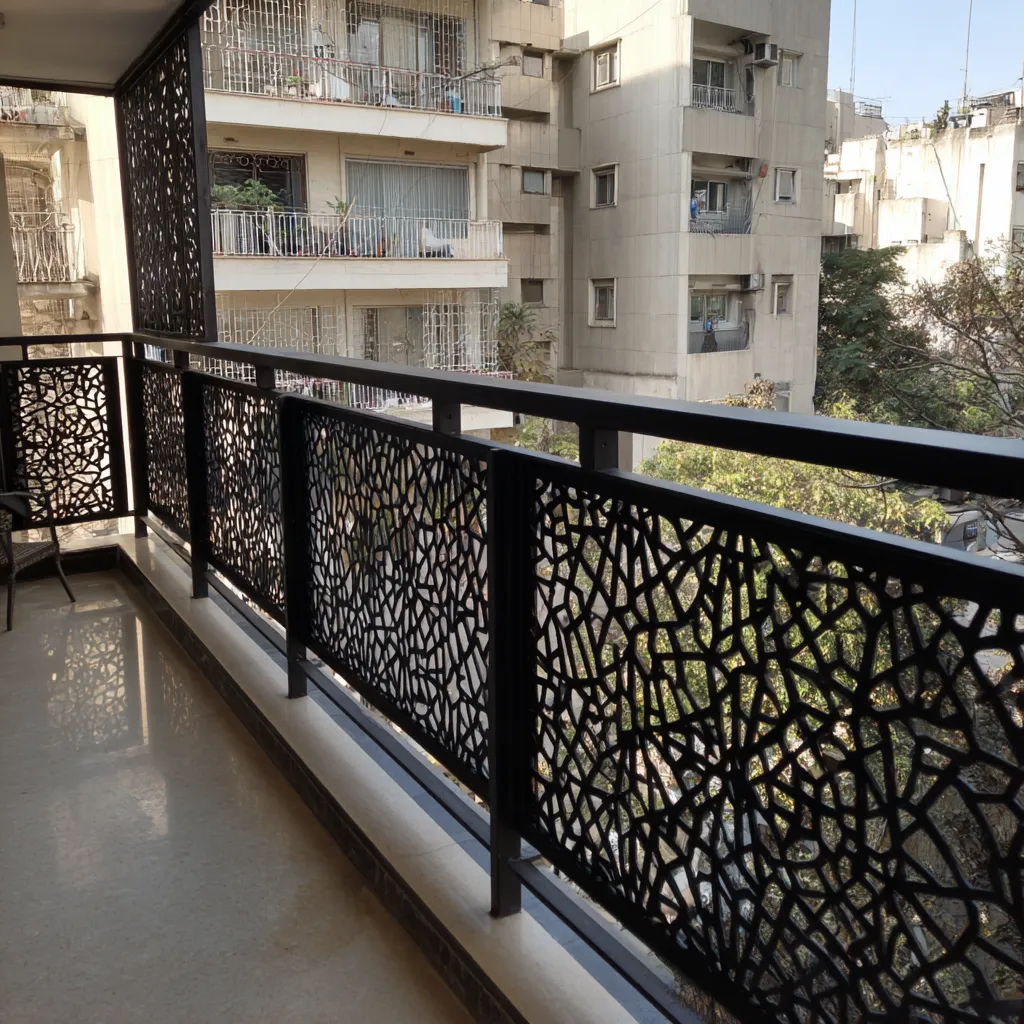
Image Caption: Metal CNC grill used for a balcony railing.
Metal CNC work is mostly about strength. You see it on gates, balcony panels, grills, and front elevations. A CNC grill design in metal stays firm even after years of use if the coating is done properly. Thickness depends on location. Thin sheets bend. Thicker ones last. Metal does not suit indoor decorative walls because it feels heavy, both visually and physically. Straight lines, geometric cuts, and open jali patterns work better than complex shapes. Matte black and dark grey finishes are common because they hide dust and wear.
Iron
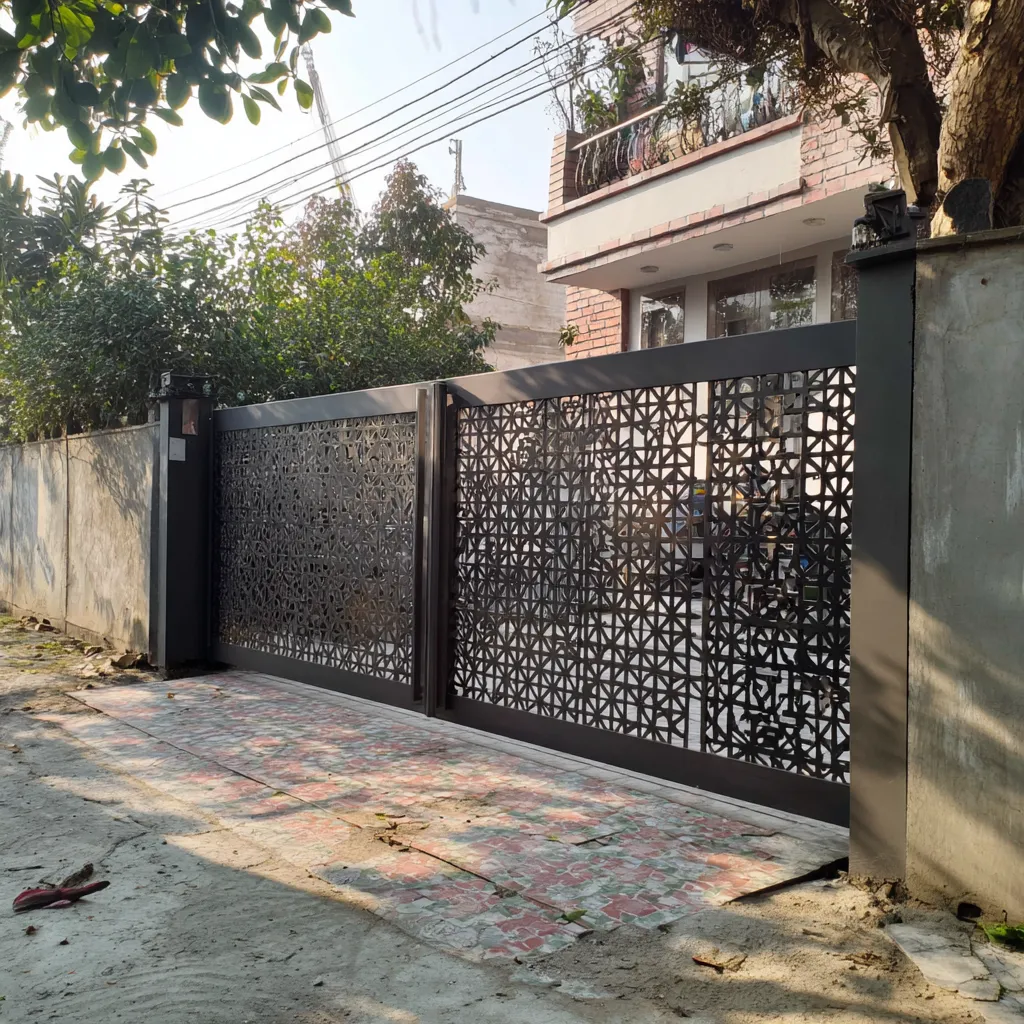
Image Caption: Iron CNC cutting used for a compound gate.
Iron is used when safety comes first. Independent houses often use it for compound gates and entry grills. A CNC cutting gate design in iron feels solid and secure. It is heavier than most metals used in CNC work, so patterns cannot be too fine. Rust is the main issue. Without proper coating, iron ages fast. That is why simpler cuts work better than detailed ones. Bold jali styles and large gaps suit iron more than delicate designs.
ACP (Aluminium Composite Panel)
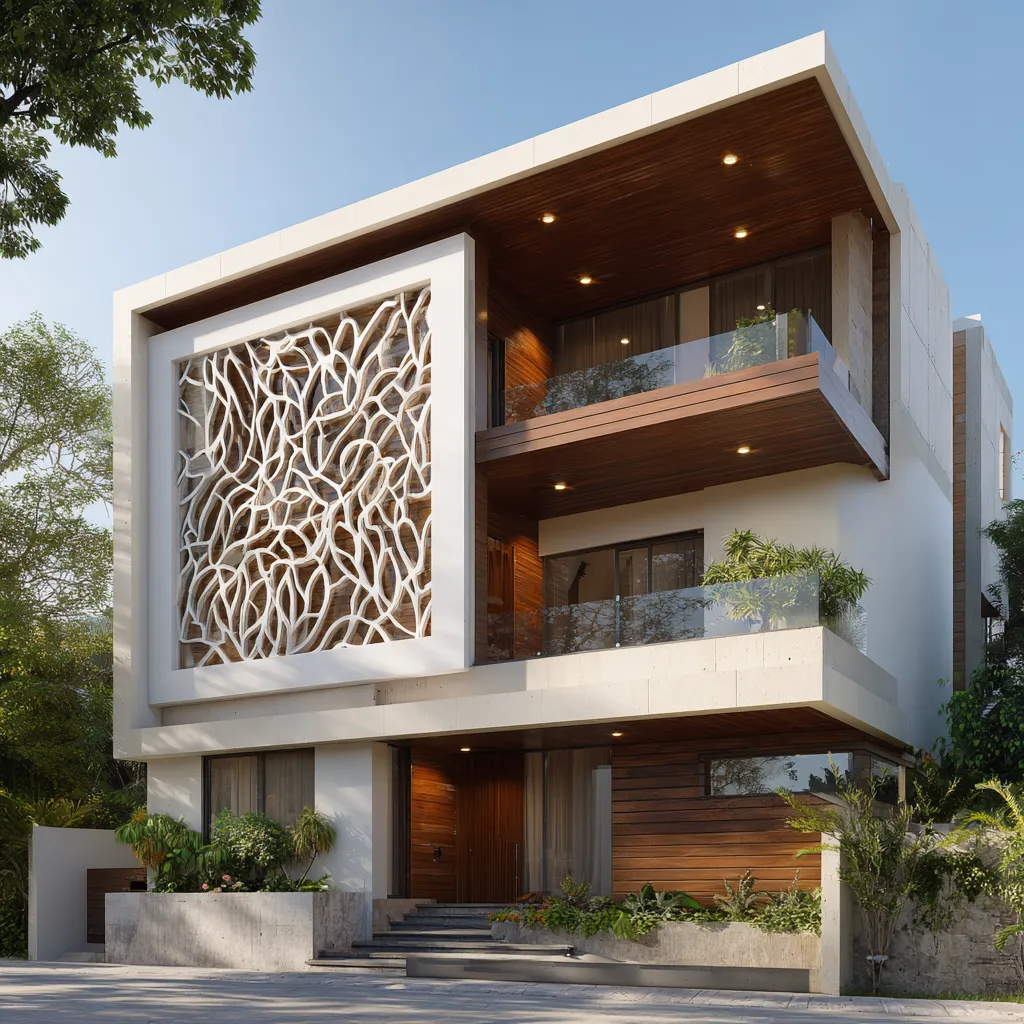
Image Caption: ACP CNC panel fixed on a modern house front.
ACP is standard on modern house fronts. A CNC design for front elevation made in ACP looks clean and sharp without adding too much weight. It handles sun and rain well and does not need much maintenance. ACP sheets are thin, so very intricate cuts do not hold well. The strength lies in simple, repeated patterns. Geometric styles work best. People choose ACP when they want a neat elevation without heavy stone or metal structures.
Acrylic
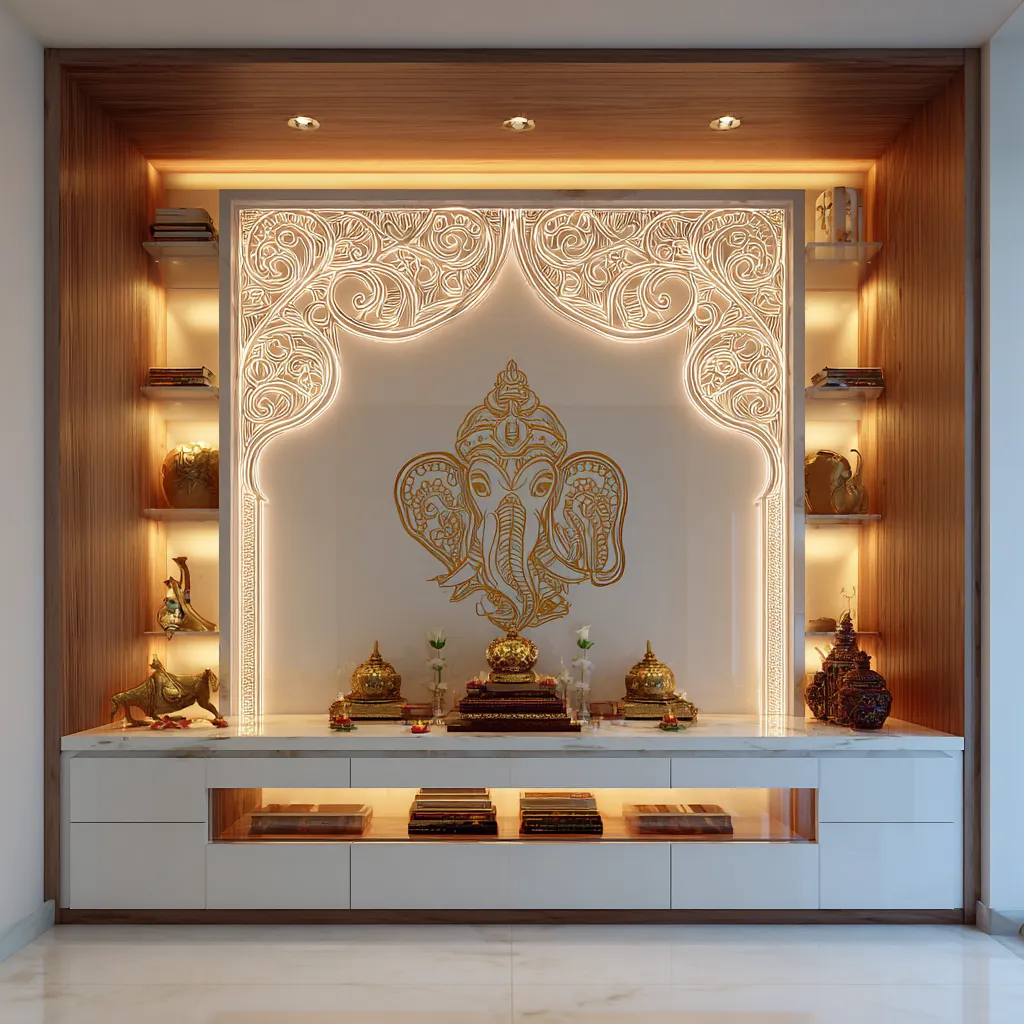
Image Caption: Backlit acrylic CNC panel used in a pooja unit.
Acrylic is mostly used where lighting is involved. Backlit pooja panels, wall décor, and layered designs often use this material. It is light and easy to cut, but not meant for load or impact. Acrylic scratches if handled roughly. That is why it stays away from doors or high-traffic areas. When used carefully, it gives a clean glow effect. Mandir back panels, name plates, and wall accents are common uses.
PVC / UPVC
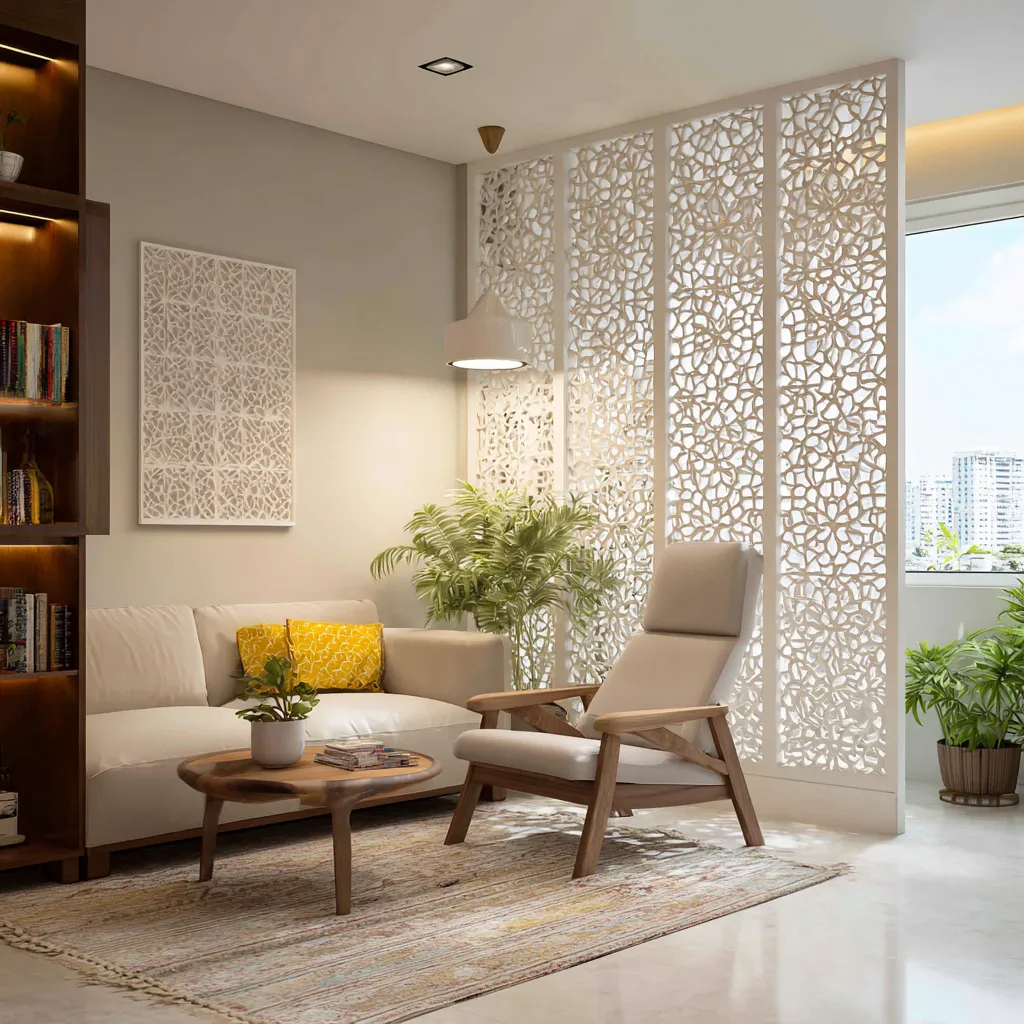
Image Caption: PVC CNC partition used inside a living space.
PVC and UPVC show up in budget-driven projects. Rental homes, temporary partitions, and light decorative panels often use them. These materials handle moisture better than MDF but feel less strong. Thickness is typically low, which limits the depth of the design. Simple patterns work fine. Heavy detailing does not. People choose PVC when ease of cleaning matters more than long-term durability.
Glass (Etched or CNC)
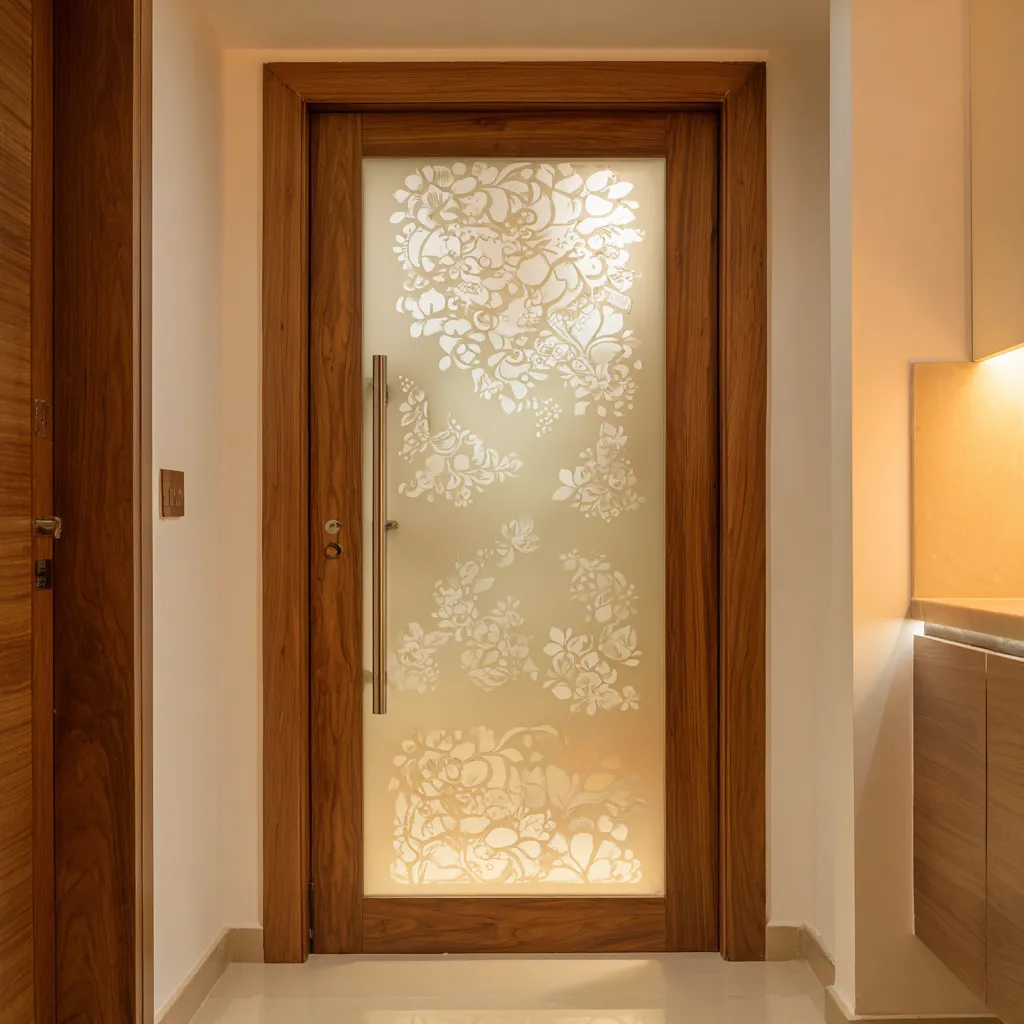
Image Caption: CNC-etched glass panel fixed in a door.
Glass CNC work is usually limited to inserts. Pooja doors, side panels, and decorative partitions use etched or CNC glass. It keeps spaces visually open and lets light pass through. Glass needs proper thickness and careful fixing. Maintenance is higher compared to other materials because dust and marks show easily. Minimal patterns work better than crowded designs. Religious symbols and soft motifs suit glass the most.
Stone (Exterior Use)
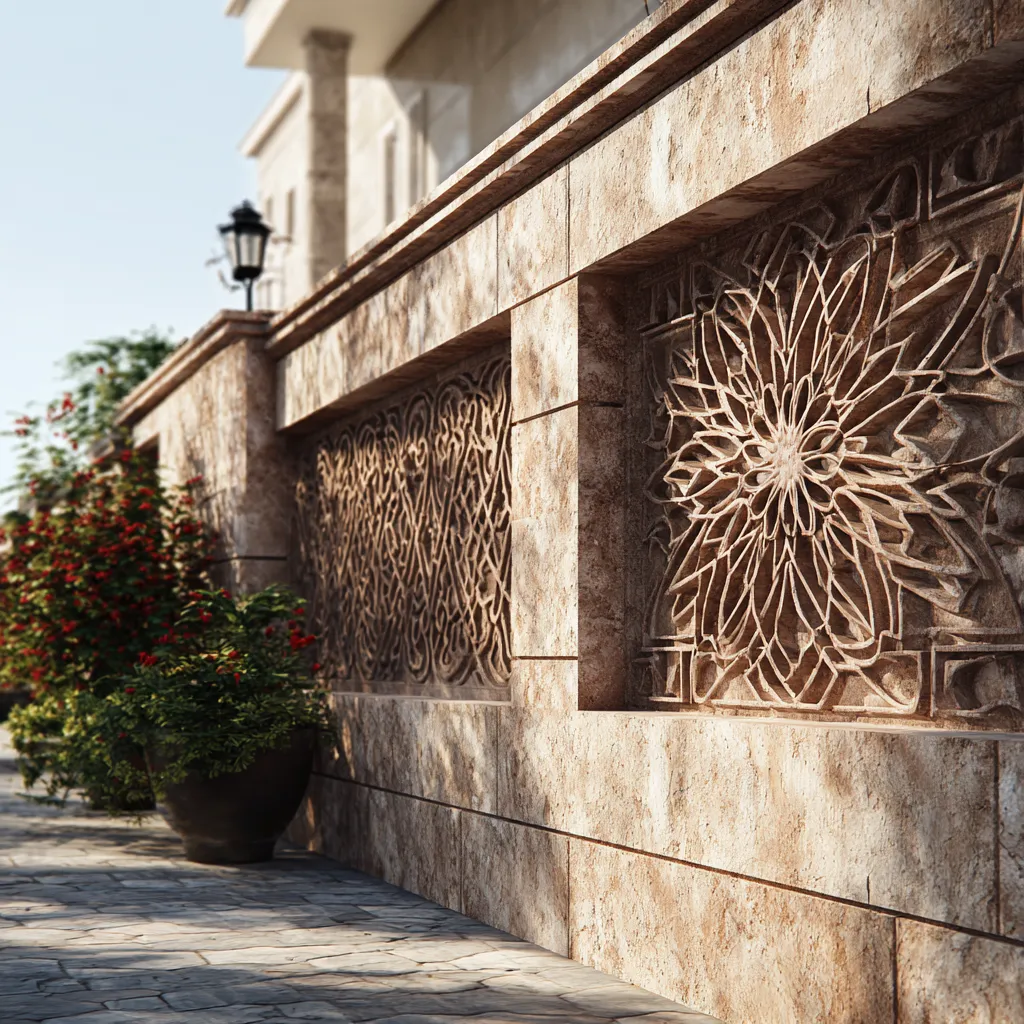
Image Caption: Stone CNC work used on an exterior boundary wall.
Stone CNC is mostly seen on exterior walls and boundary features. It is heavy, expensive, and built to last. Once fixed properly, it does not need much attention. The thickness is high because the stone needs support. Design options are limited due to hardness, but the result feels permanent. Mandala patterns and traditional motifs are common. Stone CNC is chosen when durability matters more than frequent design changes.
CNC Cutting Design Categories: By Pattern and
People usually choose CNC patterns based on what they are already used to seeing around them. Some designs show up mostly in prayer spaces. Others are picked simply because they feel neat and easy to live with.
Traditional and Religious CNC Designs
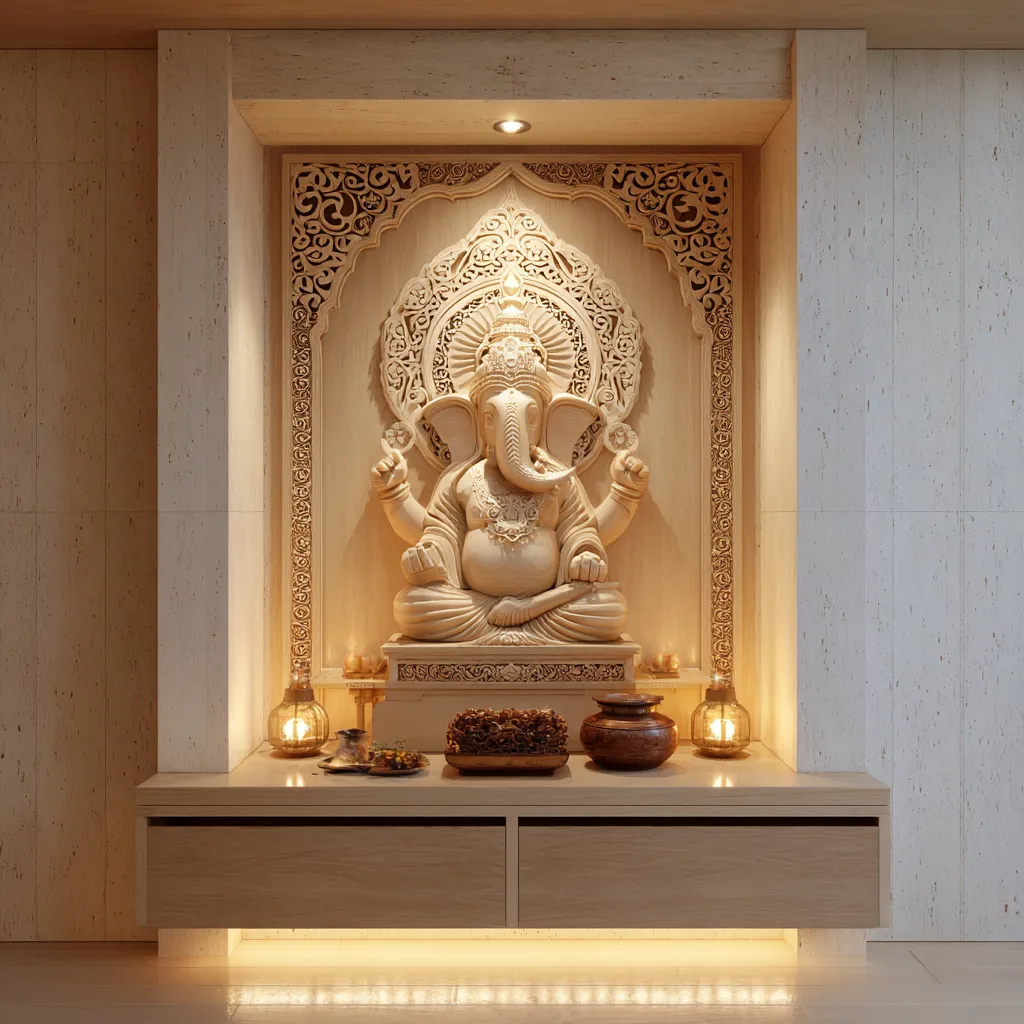
Image Caption: Traditional Indian pooja room with a CNC-cut mandir panel featuring Lord Ganesh.
These designs are mostly seen inside pooja rooms and near entrances. A mandir CNC design often carries symbols that people already recognise, like Om, Ganesh, or diya shapes. In many homes, mandir CNC cutting design replaces solid shutters so the space does not feel closed off. Light passes through. Air moves easily. These patterns sit better when the walls and furniture around them stay simple. Too many colours nearby can make the space feel crowded.
Floral and Nature-Inspired CNC Designs
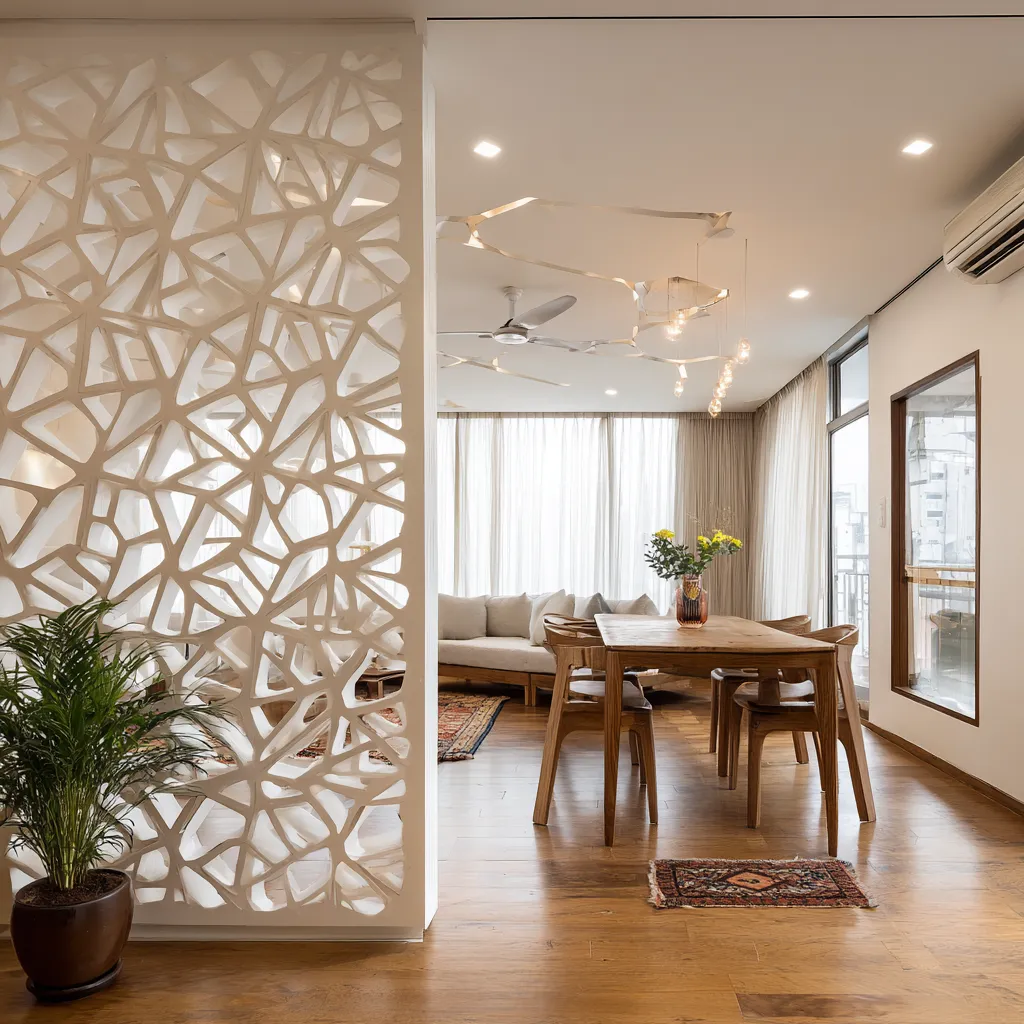
Image Caption: Living and dining area separated by a CNC jali partition with leaf patterns.
Floral patterns are usually chosen when a space feels empty but not meant to look bold. A jali work design with leaves or vines often appears between the living and dining area. It breaks the space without fully blocking it. A CNC cut jali design with softer curves works better in homes where furniture already has rounded edges. Light shades are commonly used so the design does not overpower the room.
Geometric and Modern CNC Patterns)
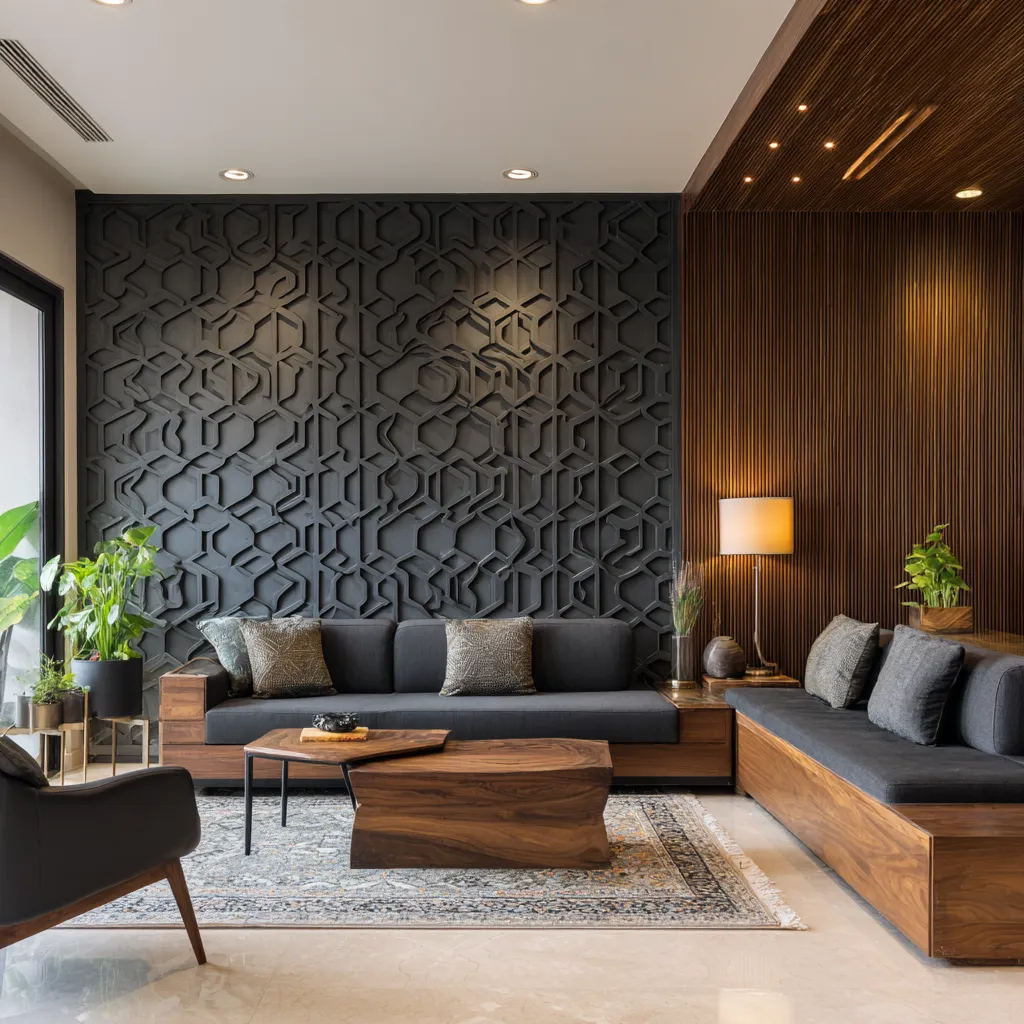
Image Caption: Modern living room with a geometric CNC wall panel.
Geometric designs show up more in flats and newer homes. A modern CNC pattern often uses straight lines or repeated shapes. These designs are fixed on walls, ceilings, or partitions where people want things to look ordered. A modern CNC cutting designs patterns option is usually chosen when the rest of the room is already busy. Dark colours or single shades help keep the look controlled.
Jaali-Based CNC Designs
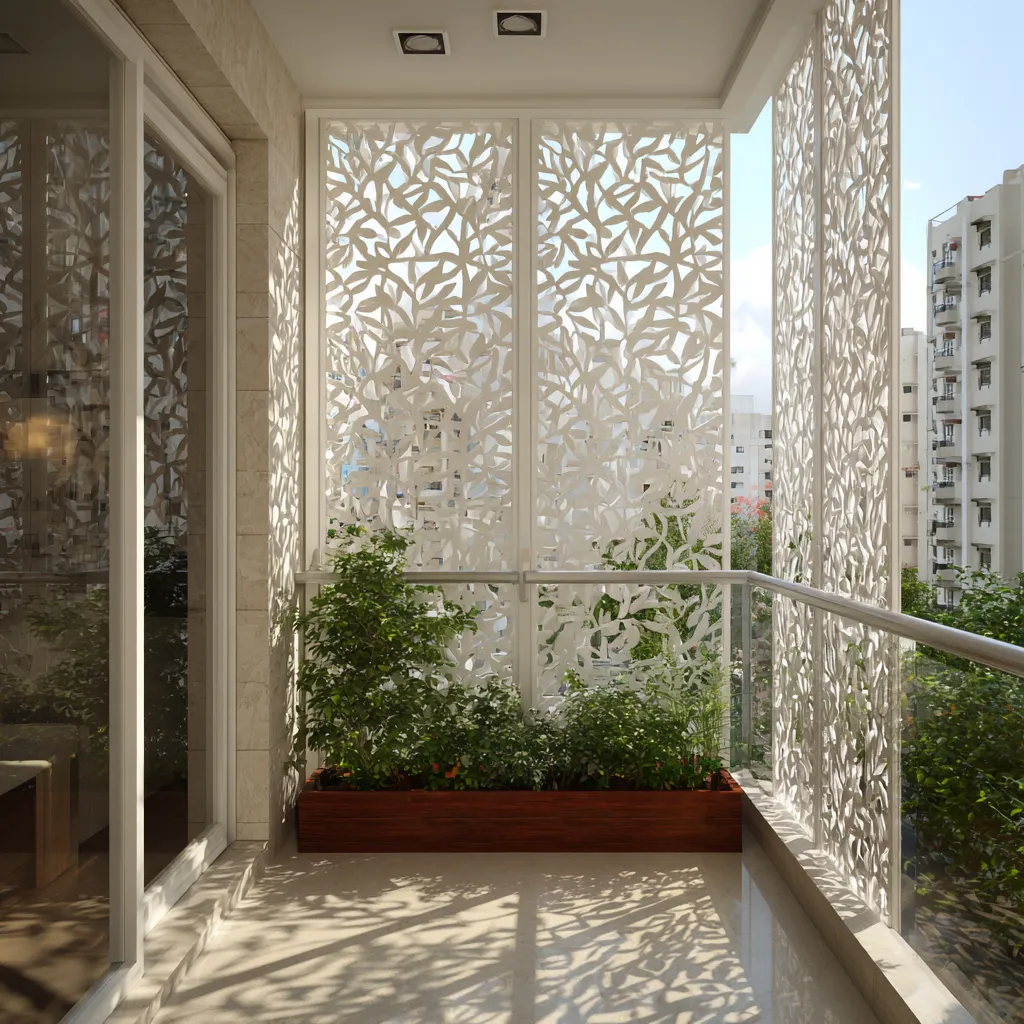
Image Caption: Balcony screen with CNC jali design.
Jaali designs are chosen for practical reasons first. A CNC jali design lets air pass through while still giving separation. Balconies, windows, and room dividers use this style often. A jali CNC cutting design can be tight or open depending on how much privacy is needed. Homes with less natural light usually go for wider gaps. White and neutral finishes are easier to maintain here.
Abstract and Decorative CNC Designs
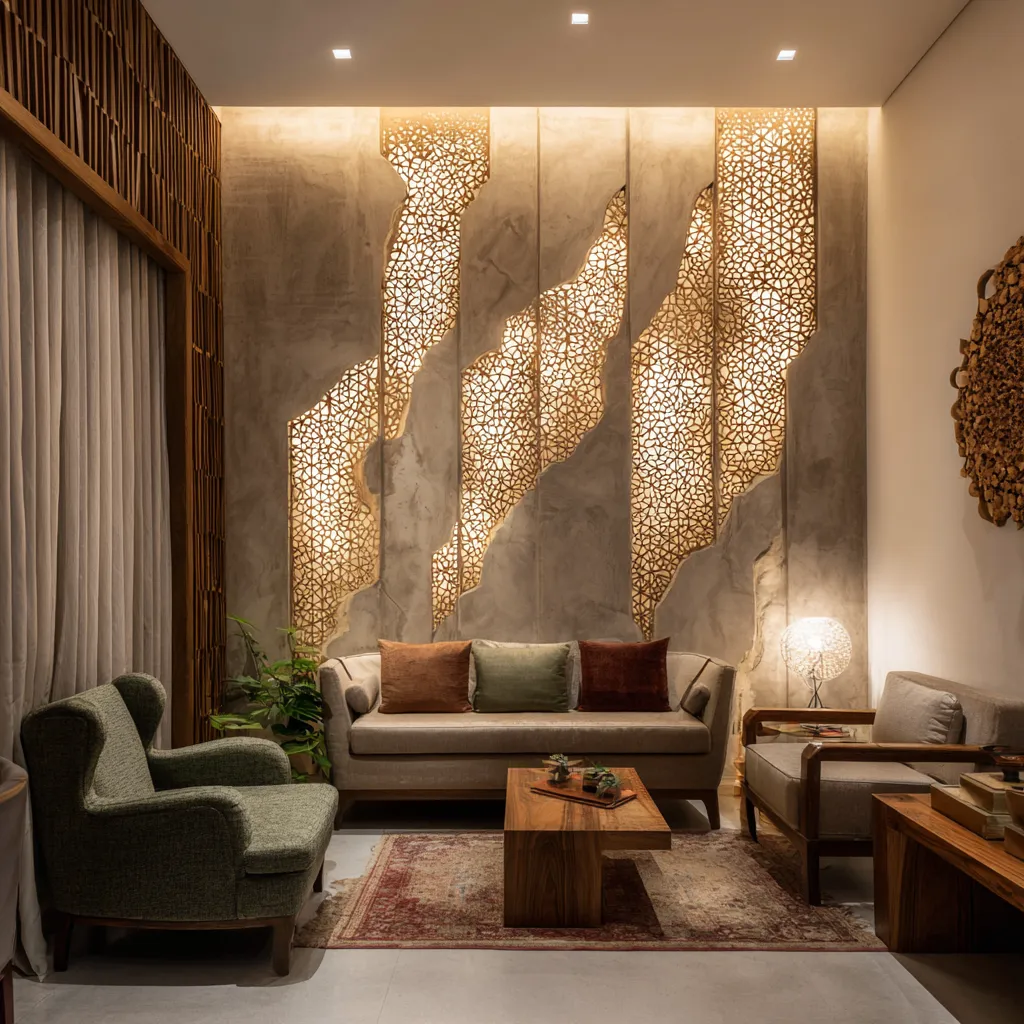
Image Caption: Wall with abstract CNC cutting design.
Abstract designs are picked when the homeowner wants something different but not traditional. The latest CNC cutting design in this category does not follow symbols or set rules. These designs usually sit on feature walls or ceilings. Furniture around them stays plain. Lighting is kept soft. The idea is to let the shape speak without forcing attention.
Applications for CNC Cutting
CNC designs are usually chosen after the layout of the home is fixed. People look at empty areas and decide what can sit there without making the space feel heavy. These applications are based on how CNC designs are actually used in homes, not how they look in catalogues.
CNC Cutting Designs for Main Doors
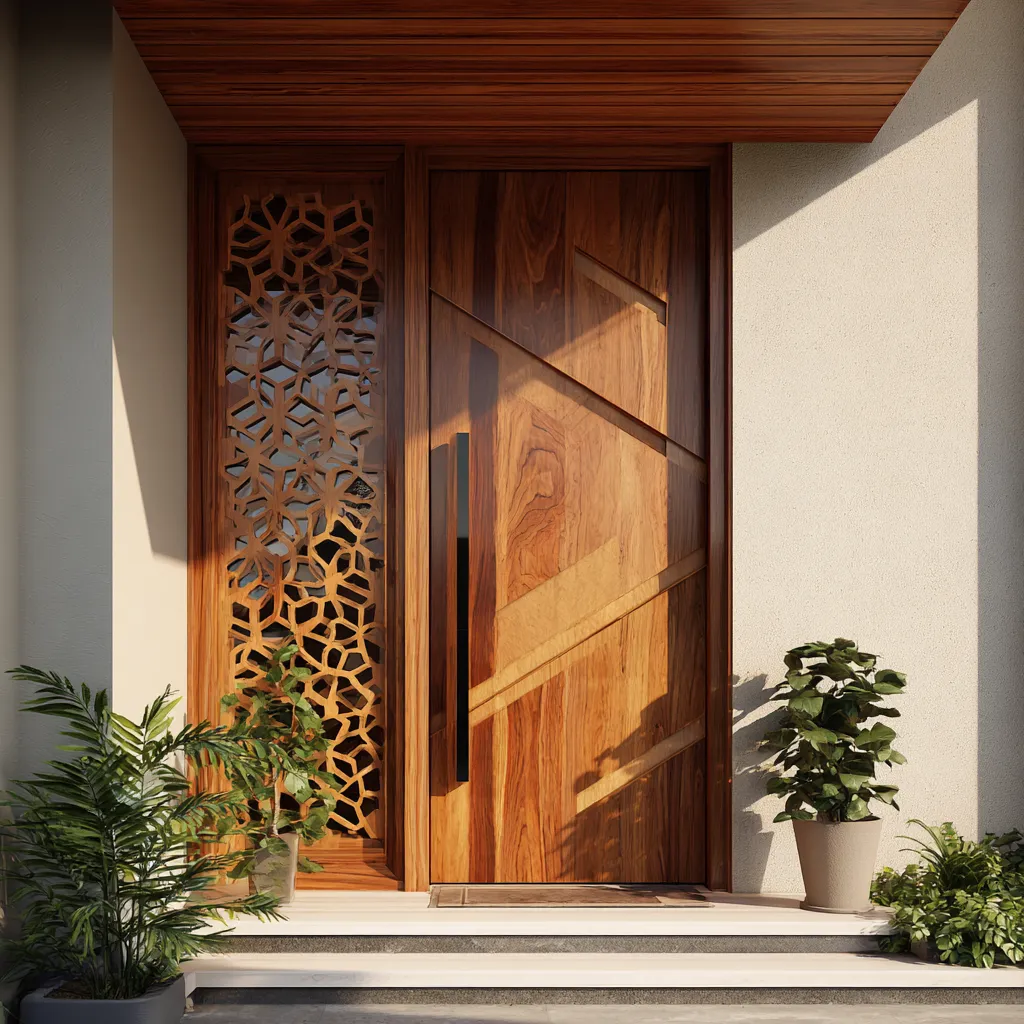
Image Caption: A main door with simple CNC cutting.
Door-based CNC work is one of the most common uses today. A CNC cutting door design is usually seen on main doors, safety doors, and inner wooden doors. These designs show patterns cut directly into wood or metal sheets. A main door CNC cutting design is perfect for homeowners who want detail without heavy carving. It looks neat and stays strong over time. Dark wood shades, teak, or walnut finishes work well. For flats, a modern CNC door design paired with a safety grill is a popular choice.
CNC Designs for Safety Doors and Grills
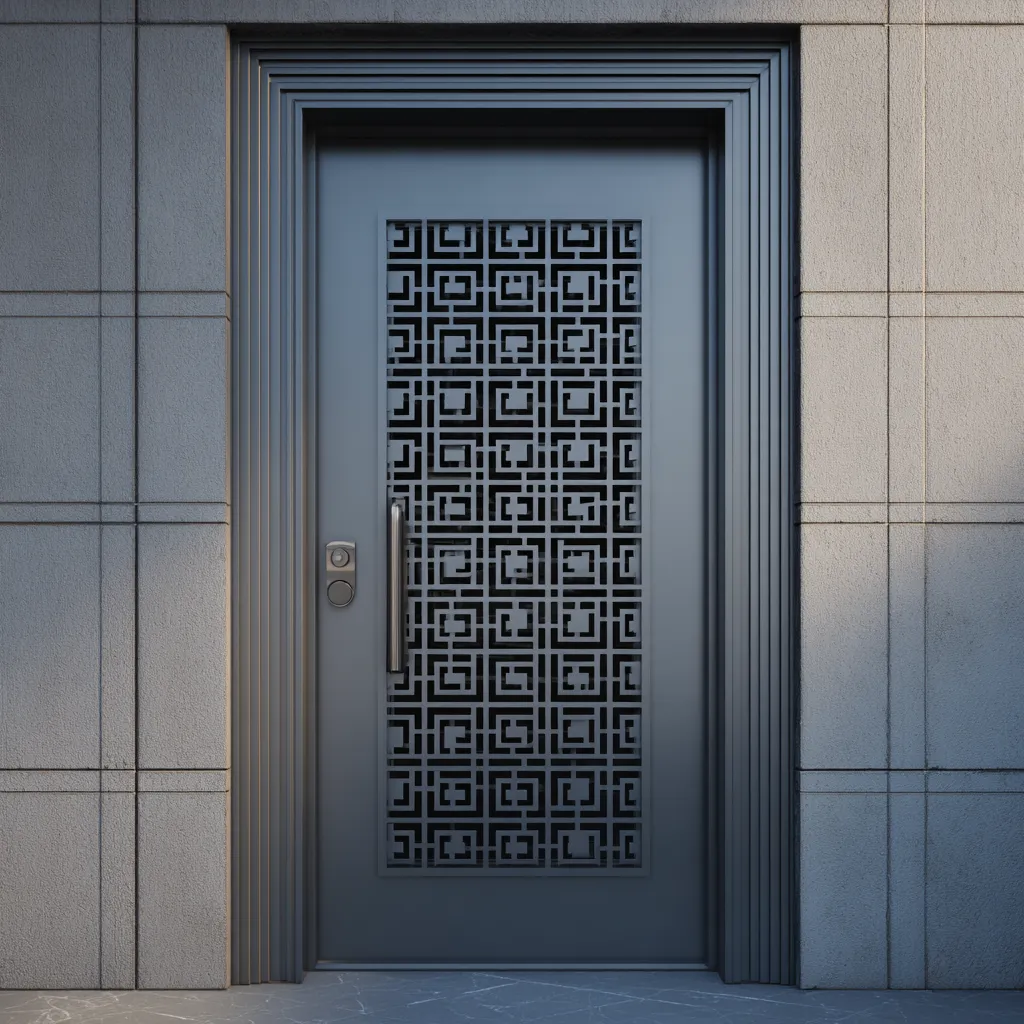
Image Caption: Apartment safety door with CNC grill design in matte metal finish.
Safety doors focus more on strength than decoration. A CNC grill design is used to add airflow without compromising security. Flats often use a modern CNC door design paired with a grill rather than a solid metal door. Gaps are kept even. Too much detailing makes cleaning difficult. Matte finishes are preferred because they hide dust and scratches better over time.
CNC Cutting Designs for Pooja and Mandir Areas
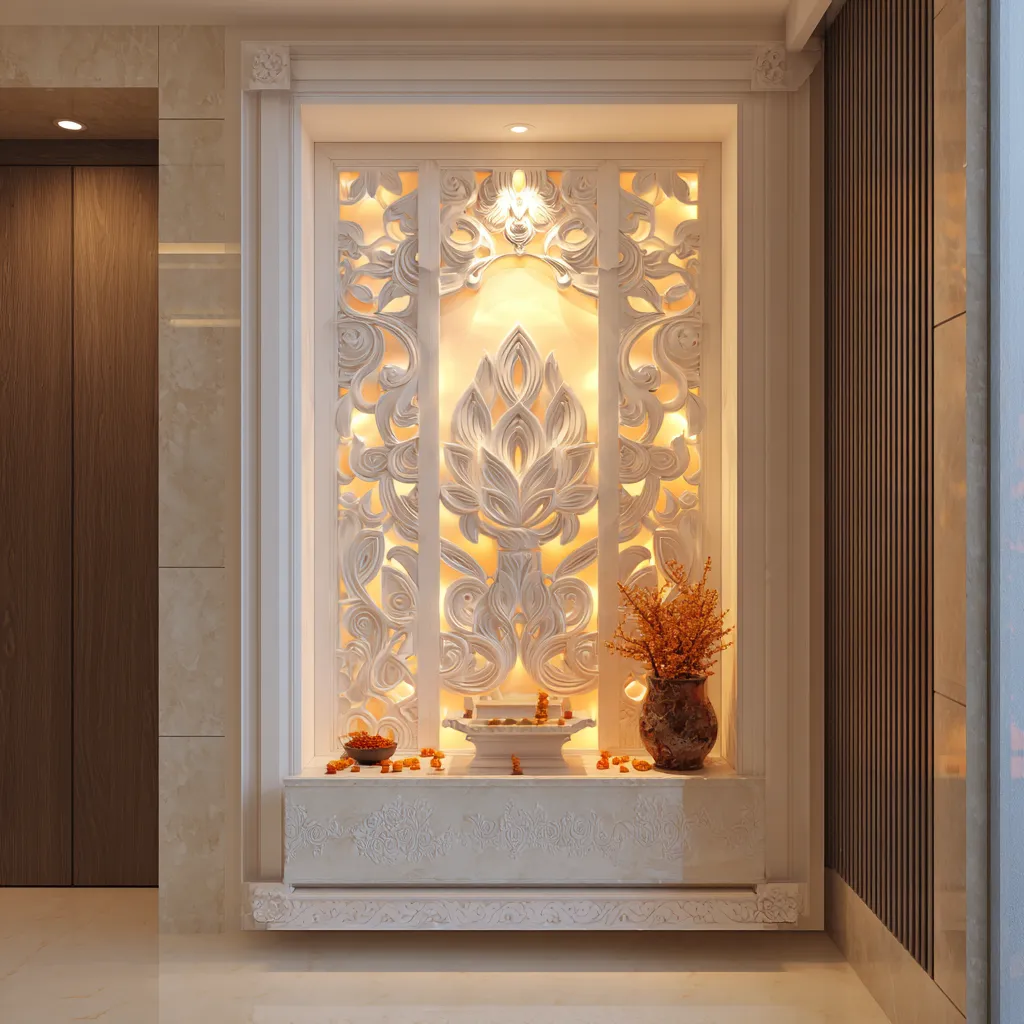
Image Caption: CNC-cut mandir panel with backlighting.
Religious spaces often use CNC because it allows detailed symbols with clean edges. A mandir door CNC design usually includes lotus, Om, or deity patterns cut on MDF or wood. Many homes also use CNC cutting design for mandir shutters instead of solid doors to allow light and air inside. A pooja room CNC cutting design suits small apartments where space is limited. Light colours like white, cream, or light wood tones work best here. Backlighting can be added to improve visibility without making the space heavy.
CNC Cutting Designs for Walls and Decorative Panels
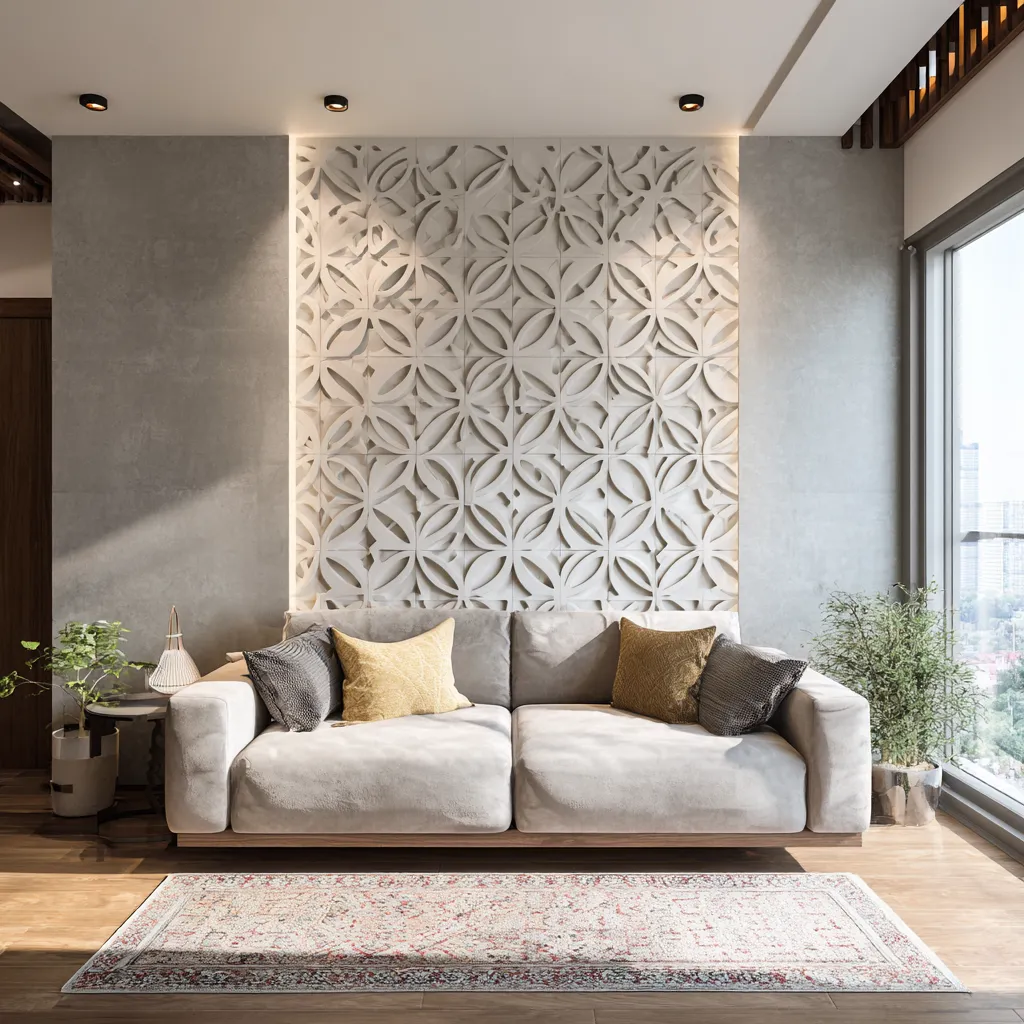
Image Caption: CNC wall panel installed behind a living room sofa.
Walls are often left plain, but CNC panels help break that emptiness. A CNC cutting design for wall can be used behind sofas, beds, or dining areas. These panels usually focus on patterns rather than deep cuts. A CNC wall design works well in MDF for indoor use. Laser-based options like laser-cut wall design are also chosen for fine detailing. Neutral shades or single-tone colours keep the wall from looking crowded. This type of design is popular because it adds detail without changing furniture.
CNC Designs for Partitions and Dividers
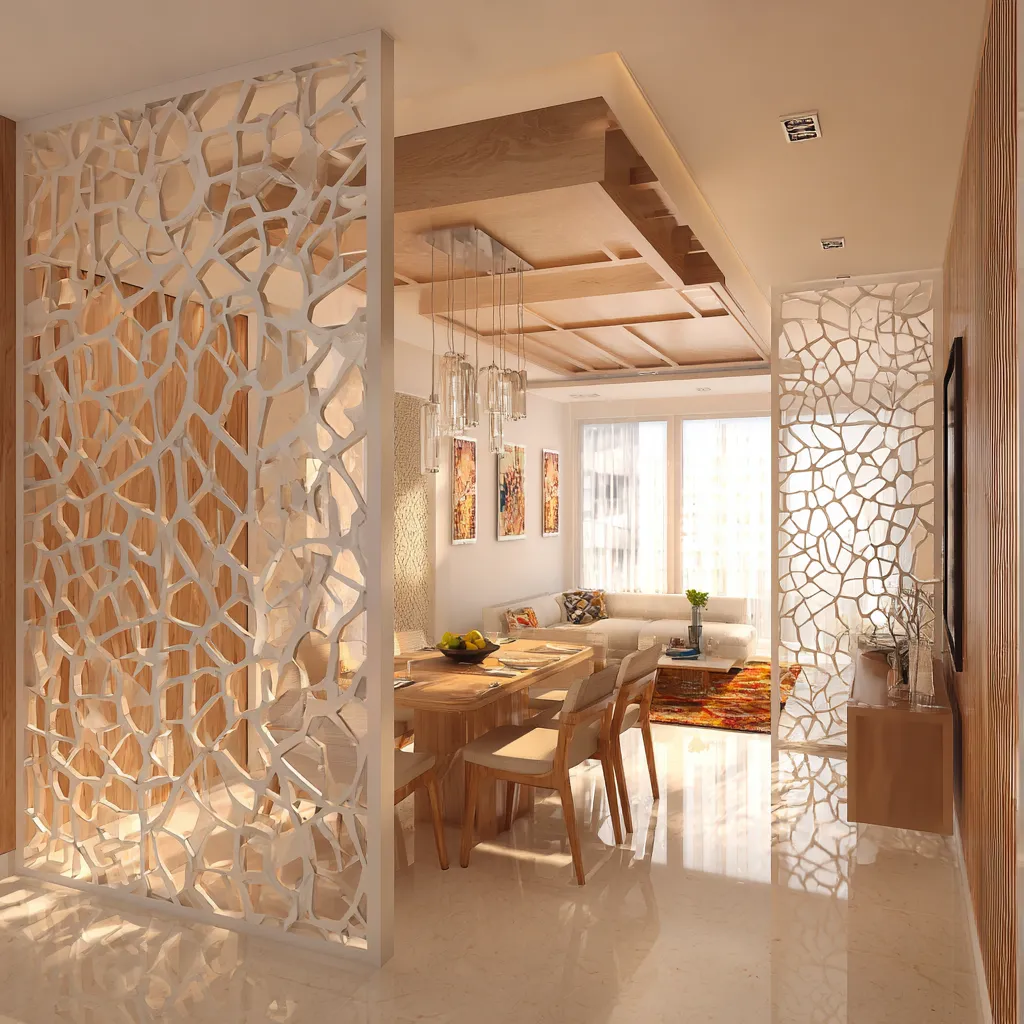
Image Caption: CNC partition between living and dining area.
Partitions are used when rooms need separation but not walls. A CNC partition design works well between the living and dining areas. Patterns are kept open so light moves through both spaces. A CNC design for partition is often chosen after furniture is placed, not before. Neutral colours help the divider blend into the background instead of standing out.
CNC Designs for Ceilings
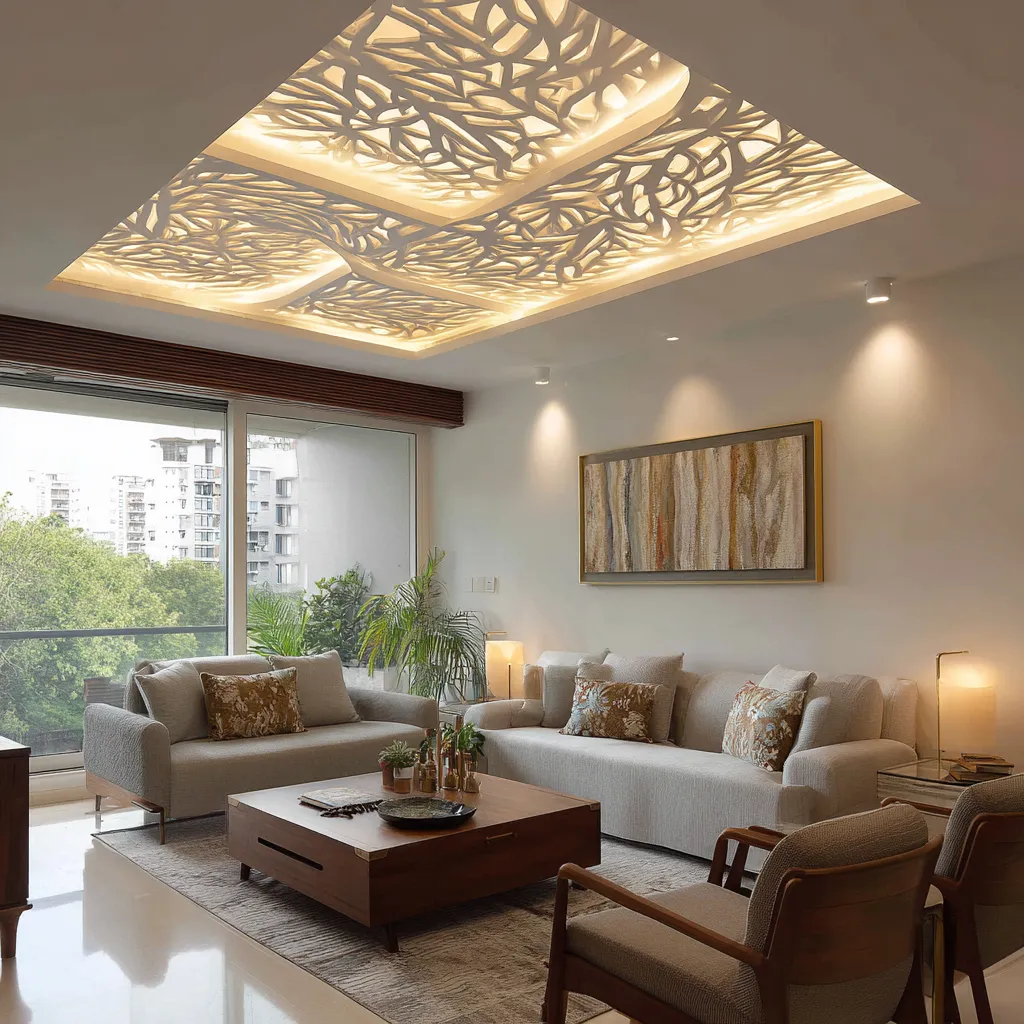
Image Caption: False ceiling with CNC cutting design around light fixtures.
Ceiling CNC work is less common but still used in selected spaces. A CNC cutting ceiling design is usually added around light fixtures or false ceiling sections. A modern CNC ceiling design keeps patterns shallow so the ceiling does not feel lower. Light colours work better here. Dark shades tend to shrink the space visually.
CNC Cutting Designs for Windows, Balconies, and Partitions
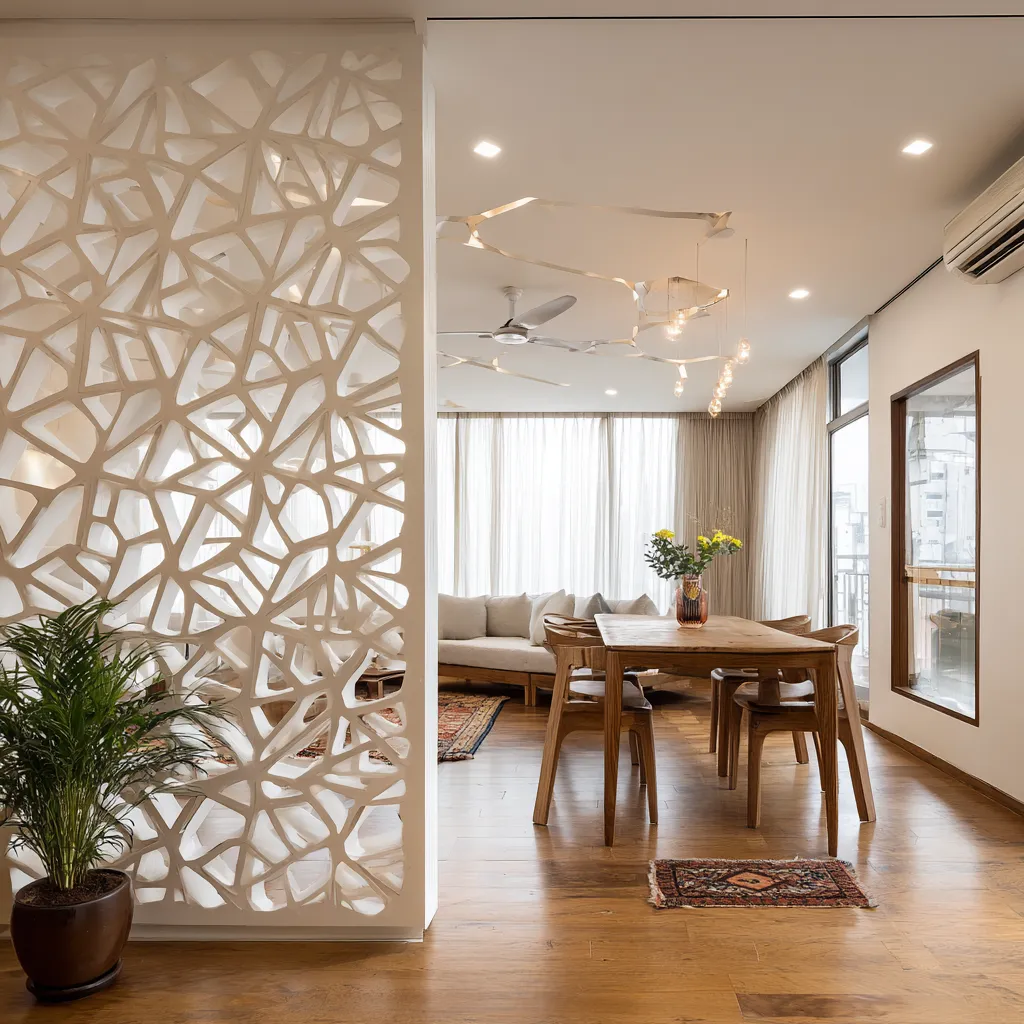
Image Caption: CNC jali partition between dining and living areas.
Spaces that need airflow benefit the most from CNC jali work. A CNC jali design is commonly used for windows, balconies, and room dividers. It allows air and light while still offering privacy. In living areas, a CNC partition design helps separate dining and seating spaces without closing the room. Traditional patterns suit larger homes, while jali CNC cutting design with simple lines works better in flats. White, brown, or matte black finishes are easy to maintain and match most interiors.
CNC Cutting Designs for Exterior, Gate, and Elevation
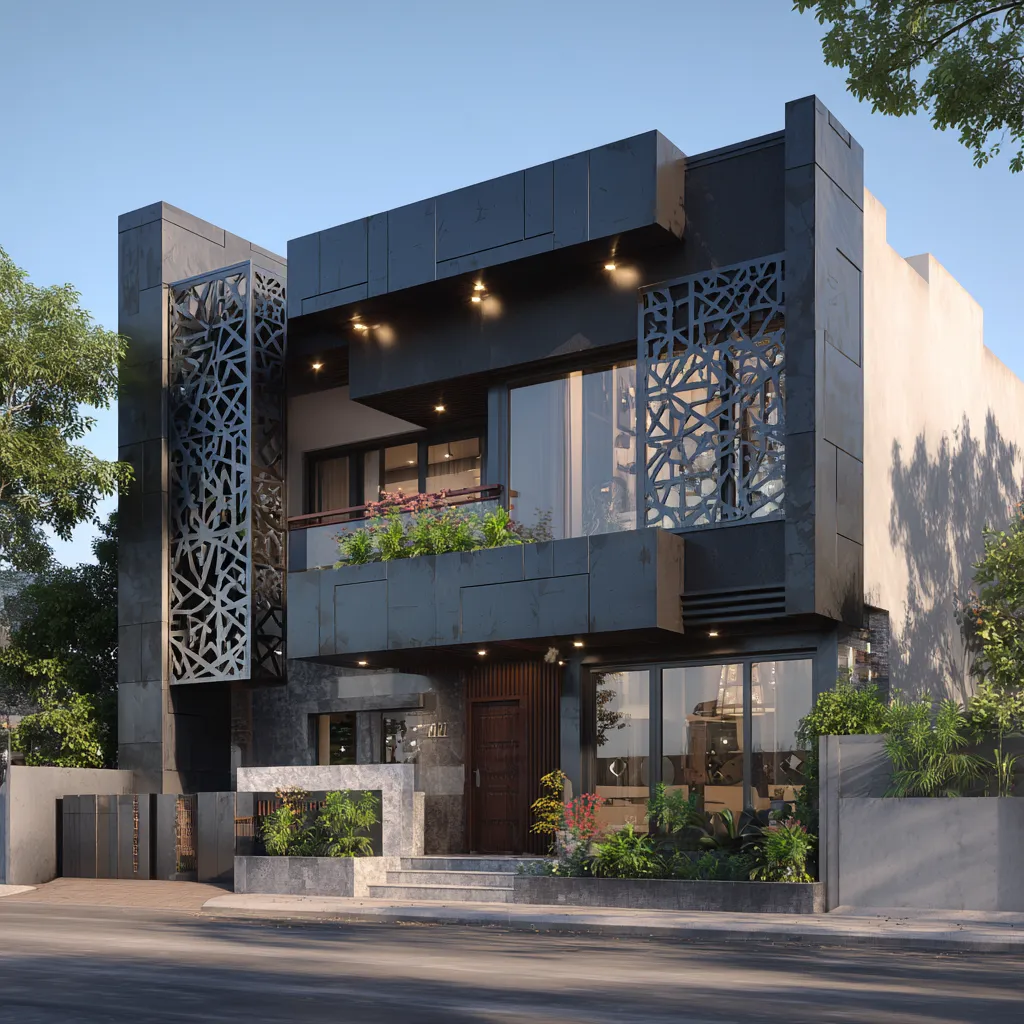
Image Caption: CNC panels used on the front elevation.
Outdoor CNC work needs stronger material and simpler patterns. A CNC design for elevation is usually done in metal, ACP, or weather-resistant sheets. These designs improve the front look of the house without adding heavy structures. Many homes also use CNC cutting gate design for compound gates and entry grills. Straight lines and balanced gaps work best outdoors. For modern houses, front elevation CNC design with geometric patterns is widely preferred because it looks clean and lasts longer.
CNC Cutting Design
Themes usually come into play after the location and material are decided. People look at the room, the furniture already there, and how much detail the space can handle. Themes help narrow that choice without overthinking it.
Traditional CNC Design Themes
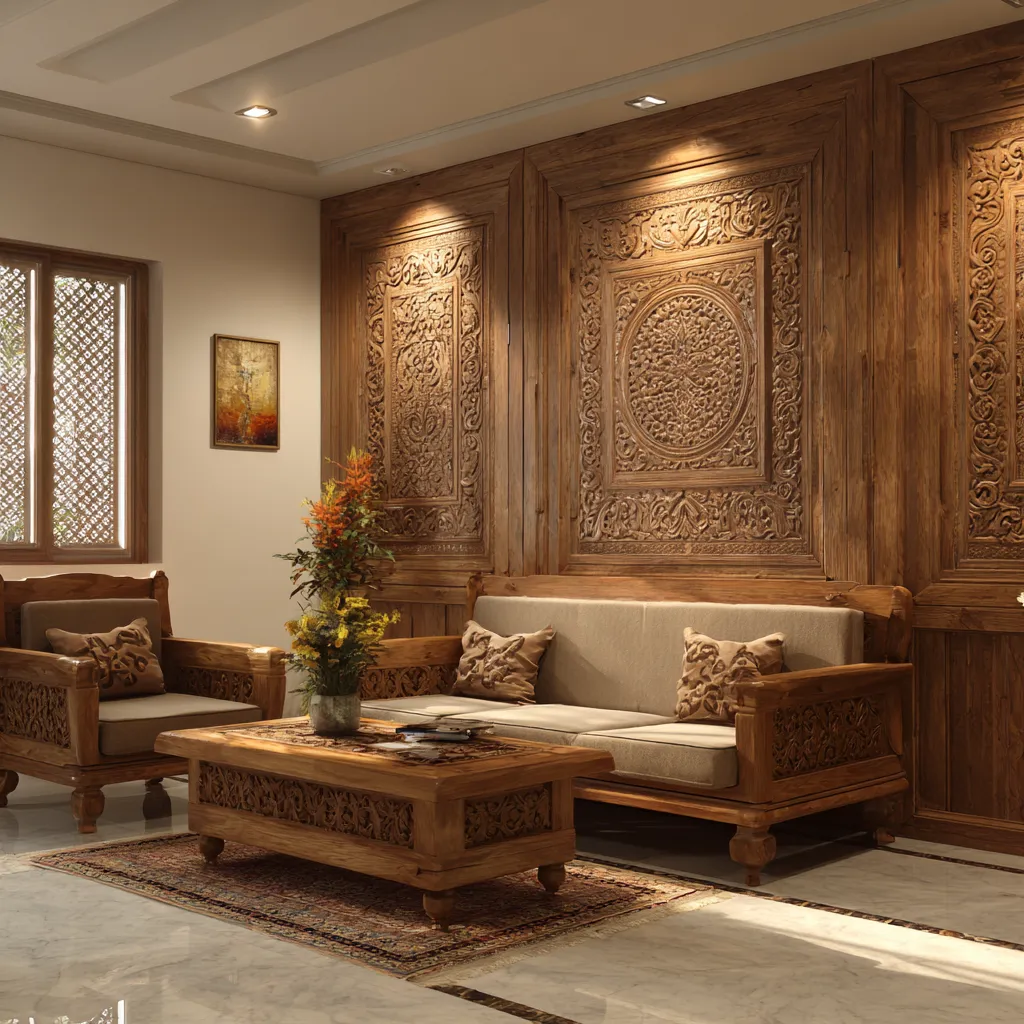
Image Caption: Traditional Indian interior with CNC panels featuring classic motifs
Traditional themes are chosen in homes where the rest of the space already follows a familiar style. You see this mostly in pooja rooms, entrances, and family halls. A mandir CNC design with religious symbols or classic patterns fits easily into such homes. These themes do not need extra styling. They sit comfortably with wooden furniture, neutral walls, and soft lighting. Too much layering here can make the space feel crowded, so most people keep the surrounding area simple.
Contemporary CNC Design Themes
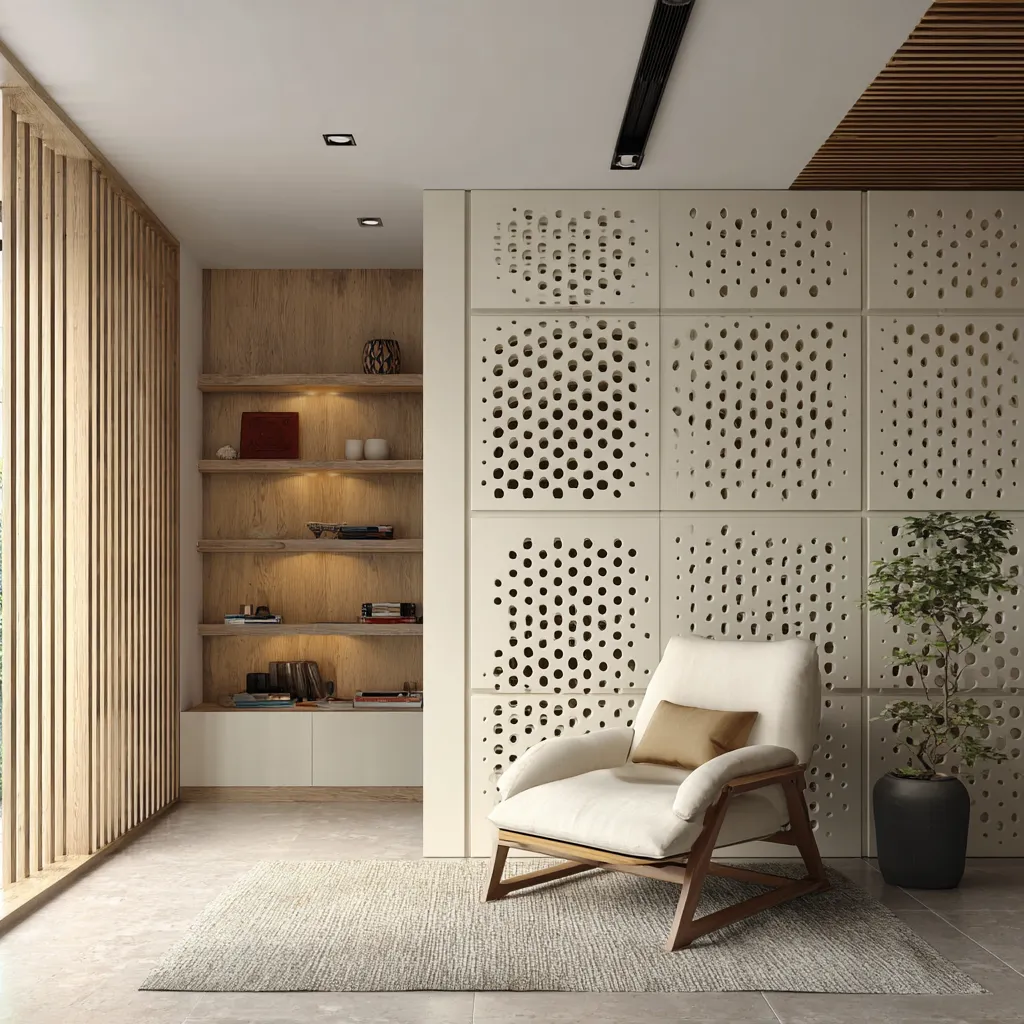
Image Caption: Contemporary flat interior with modern CNC partition design.
Contemporary themes are more common in flats and newer houses. A modern CNC design usually focuses on clean lines and repeated shapes. These themes are used on walls, partitions, and sometimes ceilings. They work well in spaces where furniture is minimal and colours are controlled. People choose this style because it feels organised and easy to maintain. Loud colours are avoided. Single-tone finishes are preferred.
Ethnic CNC Design Themes
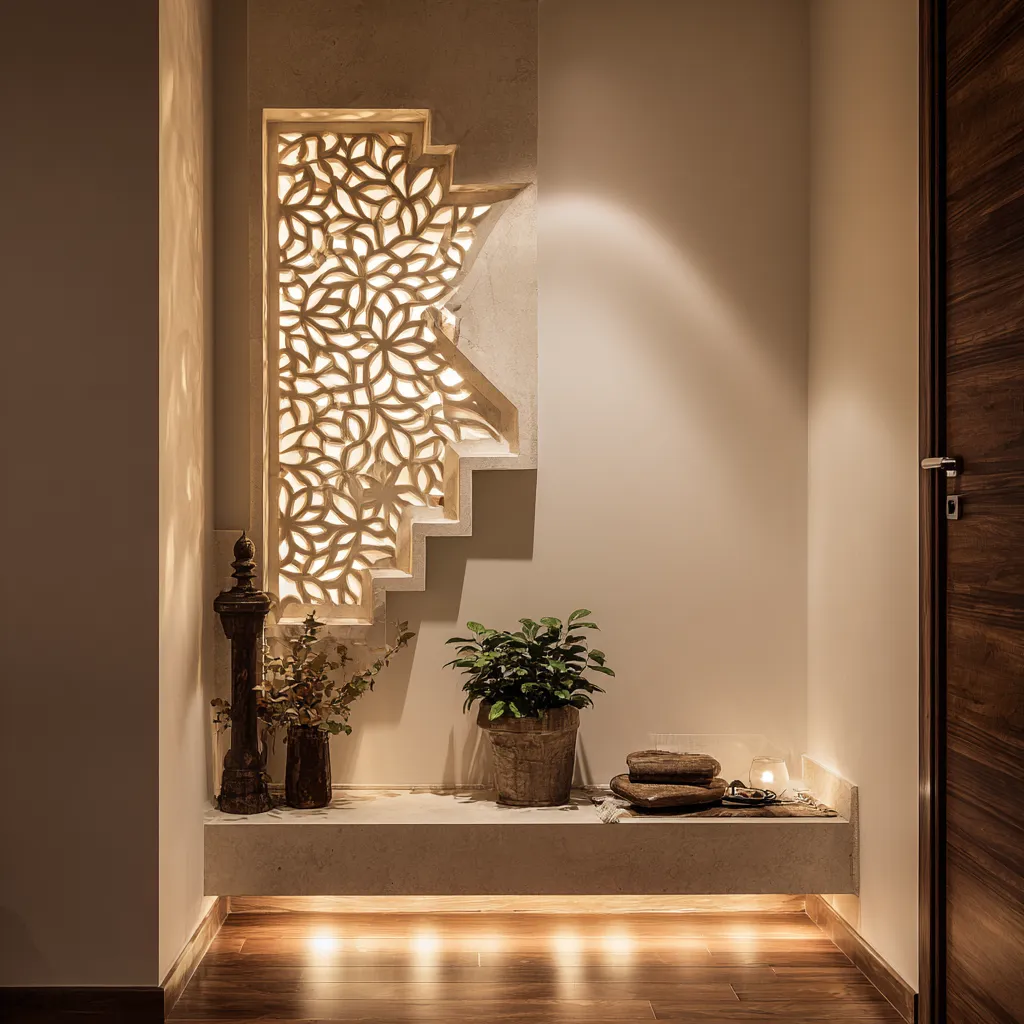
Image Caption: Quiet corner of a home with ethnic CNC design.
Ethnic themes fall somewhere between traditional and decorative. They often appear in corners meant for quiet use, like reading areas or small prayer spaces. Motifs inspired by Indian art forms are common. These designs feel personal rather than showy. They work best when the surrounding décor is understated. Heavy furniture or dark walls nearby can overpower the pattern.
Nature-Inspired CNC Design Themes
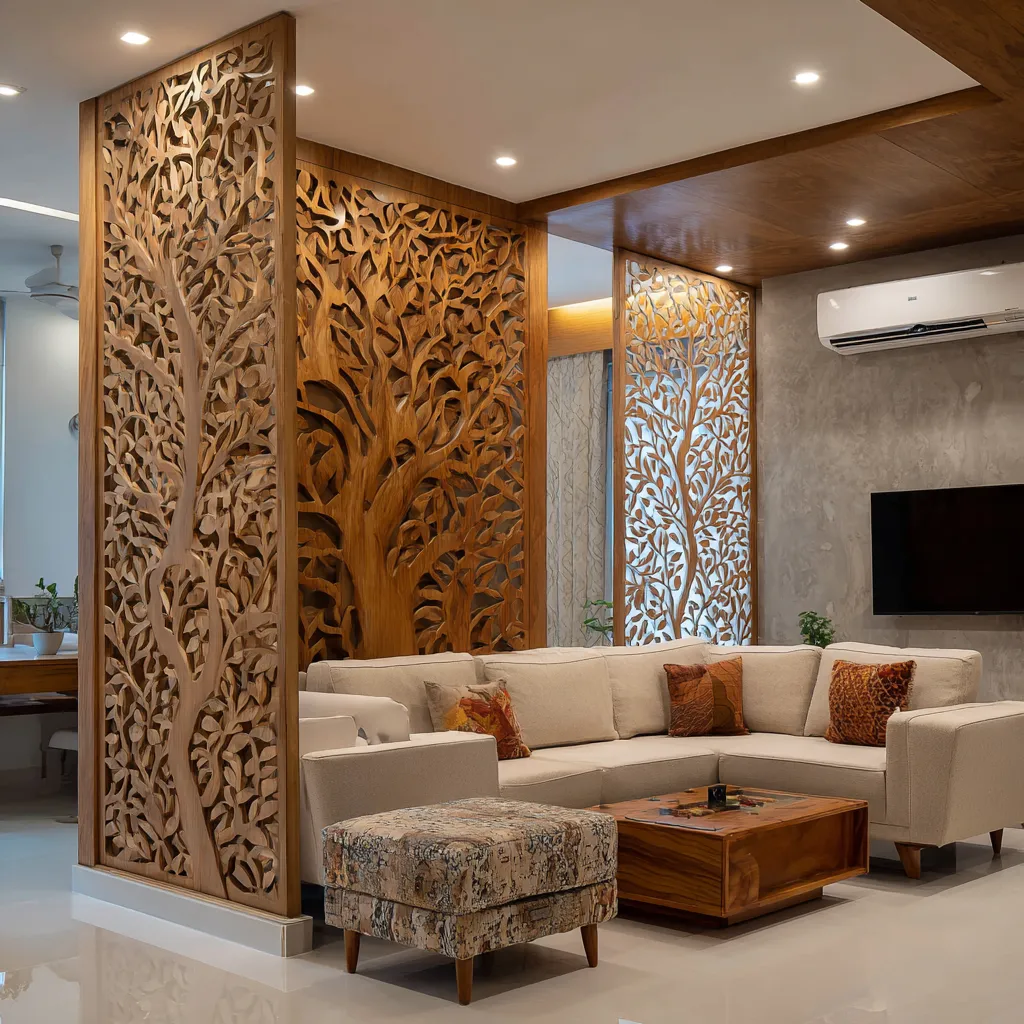
Image Caption: Living room with nature-inspired CNC jali featuring tree and vine patterns.
Nature-based themes are picked when a space feels flat or boxed in. Tree patterns, vines, and flowing shapes help soften sharp edges. A CNC jali design inspired by nature is often used for partitions or balcony screens. These themes sit well in living rooms and dining areas. Light shades help keep the look open. Busy backgrounds reduce their effect, so people usually leave the rest of the space calm.
Kids-Themed CNC Designs
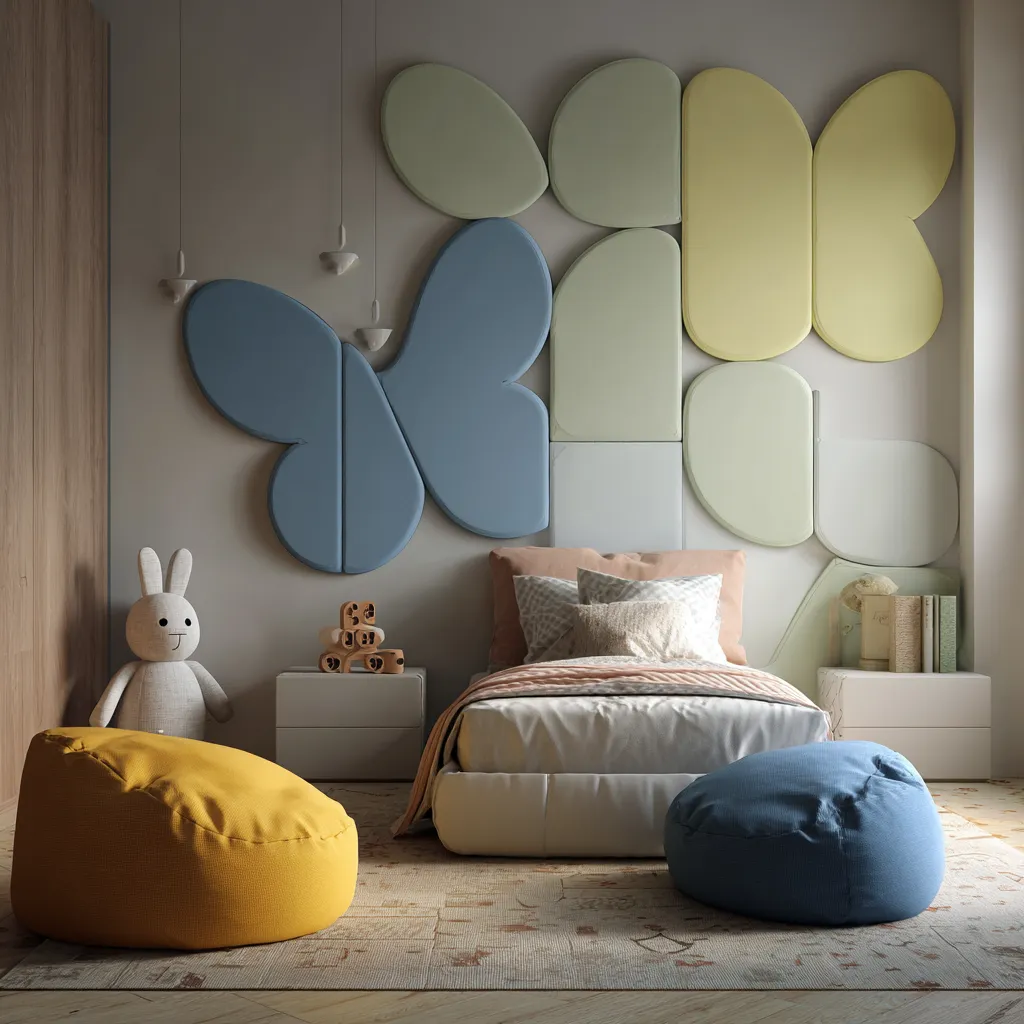
Image Caption: Kids’ bedroom wall panel with butterflies CNC cut shapes.
Kids' themes are used sparingly. Butterfly shapes, simple animals, or playful patterns appear in bedroom panels or study corners. Materials are kept light. Sharp edges and deep cuts are avoided. These designs are meant to add interest, not dominate the room. As children grow, these panels are often replaced, so people keep the designs simple.
Modern Abstract CNC Themes
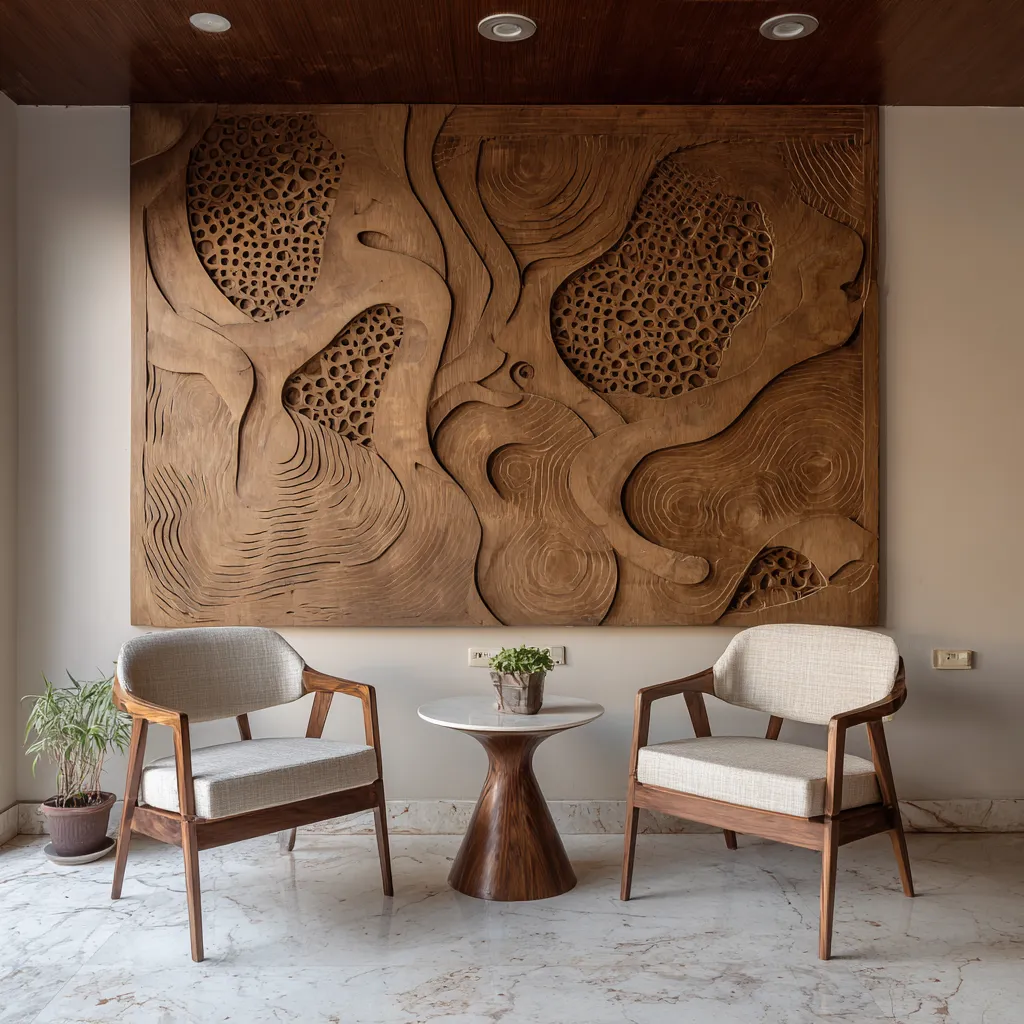
Image Caption: Single feature wall with abstract CNC cutting design.
Abstract themes are chosen by homeowners who want something different without a fixed meaning. A latest CNC cutting design in this style focuses on form rather than symbols. These themes work best as single features, like one wall or a ceiling section. Too many abstract elements in one space can feel confusing. Balance matters more than detail here.
Mistakes to Avoid in CNC Cutting Design
Most issues with CNC work show up after installation, not on the drawing. These mistakes are common, and they usually happen when design decisions are rushed or copied without checking the space properly.
- Using MDF in damp or outdoor areas: MDF works well indoors, but moisture slowly ruins it. Balconies, modular kitchens, and seepage-prone walls are not suitable.
- Choosing very thin or delicate patterns: Fine cuts may look good on paper, but they crack easily during fixing or cleaning, especially on doors and partitions.
- Skipping proper coating on metal CNC work: Without paint or powder coating, metal starts rusting quickly, more so in balconies and exterior areas.
- Poor installation and uneven fixing: Misaligned panels lead to gaps, vibration, or bending. Even a good design looks bad if it is not fixed properly.
- Trying to use CNC designs everywhere: Too many CNC elements make the space feel crowded. CNC works best when used in selected areas, not every wall and door.
Conclusion
CNC cutting designs have quietly become part of everyday homes. They show up on doors, walls, partitions, and even outside elevations without demanding attention. What makes them work is not just the pattern, but where they are placed and how much space they are given. A well-chosen CNC cutting design fits into the house instead of standing apart from it. Material choice, pattern size, and proper fixing matter more than chasing trends. When CNC work is used with restraint, it adds detail without clutter. That balance is why these designs continue to find a place in both small flats and larger homes, across styles that range from traditional to modern.
*Images used are for representational purposes only. Unless explicitly mentioned, the Interior Company does not hold any copyright to the images.*

Ready for a home transformation?
Let our designers assist you!
Recent Posts









Most homes use CNC work on main doors, pooja shutters, partitions, and wall panels. Some also use it for balconies and front elevations, depending on the material.
No. MDF stays indoors. WPC works better near moisture. Metal and ACP are chosen for outdoor areas where the weather is a factor.
They do if the right material is used in the right place. Metal, stone, and WPC last longer than MDF, which is meant only for dry interiors.
Yes, as long as the pattern is balanced. Heavy detailing is avoided. Wood and metal are commonly used for strength and durability.
Simple religious symbols are preferred. Lotus, Om, and Ganesh patterns are common because they allow light and air without closing the space.
CNC cutting uses a rotating tool and is better for wood and thicker sheets. Laser cutting is finer but limited to thinner materials.
For partitions, 12 mm is usually enough. Doors and shutters feel sturdier when 18 mm boards are used.
Yes, but only with materials like metal, ACP, stone, or WPC. MDF should never be used outdoors.
Geometric jali, backlit panels, and simple wood carving designs are being used more than very dense patterns.
Not much. MDF may need repainting over time. Metal benefits from proper coating. Outdoor panels just need occasional cleaning.
Related Category
- Exterior Design
- False Ceilings
- Furniture
- Tips and Advice
- Walls and Texture